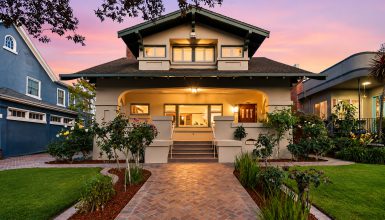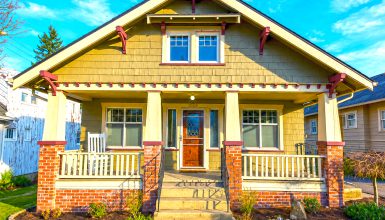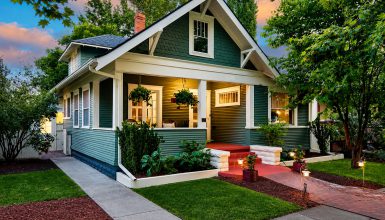
What makes a Craftsman home stop you in your tracks?
Most of the time, it is not just the porch. It is not just the trim. It is not even the pretty front door. It is the full color story working together. The siding, roof, columns, stone, brick, railings, and landscaping all play a part.
Craftsman homes love color with depth. They look best in shades that feel rooted in nature. Think cedar brown, sage green, slate gray, creamy white, deep blue, warm taupe, and rich charcoal. These colors make the home feel calm, grounded, and full of character.
The best part? Craftsman color schemes can go many ways. Some feel cozy and classic. Some look bold and modern. Others lean rustic, coastal, or cottage-inspired. Yet, they all share one thing. They highlight the hand-built look that makes Craftsman homes so loved.
Below are 20 Craftsman house exterior color schemes, each with a title, a full design breakdown, and a cues list you can use for your own home.
1. Cedar Shake Craftsman with Stone and Crisp White Trim
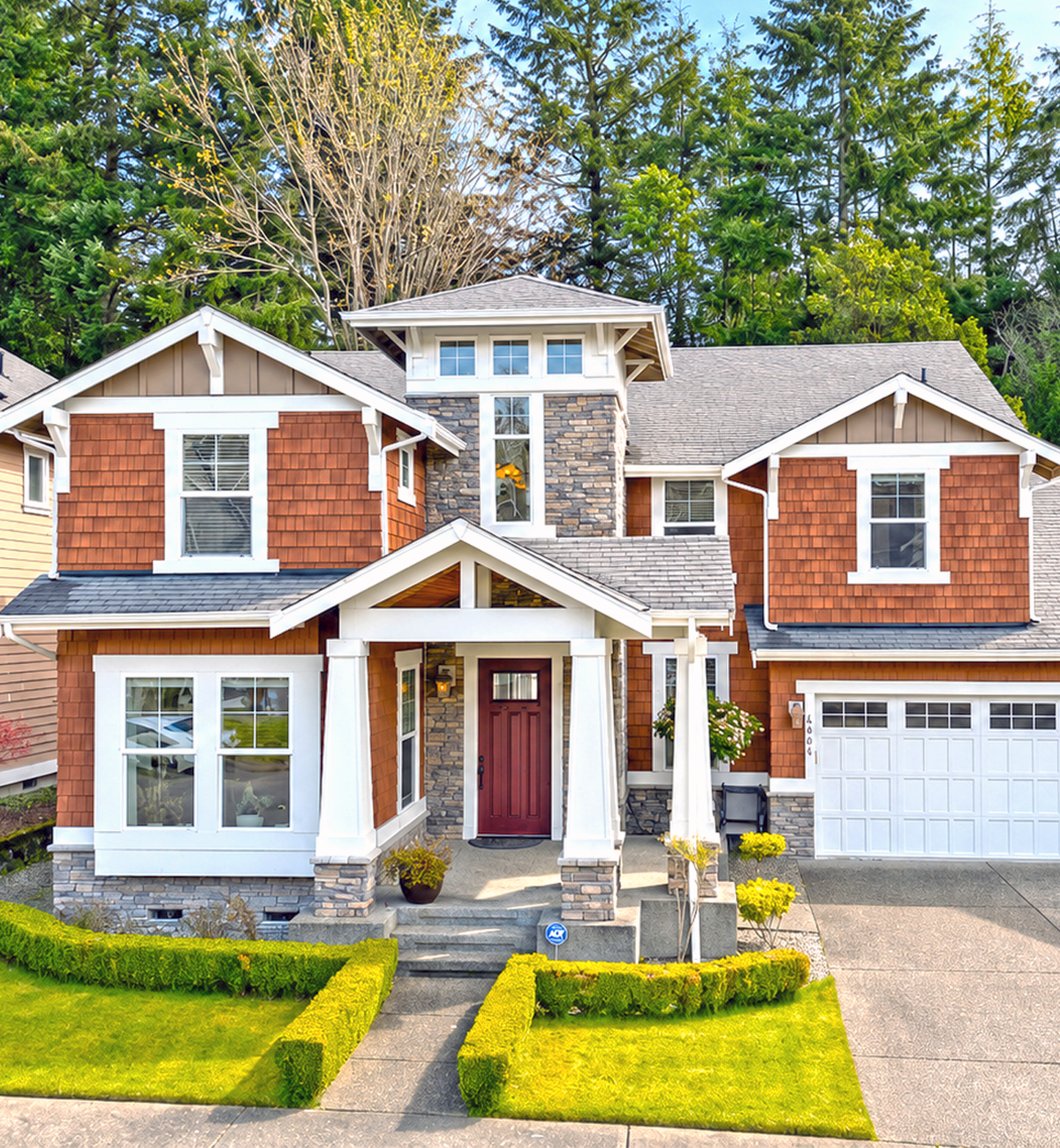
This home uses one of the most classic Craftsman color pairings: warm cedar, white trim, and gray stone. The cedar shake siding brings rich texture to the upper parts of the house. Then, the white trim frames the windows, rooflines, porch, and garage with a clean edge.
The gray stone adds weight near the base of the home. That matters because Craftsman homes often look best when the lower level feels strong and grounded. The deep red front door adds one more warm note. It gives the entry a clear focal point without fighting the cedar tones.
This color scheme works well for larger Craftsman homes because it breaks up the mass. The home has several gables, a front porch, a garage wing, and a stone chimney. Each material helps define a different part of the house.
Design Cues
- Use warm cedar shake siding on gables.
- Add white trim for a crisp outline.
- Pair cedar with gray stone columns or skirting.
- Choose a red, brown, or burgundy front door.
- Keep the roof soft gray for balance.
- Use neat hedges to frame the walkway.
- Repeat white details on brackets and windows.
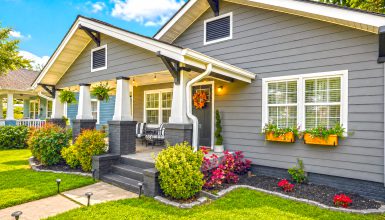
2. Charcoal Gray Bungalow with Bright White Porch Details
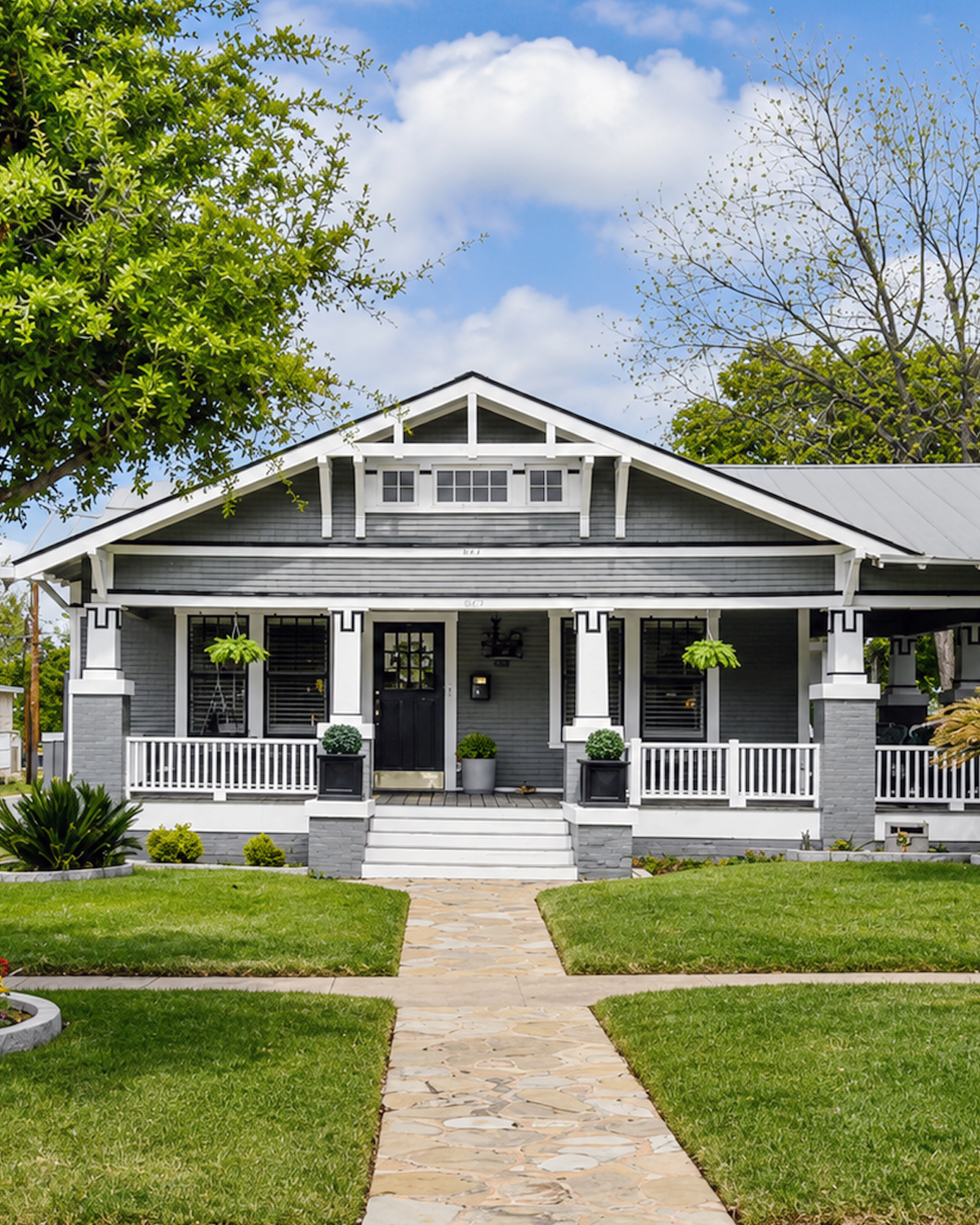
This color scheme feels bold, but still timeless. The deep charcoal siding gives the home a strong presence. It also makes the white trim look extra sharp. On a Craftsman bungalow, that contrast works beautifully because the style has many details worth showing off.
The wide porch is the star here. White columns, white railings, and white trim create a fresh frame against the dark siding. The dark front door blends into the palette, which gives the porch a quiet and polished look.
This scheme is great for anyone who wants a classic Craftsman shape with a more modern mood. It feels clean, neat, and stylish. The gray also works well with green lawns and shade trees, so the house feels part of the landscape.
Design Cues
- Paint lap siding charcoal or deep gray.
- Use white trim on columns and rails.
- Keep the front door dark for a seamless look.
- Add black or bronze porch lights.
- Choose simple potted plants.
- Use a pale walkway to brighten the entry.
- Keep the landscaping low and tidy.
3. Soft Beige Craftsman with Cream Trim and Arched Garage Doors
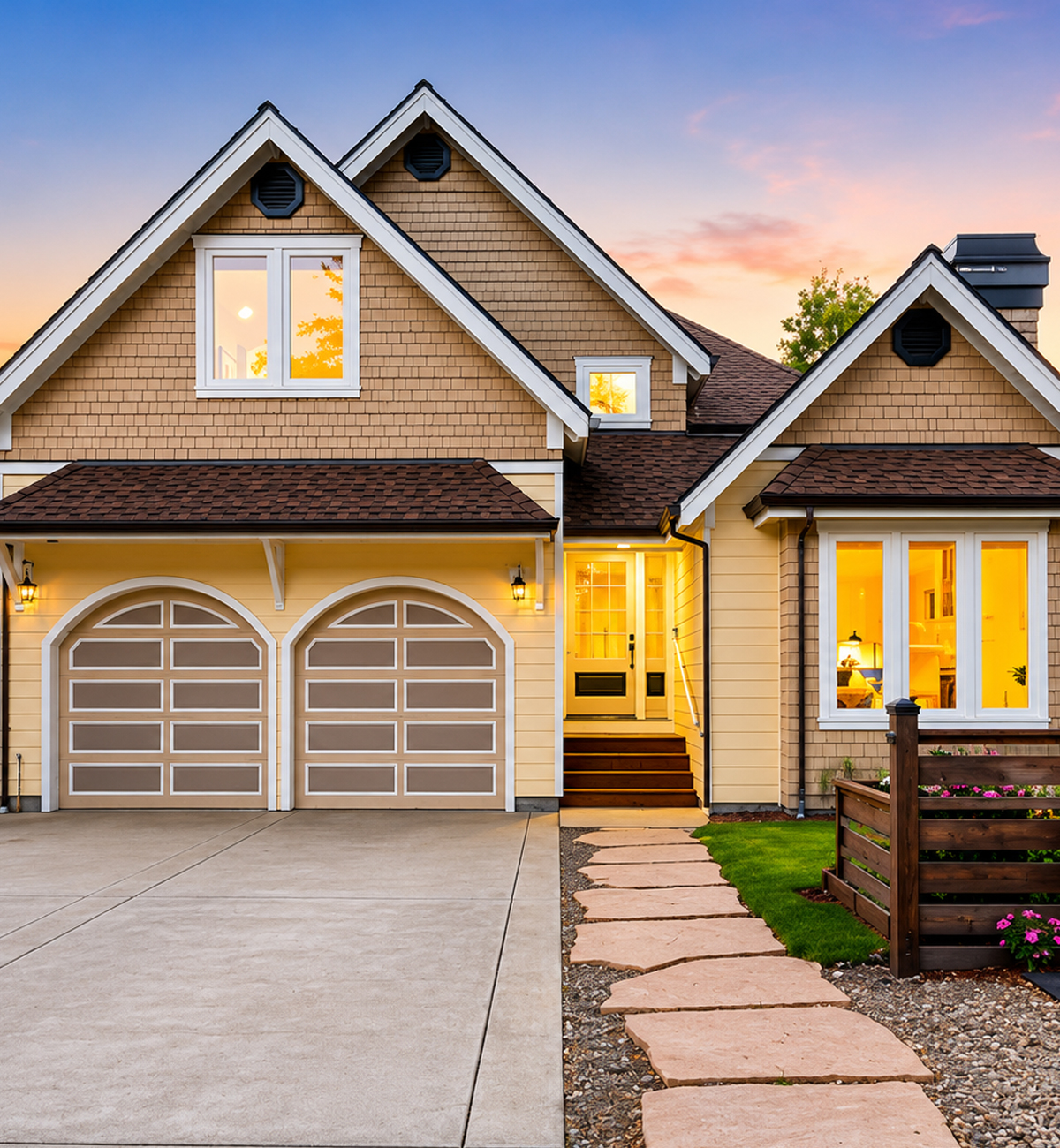
This home shows how soft colors can still feel rich. The beige siding has a warm, gentle tone. It pairs well with cream trim and a brown roof. Together, the colors create a calm and welcoming look.
The arched garage doors add charm. They soften the front view and give the home a cottage-like feel. The beige-on-beige palette keeps the whole exterior smooth and easy on the eye. Meanwhile, the bright windows and warm interior lights add a cozy glow.
This color scheme works best for Craftsman homes with lots of rooflines or mixed shapes. Since the colors sit close together, the house feels unified. Nothing feels too loud. The result feels simple, graceful, and very livable.
Design Cues
- Choose beige or greige shingle siding.
- Use cream trim instead of stark white.
- Add brown roof shingles for warmth.
- Match garage doors to the siding.
- Use arched garage panels for charm.
- Add soft outdoor lighting.
- Keep the front path simple and clean.
4. Moody Gray Craftsman with White Brick Porch Base
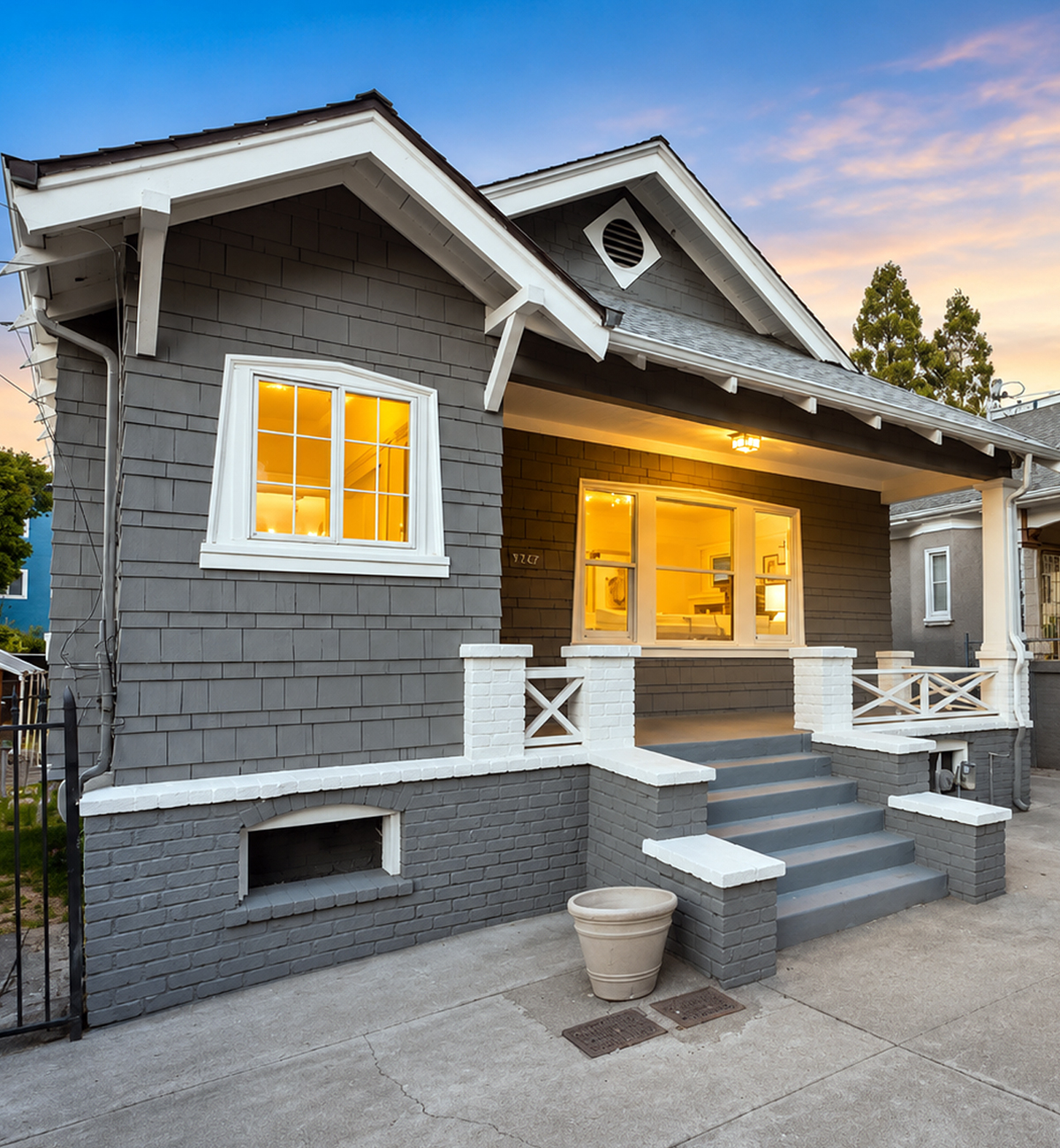
This home leans into strong contrast. The gray shake siding gives the house a moody, handsome look. Then, the white trim and painted brick brighten the entire porch. The mix feels bold but still classic.
The porch base plays a big role here. Painted brick at the foundation gives the home a sturdy feel. It also ties into the white trim around the windows and railings. Because the siding is dark, the white details help each Craftsman feature stand out.
The wide steps, square porch posts, and cross-rail accents create a friendly front entry. Warm light from the windows keeps the gray palette from feeling cold. This is a smart choice for small or mid-size Craftsman homes that need strong curb appeal.
Design Cues
- Use dark gray shake siding.
- Paint porch brick white or soft cream.
- Highlight windows with thick trim.
- Add cross-style porch railings.
- Use warm white bulbs for a cozy glow.
- Keep steps and porch floors in soft gray.
- Add simple planters near the entry.
5. Bold Blue Craftsman with a Sunny Yellow Door
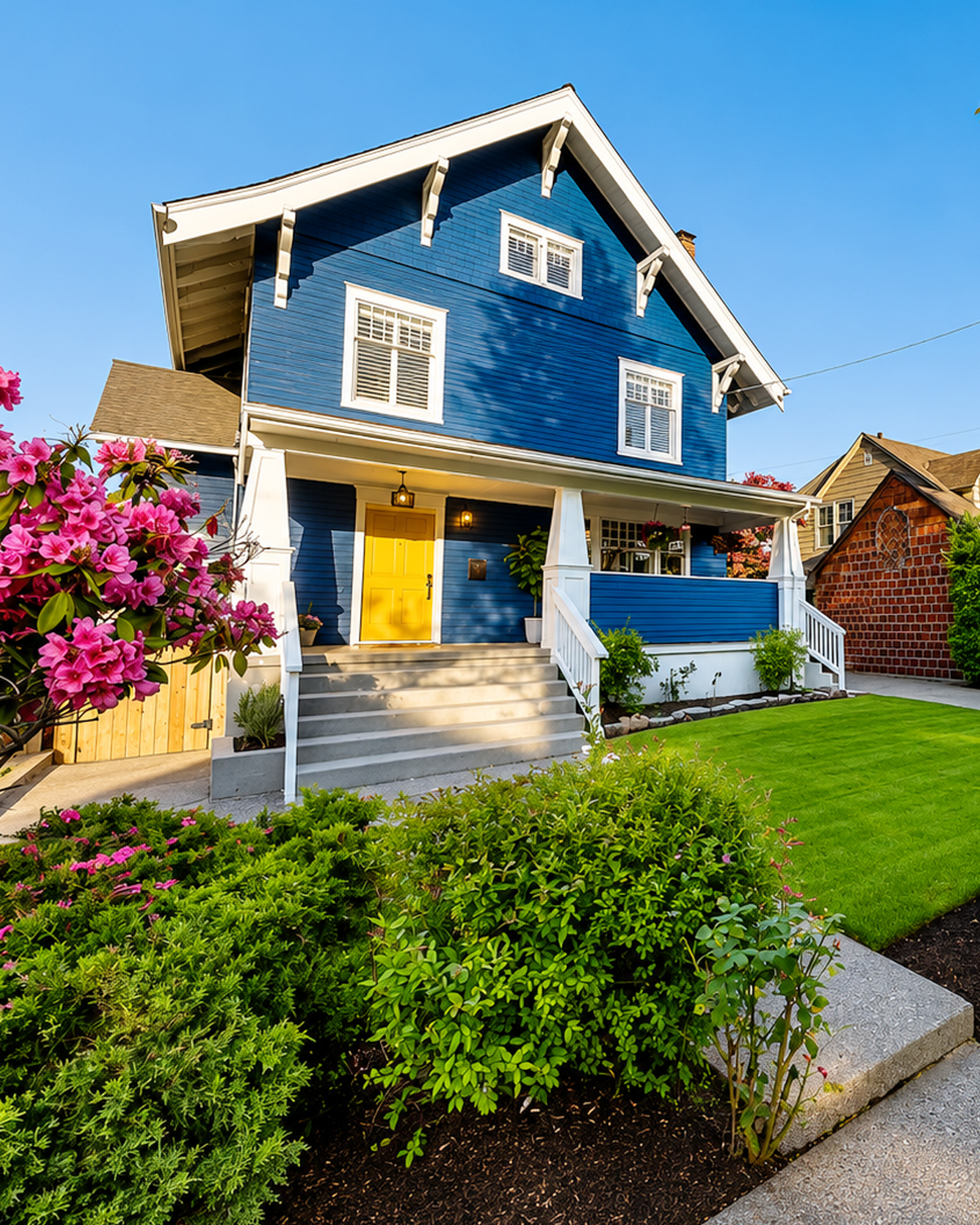
This exterior proves that Craftsman homes can handle cheerful color. The rich blue siding gives the house personality. The white trim keeps the look crisp. Then, the yellow front door adds joy right where the eye wants to land.
The palette feels bold, but not busy. Blue and white create a classic base. The yellow door works like a small burst of sunshine. Since the porch is deep and shaded, the yellow helps the entry stand out.
This is a great color idea for homeowners who love charm and energy. It works especially well on homes with wide porches, white railings, and simple lawn spaces. The yellow door also pairs well with flowers, hanging baskets, and warm porch lights.
Design Cues
- Paint siding navy or rich blue.
- Use white trim to sharpen the lines.
- Choose a yellow front door for contrast.
- Add black or bronze lighting.
- Use white porch posts and railings.
- Bring in pink, white, or yellow flowers.
- Keep the roof neutral gray.
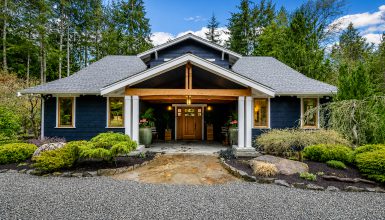
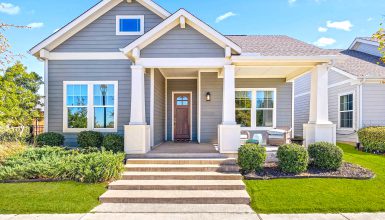
6. Deep Blue-Gray Craftsman with a Classic Front Porch
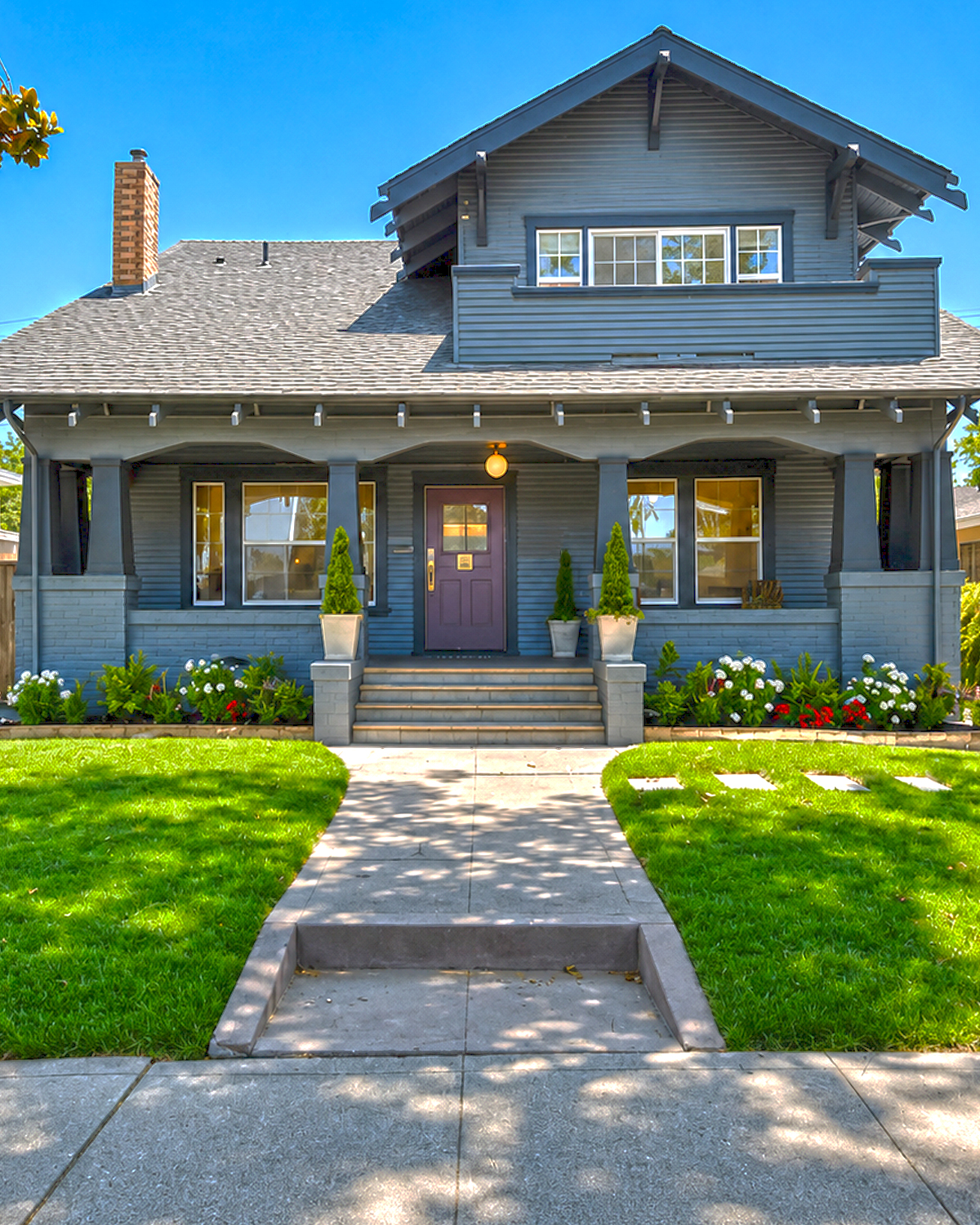
This home uses a deep blue-gray that feels refined and calm. The color sits between navy and charcoal, which makes it easy to pair with white trim. It gives the house depth without looking too harsh.
The front porch stretches across the facade, so the white columns and trim carry a lot of visual weight. They brighten the darker siding and create a strong rhythm across the home. The dark front door keeps the entry simple and polished.
This palette works well for homes with symmetrical windows and clean landscaping. It feels mature and settled. It also looks great with a green lawn because the cool siding and fresh grass balance each other.
Design Cues
- Choose deep blue-gray siding.
- Use white trim on all porch features.
- Keep the front door dark or muted.
- Add matching planters on each side.
- Use flower beds to soften the base.
- Repeat the siding color on porch walls.
- Keep shutters or accents simple.
7. Urban Craftsman with Brick, Coral, and White Trim
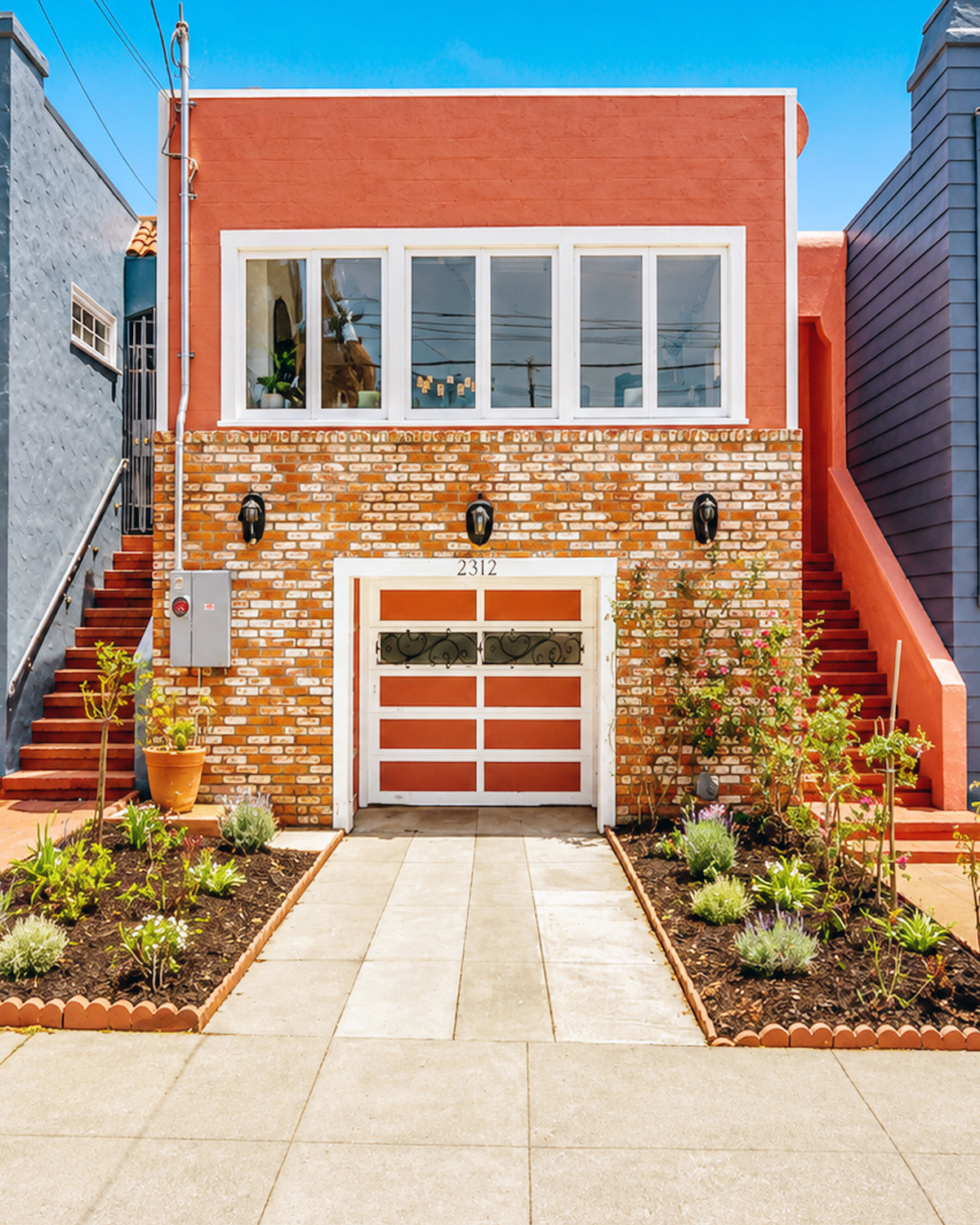
This home has a more unexpected color story. It mixes old brick with coral-red siding and white trim. The result feels urban, creative, and full of charm.
The brick base gives the home texture and history. The coral siding above it adds warmth and a bit of play. The white window trim creates a clean break between the two strong materials. This balance keeps the house from feeling too heavy.
The red stairs on both sides also help tie the palette together. They echo the brick tones and give the exterior a lively frame. This color scheme works well for city Craftsman homes that need color, but also need street presence.
Design Cues
- Keep exposed brick as a main feature.
- Use coral, terracotta, or muted red siding.
- Add white trim for clean contrast.
- Repeat red tones on stairs or rails.
- Use dark mulch for planting beds.
- Keep the garage door simple.
- Choose metal accents in black or bronze.
8. Sage Green Stucco Craftsman with Red Brick Steps
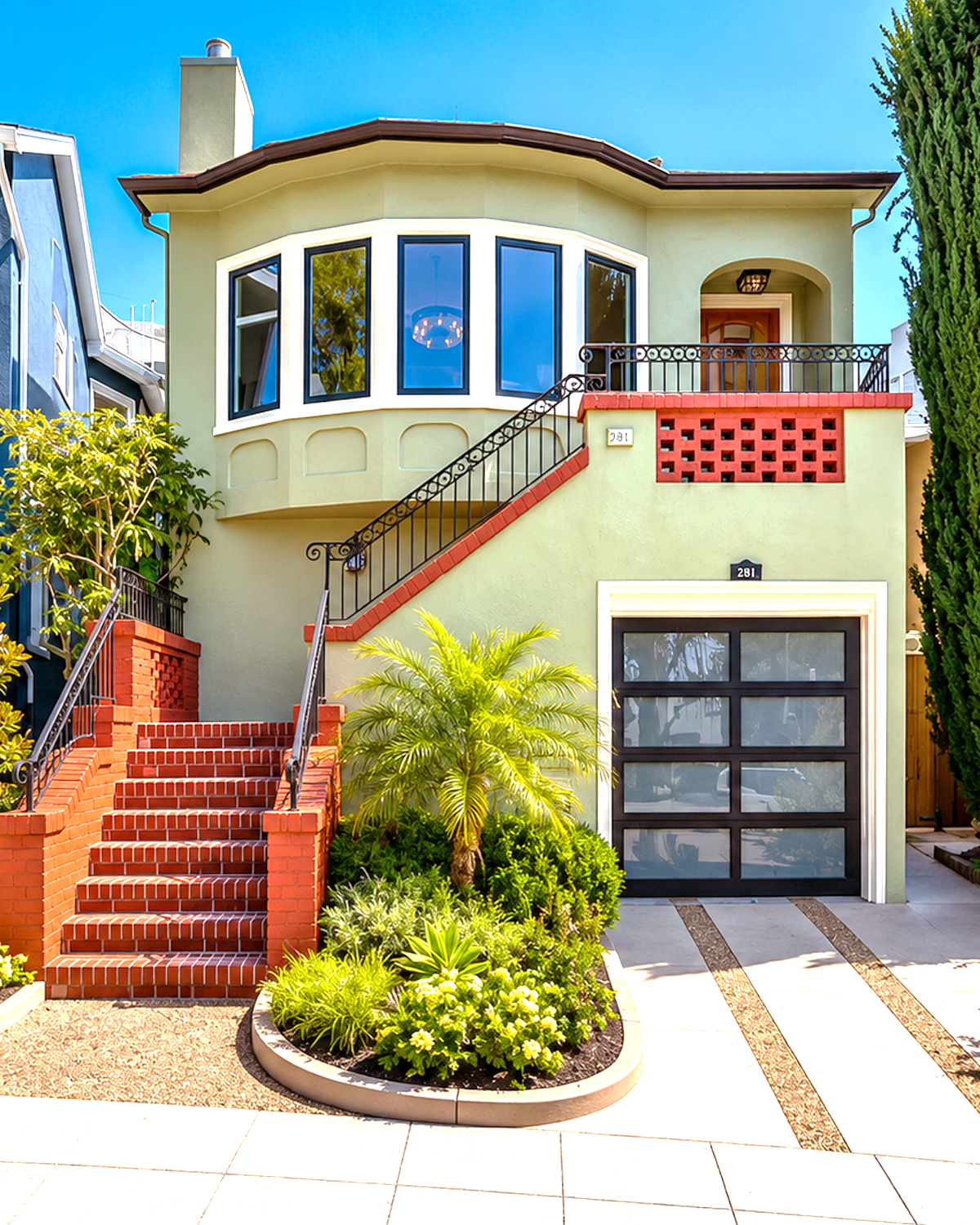
This home feels warm, sunny, and relaxed. The light sage green stucco creates a soft backdrop. It feels fresh, but not too bright. The red brick stairs add warmth and give the entry a strong sense of place.
The black metal railing brings a bit of contrast. It also helps the eye follow the stairway up to the porch. The curved bay window adds softness to the front elevation, while the garage below grounds the home.
This palette has a sweet old-world feel. It works well for Craftsman homes with stucco, brick stairs, arched details, or tropical plants. The green and red pairing feels bold, but the muted shades make it easy to live with.
Design Cues
- Use pale sage or soft olive stucco.
- Pair it with red brick stairs.
- Add black metal railings.
- Keep trim cream or warm white.
- Use lush plants near the entry.
- Add a dark garage door for contrast.
- Repeat brick tones in garden edging.
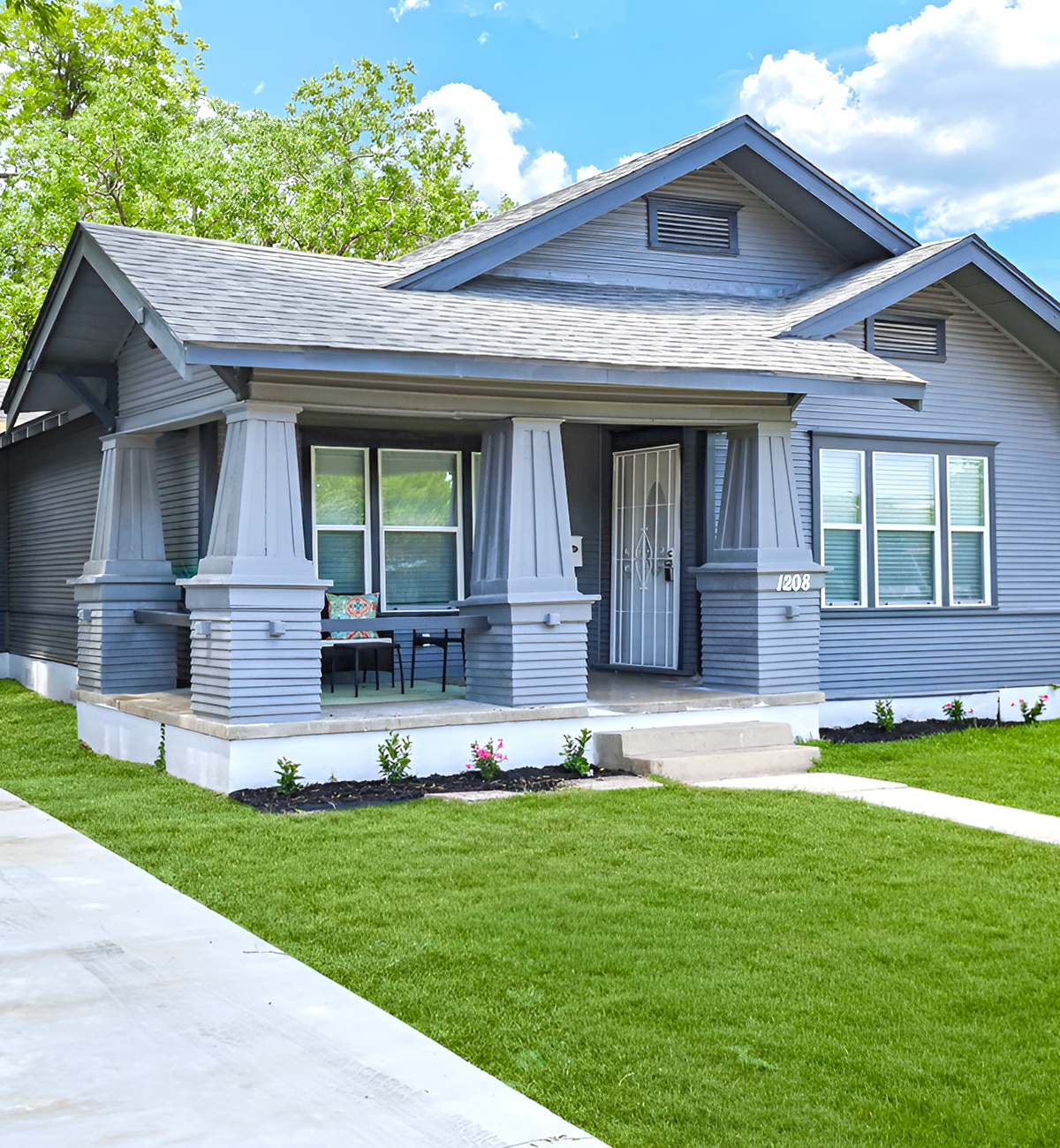
9. Slate Gray Craftsman with a Natural Wood Door
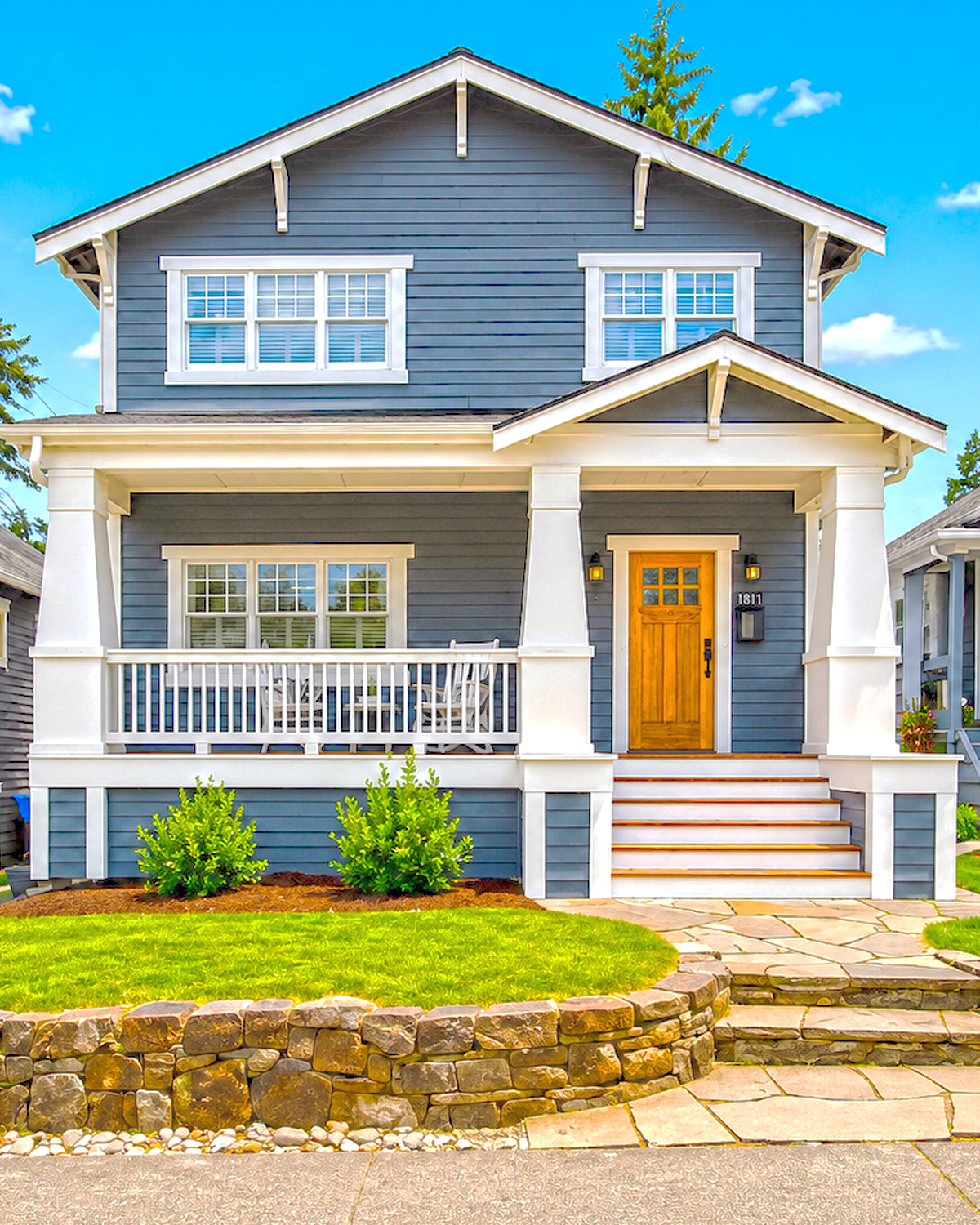
This home keeps the palette simple and strong. Slate gray siding covers the main body. White trim outlines the porch, windows, and columns. Then, the natural wood front door brings warmth to the center.
The wide white porch columns are key. They make the home feel sturdy and true to Craftsman style. The gray siding gives a clean backdrop, while the white trim adds structure. The wood door keeps the scheme from feeling too cool.
This color idea works well for homeowners who want a safe yet stylish update. Gray and white feel current, but they do not date fast. The wood door adds just enough personality.
Design Cues
- Use medium slate-gray siding.
- Paint porch columns bright white.
- Add a natural wood front door.
- Choose white window trim.
- Use stone or brick for retaining walls.
- Keep the roof medium gray.
- Add green shrubs for softness.
10. Creamy White Craftsman with Black Modern Windows
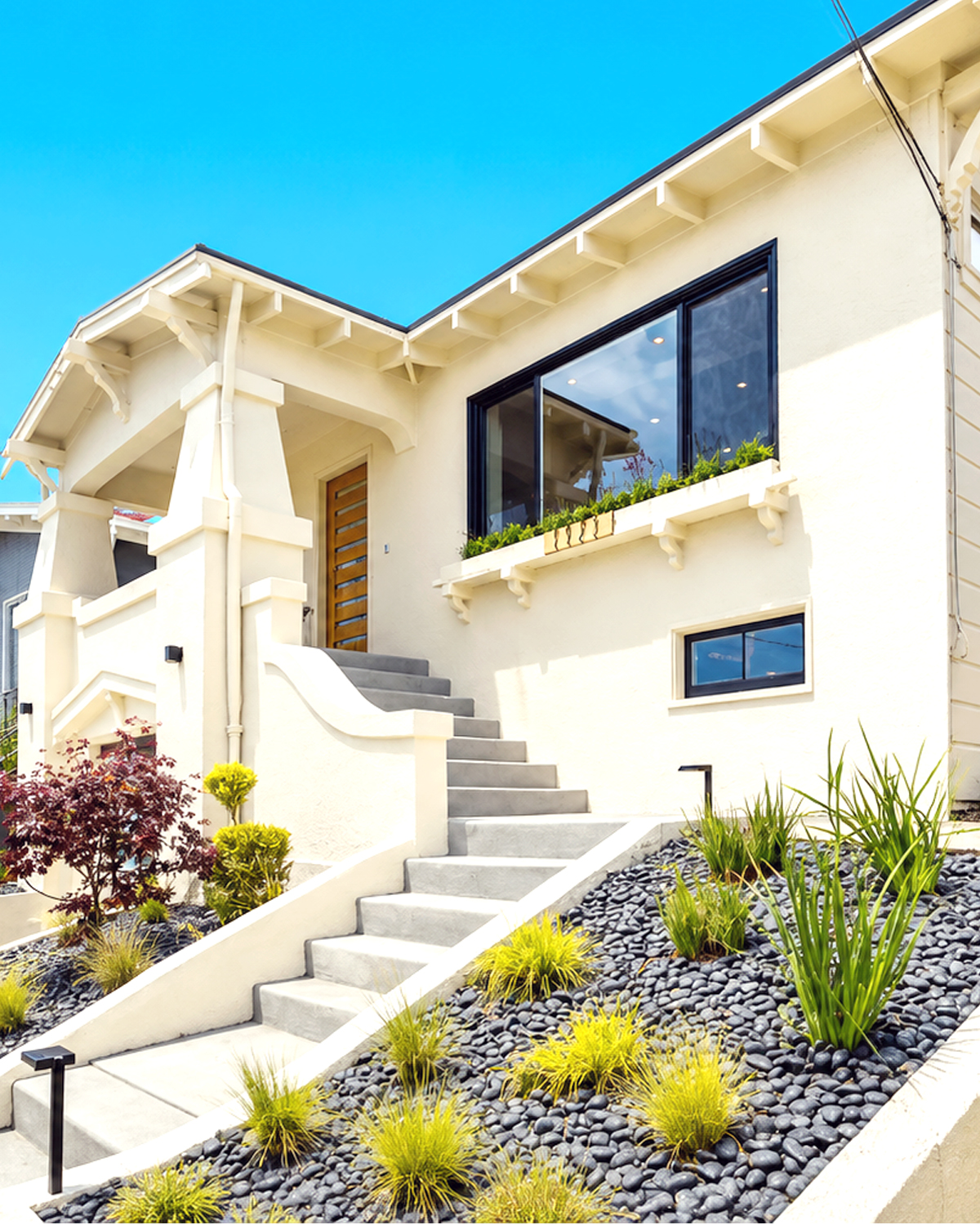
This house gives Craftsman style a modern twist. The soft cream exterior feels warm and clean. Black window frames add a fresh, bold edge. The mix creates a look that feels both classic and current.
The cream color works well on stucco and smooth siding. It reflects light and makes the home feel bright. The black windows create contrast, so the design does not look flat. Small trim brackets under the roofline keep the Craftsman character alive.
The landscaping also supports the modern feel. River rocks, grasses, and simple planting beds create a neat look. This scheme works well for hillside homes, city lots, and modern Craftsman updates.
Design Cues
- Choose cream or warm white siding.
- Use black window frames for contrast.
- Keep trim simple and clean.
- Add natural wood at the door.
- Use river rock in the landscape.
- Add grasses and low-water plants.
- Choose sleek black path lights.
11. Gray-Green Craftsman with Stone Chimney Charm
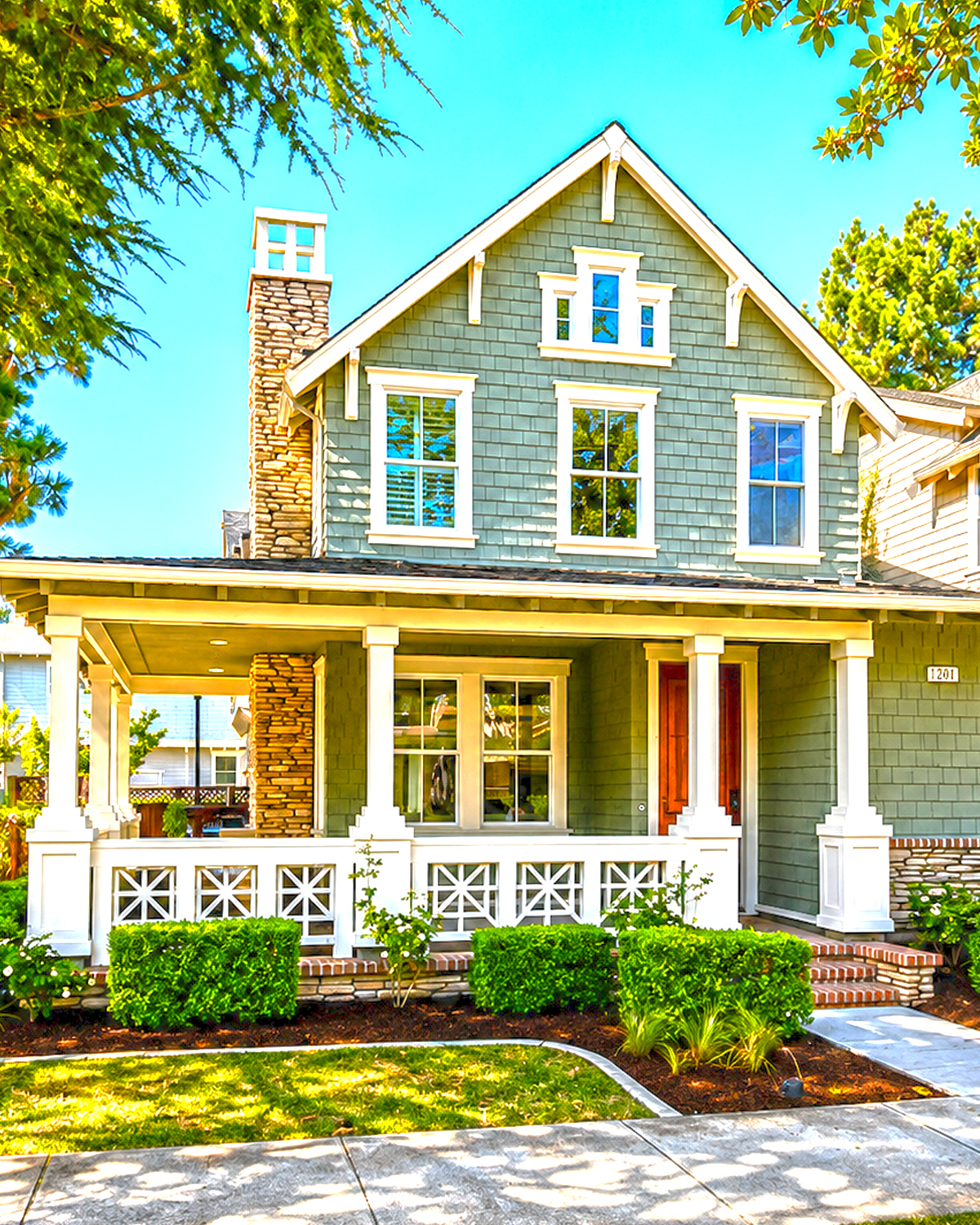
This home feels peaceful and rooted. The gray-green shake siding blends with the trees around it. White trim gives the home a clean outline. Then, the stone chimney adds a natural, handcrafted touch.
The large porch is a major feature. It wraps the front and creates a shaded outdoor room. The white porch panels add pattern without feeling fussy. Since the body color is soft, the stone chimney stands out in a quiet way.
This color scheme works well for Craftsman homes in leafy neighborhoods. It feels relaxed and timeless. It also suits homes with big porches, mature trees, and natural stone details.
Design Cues
- Use gray-green shake siding.
- Add white trim around windows and doors.
- Keep stone natural, not painted.
- Use a brick or stone porch base.
- Add white decorative porch panels.
- Choose a warm wood door.
- Plant boxwoods and grasses near the porch.
12. Rustic Green Craftsman with Cedar and Stone Accents
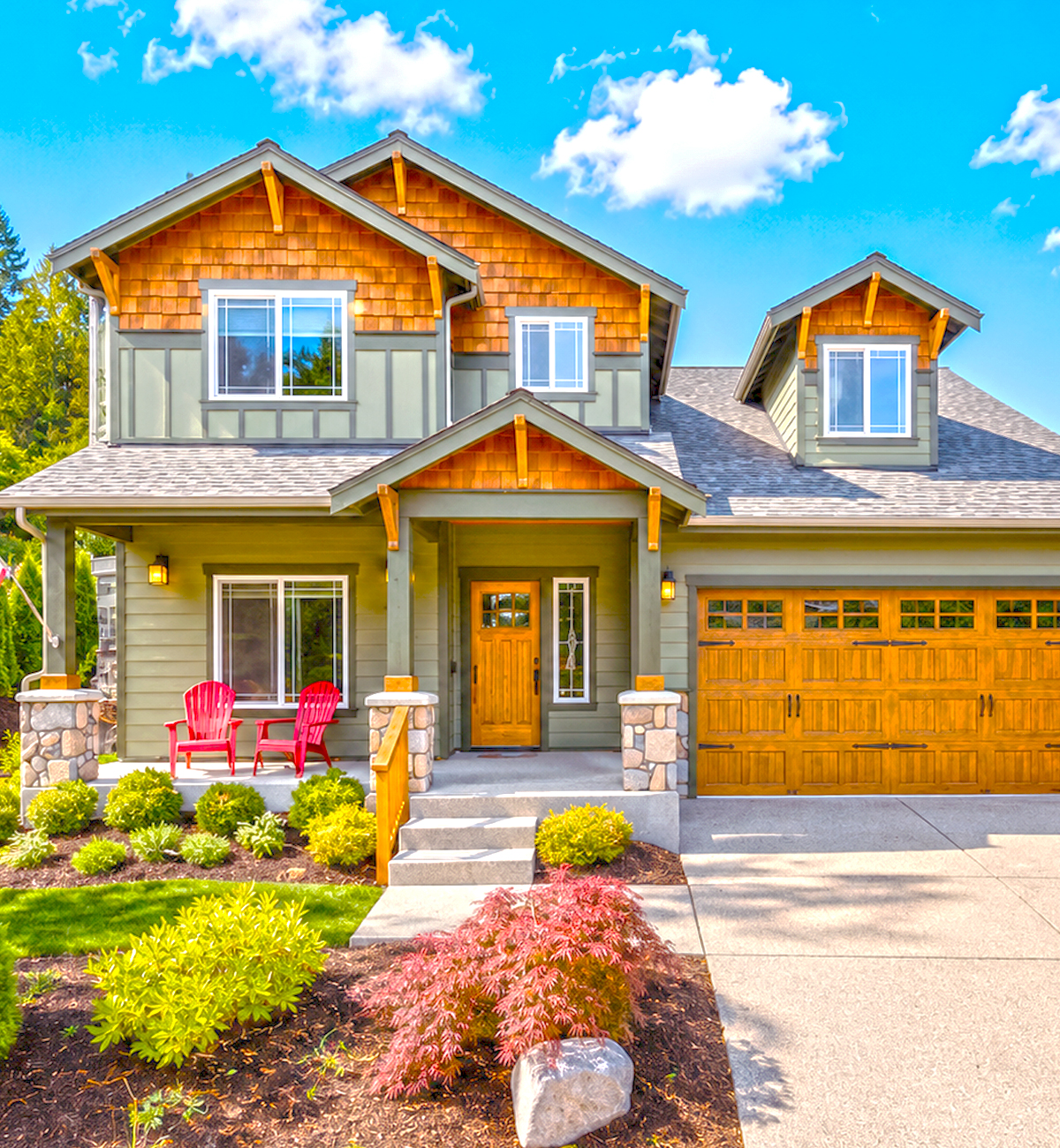
This exterior feels like a mountain retreat. The green siding blends with the tall trees. Cedar shake accents add warmth at the gables. Stone column bases make the house feel solid and grounded.
The wood garage door adds a rich natural note. It connects the home to the front door and the cedar details above. Because the siding is muted green, the wood tones feel warm, not loud.
This scheme works well for homes in wooded or rural settings. It also suits larger Craftsman homes with attached garages. The mix of green, cedar, stone, and wood creates a strong nature-inspired palette.
Design Cues
- Choose muted green siding.
- Add cedar shakes to upper gables.
- Use stone on columns or lower walls.
- Pick a wood garage door.
- Match the front door to the garage.
- Keep trim off-white or cream.
- Use natural mulch and evergreens.
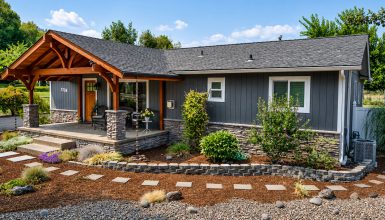
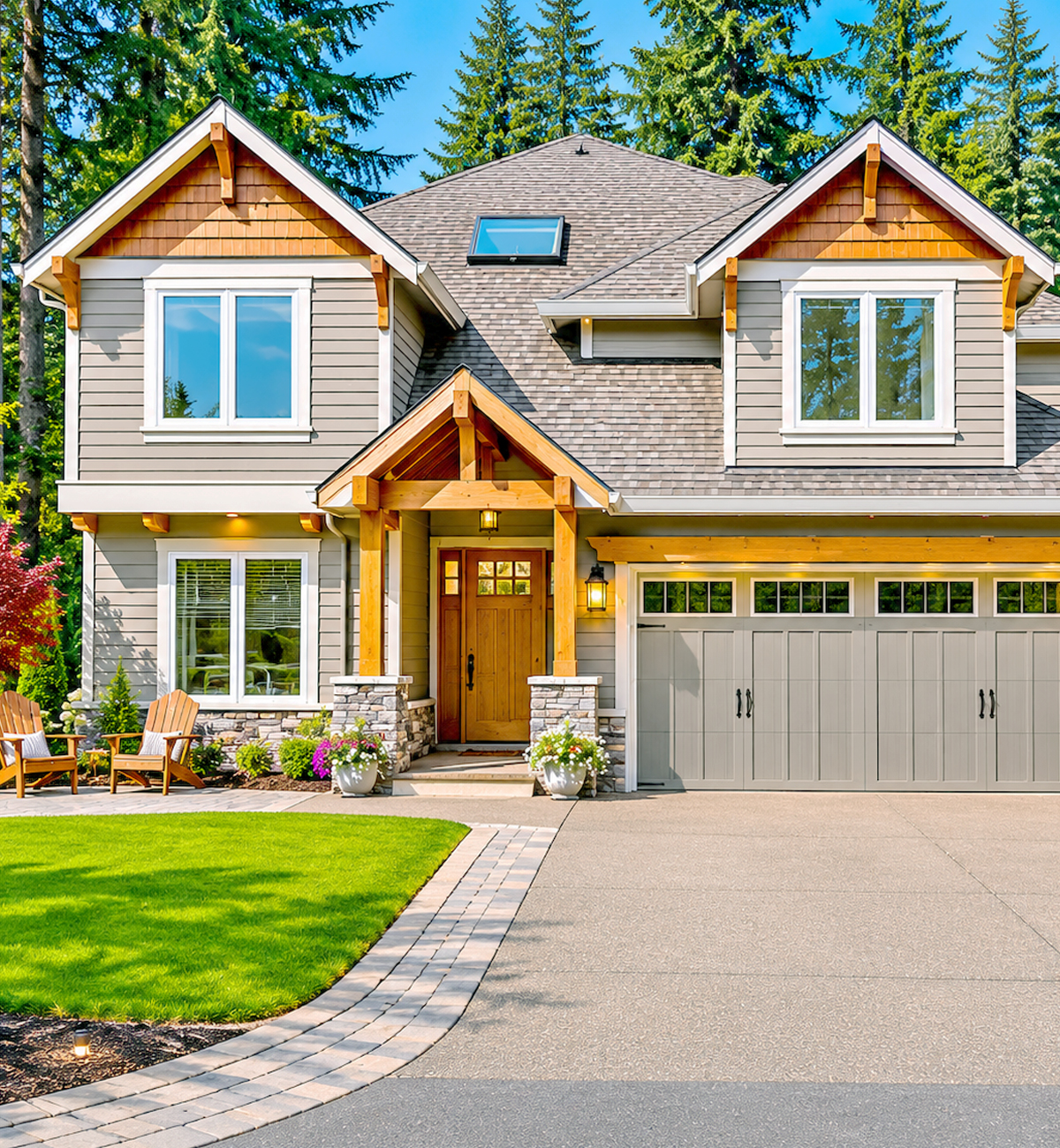
13. Taupe Craftsman with Timber Accents and Stone Base
This home feels upscale without looking flashy. Taupe siding gives the exterior a soft, earthy base. Timber accents add warmth. Stone details bring texture and strength.
The entry is especially inviting. The wood beams around the porch draw the eye to the front door. The stone columns support the entry and connect with the landscape. This layered mix makes the home feel custom and thoughtful.
Taupe is a smart choice for Craftsman homes because it works with many accent colors. It pairs well with cedar, black, cream, brown, and stone. It also blends well with trees and lawns.
Design Cues
- Use taupe or warm gray siding.
- Add stained wood beams at the entry.
- Use stone veneer on columns.
- Choose a wood front door.
- Keep roof shingles medium gray.
- Add soft shrubs near the walkway.
- Repeat wood tones in porch details.
14. Espresso Brown Craftsman with White Cottage Details
This home uses a deep espresso brown that feels cozy and rich. White shutters, trim, and railing brighten the exterior. The result feels like a Craftsman cottage with a polished finish.
The large front window is important. Its white frame breaks up the dark siding and brings light to the facade. The brick walkway and steps add warmth underfoot. They also make the entry feel more charming.
This palette works well on older Craftsman homes that need a refreshed look. Dark siding can make small homes feel more tailored. White trim keeps the home from looking too heavy.
Design Cues
- Paint siding dark brown or espresso.
- Add white shutters for contrast.
- Use white porch railings.
- Keep the front door black or deep green.
- Add brick steps or a brick path.
- Use soft shrubs under windows.
- Keep the lawn neat and simple.
15. Warm Brown Craftsman with Stone and Cedar Gables
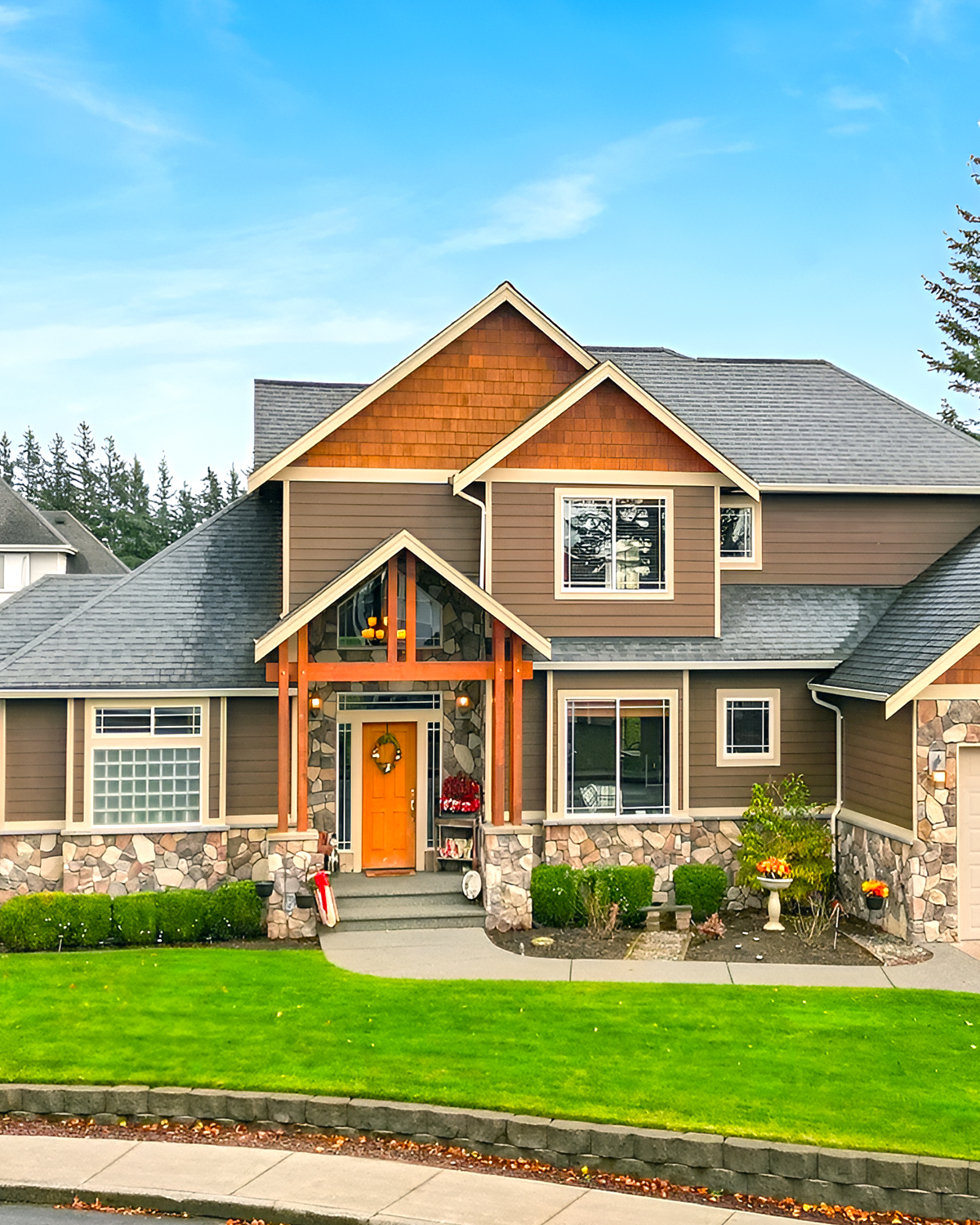
This home feels grand, rustic, and very welcoming. The warm brown siding sets a calm base. Cedar gables bring in an orange-brown tone. Stone across the lower level adds texture and depth.
The front entry uses wood beams to create a strong focal point. That detail is important because the house has a wide front. The beams pull the eye toward the door and help the home feel more human in scale.
This scheme works well for large Craftsman homes with many rooflines. The mix of brown, cedar, and stone keeps the house from looking flat. It also ties the home to the lawn and trees.
Design Cues
- Use warm brown siding.
- Add cedar shakes in the gables.
- Apply stone veneer along the base.
- Frame the entry with wood beams.
- Choose a warm wood front door.
- Use cream trim instead of bright white.
- Keep landscaping low near stonework.
16. Fresh Green Craftsman Bungalow with a Blue Door
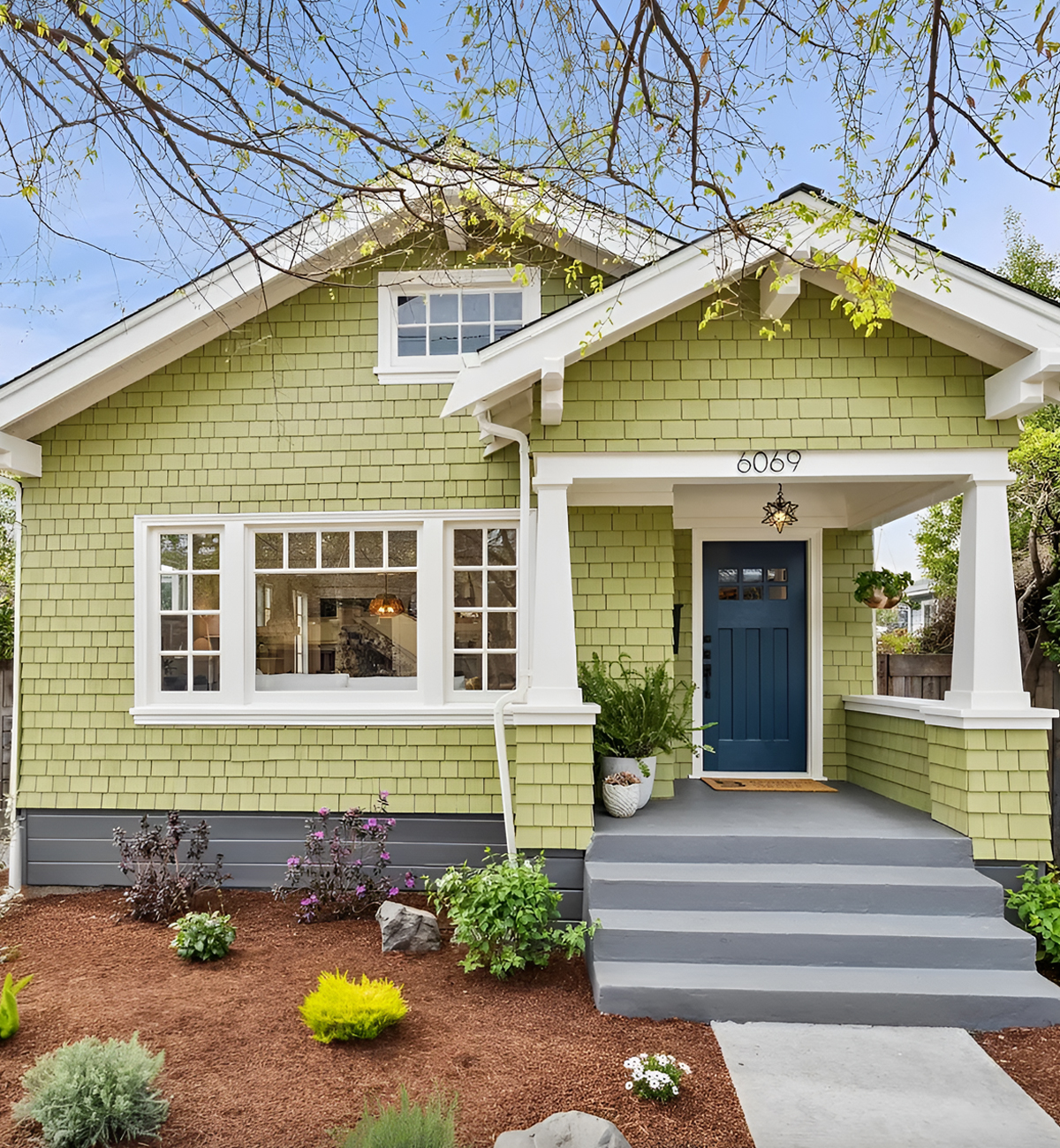
This color scheme feels happy, fresh, and full of life. The soft green shake siding gives the house a garden-like feel. White trim keeps everything bright and tidy. The blue door adds a charming accent that feels calm, not loud.
The wide front window gives the home a welcoming look. The porch sits to one side, which makes the blue door stand out even more. Gray steps and a dark foundation ground the soft green body color.
This palette works well for bungalows because it brings out the cozy shape of the home. It also pairs beautifully with mulch beds, small flowers, and simple shrubs.
Design Cues
- Use light green shake siding.
- Add bright white trim.
- Paint the front door blue or teal.
- Use gray on steps and porch floor.
- Keep the foundation dark.
- Add simple mulch beds.
- Use white gutters and brackets.
17. Orange Cedar Craftsman with Gray Siding
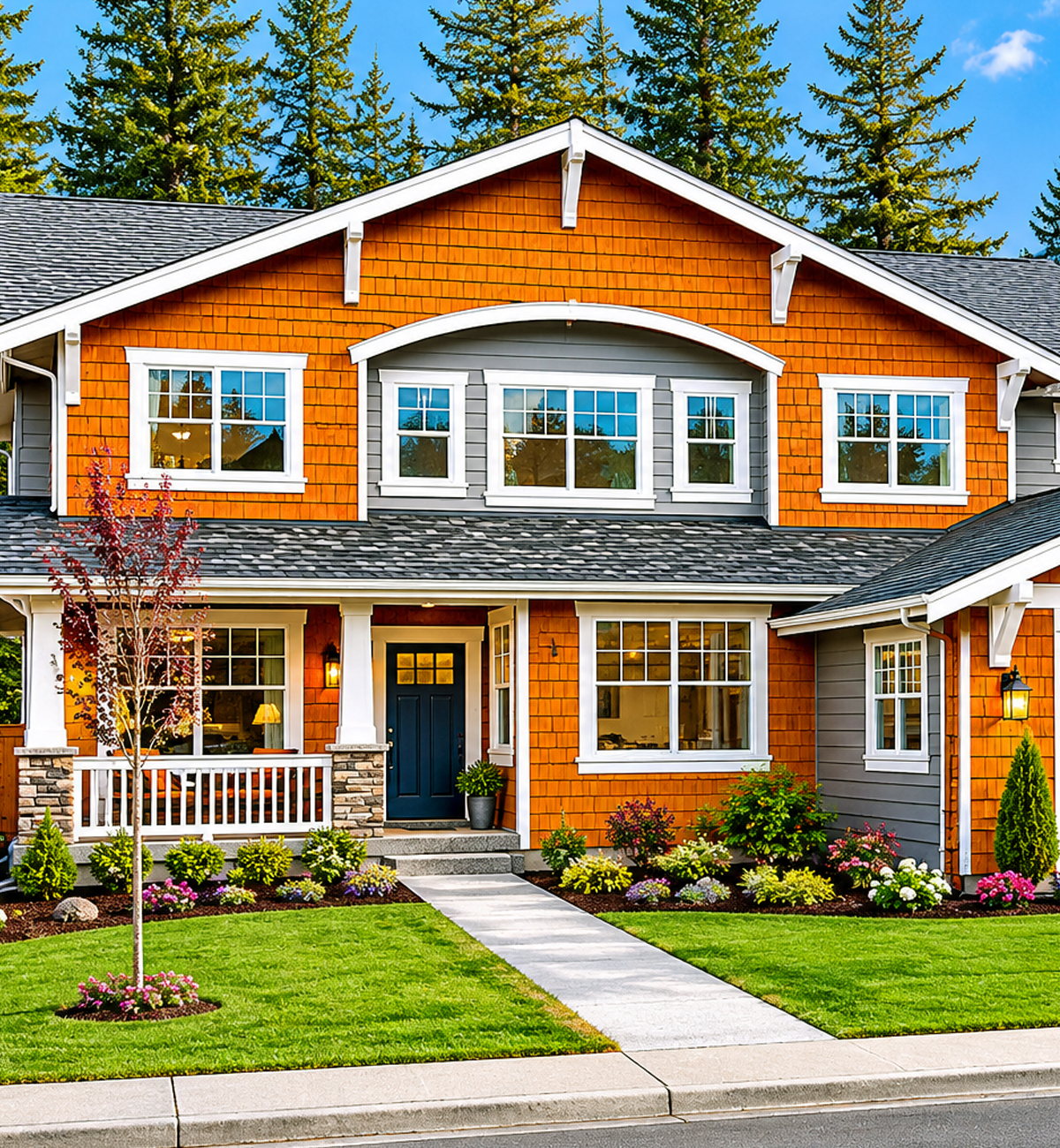
This home makes cedar the star. The orange-toned shake siding brings energy and warmth to the front. Gray siding balances it and keeps the palette grounded. White trim gives the whole home a clean frame.
The garage wing repeats the orange gable, which helps the design feel balanced. Without that repeat, the bold cedar color might feel too strong on only one side. Here, it feels planned and polished.
This scheme works well for homes in scenic areas. It also suits homeowners who want color without using bright paint. Cedar offers natural warmth, while gray keeps the look modern.
Design Cues
- Use orange cedar shakes on gables.
- Pair cedar with medium gray siding.
- Add white trim to cool the palette.
- Repeat cedar on more than one gable.
- Use gray roof shingles.
- Add simple green lawn areas.
- Keep porch railings white or natural wood.
18. White Stucco Craftsman with Black Railings and Blue Door
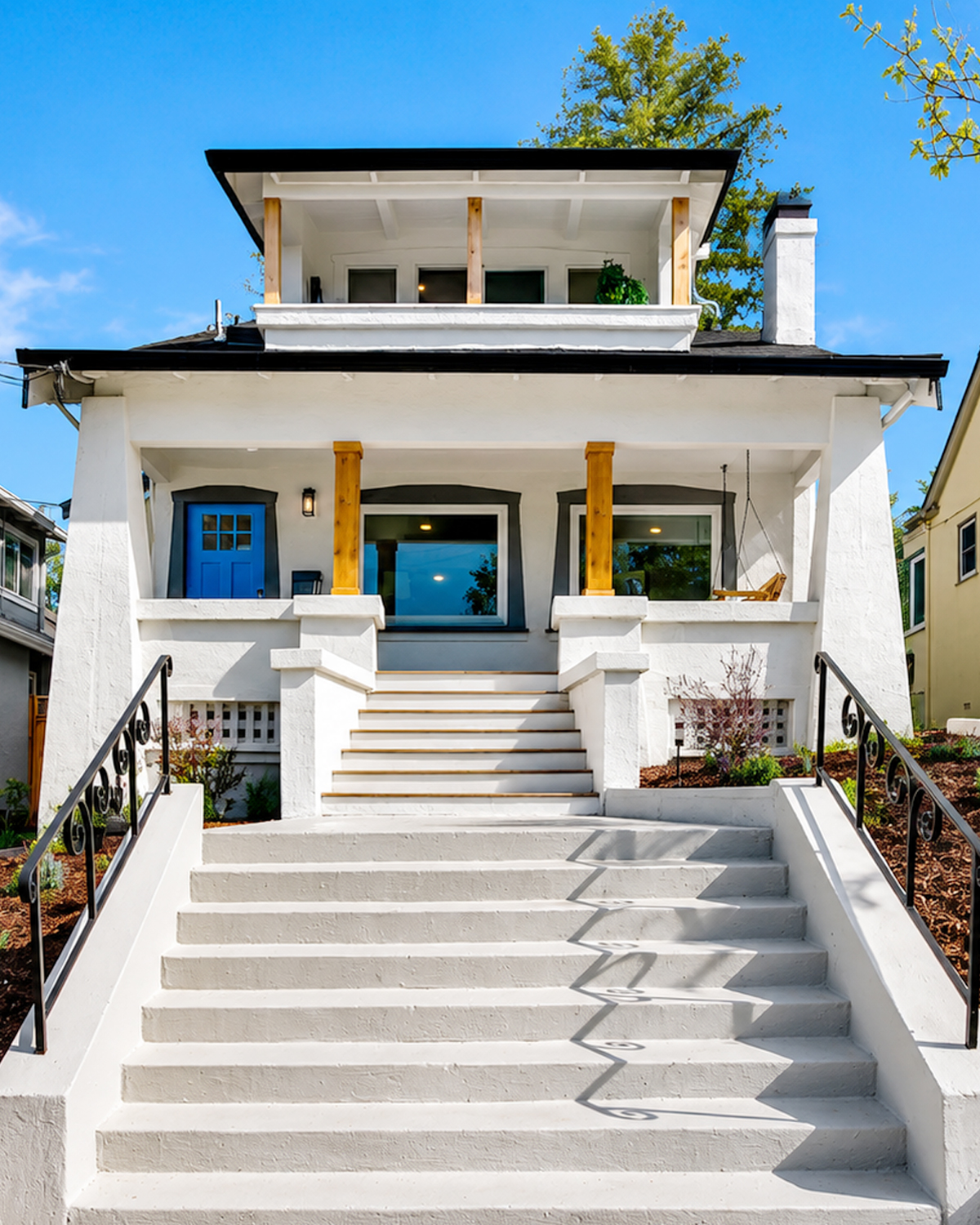
This home has a fresh, modern Craftsman look. The white stucco feels bright and clean. Black railings add a graphic line along the stairs. The blue door gives the entry a cheerful pop.
The broad staircase adds drama. Since the house sits higher than the street, the steps become part of the design. The white walls make the stairs feel grand, while the black railings help define the edges.
This palette works well on urban Craftsman homes or homes with stucco exteriors. It feels crisp and bright, but still warm thanks to the wood posts and blue door.
Design Cues
- Use white or warm white stucco.
- Add black railings for contrast.
- Paint the front door bright blue.
- Keep porch walls low and solid.
- Use simple wood porch posts.
- Add mulch beds on each side.
- Keep planting low to show the architecture.
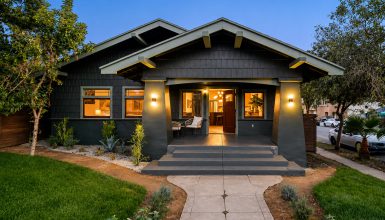
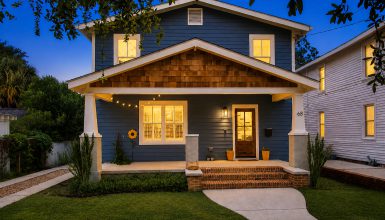
19. Dark Charcoal Craftsman with Warm Evening Glow
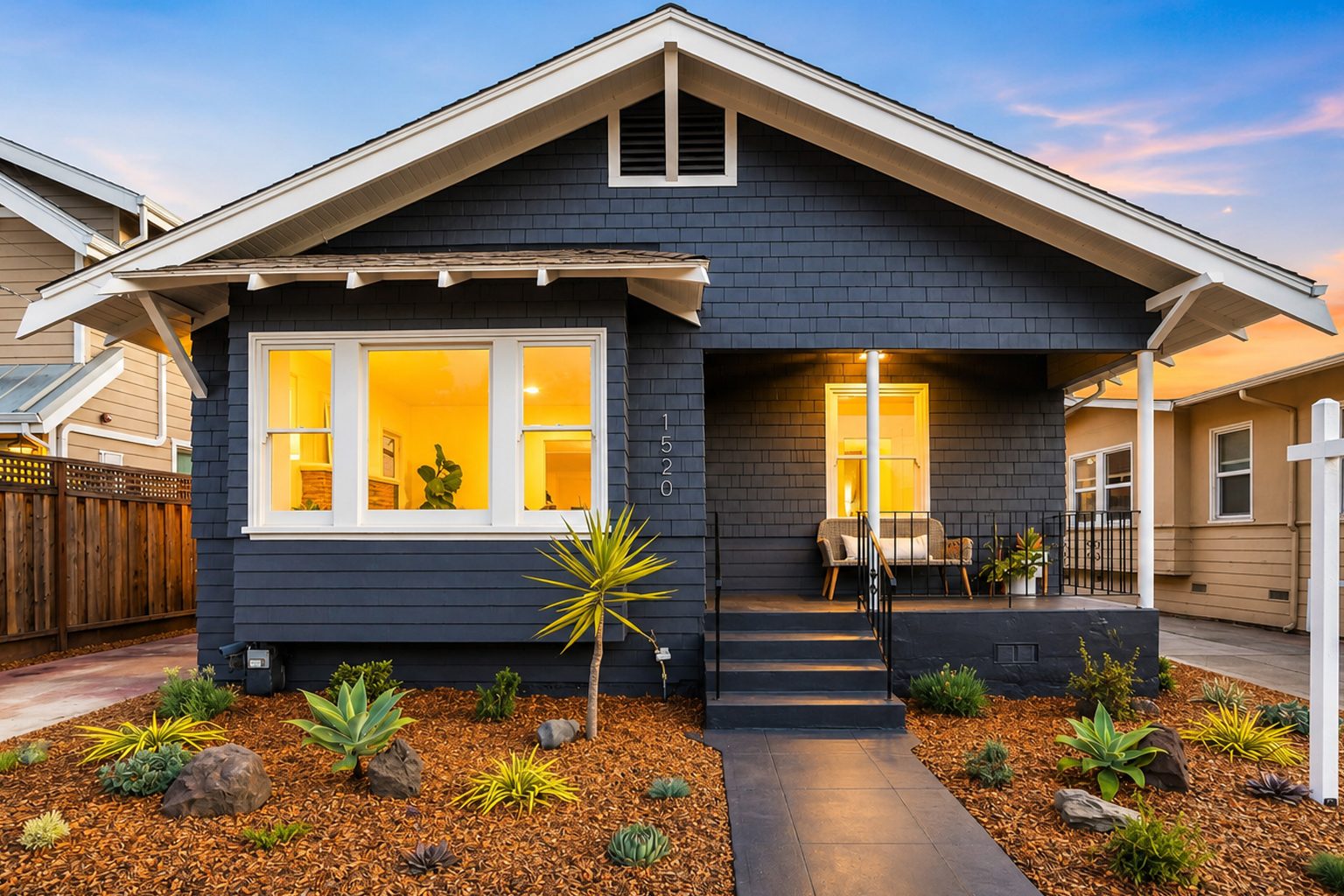
This home shows how powerful a dark exterior can be. The charcoal siding creates a bold, calm backdrop. White trim along the roofline and windows gives the shape a clean outline. At dusk, the warm light from inside makes the house glow.
The porch feels cozy and quiet. A simple bench and black railings keep the design unfussy. The landscaping uses mulch, rocks, and drought-friendly plants. That choice pairs well with the dark siding and adds a modern edge.
This palette works well for small Craftsman homes because it gives them strong style. It also makes white windows and warm lighting look extra beautiful.
Design Cues
- Paint siding deep charcoal.
- Use white trim on eaves and vents.
- Add black railings for a sleek look.
- Use warm porch lighting.
- Choose drought-tolerant plants.
- Add rocks and mulch for texture.
- Keep the front path simple and straight.
20. Chocolate Brown Craftsman with White Trim and Brick Walkway
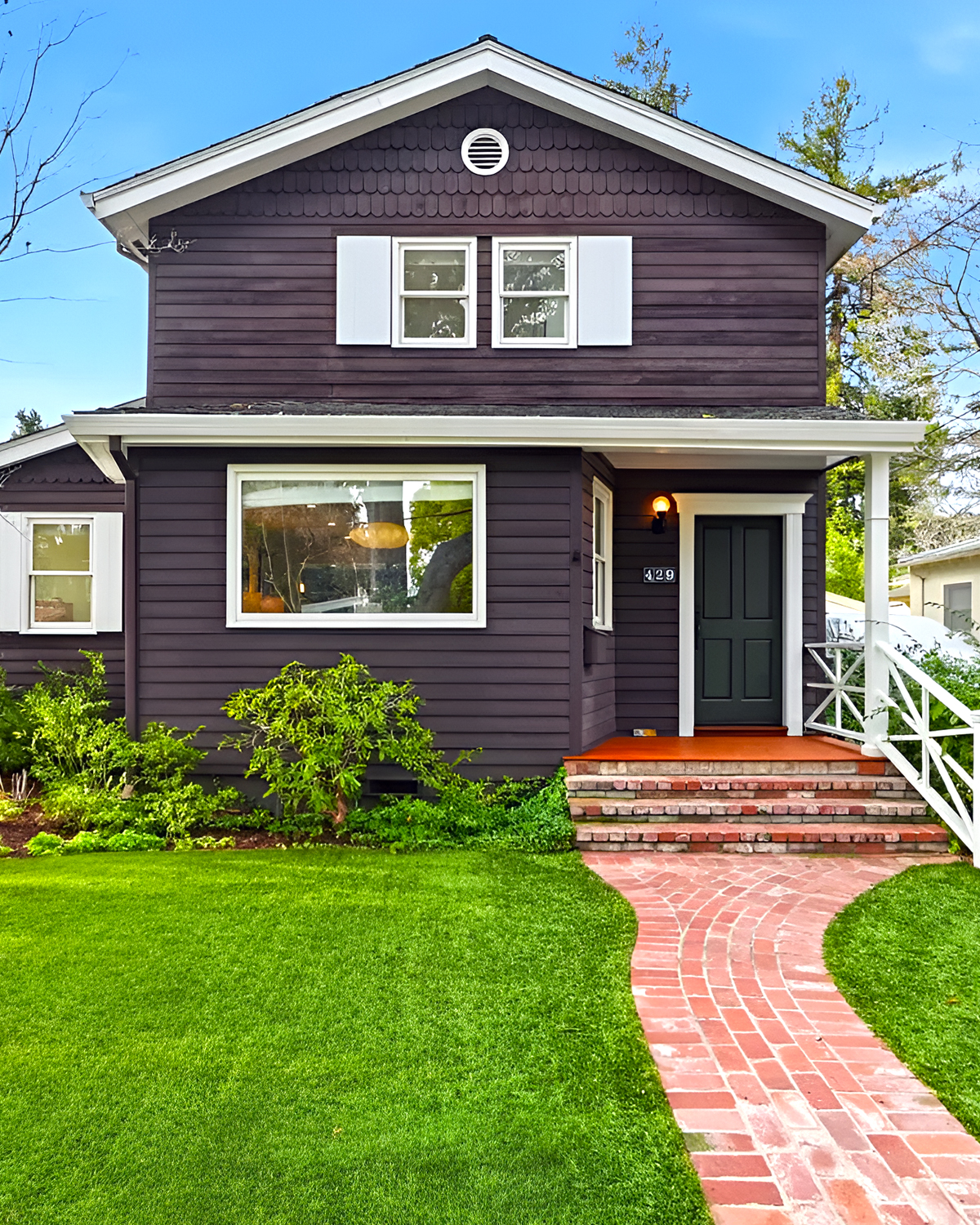
This home has a cozy, classic feel. The chocolate brown siding looks rich and warm. White trim and shutters brighten the facade. The black front door adds a quiet, polished note.
The curved brick walkway gives the yard charm. It softens the straight lines of the house and leads visitors toward the porch. The brick steps also add warmth and texture to the entry.
This color scheme suits traditional Craftsman homes, especially those with cottage details. It feels grounded, homey, and easy to love. The green lawn keeps the dark siding fresh.
Design Cues
- Use chocolate brown siding.
- Add white trim and shutters.
- Choose a black or deep green front door.
- Use brick for the walkway and steps.
- Keep the porch rail simple.
- Add shrubs near the foundation.
- Let the lawn bring color contrast.
How to Choose the Best Craftsman Exterior Color Scheme
A great Craftsman palette starts with the home’s best features. Look at the porch, roofline, columns, windows, and gables first. These details should guide the color plan.
Start with one main body color. This could be gray, green, brown, blue, beige, cream, or taupe. Next, choose a trim color that brings out the architecture. White, cream, and soft off-white work well on most Craftsman homes.
Then, add one accent color. The front door is the easiest place to do this. Red, yellow, blue, black, green, and natural wood all work well. The accent should feel special, but not random.
Natural materials also matter. Stone, brick, cedar, and wood are part of the Craftsman look. Use paint colors that make these materials feel connected. For example, gray siding pairs well with stone. Green siding works well with cedar. Brown siding looks great with brick.
Landscaping also affects the final look. Deep exterior colors need green plants, white flowers, or pale paths to brighten them. Light homes need mulch, stone, or dark railings to ground them.
In the end, Craftsman color schemes work best when they feel warm, layered, and natural. The goal is not to cover the home in trendy paint. The goal is to bring out its soul. A well-chosen palette makes every bracket, column, window, and porch rail feel more beautiful. And that is what gives a Craftsman home its lasting curb appeal.