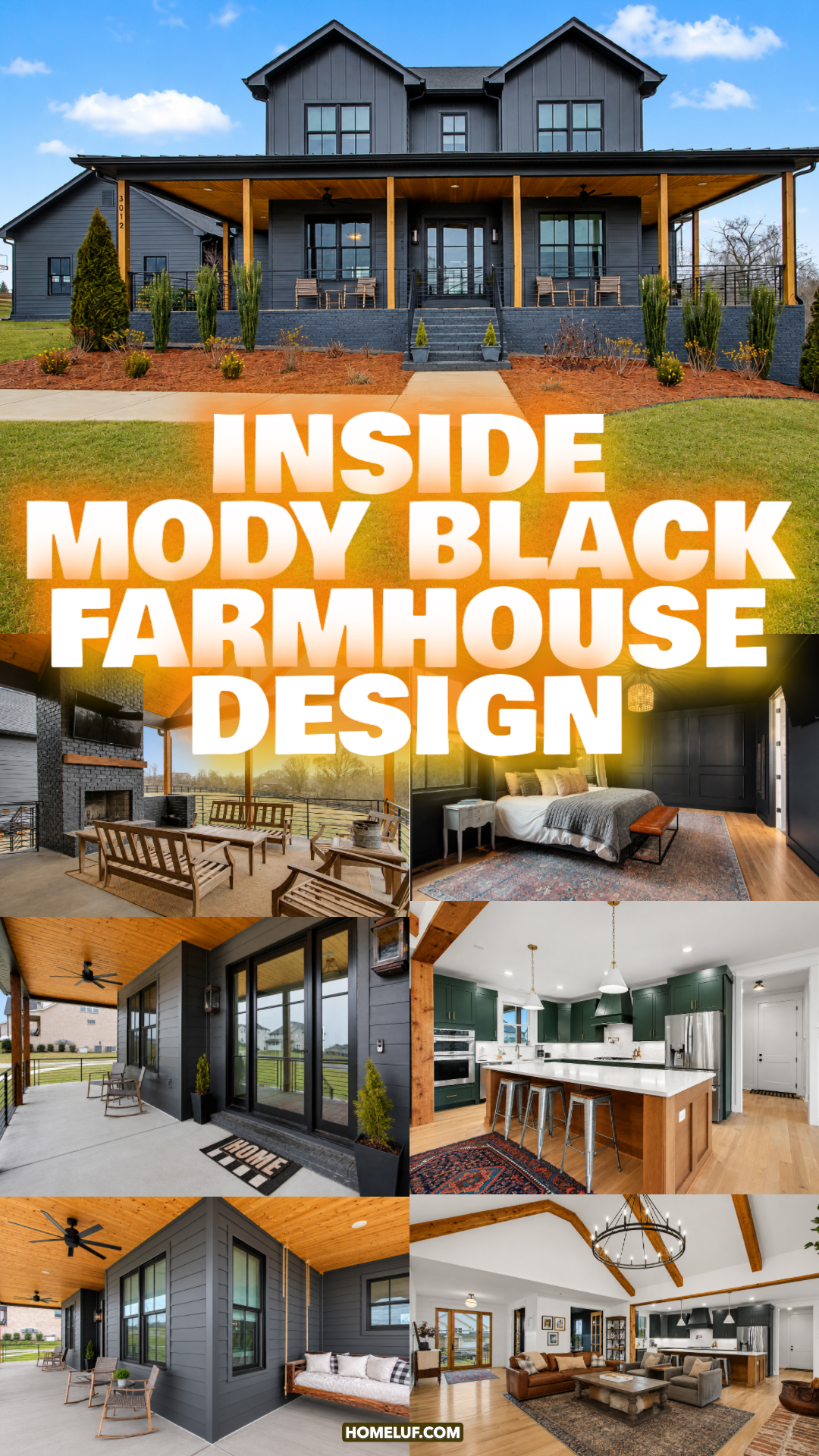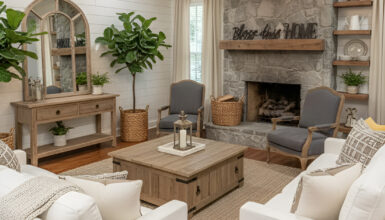
What makes a dark farmhouse feel warm instead of cold? This home has the answer. Its deep charcoal exterior looks bold and modern. Yet warm wood, wide porches, soft rugs, old brick, and rich leather keep the house relaxed and welcoming.
The contrast starts at the curb. Dark siding wraps the large farmhouse form. Black window frames add clean lines. Natural wood posts then soften the strong color. Inside, white walls and pale oak floors bring a fresh shift in mood. Exposed beams, green cabinets, warm wood, and vintage-style rugs tie each space back to the outdoors.
The result feels rustic, but not rough. It feels modern, but not stark. Most of all, it feels like a real family home.
1. A Bold Black Farmhouse Exterior
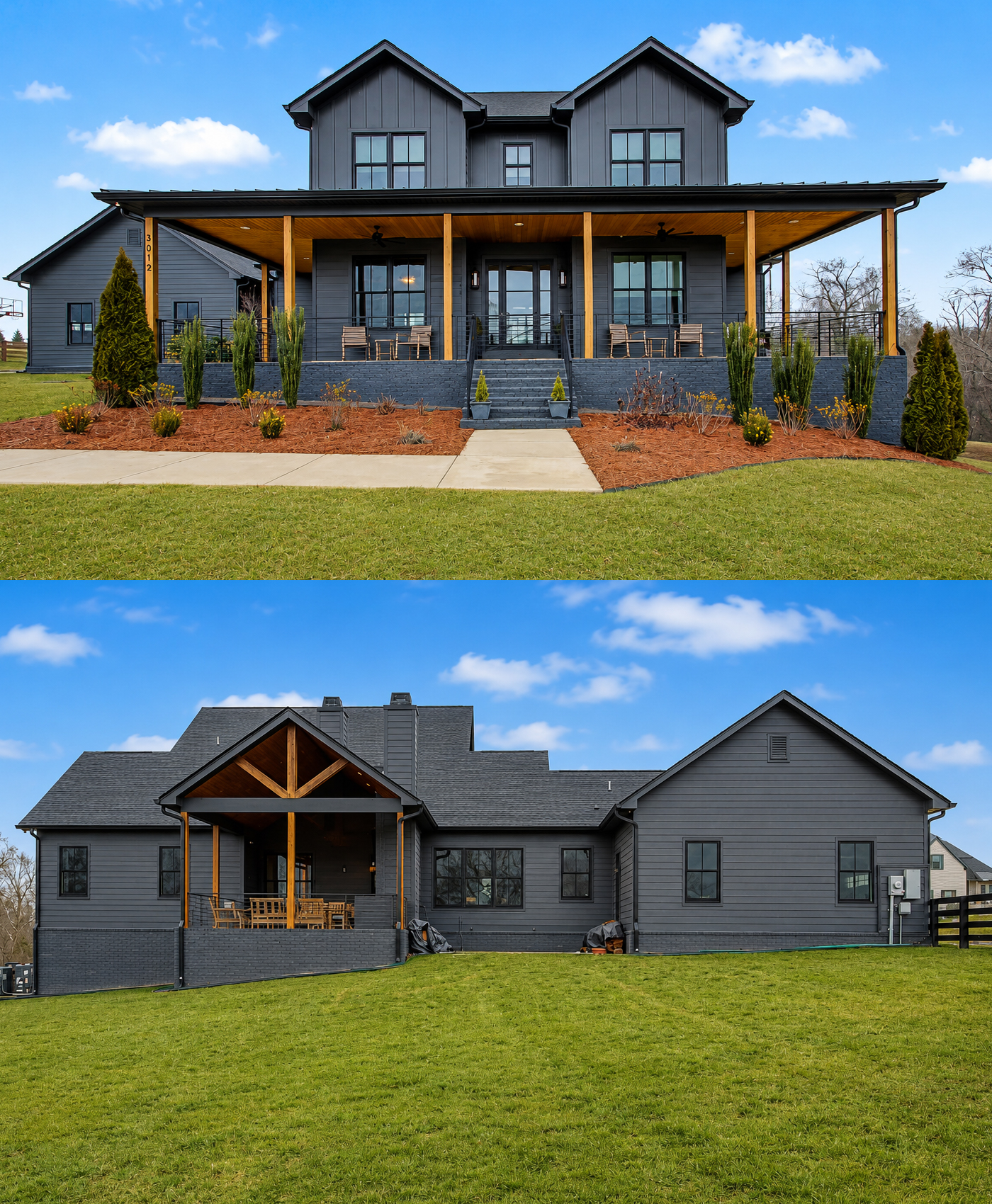
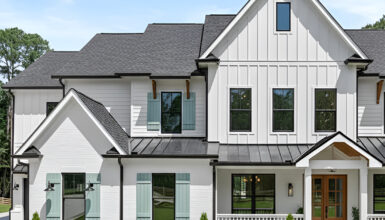
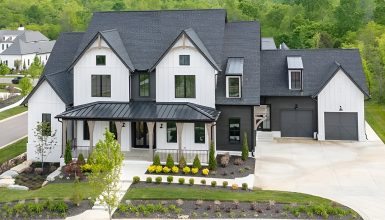
The exterior makes a strong first impression. Deep charcoal siding covers almost every wall. Dark trim, black windows, and a dark roof create a smooth, one-color look.
This simple color plan lets the shape of the house stand out. Several front gables give the home height and charm. The attached garage sits lower, which helps the large house feel less tall. The long porch also pulls the design down toward the ground.
The paint color does not look like a flat jet black. Instead, it reads as a soft black or dark graphite gray. This small shift matters. A softer dark tone reflects more light. It also shows the lines of the siding and trim.
The house sits on a wide, open lot. That extra space helps the dark color feel calm. A black house can look heavy on a tight site. Here, the broad lawn and bright sky give it room to breathe.
Exterior design cues
- Deep charcoal or soft black siding
- Dark roof shingles
- Dark window frames and trim
- Several simple gable roof forms
- Long, low porch roof
- Attached side garage
- Clean walls with little added trim
- Wide lawn around the home
- Warm wood used as contrast
2. Warm Wood Breaks Up the Dark Color
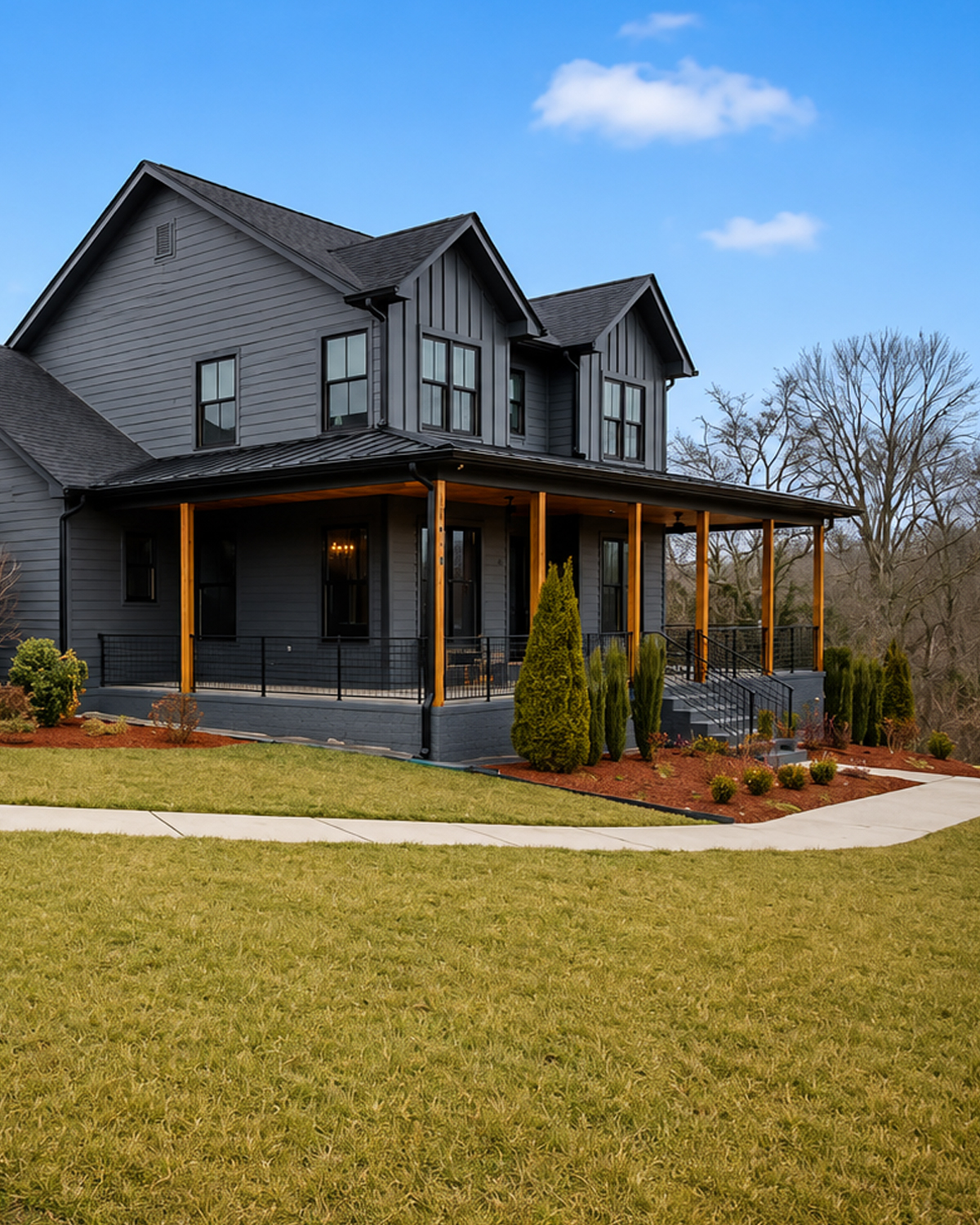
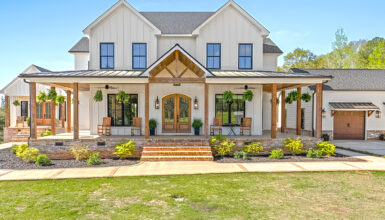
The natural wood porch posts make the whole exterior work. Without them, the front could feel too dark. Their warm honey tone brings life to the charcoal walls.
The wood also gives the home a more rustic look. It feels natural and honest. There is no need for fancy carved posts or thick stone bases. The simple square posts suit the clean farmhouse form.
The porch ceiling uses the same warm wood tone. This creates a soft glow under the deep roof. From the yard, the ceiling looks like a warm ribbon running across the front of the house.
The front doors also show a warm wood finish. They link the porch ceiling to the interior floors and beams. Because the same wood tone appears in several places, the home feels well planned.
This is a smart lesson for any dark exterior. A black wall needs a warm partner. Wood works well because it adds both color and texture.
Warm wood cues
- Square natural wood porch posts
- Tongue-and-groove wood porch ceiling
- Clear or warm stain
- Wood-framed front doors
- Wood accents used in more than one area
- Simple grain left visible
- Black metal placed beside warm timber
3. A Long Porch With Modern Farmhouse Lines
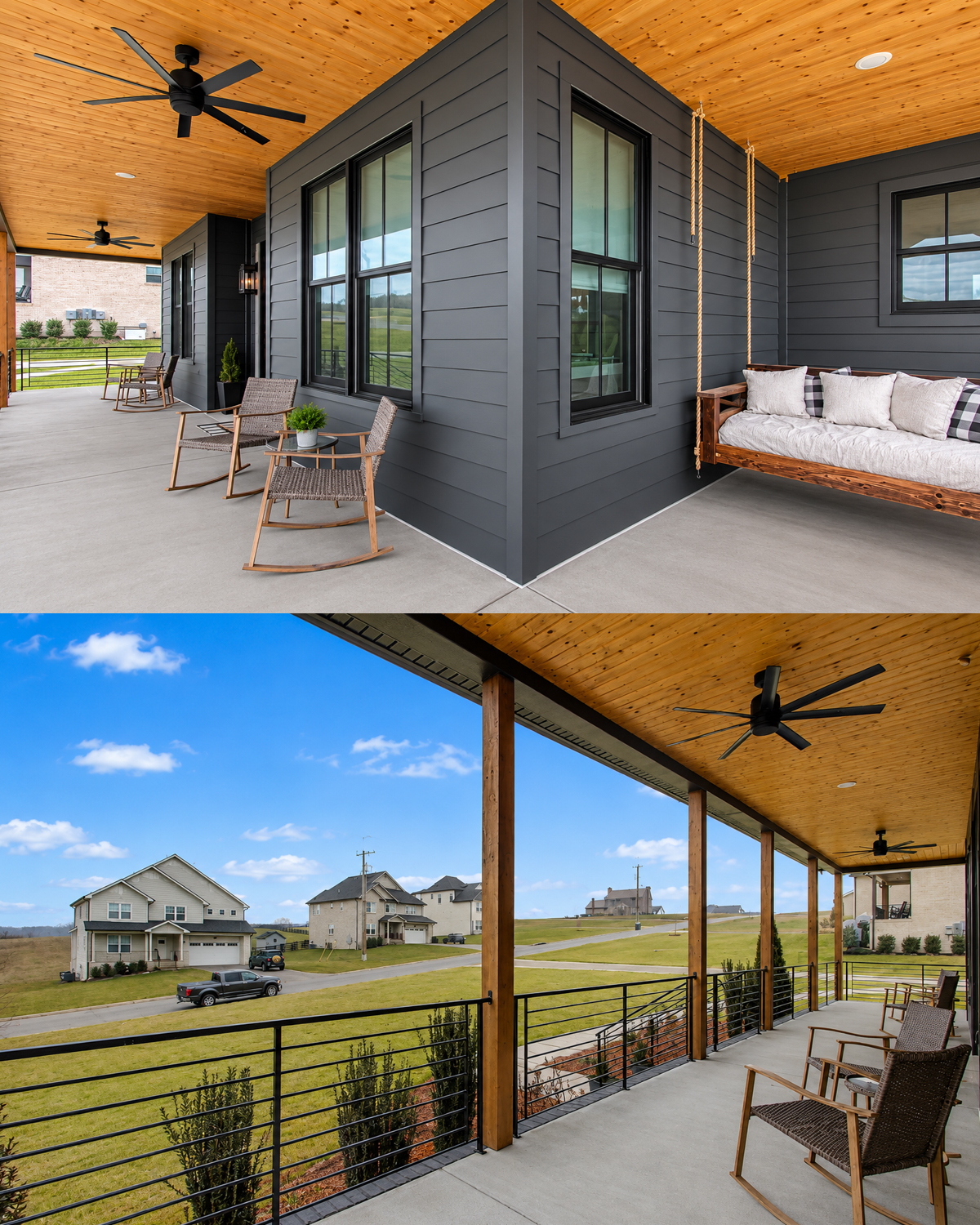
The wide front porch gives the exterior its welcoming feel. It runs across much of the main front wall. The roof is low and almost flat, which adds a modern edge.
A porch this long does more than add charm. It creates shade. It protects the front doors and windows. It also gives the family several places to sit.
The porch uses open black metal rails. Thin horizontal lines keep the view clear. They also make the porch feel lighter than a solid wood rail would.
The concrete floor stays simple. It suits the dark exterior and can handle daily use. Small groups of rocking chairs give the long porch a steady rhythm.
The steps sit near the center. This gives the front a calm and balanced look. The low painted brick base helps lift the porch above the sloped yard.
Front porch cues
- Full or near-full-width porch
- Slim black metal railing
- Simple concrete porch floor
- Painted brick porch base
- Wide center steps
- Small seating groups
- Black outdoor ceiling fans
- Recessed ceiling lights
- Large black wall lanterns
- Tall planters near the entry
4. Large Windows Keep the Dark Exterior Fresh
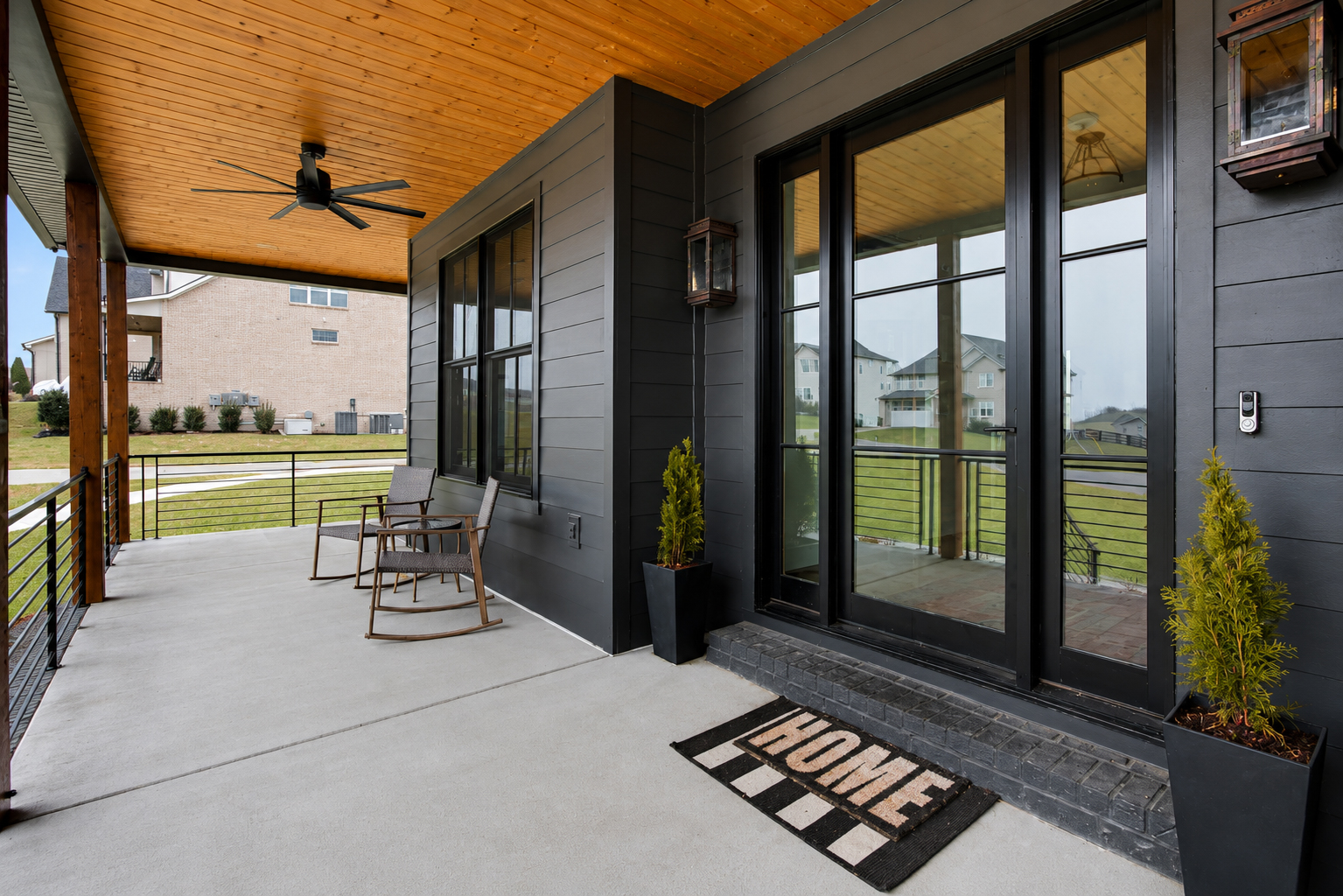
Dark homes need good window placement. This farmhouse uses tall windows with thin black frames. The windows bring light inside while adding crisp order to the outside walls.
Most of the windows have simple divided panes. That detail gives them a classic farmhouse feel. Yet the narrow frames look current.
The upper windows sit within strong gable shapes. They help the second floor feel part of the whole design. On the porch, tall windows stretch close to the floor. This helps the interior connect with the yard.
Black window frames blend into the dark walls. As a result, the glass becomes the main feature. The effect feels sleek and quiet.
Window and door cues
- Tall black-framed windows
- Simple divided-light grids
- Narrow exterior trim
- Large glass front doors
- Matching side windows near doors
- Even spacing across the front
- Windows placed inside gable ends
- Dark frames used inside and out
5. A Rear Porch Made for Slow Evenings
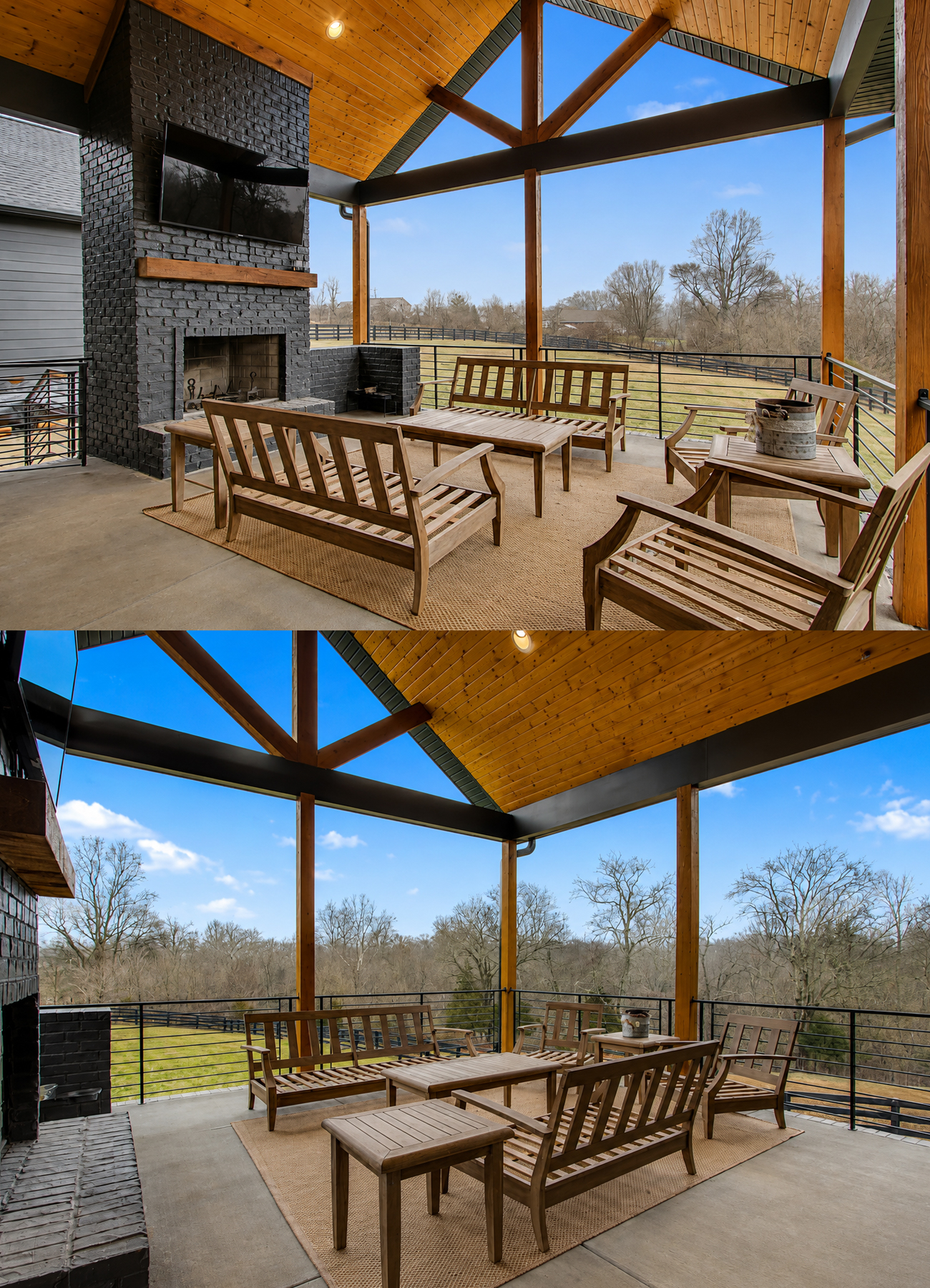
The rear porch feels more private than the front. It has a tall peaked roof with open timber framing. This higher roof makes the space feel like an outdoor room.
A large brick fireplace anchors one side. The brick is painted dark to match the house. A thick wood mantel adds warmth and gives the fireplace a rustic focal point.
The seating feels simple and useful. Wood benches, chairs, and a coffee table form an easy group around the fire. A plain outdoor rug softens the concrete floor.
The porch opens toward the land. Thin metal rails keep the view wide. The tall roof also frames the trees and sky.
This area shows how a black farmhouse can feel cozy outdoors. The key is to mix strong dark surfaces with wood, fire, soft fabric, and open views.
Rear porch cues
- Tall gabled porch roof
- Exposed wood truss
- Dark painted brick fireplace
- Thick wood mantel
- Simple wood outdoor furniture
- Large outdoor rug
- Thin black metal railing
- Open views to the yard
- Warm ceiling boards
- Soft recessed lighting
6. A Bright Entry Creates Instant Contrast
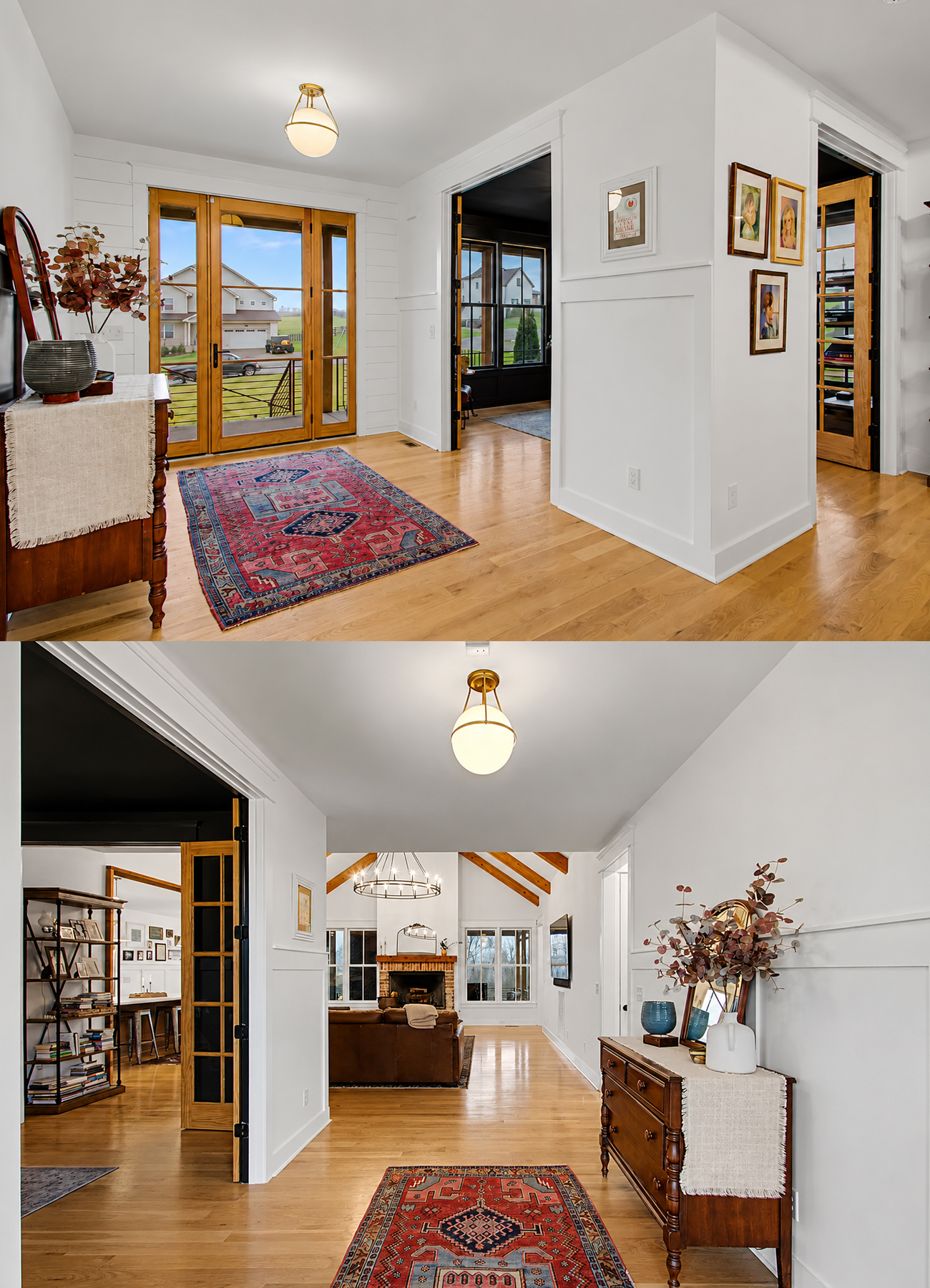
The mood changes as soon as you step inside. The entry is light, open, and clean. White walls replace the dark exterior color. Pale wood floors add warmth.
This sharp contrast gives the home a sense of surprise. From the outside, you may expect dark rooms. Instead, the entry feels fresh and bright.
White wall trim adds a quiet farmhouse touch. Some walls use horizontal planks. Others use simple panel trim. These details give the space shape without adding too much color.
A red vintage-style runner brings life to the floor. It adds pattern and makes the wide entry feel less bare. A dark wood chest adds age and depth. The piece also helps the entry feel lived in.
The warm wood doors connect the inside to the porch. Their glass panels also let light flow through the front of the home.
Entry design cues
- White walls and trim
- Pale natural wood floors
- Glass-paneled wood doors
- Vintage-style runner rug
- Dark antique or old-look chest
- Simple wall panel trim
- Wide openings between rooms
- Small globe ceiling light
- Art hung in loose groups
7. A Great Room With Height and Warmth
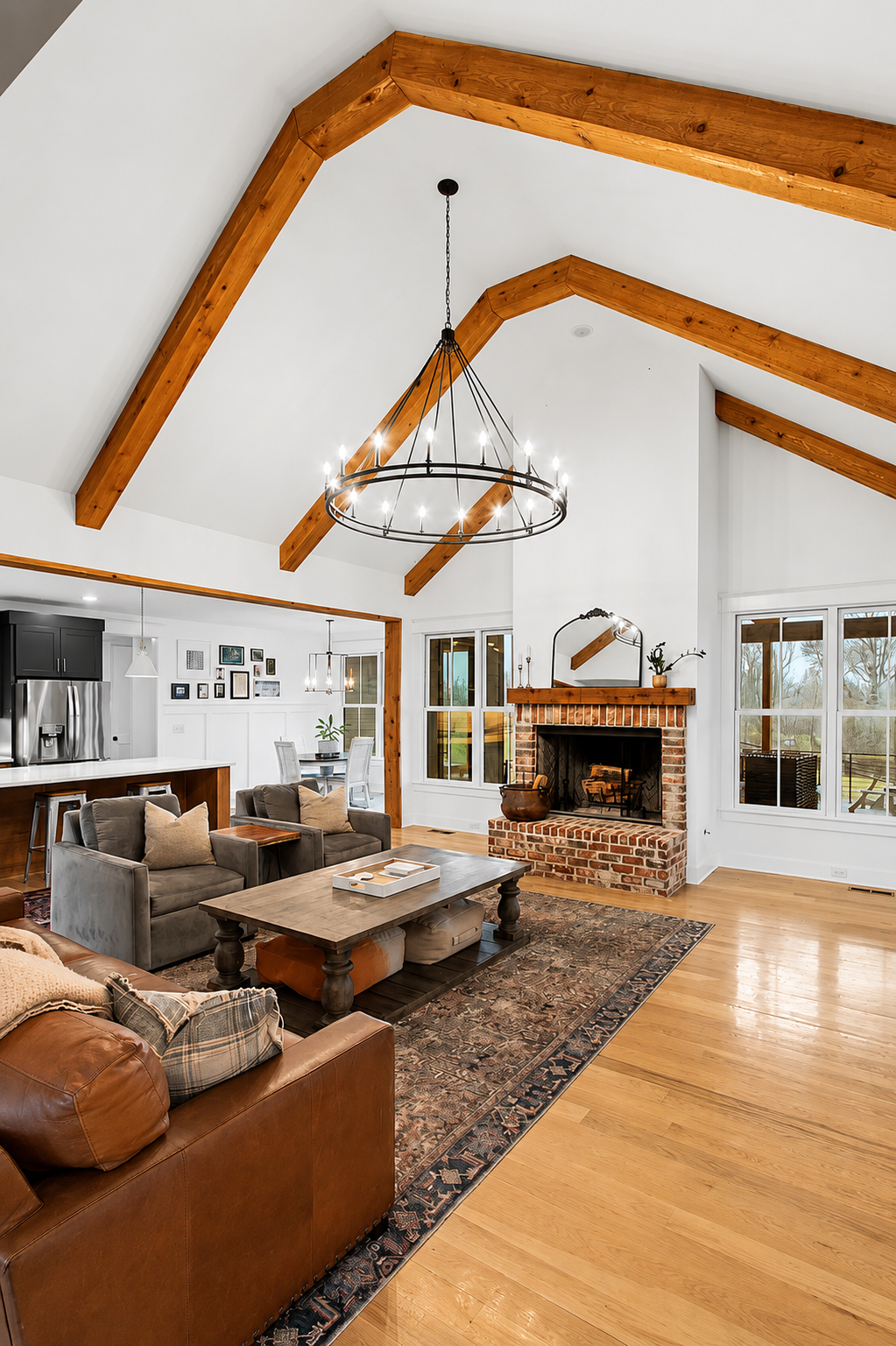
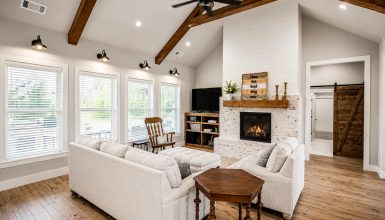
The main living room has a high vaulted ceiling. Exposed wood beams draw the eye upward. A large black ring chandelier fills the open space without making it feel crowded.
White walls keep the room bright. The beams then add the warmth that a large white room needs. They also link the great room to the timber details outside.
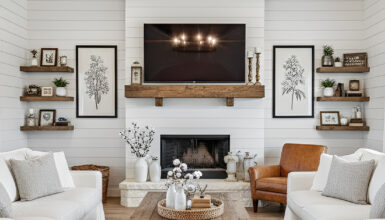
An old brick fireplace forms the main focal point. Its worn red and brown tones bring history into the newer space. A thick wood mantel adds another warm layer.
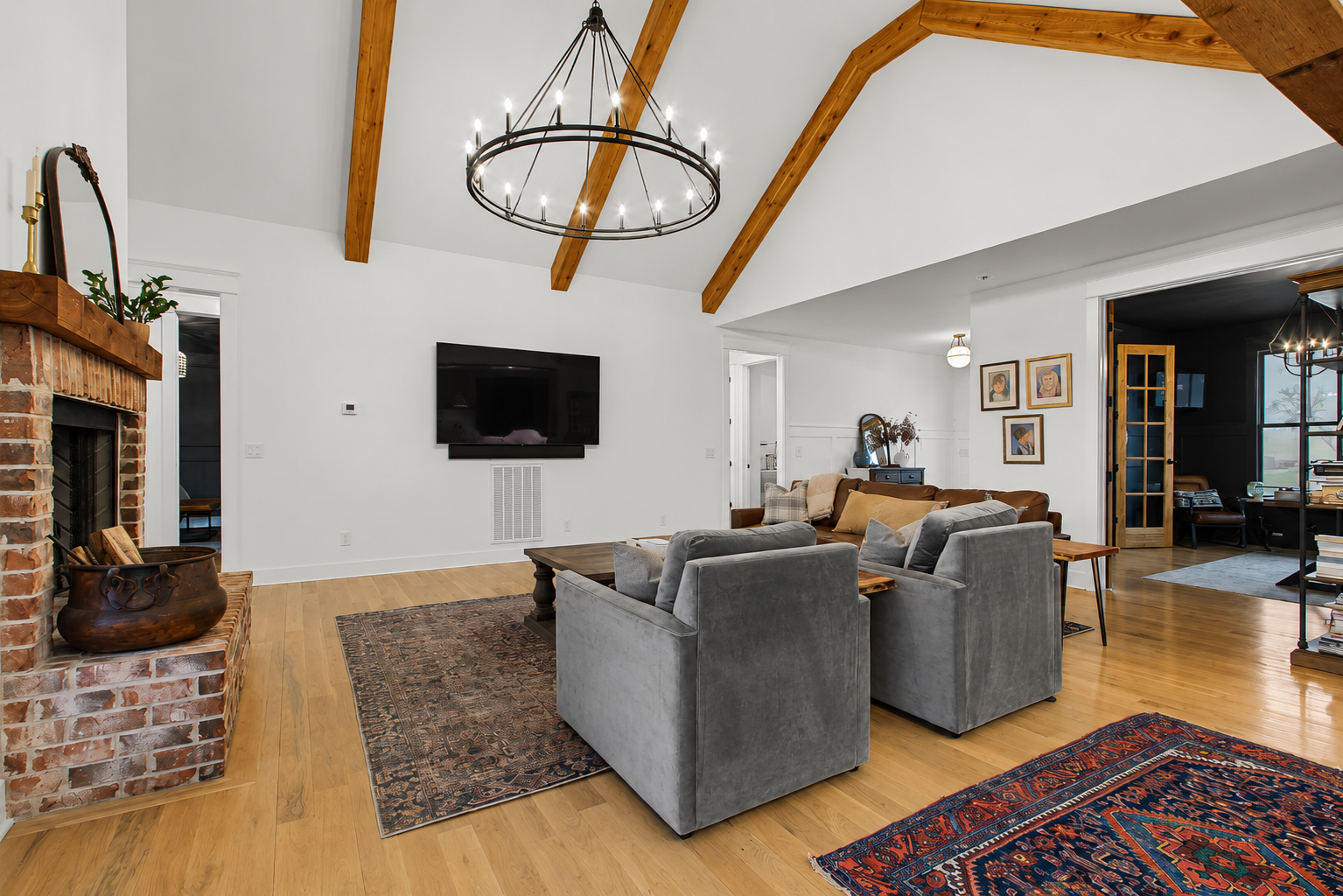
The furniture plan feels calm and social. A brown leather sofa faces the fireplace and television. Gray chairs add soft texture. A large wood coffee table fills the center.
The rugs carry faded colors and old-world patterns. They help ground the large room. They also make the open floor plan feel cozy.
Nothing looks too perfect. The brick has marks. The wood shows grain. The rugs look worn. These details keep the space from feeling like a showroom.
Great room cues
- High vaulted ceiling
- Exposed warm wood beams
- Large black ring chandelier
- White walls
- Old red brick fireplace
- Thick wood mantel
- Brown leather sofa
- Soft gray chairs
- Large wood coffee table
- Faded vintage-style rugs
- Open plan with clear walkways
8. A Cozy Layout Within an Open Floor Plan
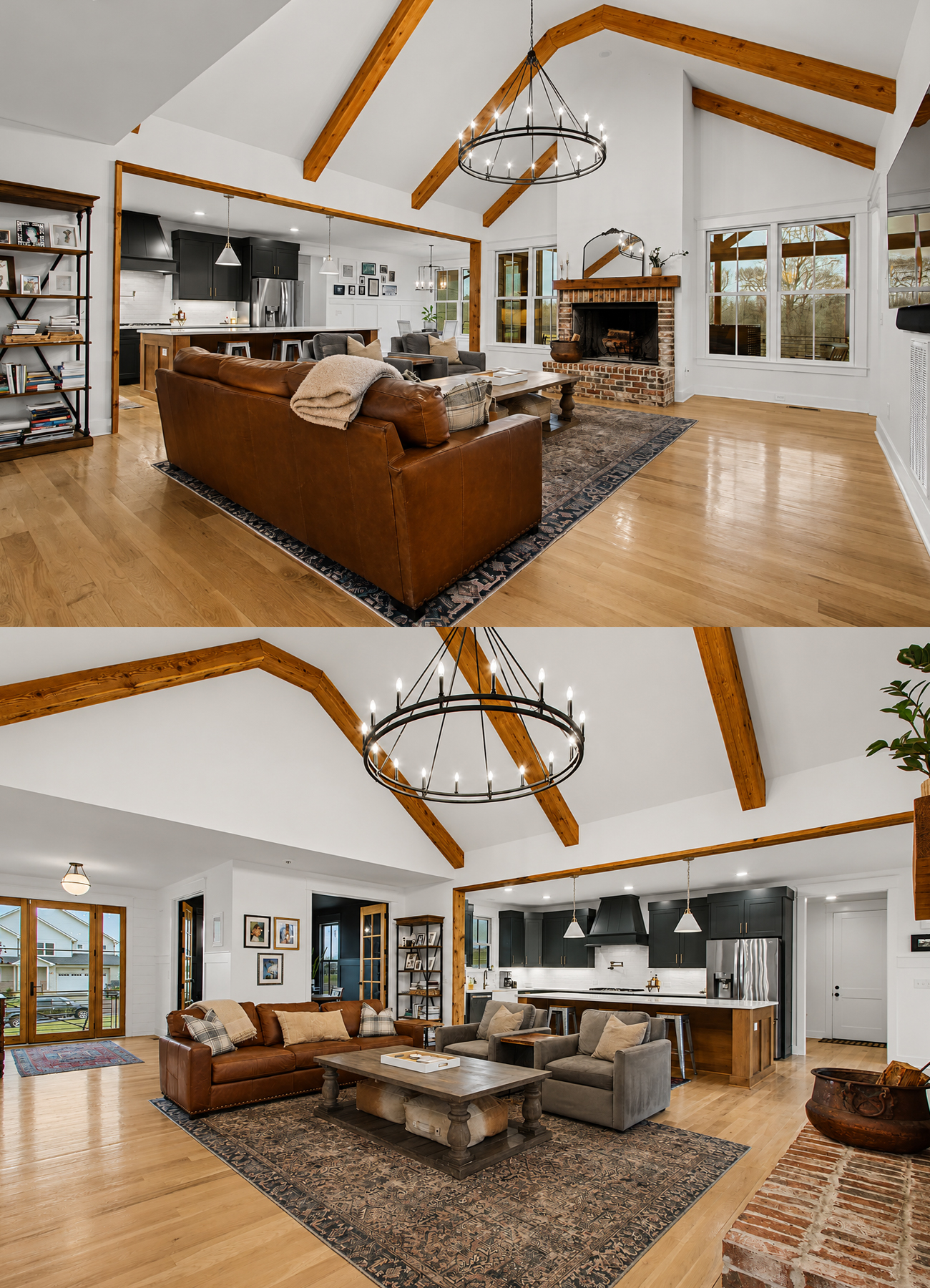
The great room and kitchen share one large area. Still, each zone feels clear. The furniture and ceiling details help divide the space.
The living room rug marks the sitting area. The kitchen island marks the cooking area. A wide wood-trimmed opening gives the kitchen a frame. These small choices make the open plan feel neat.
The seating faces inward. This makes the living room good for talk. It also keeps the main paths open around the furniture.
The television sits on a plain white wall. The fireplace remains close by, so the room has two focal points. Yet the simple wall keeps them from fighting for notice.
The room does not rely on many small decorations. Instead, it uses large items with weight. The wide sofa, big light, strong table, and broad rug suit the scale of the room.
Open-plan cues
- One large connected living and kitchen zone
- Rugs used to mark each area
- Wide clear paths around furniture
- Large pieces chosen for the room size
- Island used as a visual divider
- Wood trim framing the kitchen opening
- Seating turned toward the center
- Limited small décor
9. Deep Green Kitchen Cabinets
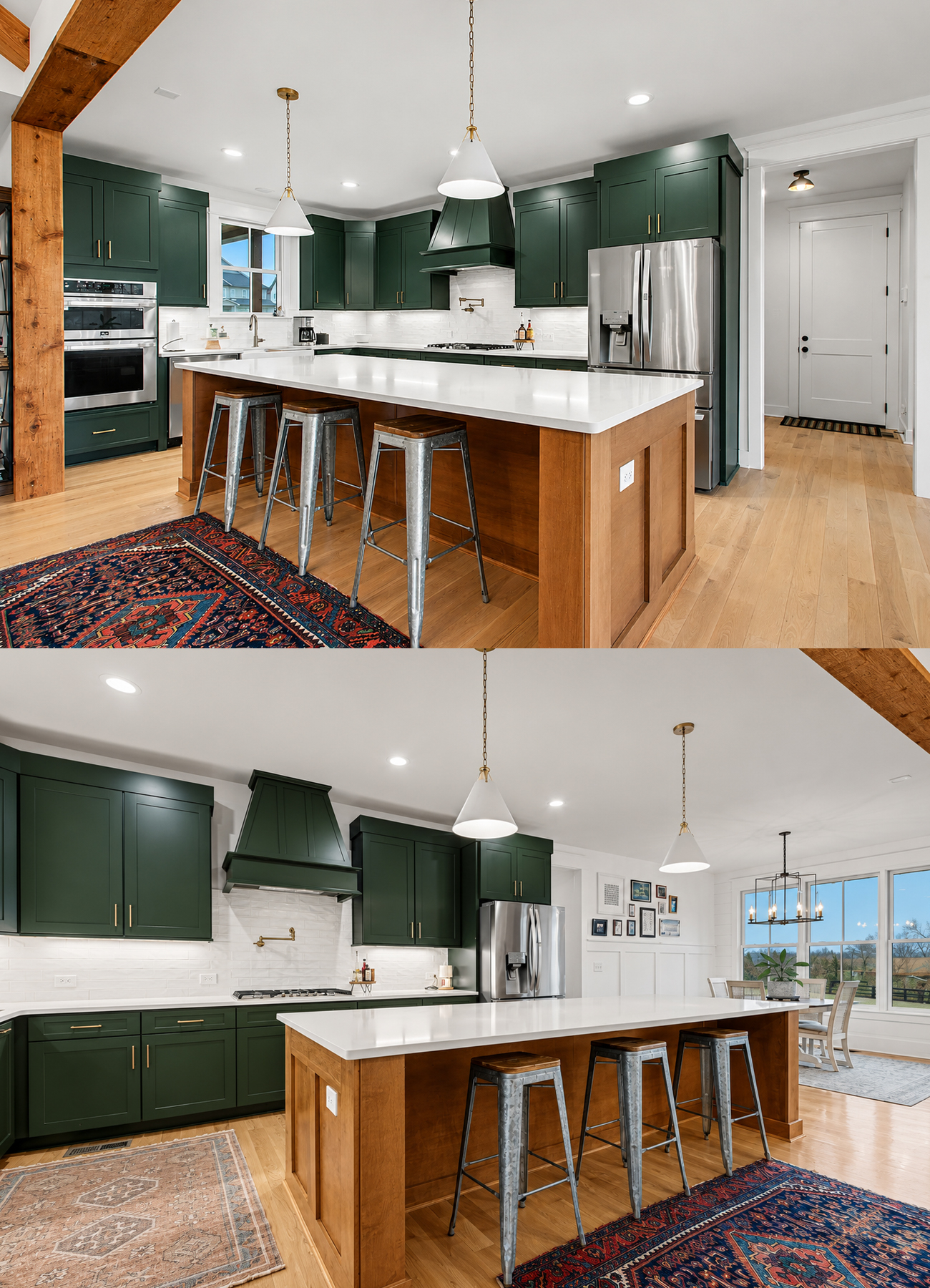
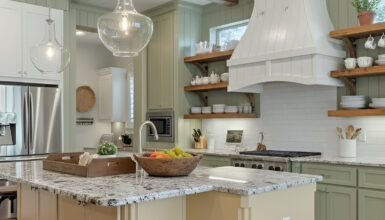
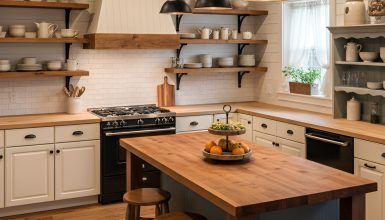
The kitchen brings in the home’s richest color. Deep green cabinets sit against white walls and a white backsplash. The green feels earthy and calm. It also pairs well with the warm wood beams and island.
The cabinet doors have a simple Shaker style. The range hood uses the same green finish, which gives the cooking wall a built-in look.
Slim brass pulls add a soft glow. They feel warmer than bright chrome. They also work well with the wood island and golden floor tones.
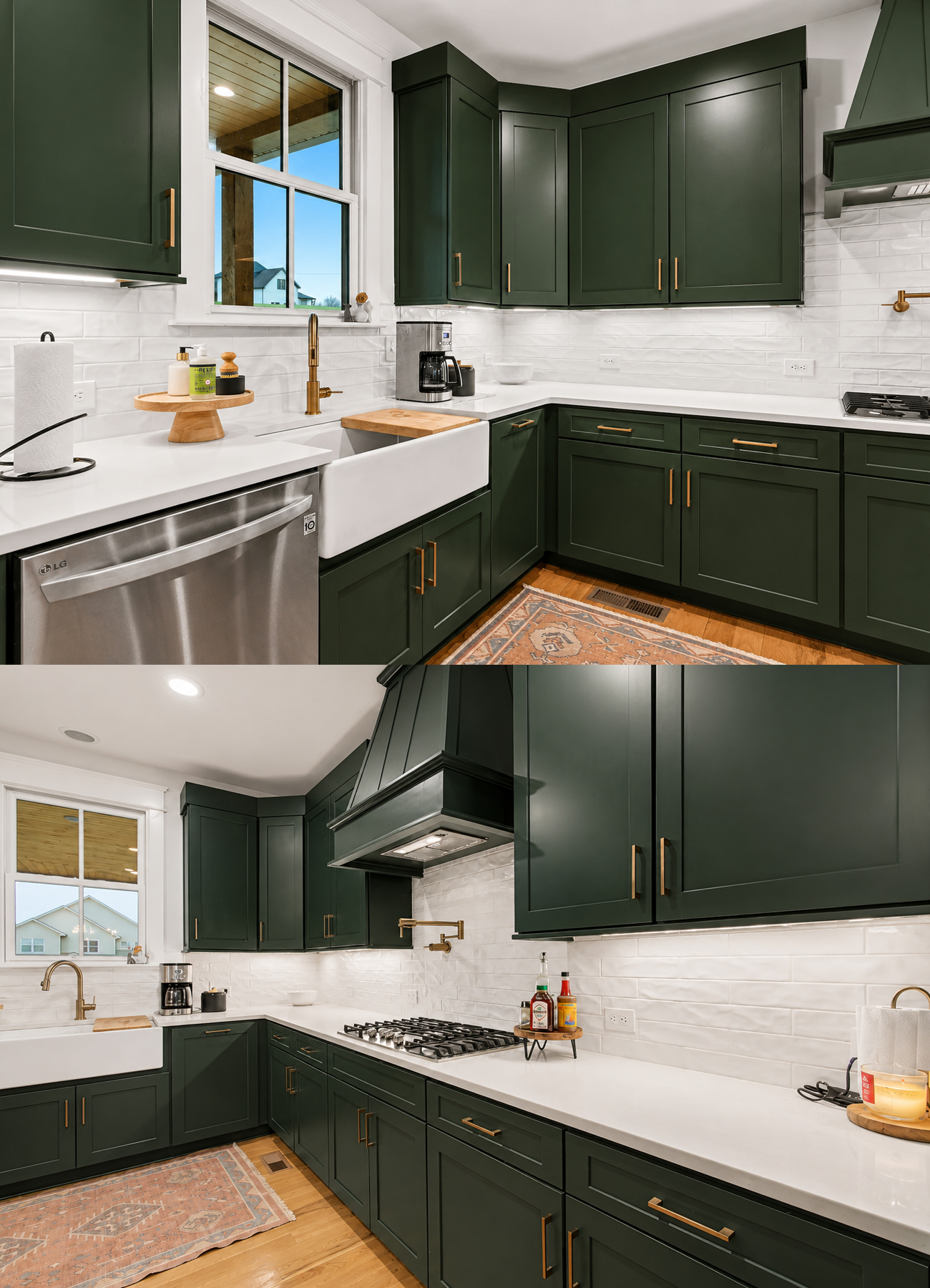
The backsplash uses long white tiles with a handmade look. The soft surface keeps the kitchen from feeling too sharp.
Stainless steel appliances add a practical modern note. They do not take over the room because the dark cabinets frame them.
Green kitchen cues
- Deep forest or olive green cabinets
- Simple Shaker cabinet doors
- Matching green range hood
- White tile backsplash
- Light counters
- Slim brass hardware
- Stainless steel appliances
- Warm wood floor
- White walls around the cabinets
- Soft task and ceiling lights
10. A Warm Wood Island at the Center
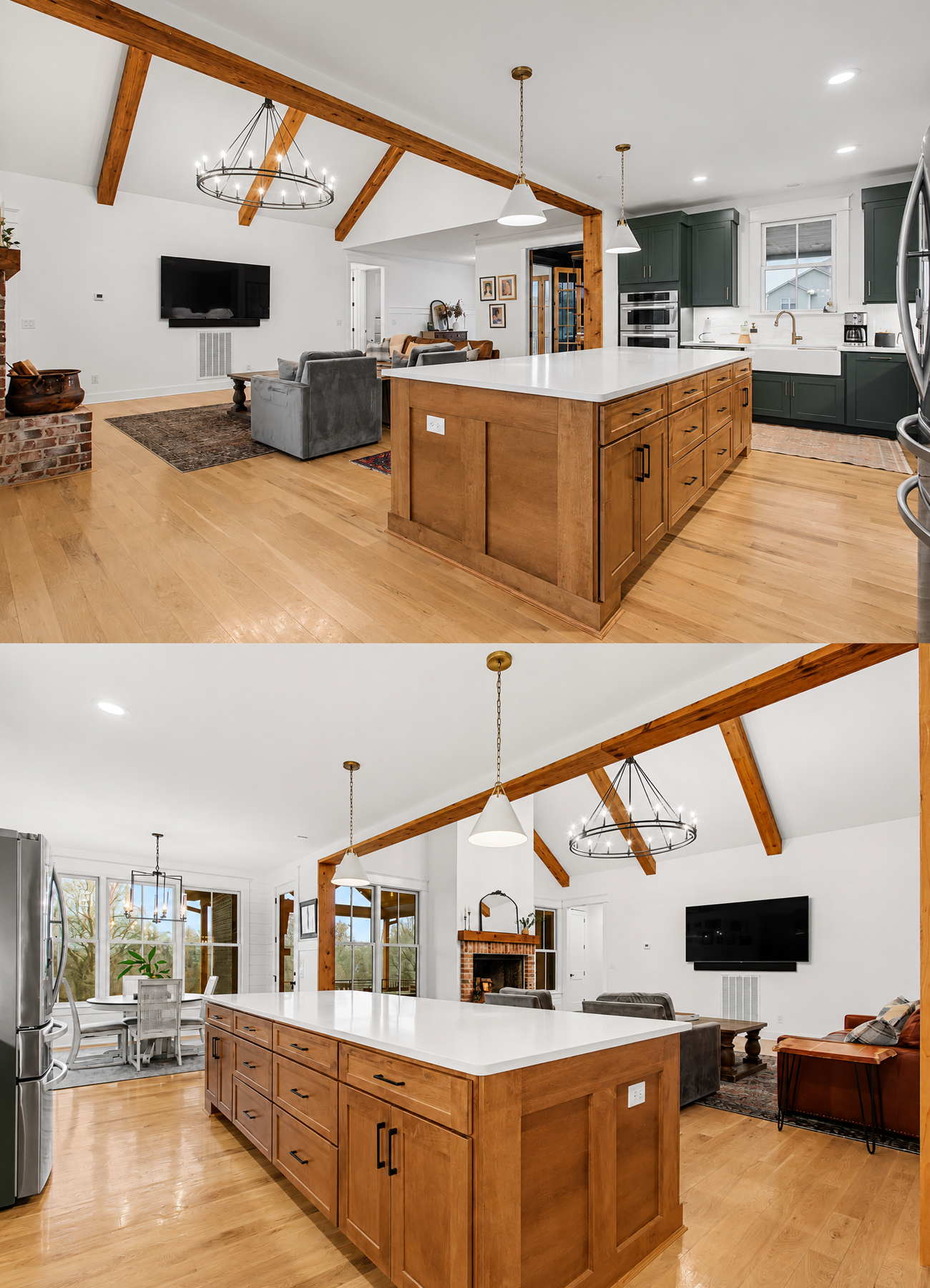
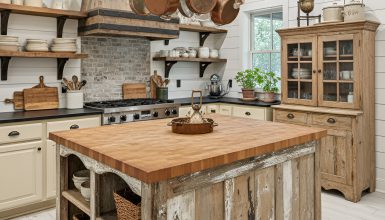
The large kitchen island acts as a warm bridge between the green cabinets and the living room. Its wood finish echoes the ceiling beams, porch posts, doors, and floors.
A pale counter keeps the island fresh. The wide surface offers room for food prep, serving, and casual meals.
Metal stools bring in an industrial farmhouse note. Their worn finish looks relaxed. It also adds contrast beside the smooth counter and wood panels.
Storage fills both sides of the island. This makes the large piece useful, not just pretty. Deep drawers can hold pans, bowls, and tools close to the work zone.
Simple white pendants hang above the island. They add light without taking attention away from the large chandelier in the great room.
Island design cues
- Large wood island
- Wide pale counter
- Deep drawers and cabinets
- Three or more counter stools
- Worn metal stools
- Simple white pendant lights
- Dark hardware
- Warm stain that matches the beams
- Clear space on all sides
11. A Light Dining Nook With Vintage Charm
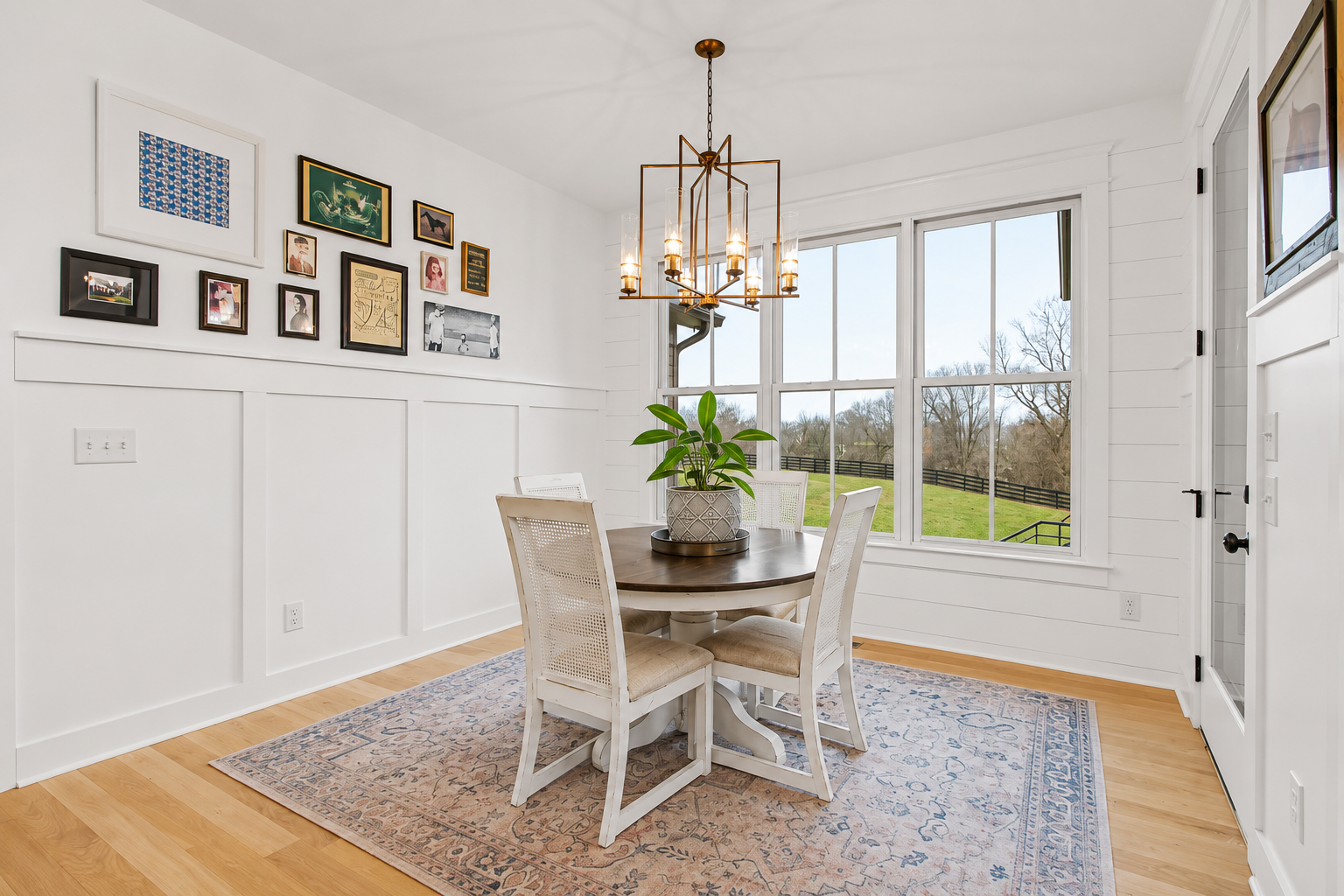
The dining space sits beside a large bank of windows. Daylight fills the room and makes the white walls glow.
Simple wall panels add farmhouse detail. Horizontal boards cover part of the walls, while square trim panels sit below the art. This mix gives the room a custom feel.
A round wood table suits the square room. It softens the straight lines of the windows and wall trim. The light chairs keep the small area open.
A faded rug marks the dining zone. It brings in pale blue, gray, and soft brown. The colors feel calm next to the green kitchen.
The open metal chandelier adds a light touch of age. Its shape feels classic, yet its clean frame keeps it current.
Dining nook cues
- Large grouped windows
- Round wood table
- Light painted dining chairs
- Faded blue-gray rug
- White paneled walls
- Small gallery wall
- Open metal chandelier
- Simple plant centerpiece
- Bright view toward the yard
12. Moody Rooms Add Depth
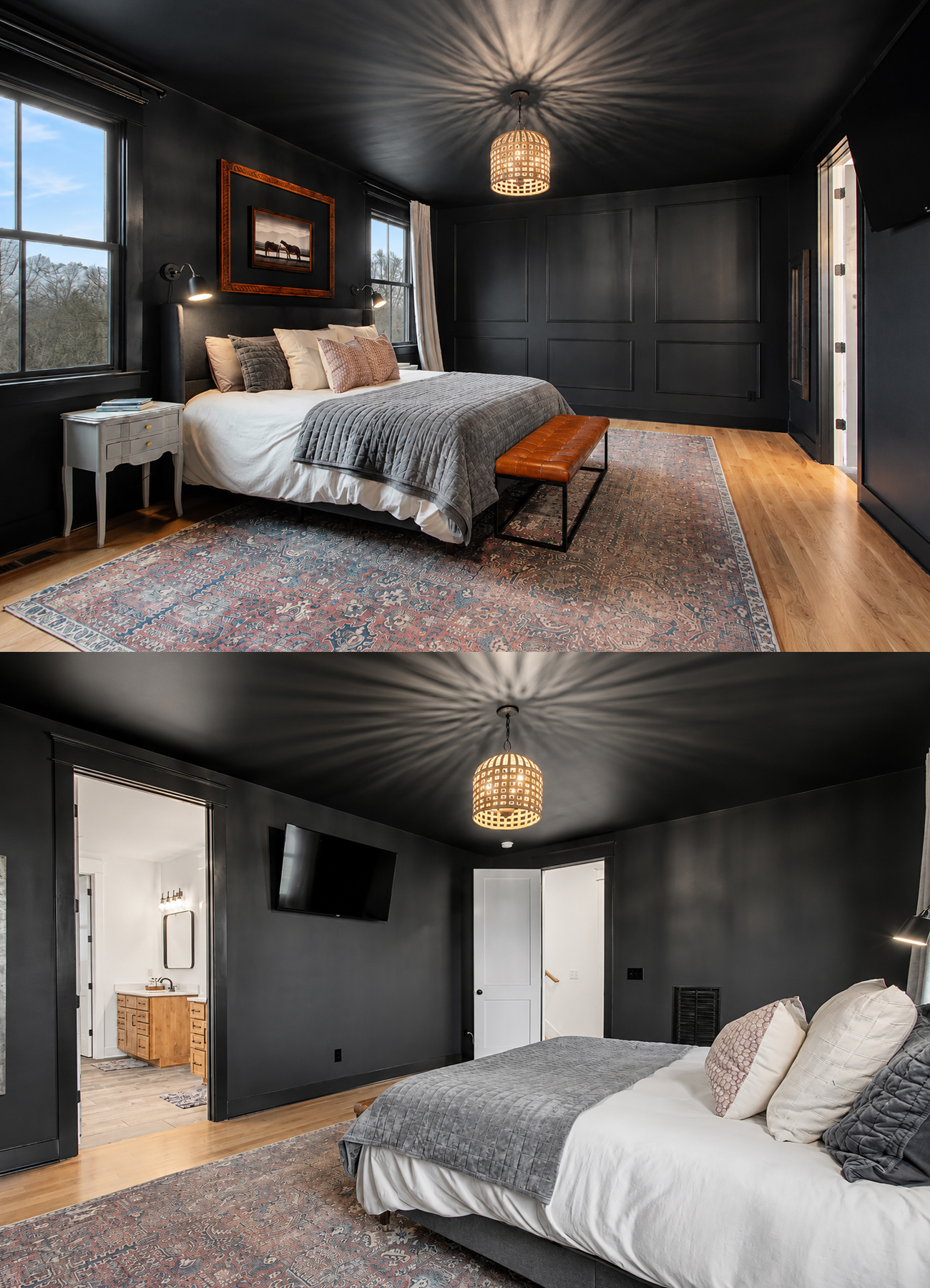
Most of the home is bright, but a few rooms use deep charcoal on the walls, ceiling, and trim. These dark spaces add drama. They also echo the exterior.
The bedroom feels quiet and cocoon-like. Dark walls wrap the bed. The ceiling matches, so the room feels soft rather than chopped into parts.
A paneled feature wall gives the dark color more depth. The trim catches light and creates gentle shadows. Light bedding then stands out against the walls.
A woven pendant throws a pattern across the ceiling. This adds movement without adding more color.
Warm wood floors stop the room from feeling too heavy. A faded rug, leather bench, and soft gray quilt add comfort.
Moody bedroom cues
- Charcoal walls and ceiling
- Dark painted trim
- Simple wall panel molding
- Light bedding
- Gray quilt or coverlet
- Leather bench
- Faded patterned rug
- Warm wood floor
- Woven or open pendant light
- Limited wall décor
13. A Dark Home Office With Natural Wood
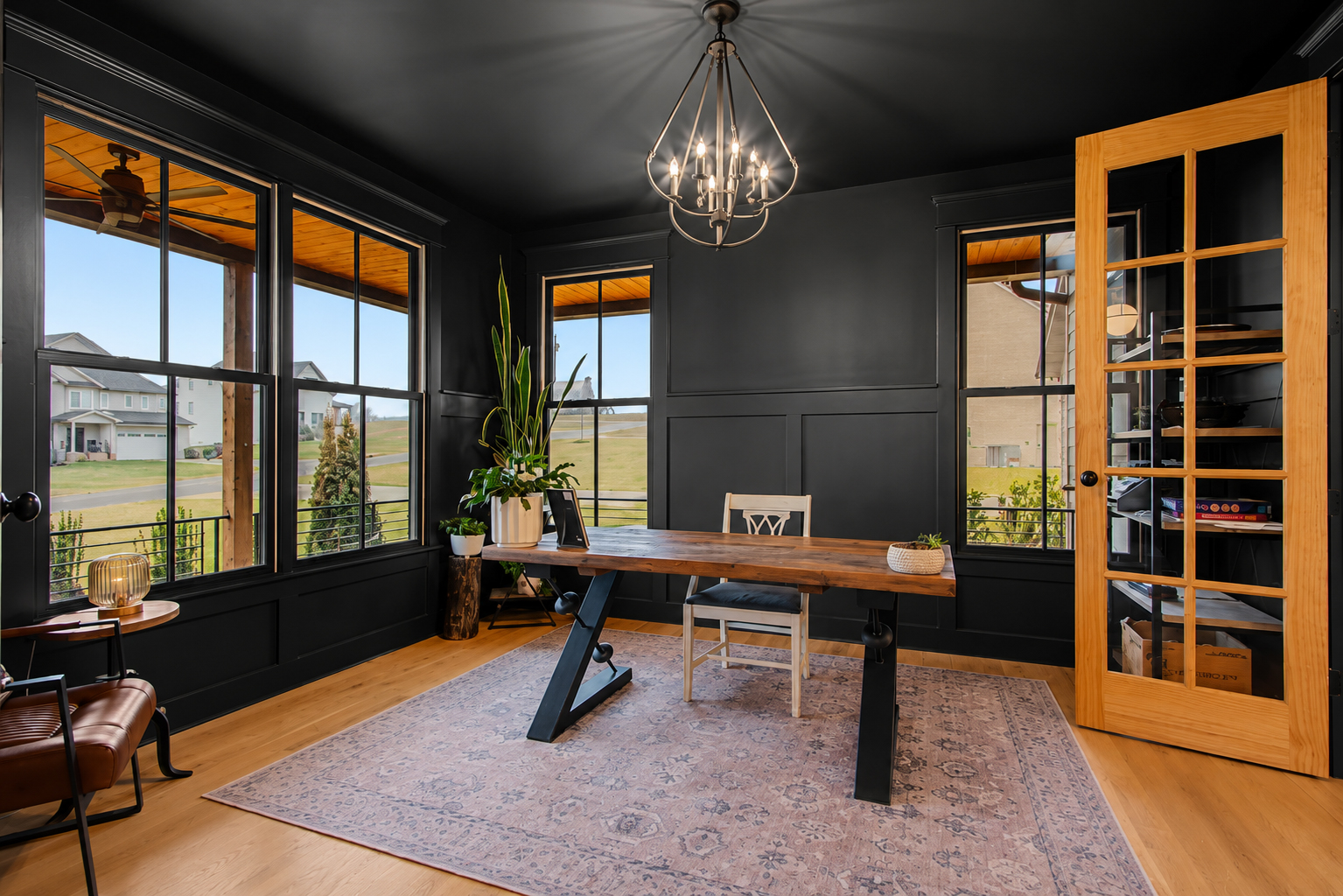
The home office uses the same deep color as the bedroom. Yet large windows keep the room from feeling closed in.
The walls, trim, and ceiling all share one dark shade. This color wash creates a rich background. Natural wood then becomes the main accent.
A thick wood desk gives the room a strong center. Its black trestle legs link it to the dark walls. A wood-framed glass door adds another warm note.
A soft rug lightens the floor. Plants add a fresh touch. The room feels serious enough for work, but still warm enough for daily use.
This office shows a useful rule for dark rooms: bring in plenty of daylight, warm wood, and soft texture.
Dark office cues
- Dark walls, trim, and ceiling
- Large clear windows
- Thick natural wood desk
- Black metal desk legs
- Wood-framed glass door
- Soft faded rug
- Green plants
- Simple statement light
- Few pieces of furniture
- Warm task lighting
14. A Bright Farmhouse Bathroom
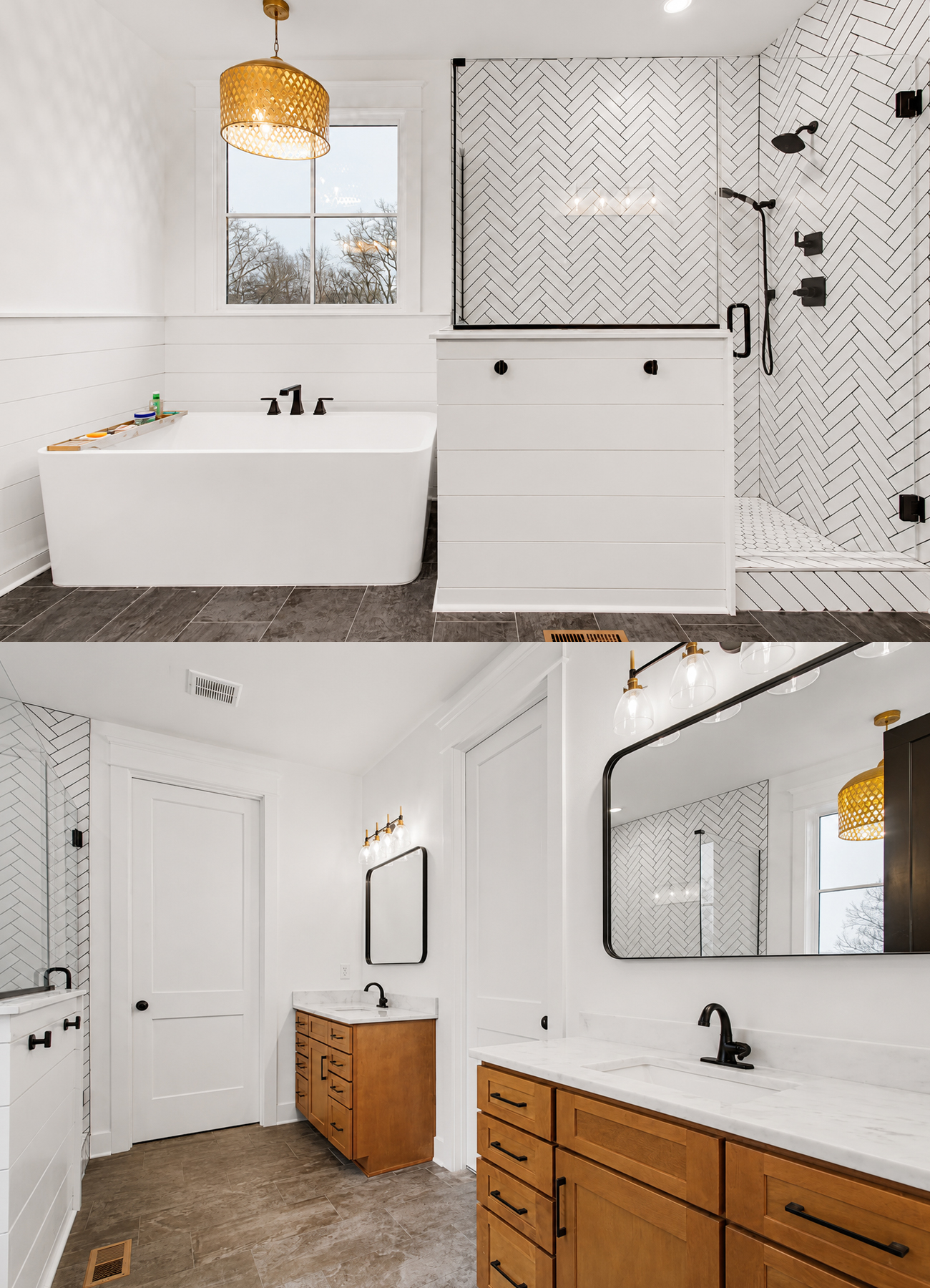
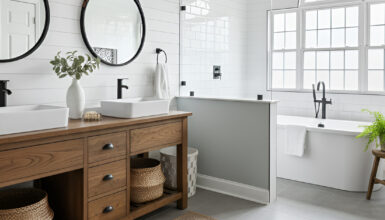
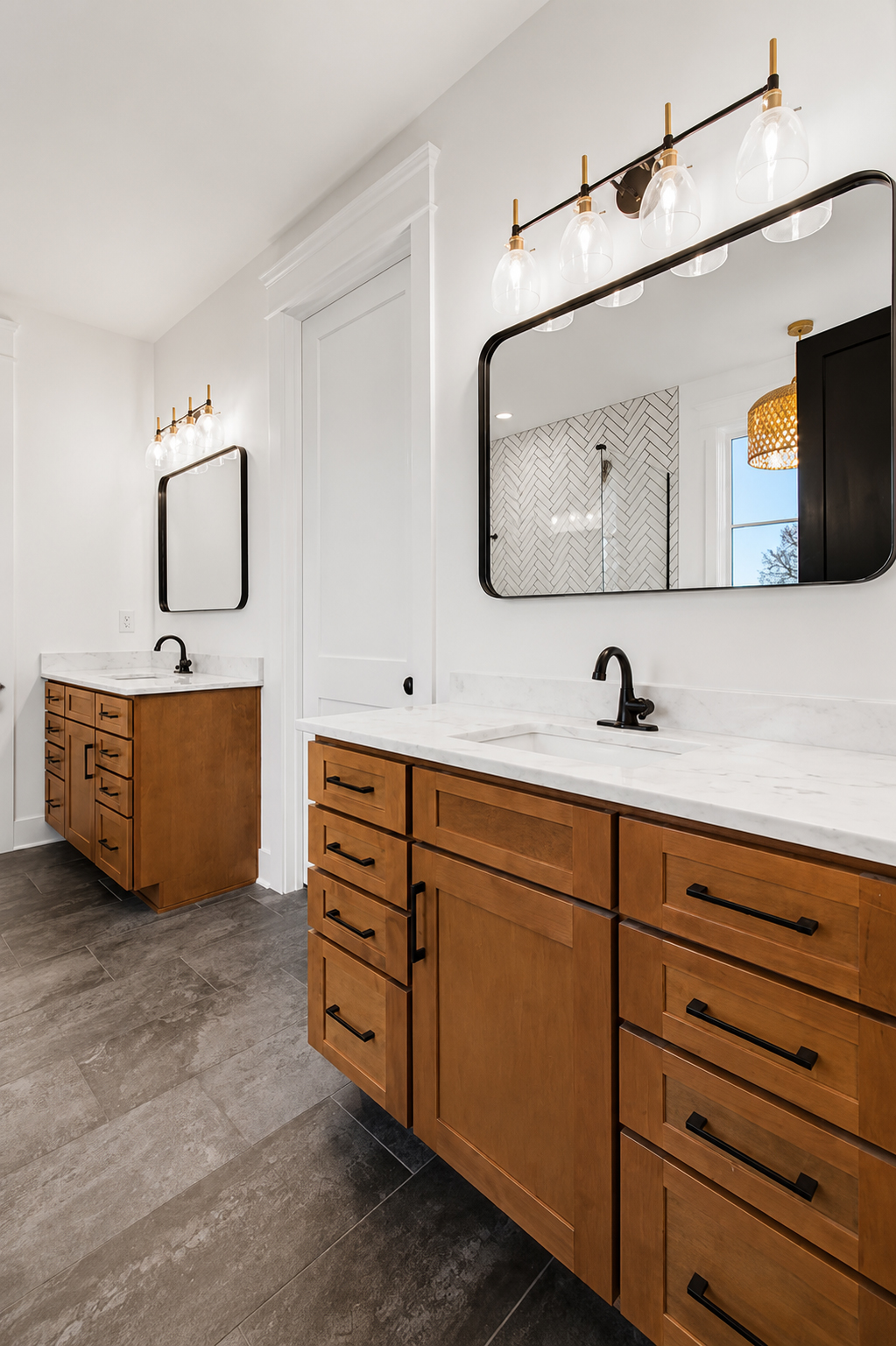
The main bathroom returns to the light side of the home. White walls and pale counters make the room feel crisp. Warm wood vanities keep it from looking cold.
The vanities use simple flat or Shaker-style fronts. Black hardware and faucets add clear contrast. Large mirrors with rounded black frames repeat the dark metal.
The walk-in shower uses white herringbone tile with dark grout. The pattern adds movement, yet the color stays calm. A glass wall keeps the room open.
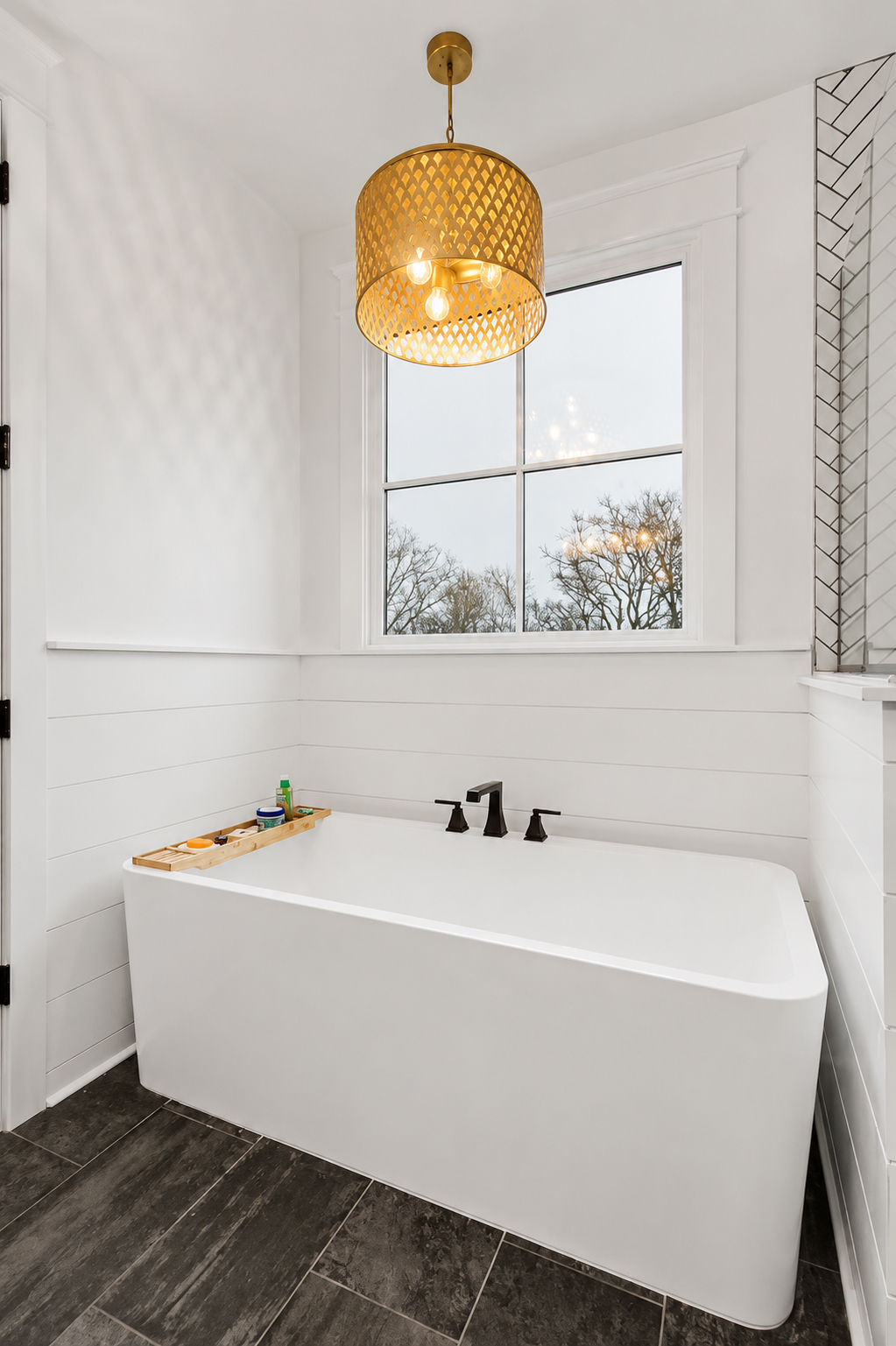
The freestanding tub has a simple shape. It sits beside a window, which gives the bathing area a quiet spa feel.
A gold woven pendant adds warmth above the tub. This small touch keeps the room from feeling too white.
Bathroom cues
- White walls
- Warm wood vanities
- Pale stone-look counters
- Black faucets and pulls
- Large black-framed mirrors
- White herringbone shower tile
- Dark grout lines
- Clear glass shower wall
- Freestanding white tub
- Warm gold pendant light
- Dark stone-look floor tile
15. A Flexible Bonus Room Upstairs
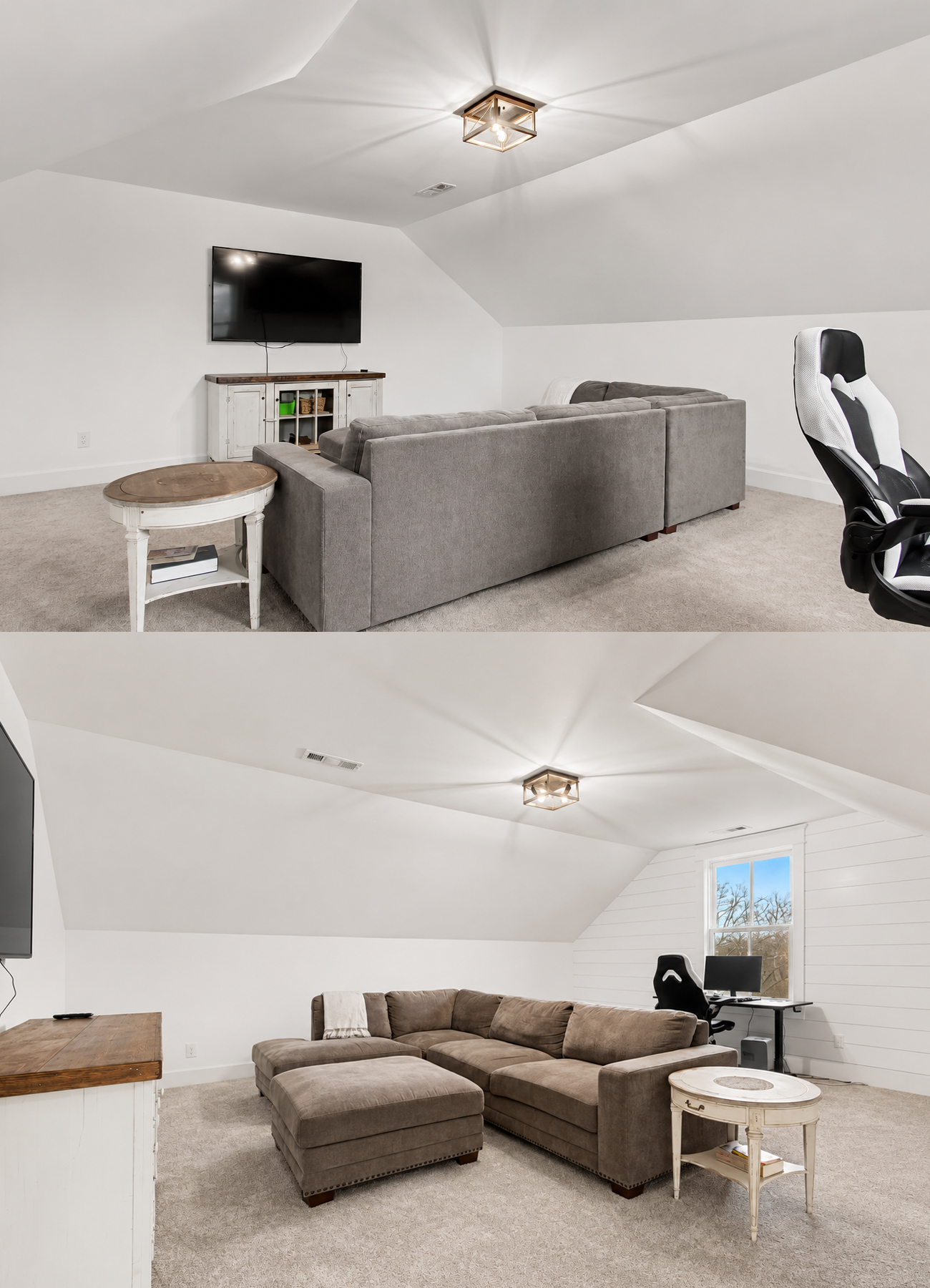
The upper bonus room feels simple and useful. White walls and soft carpet create a calm base. Sloped ceilings give the room a snug shape.
A large sectional turns it into a casual media room. A desk near the window adds a work or gaming zone. This flexible plan suits family life.
White horizontal boards cover the end wall. They add farmhouse texture while keeping the room light.
The décor stays minimal. That gives the room room to change. It could become a playroom, guest space, hobby room, or home theater.
Bonus room cues
- Sloped upper-level ceiling
- White walls
- Light neutral carpet
- Large soft sectional
- Simple media wall
- Small desk by the window
- White horizontal wall boards
- Low-profile ceiling light
- Open floor space
16. The Color Story That Ties It All Together
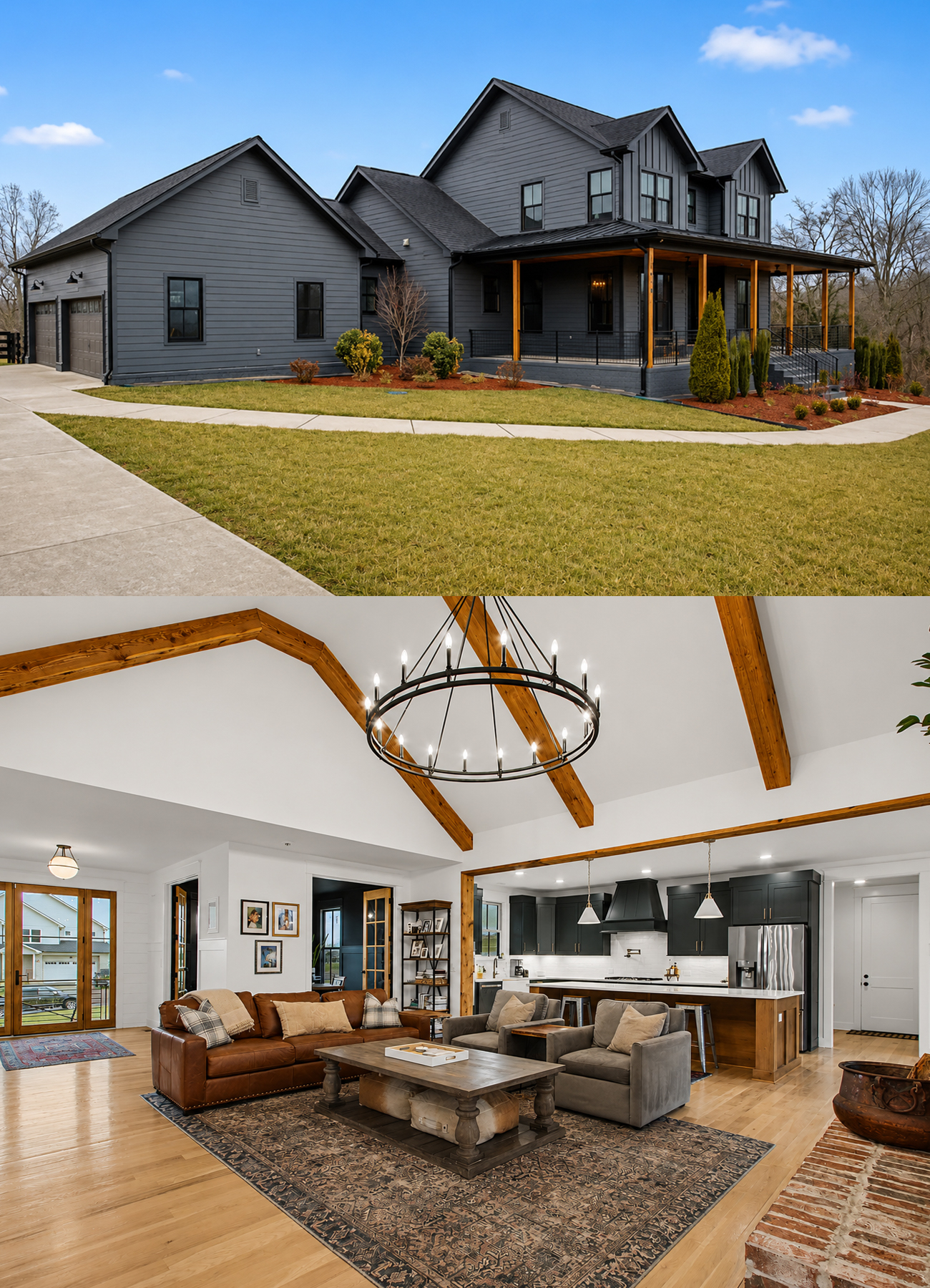
This home uses a clear color plan. Black, white, warm wood, deep green, old brick, and soft gray appear again and again.
The dark exterior returns in the bedroom and office. The warm porch wood returns in the floors, beams, doors, island, and vanities. White walls link the entry, living room, dining room, kitchen, bath, and bonus room.
Green cabinets add one earthy color. Faded rugs add soft red, blue, and brown tones. Leather furniture adds another warm layer.
Because the palette repeats, each room can have its own mood without feeling out of place.
The home also balances hard and soft surfaces. Brick, metal, glass, tile, and concrete give it structure. Rugs, bedding, pillows, wood grain, and woven lights add comfort.
Whole-home palette cues
- Soft black or deep charcoal
- Warm white
- Honey or medium-tone wood
- Deep forest green
- Worn red brick
- Soft gray upholstery
- Brown leather
- Muted red and blue rugs
- Black metal details
- Small touches of brass
Conclusion
This black farmhouse proves that dark design can still feel warm and welcoming. Natural wood softens the exterior, while white walls and pale floors brighten the rooms. Rustic brick, soft fabrics, and deep colors add warmth and depth. Together, these details create a stylish home that feels calm, comfortable, and ready for everyday life.