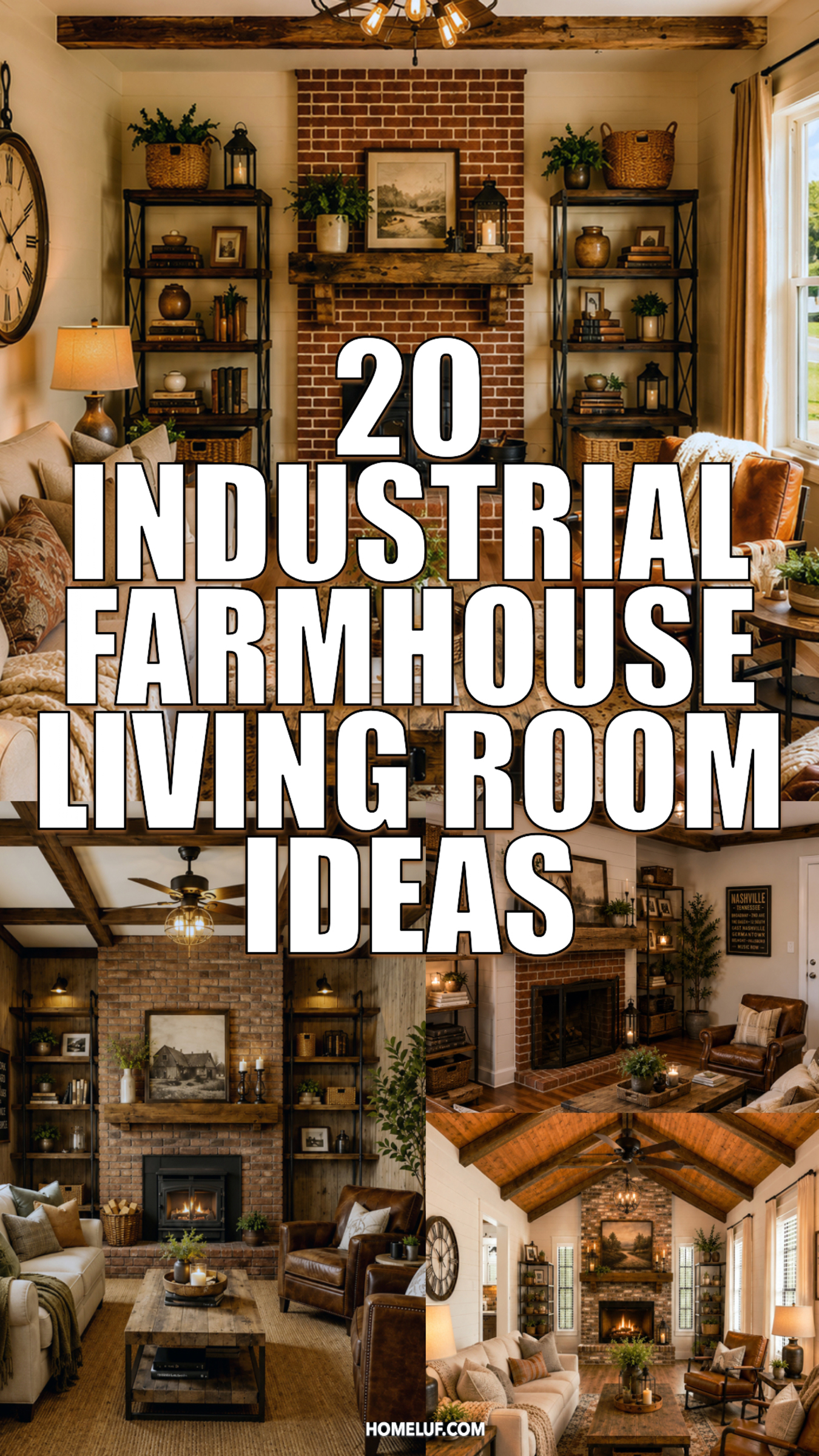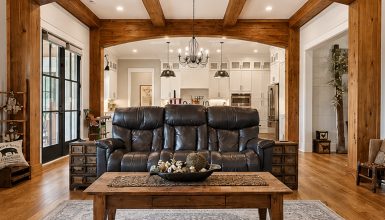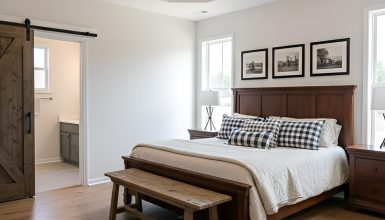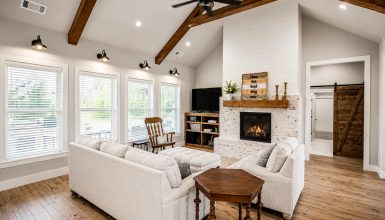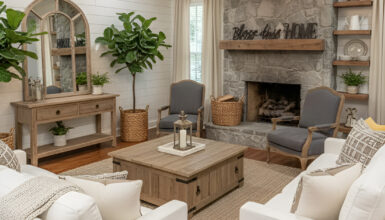
Can a living room look bold and still feel cozy? That is the magic of industrial farmhouse style. It blends the raw charm of black metal, exposed brick, and weathered wood with the soft comfort of warm neutrals, woven rugs, and plush seating. The result feels stylish, relaxed, and full of character. With the right mix of rustic texture and urban edge, your living room can feel both polished and welcoming.
Below are 20 industrial farmhouse living room decor ideas, with clear design cues you can use in your own home.
1. Start With a Warm Neutral Base
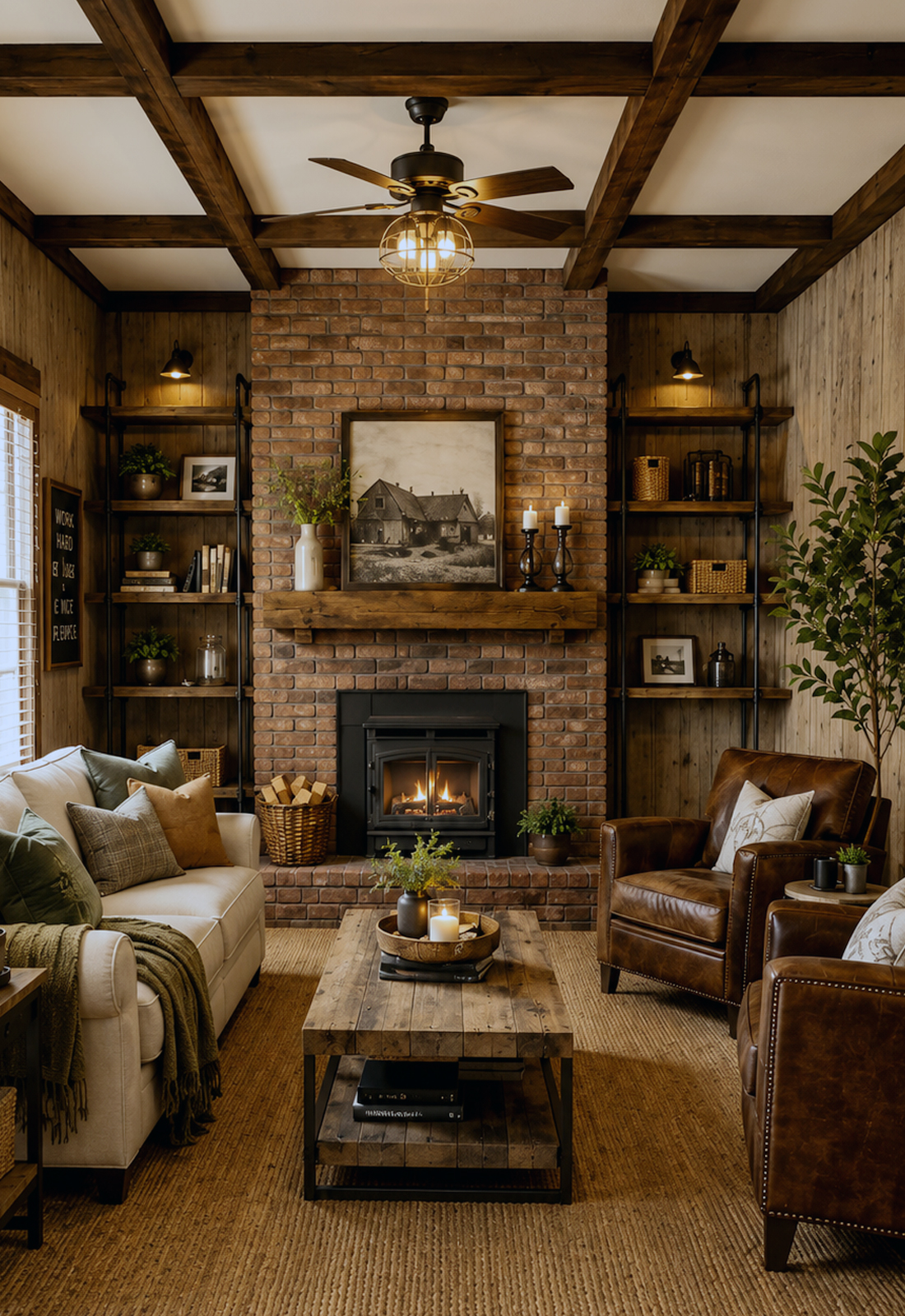
Every strong room needs a good base. For industrial farmhouse decor, that base should feel calm, soft, and natural.
Warm white walls, creamy trim, soft gray sofas, and light beige rugs all work well. These shades keep the room bright. They also soften the heavy feel of black metal, dark wood, and brick.
The goal is not to make the room plain. Instead, the quiet base lets the bold pieces stand out. A black iron chandelier looks stronger against white walls. A reclaimed wood table feels richer on a light rug. A brown leather chair glows in a soft gray room.
This style works best when the colors feel grounded. Avoid bright white if it feels too cold. Choose warm whites with a creamy or sandy undertone. Then add deeper shades through furniture and decor.
Design cues:
- Use warm white, cream, greige, or soft gray walls.
- Add charcoal, black, and iron tones for contrast.
- Bring in deep brown through wood and leather.
- Keep large pieces simple so texture can shine.
- Avoid too many bright colors.
2. Add an Exposed Brick Accent Wall
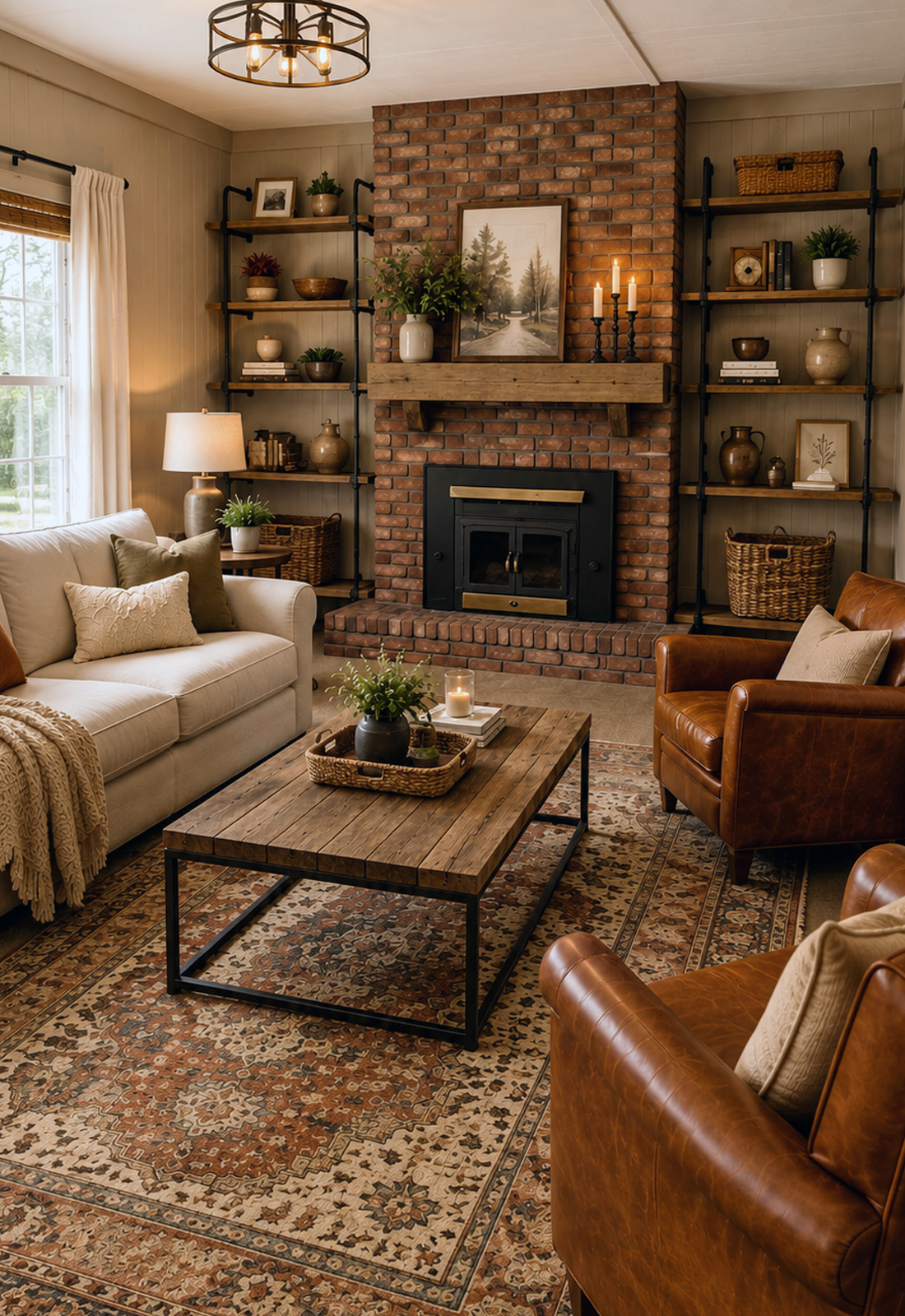
Nothing says industrial farmhouse like exposed brick. It adds instant age, texture, and charm. It also gives the room a relaxed urban loft feel.
A red brick wall brings warmth and depth. A whitewashed brick wall feels softer and brighter. A gray brick wall can look more modern and moody. All three can work.
Brick pairs well with farmhouse pieces because it feels honest and old. It looks beautiful behind a linen sofa, a black metal console, or a reclaimed wood mantel. It also works well with vintage signs, open shelving, and warm sconces.
If you do not have real brick, you can still get the look. Brick veneer, thin brick panels, or high-quality faux brick can create the same mood. The key is to keep the finish matte and textured.
Design cues:
- Use brick on one main wall, not every wall.
- Choose red brick for warmth.
- Choose whitewashed brick for a softer look.
- Pair brick with wood, leather, linen, and iron.
- Add warm lighting to bring out the texture.
3. Bring In Reclaimed Wood
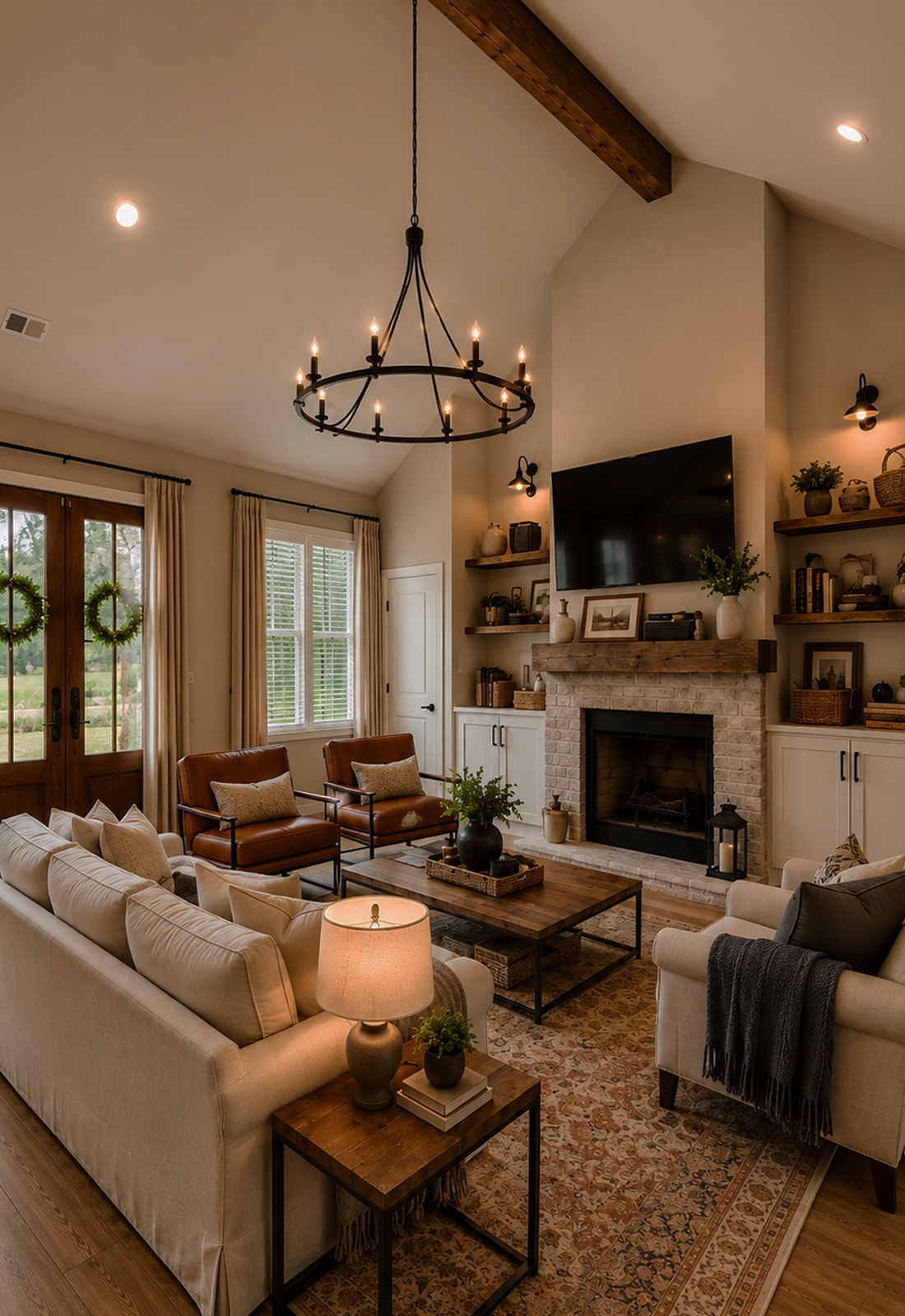
Reclaimed wood gives the room soul. It adds history and warmth. It also keeps the industrial side from feeling too cold.
Use reclaimed wood on coffee tables, ceiling beams, shelves, mantels, side tables, or media consoles. Look for wood with knots, marks, nail holes, and natural grain. These flaws are part of the beauty.
A thick reclaimed wood coffee table with black metal legs can anchor the room. Floating wood shelves on a brick wall can add storage and style. A rustic wood mantel can soften a fireplace with black tile or stone.
This style loves wood that feels real. Skip glossy finishes. Go for matte, weathered, waxed, or lightly sealed wood instead.
Design cues:
- Choose wood with visible grain and age.
- Pair wood tops with black iron bases.
- Use thick shelves for a strong farmhouse feel.
- Mix light and dark wood with care.
- Keep the finish natural, not shiny.
4. Choose a Statement Leather Sofa
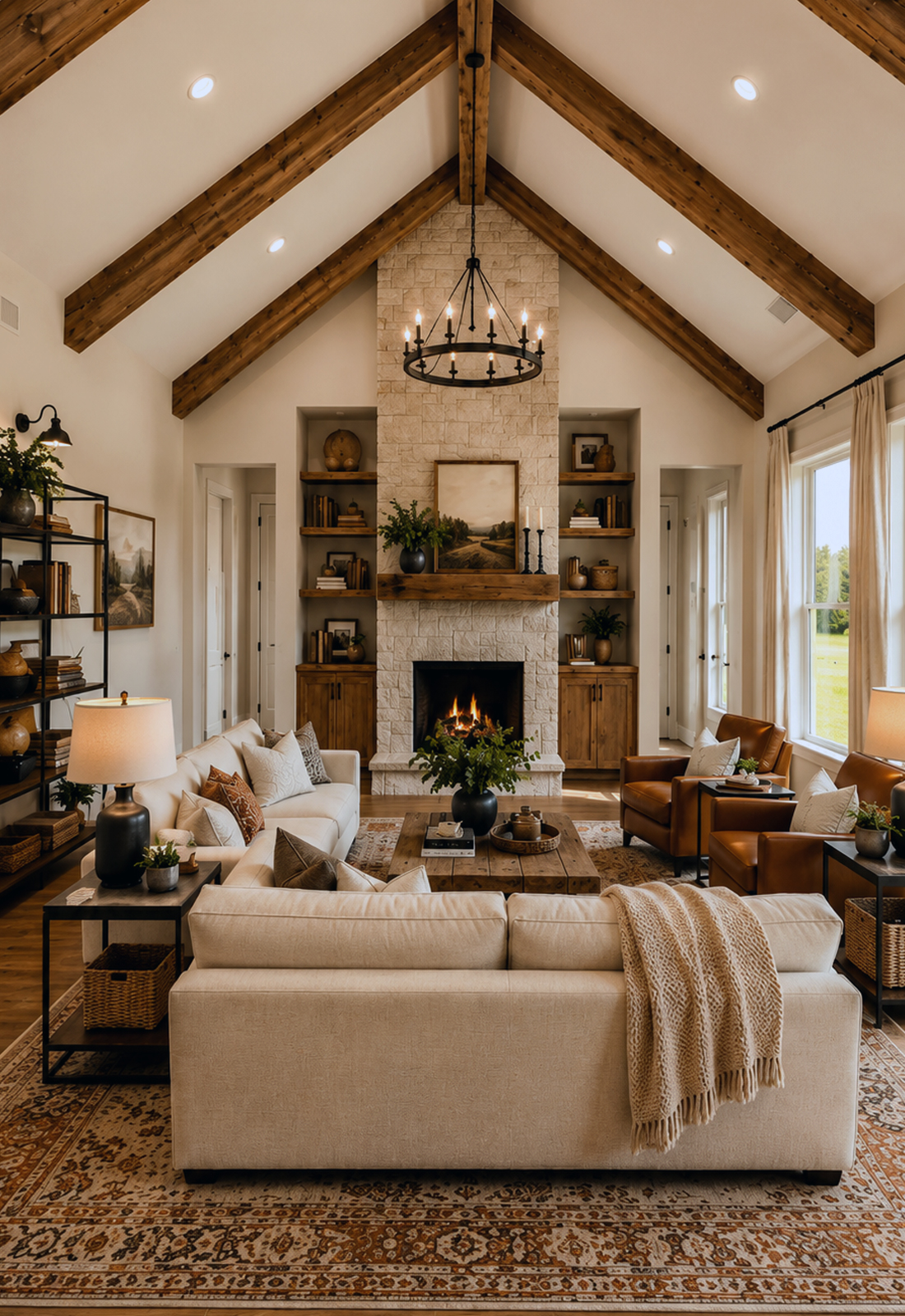
A leather sofa can become the heart of an industrial farmhouse living room. It brings warmth, depth, and a rugged feel.
Brown leather works best. Think caramel, cognac, saddle, chestnut, or deep espresso. These tones pair well with brick, black metal, cream walls, and wood floors.
The sofa should feel relaxed, not formal. A soft leather sofa with clean lines can look both modern and rustic. A tufted leather Chesterfield can add vintage charm. A simple track-arm sofa can feel more updated.
Leather also gets better with age. That makes it a smart choice for this style. Scratches and soft wear add character over time.
Design cues:
- Pick brown leather for warmth.
- Use black leather only if the room has enough soft texture.
- Add linen pillows to soften the look.
- Pair with a woven rug for comfort.
- Choose a sofa shape that feels relaxed and sturdy.
5. Use Black Metal as the Main Accent
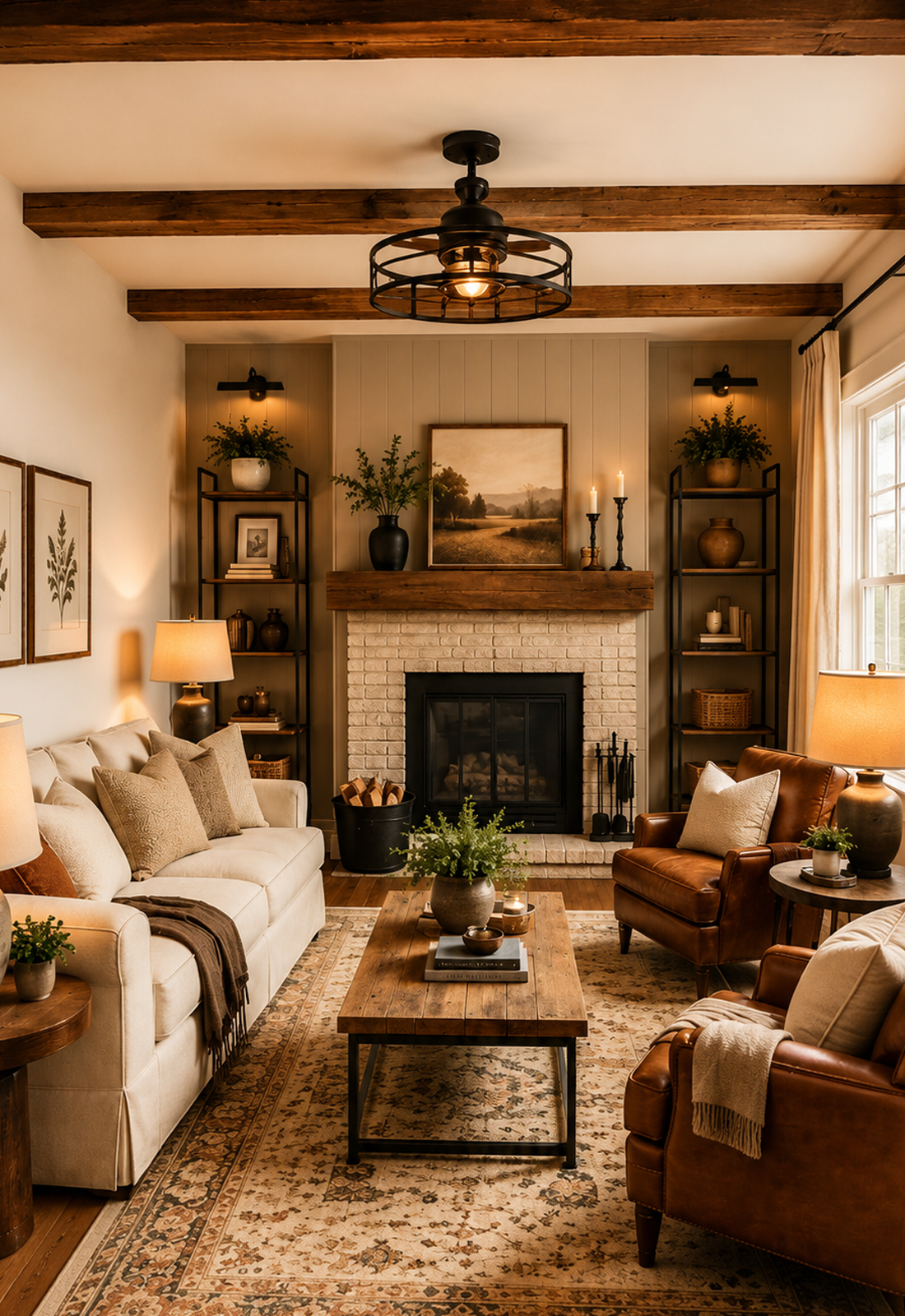
Black metal gives this style its industrial edge. It adds shape, contrast, and structure.
Use it in light fixtures, curtain rods, table legs, shelving frames, fireplace screens, mirrors, and hardware. Matte black works better than shiny black. It feels more grounded and timeless.
The trick is to repeat black metal in a few places. One black fixture may look random. But when you repeat black in the lights, mirror frame, table legs, and curtain rods, the room feels planned.
Still, do not overdo it. Too much black metal can make the room feel heavy. Balance it with warm wood, soft fabric, and light walls.
Design cues:
- Choose matte black metal.
- Repeat black accents across the room.
- Use iron, steel, or wrought metal finishes.
- Pair black with warm wood and cream tones.
- Avoid glossy chrome or bright silver.
6. Hang an Industrial Chandelier
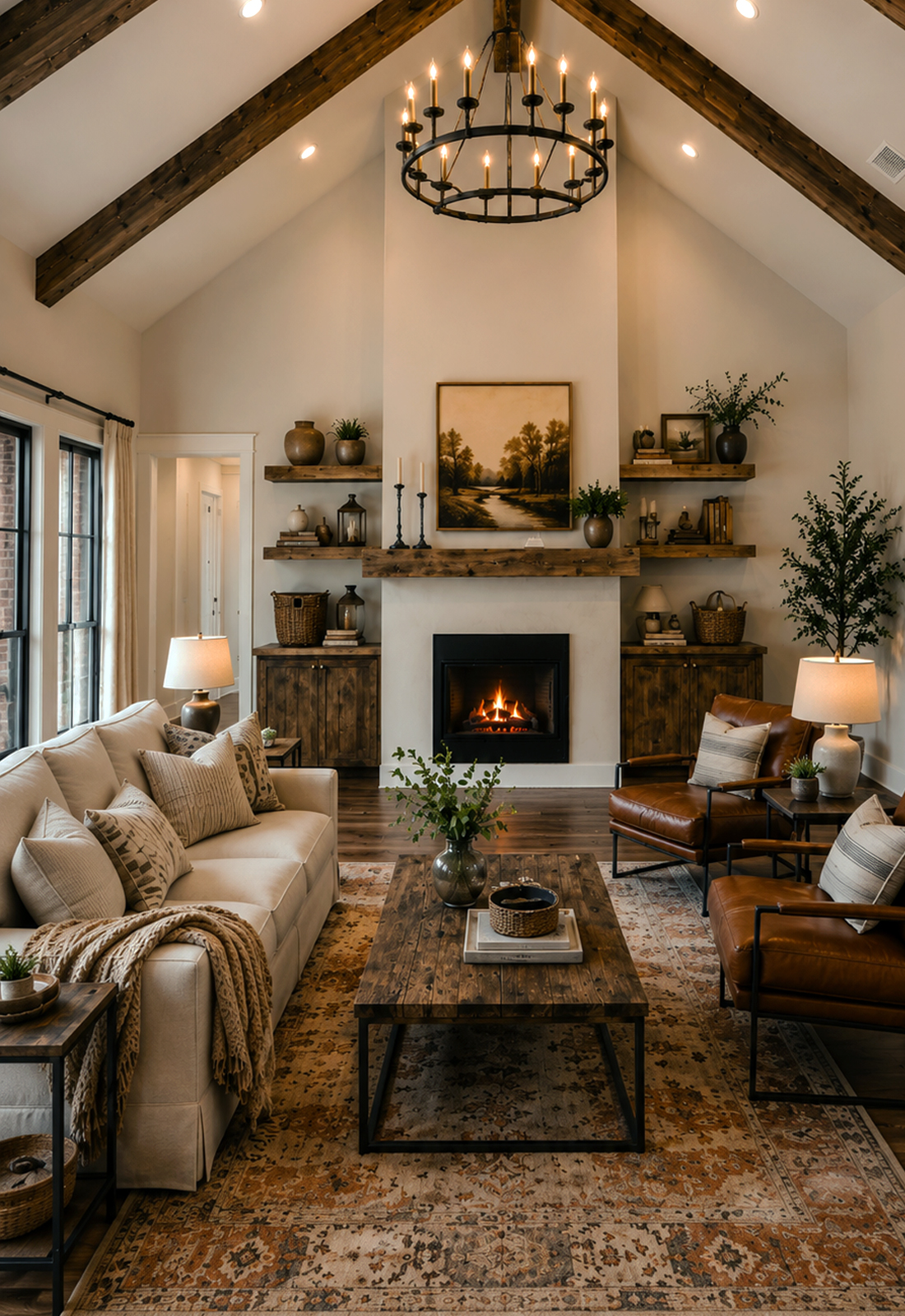
Lighting can change the whole room. In an industrial farmhouse space, a bold chandelier can become the star.
Look for fixtures with black iron, aged brass, wood beads, wagon-wheel shapes, cage frames, or Edison-style bulbs. A large fixture over the seating area can make the room feel finished.
Edison bulbs add a vintage glow. But use warm LED versions so the room does not feel too dim or orange. Dimmers also help. They let you change the mood from bright and useful to soft and cozy.
A chandelier works best when it matches the scale of the room. A small fixture can look lost in a big living room. A large one can add drama and balance tall ceilings.
Design cues:
- Choose a black iron or mixed wood-and-metal fixture.
- Use warm white bulbs.
- Add a dimmer for soft evening light.
- Match the fixture size to the room.
- Try cage, wheel, linear, or lantern styles.
7. Layer Cozy Farmhouse Textiles
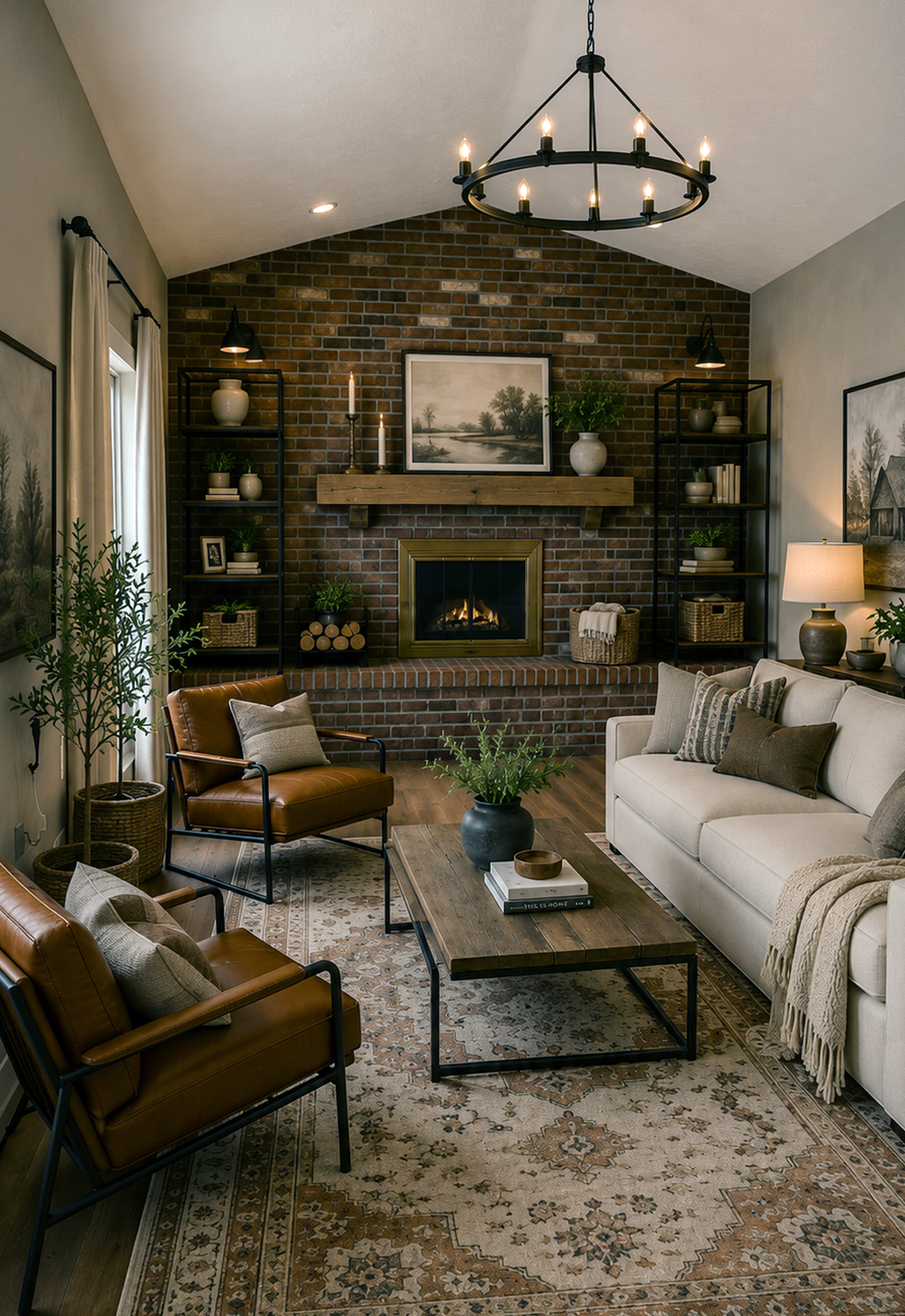
Hard surfaces are a big part of industrial style. Brick, metal, concrete, and wood can look amazing. But they can also feel cold without soft layers.
That is where farmhouse texture comes in. Add woven throws, chunky knit blankets, linen pillows, cotton slipcovers, jute rugs, and soft wool accents.
Texture matters more than pattern here. A cream knit throw can warm up a leather sofa. A linen pillow can soften a metal-framed chair. A jute rug can ground the space and add natural charm.
Keep the colors simple. Cream, tan, gray, brown, black, and muted green all work well.
Design cues:
- Layer linen, cotton, wool, jute, and leather.
- Use chunky throws for comfort.
- Choose pillows with simple texture.
- Add a soft rug under the main seating area.
- Keep patterns subtle and natural.
8. Add a Reclaimed Wood Coffee Table
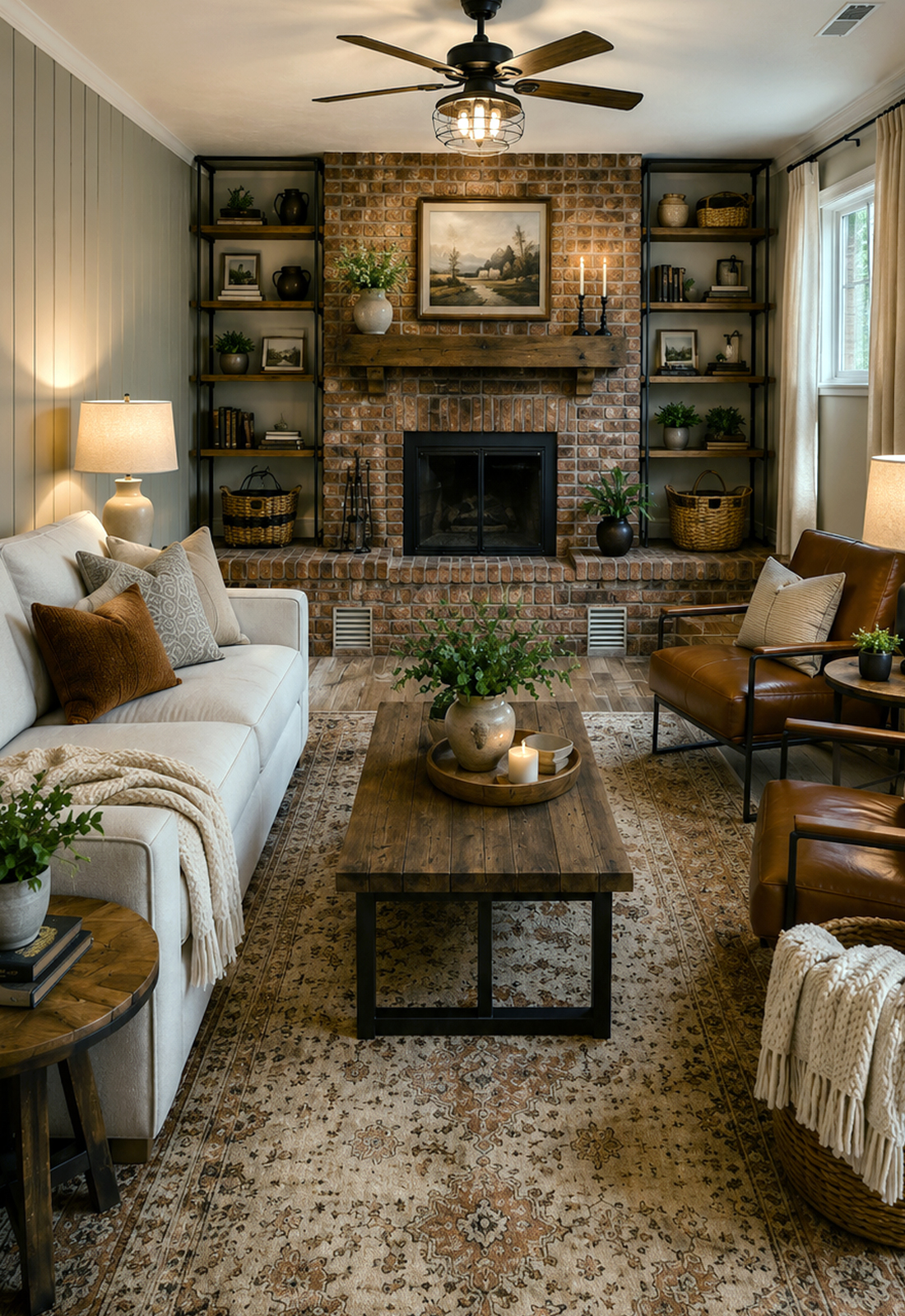
The coffee table often sits at the center of the room. So it should set the tone.
For industrial farmhouse style, choose a coffee table made from heavy wood, iron, or both. A reclaimed wood top with metal legs works beautifully. So does an old trunk, a wood cart, or a simple block-style table.
The table should feel sturdy. It should look like it can handle real life. This is not the place for delicate glass or shiny gold.
Style the top with simple pieces. Use a tray, a stack of books, a ceramic bowl, a small plant, or a black metal candle holder. Leave some open space so the table stays useful.
Design cues:
- Choose thick wood or mixed wood and metal.
- Look for aged marks and natural grain.
- Use a black metal base for contrast.
- Keep tabletop decor simple.
- Add one soft item, like a woven tray or ceramic vase.
9. Style Open Shelves With Rustic Pieces
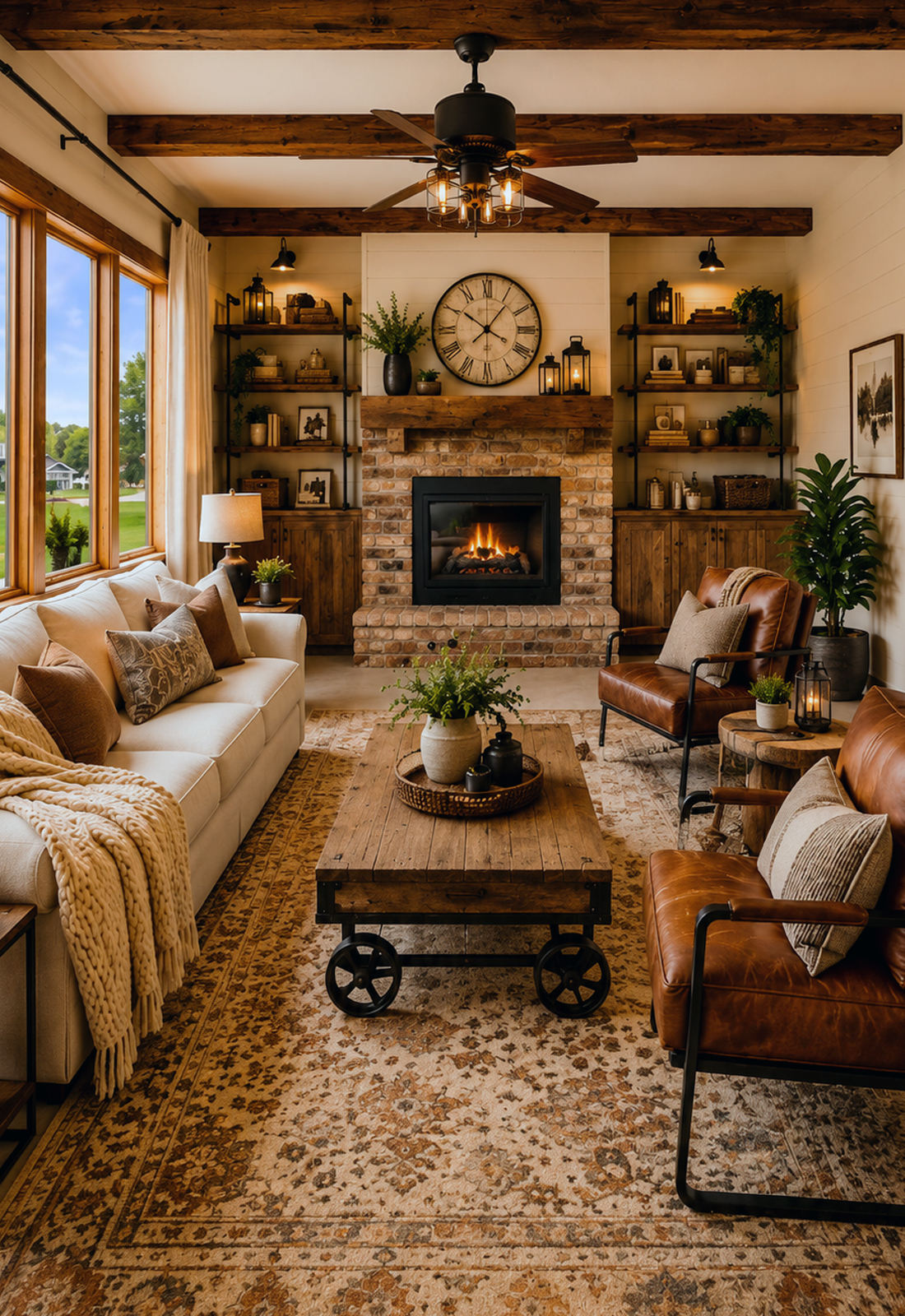
Open shelves fit this style well because they feel useful and casual. They also let you show off texture.
Use thick wood shelves with black metal brackets. Place them on a brick wall, beside a fireplace, or above a console table.
Style the shelves with a mix of old and new pieces. Try pottery, framed art, baskets, books, small plants, vintage clocks, glass jars, and metal objects. Keep the look edited. Too many small items can feel messy.
Industrial farmhouse shelves should feel collected, not crowded. Leave breathing room between objects.
Design cues:
- Use wood shelves with black brackets.
- Mix ceramic, glass, metal, and woven pieces.
- Add vintage items for charm.
- Keep colors earthy and soft.
- Leave empty space so each item stands out.
10. Mix Modern Lines With Vintage Charm
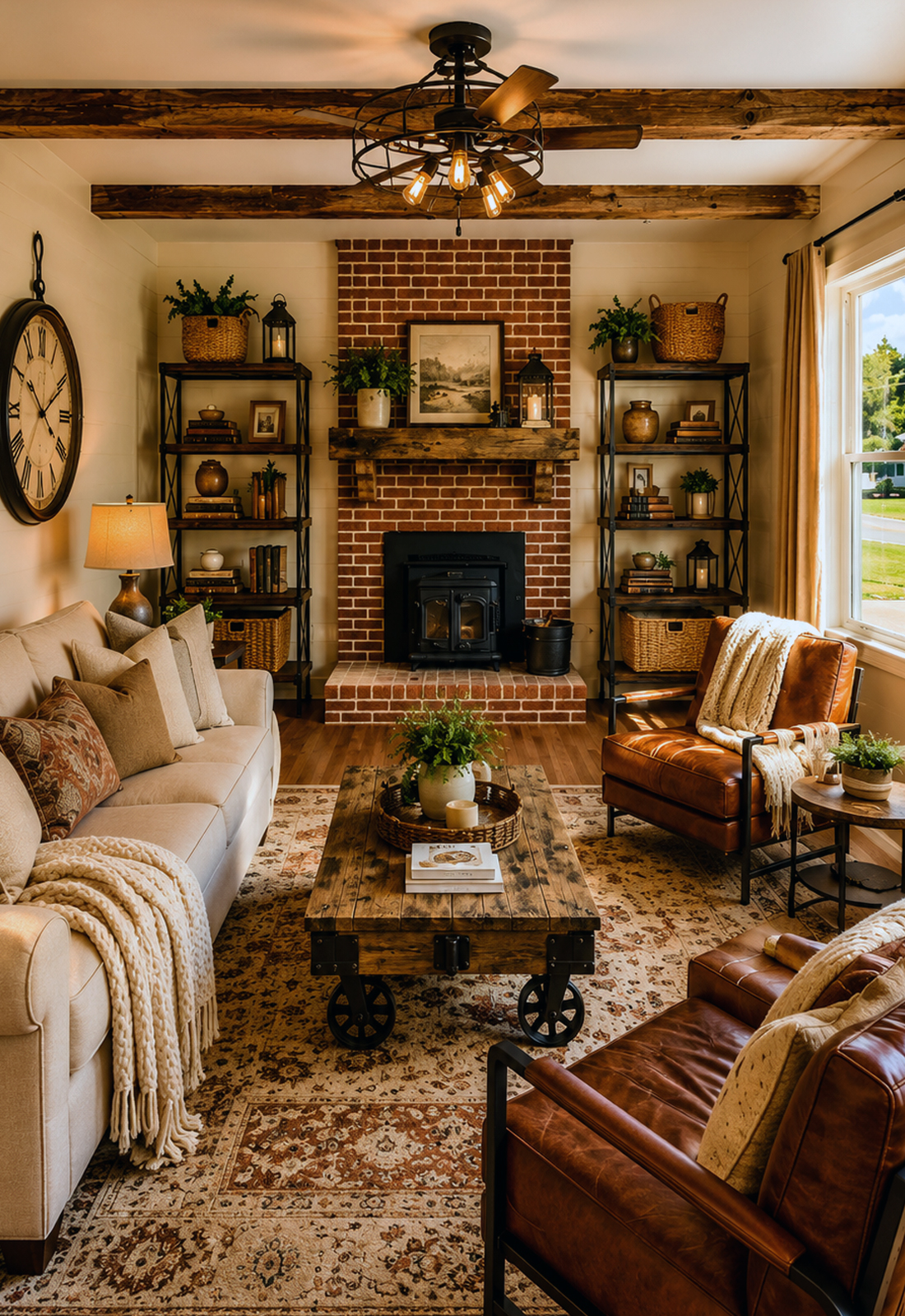
Industrial farmhouse style should not feel like a theme set. It works best when old and new pieces mix together.
A modern sofa can sit beside an antique side table. A clean black floor lamp can pair with a worn leather chair. A sleek fireplace can look warmer with a reclaimed mantel.
This mix keeps the room fresh. It also helps the space feel personal.
The key is to repeat materials. If you use a modern black lamp, add black metal somewhere else. If you use a vintage wood cabinet, echo that wood tone in the coffee table or shelves.
Design cues:
- Pair clean lines with aged materials.
- Mix vintage finds with newer pieces.
- Repeat wood, metal, and leather tones.
- Avoid matching every item.
- Let one or two old pieces tell the story.
11. Use a Jute or Woven Rug
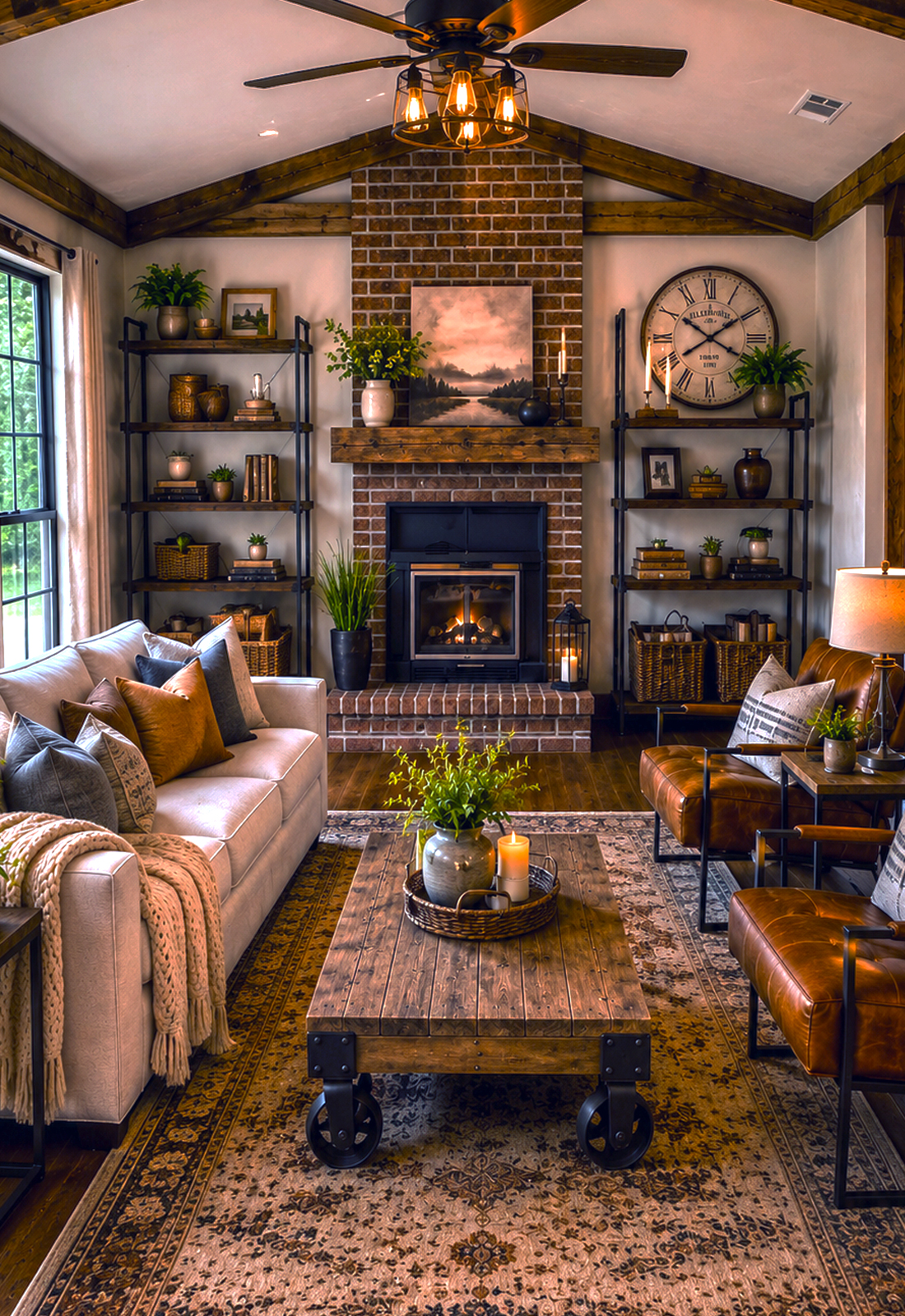
A rug can soften the whole room. It also helps define the seating area.
Jute works well in industrial farmhouse decor because it feels natural and relaxed. It adds texture without stealing attention. A woven wool rug can also work, especially in colder spaces.
Layering rugs can add even more comfort. Try a large jute rug as the base. Then add a smaller patterned rug on top. Choose simple patterns, like faded stripes, vintage motifs, or soft checks.
Make sure the rug is large enough. At least the front legs of the sofa and chairs should sit on it. This makes the room feel pulled together.
Design cues:
- Choose jute, sisal, wool, or cotton.
- Use soft earth tones.
- Layer rugs for depth.
- Pick faded or simple patterns.
- Size the rug to fit the seating area.
12. Create a Fireplace Focal Point
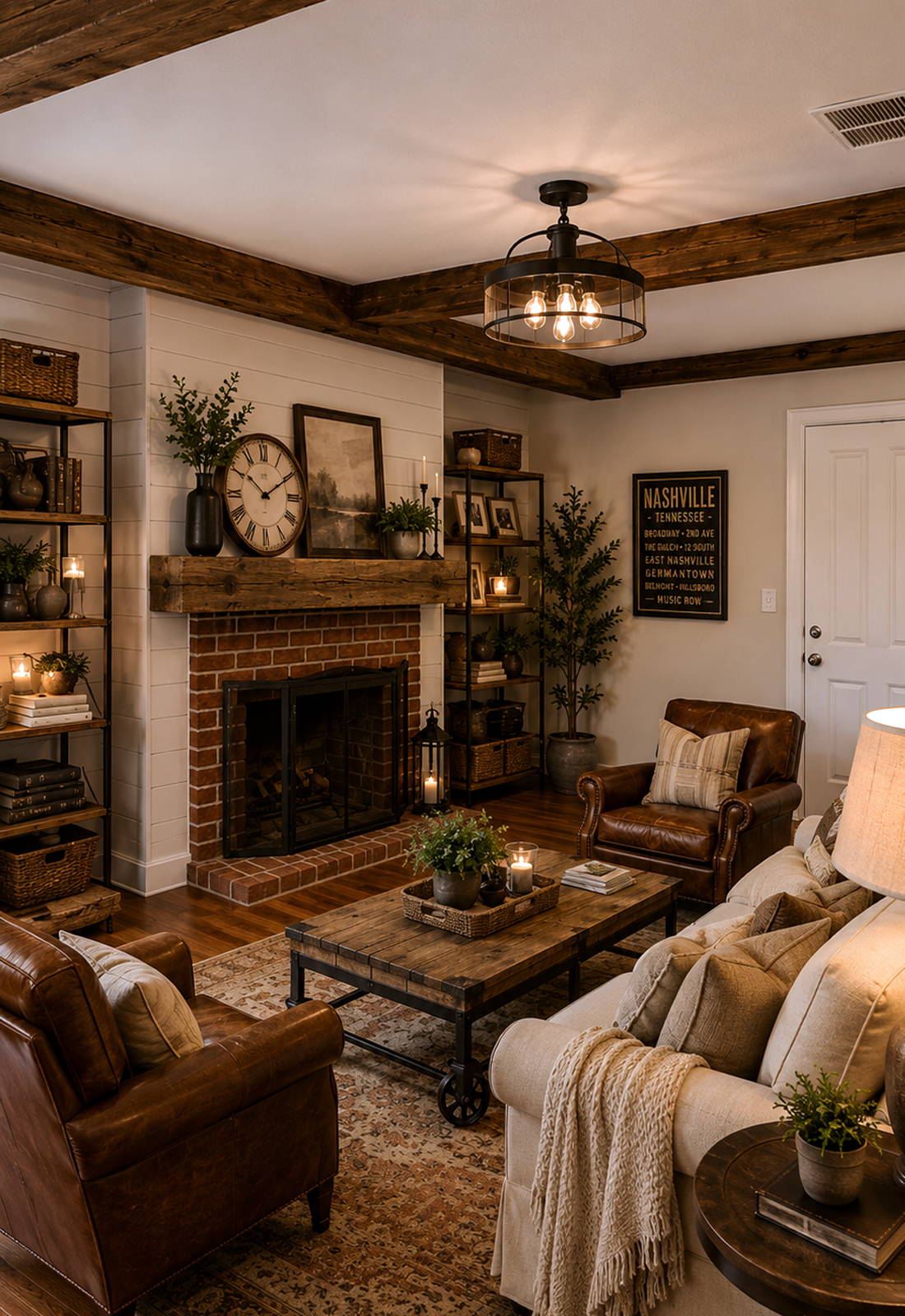
A fireplace can become the perfect industrial farmhouse feature. It adds warmth, texture, and a natural gathering spot.
If you have a fireplace, frame it with rustic and industrial details. Use a reclaimed wood mantel, black metal screen, brick surround, stone face, or matte black tile.
Decorate the mantel with simple pieces. Try a large mirror, candle holders, old books, pottery, or greenery. Keep it balanced but not too perfect.
If you do not have a fireplace, you can still create a focal wall. Use a media console, electric fireplace, or black metal cabinet with wood accents.
Design cues:
- Add a reclaimed wood mantel.
- Use brick, stone, or matte black tile.
- Choose a black metal fireplace screen.
- Hang a large mirror or simple art above it.
- Keep mantel decor warm and uncluttered.
13. Add Factory-Style Windows or Black Trim
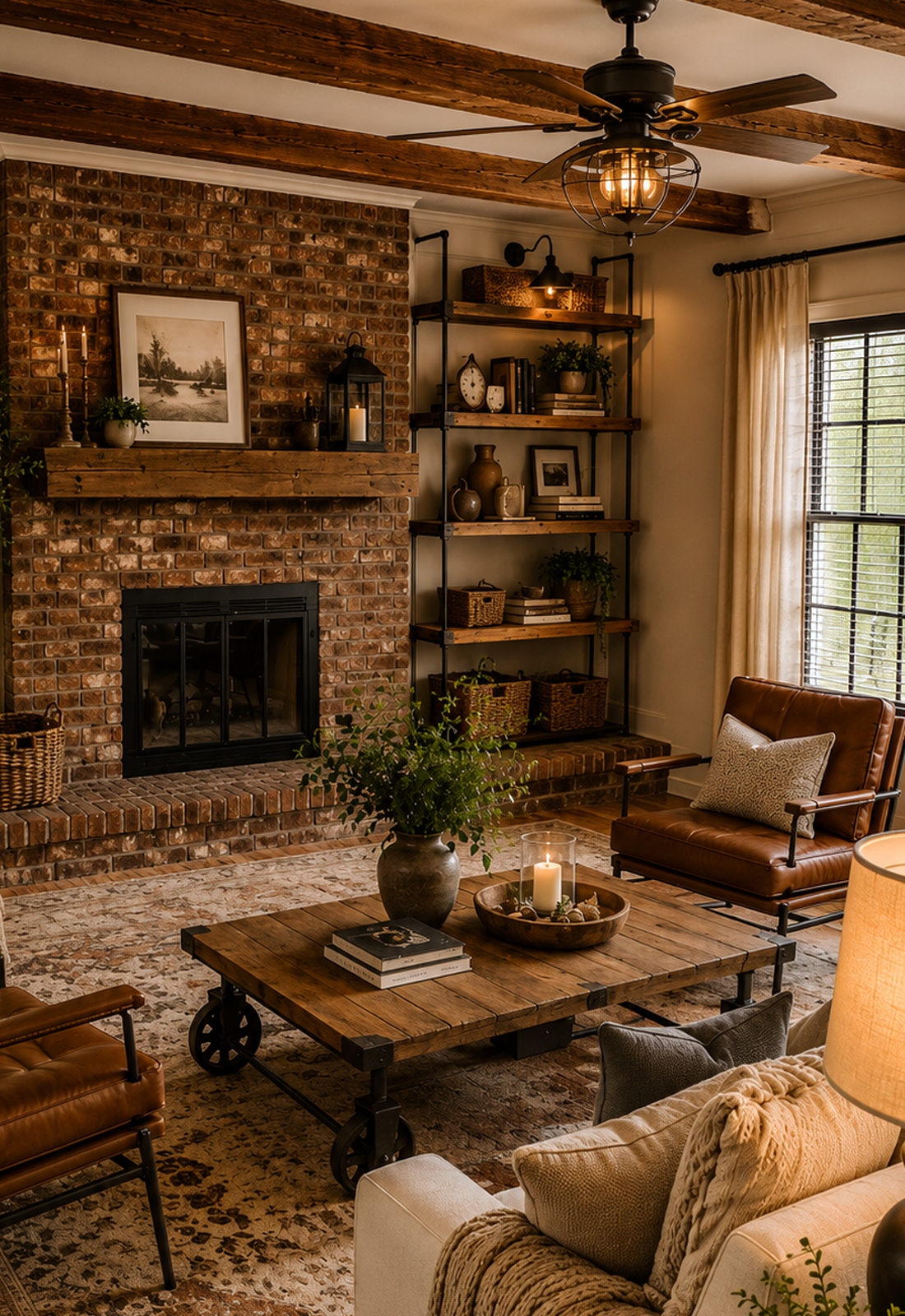
Black trim brings a crisp industrial look. It works especially well around windows and doors.
If you have large windows, black frames can create a bold loft feel. If you do not, use black curtain rods, black interior doors, or black-framed mirrors to get a similar effect.
Black trim looks sharp against white or cream walls. It also ties in with metal lighting and furniture.
To keep the room cozy, soften black trim with curtains. Choose linen, cotton, or textured panels in warm white, oatmeal, or soft gray.
Design cues:
- Use black window frames or black curtain rods.
- Add linen curtains for softness.
- Repeat black in lights and hardware.
- Keep walls warm and light.
- Use mirrors to echo the window-frame look.
14. Bring in Vintage-Inspired Wall Art
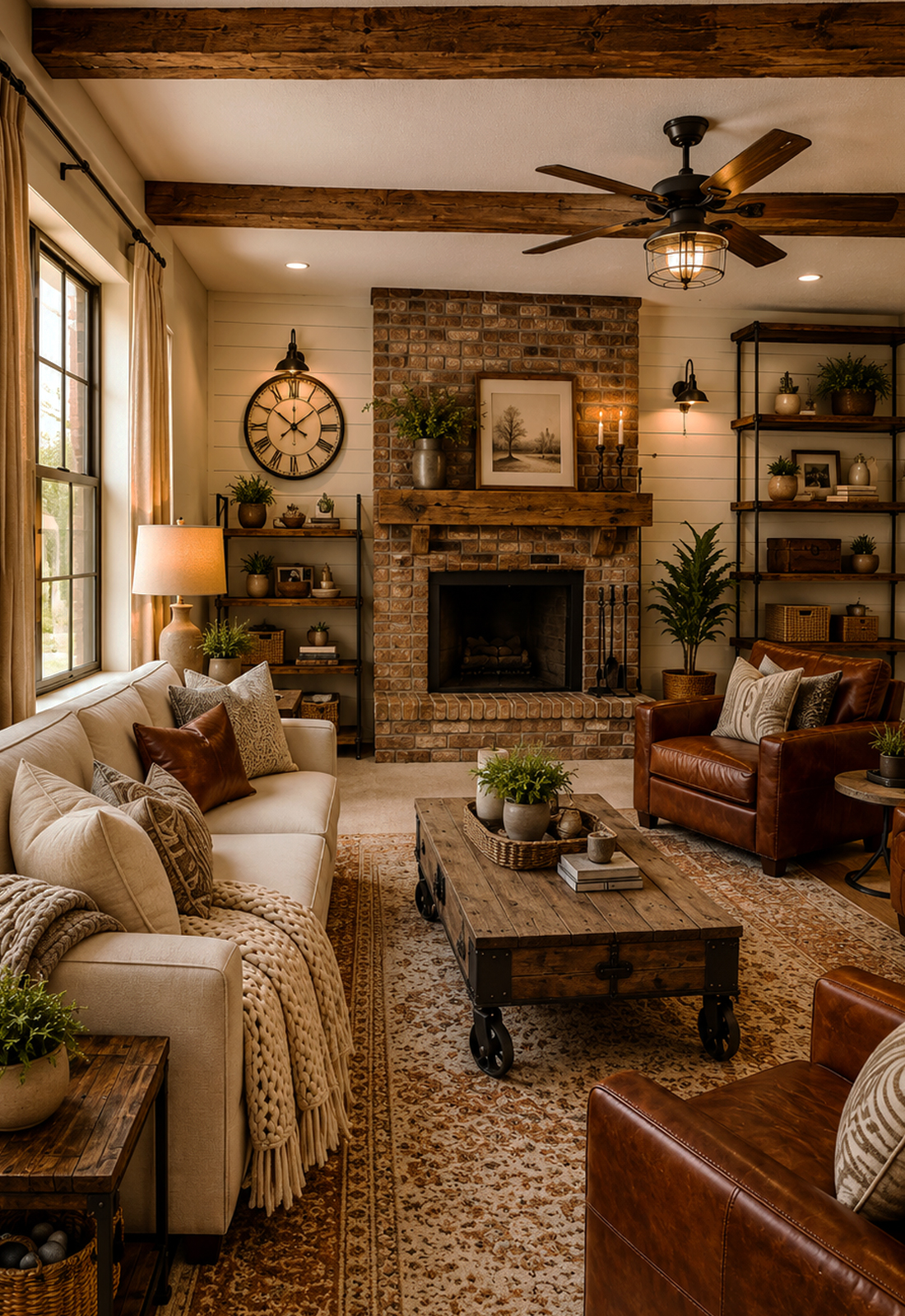
Wall art gives the room personality. For industrial farmhouse style, choose pieces that feel simple, aged, or handmade.
Vintage signs can work, but use them with care. One strong sign looks charming. Too many can feel busy. Black-and-white photos, old landscape prints, architectural drawings, maps, and simple line art also fit the style.
Large art often works better than many tiny pieces. It gives the room a clean, designed feel.
Frames matter too. Choose black metal, raw wood, or aged brass. Avoid shiny frames or bright plastic finishes.
Design cues:
- Use black-and-white prints or vintage art.
- Choose wood or black metal frames.
- Hang one large piece for impact.
- Keep signs simple and tasteful.
- Tie the art colors to the room palette.
15. Add Barn Doors With an Industrial Twist
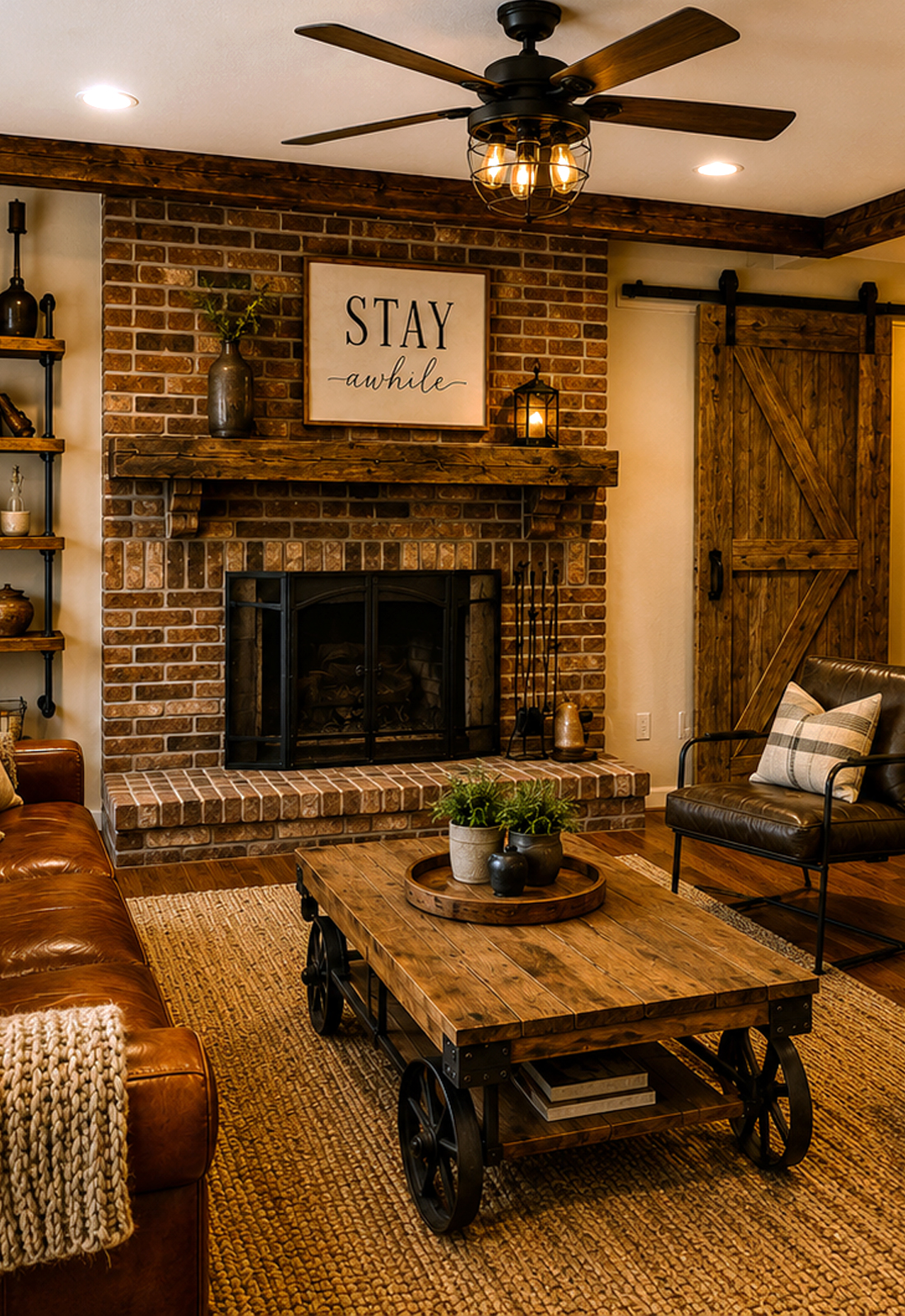
A sliding barn door is a classic farmhouse feature. Add black metal hardware, and it becomes perfect for industrial farmhouse style.
Use a barn door for a hallway, office, pantry, or media wall. Choose reclaimed wood, painted wood, or a dark stained finish. For a cleaner look, use a simple panel door with black rail hardware.
The door should feel like part of the room, not a random add-on. Match the wood tone to the coffee table, mantel, or shelves.
Barn doors also save space. That makes them useful in small living rooms or open layouts.
Design cues:
- Use black sliding rail hardware.
- Choose reclaimed or simple paneled wood.
- Match the wood tone to other pieces.
- Keep the style clean, not too rustic.
- Use it where it adds function.
16. Use Concrete or Stone for a Raw Edge
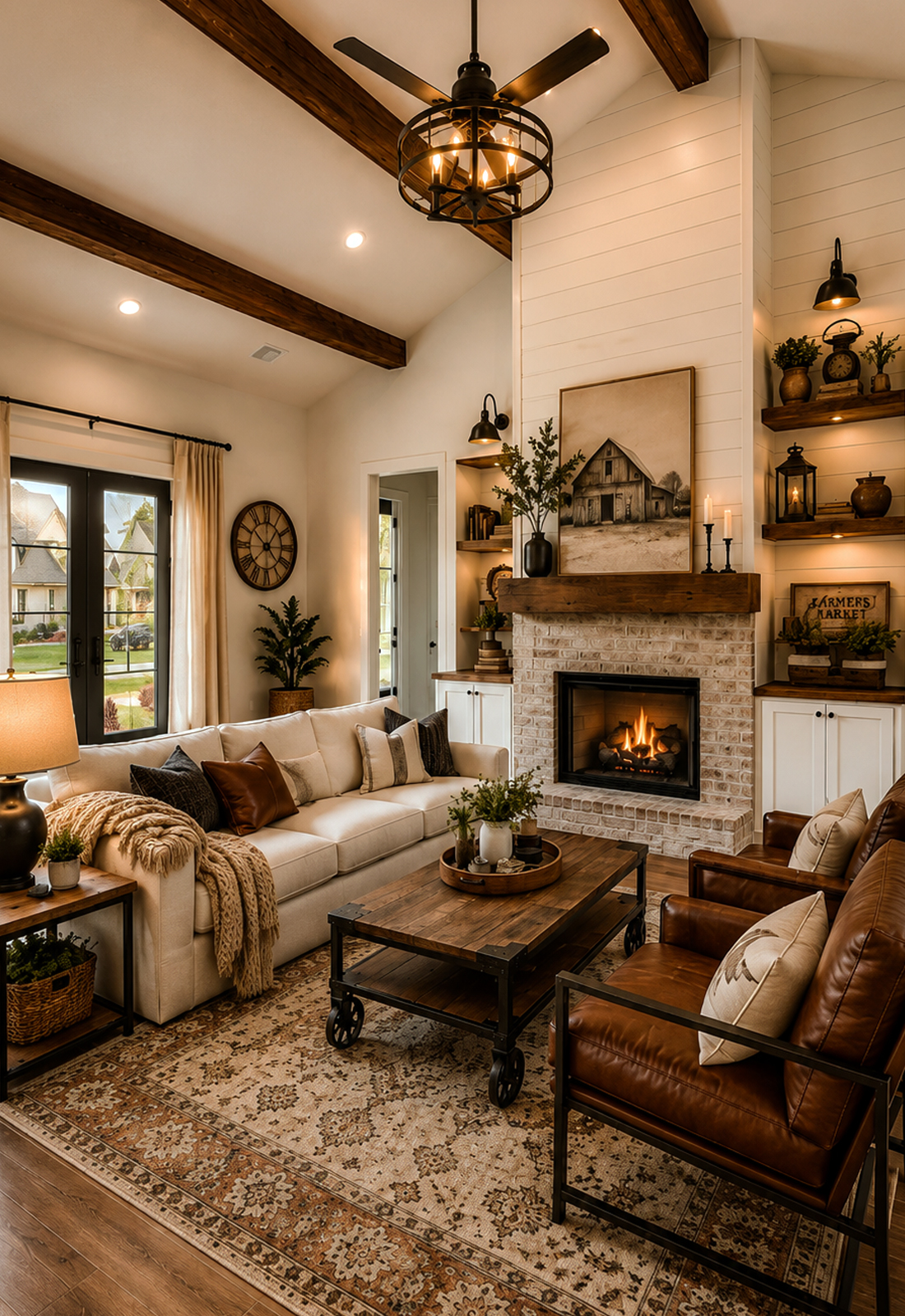
Industrial design loves raw materials. Concrete and stone bring that sturdy, grounded feel.
You do not need a full concrete wall. A small touch can be enough. Try a concrete side table, stone fireplace, cement planter, or slate hearth.
These materials cool down the sweetness of farmhouse decor. They also look great with warm wood and soft textiles.
If the room starts to feel too hard, add more fabric. A soft rug, linen curtains, and plush pillows can balance concrete and stone with ease.
Design cues:
- Use concrete in small doses.
- Add stone around the fireplace.
- Choose matte, natural finishes.
- Pair hard surfaces with soft textiles.
- Keep the palette warm so the room does not feel cold.
17. Decorate With Greenery
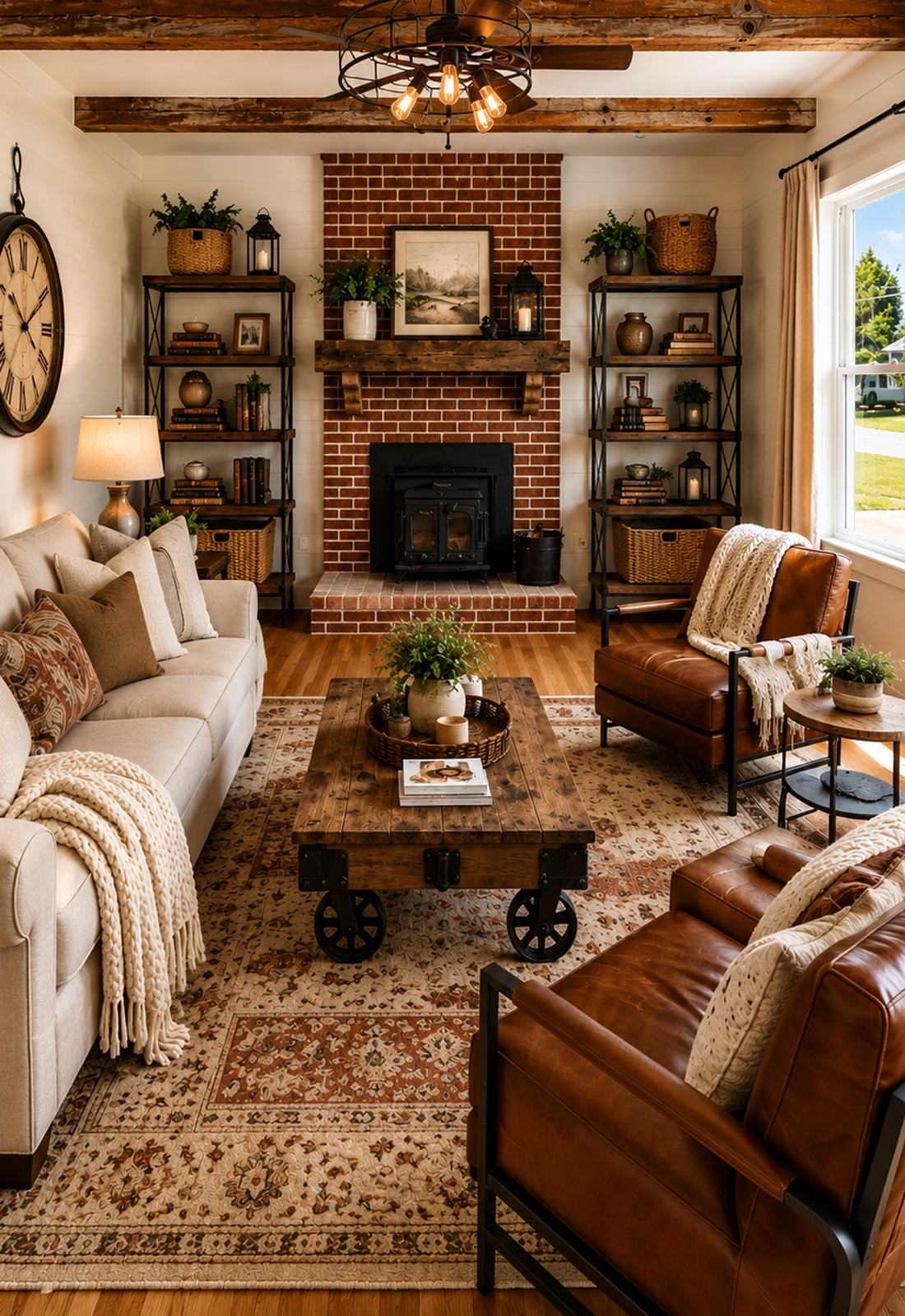
Plants bring life to an industrial farmhouse living room. They soften hard edges and add a fresh touch.
Use simple greenery in clay pots, black planters, woven baskets, or old crocks. Olive trees, snake plants, pothos, ferns, and eucalyptus stems work well.
Greenery also adds color without making the room feel busy. Soft green looks beautiful with black metal, brown leather, and warm white walls.
Do not overfill the room with plants. A large tree in one corner and a few small plants on shelves can be enough.
Design cues:
- Use simple green plants.
- Choose clay, black metal, or woven planters.
- Add one tall plant for height.
- Use greenery to soften brick and metal.
- Keep the look natural and relaxed.
18. Choose Furniture With Strong Shapes
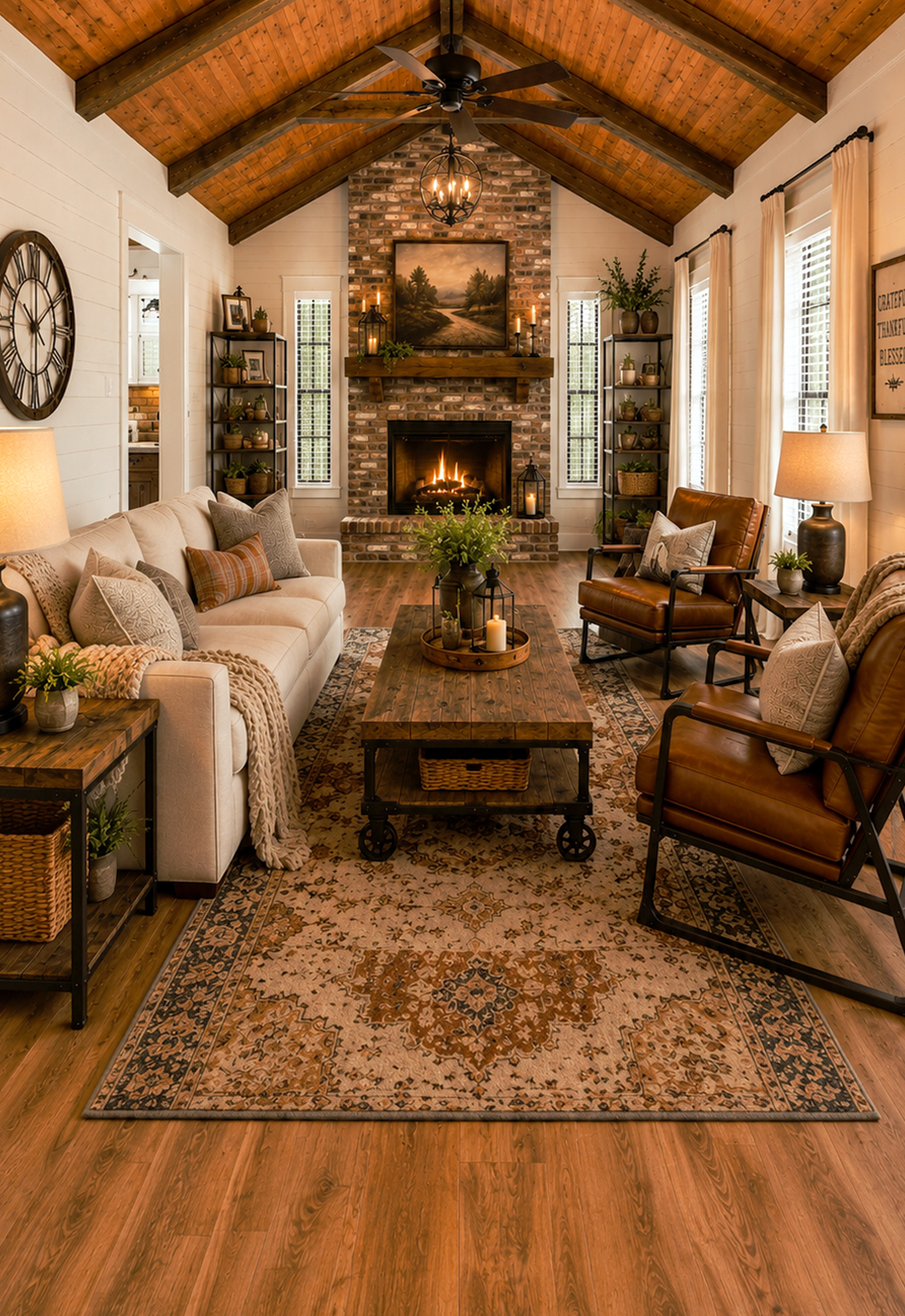
Industrial farmhouse furniture should feel solid. Look for strong shapes, clean lines, and sturdy materials.
A square wood coffee table, a metal-framed console, a leather club chair, or a simple linen sofa can all work well. Avoid pieces that feel too delicate or fancy.
Scale also matters. Industrial farmhouse rooms often look best with fewer, larger pieces. This keeps the room from feeling cluttered.
Choose furniture that supports real life. The room should invite people to sit, talk, read, and relax.
Design cues:
- Pick sturdy pieces with clean shapes.
- Use wood, leather, iron, and linen.
- Avoid delicate legs or glossy finishes.
- Choose fewer pieces with more presence.
- Make comfort a top goal.
19. Add Warm Lamps at Different Heights
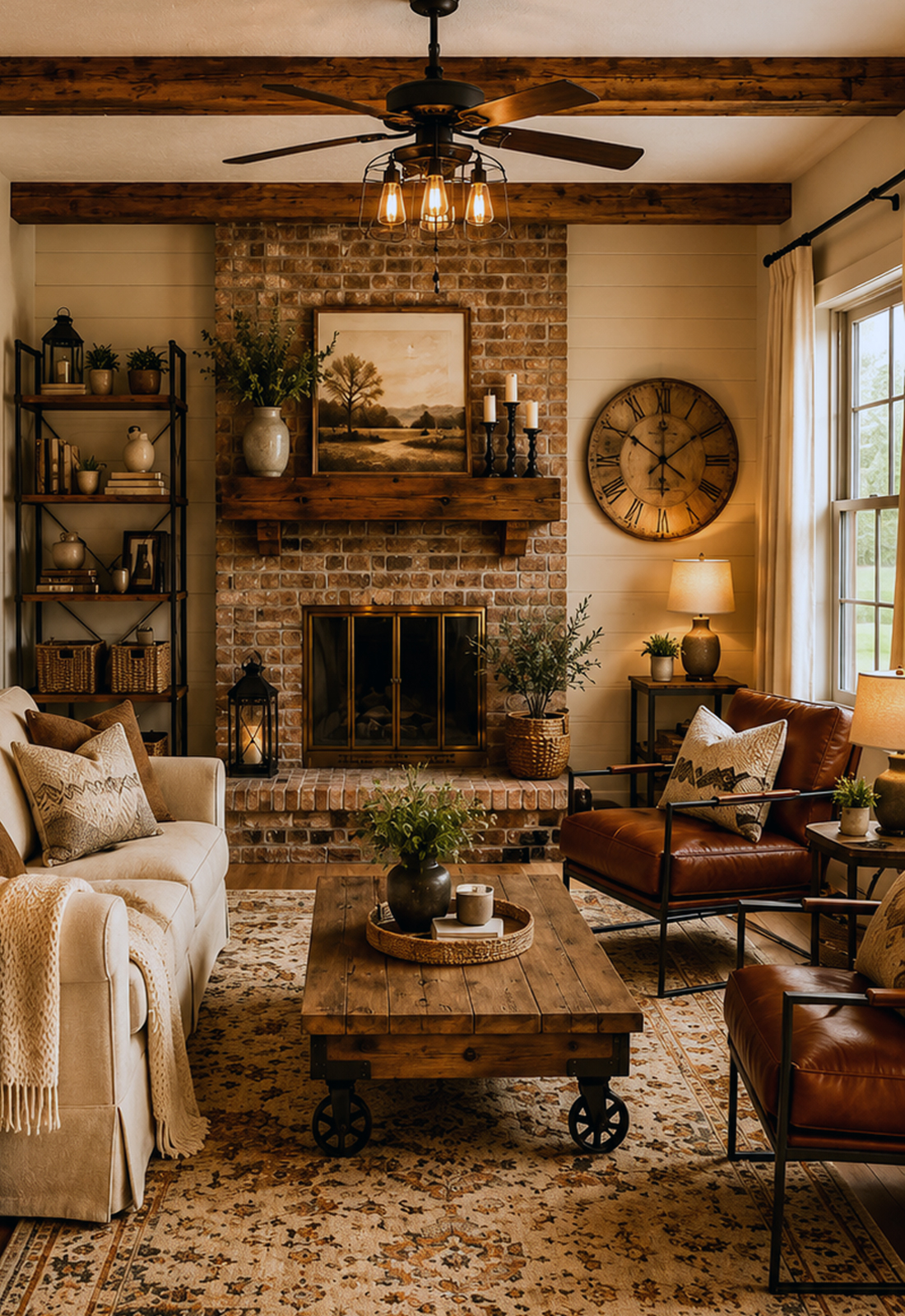
Overhead lighting helps, but lamps make the room cozy. Use a mix of table lamps, floor lamps, and wall sconces.
Black metal lamps fit the industrial side. Linen or burlap shades soften the farmhouse side. A brass or bronze accent can also add warmth.
Place lamps at different heights. This creates a soft glow around the room. It also keeps the space from feeling flat at night.
A floor lamp beside a leather chair can create a reading spot. A table lamp on a reclaimed wood console can make the entry side of the room feel warm.
Design cues:
- Use black metal, bronze, or aged brass lamps.
- Choose warm white bulbs.
- Add linen or fabric shades.
- Place light in corners and near seating.
- Use more than one light source.
20. Keep the Room Edited and Livable

The best industrial farmhouse living room feels styled but still easy to live in. It should not feel packed with decor. It should not feel too perfect either.
Leave some empty space. Let the brick, wood, metal, and fabric breathe. Choose decor with purpose. A basket can hold blankets. A tray can gather remotes. A shelf can display favorite pieces.
This style shines when every item feels useful, warm, or full of character. So choose fewer pieces, but make each one count.
The final room should feel like a cozy retreat with a little urban edge. It should feel warm in the morning, calm in the afternoon, and inviting at night.
Design cues:
- Keep surfaces simple.
- Use baskets for hidden storage.
- Leave open space around furniture.
- Avoid too many signs or small decor pieces.
- Choose comfort, texture, and character.
How to Pull the Look Together
Industrial farmhouse design works best when each choice supports the same mood. Start with a soft base. Then add contrast. Use black metal for edge. Add reclaimed wood for warmth. Layer soft textiles for comfort. Then finish the room with vintage pieces, warm light, and a few natural touches.
Think of the room as a mix of rough and soft. Brick feels rough, so place linen near it. Metal feels cool, so pair it with warm wood. Leather feels bold, so add pillows and throws. A concrete table feels raw, so set it on a woven rug.
This balance is what makes the style feel rich. It does not look flat. It has depth. It has texture. It also feels welcoming.
Color plays a big role too. A good industrial farmhouse palette often starts with warm white or greige. Then it adds black, charcoal, brown, and soft earth tones. You can also add muted green, rust, tan, or clay for a warmer look.
For a small living room, keep the walls light and use black in smaller doses. Try black curtain rods, a metal lamp, and a wood coffee table with iron legs. For a large living room, go bigger. Add a brick wall, a large chandelier, a leather sofa, and chunky wood beams.
No matter the size of the room, the feeling should stay the same. It should feel grounded, cozy, and full of charm.