What makes an old home feel grand, warm, and easy to live in?
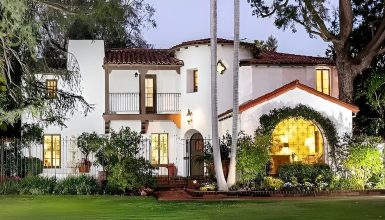
This 1927 Spanish Revival home offers a clear answer. It does not rely on one bold feature. Instead, it builds its charm in layers. Red clay roof tiles meet warm white stucco. Deep green trees frame the walls. Arched doors soften each room. Dark wood beams add age and depth. Then bright art and modern furniture bring fresh energy.
The house feels rich, yet it never feels stiff. It has formal rooms, but it also has spaces made for rest. The front garden feels like a private park. The courtyard offers a quiet place to sit. Inside, high ceilings and old beams create drama. At the same time, large sofas, open rooms, and a bright kitchen make daily life feel relaxed.
Most of all, the home respects its past without living in it. That balance gives the design its lasting appeal.
1. A Garden Approach That Hides the House
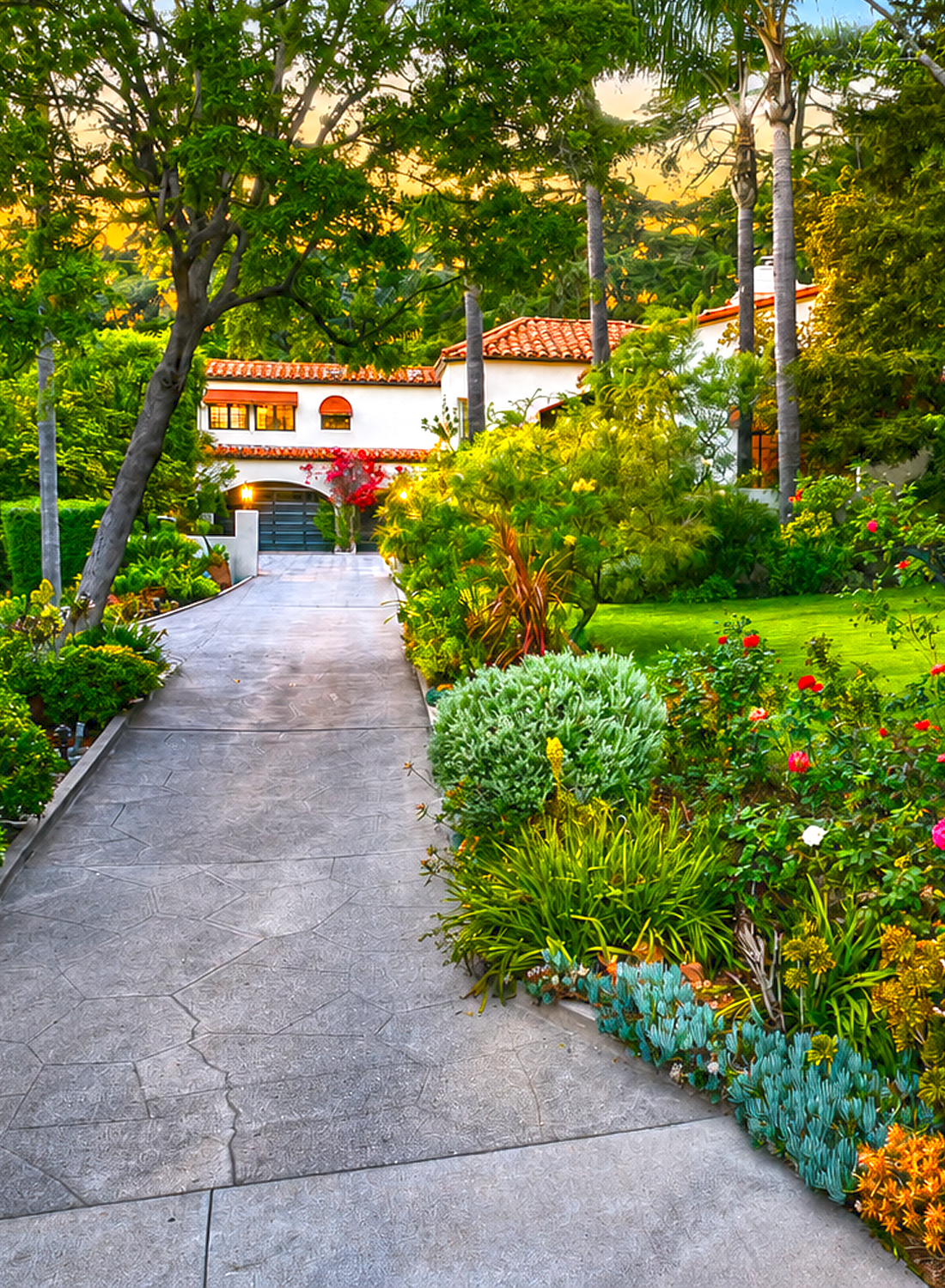
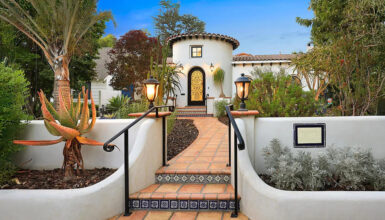
The first view does not reveal the whole home. Instead, a long drive winds through a deep green garden. Tall trees stretch over the path. Low shrubs and flowers fill both sides. This slow approach makes the home feel private and rare.
It also builds a sense of discovery. You see pieces of the white walls and red roof through the leaves. Then the home comes into full view near the end of the drive.
This method works well for Spanish Revival design. The style often feels best when it blends with the land. A straight, open lawn could make the house feel too formal. Here, the layered garden makes it feel old, settled, and tied to its site.
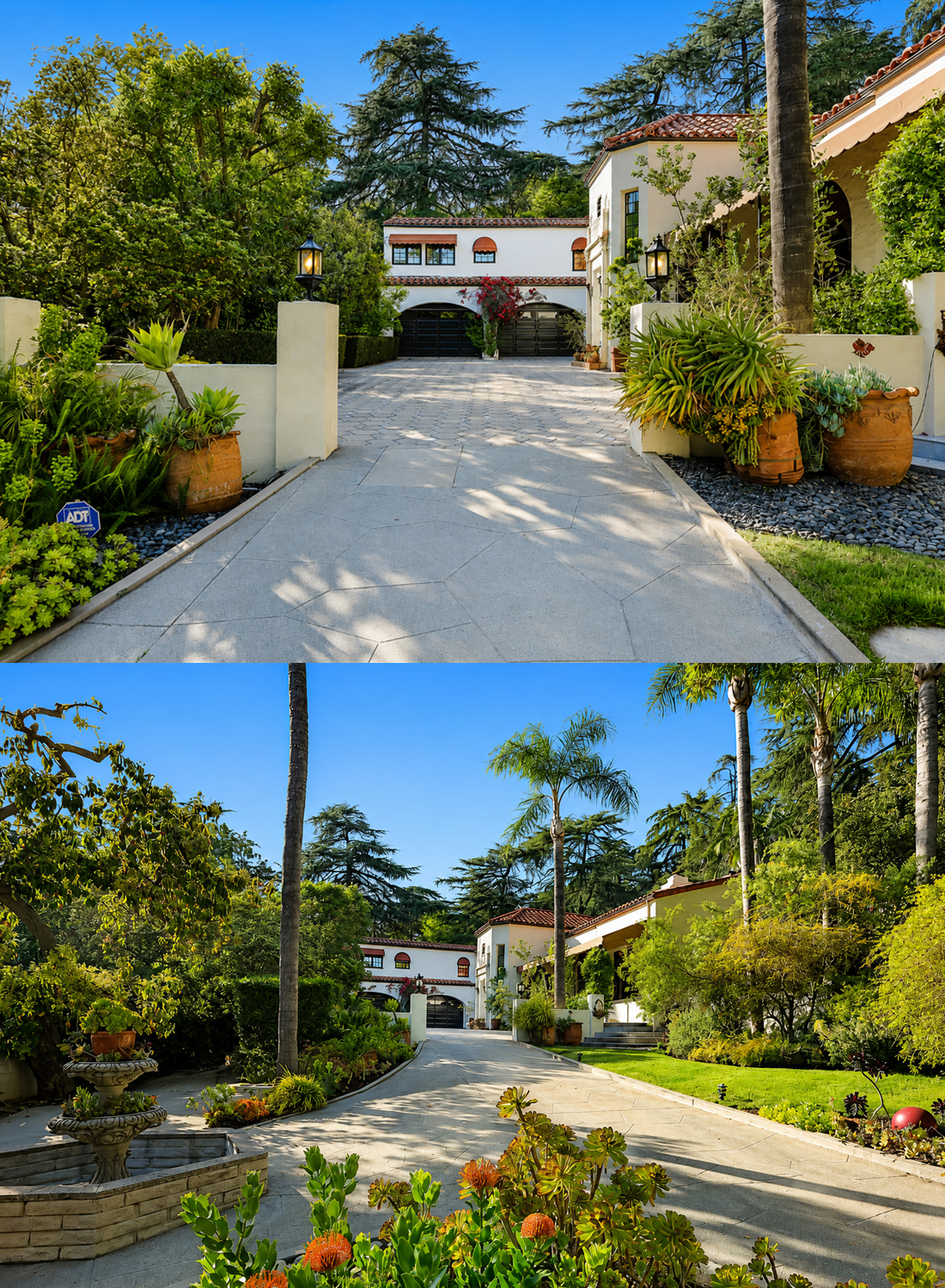
The garden also softens the hard parts of the home. The stucco walls have clean, solid forms. The roof has strong lines. Yet vines, palms, roses, and shrubs break up those edges.
Design cues
- A long and gently curved drive
- Tall trees that frame the roofline
- Dense shrubs near the path
- Bright flowers used in small groups
- Low garden lights for evening glow
- Partial views of the home through leaves
2. White Stucco and Red Clay Tile
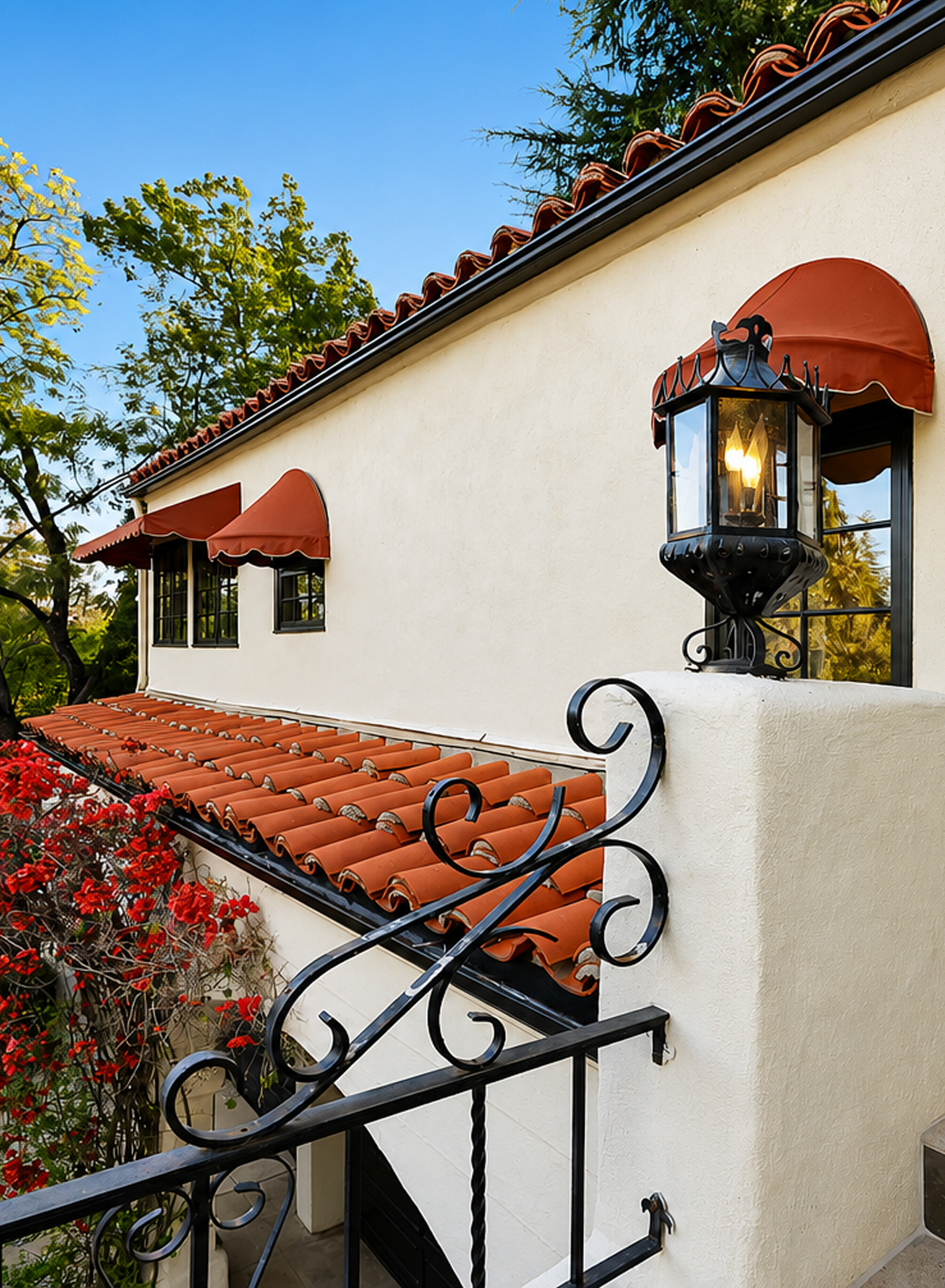
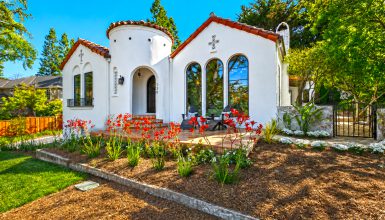
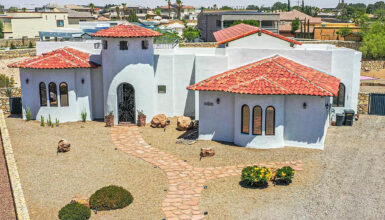
The outside uses one of the most loved Spanish Revival color pairs. Warm white stucco covers the walls. Red clay tile caps the low roof.
The white walls help the home stand out against the dark trees. Yet the shade keeps them from looking too bright. The red roof adds warmth and age. It also links the home to the rich tones used inside.
The roofline does not stay flat or plain. It rises and falls across several wings. Some parts sit low. Others rise above the main walls. This mix gives the home a loose and natural shape.
That shape feels as though the house grew over time. This trait fits many older Spanish Revival homes. They often look less like one large block and more like a group of rooms joined together.
Small tile details also appear above vents and along short roof edges. These accents repeat the main roof material without making the walls feel busy.
Design cues
- Cream or warm white stucco
- Red or rust clay roof tiles
- Low roof slopes
- Mixed roof heights
- Simple wall shapes
- Small tile accents above vents
- Dark trim for clear contrast
3. A Front Court With a Sense of Arrival
The drive opens into a wide paved court near the home. This area gives cars room to turn. Yet it also acts as a grand outdoor room.
The paving has a soft pattern. Muted gray and blue tones keep it calm. The court feels broad, but it does not feel bare. Trimmed shrubs, low walls, pots, lamps, and steps divide the space.
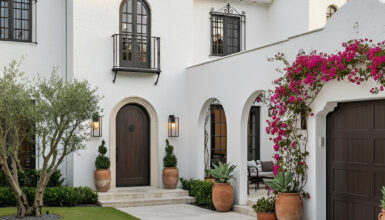
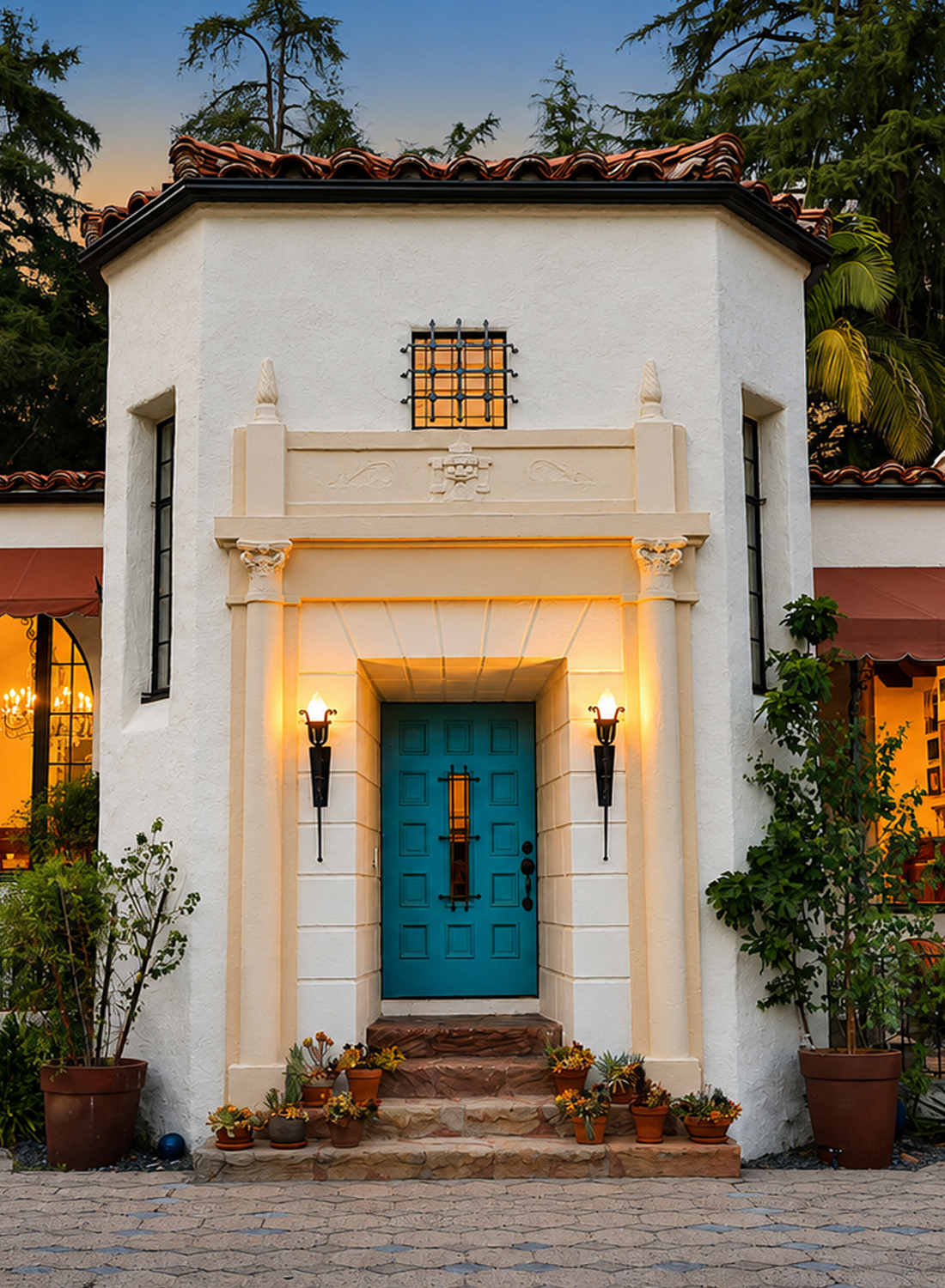
The front door sits inside a tall center bay. Pale stone trim frames it. A vivid blue-green door creates a fun surprise. It gives the front of the home a clear focus.
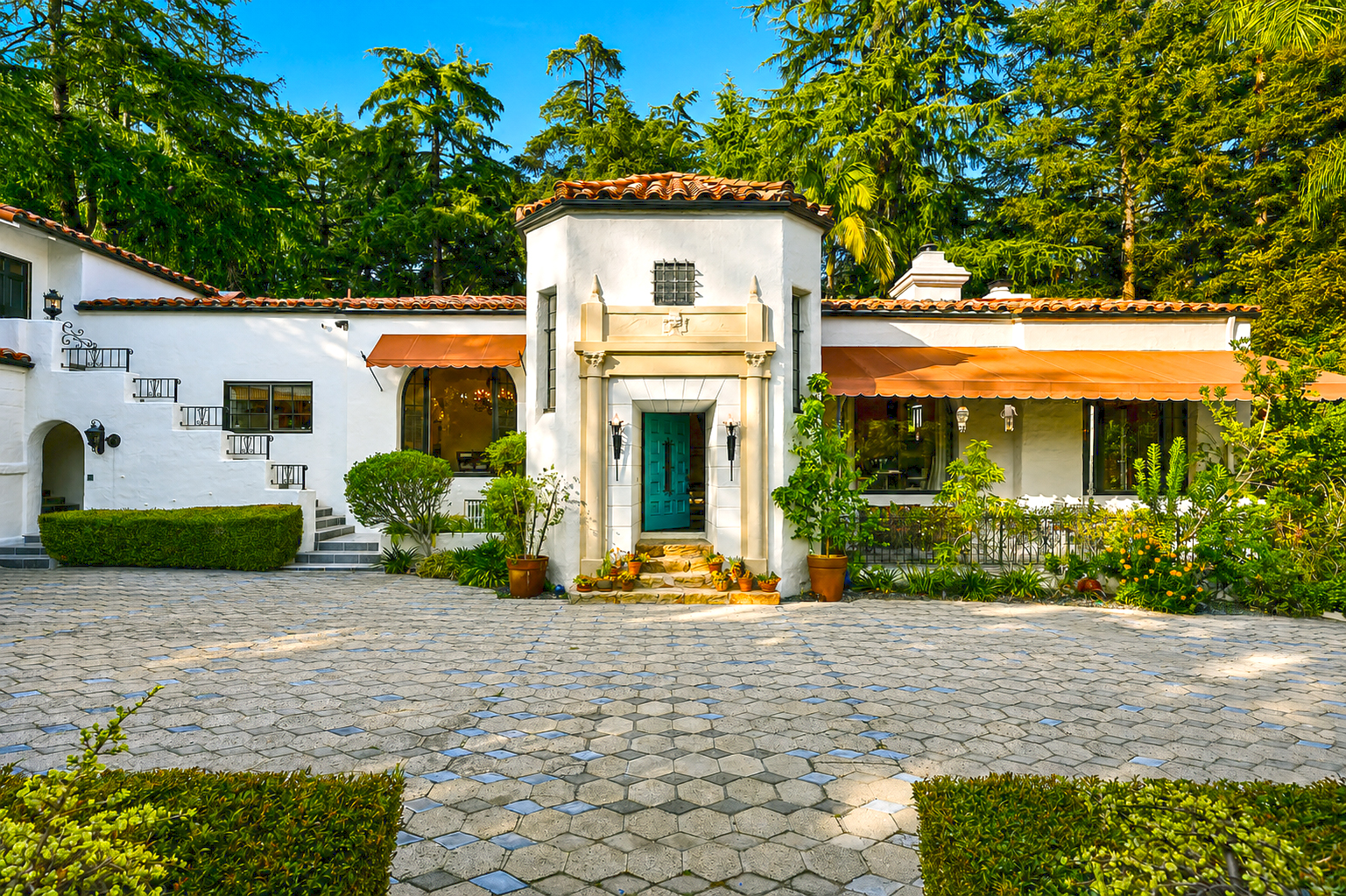
That door also shows how color can work in a historic home. The walls stay quiet. The roof stays warm. Then one cool shade marks the entry. The result feels bold, but still right for the style.
Large fabric awnings shade nearby windows. Their soft rust tone links back to the roof. Their curved edges also add a light, playful note.
Design cues
- A broad paved arrival court
- A raised entry bay
- Stone trim around the door
- One strong door color
- Rust or red window awnings
- Large clay pots near the steps
- Simple black wall lanterns
4. Courtyards That Feel Like Outdoor Rooms
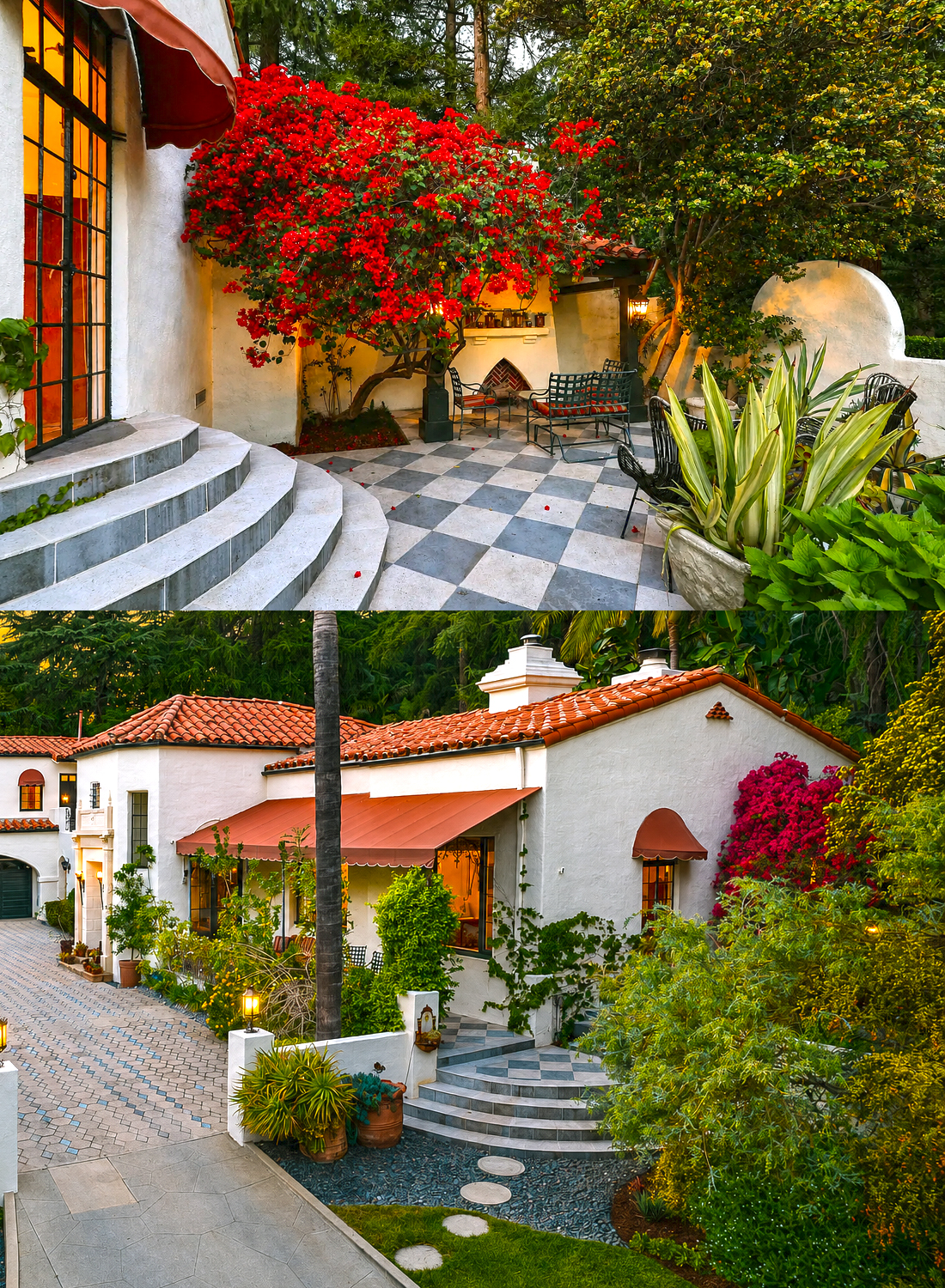
A Spanish Revival home often shines through its outdoor spaces. This house offers several places to sit, gather, or pause.
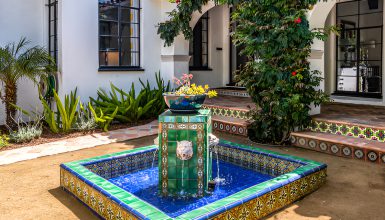
One small court uses gray and white square tiles. The pattern feels crisp and graphic. It also gives the court a strong floor, much like a room inside.
A full bougainvillea spills across the wall. Its red flowers bring life to the pale stucco. Mature trees rise nearby. Their leaves form a natural roof.
Curved stucco walls help close in the space. They create privacy without making the court feel boxed in. Black metal chairs add a light frame. Their open shape lets the tile and plants remain in view.
The court feels formal enough for guests. Yet it also suits a quiet cup of coffee. That mix makes it useful.
Design cues
- Checkered stone or tile floors
- Low curved stucco walls
- Flowering vines
- Open metal chairs
- Large pots with bold plants
- Soft, warm wall lights
- Thick tree cover for shade
5. An Outdoor Fireplace Under a Tile Roof
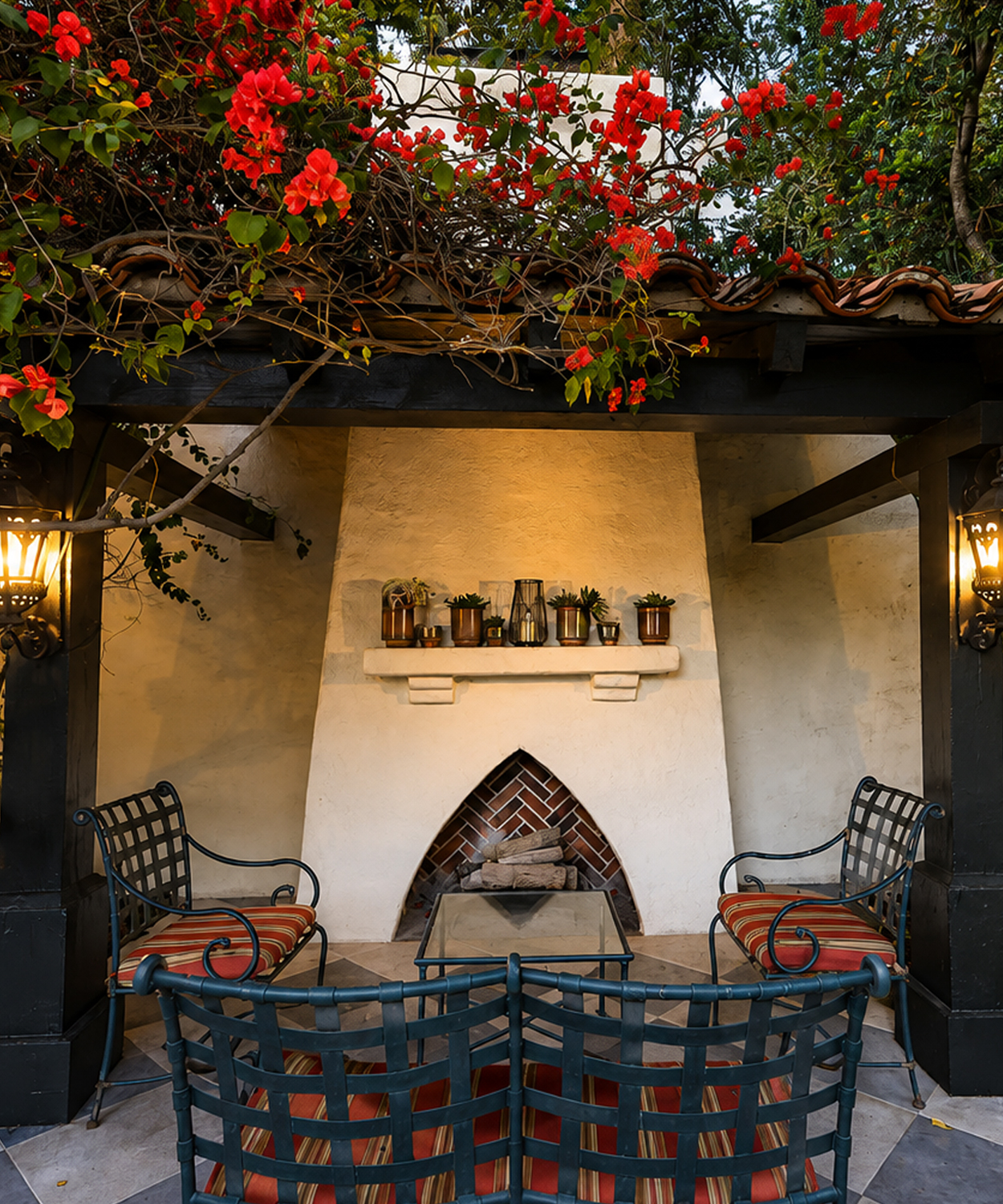
The outdoor fireplace creates one of the most charming spaces around the home. It sits below a dark wood cover with red roof tiles.
The white fireplace has a pointed opening. Dark brick fills the firebox. A simple ledge above it holds small pots and decor. This small detail makes the wall feel lived in.
Dark posts support the roof. Their deep color stands out against the pale wall. Metal chairs gather around a low table. Red and cream seat cushions tie the area to the roof and flowers.
The space feels close and calm. It does not need a large outdoor sofa or a full kitchen. The fireplace gives it a clear purpose.
This is a smart lesson for any yard. A small outdoor room can feel special when it has one strong feature.
Design cues
- A built-in stucco fireplace
- Dark wood posts
- A small tiled roof
- Brick inside the firebox
- A simple mantel ledge
- Four chairs in a close group
- Warm lanterns at both sides
6. A Covered Walk With Bold Tile
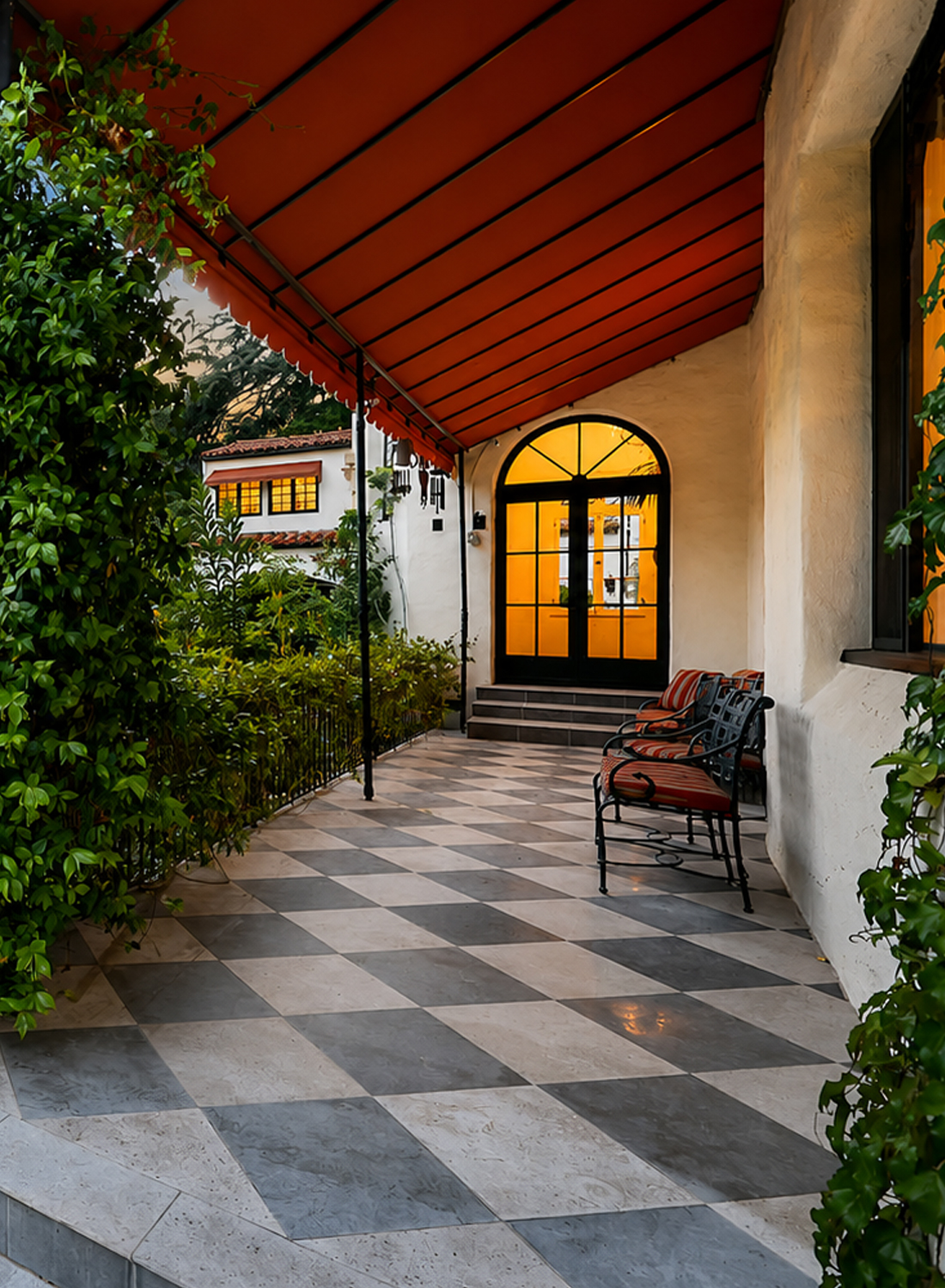
A long covered walk runs beside the house. A deep rust awning shades the path. Large square tiles form a gray and white pattern underfoot.
The awning adds a soft shape to the hard wall. It also makes the walk feel cool and safe. At night, light from the windows gives the path a warm glow.
A large climbing plant wraps one post. Potted succulents sit near the low wall. Black iron chairs offer a place to pause.
This space works as more than a route to the door. It becomes a true porch. The strong floor pattern gives it style. The long awning gives it form.
The floor also links the outer court to the inner entry. This repeated use of dark and light stone helps the house feel joined from one space to the next.
Design cues
- A long fabric awning
- Checkerboard stone flooring
- Climbing vines around posts
- Low stucco walls
- Black iron seating
- Large pots near the steps
- Warm light behind dark window frames
7. A Pool Court With Simple Lines
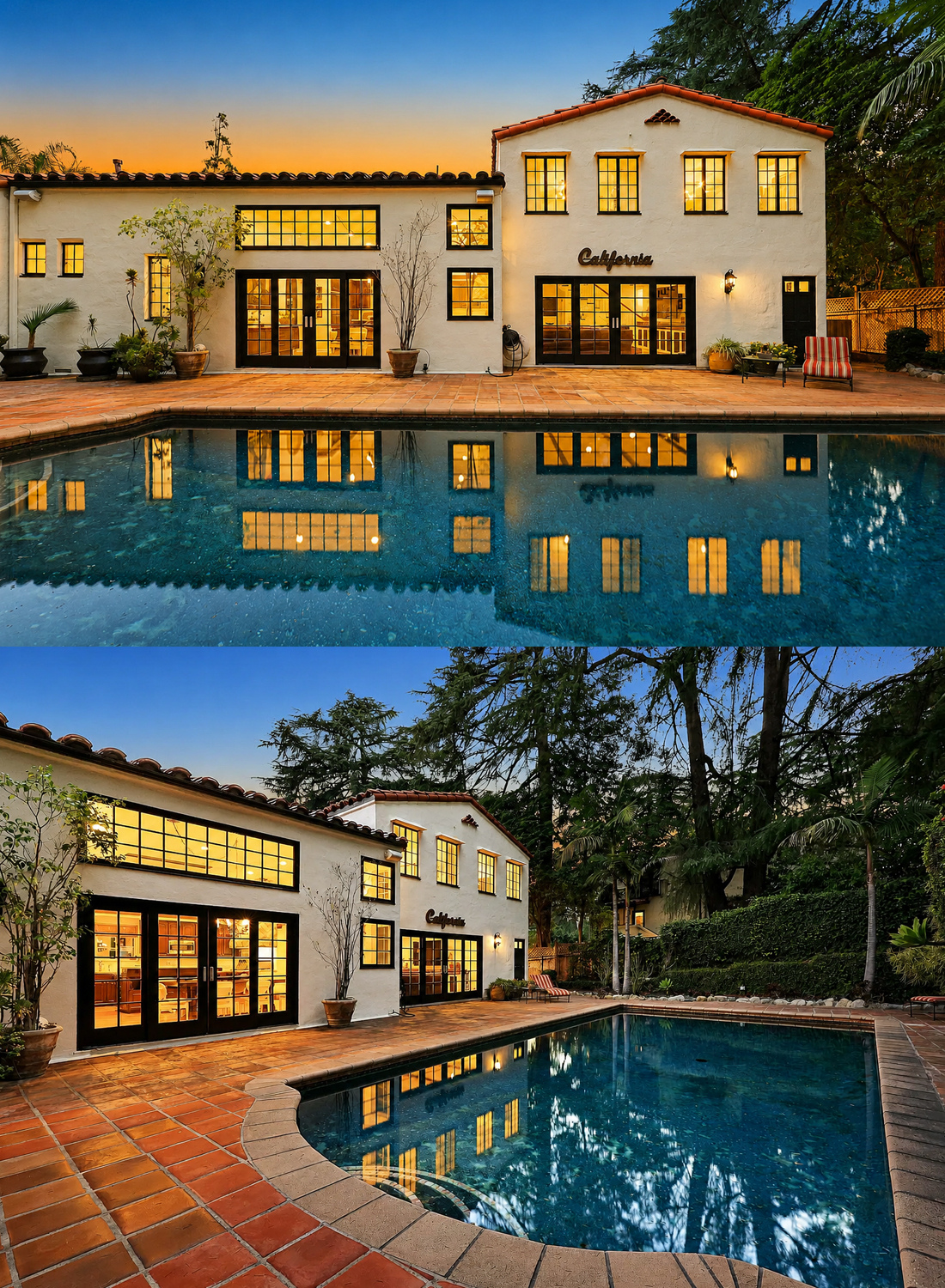
At the back, the home opens to a long pool. The pool has a plain shape. That choice works well with the old house.
The rear walls stay simple. White stucco covers the full face. Dark doors and windows create a sharp grid. Red clay coping and brick-toned paving warm the pool deck.
There is little extra decor. A few lounge chairs and planters offer all that the space needs. The blue water becomes the main feature.
This calm design lets the house remain the star. It also gives the yard a clean break from the dense garden near the front.
The pool court feels private because tall hedges and trees surround it. Yet the broad sky keeps it bright.
Design cues
- A long rectangular pool
- Warm brick or clay pool paving
- White stucco walls
- Black French doors
- Simple lounge chairs
- Tall hedges for privacy
- A small number of large pots
8. A Foyer With Real Drama
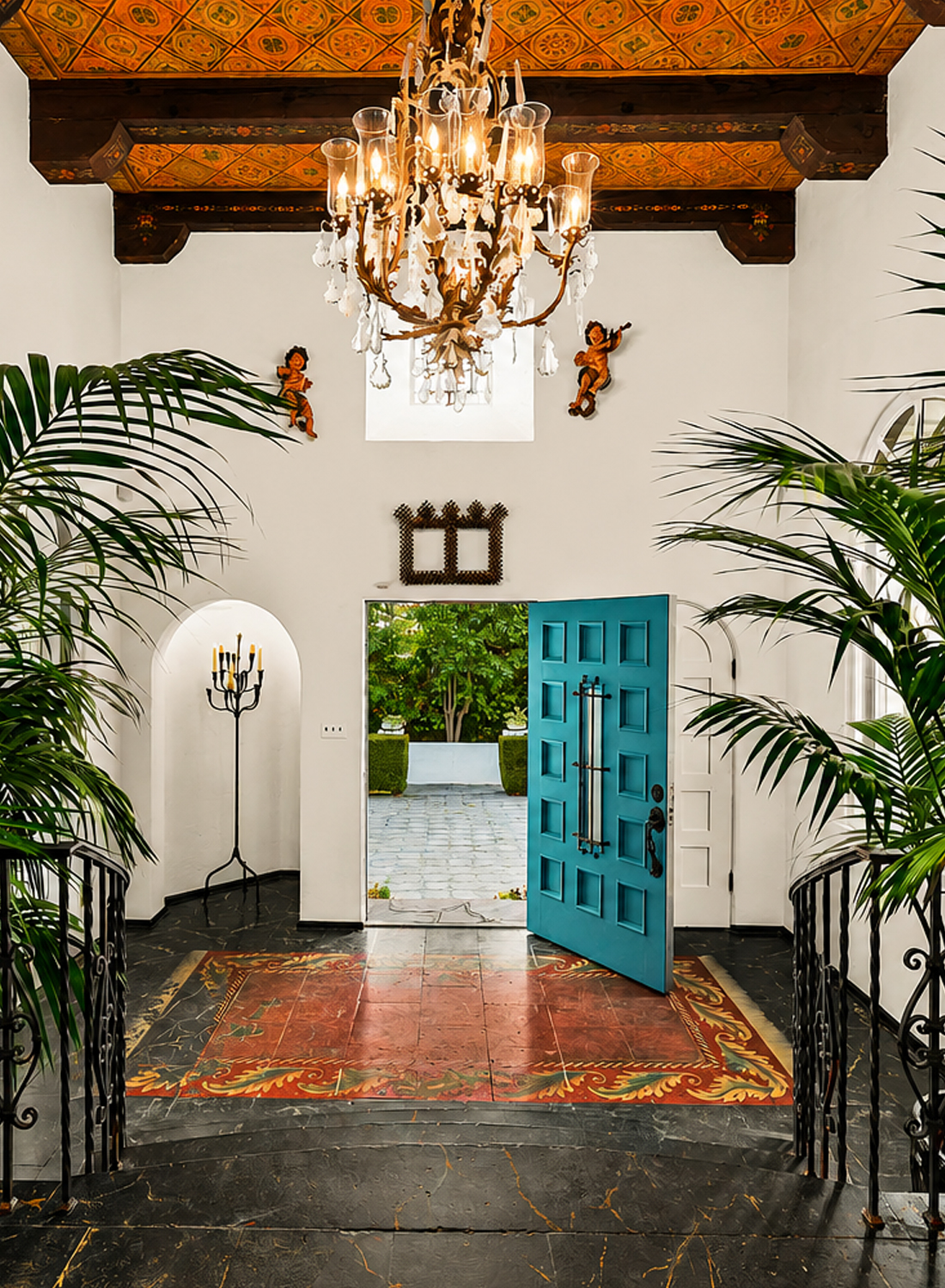
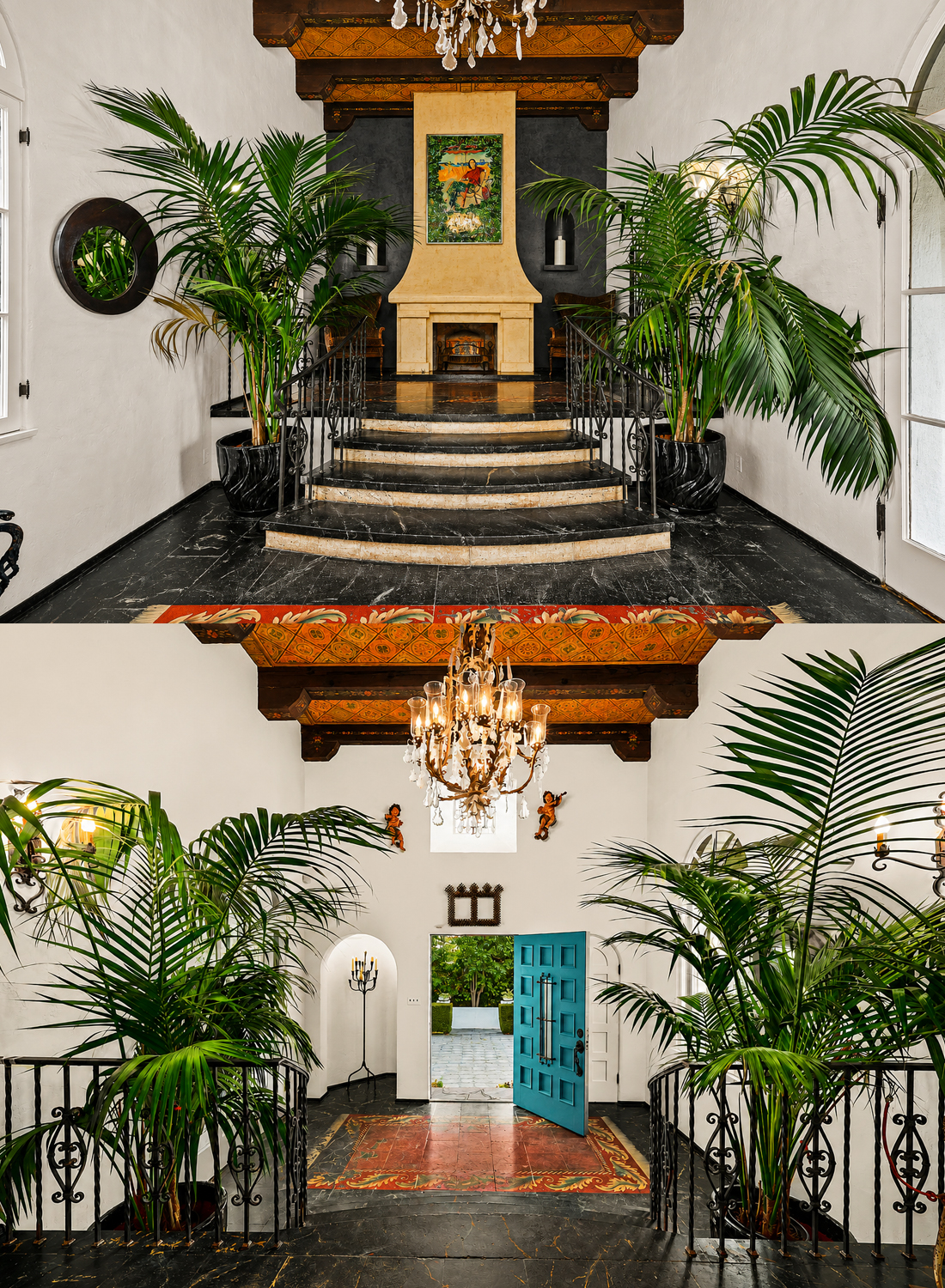
The entry makes a strong first mark. Dark stone covers the floor. Wide curved steps rise toward a fireplace. Large palms stand on both sides. Iron rails guide the way.
Above, dark beams cross a rich painted ceiling. A crystal light hangs at the center. The mix feels grand, bold, and full of story.
The open blue door brings in a cool flash of color. This shade feels even stronger beside the black floor and white walls.
The palms play a key role. Without them, the room might feel too hard. Their green leaves soften the rails and fill the tall space. They also echo the garden beyond the door.
The stairs do not run up to a second floor. Instead, they raise the next room by a few steps. This small change in level creates a sense of event. It slows the walk and marks the shift from entry to living space.
Design cues
- Dark stone or black tile floors
- Wide curved steps
- Decorative iron rails
- Tall indoor palms
- A painted or patterned ceiling
- Heavy dark ceiling beams
- A crystal chandelier
- A bright blue or green door
9. The Ceiling as the Main Feature
This home often draws the eye upward. It treats the ceiling as a major part of each room.
In the entry, painted panels fill the spaces between dark beams. In the formal living room, a deep coffered ceiling adds weight and age. Other rooms use long stained beams across white ceilings.
These choices create contrast. White walls keep each space light. Dark wood then adds a clear frame above.
The beams also help large rooms feel warm. High ceilings can feel cold when every surface stays white. Here, the wood brings the scale down. It gives the eye a place to rest.
Not every room needs the same ceiling. In fact, the mix adds charm. Some areas feel grand. Others feel light and modern.
Design cues
- Exposed stained beams
- Deep coffered ceiling panels
- Painted detail between beams
- White walls below dark wood
- Small recessed lights between beams
- Hanging lights in key rooms
10. A Formal Living Room With a Fresh Look
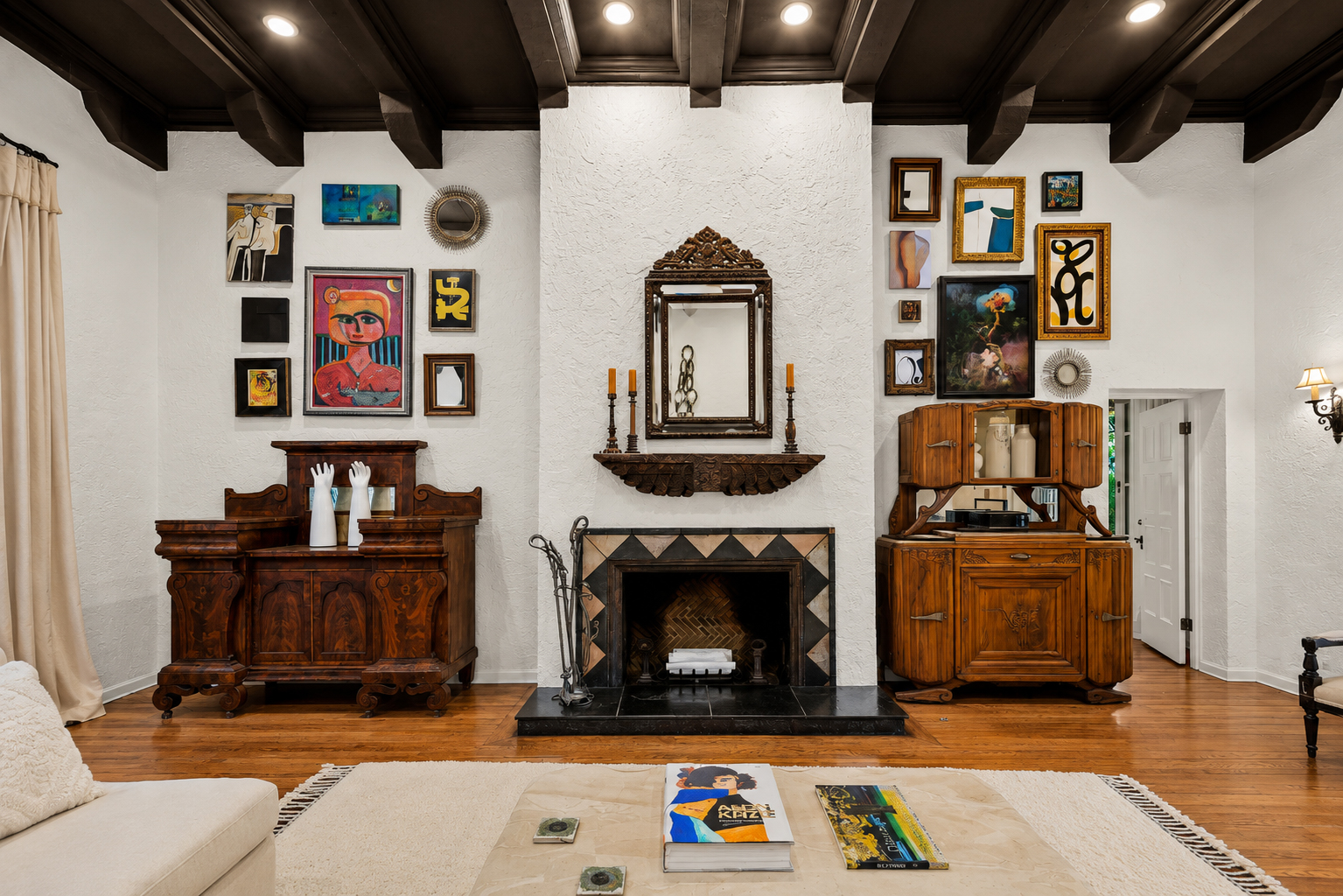
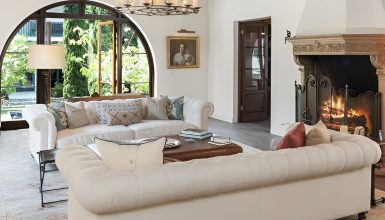
The formal living room keeps many old features. Thick white walls wrap the space. A large arched window opens to the garden. A dark coffered ceiling spans the room. An old fireplace sits to one side.
Yet the furniture feels current. A soft white sectional fills the center. A light rug covers part of the wood floor. Modern art adds bold color to the walls.
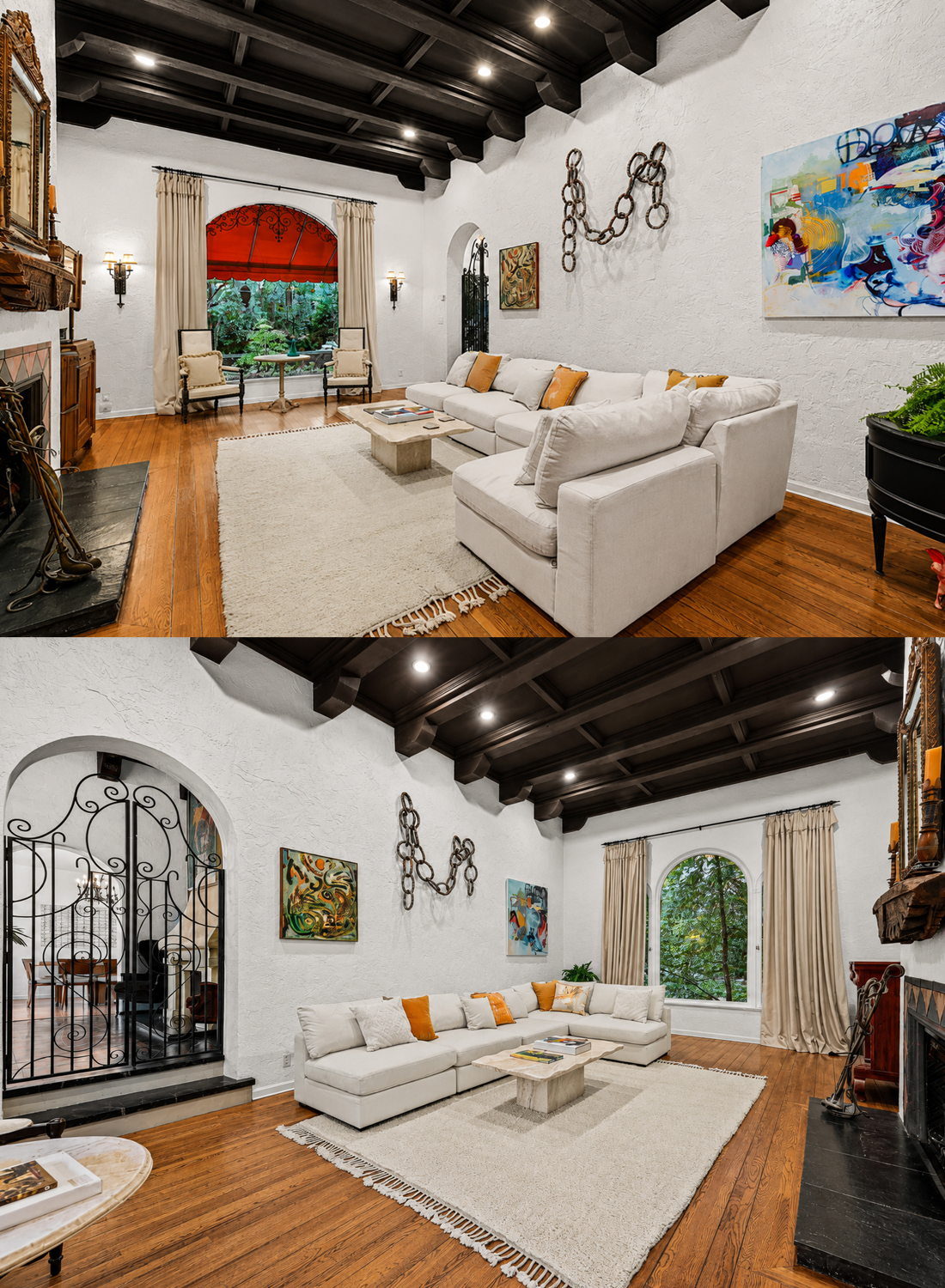
This contrast keeps the room from feeling like a stage set. The architecture brings age. The furniture brings comfort.
Cream curtains frame the arched window. They fall in long, loose panels. The pale cloth blends with the walls and sofa. As a result, the view remains the focus.
Orange pillows add small bursts of warmth. Their color links to the awnings and clay tile outside.
A black iron gate fills one arched opening. It acts like a door, a screen, and a work of art. Its curves suit the Spanish style, while its open design keeps the rooms linked.
Design cues
- A large arched window
- Full-length neutral curtains
- A white or cream sectional
- A pale textured rug
- A dark wood ceiling
- One strong piece of modern art
- A black iron gate
- Small orange or rust accents
11. A Relaxed Family Room With Warm Leather
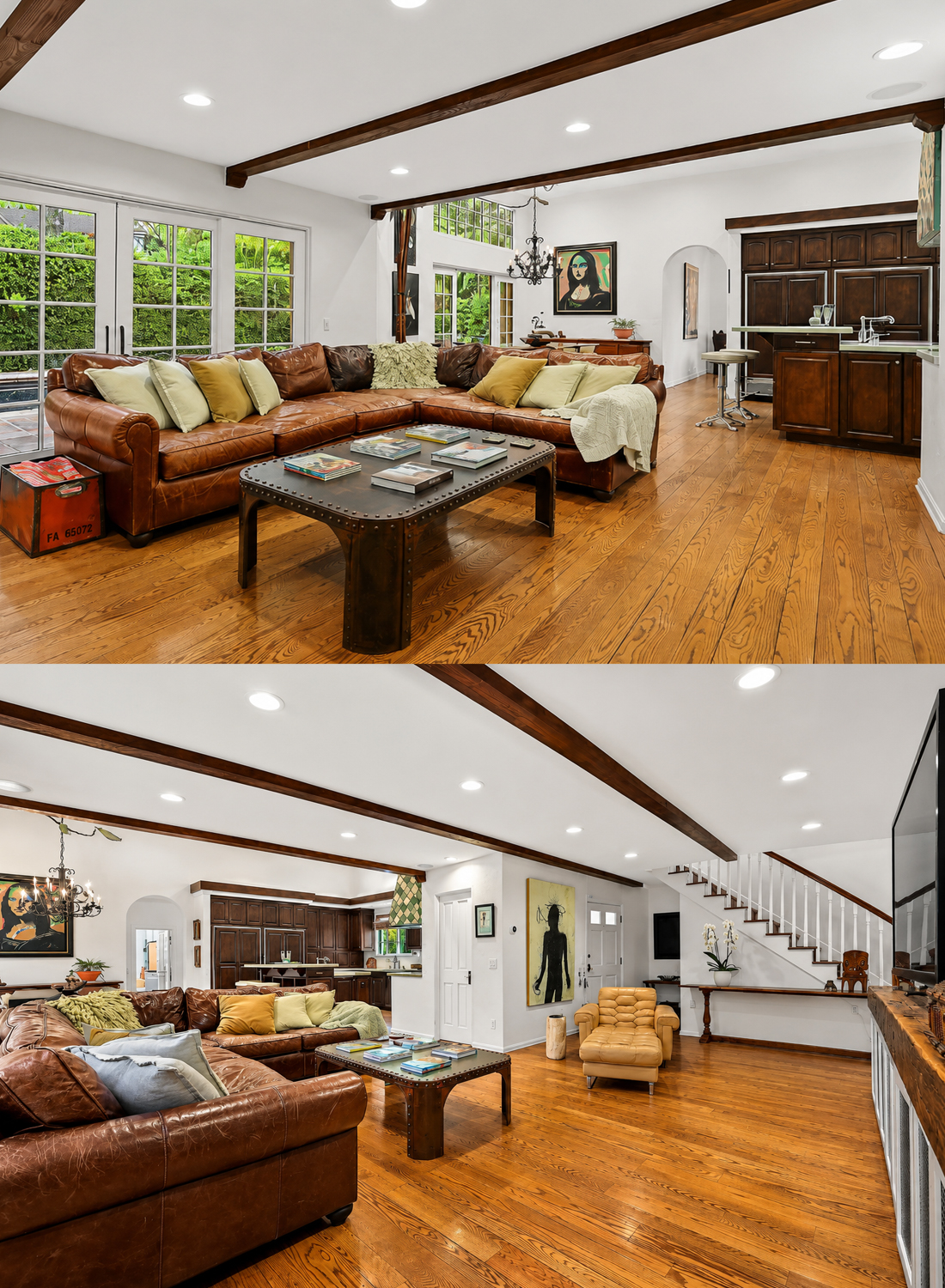
The family room has a more casual mood. Wide French doors open to the yard. Long wood floors run through the space. Dark beams cross the white ceiling.
A large brown leather sectional anchors the room. Its deep tone adds warmth. It also stands up well against the large scale of the room.
Soft cream, pale green, and tan pillows keep the sofa from looking too heavy. A broad metal coffee table adds an industrial edge. Its low form suits the large seating area.
The kitchen opens at one end. This layout makes the room useful for family life. People can cook, talk, watch television, or step outside without leaving the main space.
The design feels updated, but it still fits the home. Wood floors, arches, dark cabinets, and old-style lights link the modern plan to the older shell.
Design cues
- A large brown leather sofa
- Light neutral pillows
- A low metal coffee table
- Warm oak floors
- Dark ceiling beams
- White walls
- Wide French doors
- An open link to the kitchen
12. A Kitchen That Blends Old and New
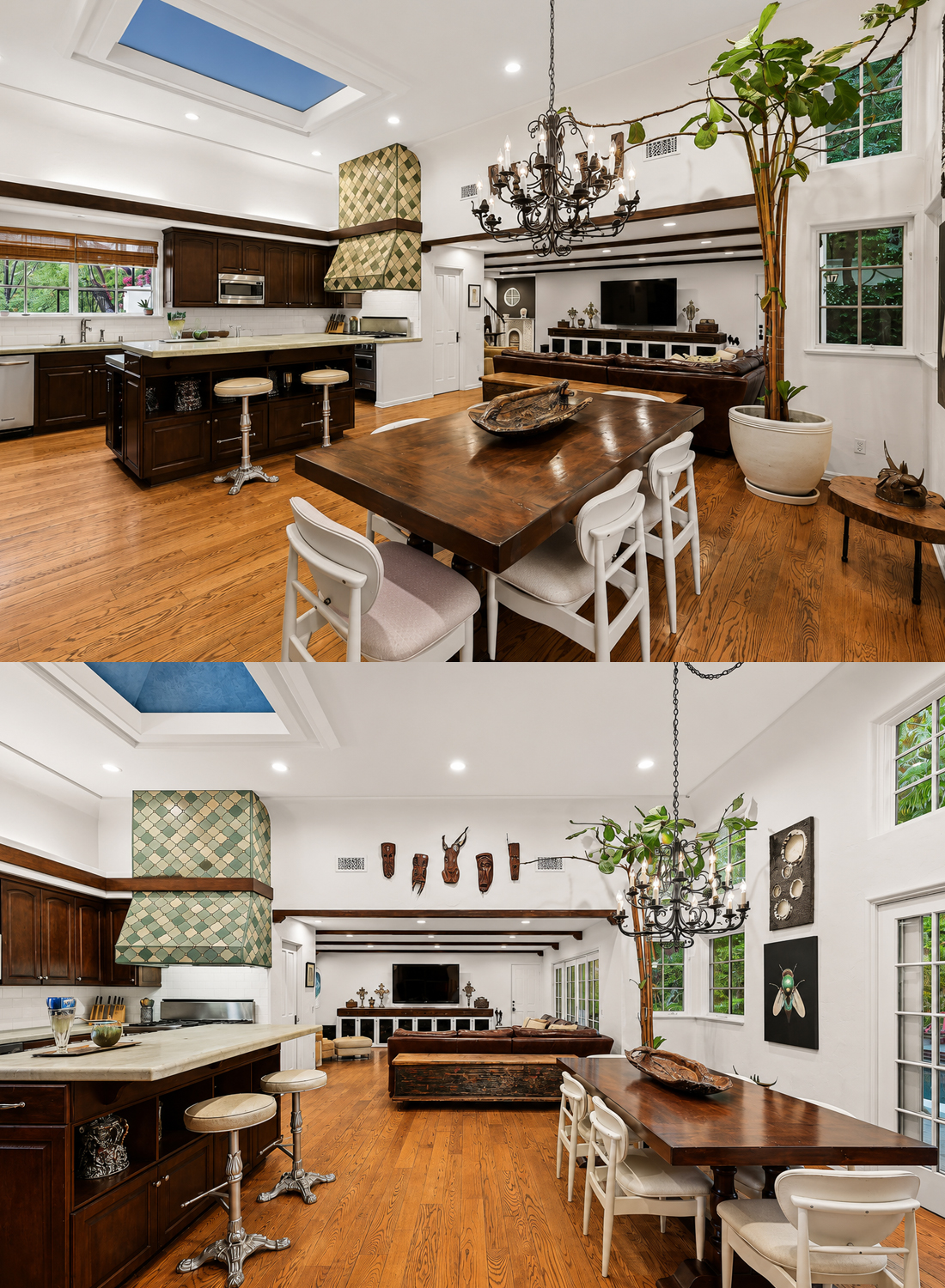
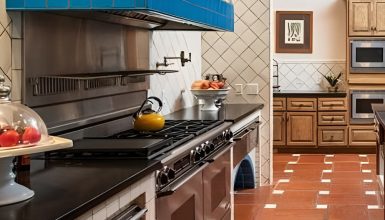
The kitchen feels fresh, but it does not turn away from the home’s roots. Dark wood cabinets add depth. Pale counters keep the room bright. A white tile backsplash gives the walls a clean finish.
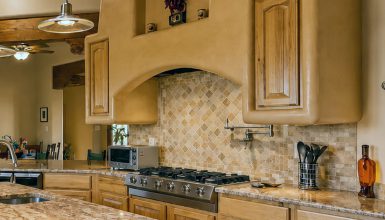
The range hood brings the most style. Its broad shape recalls an old plaster hood. A green and cream tile pattern covers its face. Dark wood trim marks its edges.
This mix creates a strong focal point. The hood looks crafted rather than plain. It also adds pattern without filling the whole room with color.
A large island offers prep space and seating. Metal stools add shine and a bit of fun. Their slim legs keep the island from feeling too solid.
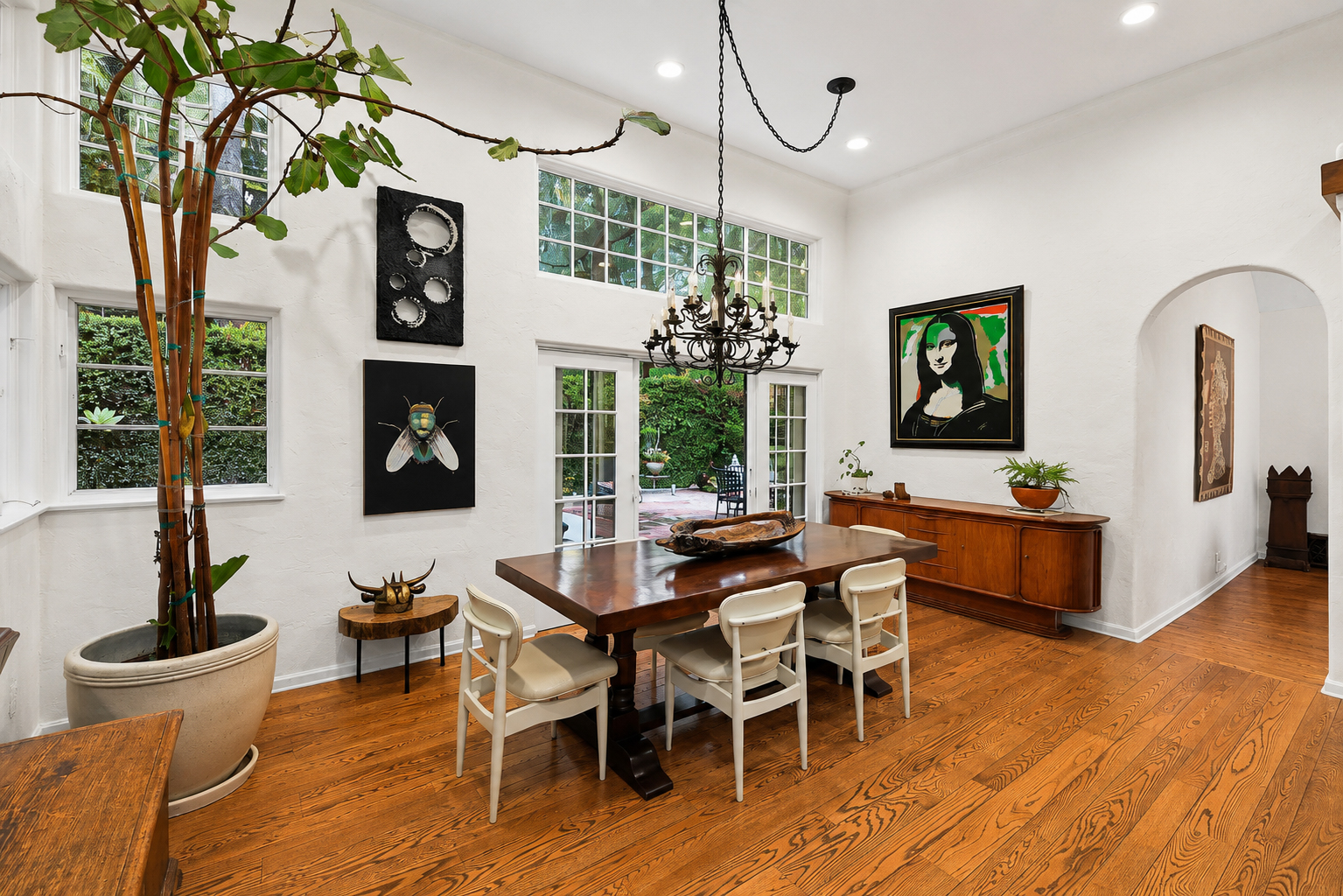
Above the dining zone, a large black chandelier adds age and drama. The room has a high ceiling, so the light helps fill the open space.
A tray detail in the ceiling adds another soft shade of blue. This small color note links back to the front door.
Design cues
- Dark wood cabinets
- Pale stone counters
- White subway-style tile
- A large tiled range hood
- A wide island
- Metal counter stools
- A black iron chandelier
- A blue ceiling inset
13. Dining Areas With Art and Garden Views
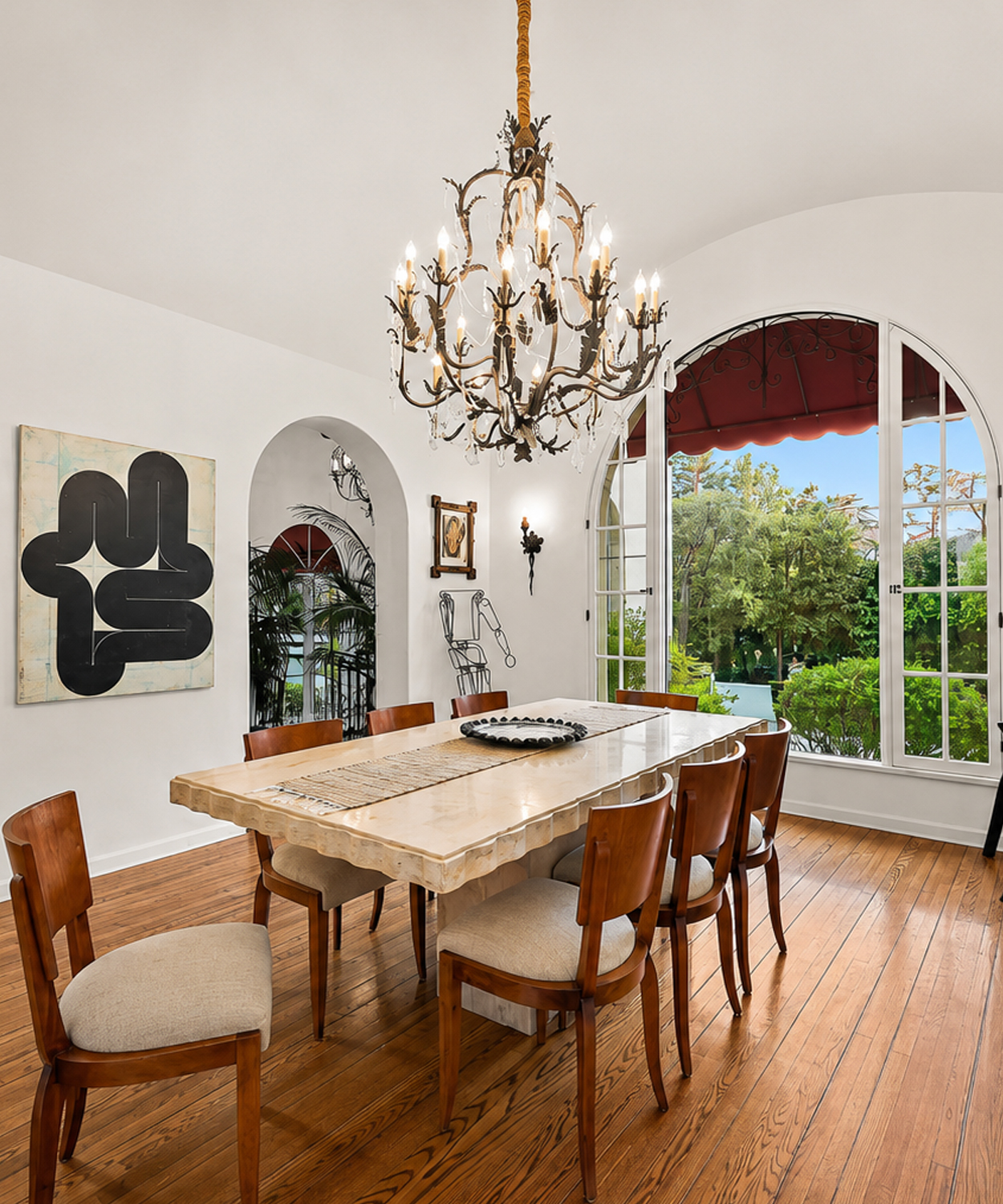
The dining rooms feel simple in form but rich in detail. Large wood tables act as the center of each space. Mixed chairs keep the look relaxed.
Tall arched doors and windows bring in green views. White walls reflect the light. As a result, even the dark tables do not feel too heavy.
The art adds a playful tone. Some pieces feel modern. Others have a folk or found look. This loose mix makes the rooms feel personal.
A tall indoor tree fills one corner. It brings height to the room and softens the straight lines of the table. A long wood sideboard gives the wall a low, calm base.
The hanging lights have strong shapes. One crystal light feels grand. Another black iron fixture feels more rustic. Both work because the rest of the room stays simple.
Design cues
- A long solid wood dining table
- A mix of wood and pale chairs
- Arched doors to the garden
- One large hanging light
- A tall indoor tree
- A low vintage sideboard
- Bold art on white walls
14. A Bedroom That Uses Color With Care
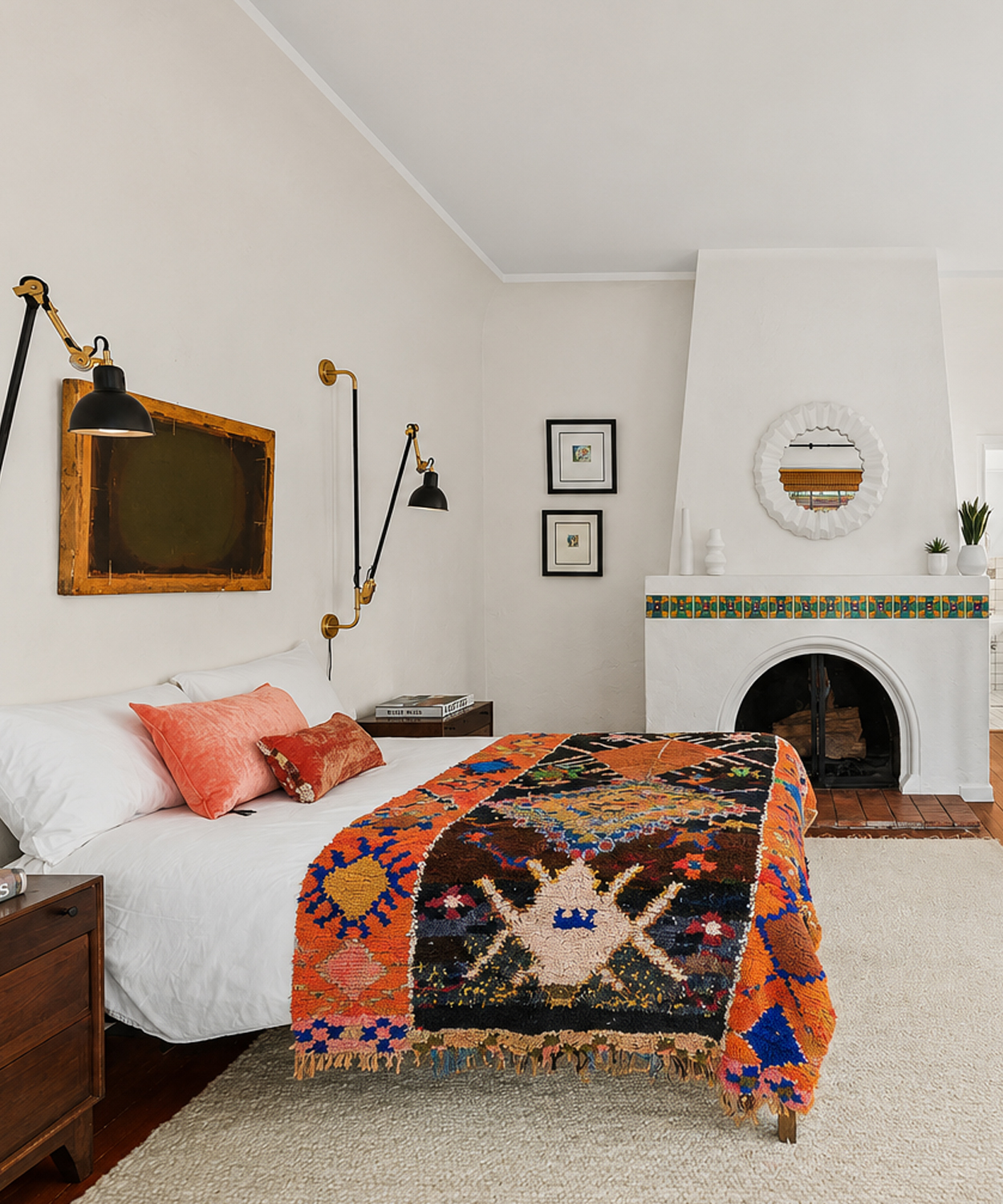
The bedroom stays quiet and light. White walls and warm wood floors form a soft base. A white bed keeps the center calm.
Then one rich woven blanket adds the main color. Orange, blue, brown, and cream create a warm folk pattern. The blanket gives the room life without making it busy.
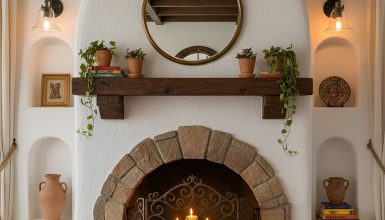
The fireplace adds true charm. Its rounded opening and simple white hood suit the Spanish style. A thin band of patterned tile brings in color.
Tall wood cabinets stand near the French doors. Their warm grain ties to the floor and bedside furniture. Black swing-arm wall lights add a useful modern touch.
Outside, red flowers fill the view. The simple room lets that color shine.
Design cues
- White walls and bedding
- A bold woven blanket
- Warm wood floors
- A rounded fireplace
- A narrow band of patterned tile
- Freestanding wood cabinets
- Black wall-mounted reading lamps
- French doors facing flowers
15. A Bath With Vintage Shape and Simple Tile
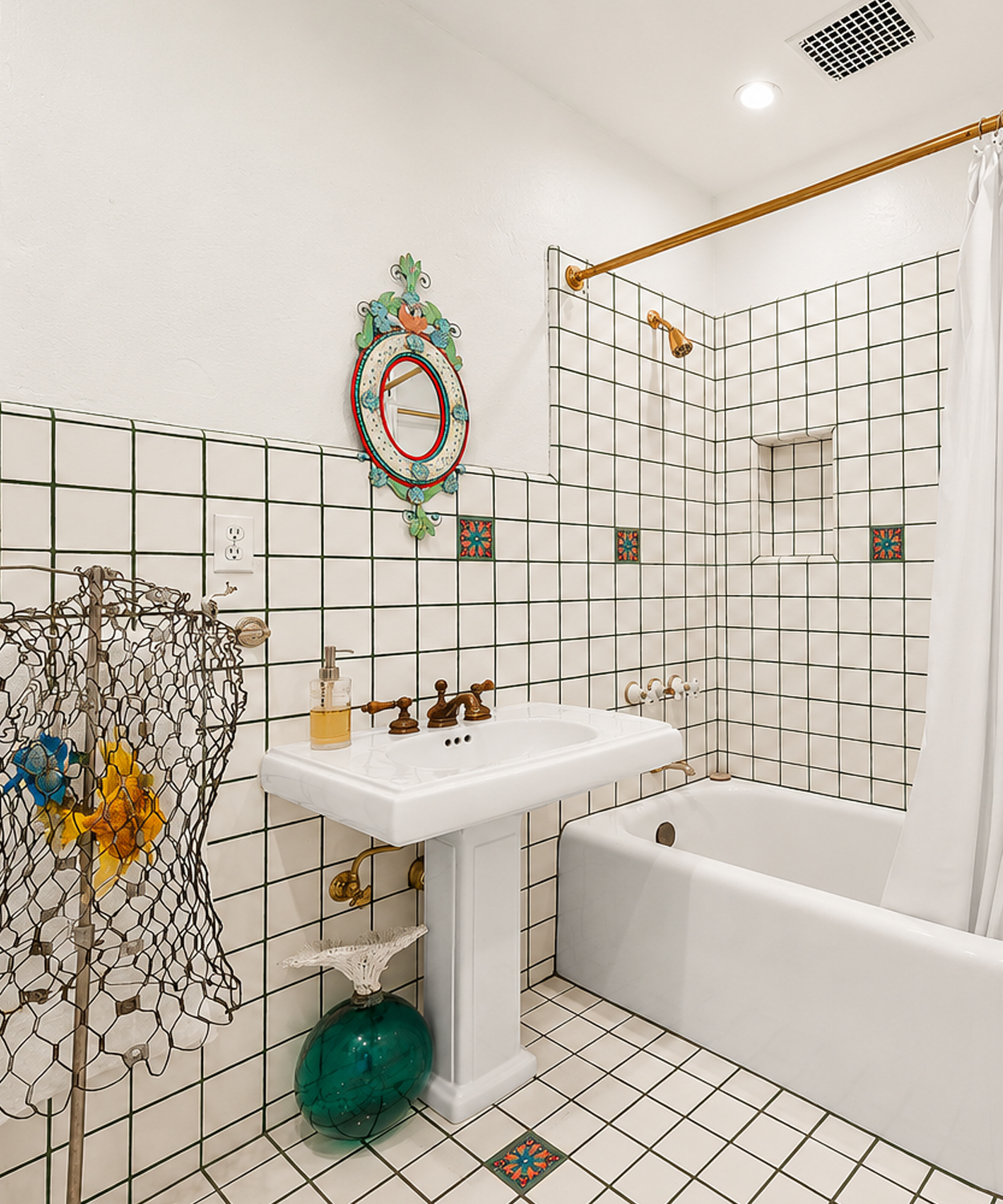
The bathroom uses a clear black-and-white base. Square white tiles cover the lower walls, tub area, and floor. Dark grout forms a neat grid.
A curved white tub softens those straight lines. A white pedestal sink keeps the room open. Brass rods and fittings add warm shine.
A small bright mirror brings in a bit of color. Tiny patterned tiles appear in a few spots. These details keep the room from feeling plain.
The built-in storage has shaped door panels. This touch adds a more formal note. Yet the all-white finish helps the cabinets blend into the wall.
The room proves that a small bath can feel full of character. It uses common parts, but shape and pattern give them life.
Design cues
- White square wall tile
- Dark grout
- A curved bathtub
- A pedestal sink
- Brass shower rods
- Small patterned tile accents
- A bright framed mirror
- White built-in storage
16. A Color Palette Drawn From the House and Garden
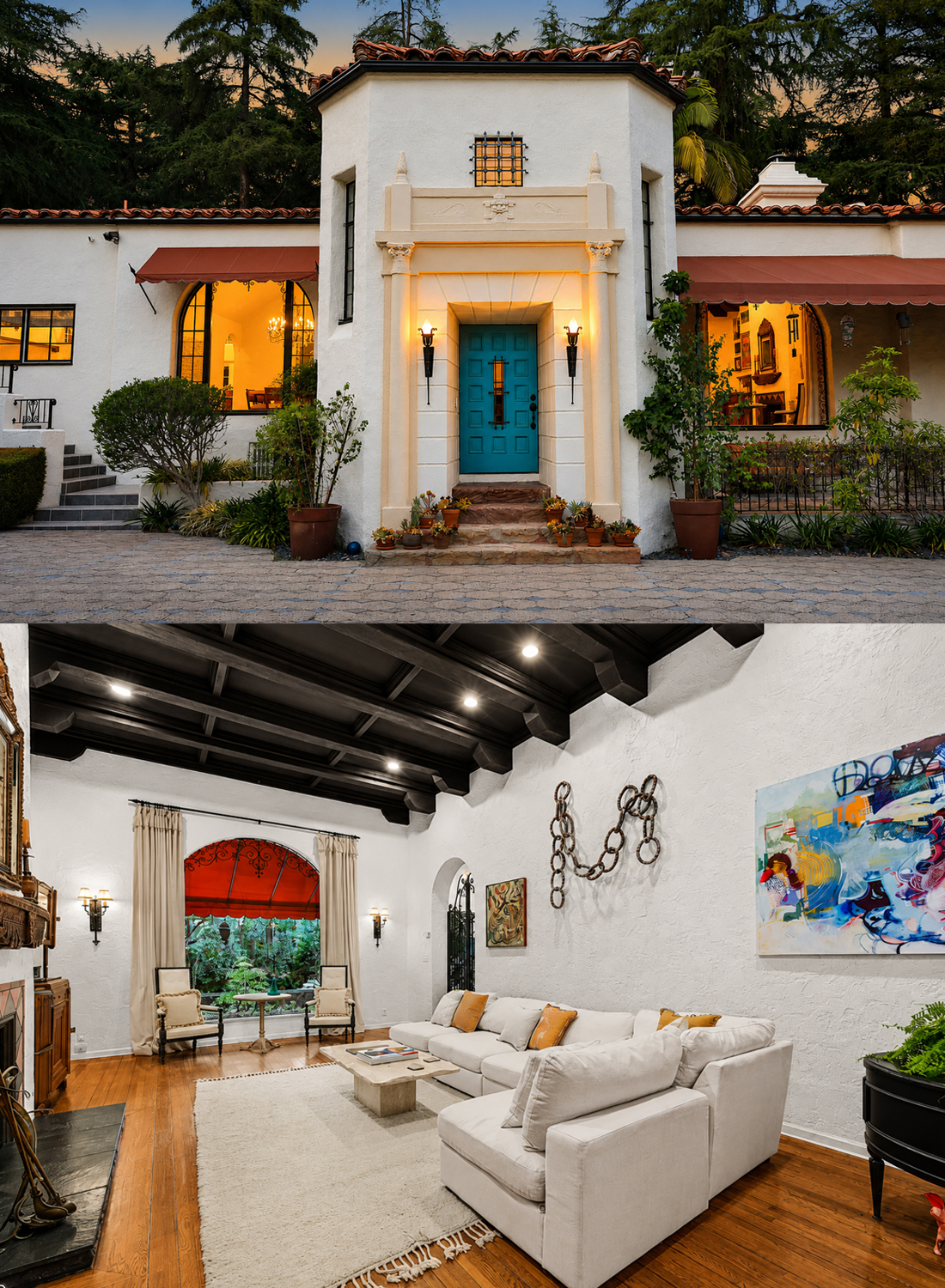
The home uses color in a smart way. Most walls stay warm white. Wood, leather, and clay bring in brown and rust tones. Black iron and dark stone add weight.
Then the design adds bright color in small doses. Blue appears on the front door and ceiling detail. Green fills the rooms through plants and views. Orange shows up in awnings, pillows, tile, and rugs. Red flowers bring energy outside.
This balance keeps the design from feeling dull. Yet it also protects the calm mood.
A key rule appears across the home: large surfaces stay soft. Small items carry the bold shades.
That rule works well in old homes. It lets the shape of each room stand out. It also makes future changes easy.
Main palette cues
- Warm white
- Deep brown
- Charcoal black
- Clay red
- Rust orange
- Garden green
- Blue-green accents
- Soft cream
17. Old Architecture With Modern Comfort

The best part of this home may be its mix of old and new. The design does not try to make every item look like it came from 1927.
Modern sofas offer deep comfort. The kitchen has open work zones. Recessed lights improve the rooms. Large art brings a fresh point of view. Yet the home keeps its arches, beams, tile, ironwork, fireplaces, and wood floors.
This balance gives the house life. A full period look might feel too formal. A full modern update could erase the charm.
Instead, each modern choice supports the old shell. Pale sofas let dark ceilings stand out. Simple tables sit below ornate lights. Clean kitchen counters balance the patterned hood.
This approach can guide any old-home update. Save the parts that give the house its soul. Then add comfort with care.
Why This 1927 Spanish Revival Home Feels So Special
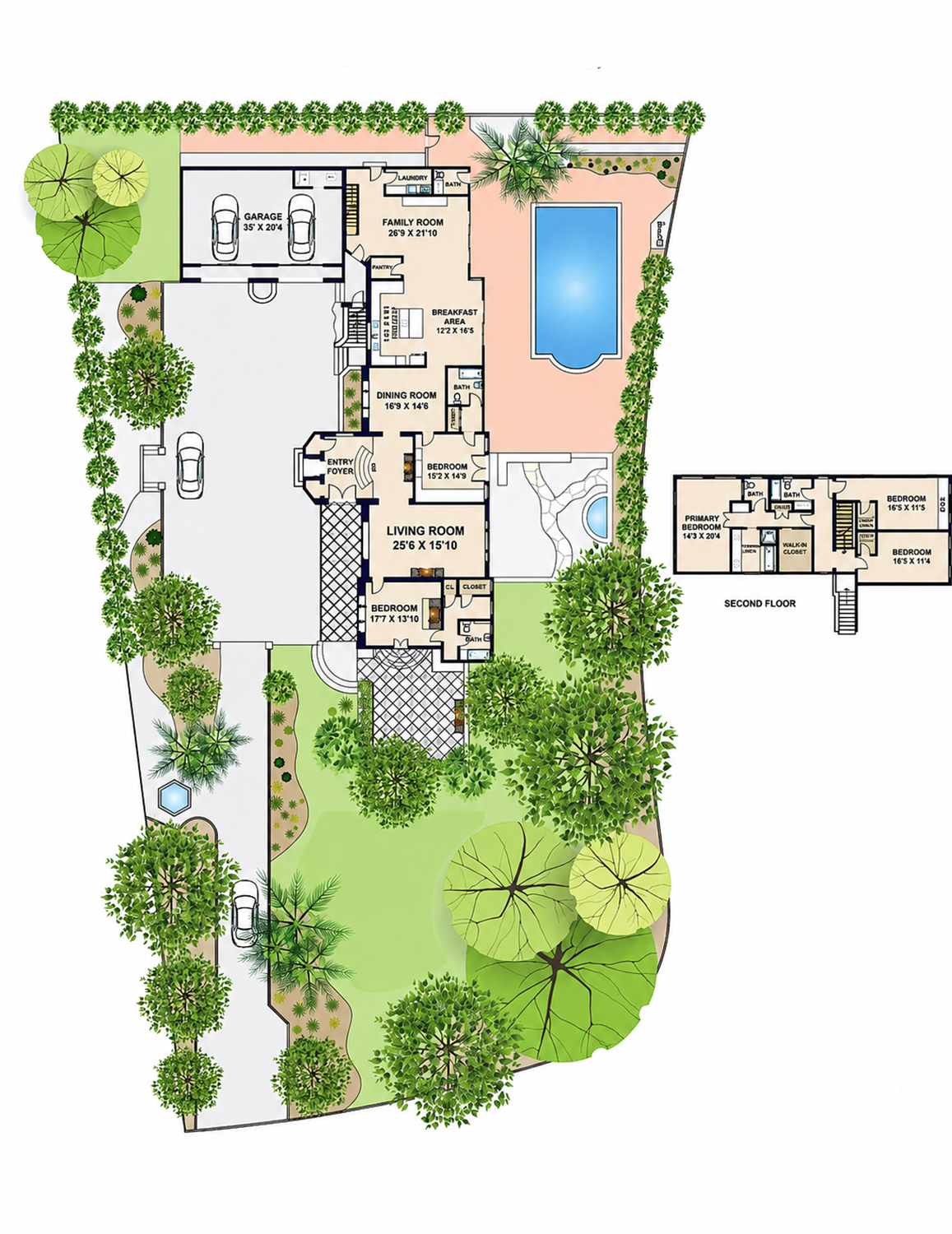
This home draws you in because it offers more than beauty. It creates a full sense of place.
The garden slows the walk to the door. The courtyards make the outdoors feel private. The white walls catch the light. The dark beams bring warmth overhead. Arches lead from one room to the next. Art, plants, and woven cloth add a free and personal spirit.
The home also knows when to stay simple. A plain white wall gives old wood more power. A quiet pool lets the trees and sky shine. A soft sofa makes a grand room feel easy.
That mix creates the real magic. The design feels historic, but not frozen. It feels bold, but not loud. It feels grand, but still warm.
Nearly a century after it was built, this Spanish Revival home still offers a clear lesson. Good design does not come from filling every space. It comes from using strong shapes, rich texture, and color with care.
Conclusion
This 1927 Spanish Revival home shows how timeless design can still feel fresh. Its arches, tile, ironwork, beams, and garden views honor the past. Meanwhile, soft seating, bold art, and open living areas make the home easy to enjoy today. The result feels grand, personal, and deeply inviting.