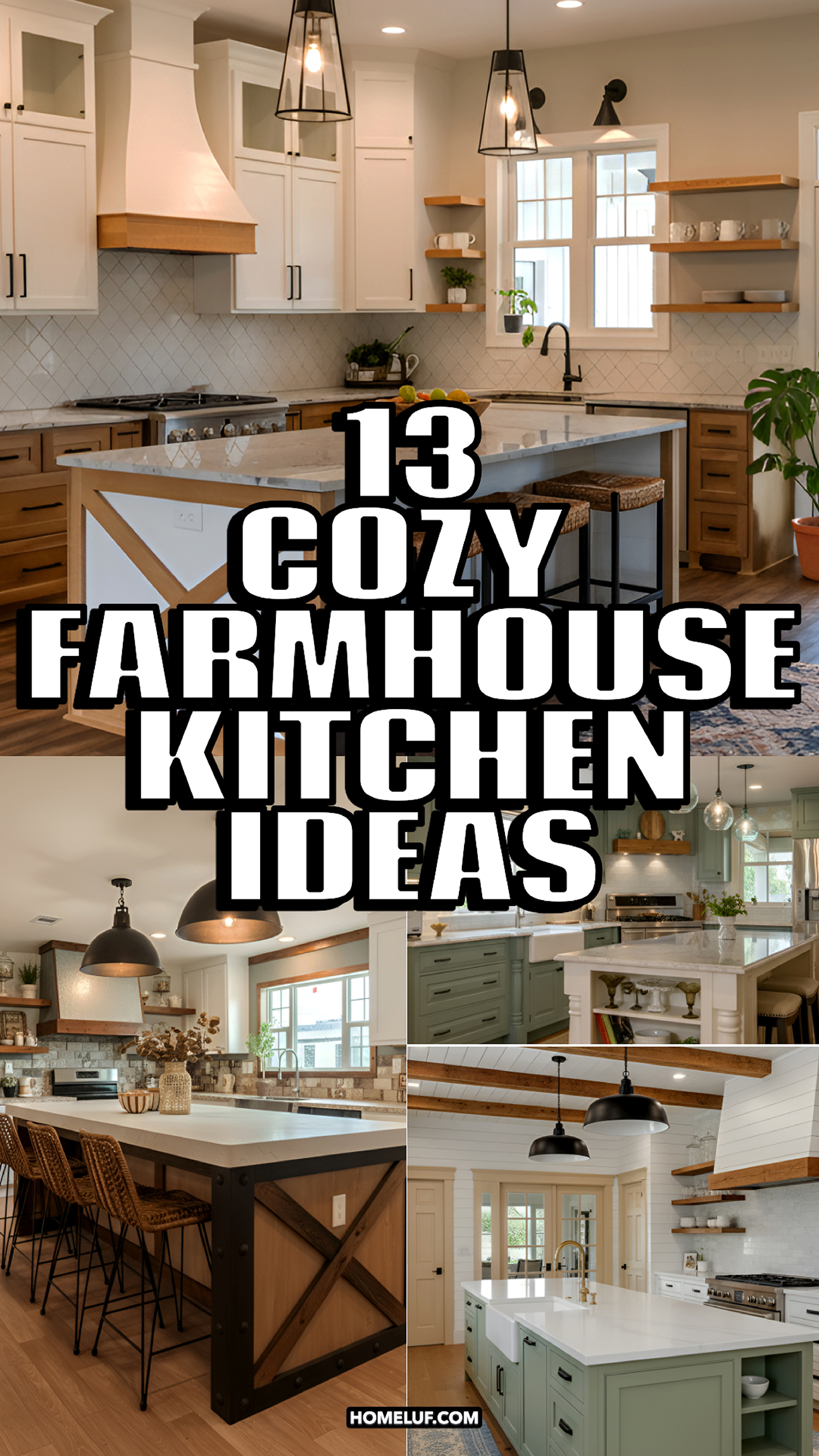
A farmhouse kitchen has a way of making everyone slow down and smile. It feels warm, easy, and full of charm. You can almost hear the dishes clink, smell fresh bread in the oven, and picture sunlight falling across wood counters and open shelves. That is why this style never goes out of fashion.
The best part is this: you do not need an old country house to get the look. You just need the right mix of comfort, function, and timeless details. From soft colors and shaker cabinets to apron-front sinks and natural wood accents, a farmhouse kitchen can turn an everyday cooking space into the heart of the home. If you want a kitchen that feels cozy, classic, and welcoming, these ideas will show you exactly how to create it.
1. Start With the Feeling First
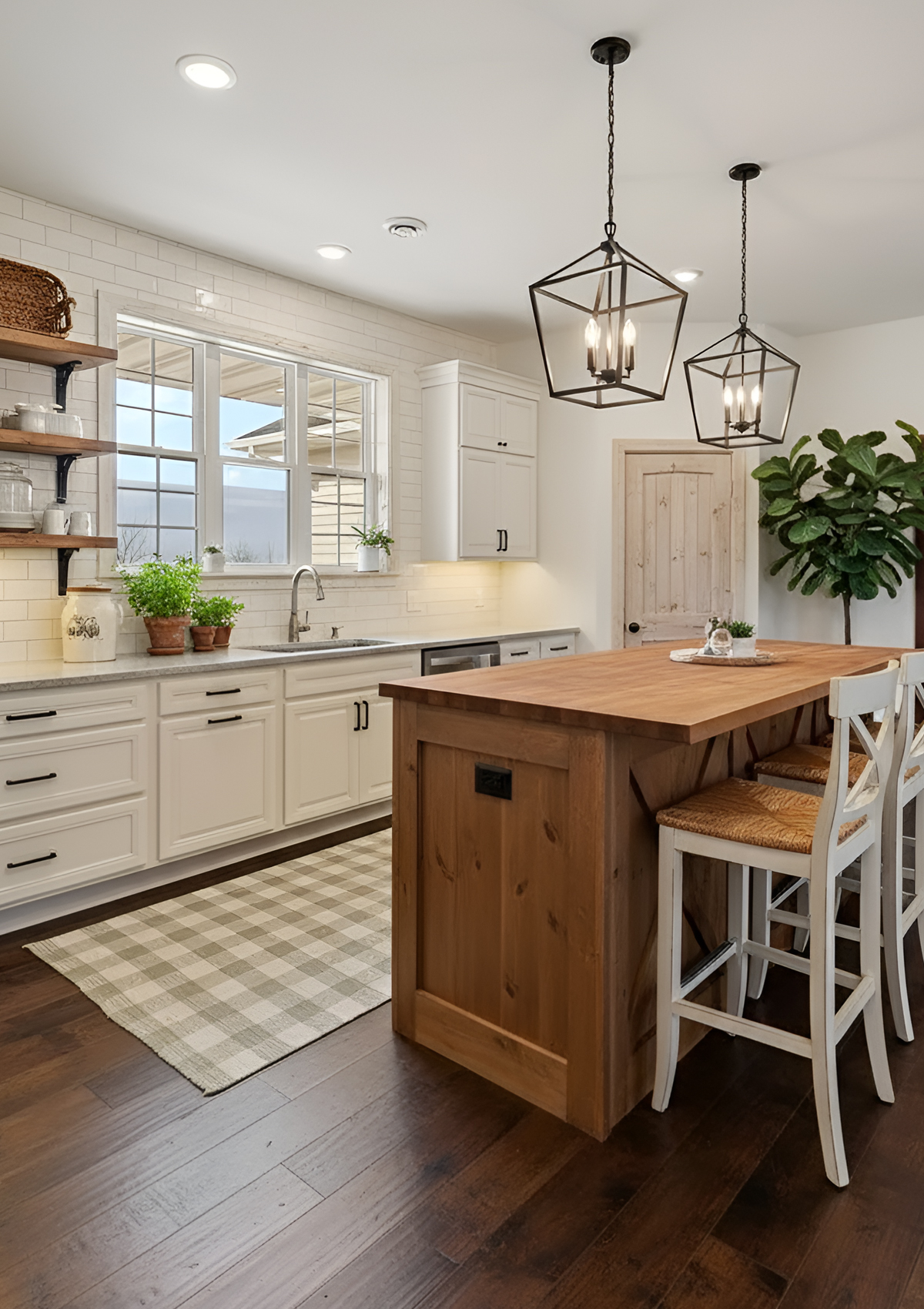
Before you pick paint, tile, or light fixtures, think about the mood you want the room to have. A farmhouse kitchen should feel grounded and welcoming. It should feel like the kind of place where fresh bread cools on the counter, coffee is always brewing, and family gathers without being asked twice.
That means the design should not feel cold or too perfect. It should not feel overly sleek. It should not feel like every surface came straight out of a showroom. Farmhouse style works best when it mixes beauty with comfort.
Ask yourself a few simple questions. Do you want your kitchen to feel light and airy? Cozy and rustic? Fresh and modern with farmhouse touches? Old-fashioned and layered? There is more than one way to do farmhouse style, so getting clear on your version helps every other choice fall into place.
Cues to focus on:
- Warmth over formality
- Function over fuss
- Simple lines
- Comfortable materials
- A space that feels lived in, not staged
2. Choose a Soft, Natural Color Palette
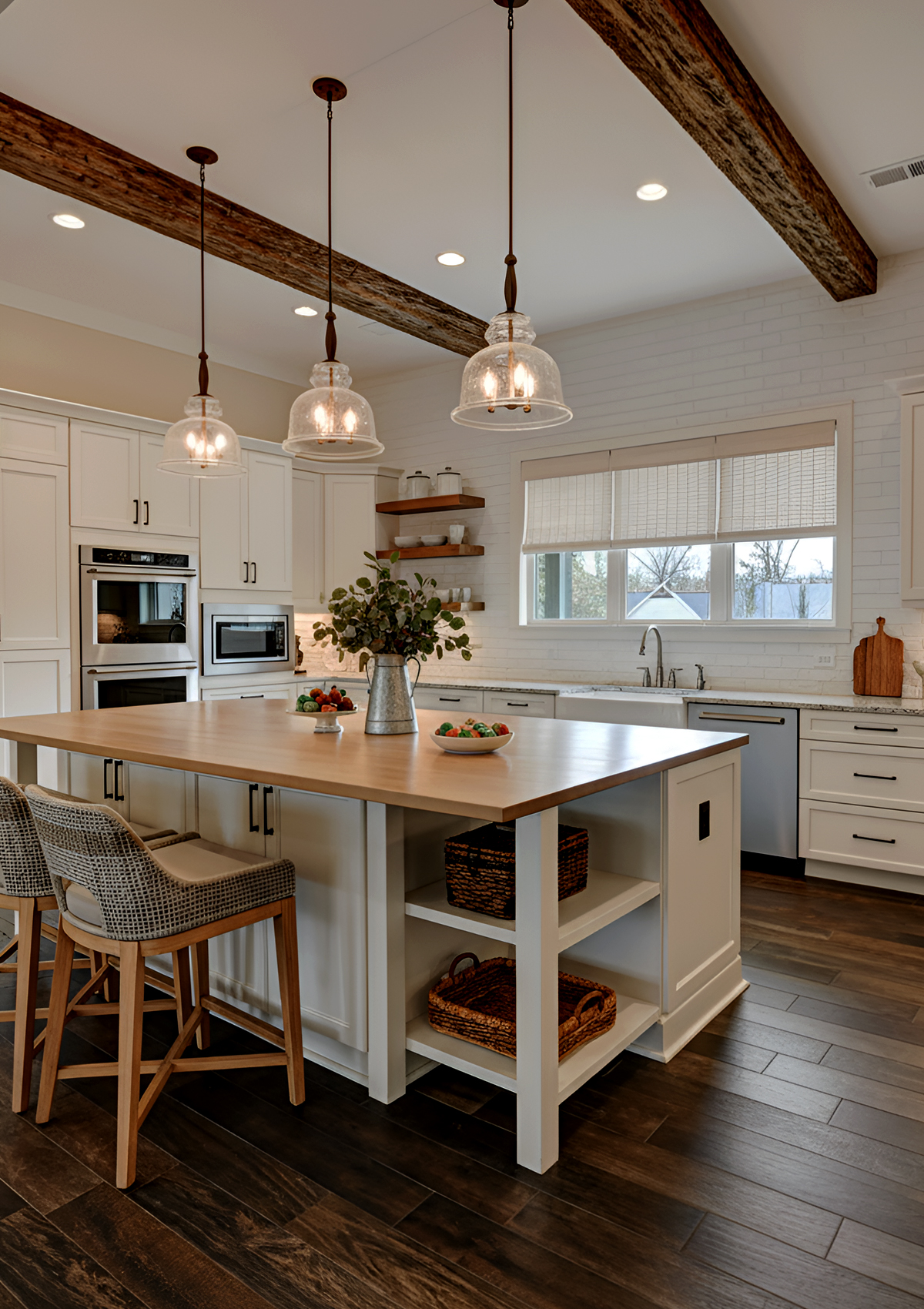
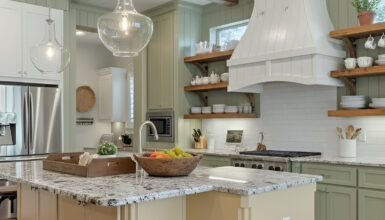
Color sets the tone fast. In a farmhouse kitchen, the palette usually feels calm, soft, and easy on the eyes. White is a classic choice, and for good reason. It makes the room feel bright and clean. But white is not the only answer.
Cream, warm beige, soft gray, sage green, dusty blue, greige, and muted taupe also work beautifully. These shades feel natural and relaxed. They give the kitchen that gentle, homey look farmhouse style does so well.
If you love white, go for warm whites instead of icy ones. A stark white can make the room feel sharp and modern in the wrong way. A warmer white looks softer and more inviting. Then layer in wood tones, black accents, aged brass, or earthy textiles to keep the room from feeling flat.
You can also use color on lower cabinets, an island, or a pantry door. Soft green and muted blue look especially lovely in farmhouse kitchens because they connect the room to the outdoors.
Color cues to use:
- Warm whites instead of cool whites
- Nature-inspired shades
- Soft contrast
- Muted, dusty tones
- Finishes that feel calm, not loud
3. Bring in Natural Wood for Warmth
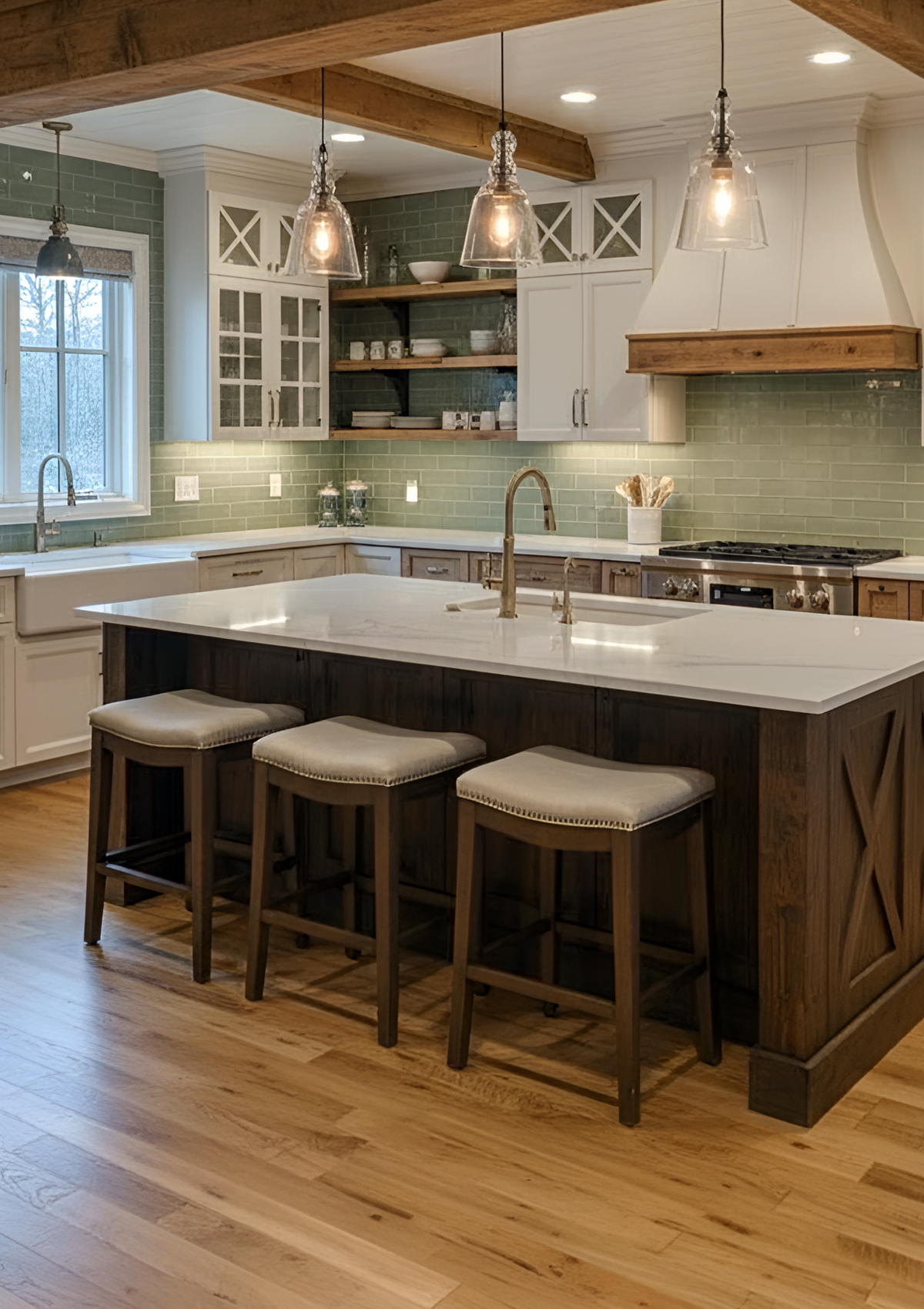
If there is one thing that keeps a farmhouse kitchen from feeling plain, it is wood. Wood brings soul to the room. It adds age, warmth, and texture in a way painted finishes never can.
You might use wood on open shelves, ceiling beams, flooring, bar stools, a vent hood, or a large island. Even one strong wood feature can shift the whole mood of the space. Reclaimed wood is a favorite because it has knots, grain, and color changes that add instant character. But new wood can work too, especially if you choose a finish that feels matte and natural rather than glossy.
The goal is not perfection. In fact, farmhouse style often looks better when the wood feels a little honest and imperfect. Slight wear, visible grain, and hand-finished surfaces make the room feel real.
If your kitchen already has lots of white, wood will help balance it. It adds depth and keeps the room from feeling too crisp.
Wood cues to include:
- Natural grain
- Warm medium or light tones
- Matte or low-sheen finish
- Rustic stools or shelving
- Beams, butcher block, or a wood island
4. Pick Cabinets That Feel Simple and Timeless
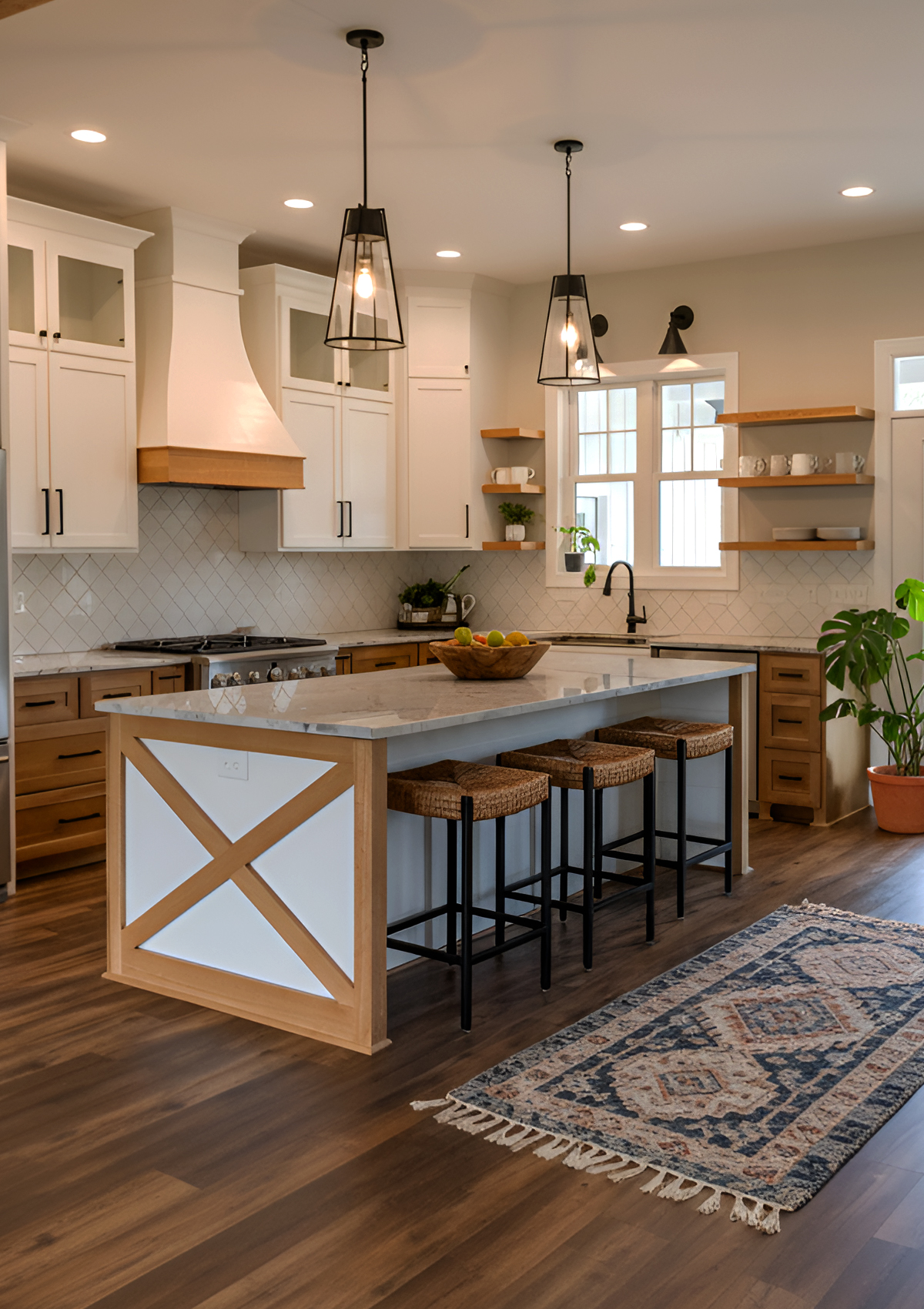
Cabinets play a huge role in farmhouse style. The best farmhouse kitchens usually have cabinetry that looks classic, not flashy. Shaker-style cabinets are one of the most popular choices because they have clean lines and a simple frame. They feel timeless, practical, and easy to live with.
Flat-front cabinets can work in modern farmhouse kitchens, but if you want a more classic farmhouse look, shaker doors are usually the better fit. Avoid cabinet styles with too much ornament unless you are going for a cottage farmhouse look. The charm in farmhouse design comes from restraint.
Painted cabinets are common, especially in white, cream, soft gray, or muted green. But wood cabinets can also work if the tone feels warm and natural. You can even mix finishes. For example, white perimeter cabinets paired with a stained wood island can look beautiful.
Cabinet hardware matters too. Black iron pulls, antique brass knobs, bin pulls, and simple cup handles all feel at home in farmhouse spaces.
Cabinet cues to remember:
- Shaker fronts
- Simple door profiles
- Painted or natural wood finishes
- Mixed finishes for depth
- Hardware with a vintage or handcrafted feel
5. Make the Sink a Focal Point
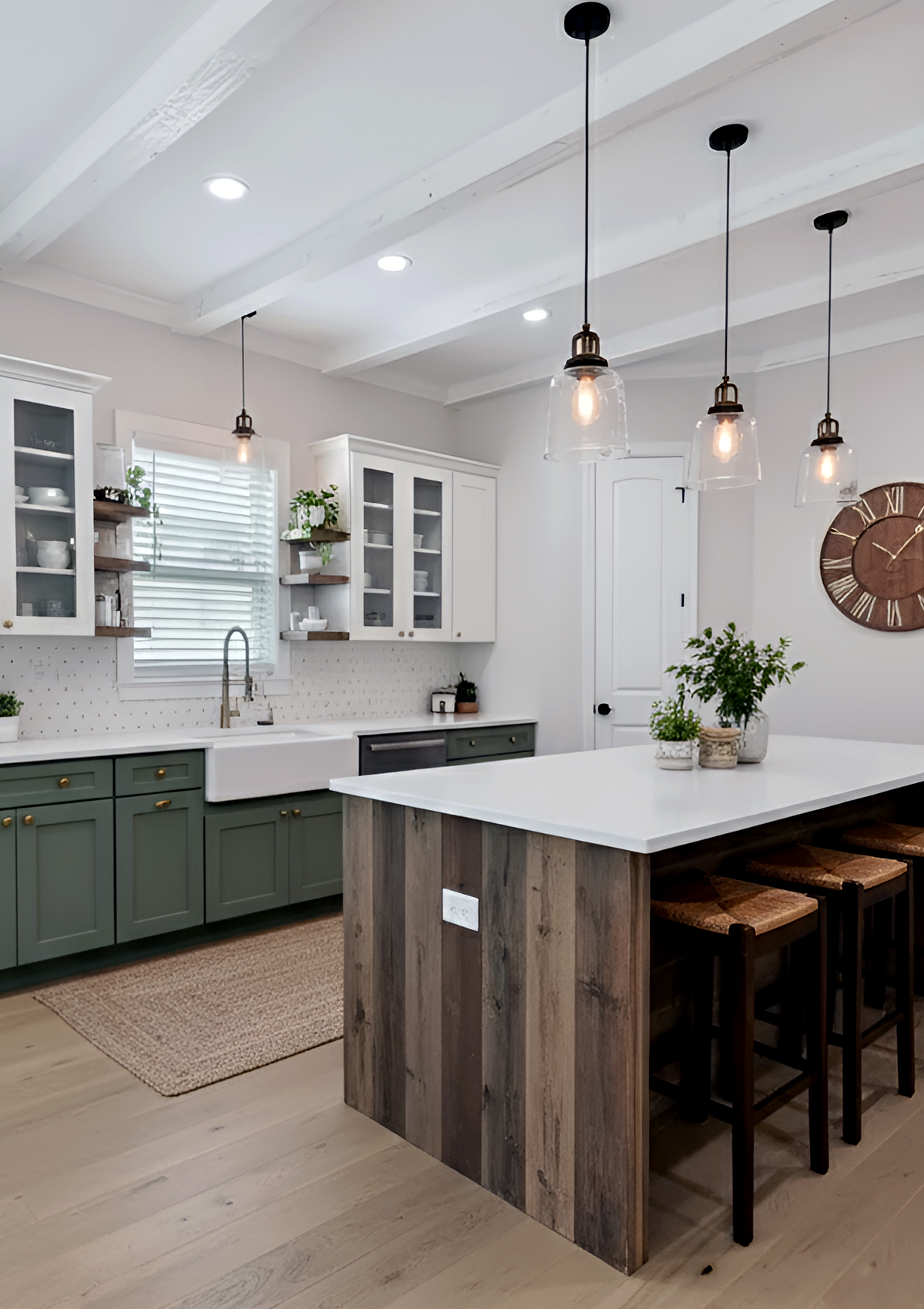
A farmhouse kitchen almost always has a hardworking sink. This is one of the clearest style signals in the room. The classic choice is an apron-front sink, often called a farmhouse sink. It has that deep front panel that shows below the countertop, and it instantly adds charm.
But the look is not just about style. These sinks are usually big and practical too. They make it easier to wash large pots, baking sheets, and stacks of dishes. That mix of beauty and function is exactly what farmhouse style is all about.
White fireclay sinks are the most traditional option. Stainless steel works for a more modern farmhouse look. Stone and composite sinks can also work, depending on the rest of the design.
Pair the sink with a bridge faucet, a simple gooseneck faucet, or a faucet in matte black, brass, or polished nickel. Then frame the whole moment with a window if you can. A sink under a window feels bright, classic, and deeply farmhouse.
Sink cues to add:
- Apron-front design
- Deep basin
- A practical faucet with character
- A sink wall that feels open and bright
- Simple shapes that look sturdy and timeless
6. Add Counters That Feel Honest and Easy
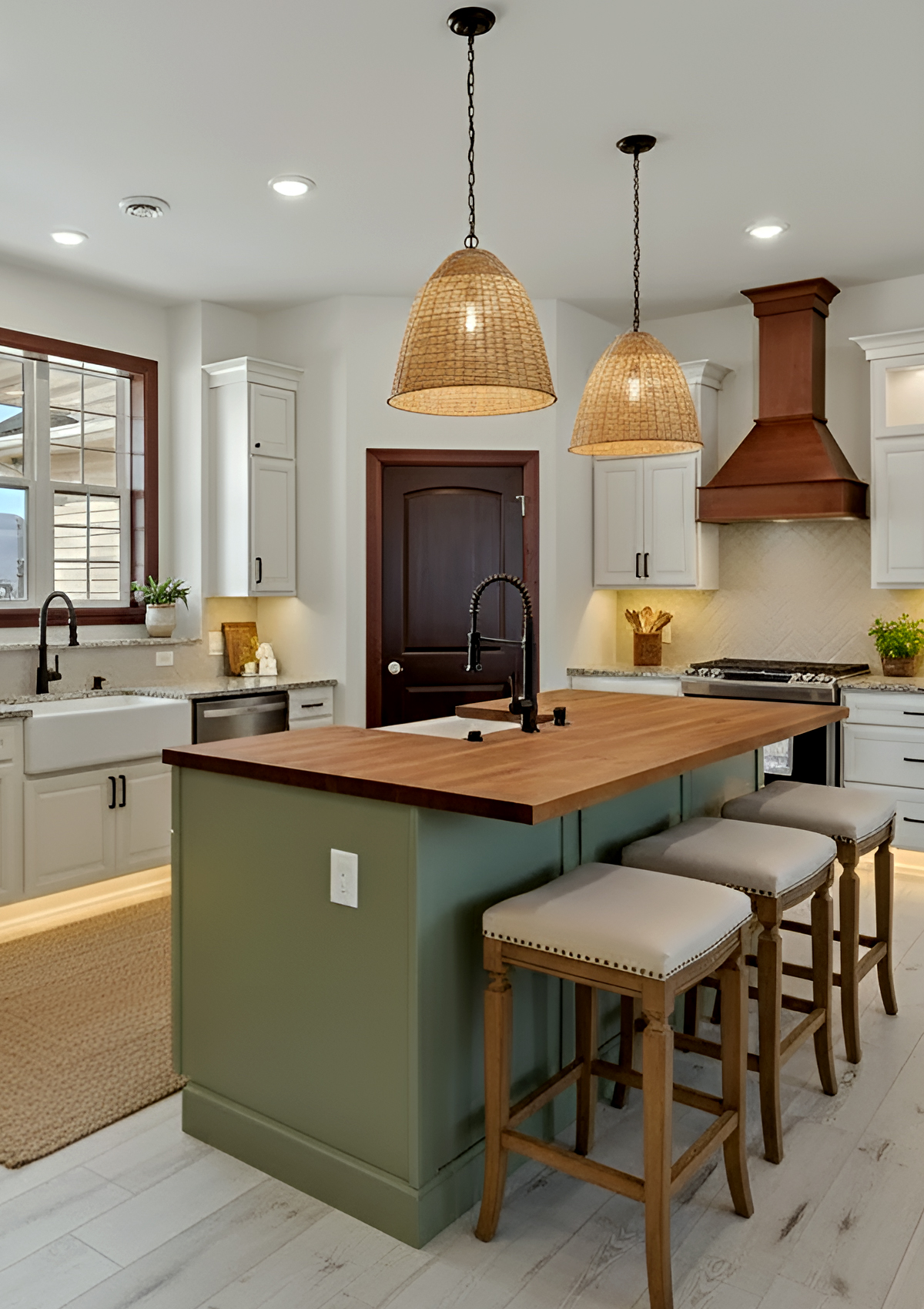
Farmhouse kitchens do not need fancy countertops to look beautiful. In fact, the best ones often use materials that feel natural, durable, and unfussy.
Butcher block is a farmhouse favorite because it brings in warmth and softness. It looks great on all counters or just on an island. Marble is another popular option, especially if you like a slightly elevated farmhouse look. It has soft movement and a classic feel, though it does need care. Quartz that mimics marble can be a practical choice if you want the look with less upkeep.
Soapstone also fits the style beautifully. It has an old-world look and a rich, grounded feel. Even simple laminate in the right color can work if the rest of the kitchen carries the farmhouse mood.
The key is to avoid materials that feel too shiny, too busy, or overly high-tech. Farmhouse kitchens look best when the counters feel natural and relaxed.
Countertop cues to try:
- Butcher block warmth
- Soft stone movement
- Matte or honed finish
- Durable, easy-care surfaces
- Materials that age gracefully
7. Let Lighting Add Character
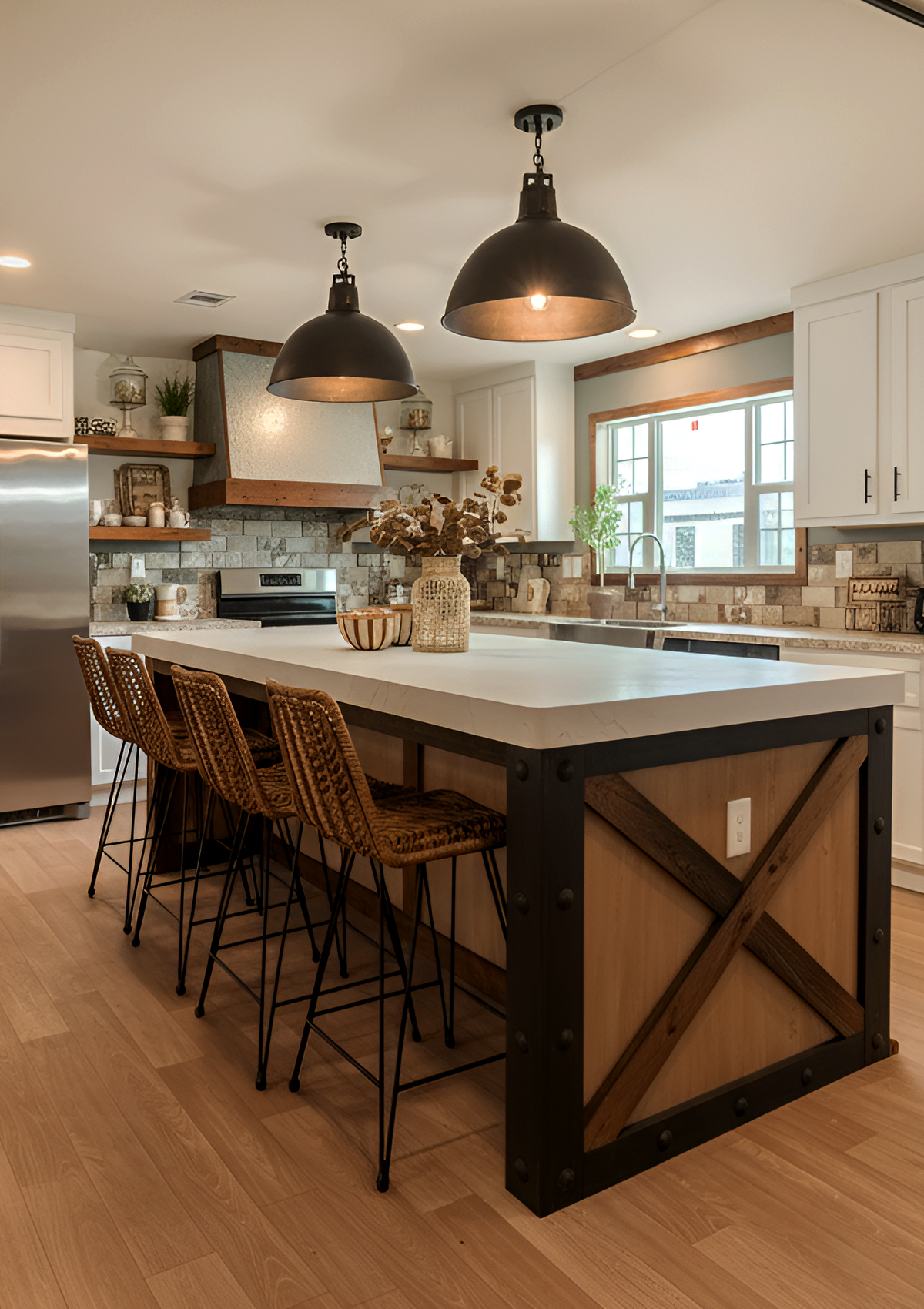
Lighting in a farmhouse kitchen should do more than brighten the room. It should add personality. This is one of the easiest places to bring in charm.
Think metal pendant lights over the island. Think lantern-style fixtures over the dining table. Think simple sconces over open shelves or near the sink. Clear glass, black metal, aged brass, and enamel finishes all work well in farmhouse spaces.
You can lean rustic with weathered finishes, or go cleaner with a modern farmhouse look. Either way, the fixtures should feel simple, sturdy, and a little nostalgic. They should not feel too glamorous or too futuristic.
Also, layer your lighting. Overhead lighting matters, but so does task lighting. Under-cabinet lights, small lamps, and sconces can make the room feel warmer and more inviting.
Lighting cues to include:
- Pendant lights with simple shapes
- Aged metal finishes
- Lantern or barn-style influence
- Soft layered lighting
- Fixtures that feel useful and beautiful
8. Use Flooring That Can Handle Real Life
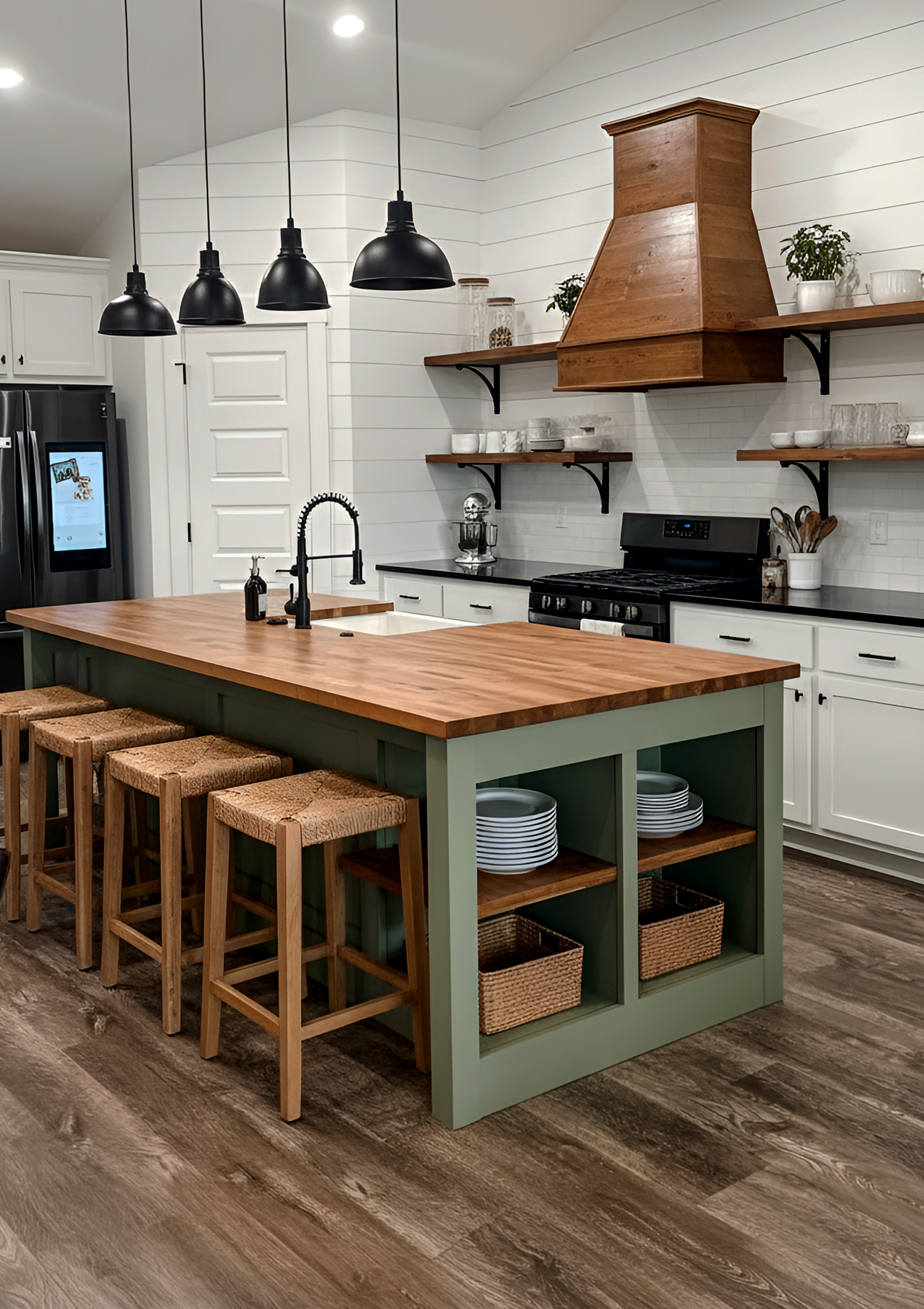
A farmhouse kitchen should look like it can handle muddy boots, spilled flour, and busy mornings. That is why flooring matters so much. The best farmhouse kitchen floors are tough, easy to clean, and full of texture.
Wood floors are a top choice. Wide planks feel especially right. They give the room a relaxed, spacious look. Lighter oak, medium brown tones, and even slightly weathered finishes all work well. If real wood is not practical, luxury vinyl plank can offer a similar look with more durability.
Brick floors also feel deeply farmhouse, especially in older-style spaces. They bring texture, warmth, and an old-world touch. Stone-look tile and matte ceramic tile can work too, especially if you want something durable and easy to maintain.
Skip anything that feels too glossy or too slick. Farmhouse style likes surfaces that look grounded.
Flooring cues to consider:
- Wide plank look
- Warm wood tones
- Matte finishes
- Textured surfaces
- Materials that feel durable and lived in
9. Keep the Backsplash Simple
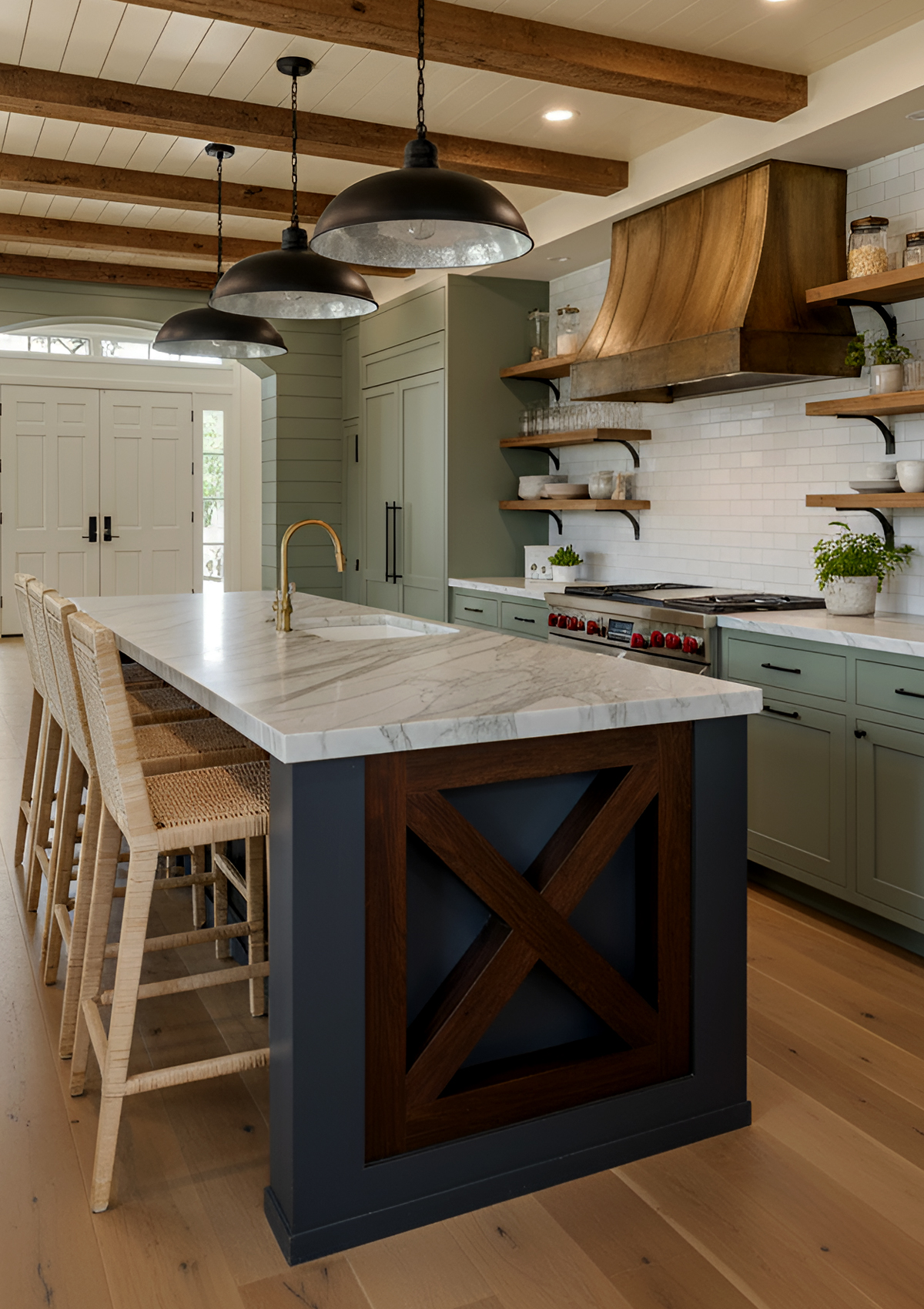
A farmhouse kitchen does not need a busy backsplash. In fact, the simplest options often work best. White subway tile is a classic for a reason. It is clean, timeless, and easy to pair with almost anything. You can lay it in a standard brick pattern, a vertical stack, or even a herringbone design if you want a little more movement.
Beadboard also works well in farmhouse kitchens, especially if you want a softer, cottage-like feel. Stone tile, zellige tile, or handmade-look ceramic tile can also add texture without overwhelming the room.
What you want to avoid is anything too glossy, too bold, or too trendy. The backsplash should support the warmth of the kitchen, not steal the show.
Backsplash cues to use:
- White or soft neutral tile
- Handmade texture
- Classic patterns
- Beadboard or simple paneling
- A clean, quiet backdrop
10. Make Room for Gathering
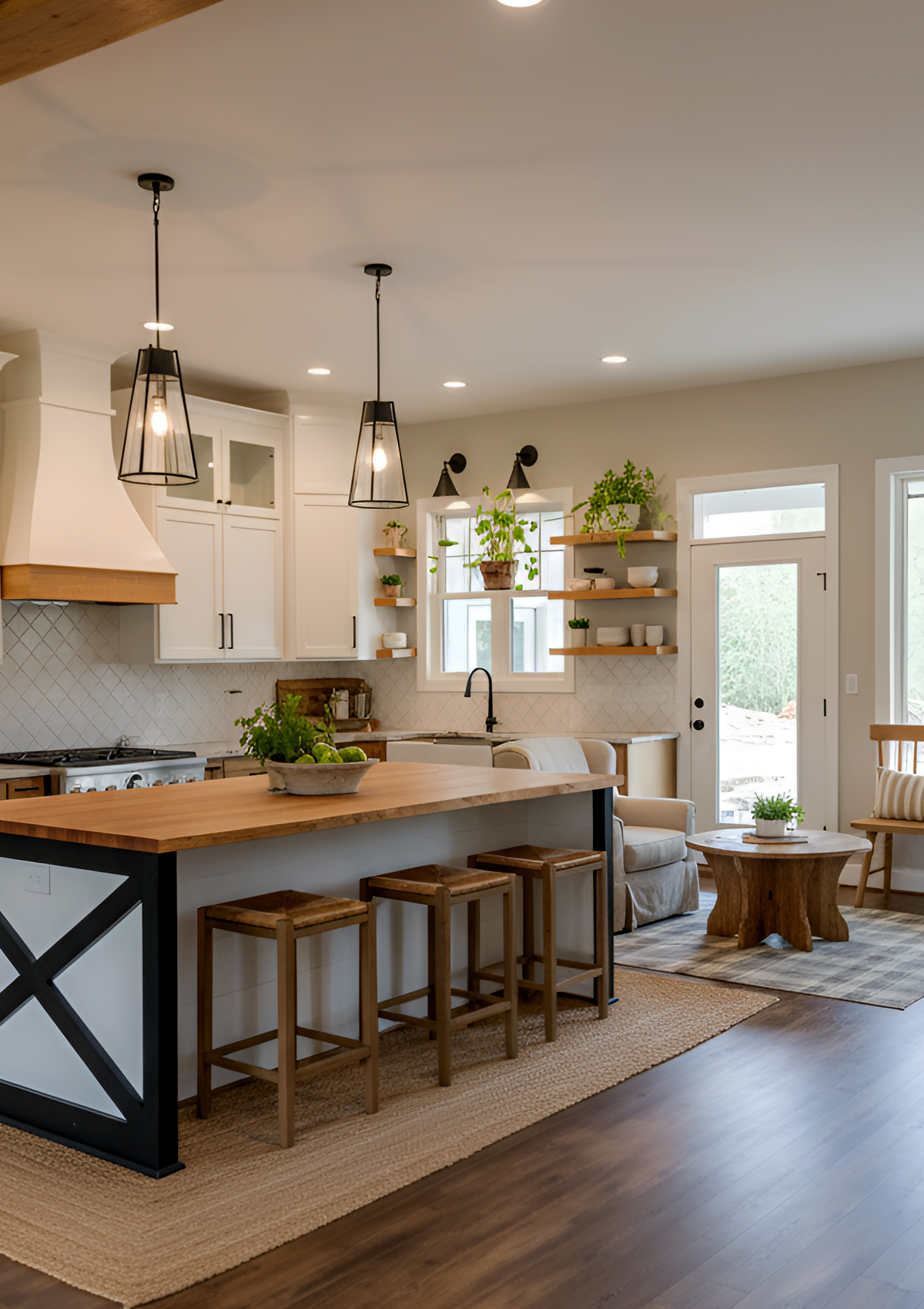
A farmhouse kitchen is rarely just a cooking space. It is a gathering space. It is where people lean on the counter, sit with coffee, or talk while dinner cooks. So when you design the room, think beyond appliances and storage. Think about connection.
A large island can help create that feeling. It gives you prep space, storage, and a place for stools. If you do not have room for an island, a small work table or an eat-in breakfast nook can bring the same farmhouse spirit.
A rustic dining table inside the kitchen also feels right at home. It makes the space feel casual and welcoming. Mismatched chairs, spindle-back stools, or a simple bench can add even more charm.
This is one of the most important farmhouse ideas of all. The room should invite people in.
Gathering-space cues to add:
- An island with seating
- A worktable feel
- A breakfast nook
- Comfortable stools or chairs
- Layout that encourages conversation
11. Use Open Storage in a Thoughtful Way
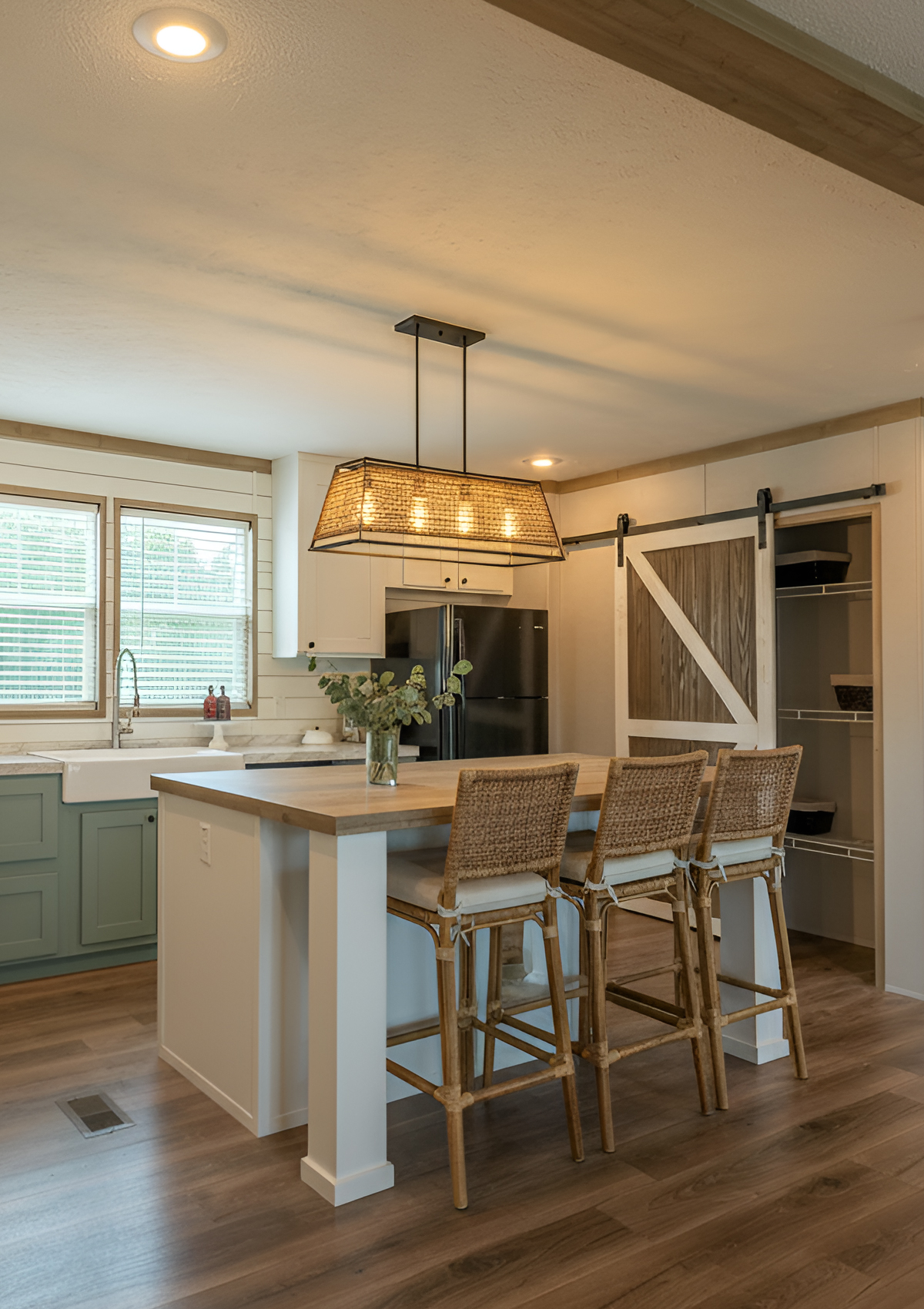
Open shelving is common in farmhouse kitchens, but it works best when used with care. A few open shelves can make the room feel airy and personal. They give you a place to display dishes, pitchers, cutting boards, or a few favorite bowls. They also break up long runs of upper cabinets.
Still, too much open shelving can make a kitchen feel cluttered fast. Farmhouse style may look relaxed, but it still needs order. The best farmhouse kitchens balance open storage with plenty of closed cabinets.
Try using open shelves in one zone only. You might place them around the range hood, next to a window, or above a coffee station. Then style them with everyday items that also look beautiful.
Open-storage cues to follow:
- A few shelves, not too many
- Everyday dishes on display
- Baskets, crocks, and cutting boards
- A mix of open and closed storage
- Styling that feels useful, not forced
12. Layer in Texture With Textiles and Decor
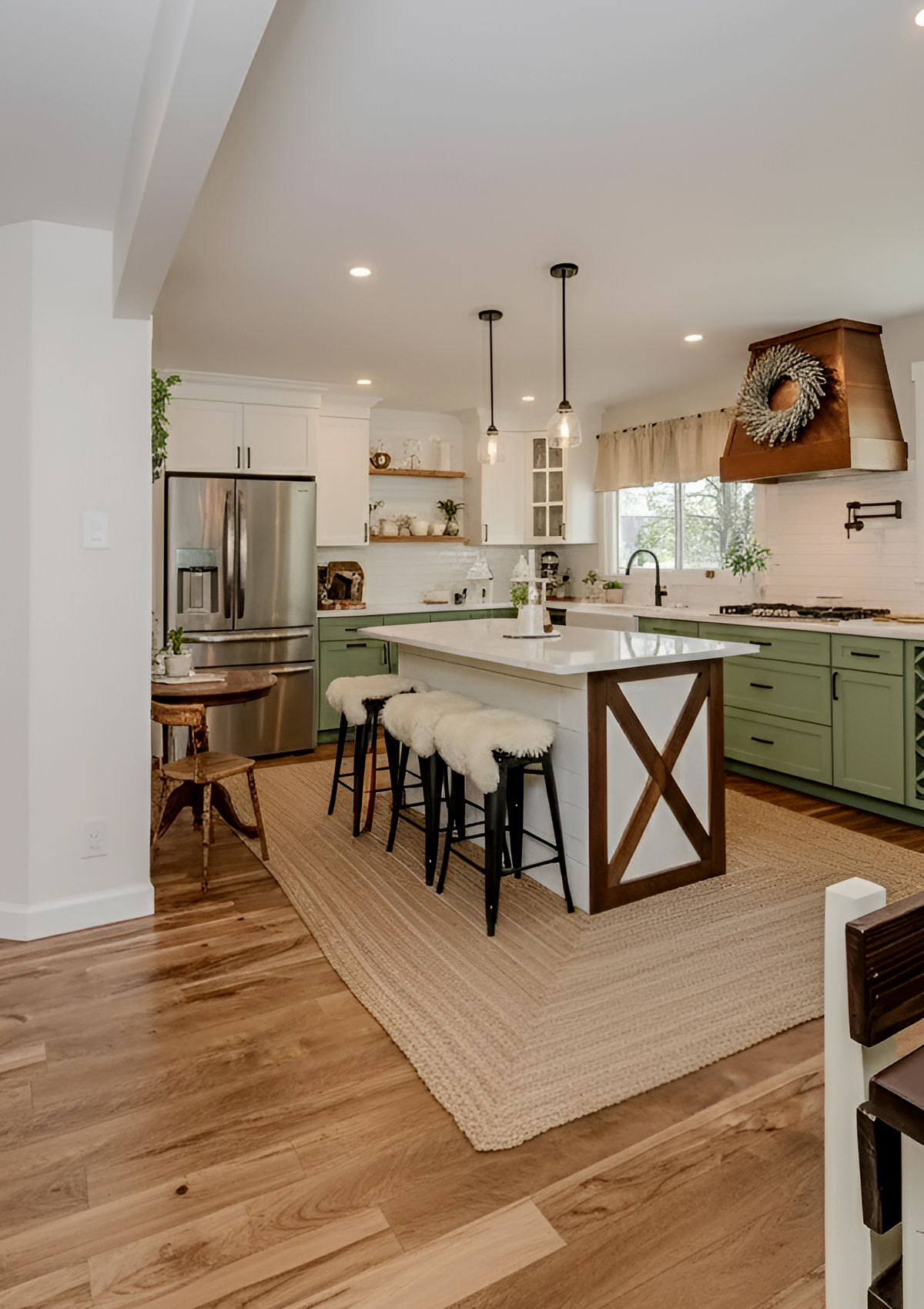
This is where the kitchen starts to feel truly cozy. Farmhouse style loves texture. A striped runner. Woven shades. Linen tea towels. A vintage crock on the counter. A wooden bowl full of fruit. These simple details make the room feel softer and more personal.
Decor in a farmhouse kitchen should feel collected, not crowded. A few old pieces go a long way. Maybe it is a vintage scale, an antique breadboard, or a framed botanical print. Maybe it is a ceramic pitcher with fresh branches. The point is to add warmth without filling every surface.
Textiles help too. Roman shades in a natural fabric, simple chair cushions, and washable runners all make the room feel layered and lived in.
Decor cues to layer in:
- Linen or cotton fabrics
- Natural woven textures
- Vintage or vintage-look accessories
- Useful decor with charm
- A light hand with styling
13. Mix Old and New for a More Real Look
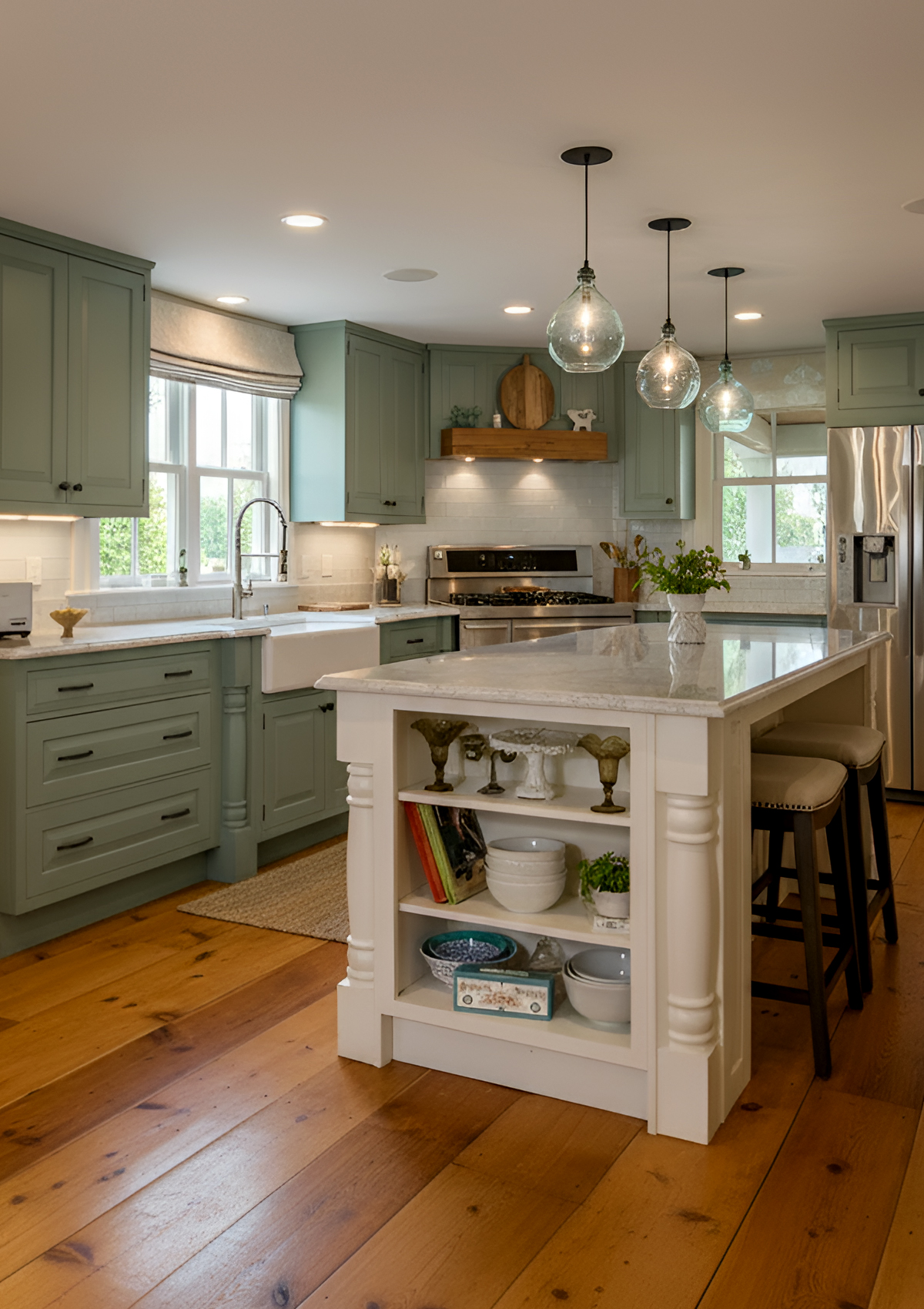
One reason farmhouse kitchens feel so inviting is that they do not look like they were purchased all at once. They feel layered over time. That is why mixing old and new works so well here.
Pair new cabinets with antique hardware. Use modern appliances with a vintage-style light fixture. Add a reclaimed table next to fresh paint and clean counters. That contrast gives the kitchen depth.
A room that is too matched can feel flat. A room with a little age and variety feels richer. Even if you are starting from scratch, you can build that layered look by mixing finishes, materials, and eras.
Farmhouse style does not ask for perfection. It asks for personality.
Mixing cues to use:
- One or two antique pieces
- New function with old charm
- Layered finishes
- Collected details
- A room that feels personal, not copied
14. Avoid the Most Common Mistakes
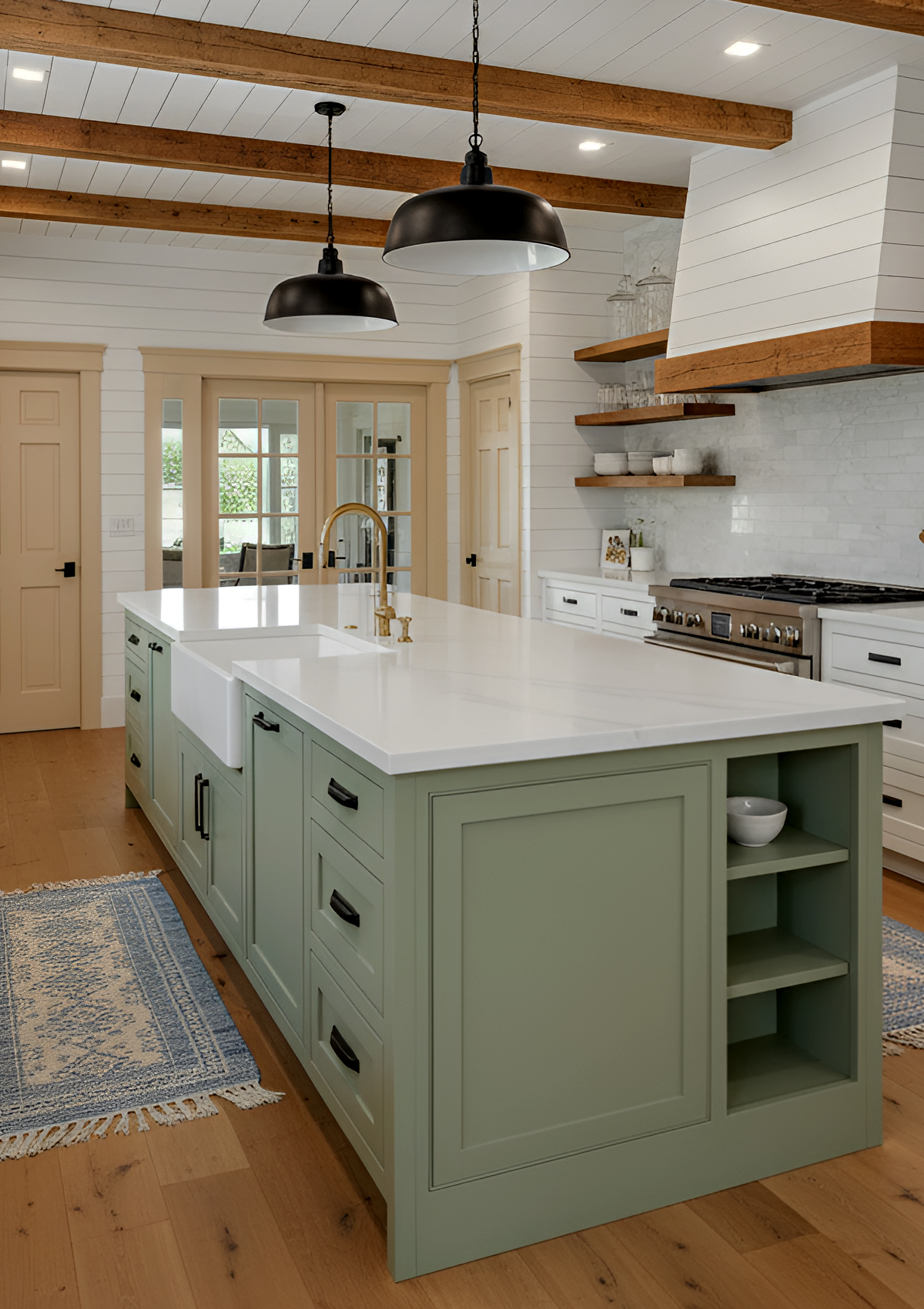
Farmhouse style is popular, which means it is easy to overdo it. One of the biggest mistakes is leaning too hard on theme decor. Too many signs, too many words on the walls, too many distressed pieces, and the room starts to feel forced.
Another mistake is making the space too rustic and forgetting function. A farmhouse kitchen still needs good storage, strong lighting, and surfaces that work for daily life. Beauty matters, but usability matters more.
Also, watch your balance. If everything is white, the room may feel cold. If everything is wood, it may feel heavy. If every item looks old, the room can lose freshness. The best farmhouse kitchens mix softness, texture, practicality, and contrast.
Mistakes to skip:
- Too much theme decor
- Too many distressed finishes
- Cluttered open shelves
- Not enough task lighting
- Choosing style over function
Conclusion
A great farmhouse kitchen is not about making the room look perfect. It is about making it feel warm, useful, and easy to love. Simple cabinets, natural wood, soft colors, vintage touches, and hardworking materials all come together to create a space that feels inviting from the moment you walk in.
Start with the basics, then layer in the details that make the room feel like home. That is where the real charm lives. A farmhouse kitchen should welcome people in, hold up to daily life, and still look beautiful at the end of the day. That is the kind of kitchen people remember.