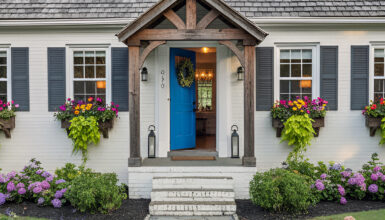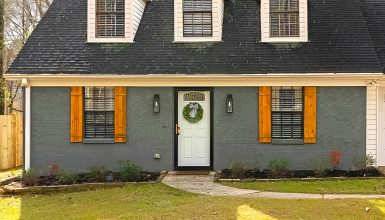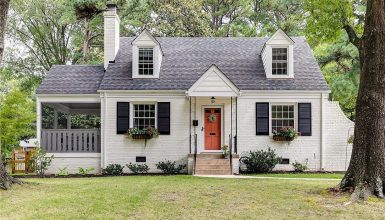
A small Cape Cod house does not need grand size to feel special. In fact, that is part of its charm. This home proves it. It feels simple, warm, and easy to love from the first look. The dark gray siding gives it a fresh face. The natural wood shutters add a cozy touch. The white trim keeps everything crisp. Then, inside, the home opens up with soft white walls, wood-look floors, a bold black brick fireplace, and relaxed rooms that feel lived-in but still styled.
This is the kind of house that says, “Come in, kick off your shoes, and stay awhile.”
What makes this design work so well is the mix. It blends classic Cape Cod cottage charm with clean, modern updates. It also uses warm wood, black accents, and simple furniture to make each room feel calm and useful. Nothing feels too fussy. Nothing feels too cold. Instead, the whole home has that sweet spot many small homes need: cozy, bright, and practical.
Let’s walk through the exterior and interior design ideas that make this small Cape Cod house shine.
1. A Dark Gray Exterior That Feels Fresh and Timeless
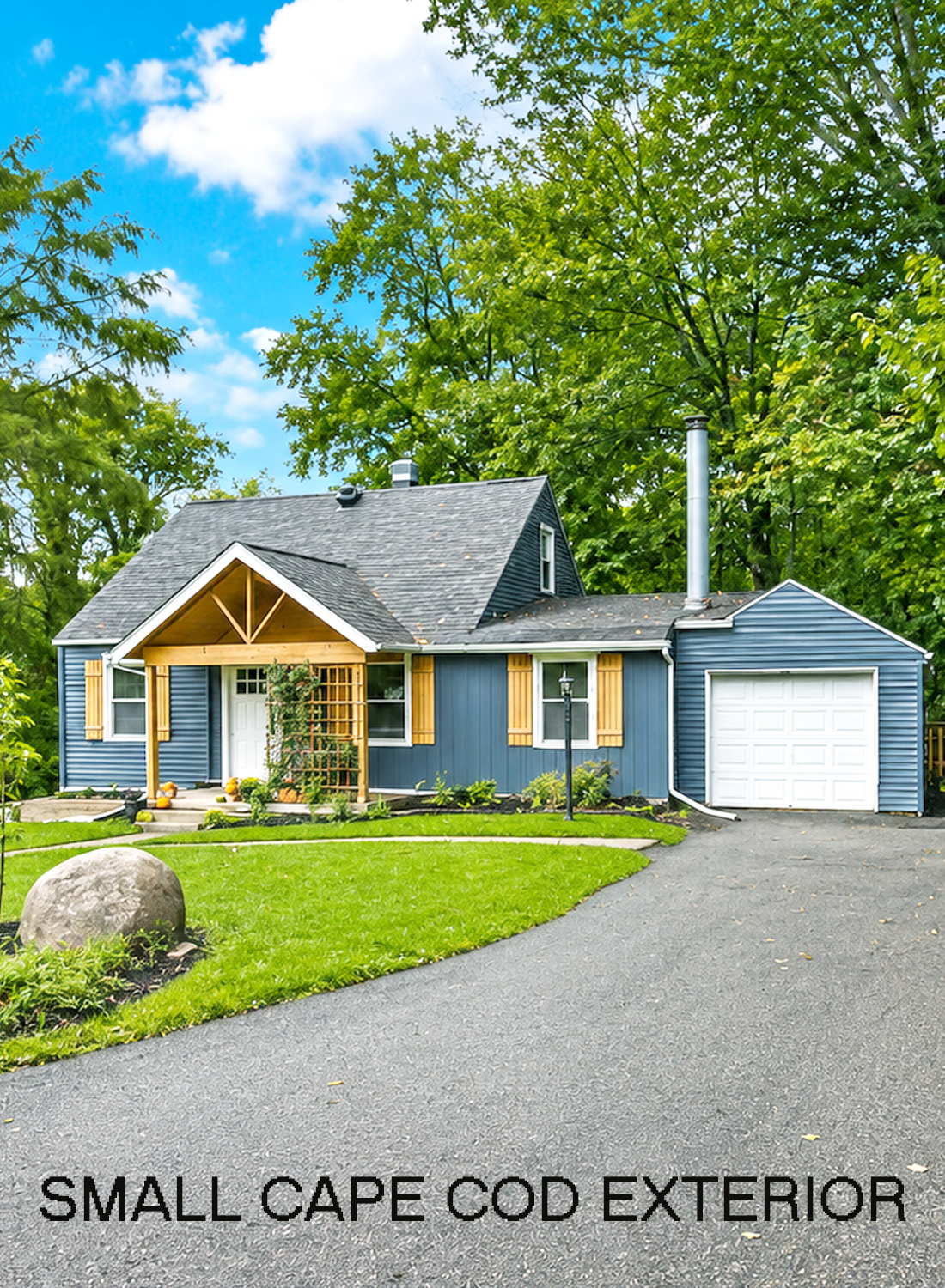
The exterior sets the tone right away. This small Cape Cod house uses dark gray siding as the main color. That choice gives the home a modern look without taking away its cottage charm. Gray works well here because it feels soft, not harsh. It also helps the white trim pop.
The house has a classic low, wide shape. That is a big part of its Cape Cod feel. The roofline sits low and simple. The main front section feels humble and balanced. Then the small garage adds extra width to the home, which makes the whole property feel more complete.
The siding mix also adds charm. Some areas use horizontal siding, while the front entry section has vertical panels. This small change gives the exterior more depth. It keeps the gray from looking flat.
Then comes the wood. The natural wood shutters warm up the whole front. They make the house feel less formal and more inviting. The wood also connects with the trees, lawn, and front garden beds. So, the home feels tucked into its setting instead of placed on top of it.
Design cues to copy:
- Use dark gray siding for a fresh cottage look.
- Add white trim for crisp contrast.
- Mix horizontal siding with vertical panels.
- Choose natural wood shutters for warmth.
- Keep the roof color simple and quiet.
- Let the home blend with green lawn and trees.
- Use black hardware for a modern touch.
2. A Front Porch That Makes the Entry Feel Special
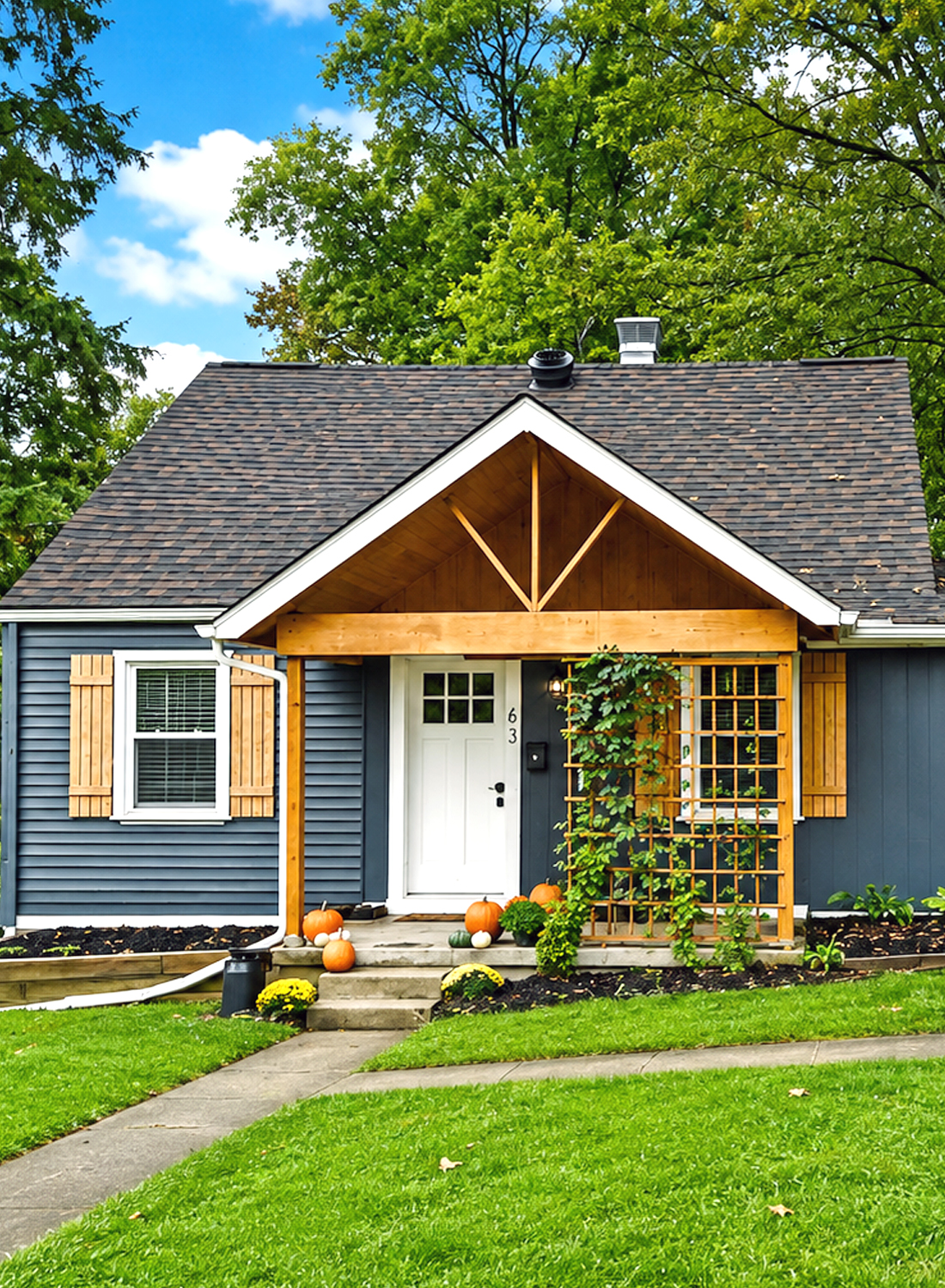
The front porch is small, but it does a lot of work. It gives the home a clear focal point. It also makes the entrance feel protected and cozy.
The gabled roof over the porch adds classic charm. It draws the eye to the front door. The underside of the porch roof uses warm wood. This detail is one of the best parts of the exterior. It adds a rich, cabin-like feel without going too rustic.
A white front door keeps the entry light. The black handle and black wall light add sharp contrast. These small black details help the home feel updated. They also tie in with the dark gray siding.
The porch decor stays simple. A welcome mat, small pumpkins, a few plants, and a trellis with climbing greenery make the space feel lived in. It does not need much. With a small porch, fewer items often look better.
The trellis is a smart idea. It adds height near the entry and softens the straight lines of the house. It also makes the front feel a bit like a garden cottage.
Design cues to copy:
- Add a gabled porch roof to frame the front door.
- Use wood on the porch ceiling for warmth.
- Keep the front door light and classic.
- Choose black door hardware for contrast.
- Add a simple wall sconce near the entry.
- Use a trellis to bring in height.
- Keep seasonal decor simple and neat.
- Add a durable welcome mat for a cozy touch.
3. Natural Wood Shutters That Warm Up the Gray Siding
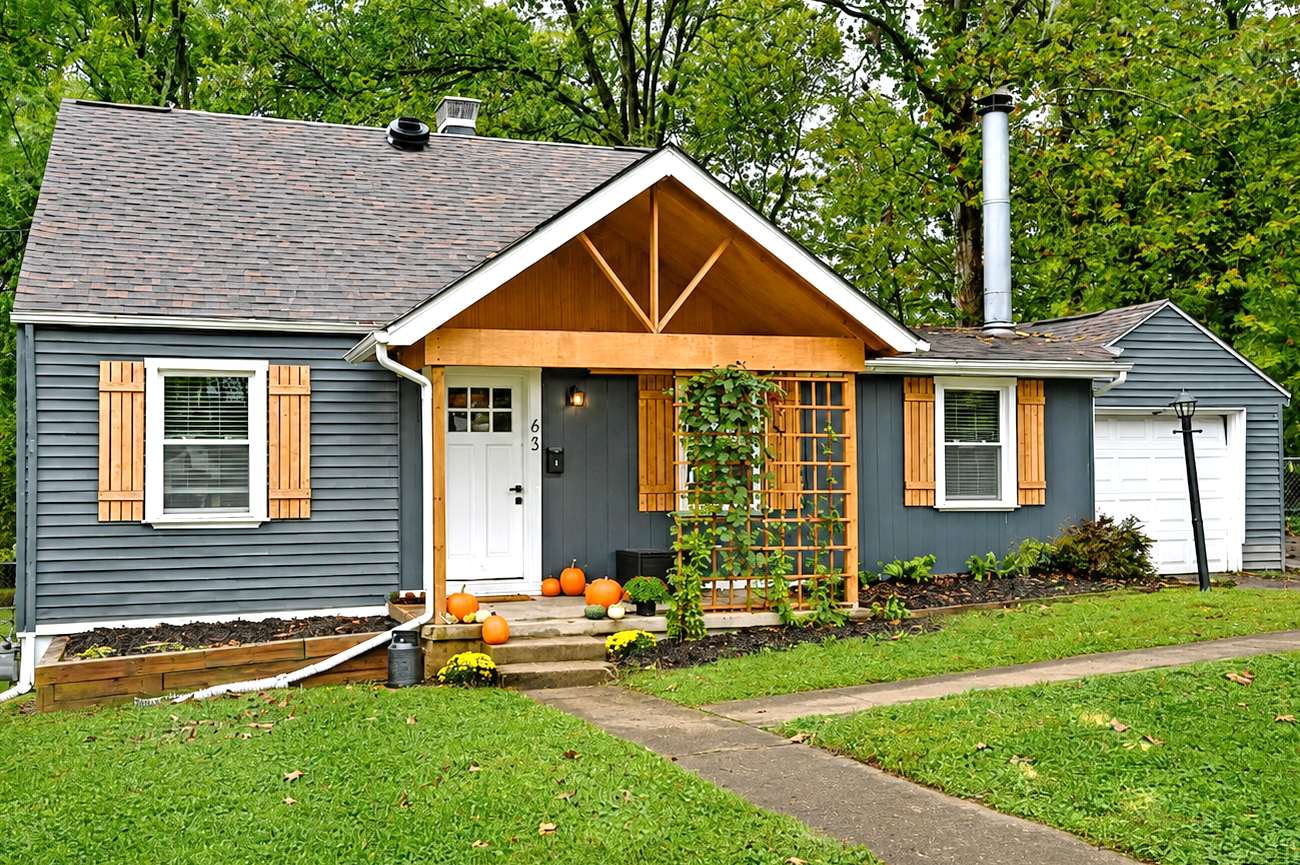
The wood shutters bring the exterior to life. Without them, the gray siding and white trim might feel a little plain. With them, the house feels warm, friendly, and custom.
These shutters have a simple board-and-batten look. That style fits a small cottage well. It feels handmade but not too rough. The warm wood tone also repeats in the porch ceiling and trellis. This repetition makes the design feel planned.
This is a good lesson for any small home. You do not need many materials. You just need to repeat the right ones. Here, gray, white, black, and warm wood carry the whole exterior.
The shutters also make the windows feel larger. They frame each window and give the front wall more rhythm. Since the home has a long, low shape, this detail helps break up the siding.
Design cues to copy:
- Use board-and-batten shutters for cottage charm.
- Pick a warm wood tone, not a harsh orange stain.
- Repeat the wood tone in other spots.
- Use shutters to frame small windows.
- Keep shutter shapes simple.
- Pair wood shutters with white window trim.
- Balance warm wood with cool gray siding.
4. Simple Landscaping That Lets the House Breathe
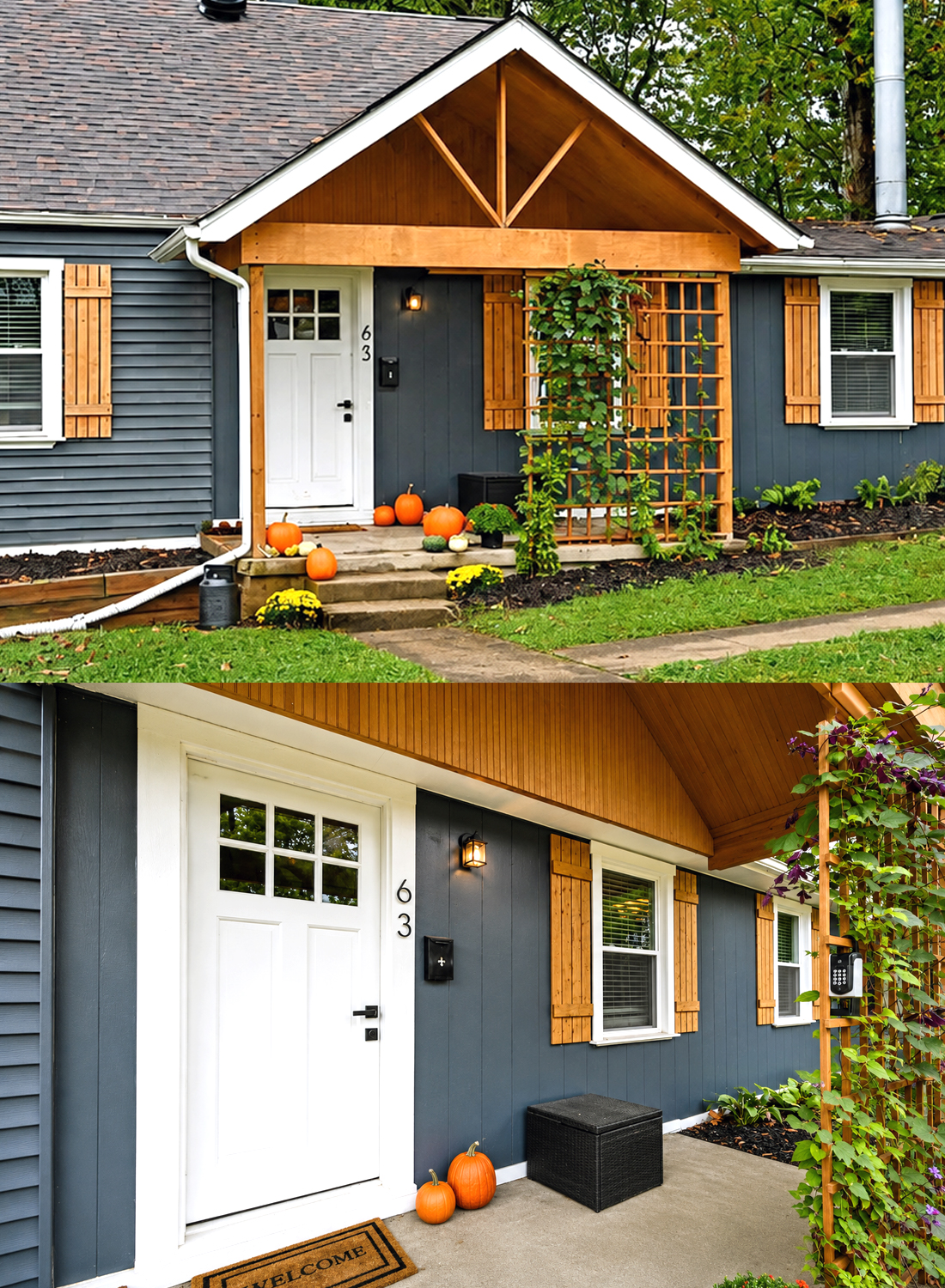
The front yard keeps things relaxed. There is open grass, low garden beds, and trees around the home. This choice fits the house well. Since the home is small, heavy landscaping could make it feel hidden. Instead, the simple lawn gives the home breathing room.
The garden beds near the house add color and texture. Low plants keep the base of the house soft. They also help the gray siding feel grounded. A few fuller plants near the trellis add charm without blocking the windows.
The walkway is plain and practical. It leads to the entry without stealing attention. In a small Cape Cod home, this kind of simple path works well. It supports the house instead of competing with it.
This yard also shows how seasonal decor can add warmth. The pumpkins by the door bring color and charm. Yet they stay small enough to feel natural.
Design cues to copy:
- Use low garden beds along the front.
- Keep plants below the windows.
- Let lawn space make the home feel open.
- Add a simple walkway to the porch.
- Use climbing plants near the entry.
- Choose seasonal decor in small amounts.
- Keep the garden soft, not crowded.
- Let mature trees frame the house.
5. A Welcoming Entry With Black-and-White Contrast
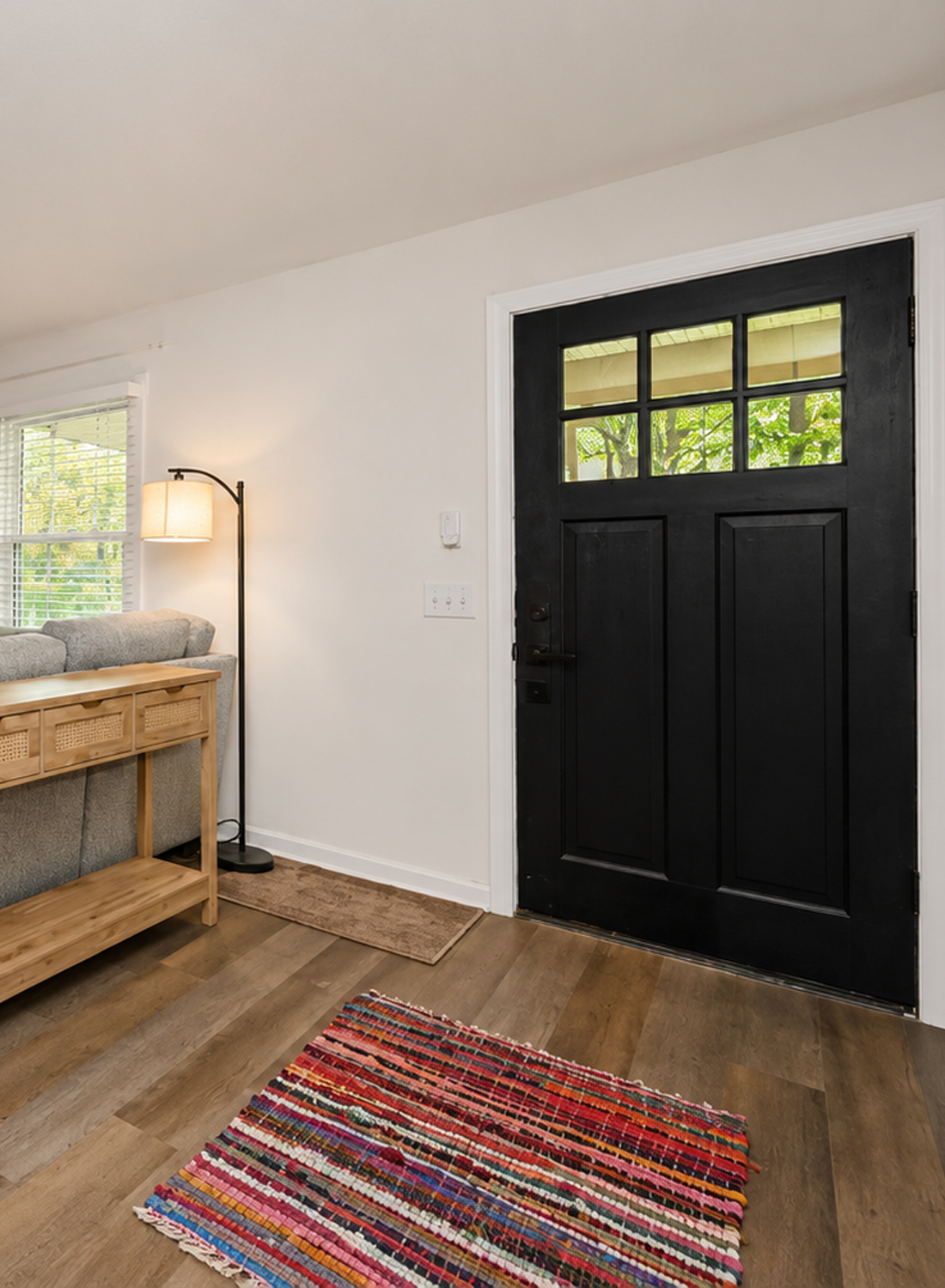
Inside, the entry starts with a strong contrast. The black front door looks bold against white walls. It gives the space a clear anchor. It also repeats the black accents from the exterior.
This entry does not have a large foyer. Instead, it opens right into the living area. That is common in small homes. The key is to create a sense of arrival without adding walls. This home does that with a rug, a console table behind the sofa, and a clear view into the living room.
The colorful rug near the door adds life. It keeps the entry from feeling too plain. The wood-look floors also help the room feel warm from the start.
The console table behind the sofa is a smart small-space move. It creates a light divider between the entry and living area. It also gives a spot for keys, lamps, baskets, or decor.
Design cues to copy:
- Paint the inside of the front door black.
- Use white walls to keep the entry bright.
- Add a colorful rug for warmth.
- Place a narrow console table behind the sofa.
- Let furniture create soft zones.
- Use wood-look floors for easy flow.
- Keep the entry clean and open.
6. An Open Living Room With a Cozy Sectional
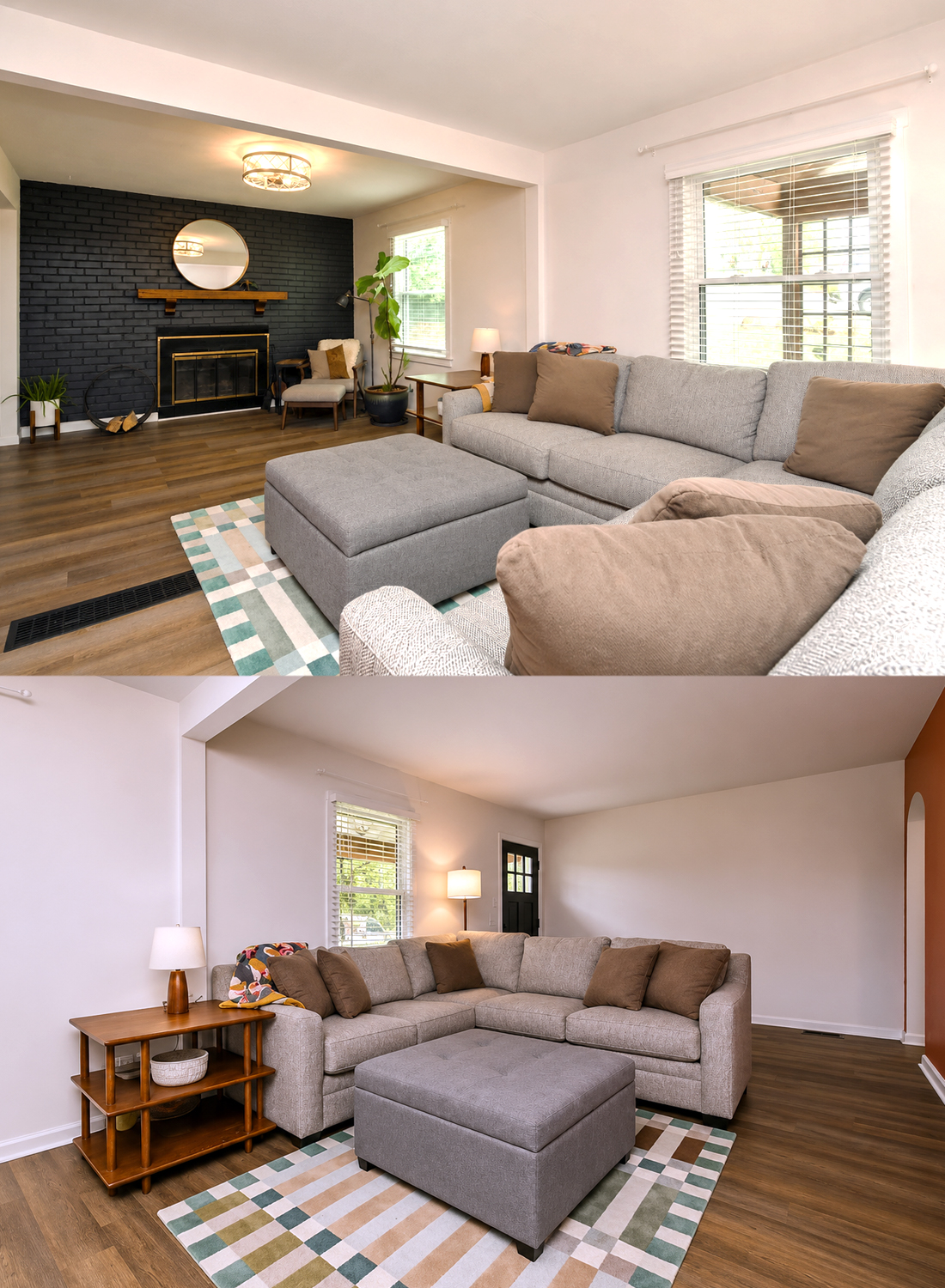
The living room feels open, simple, and comfortable. A large gray sectional fills the space and makes the room feel ready for real life. This is a smart choice for a small home. One large sofa often works better than many small chairs. It gives more seating with less visual clutter.
The sectional faces the fireplace wall. That makes the room feel cozy and grounded. The large ottoman in the center works as a coffee table and a footrest. It also keeps the room soft, which is great for a family home.
The color palette stays calm. Gray fabric, white walls, warm floors, and soft brown pillows create a quiet base. Then the patterned rug adds color without taking over the room. The rug also helps define the seating area in the open plan.
The living room does not feel overdecorated. That is a good thing. In a small Cape Cod house, too much decor can make a room feel tight. Here, the open wall space helps the room breathe.
Design cues to copy:
- Choose one large sectional instead of many small seats.
- Use a soft ottoman as the coffee table.
- Ground the seating area with a patterned rug.
- Keep walls light and simple.
- Add warm throw pillows for depth.
- Let the fireplace be the main focal point.
- Avoid too many small decor pieces.
- Use floor lamps for soft evening light.
7. A Black Brick Fireplace Wall With Big Style
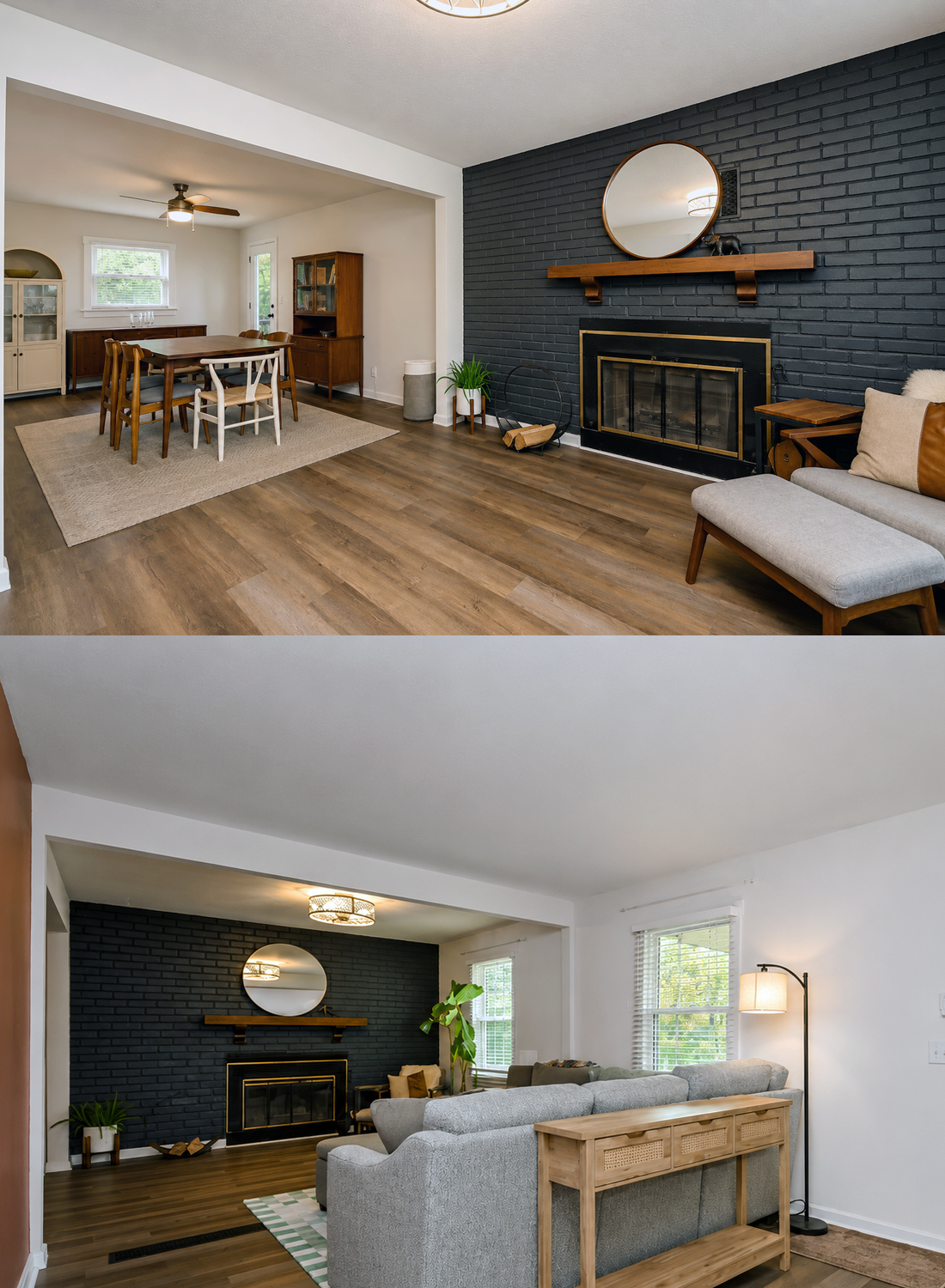
The black brick fireplace is one of the strongest interior features. It gives the home a bold focal point. It also adds texture, which matters in a room with white walls and simple lines.
Black brick feels modern, but it also works with the home’s cottage roots. It gives the fireplace a hearth-like feel. The wood mantel warms it up and keeps it from feeling too dark. The round mirror above the mantel softens all the straight lines. This is a smart move. A round shape brings balance to a brick wall.
The brass or warm metal trim on the fireplace adds a subtle vintage note. It ties in with the wood tones in the room. This mix makes the fireplace feel layered, not flat.
The fireplace zone also helps divide the open floor plan. Even though the room flows into the dining area, the dark wall gives the living room its own sense of place.
Design cues to copy:
- Paint a brick fireplace wall dark charcoal or black.
- Add a warm wood mantel for contrast.
- Hang a round mirror above the fireplace.
- Keep decor on the mantel simple.
- Use black accents in nearby furniture or lamps.
- Add a plant to soften the dark wall.
- Let the fireplace define the living room zone.
- Balance dark brick with light walls.
8. A Dining Room With Midcentury Warmth
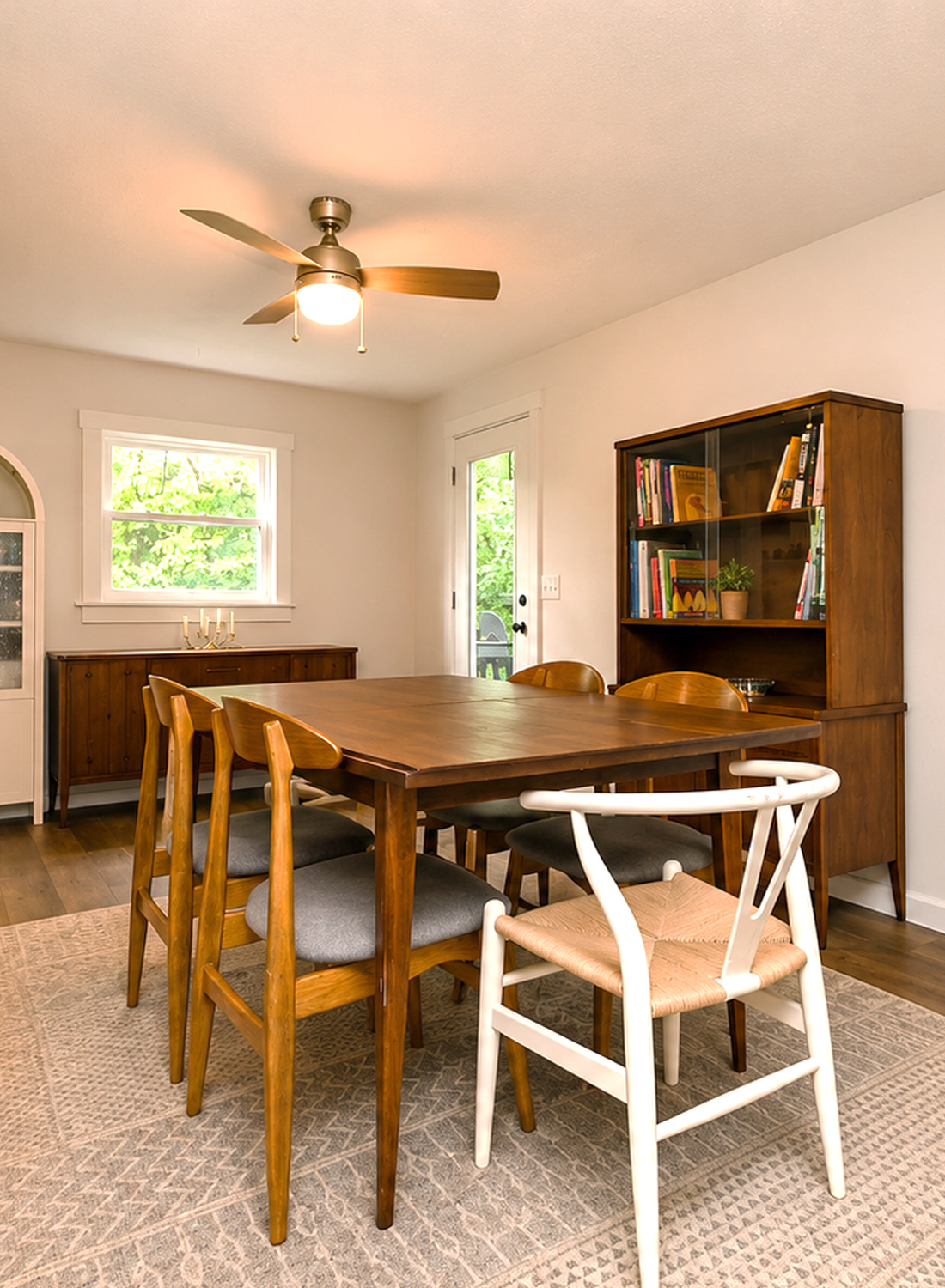
The dining room feels simple and warm. It uses a wood dining table, mixed chairs, a soft rug, and a few vintage-style pieces. This gives the home a lived-in look. It does not feel like a showroom. It feels real.
The wood table brings warmth to the white walls. The mixed chairs add charm. One white wishbone-style chair brings a lighter, more modern note. The wood chairs echo the table and the vintage storage pieces. This mix keeps the room casual.
The large rug under the table helps define the dining area. It also softens the wood-look floors. In an open home, a rug can act like a wall. It tells the eye, “This is the dining space.”
The room also has a beautiful balance of old and new. The vintage cabinet and sideboard add depth. The clean white walls and simple lighting keep it fresh.
Design cues to copy:
- Use a wood dining table for warmth.
- Mix chair styles for a collected look.
- Add a large rug under the table.
- Use a vintage cabinet or sideboard.
- Keep the walls light and clean.
- Let wood tones repeat around the room.
- Choose simple ceiling lights.
- Keep tabletop decor minimal.
9. A Small Kitchen With Big Practical Style
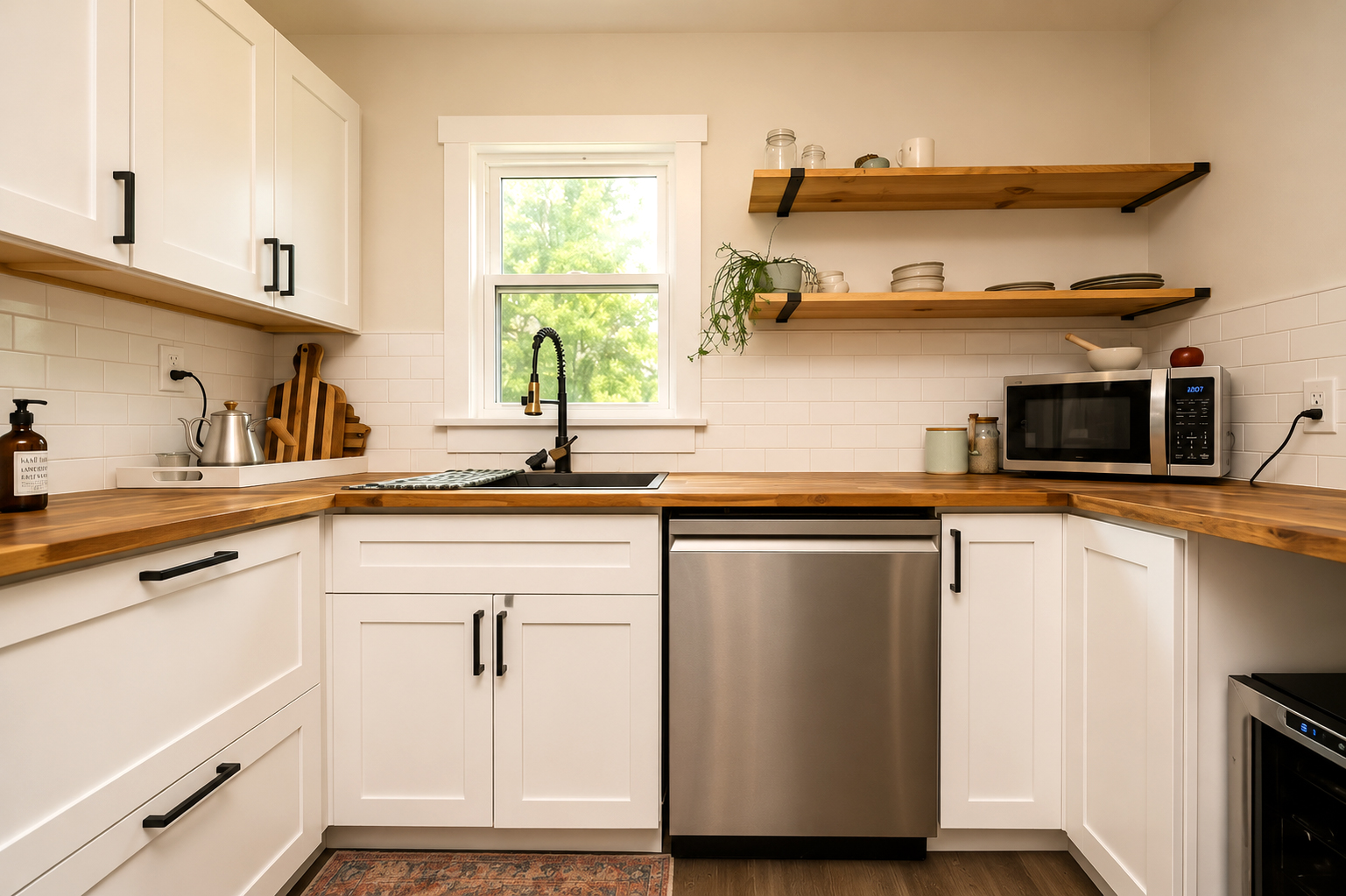
The kitchen makes smart use of its space. White cabinets keep it bright. Black hardware adds contrast. Stainless steel appliances bring a clean, modern feel. The wood countertops warm up the room and tie it to the rest of the house.
Open shelves make the wall feel lighter. They also give space for dishes, bowls, and small decor. This helps the kitchen feel open instead of boxed in. The subway tile backsplash is simple and classic. It works well with the Cape Cod feel.
The small island or bar-height table adds prep space. It also brings in a more casual spot for meals or coffee. The black metal legs keep the look light, so the kitchen does not feel crowded.
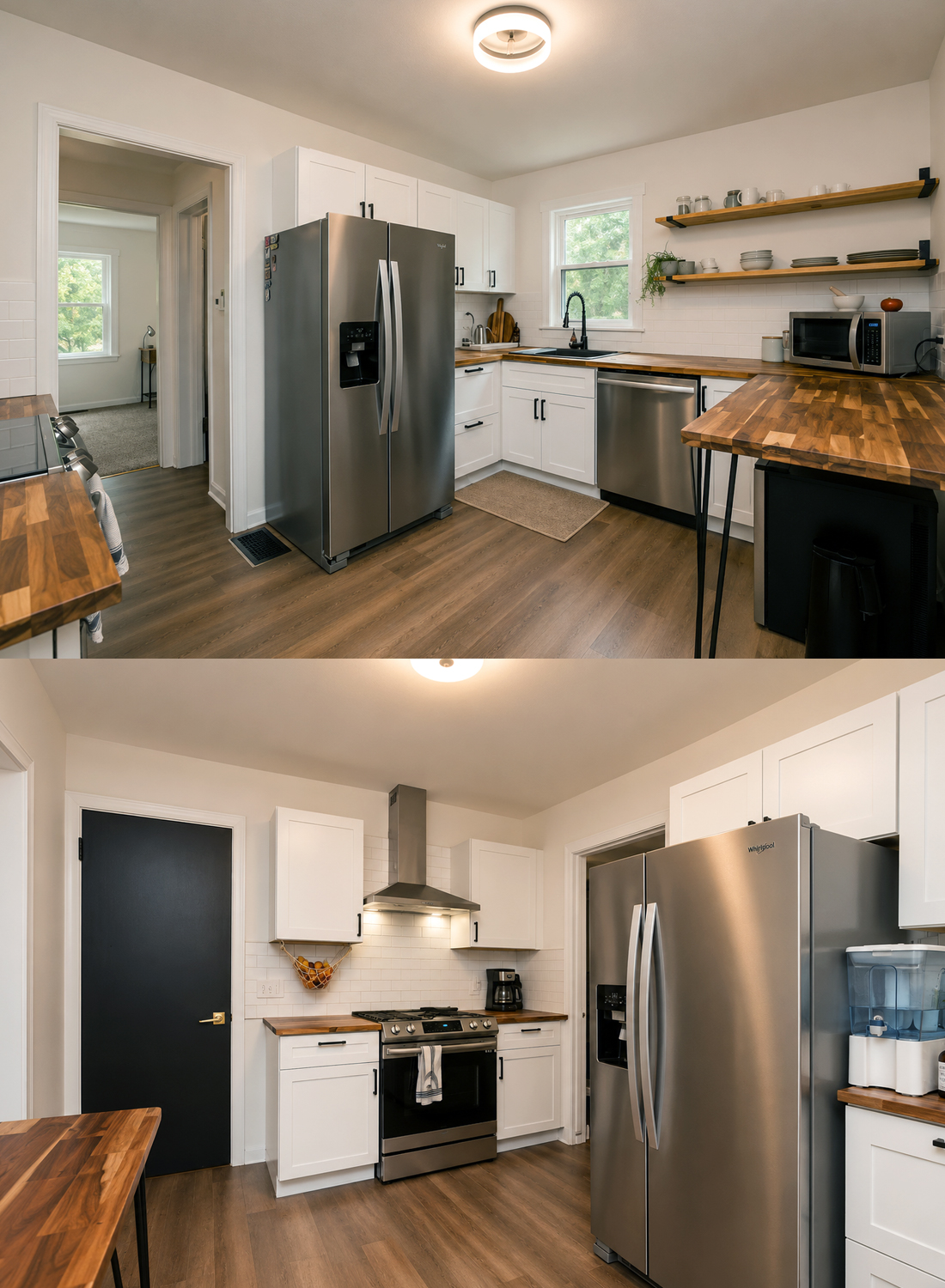
This kitchen proves that small rooms can still feel stylish. The trick is contrast. White cabinets, black handles, warm wood, and stainless steel all work together. Each finish has a job.
Design cues to copy:
- Choose white cabinets to brighten a small kitchen.
- Use black pulls for a crisp look.
- Add wood countertops for warmth.
- Install open shelves to reduce visual weight.
- Use subway tile for a classic backdrop.
- Add stainless steel appliances for a clean finish.
- Pick a slim island or work table.
- Keep the floor consistent with nearby rooms.
10. Open Floor Flow That Makes the Home Feel Larger
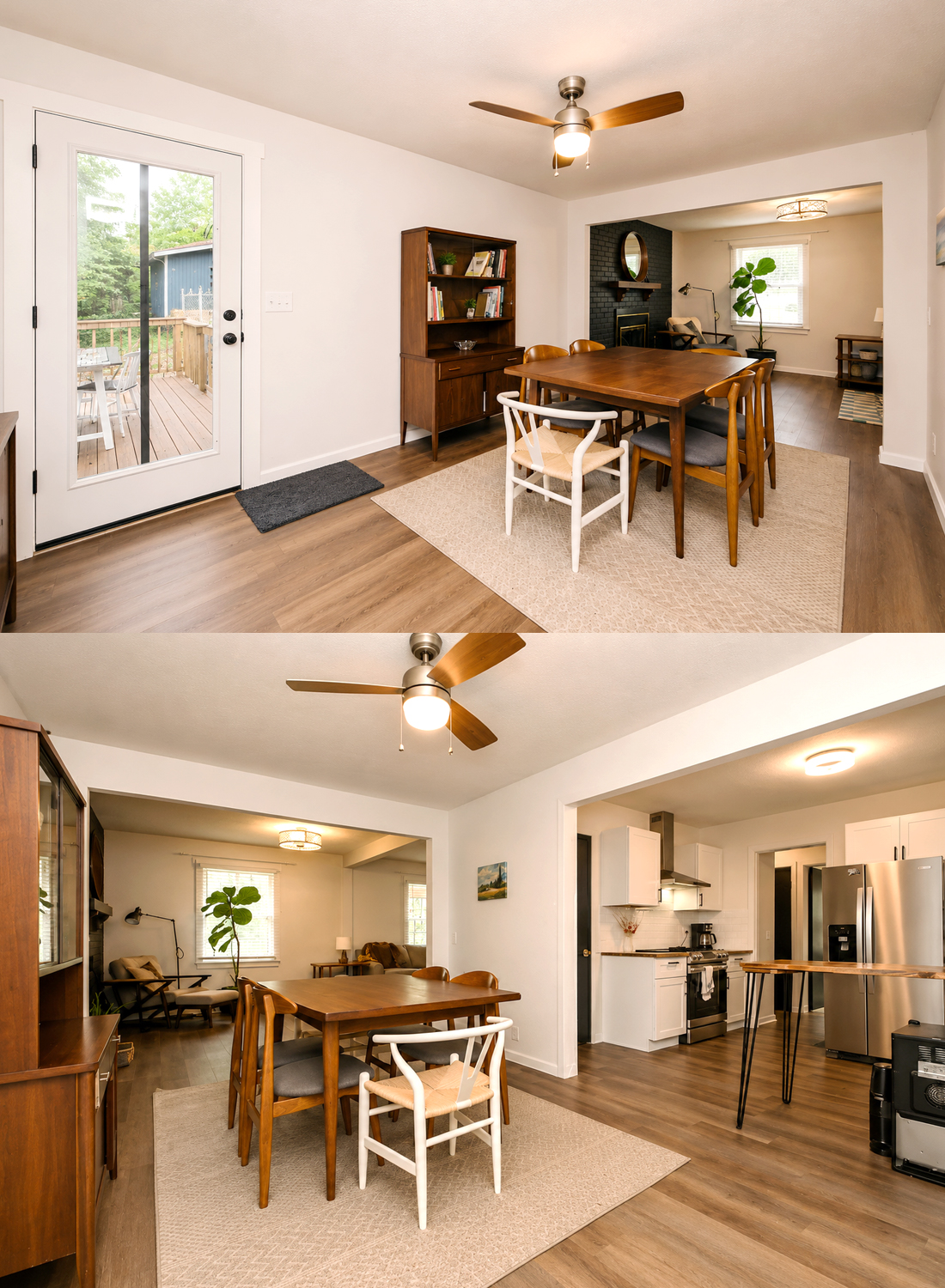
One of the best parts of this small Cape Cod house is the open flow. The living room, dining room, and kitchen connect with wide openings. This makes the home feel bigger than it is.
The flooring runs through most of the main level. That helps each space feel linked. The walls also stay white, which keeps the eye moving. There are no heavy wall colors breaking up the rooms.
At the same time, the home still has zones. The sectional marks the living area. The dining rug marks the eating space. The kitchen has its own bright white cabinet wall. Each area has a clear purpose, but they all talk to each other.
This is a great lesson for small homes. You do not always need open walls from end to end. You just need wide sightlines, steady floors, and smart furniture placement.
Design cues to copy:
- Use the same flooring through main rooms.
- Keep wall colors simple and light.
- Use wide openings between spaces.
- Let rugs define zones.
- Place furniture to guide movement.
- Keep sightlines open.
- Repeat wood tones from room to room.
- Use black accents to tie spaces together.
11. A Soft Office That Feels Calm and Useful
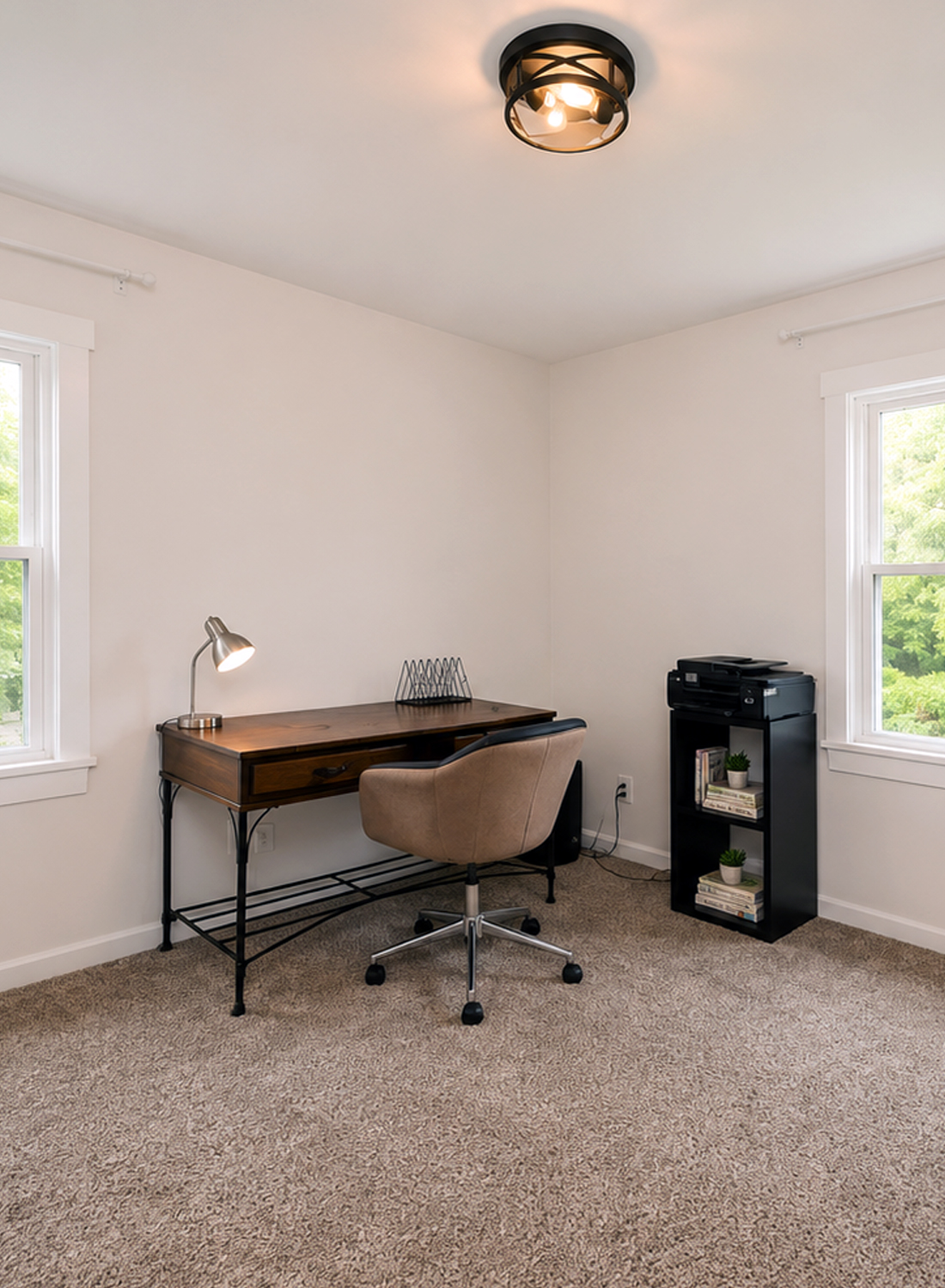
The office is simple, quiet, and bright. It uses white walls, carpet, a wood desk, and two windows. This makes the room feel calm and easy to use.
The desk sits near the window, which is a smart choice. Natural light can make work feel better. The small rolling chair keeps the room flexible. A simple file cabinet adds storage without taking up much space.
This room has a lot of open wall space. That gives the next owner many options. It could become a guest room, craft room, nursery, or reading room. For now, the office setup shows how a small spare room can stay useful without feeling packed.
The carpet adds softness. It also makes the office feel quiet. In a small home, a carpeted room can be a nice break from hard floors.
Design cues to copy:
- Place the desk near a window.
- Keep the furniture slim.
- Use a wood desk for warmth.
- Add a small file cabinet for storage.
- Keep wall decor light.
- Use carpet to soften sound.
- Let extra floor space stay open.
- Choose a simple ceiling light.
12. A Loft Bedroom With Classic Cape Cod Character
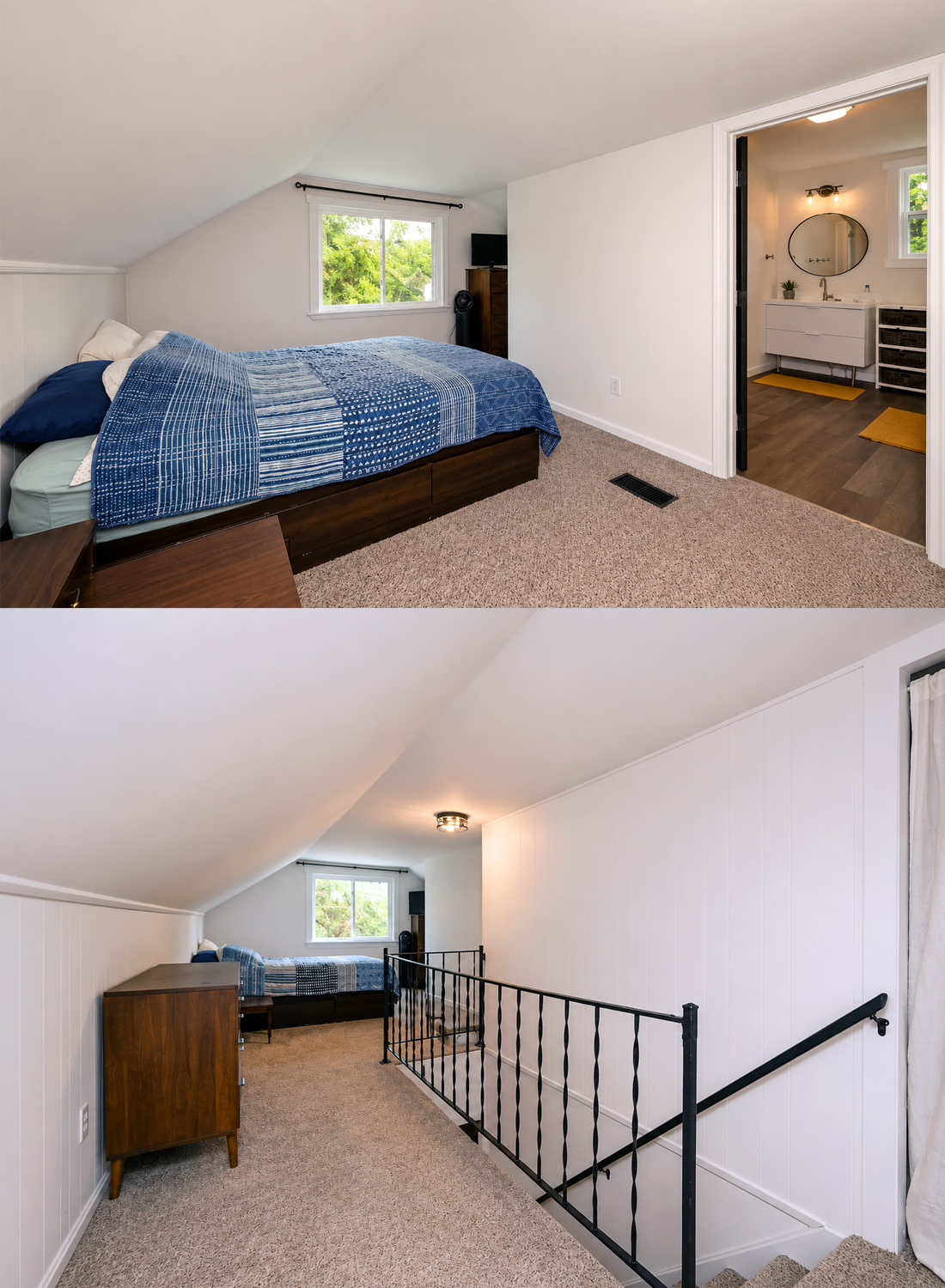
The upstairs bedroom has true Cape Cod charm. The low sloped ceiling gives the space a cozy, tucked-away feel. The white paneled walls keep it bright. The carpet makes it soft and warm.
This kind of attic bedroom needs simple furniture. A low bed works best under a sloped ceiling. It keeps the room from feeling crowded. The bed sits near the low wall, which makes good use of the shape.
The black metal railing adds contrast and safety near the stair opening. It also brings a slight vintage feel. That detail works well with the Cape Cod style.
The room connects to a bathroom, which makes the upstairs feel like a private suite. Even though the ceiling is low, the space feels useful and charming. The key is to keep the color palette light and the furniture low.
Design cues to copy:
- Use white walls to brighten a low ceiling.
- Choose a low bed for sloped rooms.
- Keep furniture simple and compact.
- Use carpet for softness.
- Add black metal railing for contrast.
- Let windows bring in natural light.
- Avoid tall headboards in attic spaces.
- Keep bedding casual and cozy.
13. A Small Bathroom With Rustic-Modern Texture
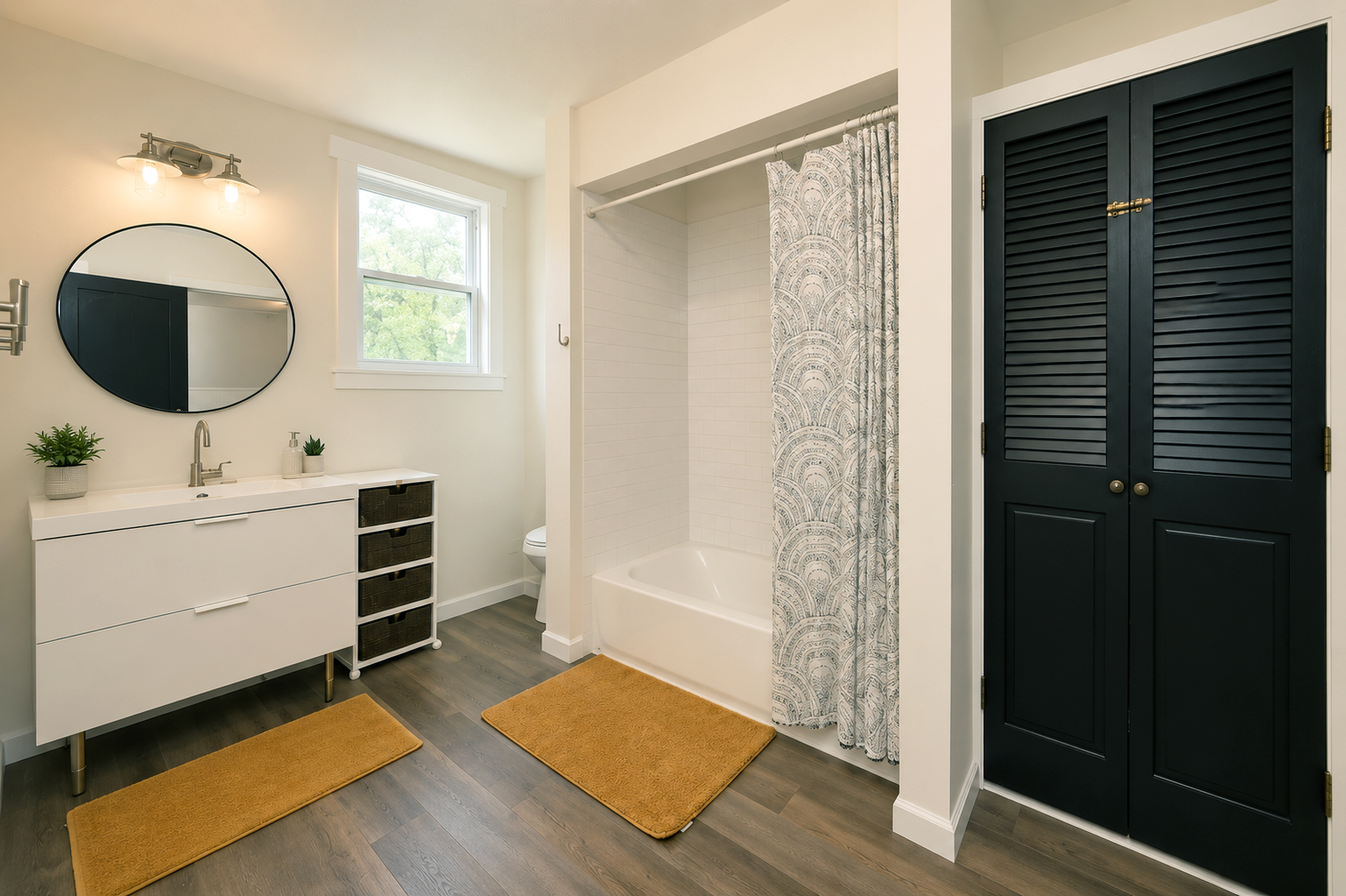
The bathroom adds a fun design twist. It has simple white tile and white walls, but the vanity area brings in texture. The wood counter adds warmth. The stone vessel sink gives the room a rustic, earthy touch. The black-framed mirror adds a modern edge.
This mix works well because the rest of the bathroom stays simple. The white tub and tile keep the room bright. The patterned shower curtain adds softness. The chrome faucet adds shine.
Small bathrooms need a focal point. Here, the sink does that job. It feels special without taking over the room. The wood counter also connects to the wood details used in the kitchen, dining room, and exterior.
The black mirror frame repeats the black doors, black hardware, and black fireplace. This creates a quiet thread through the home.
Design cues to copy:
- Use white tile to keep a small bath bright.
- Add a wood vanity top for warmth.
- Choose a stone vessel sink for texture.
- Hang a black-framed mirror.
- Keep shower walls simple.
- Add a patterned curtain for softness.
- Use chrome or black fixtures.
- Repeat wood and black details from other rooms.
14. A Color Palette That Connects Every Space
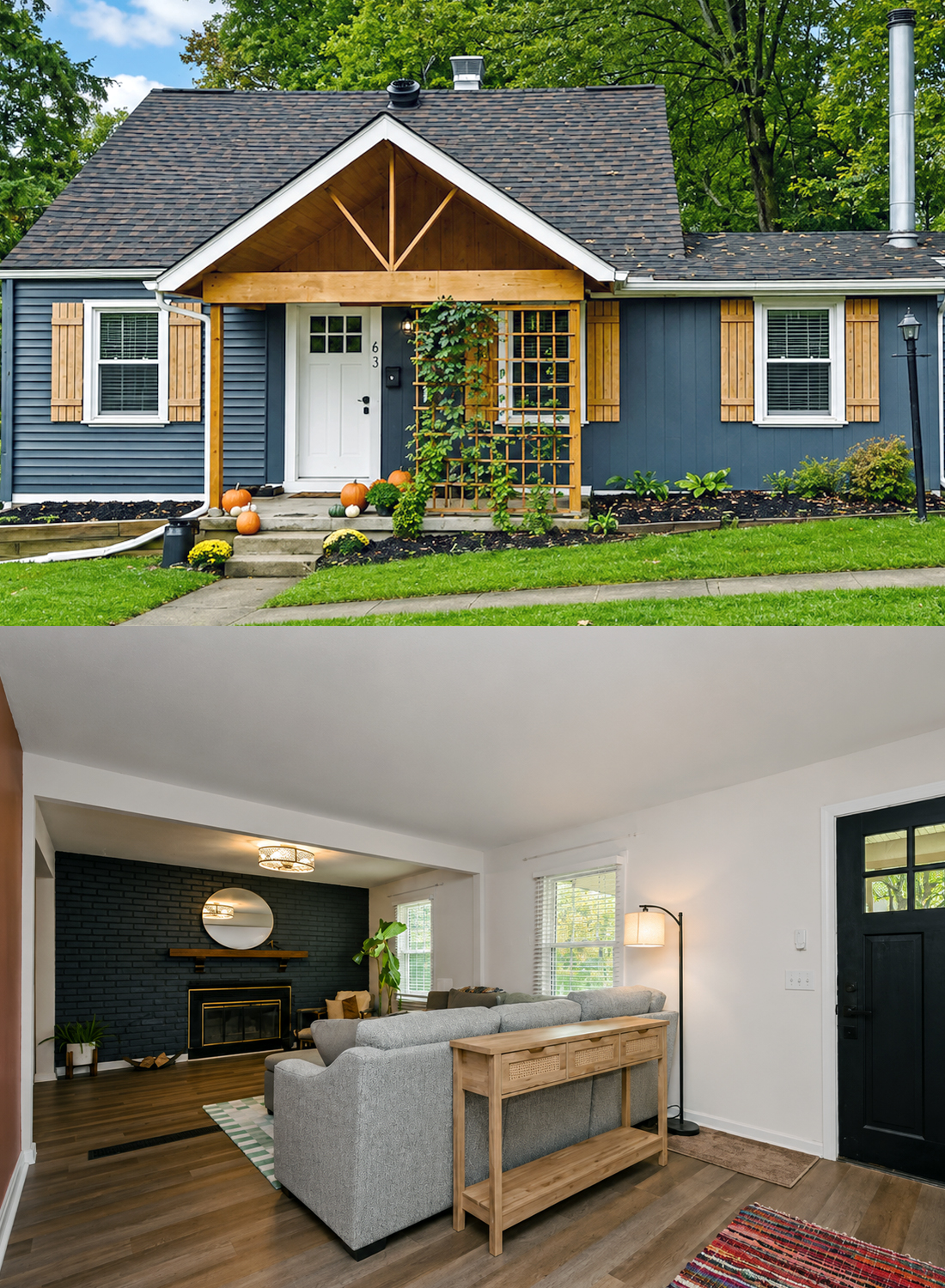
This home works because the color palette stays steady. Outside, the main colors are gray, white, black, and warm wood. Inside, those same ideas continue. White walls, gray seating, black doors, black fireplace brick, wood furniture, and warm floors all connect.
This makes the home feel calm. It also makes the rooms feel larger. When every room uses a shared palette, the eye does not stop and start. The home flows.
The best part is that the palette feels easy to live with. It does not depend on bold trends. It uses classic colors in a fresh way. That gives the home staying power.
The few bright touches, like the striped rug and small decor pieces, add life. Since the base is neutral, these pieces can change with the seasons.
Design cues to copy:
- Start with white, gray, black, and warm wood.
- Repeat the same finishes in each room.
- Use black for doors, hardware, and key accents.
- Use wood to warm up cool colors.
- Add color through rugs and pillows.
- Keep large pieces neutral.
- Let plants add natural green.
- Use simple trim for a clean look.
Final Thoughts
This small Cape Cod house shows how much charm can fit into a modest footprint. The exterior feels warm, fresh, and welcoming. The interior feels bright, useful, and cozy. Best of all, the whole home uses simple design moves that many people can copy.
Start with a calm color palette. Add warm wood. Use black accents with care. Keep the rooms open. Choose furniture that fits the scale. Then bring in texture through rugs, plants, brick, tile, and natural materials.
That is the real magic here. This home does not need grand rooms or fancy details. It uses smart choices, warm finishes, and easy charm. And that is what makes this small Cape Cod house feel so inviting from the porch to the loft.