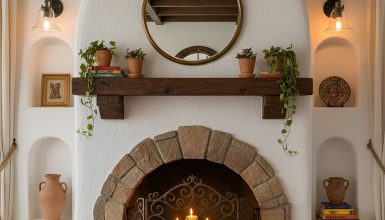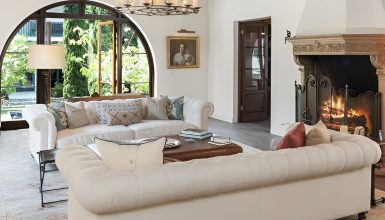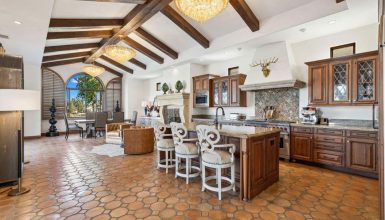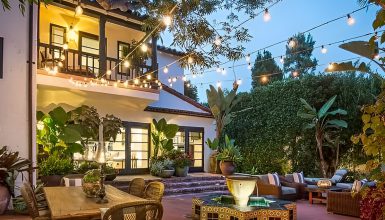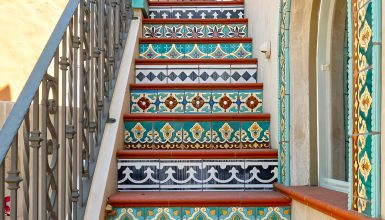
A Spanish Colonial Revival home feels like it was made for golden light. The white walls glow. The clay roof adds warmth. The arches soften every view. Then, just when the home starts to feel grand, a tiled fireplace, wood beam, or iron detail brings it back down to earth.
That is the magic of this style. It feels elegant, but not stiff. It feels old-world, but still livable. It works indoors and outdoors. It also gives every room a clear design story.
Spanish Colonial Revival design often blends stucco walls, red clay tile roofs, arched openings, wrought iron, rich wood, patterned tile, and warm stone. The look feels rooted, sunny, and full of craft. So, if you want a home with charm in every corner, this style gives you plenty to love.
1. Start With a White Stucco Exterior

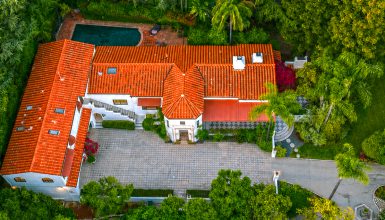
The exterior sets the tone right away. Smooth white stucco gives the home a bright, clean face. It also lets the roof, doors, plants, and ironwork stand out.
In Spanish Colonial Revival design, the walls should feel simple but rich. They do not need heavy trim. Instead, the shape of the house does the work. A curved entry, deep window recess, chimney tower, and clay roof create all the drama you need.
For extra charm, add small touches of exposed brick or aged stone. These accents make the home feel older and more handmade. Use them in corners, gate posts, low walls, or around garden features.
Design cues:
- Smooth white or warm cream stucco
- Red clay barrel tile roof
- Deep roof overhangs
- Arched front entry
- Dark wood doors
- Black iron window grilles
- Small brick or stone accents
- Tall chimney with simple lines
- Warm landscape lighting
2. Make the Front Entry Feel Grand
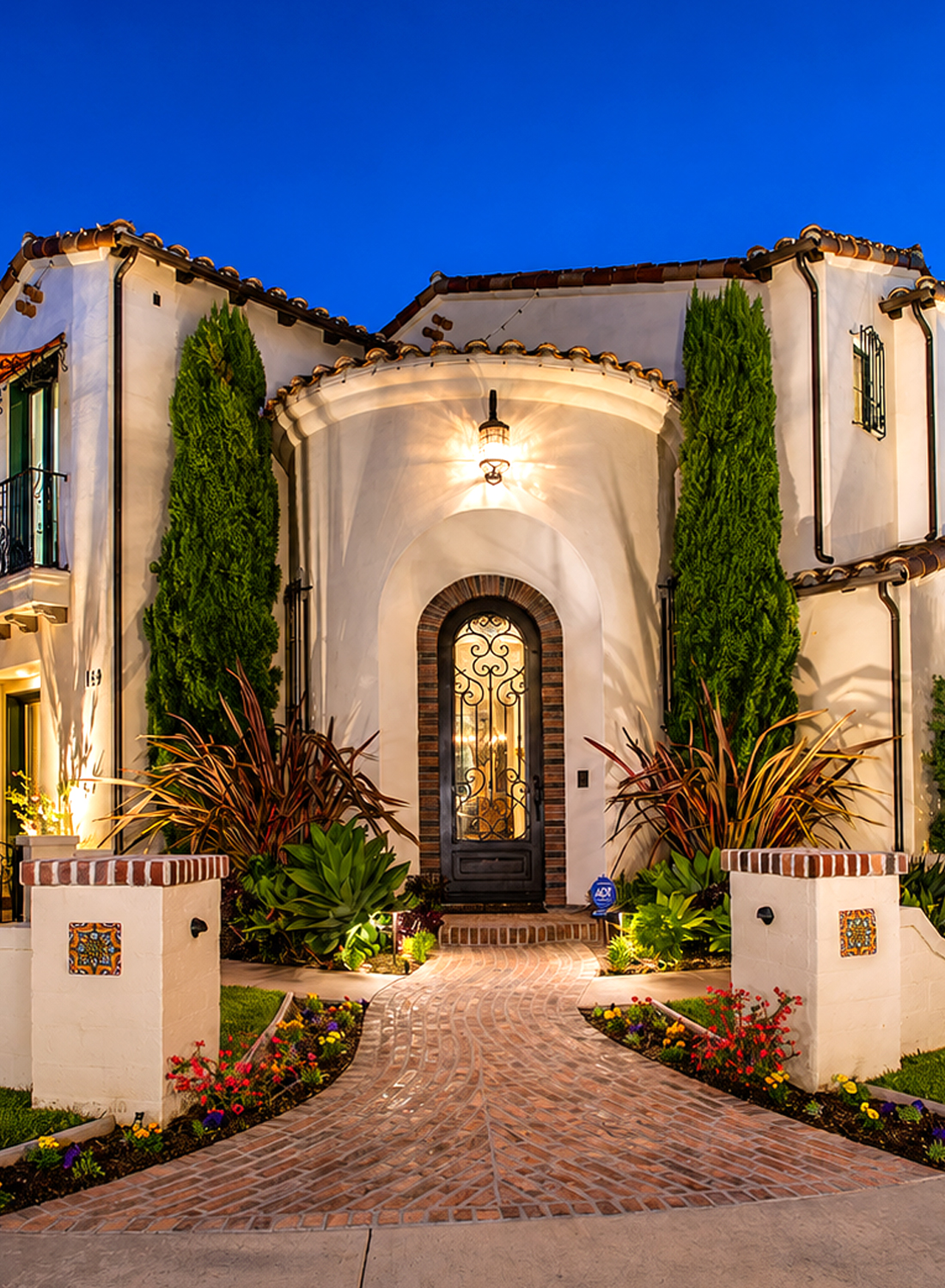
A Spanish Colonial Revival entry should feel like a moment. It does not need to be huge, but it should feel special.
An arched doorway creates that feeling fast. The curve softens the front wall and pulls the eye toward the door. A wood or iron door adds strength. If you use glass, choose a door with scrollwork or a dark metal frame.
Then, add layers. Place tall plants near the entry. Use low walls to frame the path. Add tile accents on posts or steps. A lantern above the door brings a soft glow at night.
The best part is the balance. The entry feels formal, but the materials keep it warm.
Design cues:
- Arched entry alcove
- Heavy wood or iron front door
- Scroll-style iron detail
- Brick trim around the door
- Clay tile steps
- Decorative tile inserts
- Wall lanterns
- Tall cypress-style plants
- Curved walkway
- Low stucco garden walls
3. Use a Brick or Stone Walkway
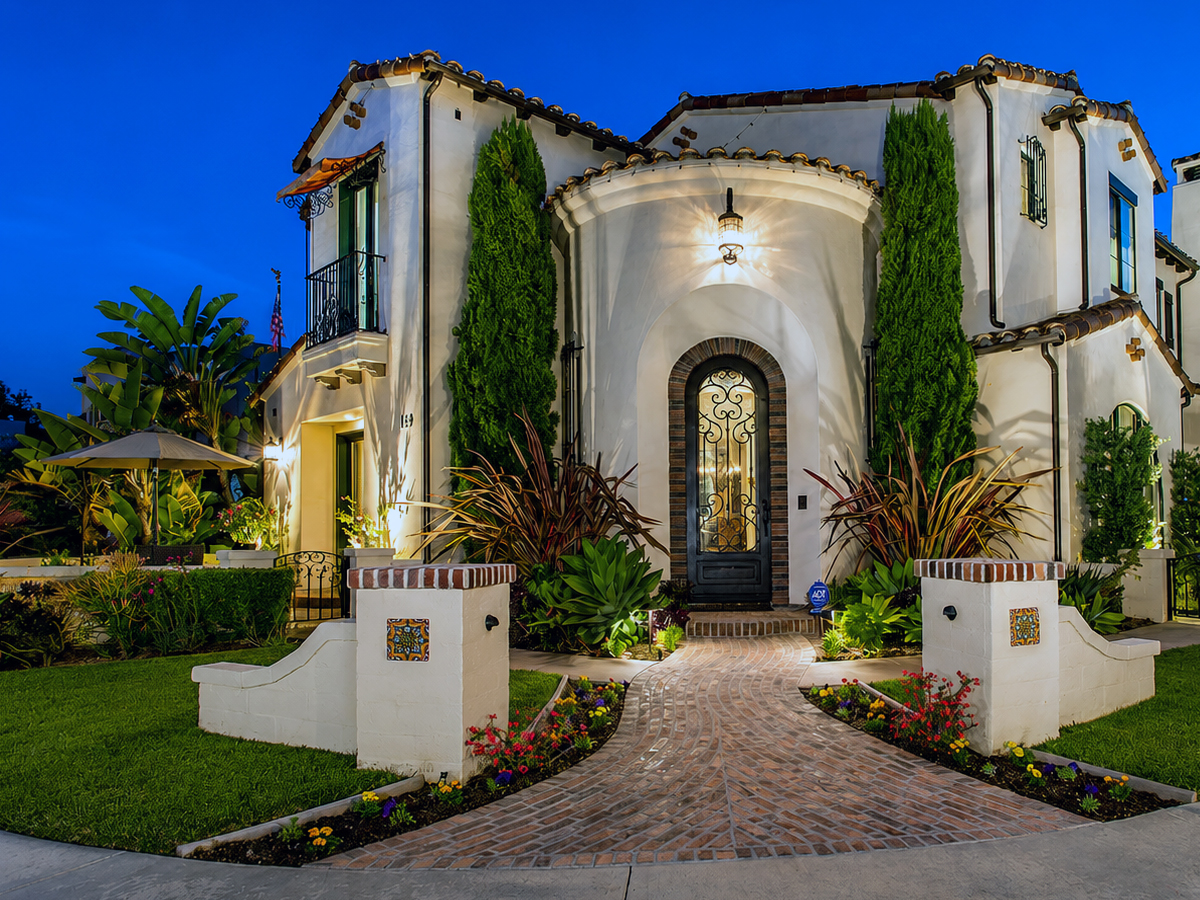
A walkway can make the whole home feel more inviting. For this style, skip plain concrete when possible. Choose brick, stone, or pavers with a warm tone.
A brick walkway works well because it adds age and texture. It also pairs well with clay tile roofs. A soft curve can make the path feel more relaxed. It leads guests in without feeling too stiff.
You can also border the path with low flowers, agave, lavender, or small shrubs. This creates a garden-like mood before anyone reaches the door.
Design cues:
- Herringbone brick path
- Warm terracotta pavers
- Tumbled stone walkway
- Curved or centered layout
- Low flower beds
- Soft ground lighting
- Border plants with texture
- Small tile details near the gate
4. Add Courtyard Charm
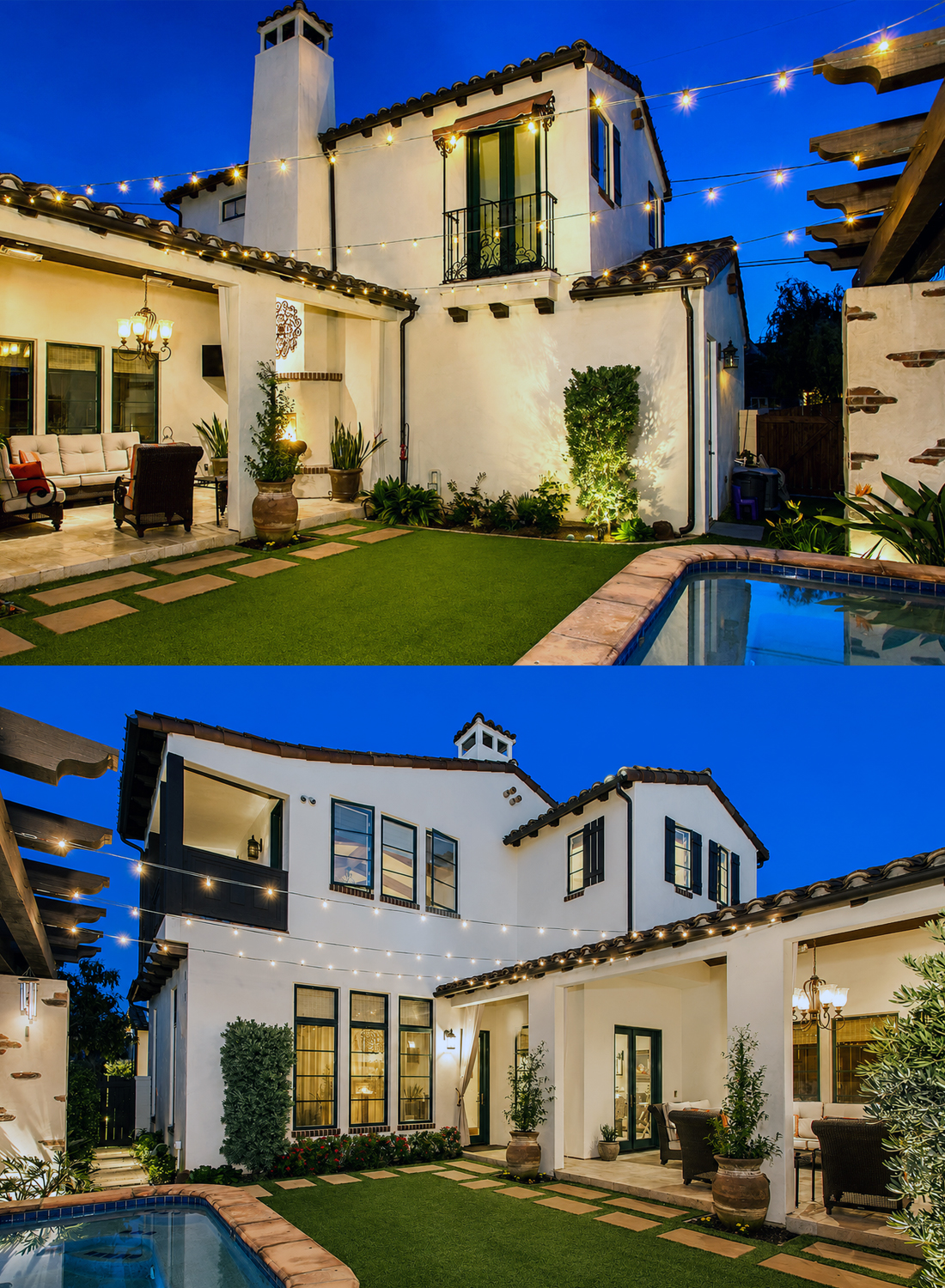
A Spanish Colonial Revival home shines when it has a courtyard feel. This style loves outdoor rooms. A courtyard gives the home a private, peaceful heart.
Use stucco walls to frame the space. Add potted plants, tiled accents, and warm lights. Then, bring in comfortable seating. The goal is not just to decorate the yard. The goal is to make the yard feel like another room.
String lights work well here. So do lanterns and wall sconces. At night, the glow bounces off the white walls and makes the space feel magical.
Design cues:
- Enclosed or semi-enclosed courtyard
- White stucco walls
- Clay tile or stone floors
- String lights
- Potted olive trees or citrus trees
- Wrought-iron accents
- Water feature or small fountain
- Outdoor dining space
- Built-in bench seating
- Patterned tile details
5. Create a Pool Area With Spanish Soul
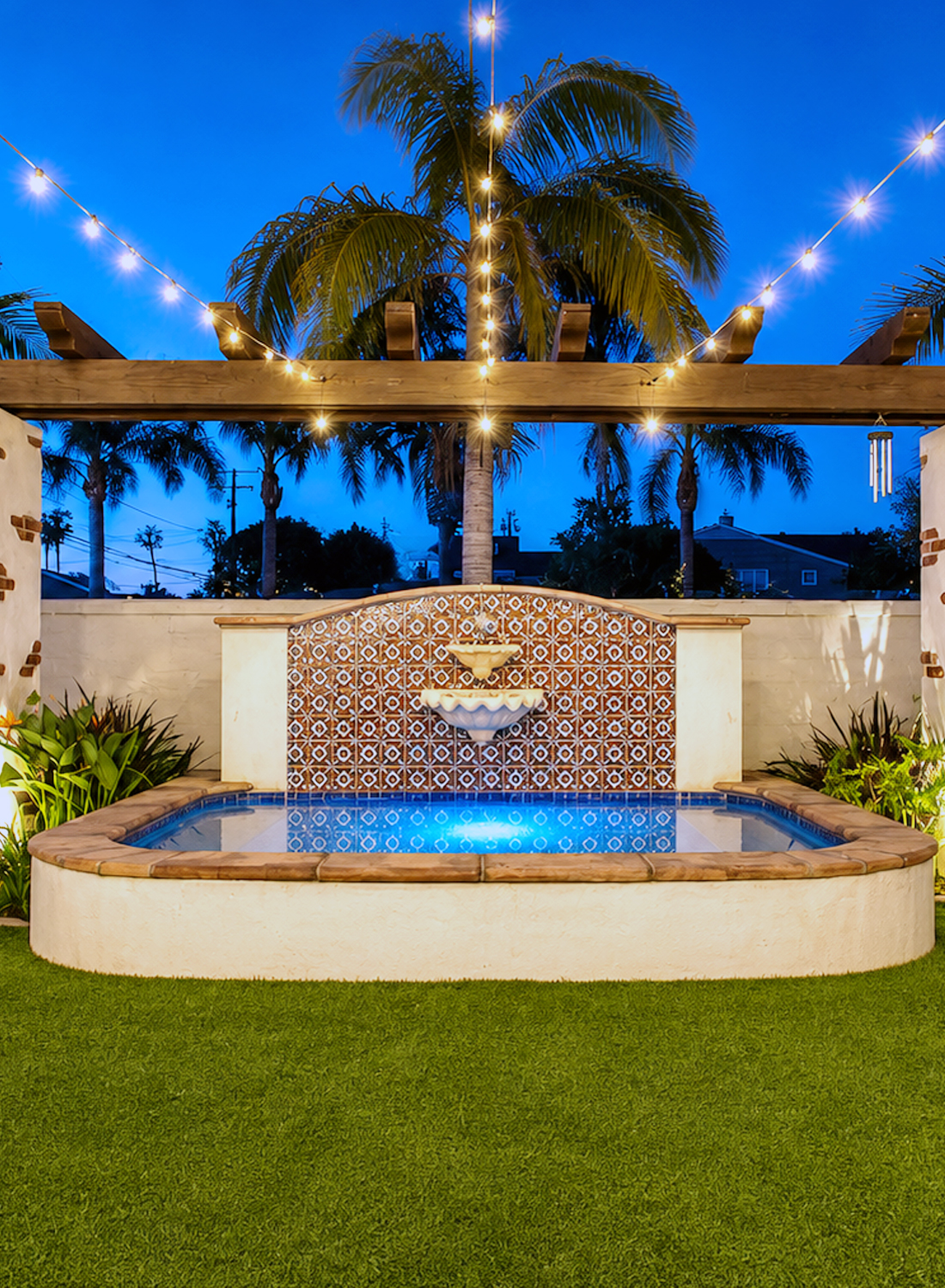
A pool can look sleek, but in this style, it should still feel warm. Use soft curves, stucco edges, terracotta coping, and patterned tile.
The tile is key. A decorative tile wall or water feature gives the pool area a strong focal point. It also adds color without making the space feel busy.
A pergola makes the pool area even better. Use dark wood beams and simple stucco columns. Then, let plants soften the edges. The mix of water, tile, wood, and greenery gives the yard that classic resort feel.
Design cues:
- Rounded pool shape or spa edge
- Terracotta pool coping
- Patterned Spanish tile
- Stucco pool wall
- Dark wood pergola
- Outdoor string lights
- Palm trees or tropical plants
- Agave and low grasses
- Soft uplighting
- Simple lounge seating
6. Design an Outdoor Living Room
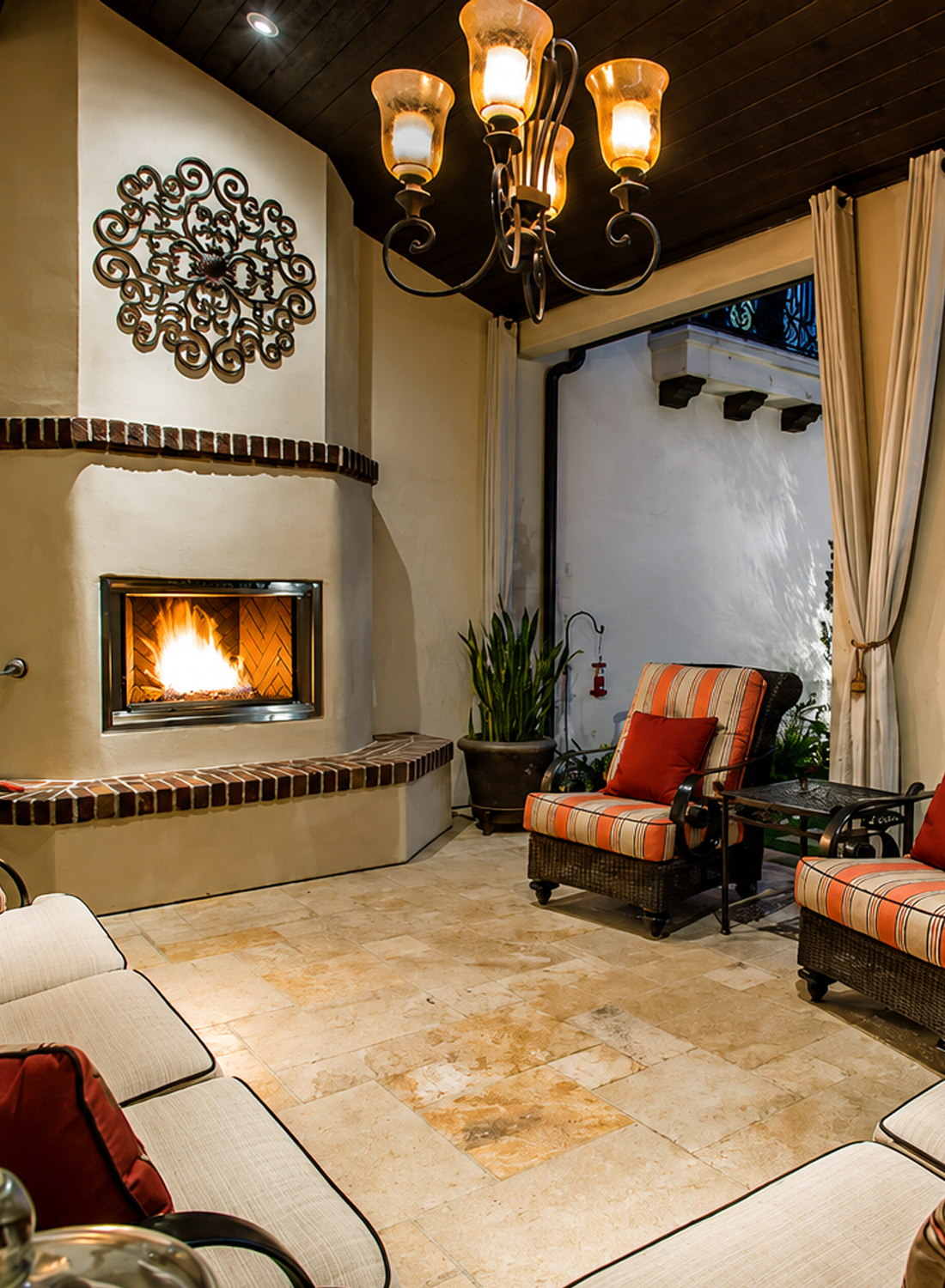
Spanish Colonial Revival homes often blur the line between inside and outside. A covered patio makes this easy.
Use a stone floor, stucco fireplace, and cushioned chairs. Add a chandelier or lantern for soft light. Then, choose fabrics in warm red, rust, cream, tan, or stripe patterns.
An outdoor fireplace gives the space a cozy center. It also helps the patio feel like a real room. Use brick trim, plaster curves, or simple tile to make it feel built-in and timeless.
Design cues:
- Covered patio or loggia
- Stucco fireplace
- Brick trim around the firebox
- Stone or tile floor
- Iron chandelier
- Wicker or iron furniture
- Striped cushions
- Rust or terracotta pillows
- Outdoor curtains
- Large potted plants
7. Bring Arches Inside
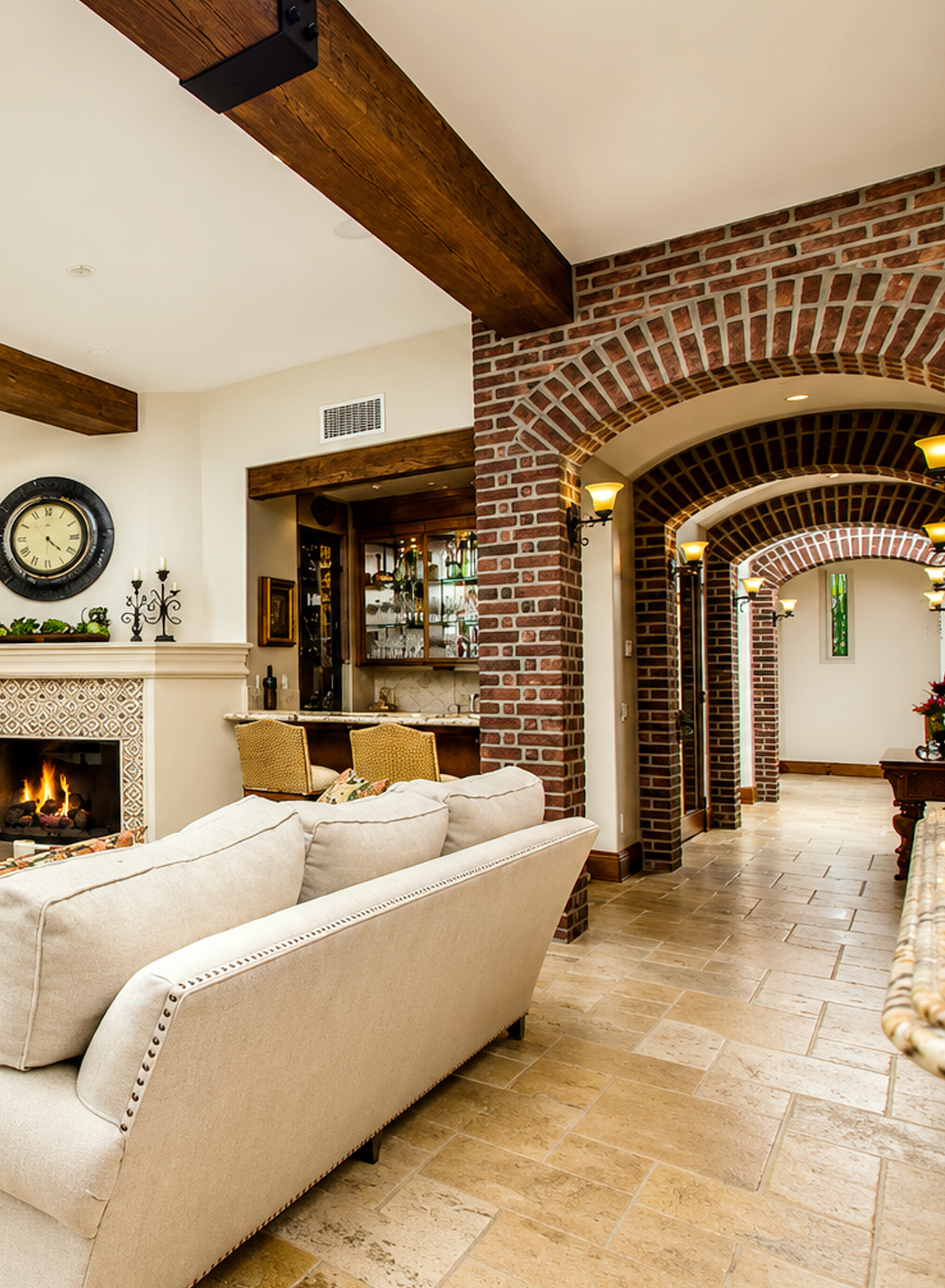
Arches are one of the most loved parts of this style. They make rooms feel soft and graceful. They also help each space flow into the next.
Use arches in hallways, doorways, niches, and window openings. You can also use arched mirrors, arched shelves, and arched cabinet details.
Brick arches add more weight and texture. They work well between a living room and a bar, hallway, or dining space. The brick gives the home a handmade feel. It also adds warmth against pale walls.
Design cues:
- Arched hallways
- Brick-framed openings
- Arched niches
- Curved doorways
- Rounded ceiling details
- Arched windows
- Wood doors with curved tops
- Iron wall decor
- Warm wall sconces
8. Build the Living Room Around a Fireplace
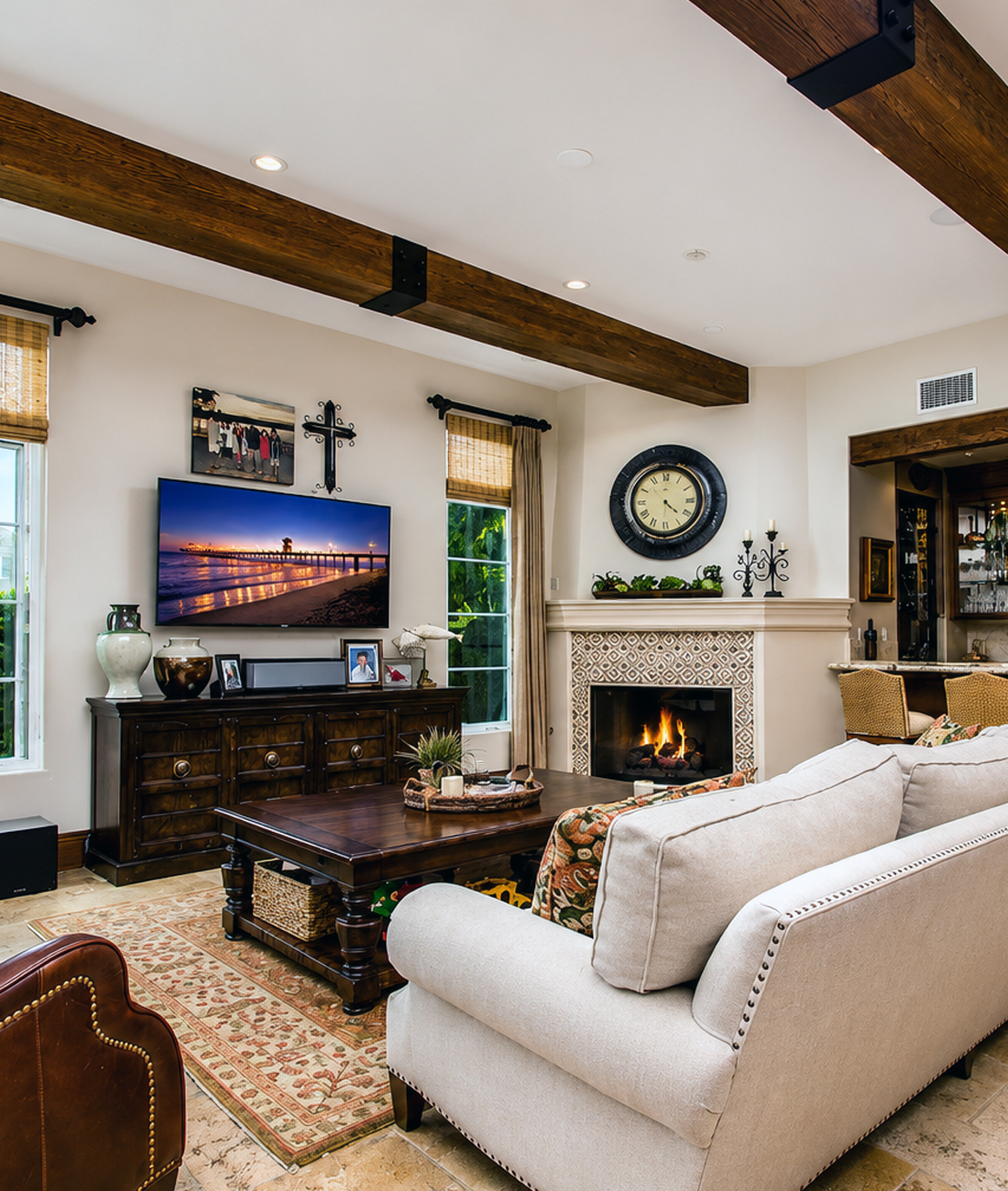
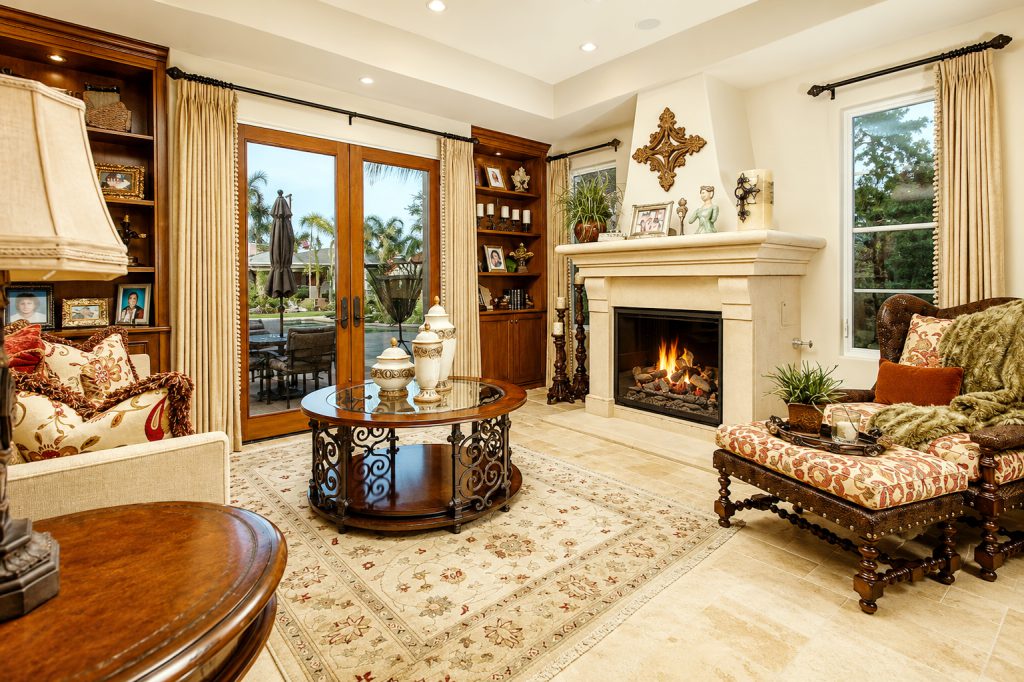
The fireplace often becomes the heart of a Spanish Colonial Revival living room. It should feel solid, warm, and a little old-world.
A stone mantel gives the room a grand feel. A tiled fireplace surround adds color and pattern. A stucco fireplace feels softer and more rustic. Any of these choices can work.
Keep the furniture warm and relaxed. Use a large sofa, carved wood coffee table, leather chairs, and a soft rug. Then, layer in plants, pottery, books, and iron accents.
The room should feel polished but comfortable. It should invite long talks, slow mornings, and cozy nights.
Design cues:
- Stone or stucco fireplace
- Patterned tile surround
- Carved wood mantel
- Large cream sofa
- Dark wood coffee table
- Leather chairs
- Nailhead trim
- Wrought-iron decor
- Woven shades
- Vintage-style rug
- Warm neutral walls
9. Use Exposed Wood Beams
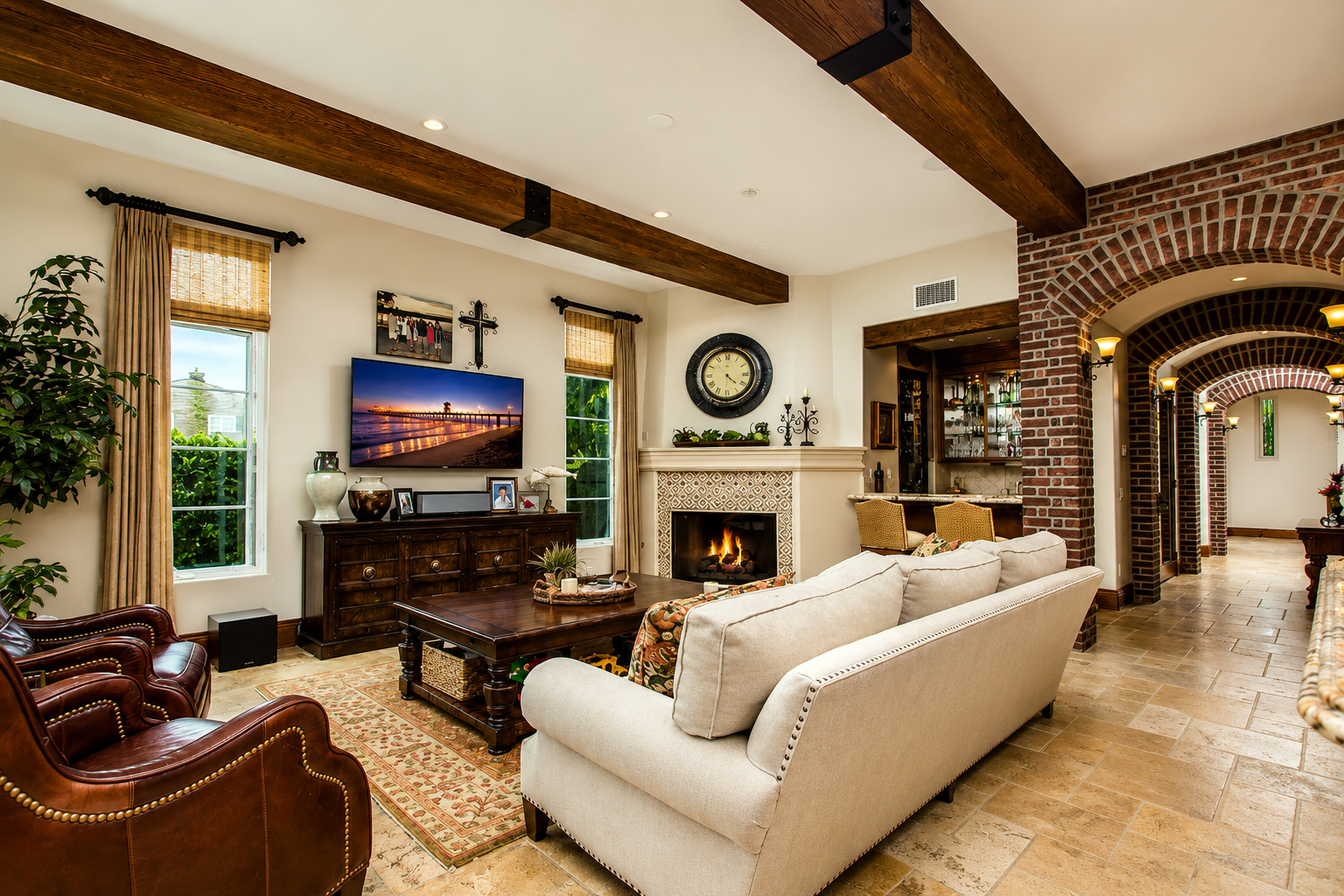
Wood beams add instant character. They make high ceilings feel grounded. They also bring warmth to white walls and stone floors.
In this style, beams can feel rustic or refined. Dark beams create drama. Medium brown beams feel softer. Either way, they should look sturdy and real.
Use beams in the living room, bedroom, kitchen, hallway, or outdoor patio. Pair them with recessed lights for comfort and function.
Design cues:
- Dark stained ceiling beams
- Wood corbels
- Beam details over doorways
- Plank ceilings
- Iron brackets
- Warm wood trim
- High ceilings
- Soft recessed lighting
10. Choose Stone Floors for a Timeless Base
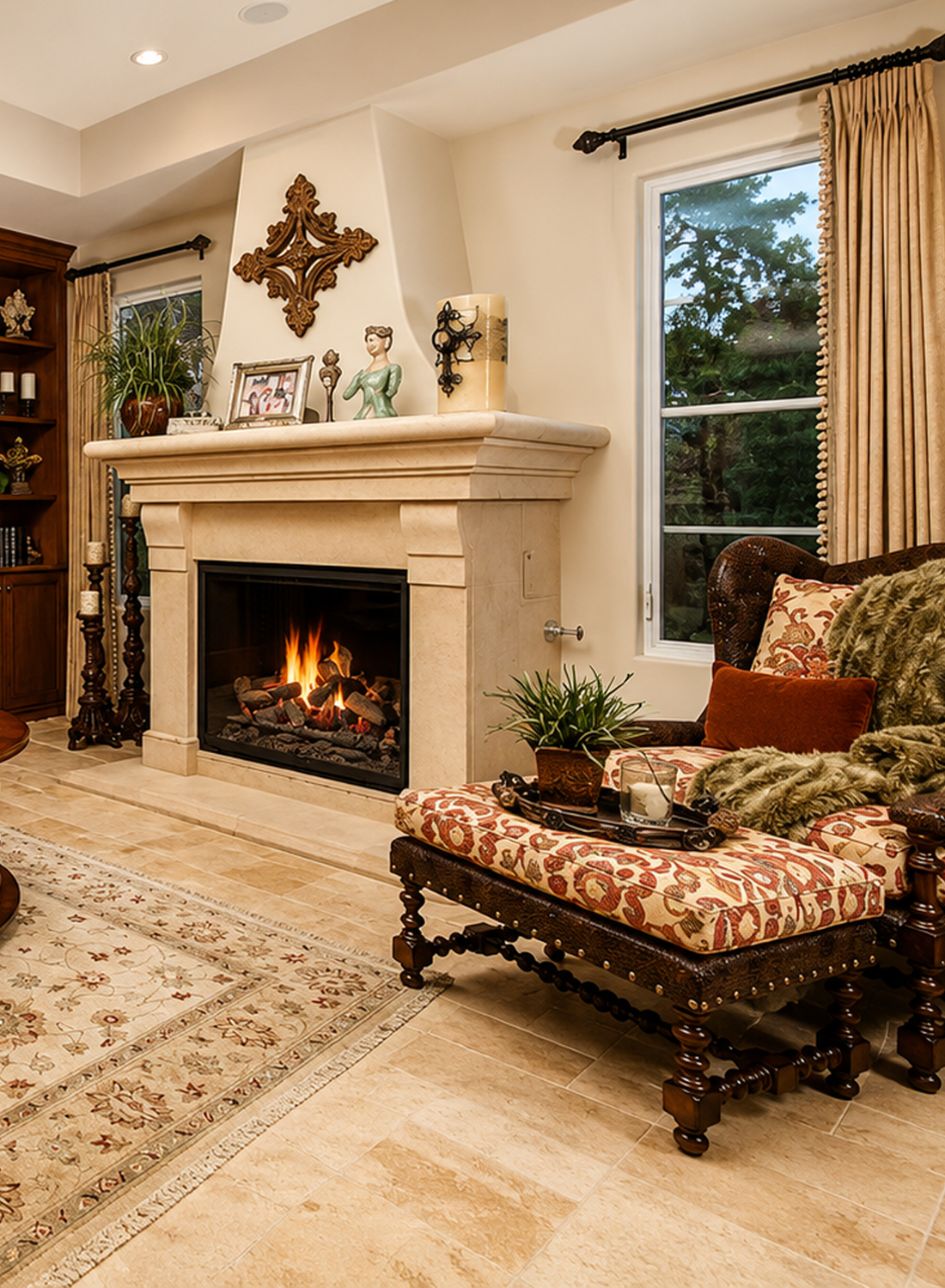
Stone floors help this style feel cool, grounded, and classic. They work well in warm climates, but they also bring texture to any home.
Use limestone, travertine, terracotta, or tumbled stone. The best floors do not look too perfect. A little texture adds age and charm.
Large stone tiles work well in open rooms. Smaller tiles can work in bathrooms, kitchens, and patios. For comfort, layer rugs in the living room, dining room, bedroom, and office.
Design cues:
- Travertine floors
- Limestone tile
- Terracotta flooring
- Tumbled stone texture
- Soft beige or sand tones
- Large-format stone
- Patterned area rugs
- Warm grout color
11. Design a Warm Spanish Colonial Revival Kitchen
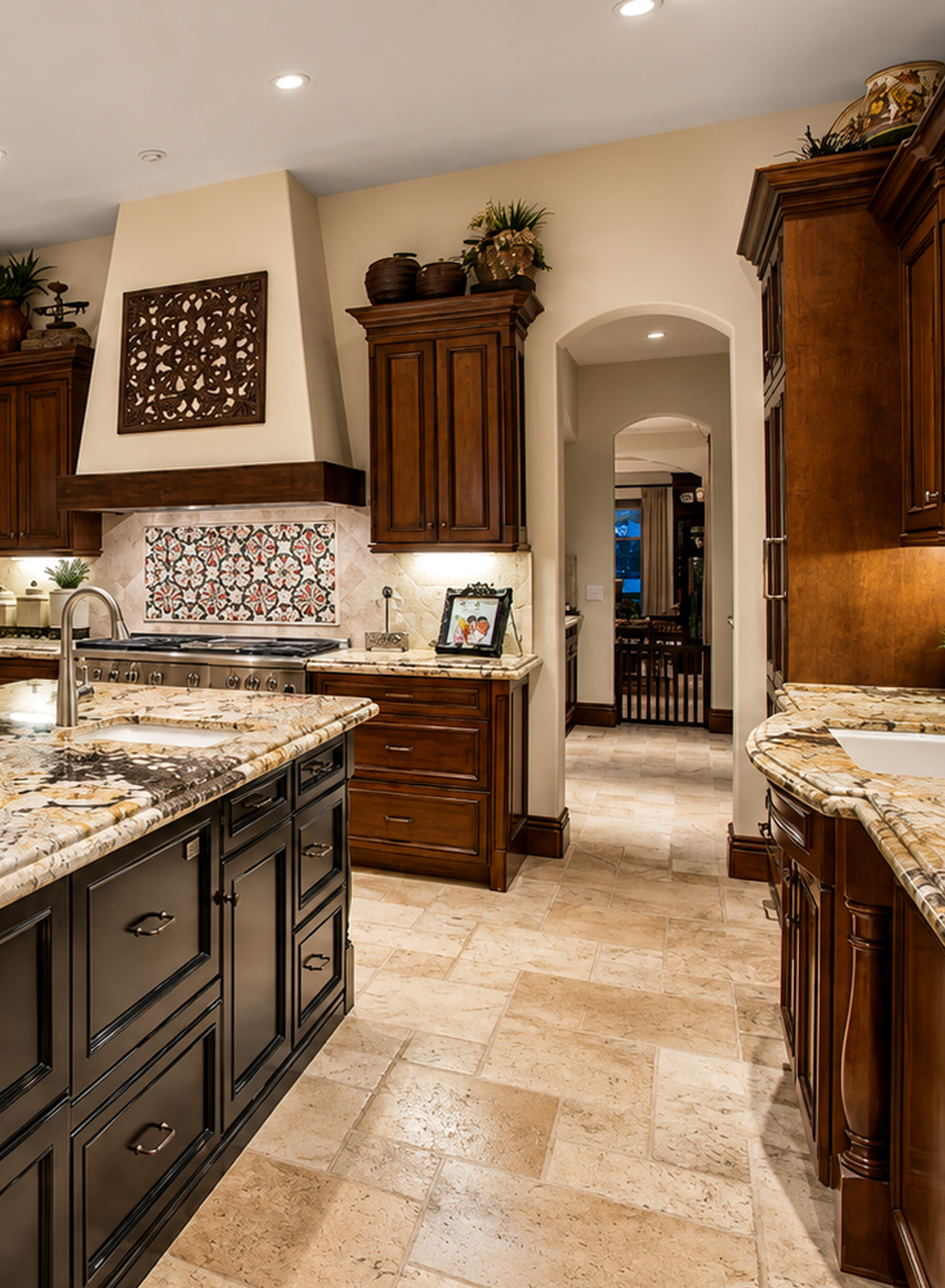
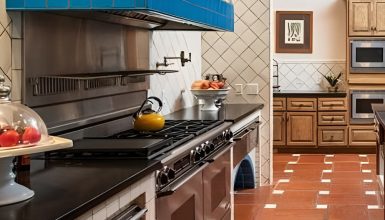
The kitchen should feel rich, useful, and full of craft. Start with wood cabinets. Choose a warm stain instead of a flat modern finish. Then, add a large island in a darker tone for contrast.
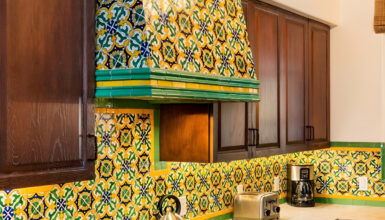
Stone counters work beautifully here. Granite, marble, quartzite, or honed stone can all fit the look. A patterned tile backsplash adds the Spanish detail that makes the room sing.
The range hood matters, too. A plaster hood feels soft and classic. A wood-trimmed hood feels rustic. A tile inset behind the cooktop gives the kitchen a focal point.
Design cues:
- Warm wood cabinets
- Dark island base
- Stone countertops
- Patterned tile backsplash
- Plaster or wood range hood
- Oil-rubbed bronze hardware
- Arched openings nearby
- Under-cabinet lighting
- Stone floors
- Wide drawers and deep storage
- Traditional cabinet profiles
12. Add Pattern With Tile
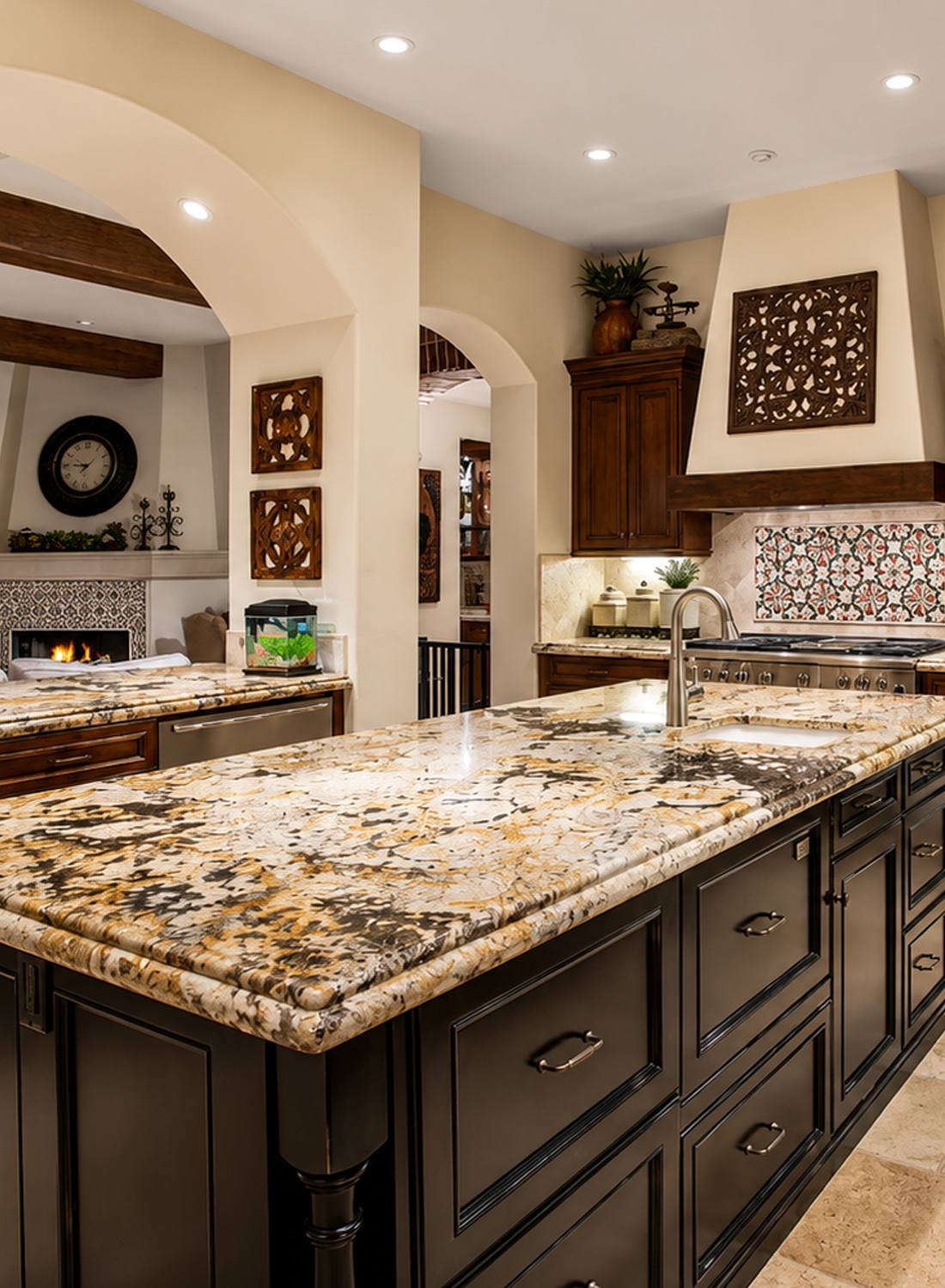
Tile is one of the easiest ways to bring Spanish Colonial Revival style into a room. Use it with care, though. A little goes a long way.
Try tile on a fireplace, stair risers, kitchen backsplash, pool wall, bathroom border, or outdoor fountain. Choose patterns with blue, rust, cream, brown, green, or terracotta tones.
If the room already has heavy furniture or bold rugs, keep the tile smaller. If the room feels plain, let the tile become the star.
Design cues:
- Hand-painted tile
- Talavera-inspired patterns
- Terracotta tones
- Blue and white accents
- Tile fireplace surround
- Tile stair risers
- Kitchen tile inset
- Pool or fountain tile
- Bathroom tile border
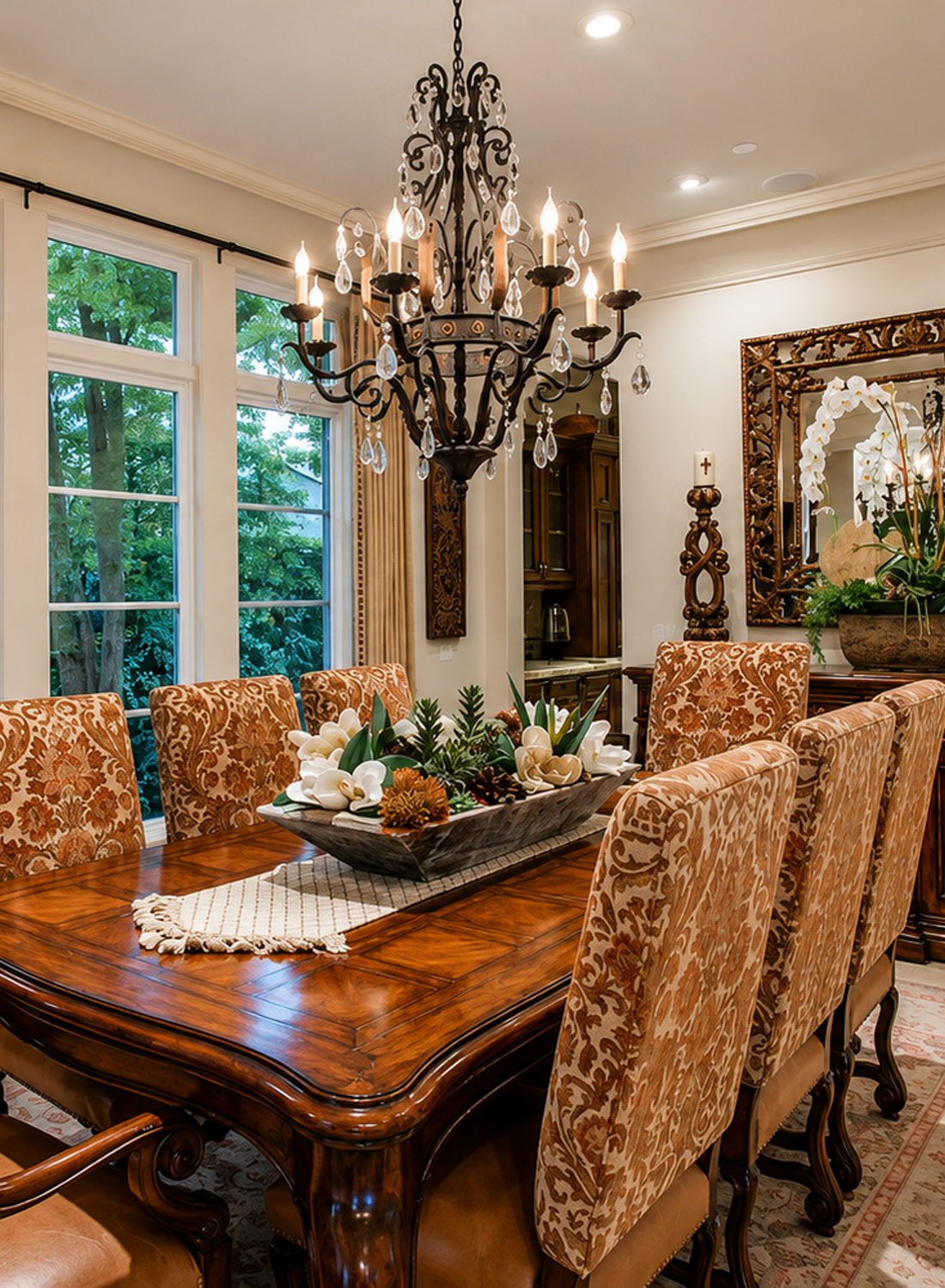
13. Create a Dining Room With Old-World Elegance
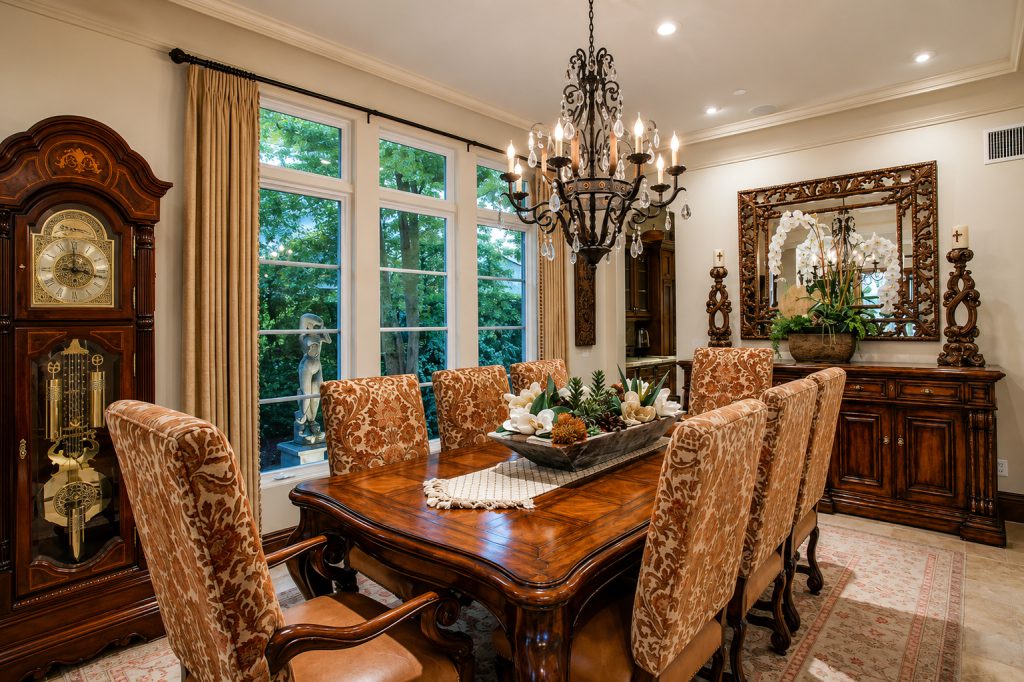
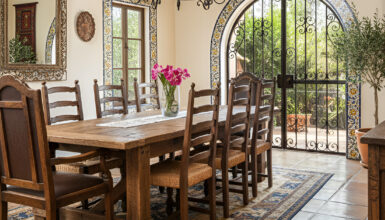
A Spanish Colonial Revival dining room should feel ready for a long dinner. The look starts with a strong wood table. Choose a carved base, rich stain, or thick top.
Then, add upholstered chairs. Patterned fabric can bring in softness and charm. A wrought-iron chandelier gives the room a classic focal point.
Use a large mirror or carved wood sideboard to finish the room. These pieces add depth and help the room feel collected over time.
Design cues:
- Large carved wood table
- Upholstered dining chairs
- Damask or floral fabric
- Iron chandelier
- Carved wood sideboard
- Large framed mirror
- Soft neutral rug
- Tall curtains
- Vintage clock or cabinet
- Warm candlelight
14. Make the Bedroom Feel Romantic but Restful
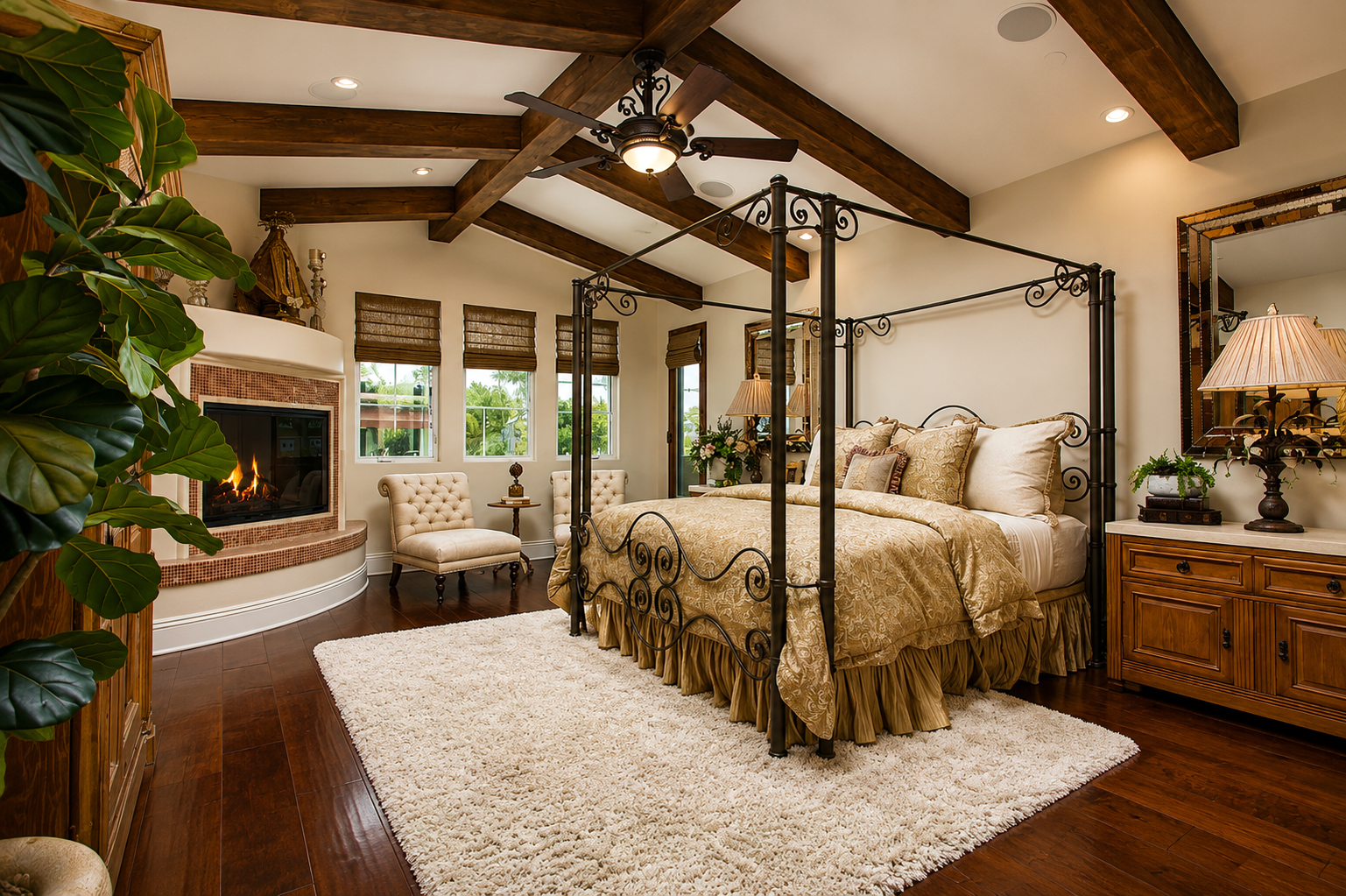
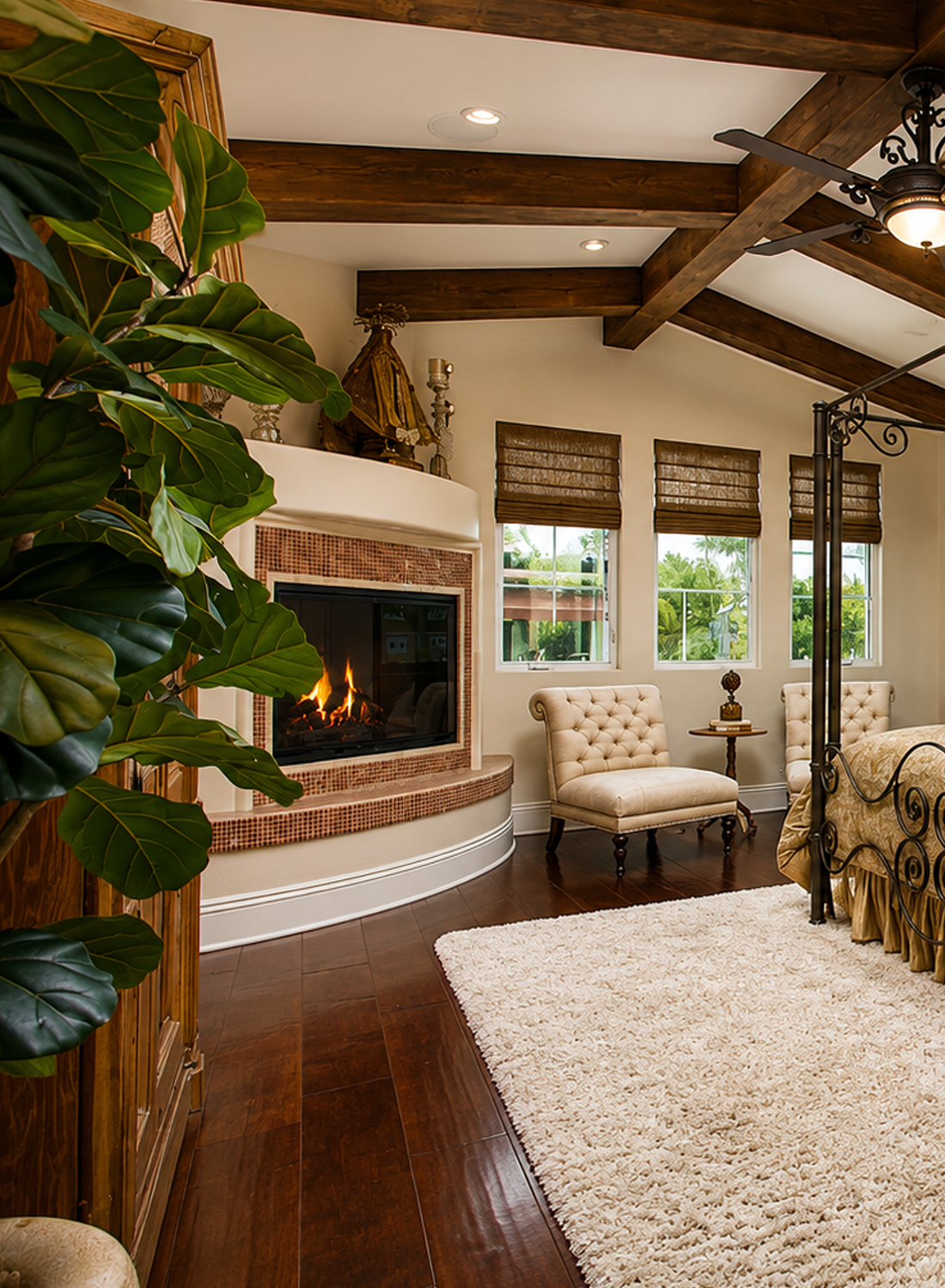
The bedroom should feel calm first. Use warm white walls, rich wood floors, and soft bedding. Then, layer in Spanish details.
A wrought-iron bed works beautifully. It adds shape without feeling heavy. Wood beams bring warmth overhead. A fireplace, if you have one, gives the room a grand touch.
Keep the color palette soft. Cream, ivory, tan, warm brown, and muted gold all work well. Add a plant or two for life. Then, use lamps and sconces with warm light.
Design cues:
- Wrought-iron bed frame
- Wood ceiling beams
- Cream bedding
- Soft gold or beige textiles
- Dark wood nightstands
- Fireplace with tile or brick
- Large area rug
- Carved mirror
- Warm table lamps
- Indoor greenery
15. Give the Bathroom a Spa-Like Spanish Feel
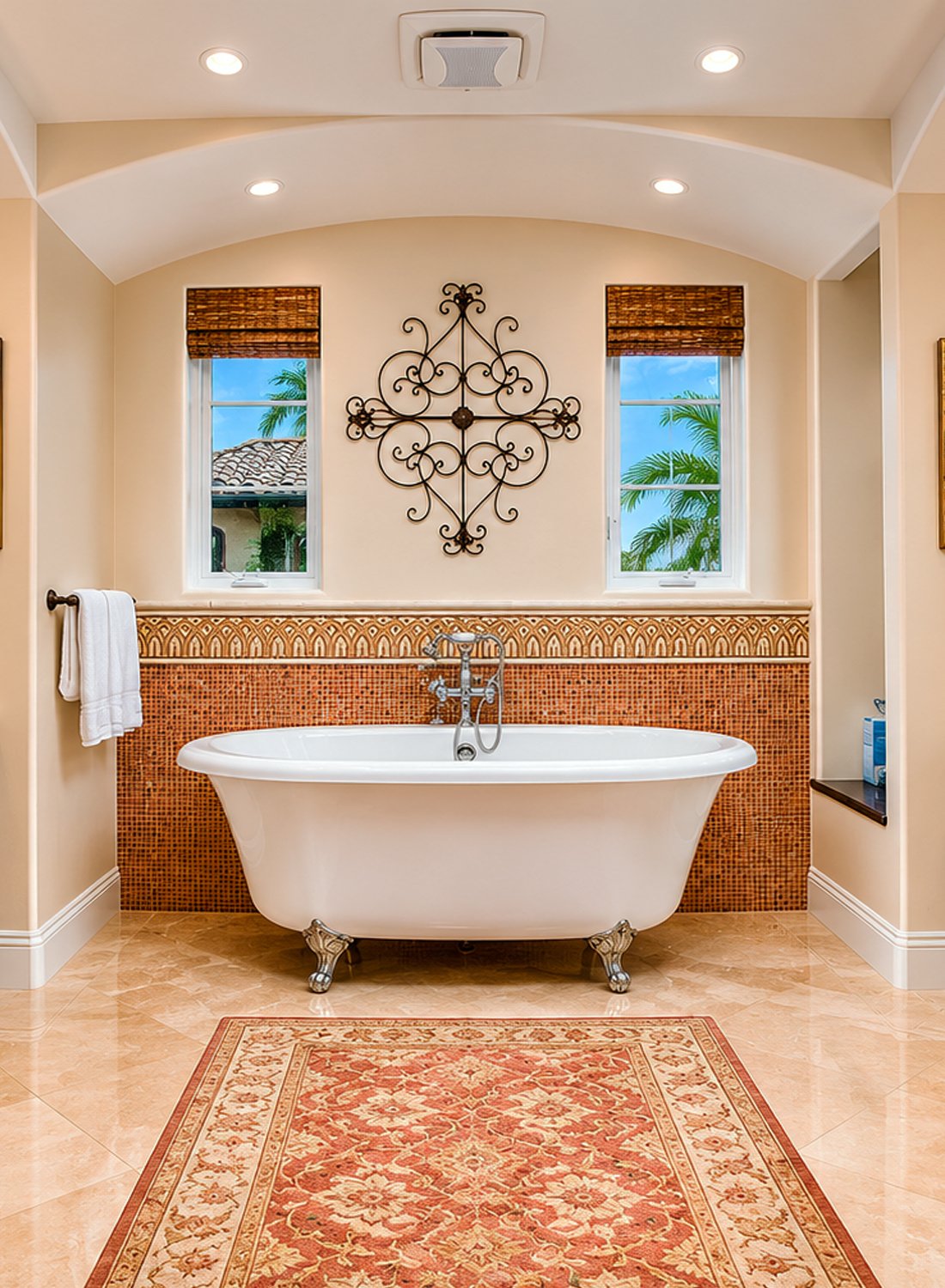
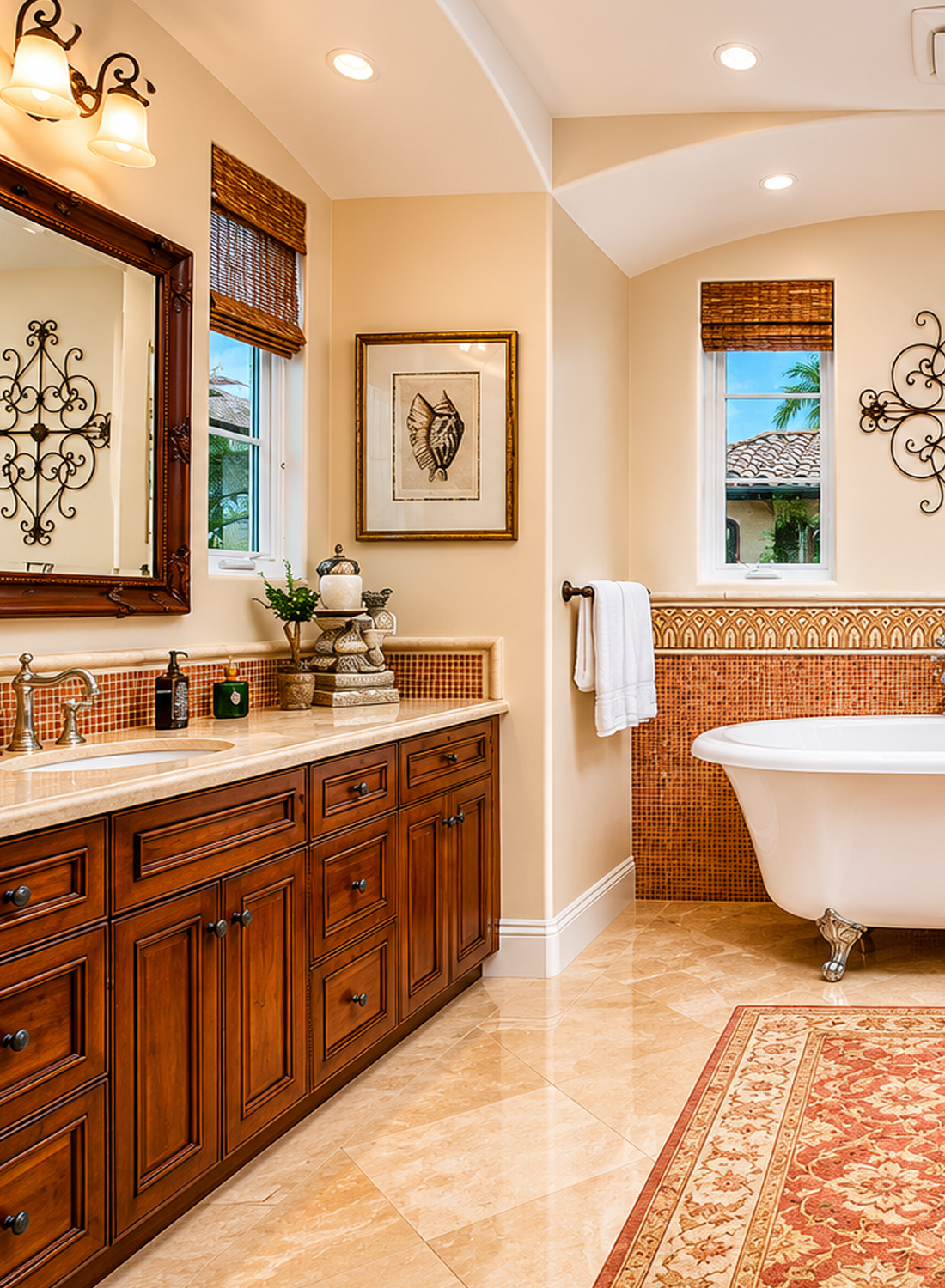
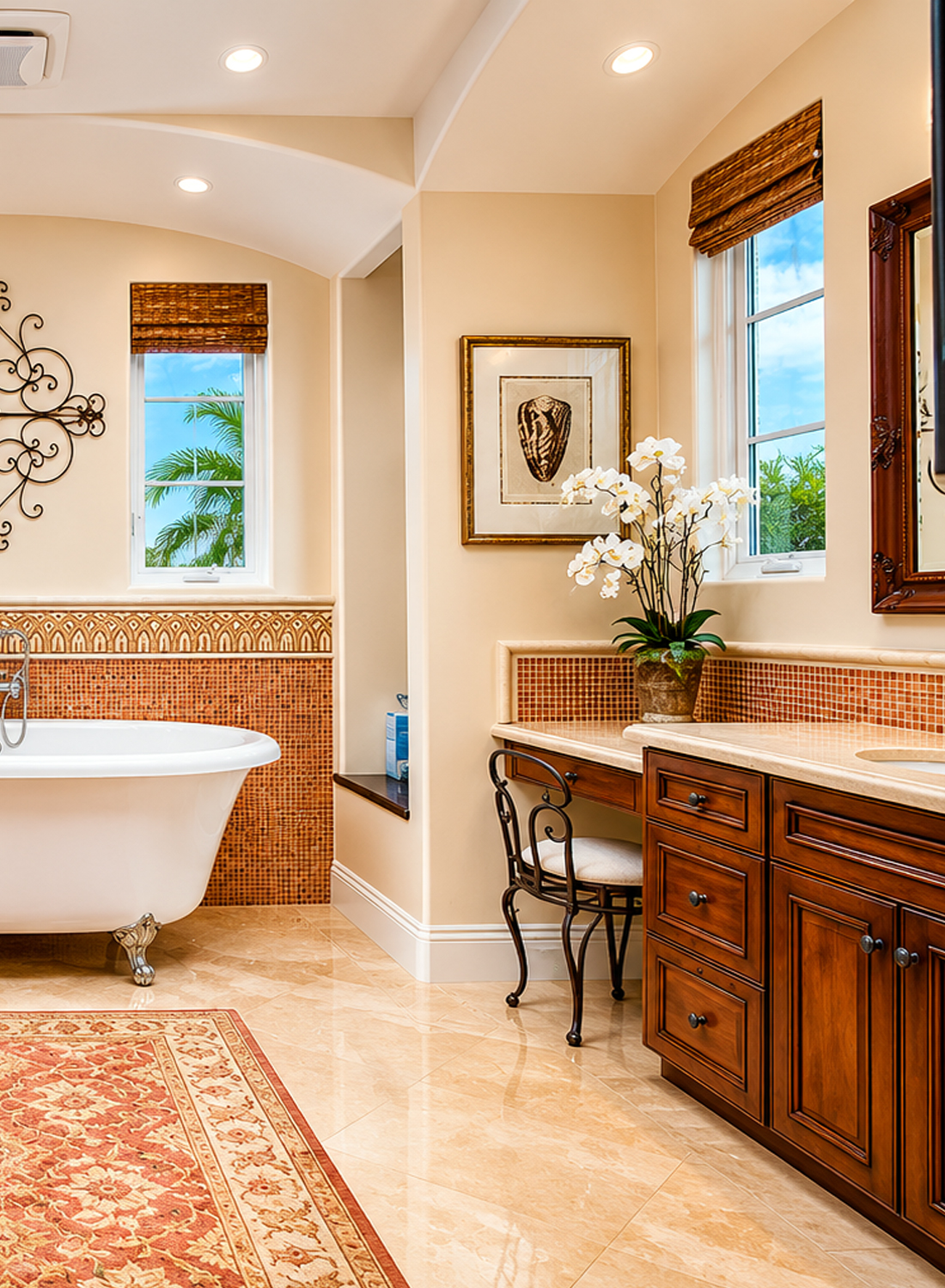
A Spanish Colonial Revival bathroom can feel both grand and calm. Start with a freestanding tub or a strong vanity. Then, add tile, wood, and iron details.
Warm wood vanities add depth. Cream stone counters keep the room soft. A tile border around the tub or wall adds charm. Wrought-iron wall decor or mirror frames can tie the whole space together.
The best bathrooms in this style feel airy. Use light walls, soft floors, and simple window treatments. Then, let the tile and wood bring the character.
Design cues:
- Freestanding tub
- Warm wood vanities
- Cream stone counters
- Patterned tile border
- Arched wall niche
- Iron mirror or wall art
- Woven window shades
- Soft rug
- Wall sconces
- Pale stone floor
16. Add a Home Office With Character
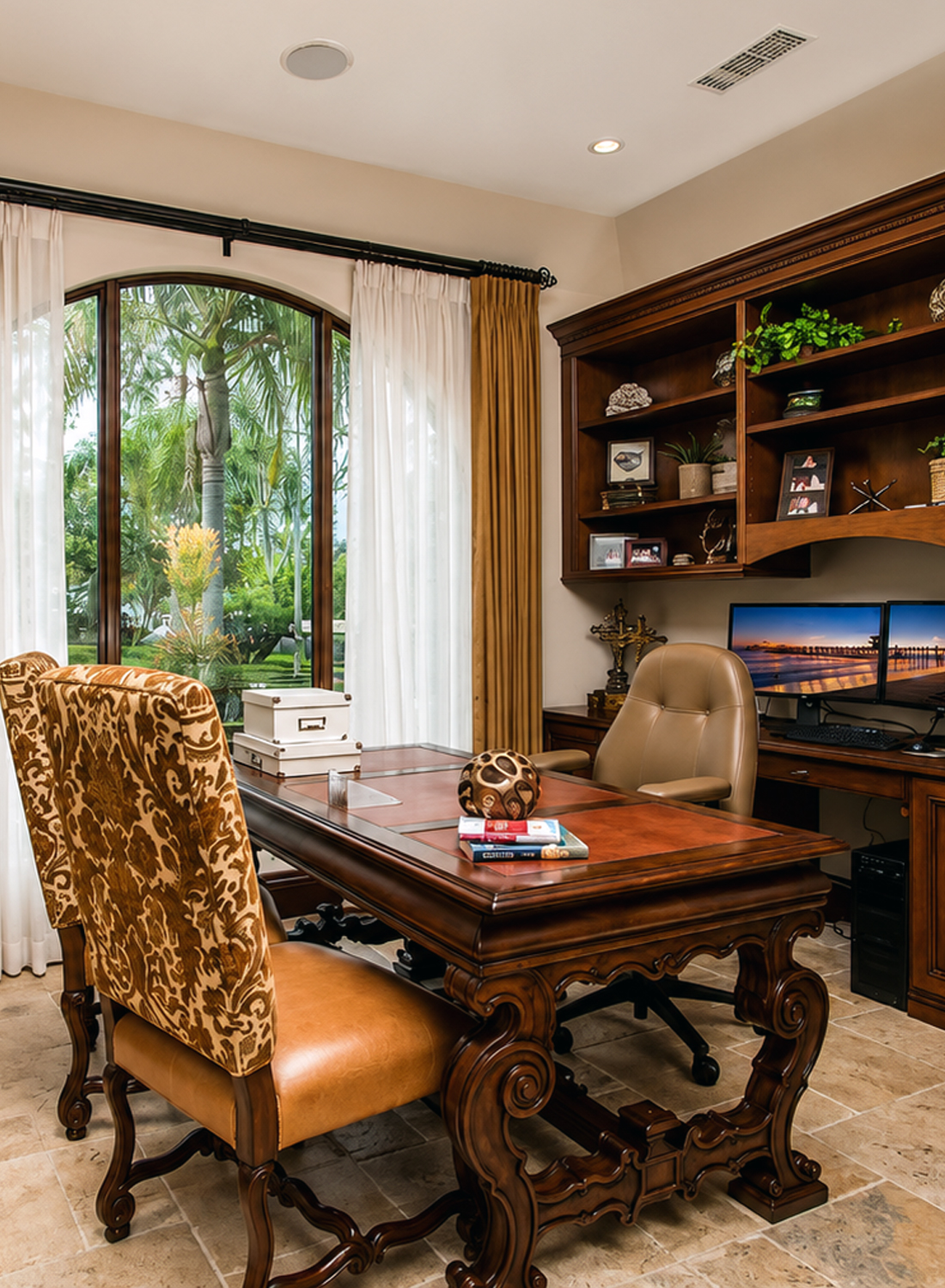
A Spanish Colonial Revival office should feel rich and focused. Dark wood furniture works well here. It gives the space weight and a sense of history.
Use built-in shelves if you can. Then, mix open display with closed storage. Add a large desk, a comfortable chair, and warm curtains. An arched window or wood trim will make the space feel even more special.
Keep the decor simple. A plant, a lamp, a few books, and one strong piece of art can do enough.
Design cues:
- Carved wood desk
- Built-in wood shelves
- Glass-front cabinets
- Arched window
- Patterned chair fabric
- Warm neutral curtains
- Stone floor
- Wrought-iron hardware
- Classic table lamp
- Indoor plant
17. Use Wrought Iron as Jewelry
Wrought iron acts like jewelry in this style. It adds shape, shadow, and contrast.
Use it on railings, balconies, chandeliers, doors, mirrors, beds, wall art, and cabinet hardware. It works best in small but clear doses. Too much can feel heavy. Just enough feels timeless.
Black iron looks crisp against white walls. Bronze or aged iron feels softer. Both can work, depending on the mood you want.
Design cues:
- Iron stair railing
- Juliet balcony
- Iron chandeliers
- Scrollwork front door
- Iron bed frame
- Iron mirror frame
- Cabinet pulls
- Wall sconces
- Outdoor gates
- Decorative wall panels
18. Layer Plants for a Lush Look
Greenery makes Spanish Colonial Revival design feel alive. It softens stucco, stone, brick, and iron. It also brings a relaxed garden feel to the home.
Use tall plants near entries and corners. Add potted plants on patios. In courtyards, mix palms, agave, olive trees, citrus trees, lavender, and climbing vines.
Inside, choose plants with strong shapes. Fiddle leaf figs, palms, snake plants, and olive trees all work well. Place them near windows, fireplaces, and empty corners.
Design cues:
- Tall cypress-style plants
- Potted olive trees
- Citrus trees
- Palms
- Agave
- Lavender
- Climbing vines
- Large indoor plants
- Clay pots
- Wicker baskets
19. Pick a Warm, Earthy Color Palette
Spanish Colonial Revival homes often use a calm base with warm accents. White, cream, sand, tan, and stone tones create the main backdrop.
Then, layer in terracotta, rust, deep brown, olive green, muted gold, and small touches of blue. These colors feel sun-washed and natural.
Try not to use too many bold shades at once. Let the walls stay quiet. Then, bring color through rugs, pillows, tile, art, and pottery.
Design cues:
- Warm white walls
- Cream and beige upholstery
- Terracotta accents
- Rust pillows
- Olive green plants
- Deep brown wood
- Black iron contrast
- Muted gold fabrics
- Blue tile accents
- Natural stone tones
20. Mix Rustic and Refined Pieces
This style works best when it does not look too perfect. Mix polished pieces with rustic ones.
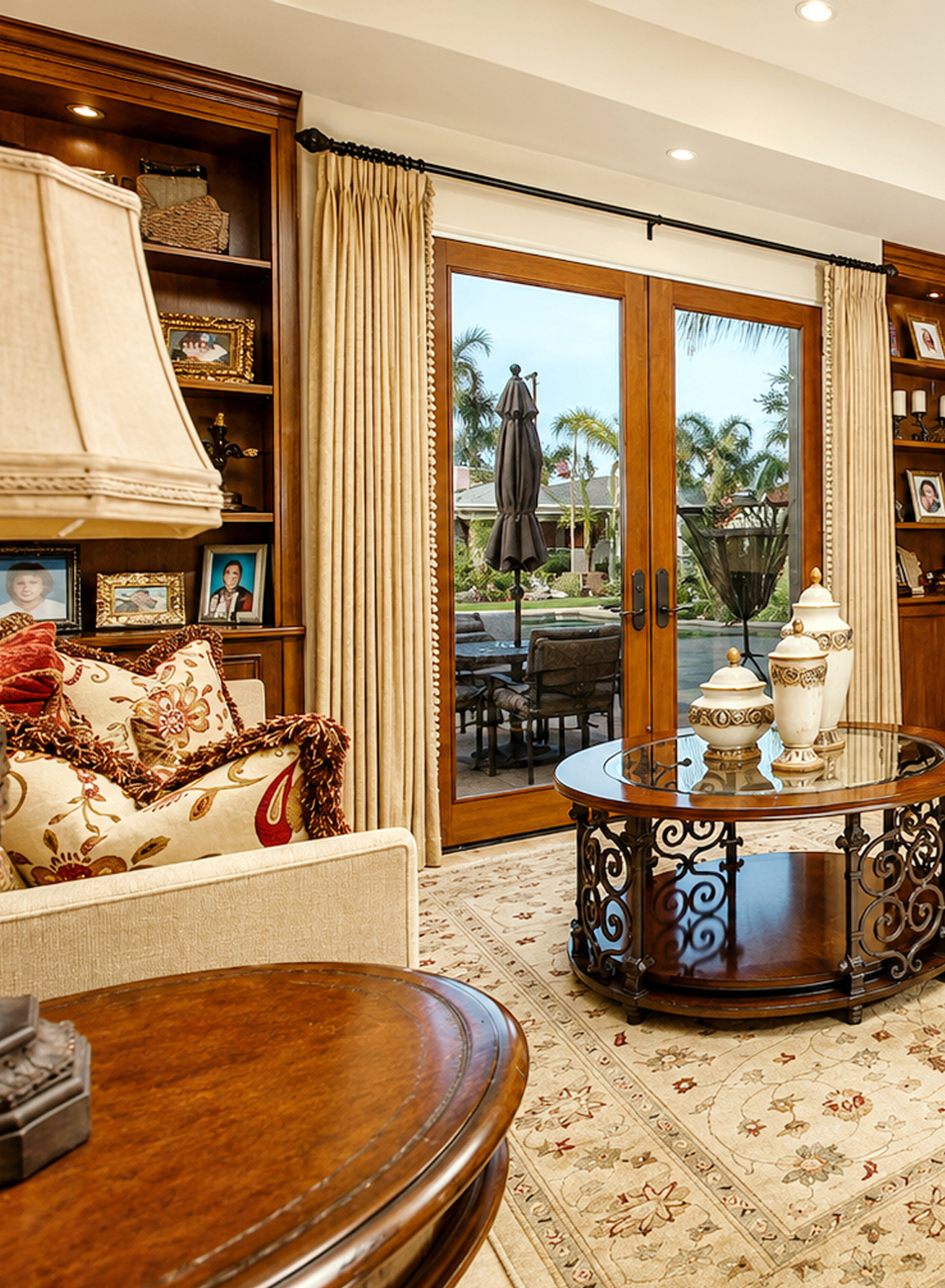
For example, pair a carved wood table with simple linen curtains. Place a refined chandelier over a stone floor. Use a grand fireplace with relaxed seating. Add a patterned rug under clean-lined furniture.
That mix keeps the home warm. It also keeps the style from feeling like a set. Spanish Colonial Revival design should feel collected, not staged.
Design cues:
- Carved wood furniture
- Simple linen curtains
- Antique-style mirrors
- Handmade pottery
- Stone floors
- Soft sofas
- Iron light fixtures
- Patterned rugs
- Aged wood finishes
- Clean wall colors
21. Use Lighting to Create a Golden Glow
Lighting can change the whole mood of this home style. Harsh white light does not fit. Warm light works best.
Use lanterns, sconces, chandeliers, and soft recessed lights. Outside, use uplights near plants and walls. In courtyards, hang string lights or lanterns.
Inside, layer lighting. Add overhead lights, wall lights, table lamps, and fireplace glow. This creates depth and warmth.
Design cues:
- Warm white bulbs
- Iron chandeliers
- Wall sconces
- Lantern-style fixtures
- Outdoor uplighting
- String lights
- Table lamps
- Recessed lights on dimmers
- Candle-style bulbs
- Seeded glass shades
22. Keep the Layout Open but Cozy
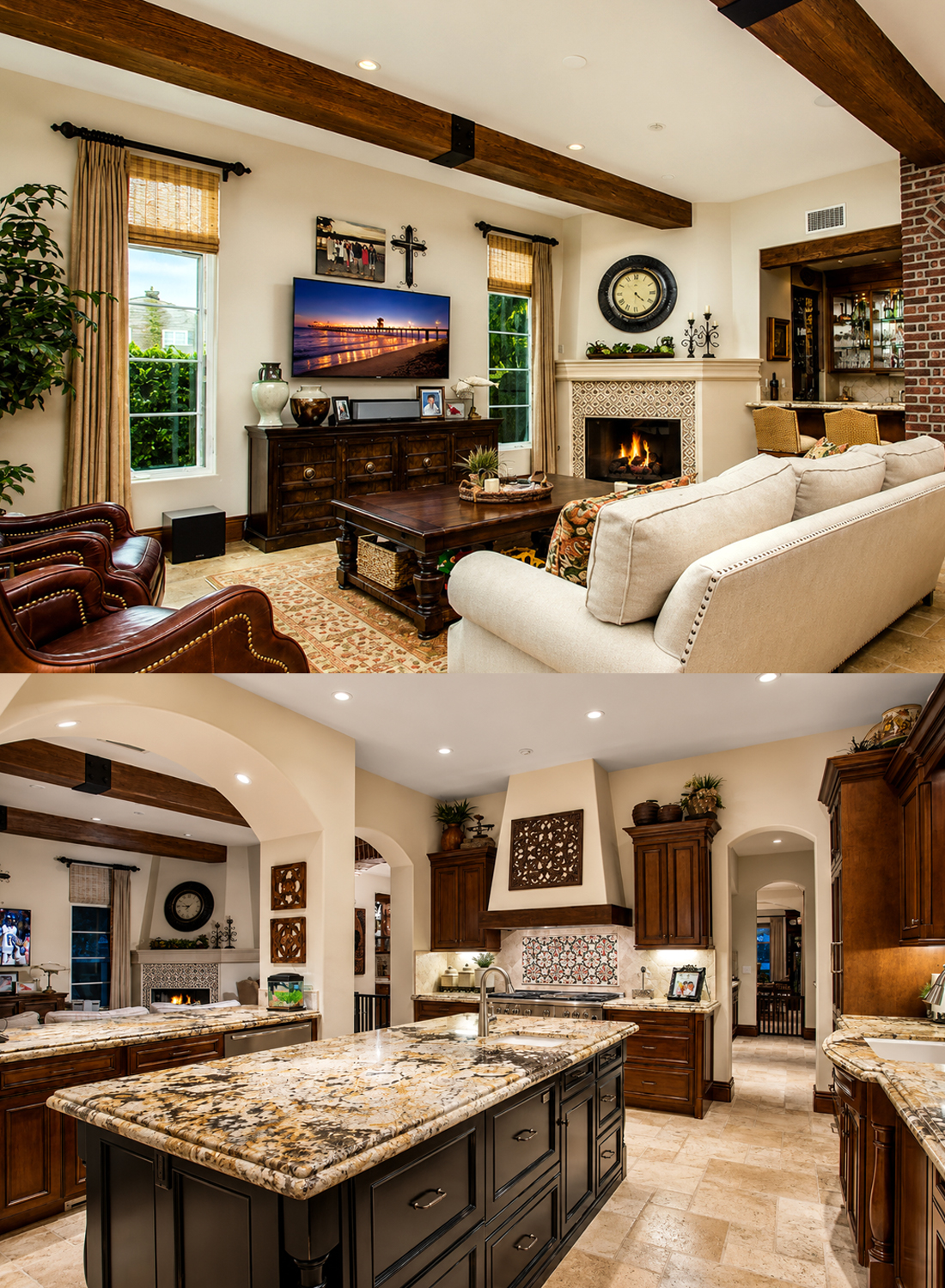
Spanish Colonial Revival homes often feel open, but they still have cozy zones. Arches and thick walls help define each space without closing it off.
Use furniture to create room-like areas. A sofa can frame the living room. A large table can anchor the dining room. A rug can define a sitting area.
This matters because the style loves flow. The home should move from living room to kitchen, patio, and courtyard with ease. Yet each space should still feel complete.
Design cues:
- Open living and dining flow
- Arched transitions
- Wide hallways
- Connected indoor-outdoor spaces
- Rugs to define zones
- Large furniture anchors
- Clear paths between rooms
- French or glass patio doors
- Cozy seating groups
23. Finish With Art, Pottery, and Handmade Texture
The final layer gives the home soul. Choose decor that looks touched by hand.
Use clay pots, carved trays, woven baskets, iron candleholders, framed art, old books, and textured textiles. You do not need too many pieces. A few strong ones will do more.
This style looks best when the decor feels warm and personal. So mix new pieces with vintage finds. Add items that feel useful, pretty, and rooted in place.
Design cues:
- Clay pottery
- Woven baskets
- Carved wood trays
- Iron candleholders
- Framed landscape art
- Vintage clocks
- Linen pillows
- Patterned throws
- Potted orchids or greenery
- Books and collected objects
Conclusion
A Spanish Colonial Revival home feels best when every room has warmth, craft, and a little drama. Let the walls stay simple. Let the arches bring shape. Let the tile add color. Then, layer in wood, iron, stone, plants, and soft light. The result feels timeless, relaxed, and full of charm.