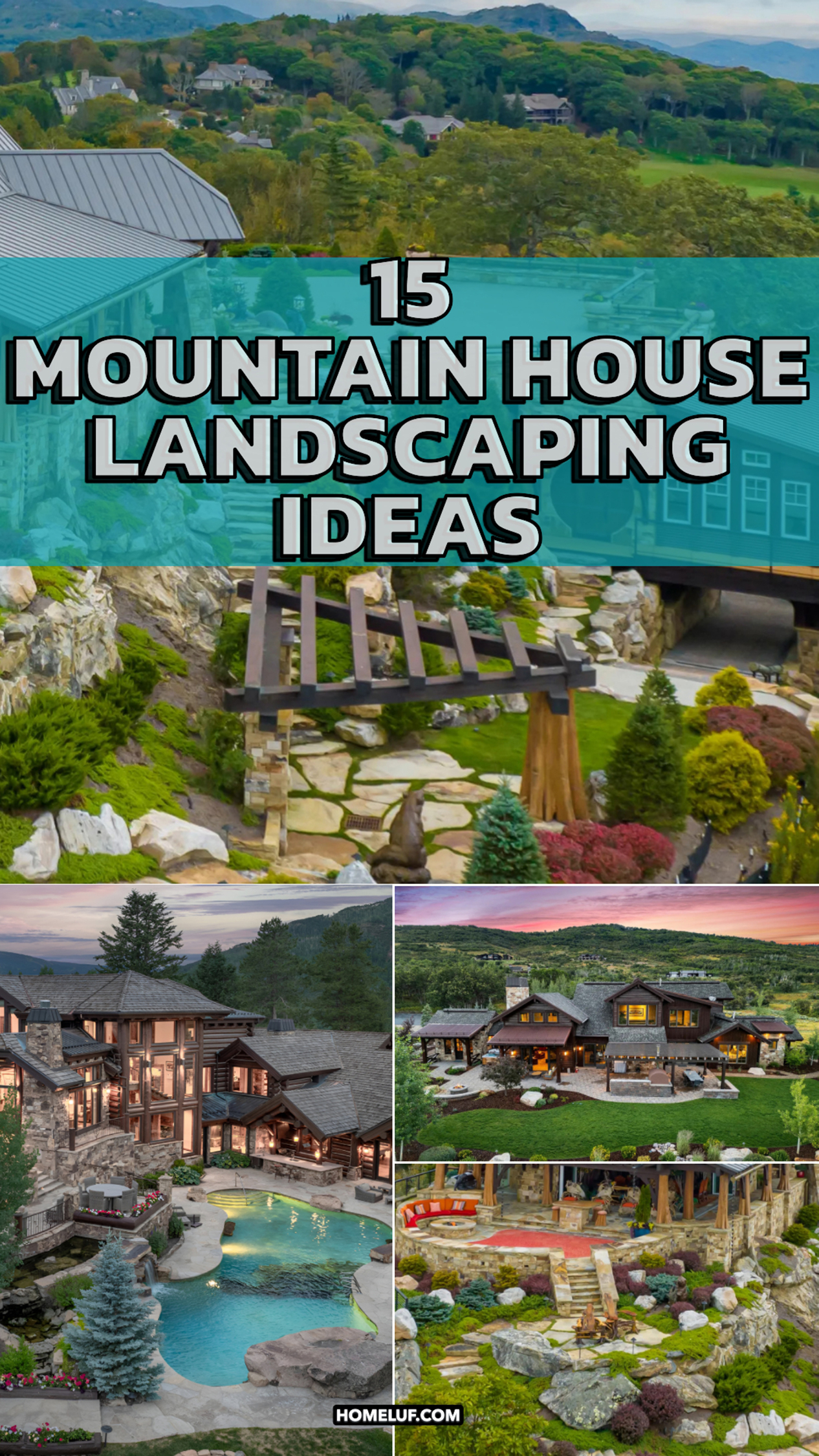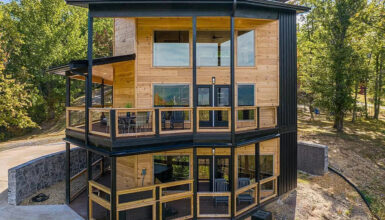
There is something magical about a mountain home that feels rooted to the land. The best ones do not fight the slope, the rocks, or the trees. Instead, they work with them. That is what makes these landscaping designs so inspiring. Some lean into wide-open meadow views. Others use stone paths, terraces, and native plants to soften a steep site. A few feel polished and grand. Others feel quiet and tucked into the woods.
As you move through these homes, notice one big idea: great mountain landscaping is never just about pretty plants. It is about framing the view, grounding the house, and making outdoor living feel natural. These designs do that beautifully.
1. Meadow-Framed Mountain Retreat
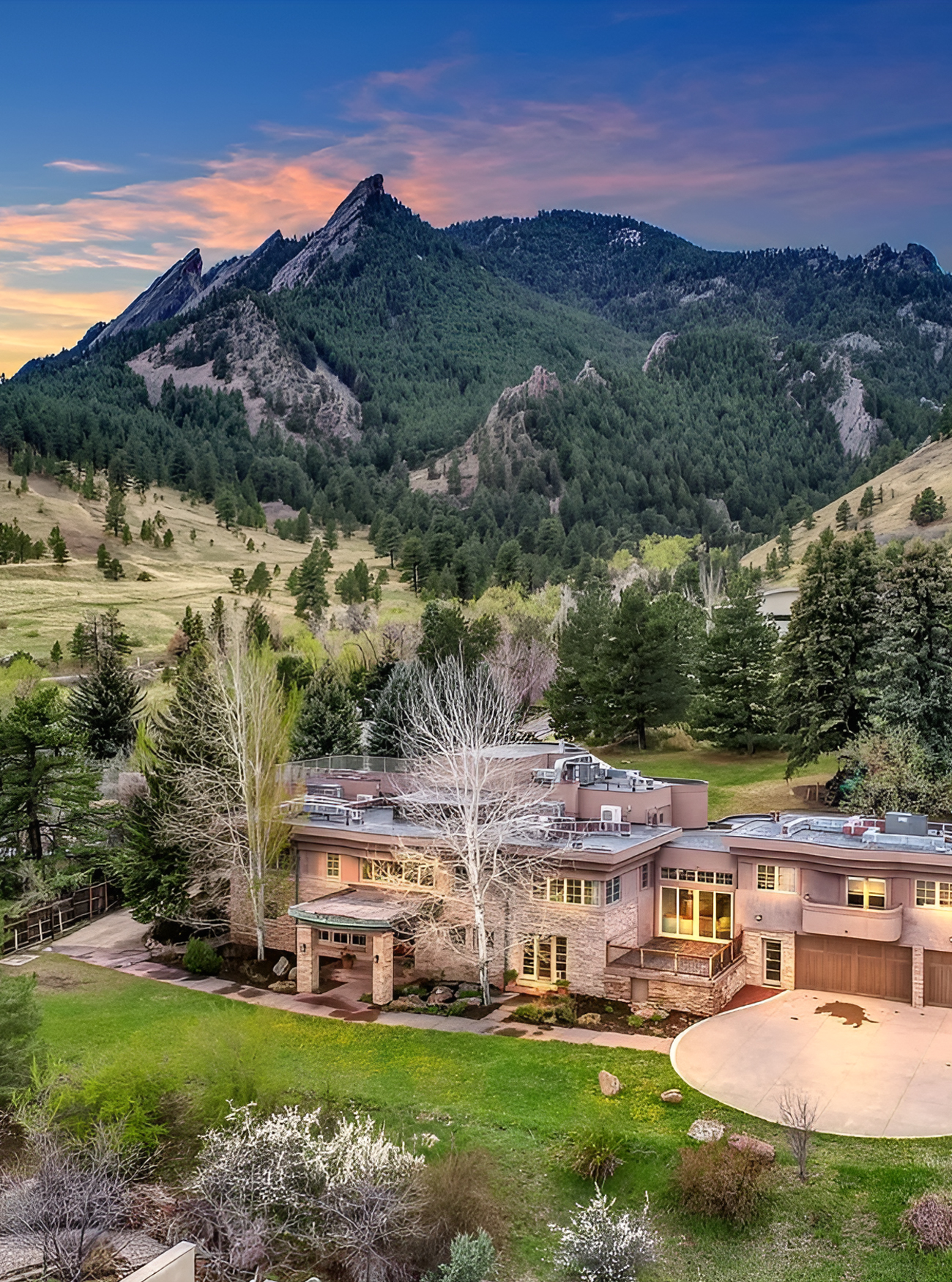
This landscape works because it lets the view lead. The house sits low in the foreground, while the dramatic mountain ridge rises behind it. That balance creates a calm, layered look. The lawn near the home feels tidy and welcoming, yet the wider site stays open and natural. That mix is smart for a mountain setting. It keeps the property polished without looking forced.
The trees also do a lot of heavy lifting here. Mature evergreens give the house shelter and scale. Meanwhile, lighter deciduous trees soften the front elevation and add seasonal color. The curved drive gives the home a graceful approach, and the planting beds stay simple, which helps the mountain backdrop stay front and center.
Cues list:
- Broad meadow-style setting
- Mature evergreen screening
- Soft lawn near the house
- Minimal front planting beds
- Curved driveway for a gentle arrival
- Landscape that frames, not blocks, the mountain view
2. Ranch-Style Mountain Home with a Park-Like Lawn
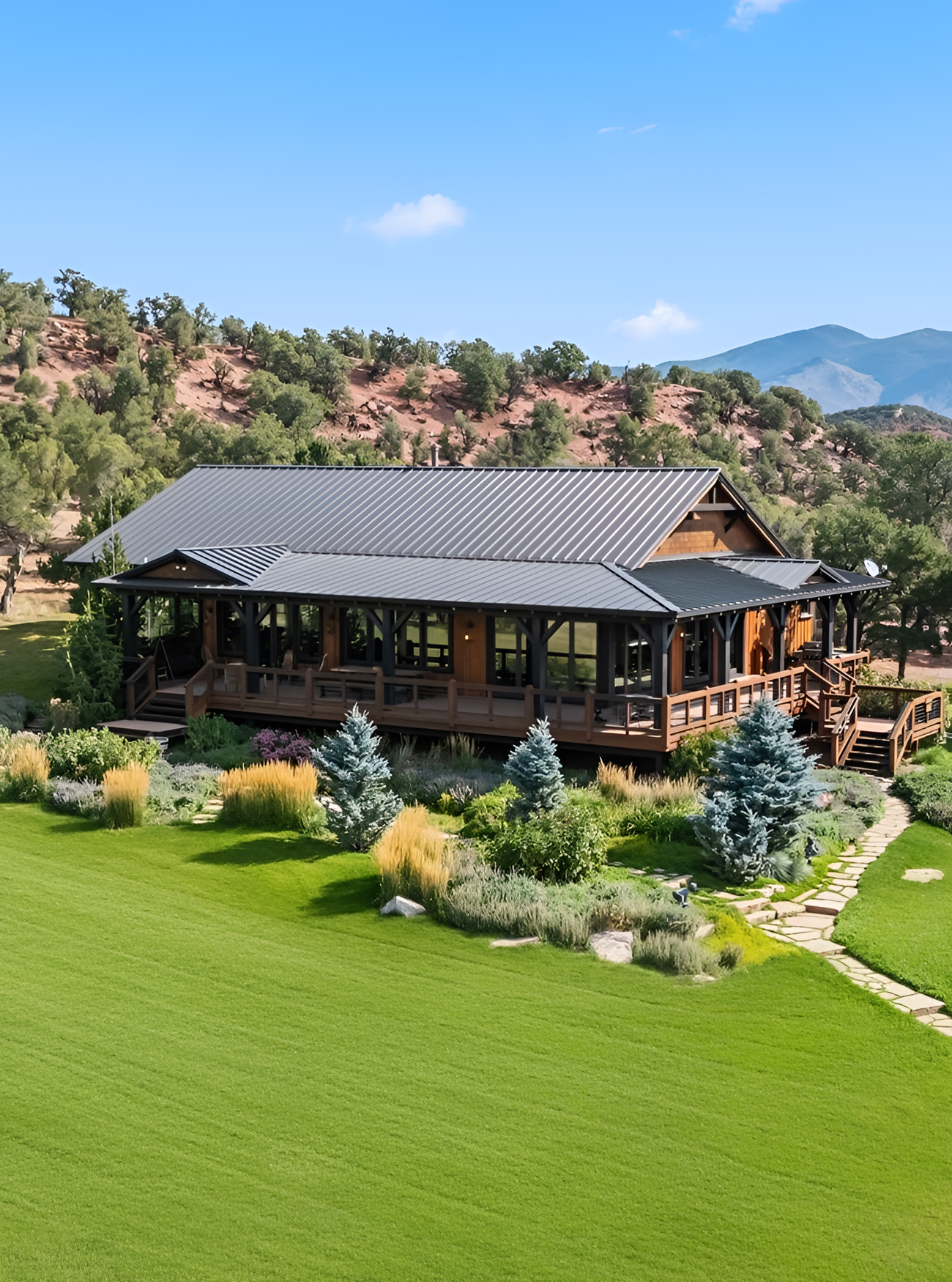
This design feels fresh, open, and easy to live with. The large green lawn gives the house breathing room, which makes the wraparound porch stand out even more. In a mountain setting, that wide lawn creates a strong contrast with the rugged hills beyond. It gives the whole property a cared-for, almost estate-like look.
What really makes this landscape shine is the transition from formal to natural. Close to the house, the beds are full and intentional. You see ornamental grasses, low shrubs, and neatly shaped plant groupings. Then, as the land moves outward, the design becomes looser and more relaxed. That shift feels right for the site. It keeps the house connected to the land instead of sitting apart from it.
Cues list:
- Expansive manicured lawn
- Full foundation plantings
- Wraparound porch with garden edge
- Curved asphalt drive
- Soft transition from formal beds to native terrain
- Open spacing that highlights mountain views
3. Rocky Slope Lodge with Natural Stone Character
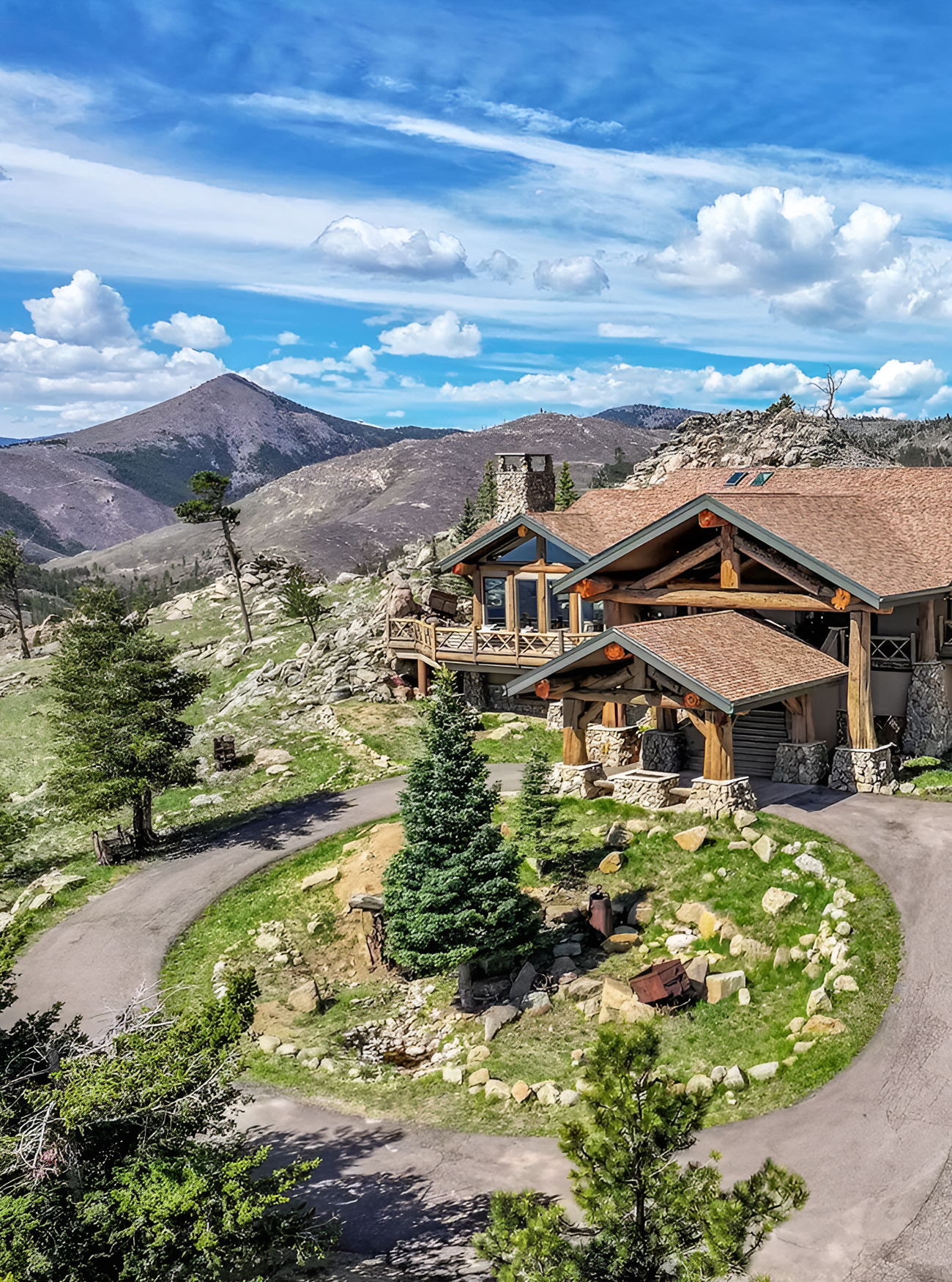
This home shows how to landscape a steep and rugged mountain lot without overdoing it. Instead of trying to flatten the land, the design embraces the rocky slope. That choice gives the property authenticity. The house feels like it grew out of the site, not like it was dropped onto it.
The driveway winds through the terrain and creates a dramatic approach. At the same time, the stone at the base of the home ties the architecture to the boulders around it. The planting stays sparse, which is the right move here. Too many soft plants would weaken the bold mountain feel. Instead, the landscape uses rock, elevation, and structure as its main design tools.
Cues list:
- Steep mountain site left mostly natural
- Winding driveway with scenic approach
- Stone base that echoes the terrain
- Sparse planting for a rugged look
- Large decks to capture views
- House placement that follows the slope
4. Sunset Stone Path Entry
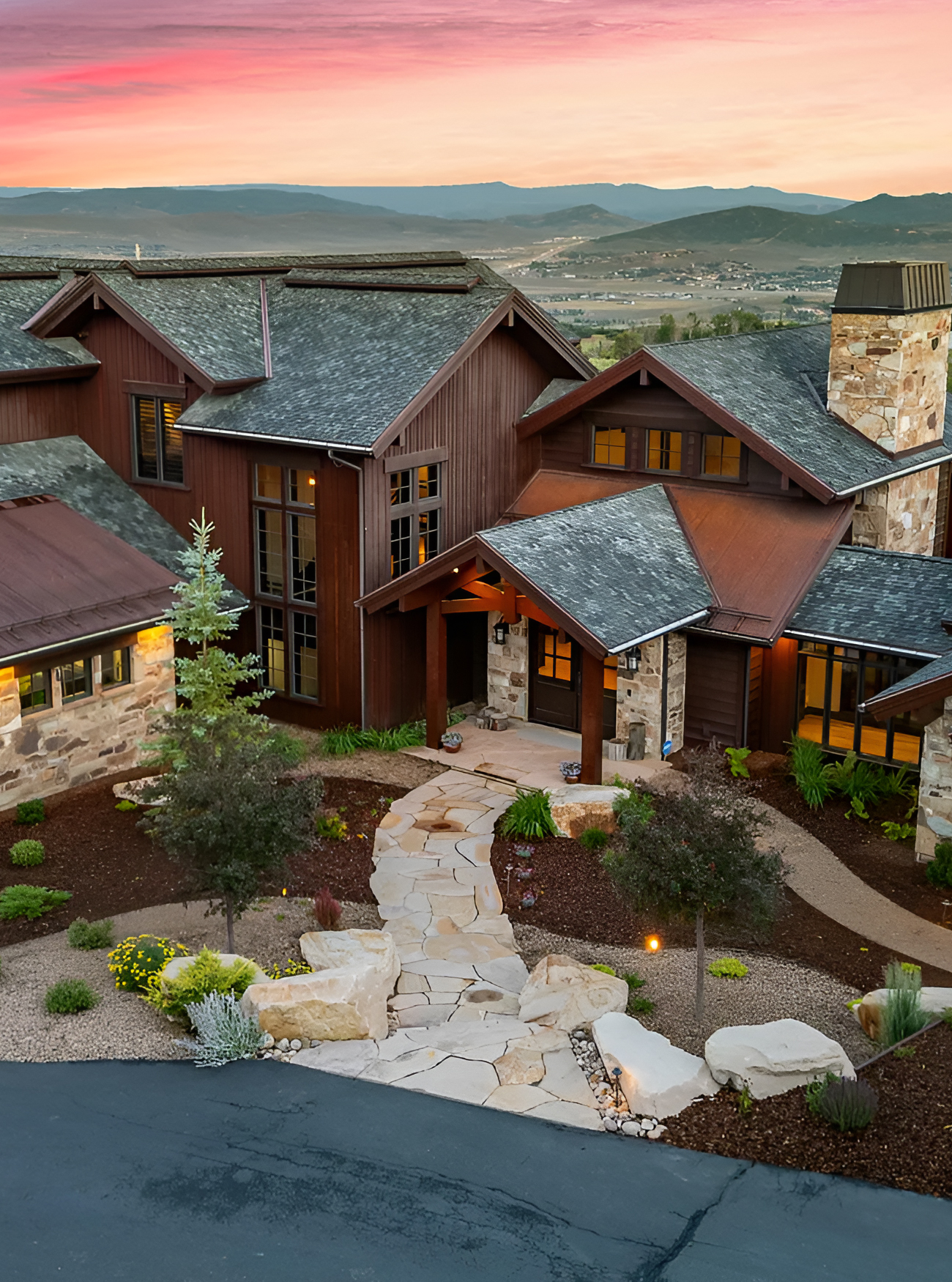
This landscape feels warm, grounded, and inviting. The house is large, but the front walk keeps it from feeling overwhelming. That stone path creates a human scale. It slows down the approach and makes the entry feel special. The planting beds along the path also soften the strong lines of the home.
The mulch, boulders, and low shrubs are especially effective here. They add texture without turning the front yard into visual clutter. In mountain landscaping, that matters. The best designs often use fewer elements, but they place them well. This one does exactly that. The evening lighting adds another layer of charm, making the front elevation glow against the wider mountain horizon.
Cues list:
- Curving stone walkway
- Mulched planting beds with low shrubs
- Boulders used as natural accents
- Warm exterior lighting
- Stone chimney and façade details
- Entry landscape scaled to a large home
5. Modern Mountain Fire Pit Escape
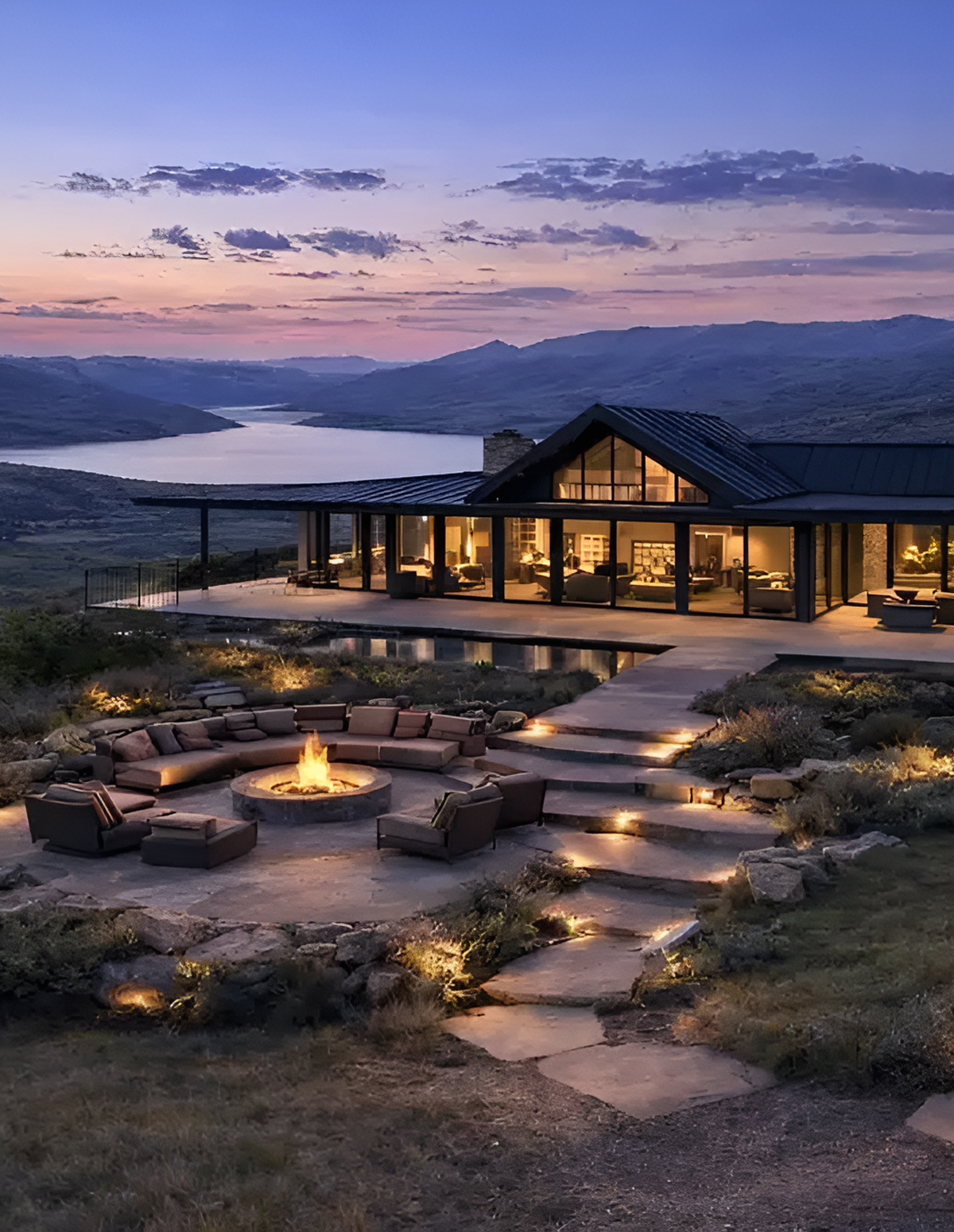
This landscape is all about the view and the outdoor living zones. The house sits low and wide, which lets the land and lake take center stage. Then the stepped path pulls your eye down toward the fire pit lounge. That layout feels intentional and relaxed. It gives the property a resort-like quality without losing its mountain edge.
The planting palette is also spot on. It looks drought-friendly and low to the ground, which suits the dry hillside. Instead of lush flower beds, the design relies on texture, spacing, and subtle lighting. That makes the home feel modern and clean. The fire pit area anchors the whole composition and turns the landscape into a place for gathering, not just looking.
Cues list:
- Stepped path to a lower lounge area
- Circular fire pit seating
- Low-water planting design
- Wide-open lake and valley views
- Subtle landscape lighting
- Clean, modern hardscape layout
6. Forest Cabin with Layered Outdoor Rooms
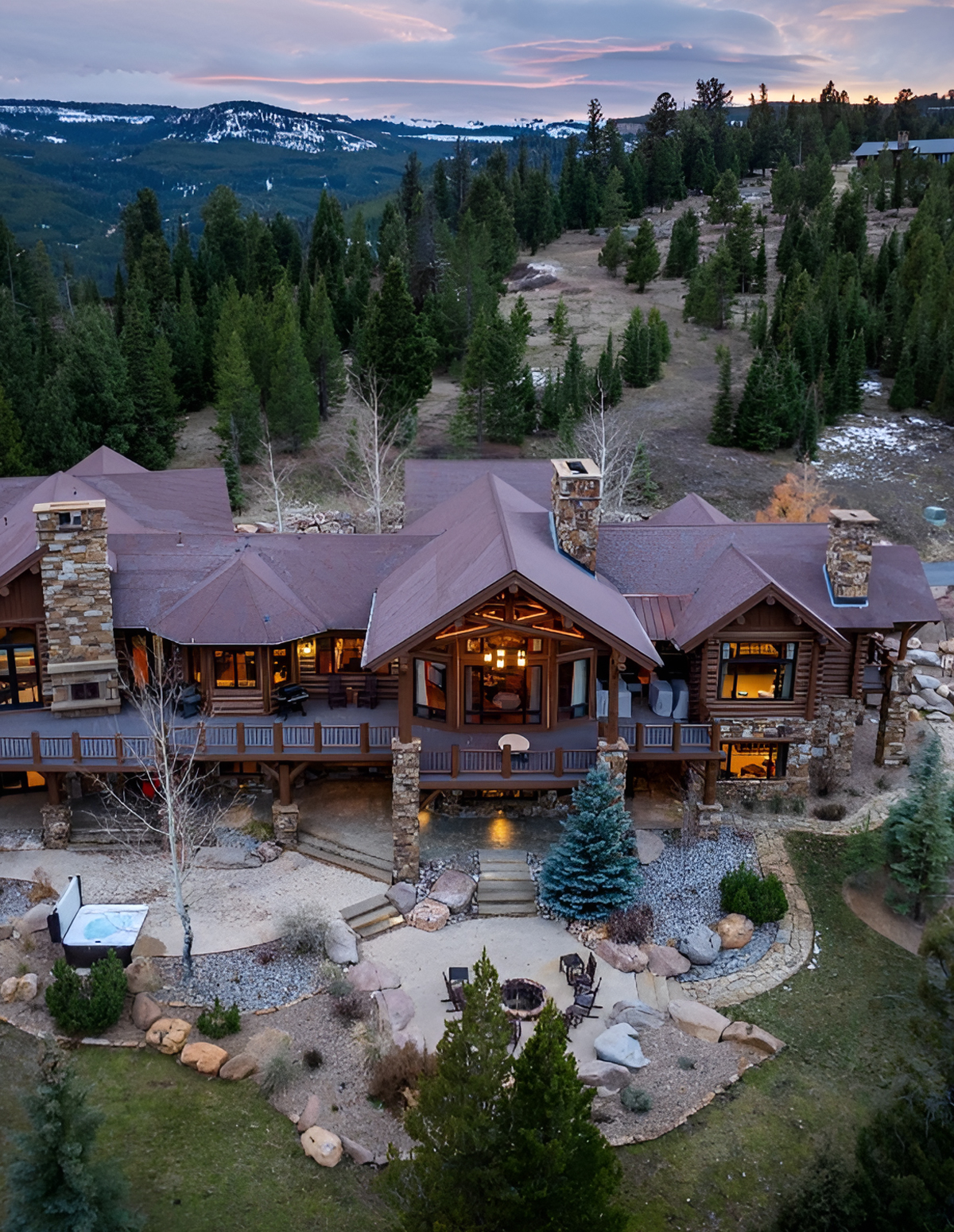
This home feels cozy because the landscaping breaks the site into smaller, usable zones. You have the main deck, a lower patio, a fire pit area, and a natural garden edge. That layering makes a big wooded property feel more personal. It also helps the house connect to the outdoors on every level.
The stonework is a key part of the design. It defines edges, supports the grade changes, and adds mountain texture. Around that, the plants stay natural and soft. The result feels warm and lived in. This is a great example of mountain landscaping that supports everyday life. It is not just scenic. It is functional too.
Cues list:
- Multi-level decks and patios
- Stone steps and retaining edges
- Fire pit gathering zone
- Natural woodland backdrop
- Soft, informal planting beds
- Outdoor layout designed for daily use
7. Aspen Grove Garden Retreat
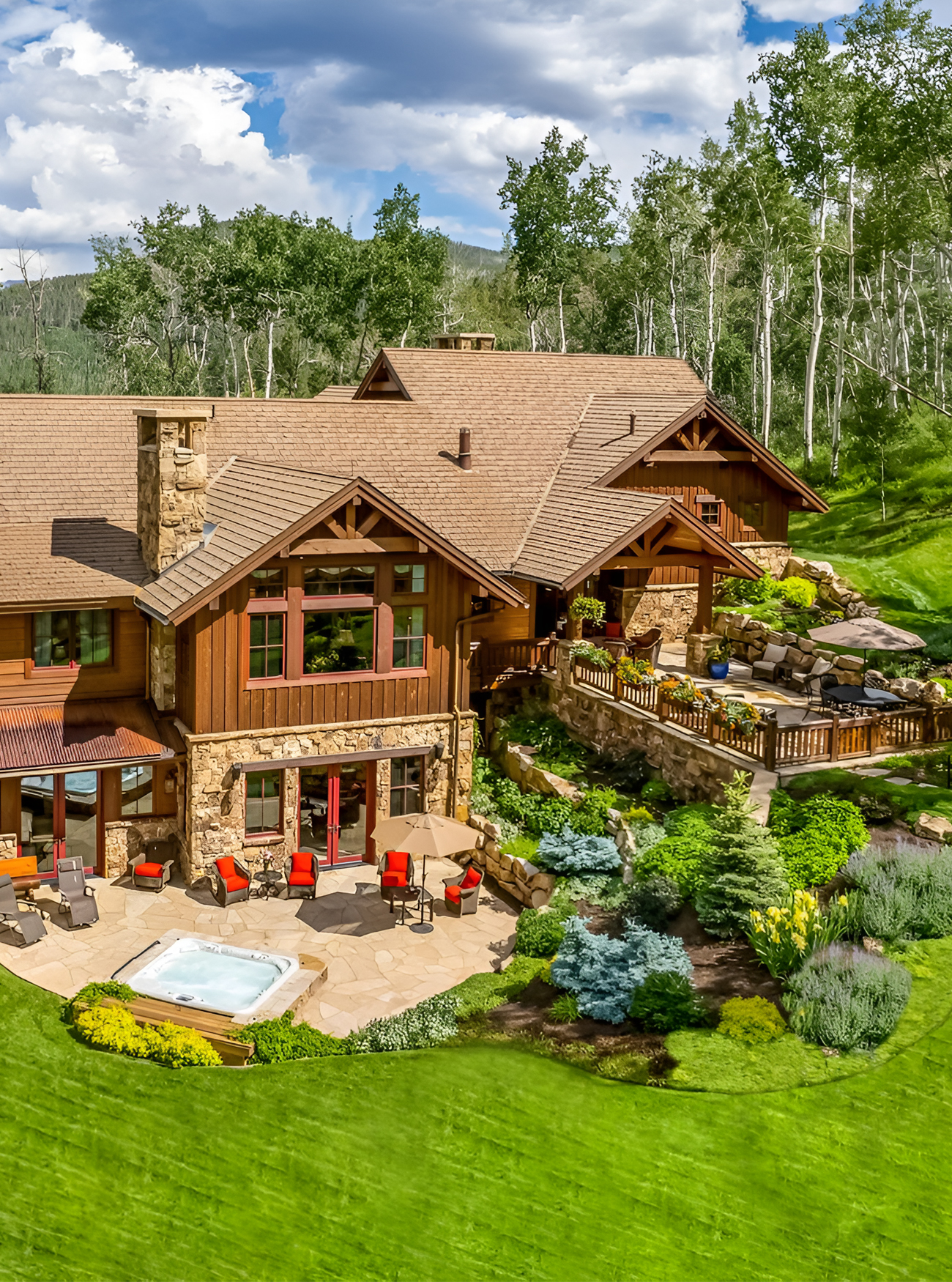
This landscape feels lush, private, and bright. The home sits among tall aspens, which instantly gives it a soft, high-country charm. The curving lawn adds elegance, while the patio and hot tub create a clear outdoor living hub. Everything feels tucked in, yet open enough to enjoy the trees and sky.
What stands out most is the contrast between strong structure and soft planting. The stone patio and retaining walls hold the space together. Then the lawn curves around them like a ribbon. That shape keeps the yard from feeling stiff. The result is polished, but still relaxed. It feels like a mountain garden you would actually want to spend time in.
Cues list:
- Aspen grove setting
- Curved lawn design
- Stone patio with hot tub
- Layered retaining walls
- Colorful seating for a lively accent
- Garden beds that soften the architecture
8. Hilltop Stone Terrace Showpiece
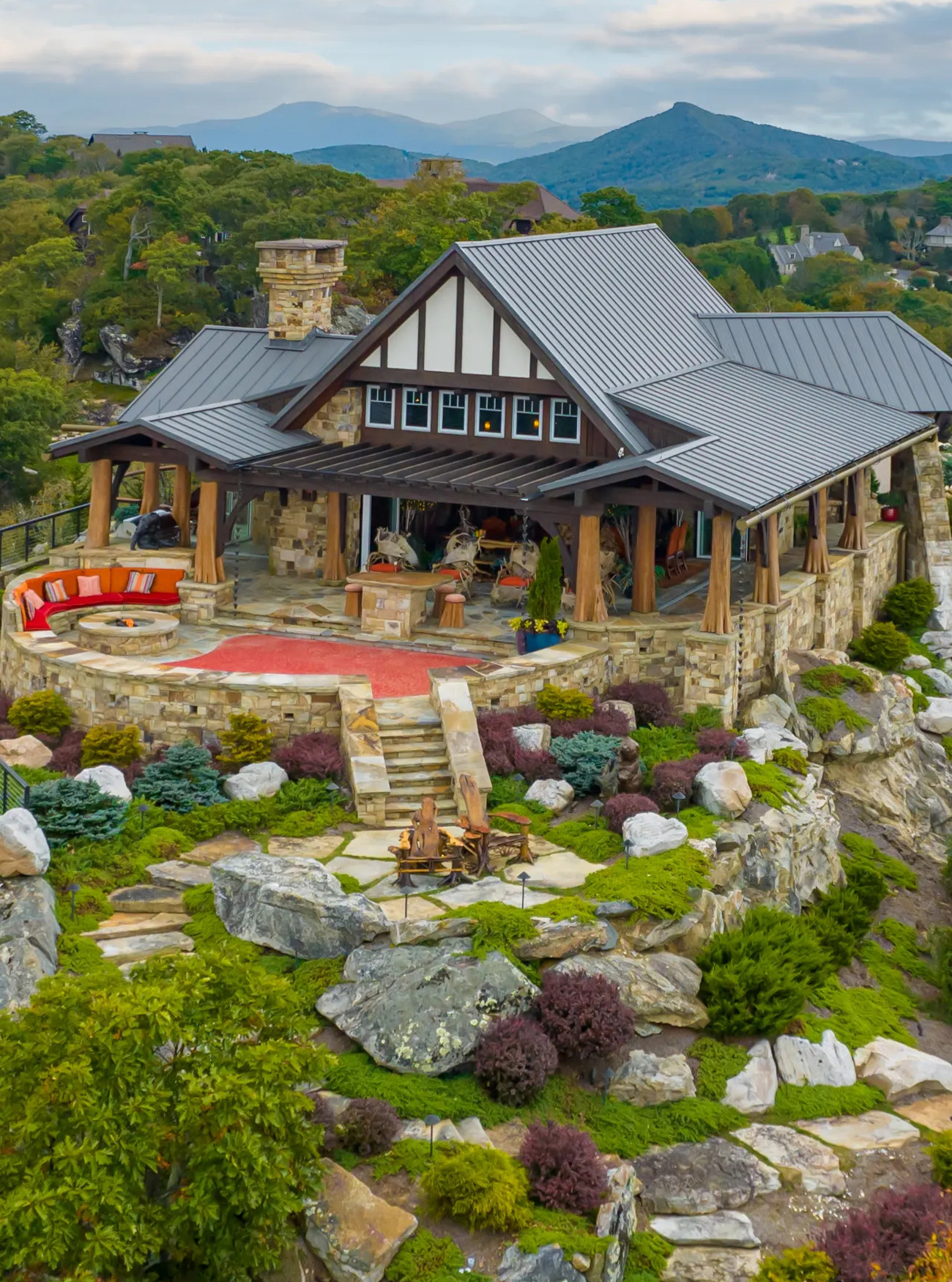
This home uses elevation as part of the design, and it works beautifully. The house sits high on a rocky perch, so the landscape leans into terraces, steps, and layered planting beds. That creates drama right away. Instead of hiding the steep site, the design turns it into the main attraction.
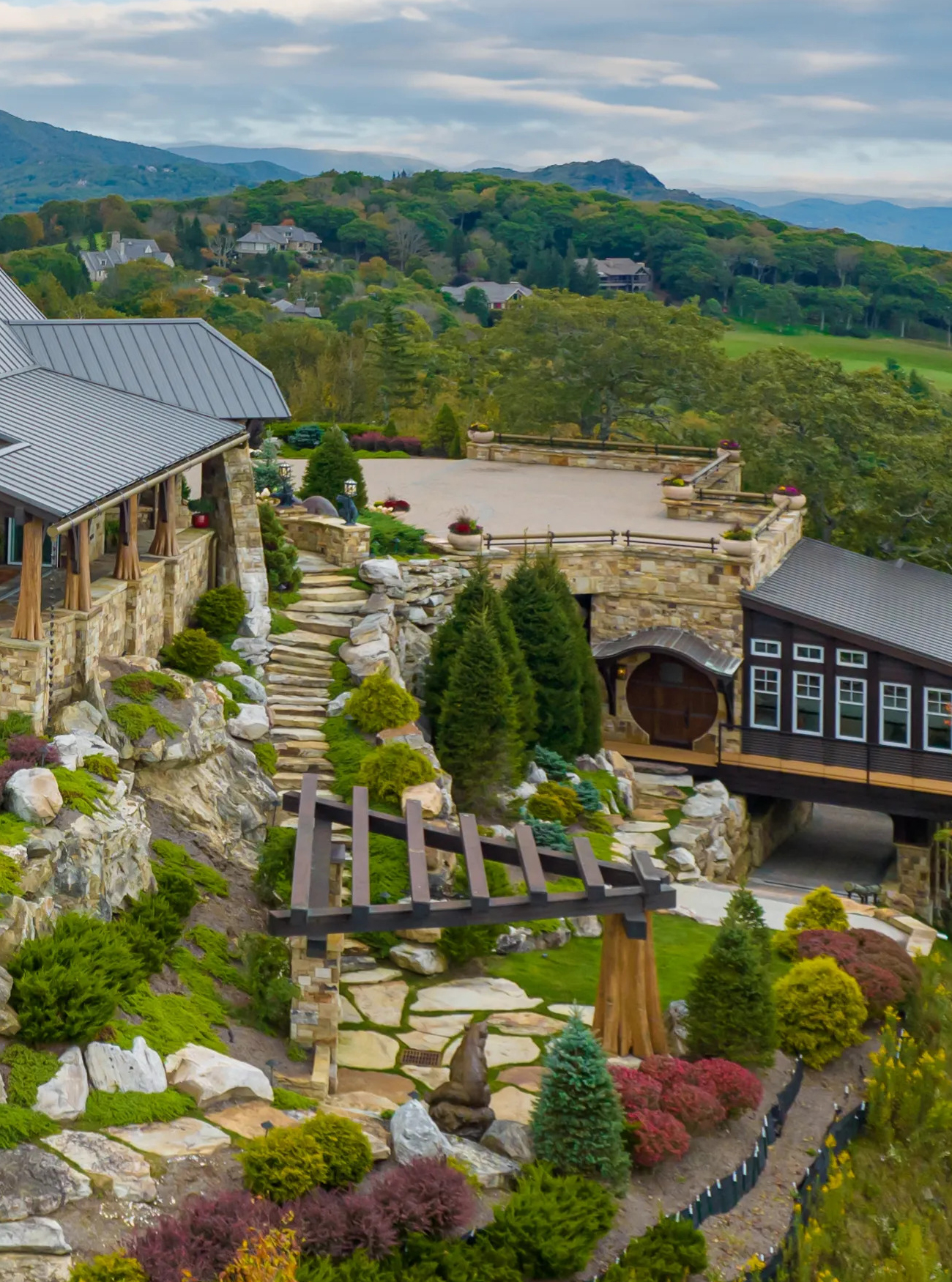
The stone terraces are especially strong here. They echo the rocky hillside and make the property feel rooted and permanent. At the same time, the shrubs and groundcovers add color and softness. The fire pit terrace is a smart touch too. It makes the front landscape more than a view piece. It becomes a destination.
Cues list:
- Dramatic hilltop siting
- Terraced stone retaining walls
- Layered foundation and slope plantings
- Multiple stair connections
- Outdoor fire pit zone
- Strong blend of architecture and terrain
9. Mountain View Patio with Hot Tub
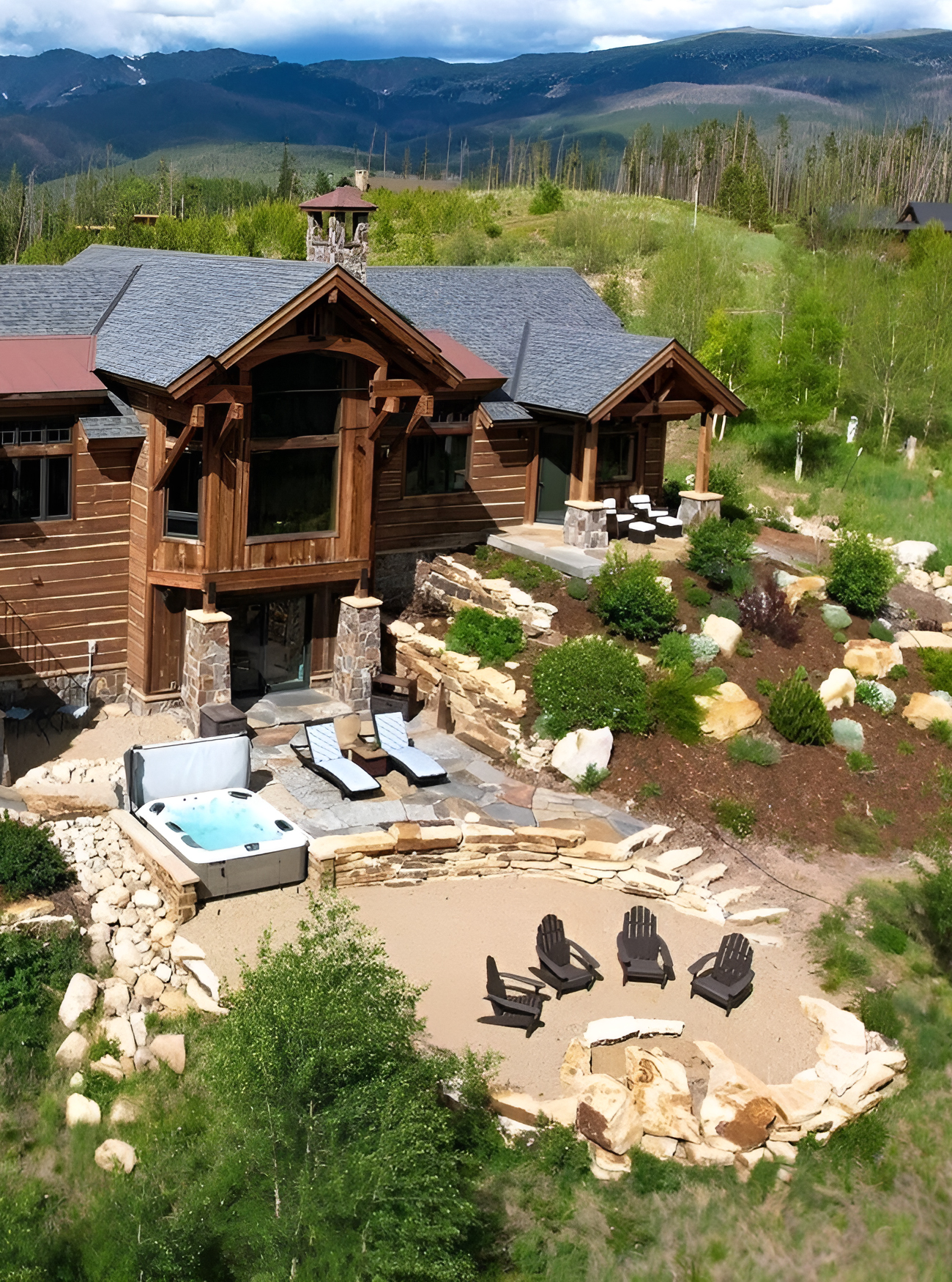
This landscape shows how to make a sloped backyard feel usable and inviting. The deck creates an upper-level viewing zone, while the lower patio adds a second place to gather. Then the hot tub becomes a focal point between the two. That layered setup is perfect for mountain living because it lets you enjoy the site at different levels.
The retaining walls and gravel seating area help organize the yard without making it feel too formal. Everything still looks natural and open. The Adirondack chairs are a great fit as well. They reinforce the casual mountain mood. Overall, this design feels rugged, relaxed, and very livable.
Cues list:
- Upper deck with scenic outlook
- Lower patio with hot tub
- Retaining walls for slope control
- Gravel fire pit or seating circle
- Natural boulder edging
- Simple mountain-style outdoor furniture
10. Luxury Pool Courtyard in the Pines
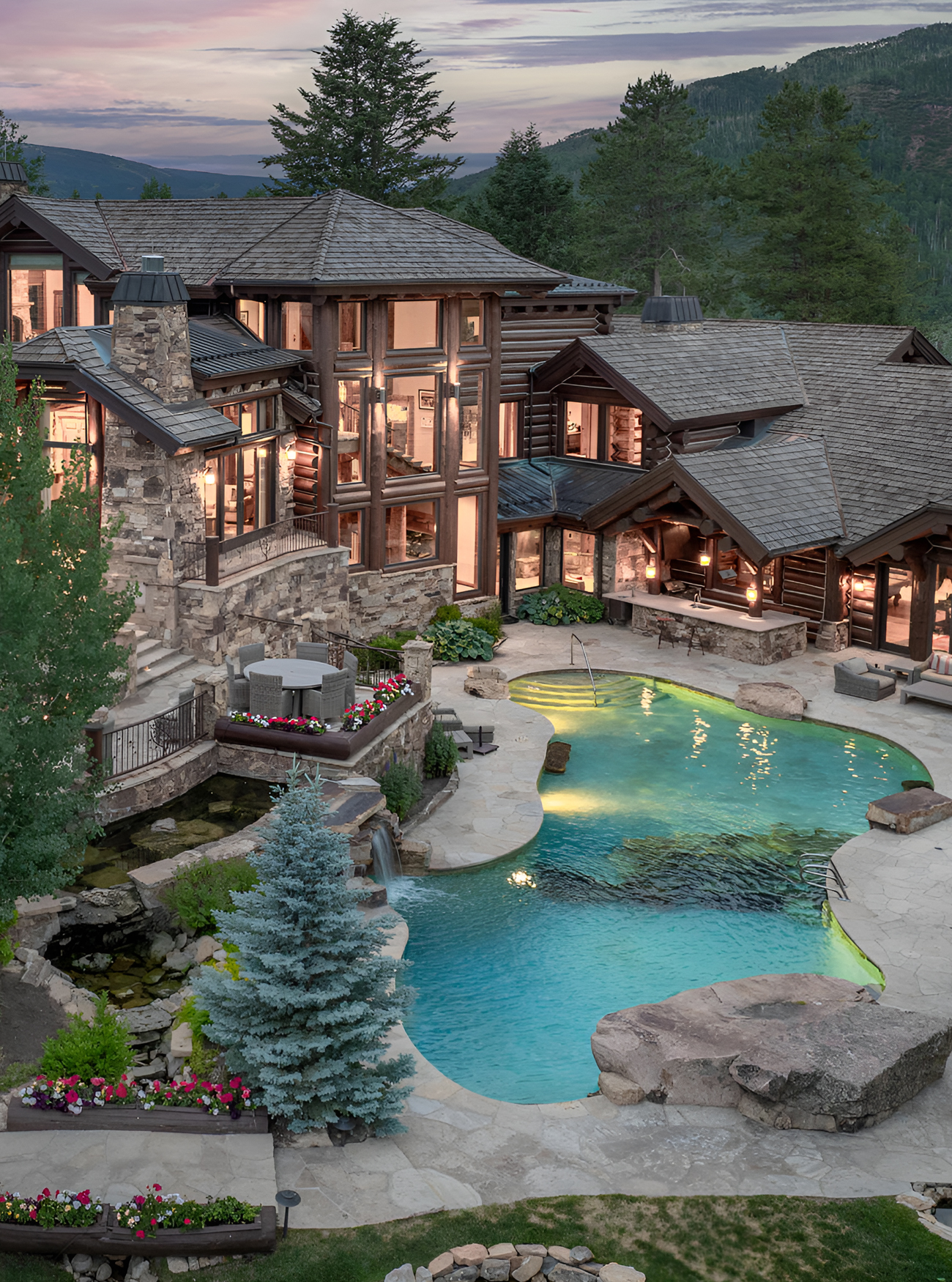
This landscape is bold, elegant, and full of resort energy. The pool acts as the heart of the design, while the home wraps around it in a protective U-shape. That layout creates privacy and makes the outdoor space feel like a true courtyard, even in a mountain setting.
The hardscape carries much of the visual weight here. Broad stone paving, water features, and crisp pool edges give the yard a polished look. Still, the trees and natural rock details keep it from feeling too formal. That balance is what makes it work. It feels luxurious, but it still belongs in the mountains.
Cues list:
- Central pool courtyard
- Stone paving throughout
- Waterfall or stream-style feature
- Mature trees for privacy
- Large windows overlooking the pool
- Resort-style outdoor layout
11. Clean and Classic Mountain Entry
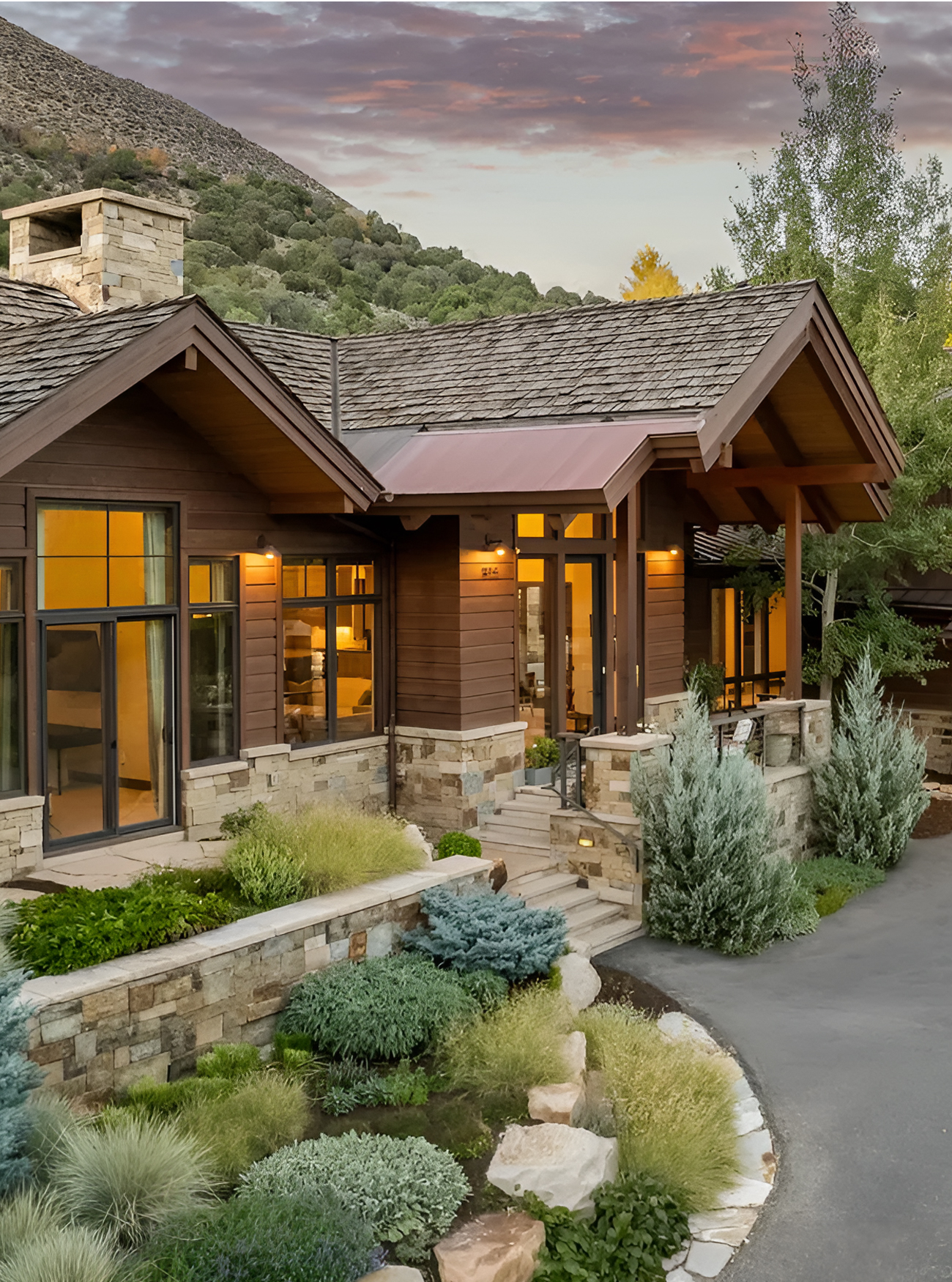
This landscape proves that simple can be beautiful. The house has strong lines, warm wood siding, and a generous driveway. So the landscaping stays restrained. Low shrubs, ornamental grasses, and a few blue-toned evergreens soften the front without crowding it.
That choice makes the architecture look even better. The clean planting beds frame the steps and entry, while the stone base ties the garden to the home. This is a smart look for anyone who wants a mountain landscape that feels upscale but easy to maintain. It is tidy, warm, and timeless.
Cues list:
- Clean front foundation beds
- Blue-toned evergreen accents
- Ornamental grass texture
- Wide driveway with open edges
- Stone base and stair details
- Low-maintenance planting style
12. Sprawling Mountain Estate with Grand Porch
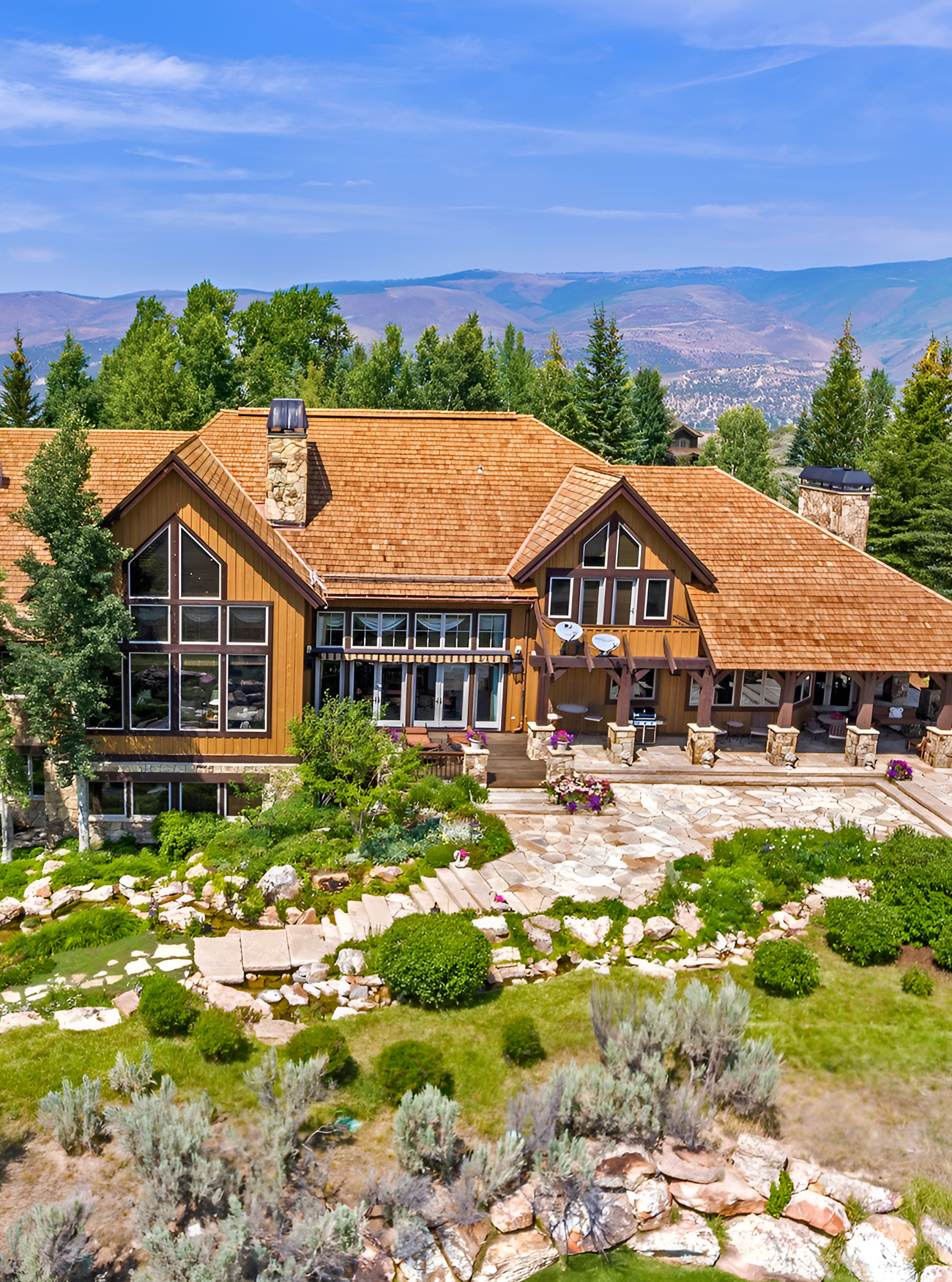
This home uses landscaping to match its scale. The long porch, wide wings, and tall windows need a broad, layered setting. That is why the design uses generous stone paving, terraced gardens, and deep planting beds. It fills the space well without looking crowded.
The front yard also feels nicely balanced. There are formal touches near the house, but the outer edges stay loose and natural. That mix is ideal for a mountain estate. It keeps the home from feeling too suburban. Instead, it feels expansive, grounded, and part of the landscape around it.
Cues list:
- Long covered porch with stone columns
- Large stone terrace areas
- Layered shrubs and garden beds
- Broad lawn and open view lines
- Estate-style scale
- Formal-near-house, natural-farther-out layout
13. Backyard Entertaining Pavilion
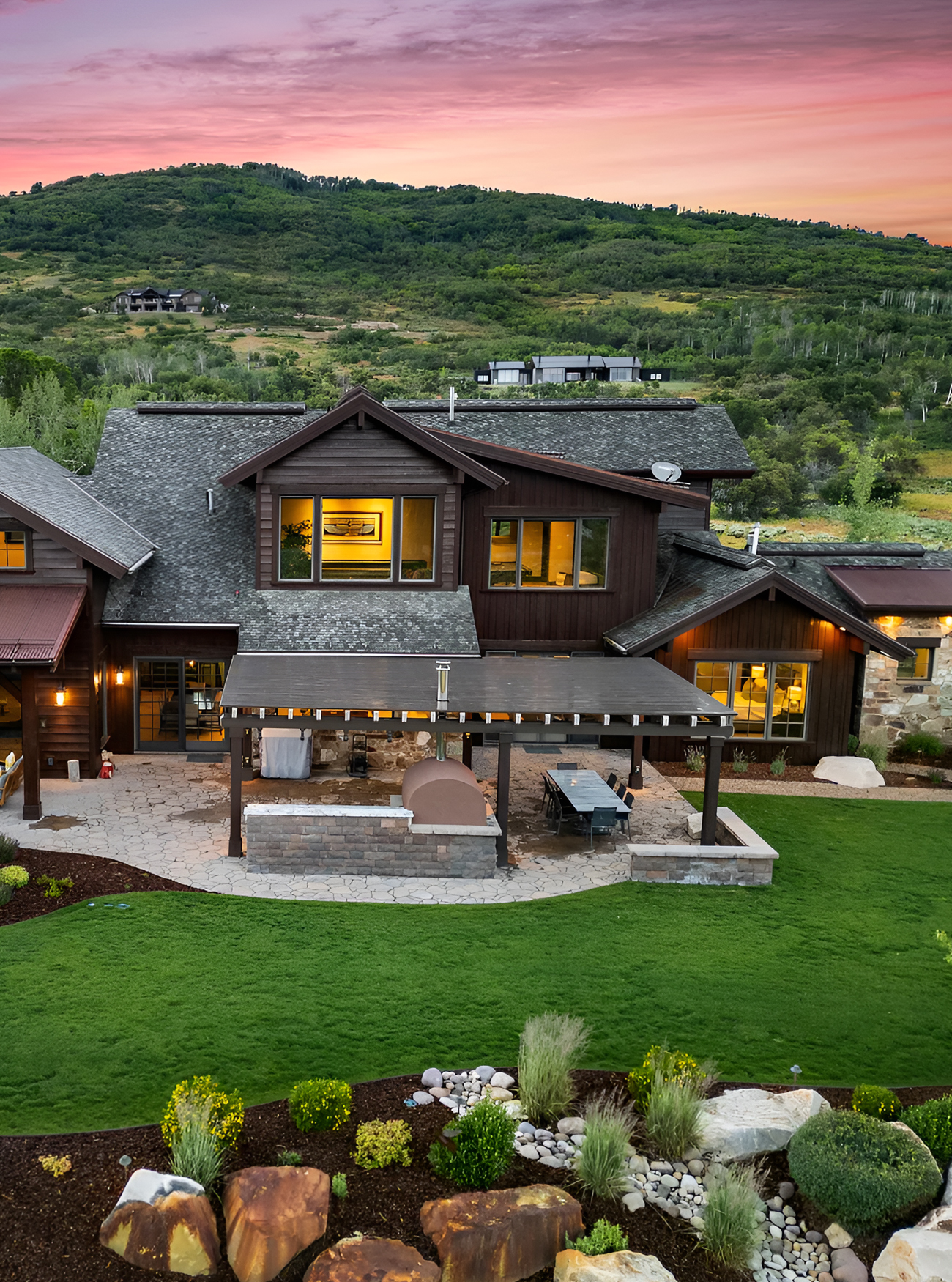
This design turns the backyard into a true outdoor room. The covered patio with pergola structure creates a place for dining and gathering, while the lawn opens up in front like a green carpet. The fire pit seating area off to one side adds warmth and gives the yard another purpose.
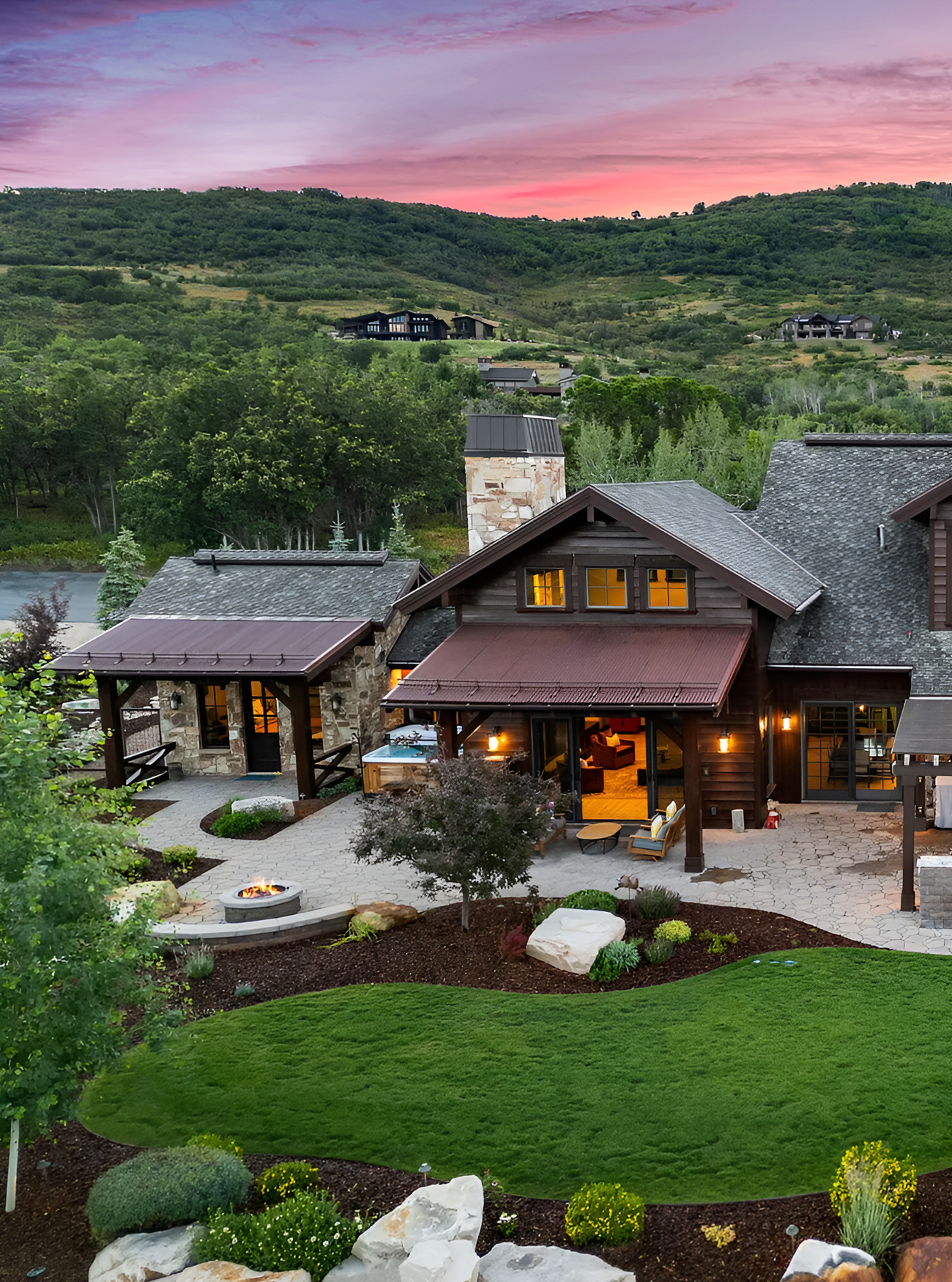
The landscape works because it uses clear shapes. The patio is structured. The lawn is smooth and simple. The planting beds curve gently around both. That contrast makes the whole space feel organized and easy on the eyes. It is a great example of mountain landscaping that feels family-friendly and polished.
Cues list:
- Covered patio or pavilion
- Outdoor kitchen or dining zone
- Fire pit near the house
- Smooth lawn for open space
- Curved mulch beds
- Large accent boulders along the border
14. Circular Drive Mountain Homestead
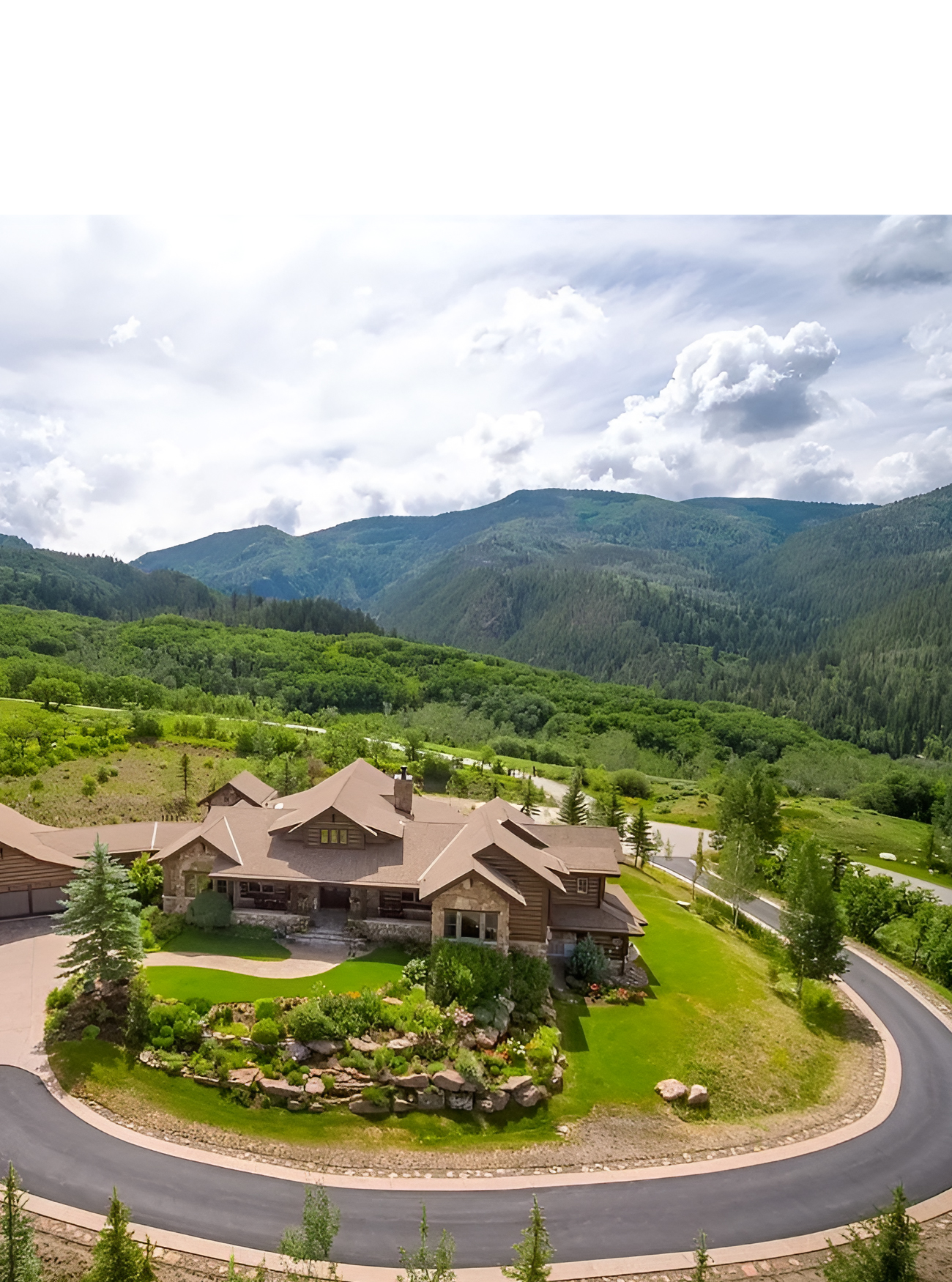
This property has a wide, open site, so the circular drive becomes the main landscape move. It gives the home presence and creates a classic estate feel. At the same time, the planted center island and front garden beds keep all that paving from feeling too harsh.
The rest of the landscape stays soft and natural. Rolling lawn, layered shrubs, and mountain views do most of the work. That approach feels right for such a large site. It gives the home definition up close, but lets the scenery carry the mood from a distance. The result is elegant without feeling too formal.
Cues list:
- Circular drive for a grand approach
- Central planted island effect
- Broad lawn around the home
- Low, layered foundation planting
- Wide spacing for scenic views
- Estate-style mountain layout
15. Stone-and-Timber Mountain Manor
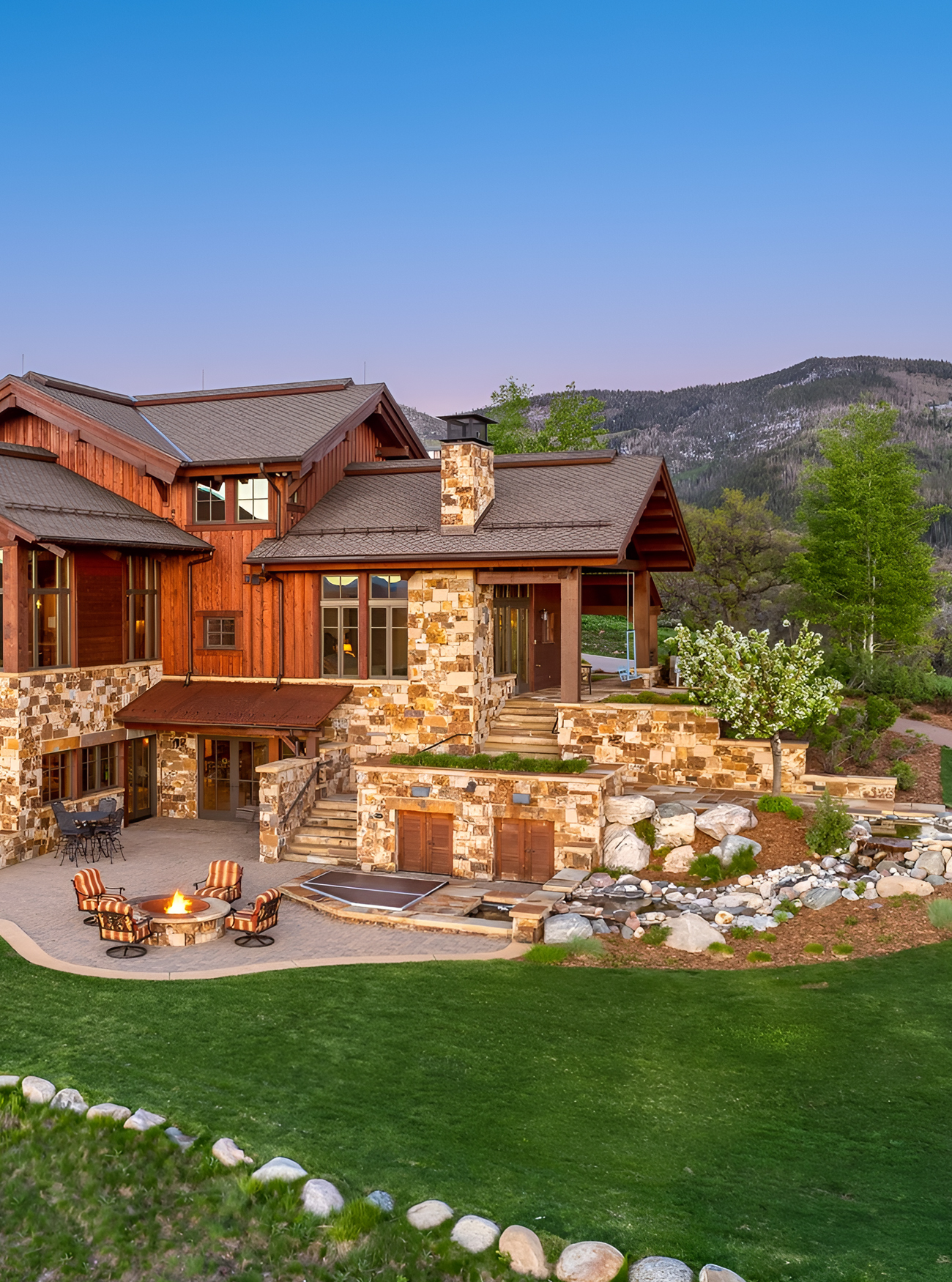
This final design feels rich, warm, and beautifully anchored to the land. The stone wraps the lower levels and terraces, while the timber upper levels add warmth and height. The backyard landscape supports all of that with patios, steps, lawn, and a fire pit area that feels made for evening gatherings.
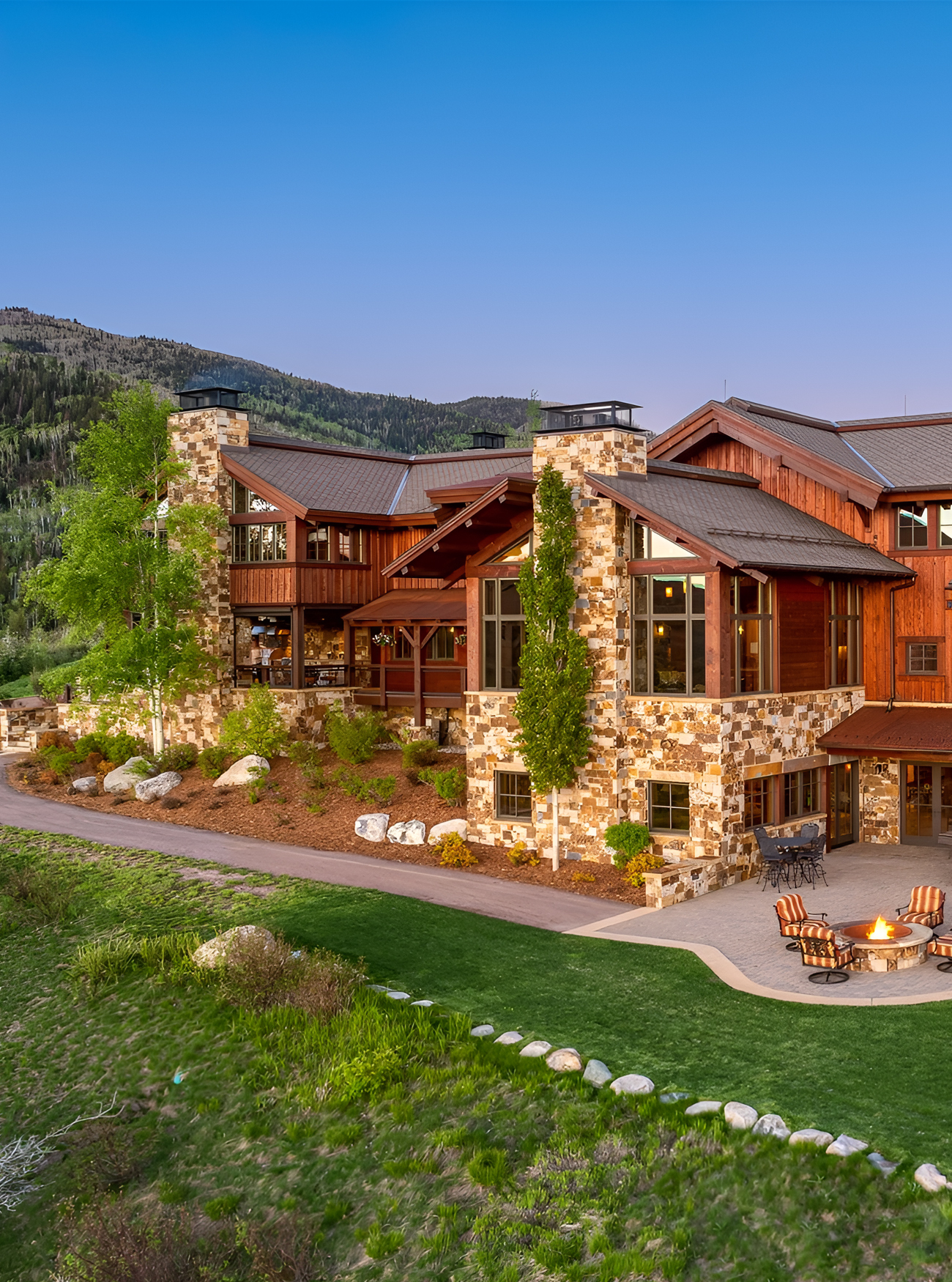
One of the best details is the way the hardscape steps down with the grade. That makes the large home feel more connected to the site. It also creates several outdoor zones instead of one flat yard. In mountain landscaping, that is often the smartest move. It adds function, beauty, and a strong sense of place.
Cues list:
- Heavy stone base and terrace walls
- Timber upper façade
- Tiered patios and steps
- Fire pit seating area
- Broad lawn with curved edge
- Layered design that follows the slope
Conclusion
Mountain house landscaping looks best when it feels natural, balanced, and tied to the land. That is the common thread in all of these designs. Some use terraces and stone walls to manage steep grades. Others lean on sweeping lawns, native plants, and outdoor living zones to create comfort and charm. No matter the style, the goal stays the same: let the home and the landscape work as one.
If you love homes that feel rooted, relaxed, and unforgettable, these ideas are full of inspiration. A beautiful mountain house does not stop at the front door. It begins the moment the driveway curves, the path unfolds, and the view opens up.