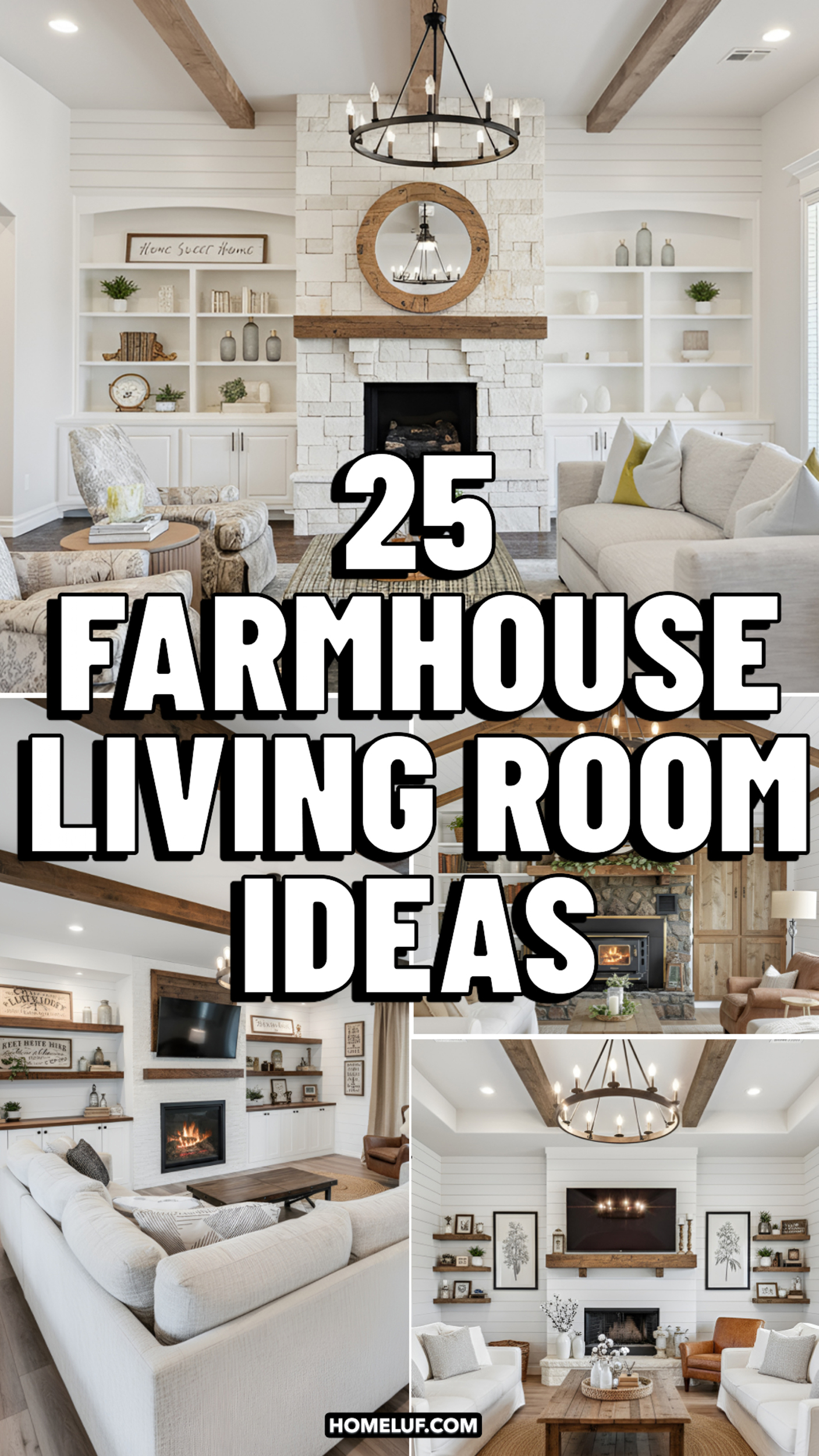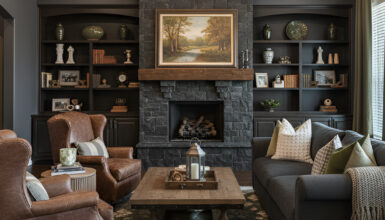
A farmhouse living room has a way of making any home feel softer, warmer, and more welcoming. It mixes comfort with character in a way that never goes out of style. Think cozy sofas, weathered wood, soft neutral colors, layered textures, and just the right touch of vintage charm. If you want a space that feels relaxed, pretty, and easy to live in, these farmhouse living room ideas are full of inspiration.
1. Start with a Soft Neutral Color Palette
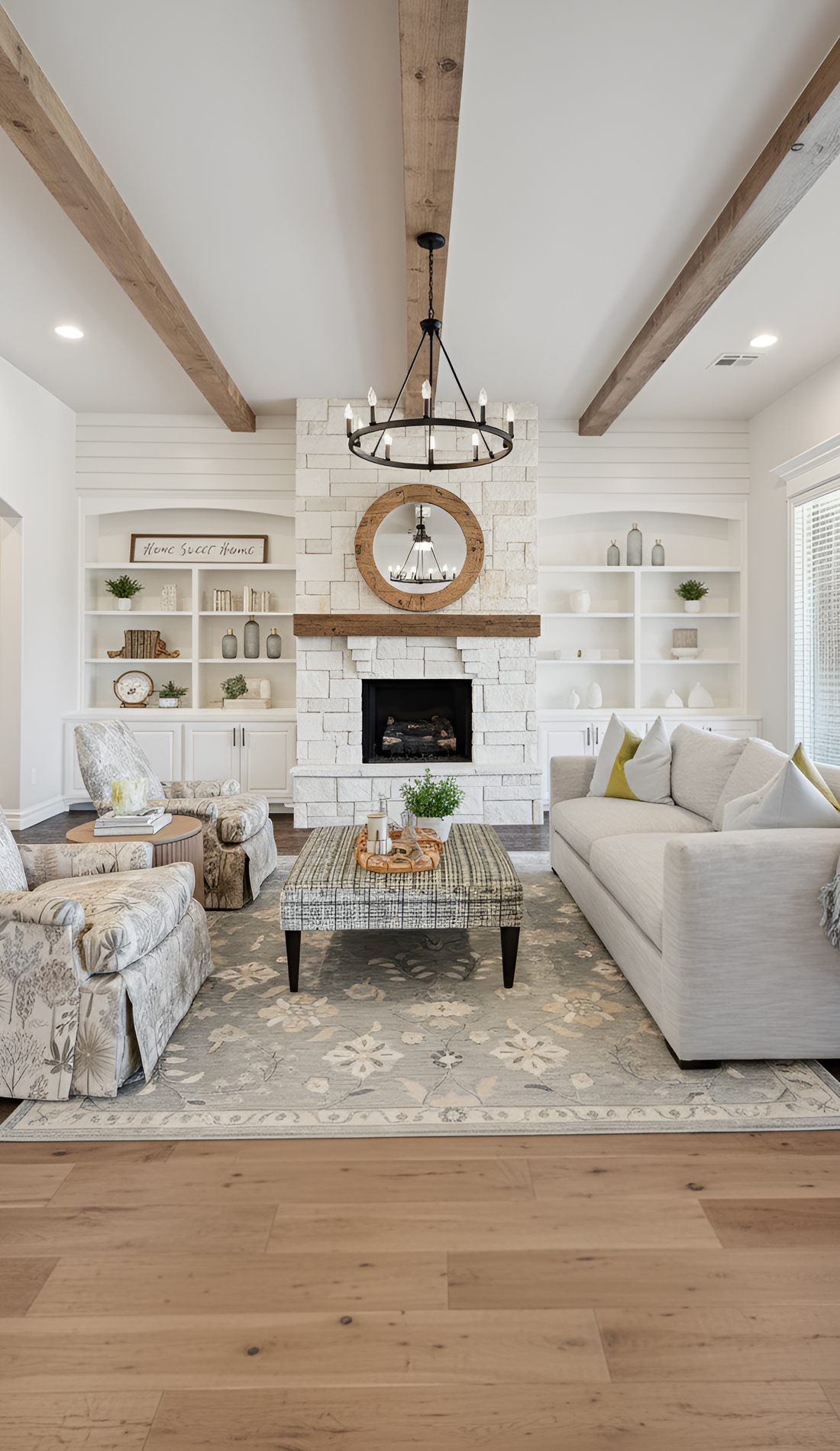
A farmhouse living room almost always begins with the right colors. Soft whites, warm beige tones, gentle greige, muted taupe, and light gray shades help create the calm backdrop this style needs.
These colors make the room feel open and bright. They also allow texture and furniture shapes to stand out. That matters in farmhouse design because this style depends less on bold color and more on warmth, contrast, and natural materials.
Try warm white walls with oatmeal-toned upholstery and weathered wood accents. Then add a few darker touches, like black metal lighting or walnut-toned frames, to keep the room from looking flat. The result feels simple but layered.
The cue here is softness. Farmhouse rooms rarely feel loud. Instead, they feel relaxed and easy on the eyes.
2. Choose a Big, Comfortable Sofa
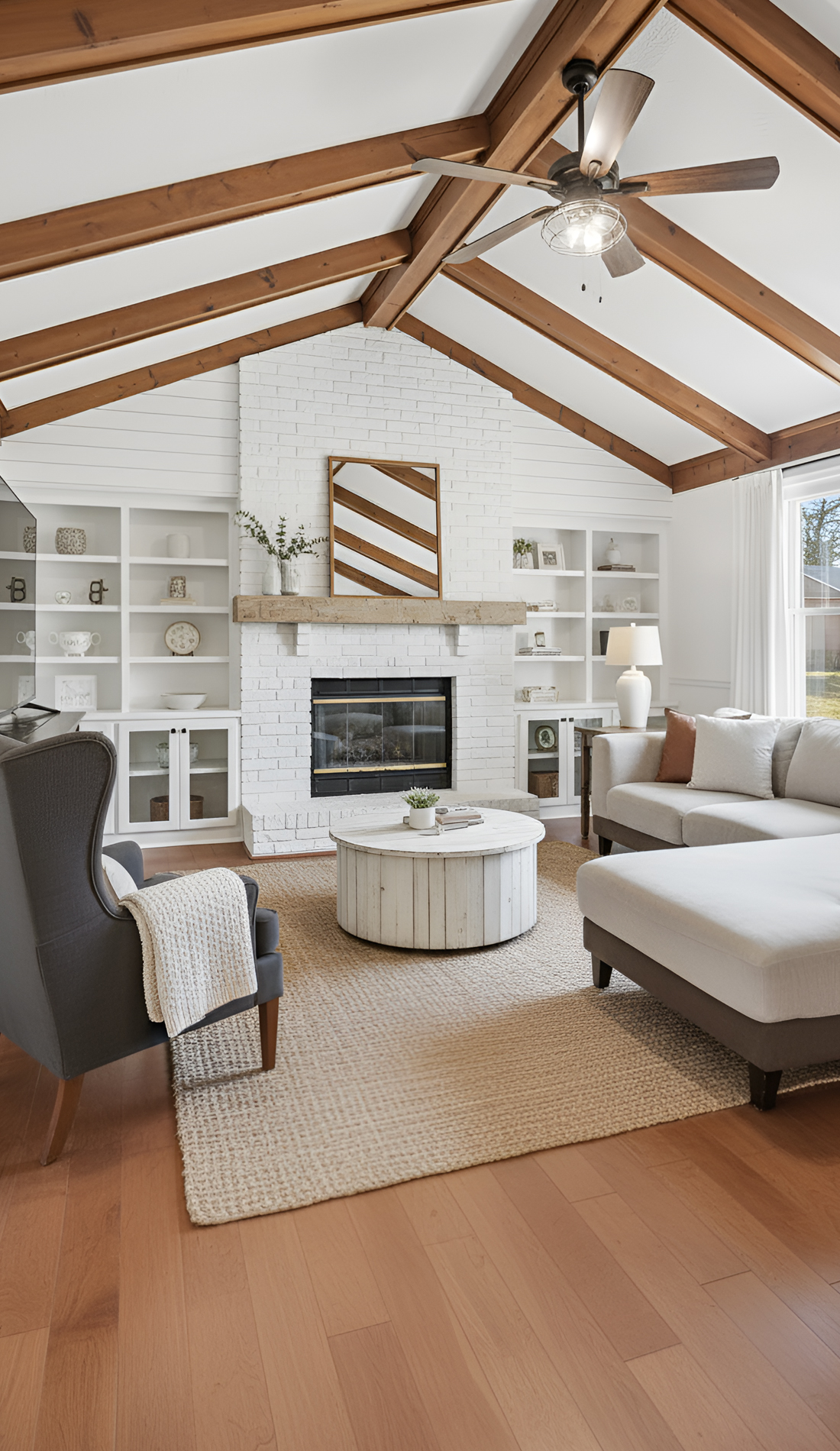
Farmhouse style is about comfort first. So, your sofa should look inviting and feel even better. Think deep seats, plush cushions, soft fabric, and a shape that encourages people to sink in and stay.
Slipcovered sofas are a classic farmhouse choice. They feel casual and unfussy. Plus, they add that loose, lived-in charm that fits this style so well. Linen and cotton blends work beautifully because they add softness without looking shiny or formal.
A large sectional can also work in a farmhouse living room, especially in an open layout. Just keep the lines simple and the color quiet. Cream, flax, soft gray, and warm ivory all fit the look.
The visual cue is ease. The sofa should feel like the heart of the room, not a showpiece you are afraid to touch.
3. Bring in Reclaimed Wood for Instant Character
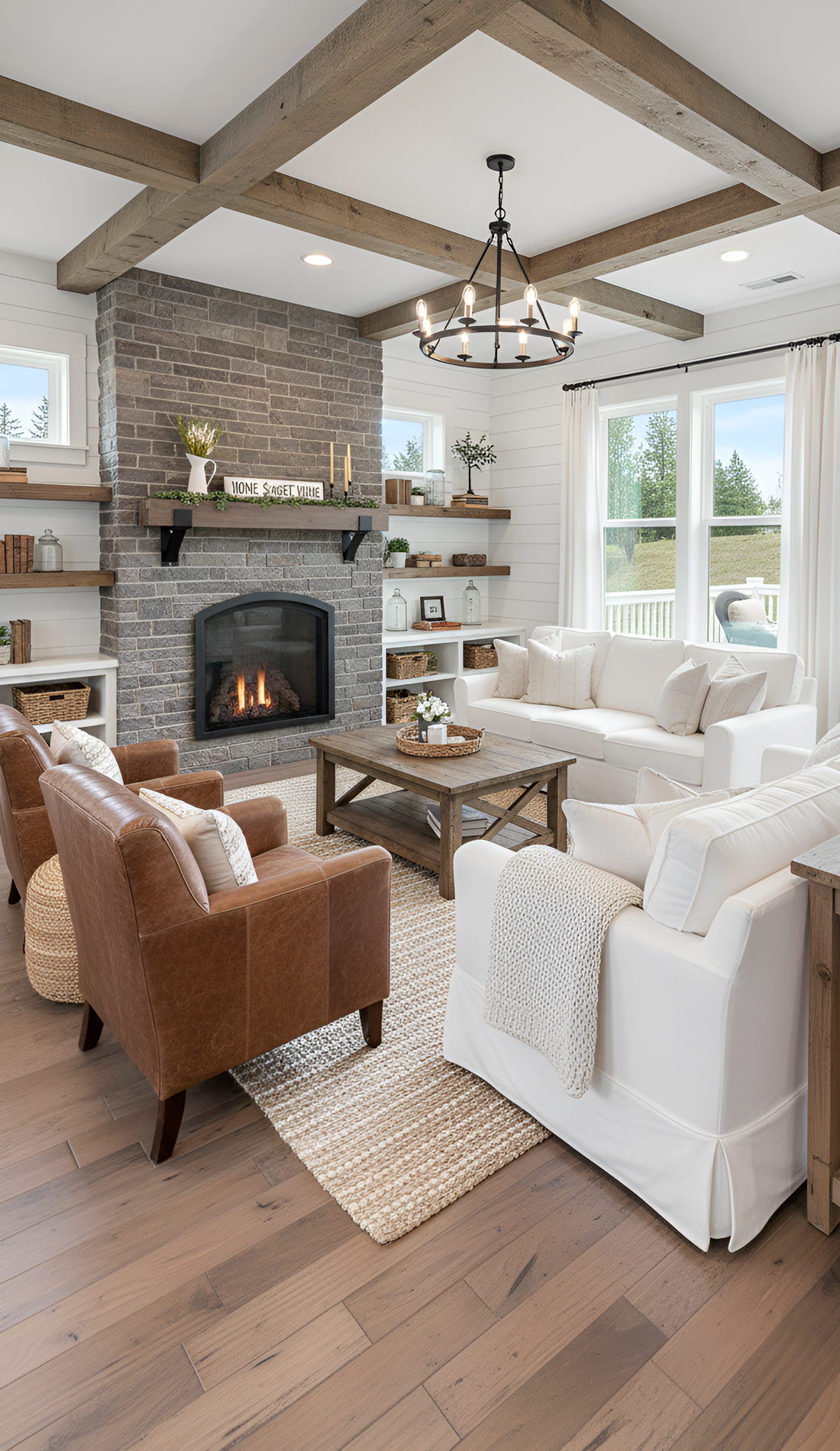
If there is one material that captures farmhouse style best, it is wood with age and texture. Reclaimed wood adds warmth, history, and soul. It keeps the room from feeling too polished.
You can use reclaimed wood in many ways. A chunky coffee table is one of the easiest options. You can also add it through ceiling beams, floating shelves, a media console, or a mantel.
Look for wood with visible grain, knots, saw marks, and natural variation. Those details bring depth into the room. They also help create the “collected over time” look that farmhouse interiors do so well.
The cue here is authenticity. Farmhouse wood should feel natural and slightly imperfect, never slick or overly processed.
4. Layer in Cozy Textiles
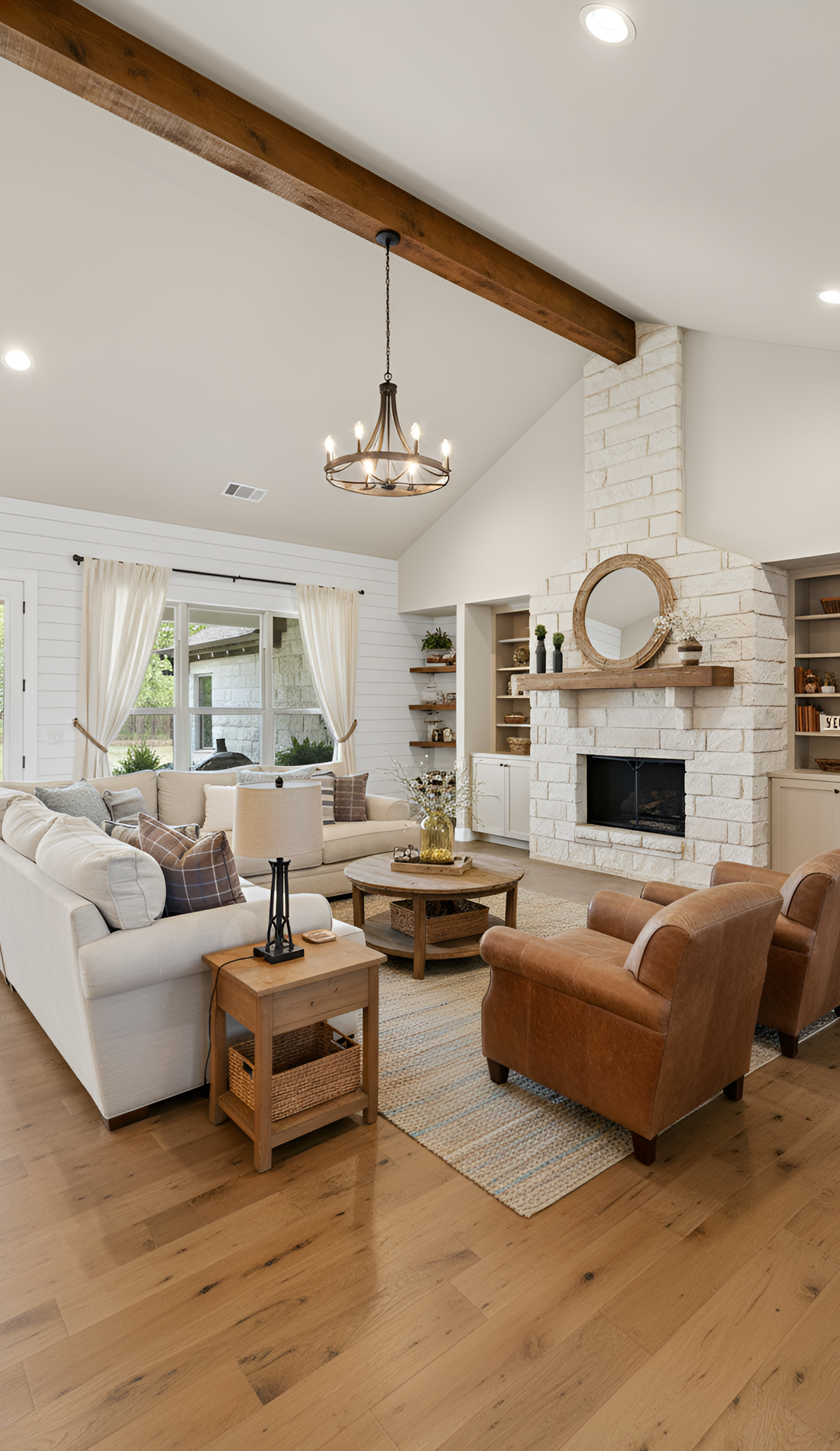
A farmhouse living room should feel warm in every season. One of the easiest ways to create that feeling is through textiles. This includes throw blankets, accent pillows, rugs, curtains, and even upholstered furniture.
Mix fabrics with different weights and textures. Pair linen with knit, cotton with jute, and soft woven fabrics with chunkier materials. This layering creates depth without needing bright colors or too many decorative pieces.
Try a cream sofa with striped pillows, a soft knit throw, and a vintage-style rug underfoot. Then add light drapes that soften the windows and help frame the room.
The cue is touchable comfort. Every textile should invite you to sit, wrap up, or walk barefoot across the floor.
5. Add a Rustic Coffee Table with Presence
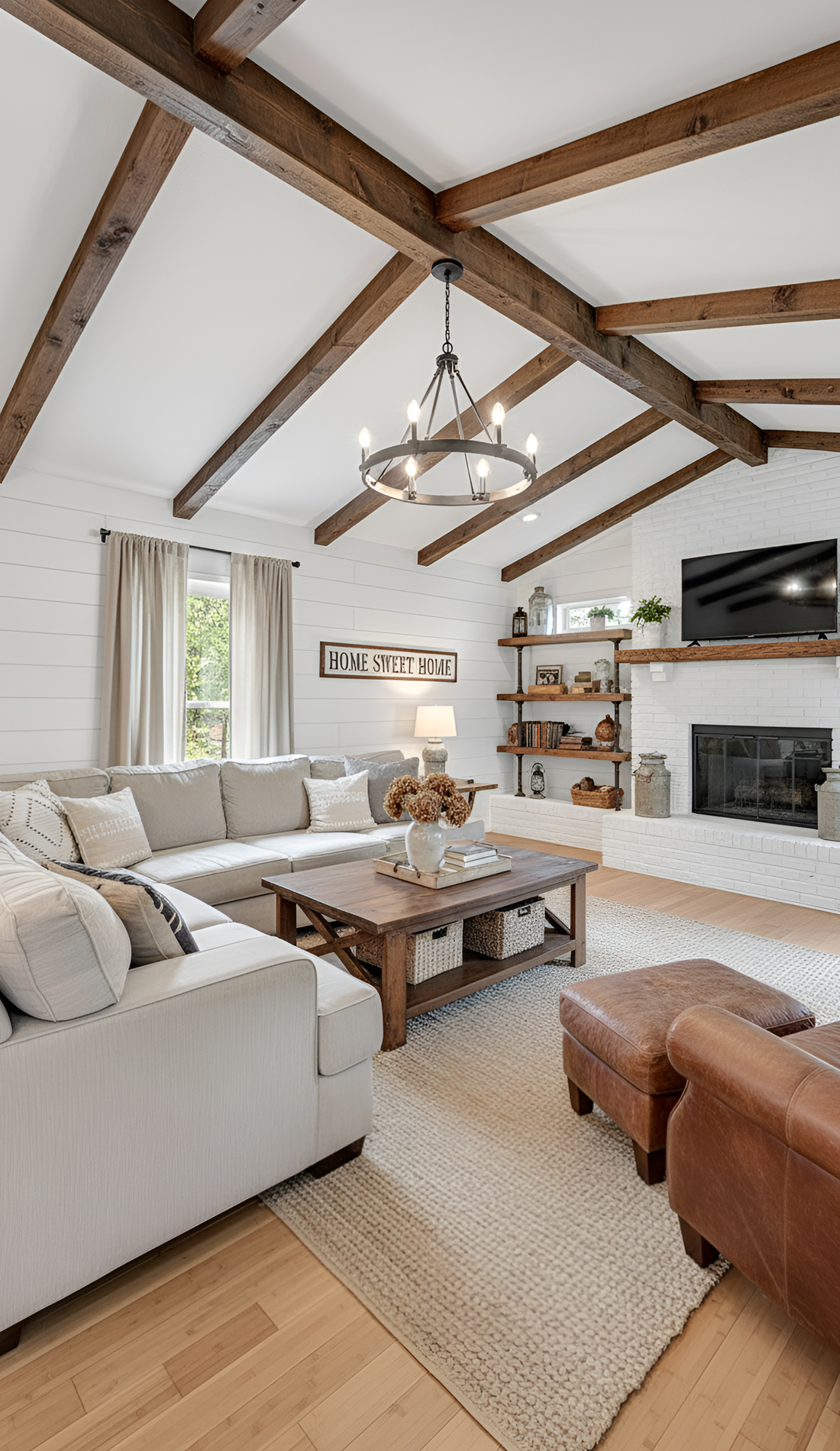
In many farmhouse living rooms, the coffee table acts like an anchor. It grounds the seating area and adds strong visual weight. Because of that, this is a great place to bring in rustic texture.
Look for a coffee table made of thick wood, distressed finishes, or sturdy turned legs. A simple rectangular table works well in classic farmhouse spaces. A round table can soften the room and improve flow, especially in smaller layouts.
You can style it with a stack of books, a ceramic vase, a wooden bowl, or a tray with candles. Keep it simple. Farmhouse style likes beauty, but it also values function.
The cue is sturdiness. The table should feel useful, solid, and timeless.
6. Use Shiplap for a Classic Farmhouse Touch
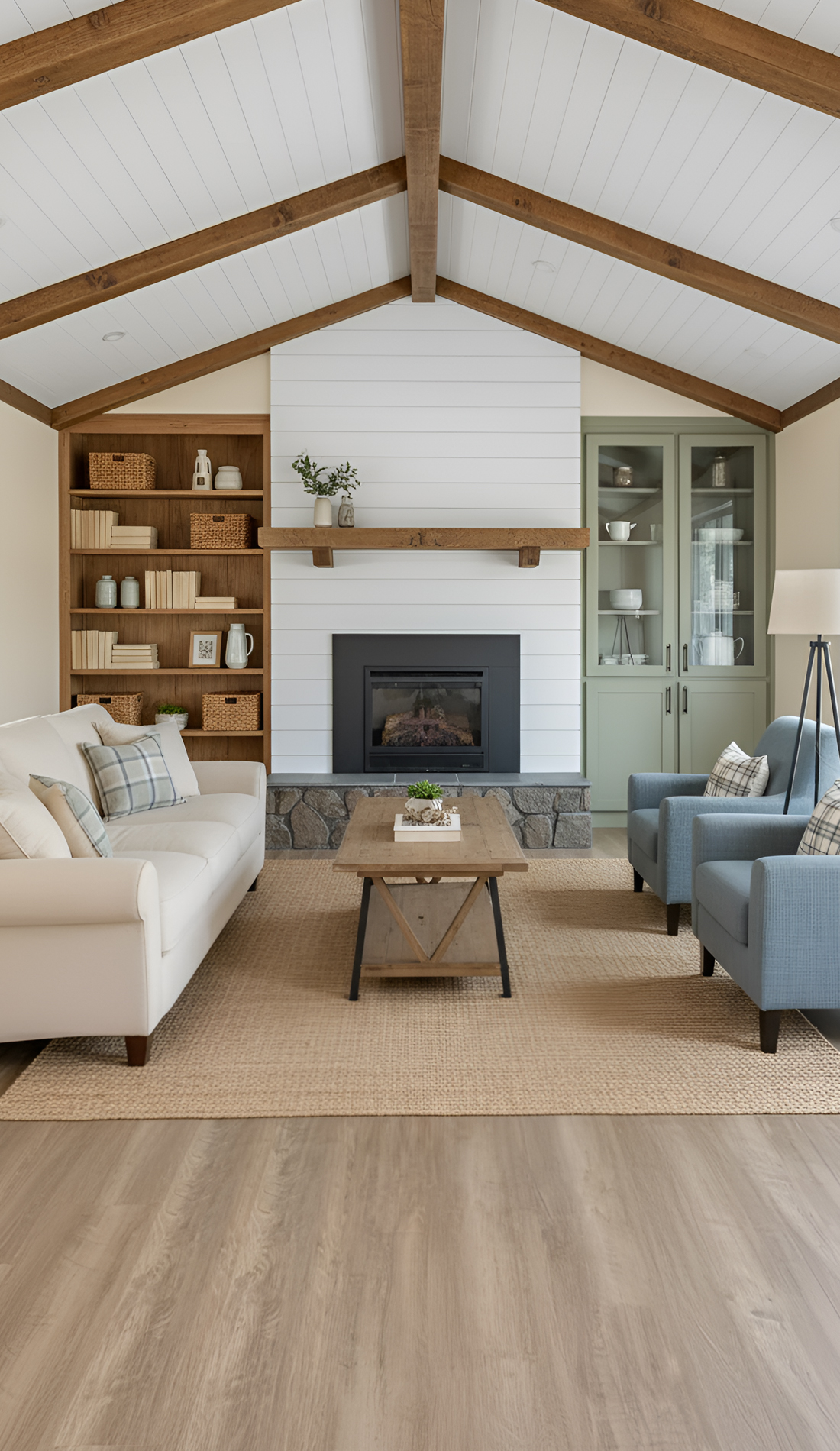
Shiplap has become one of the best-known farmhouse details, and for good reason. It adds texture without feeling busy. It also gives walls a clean but cozy look.
You do not need to cover the whole room. In fact, one shiplap accent wall can be enough. Use it behind the fireplace, around built-ins, or on the main wall behind the sofa. Painted white or soft cream, it adds quiet interest while keeping the room bright.
For a slightly moodier look, try light greige or muted sage shiplap. That still feels farmhouse, but it adds more depth.
The cue here is subtle texture. Shiplap should support the room, not take over.
7. Center the Room Around a Fireplace
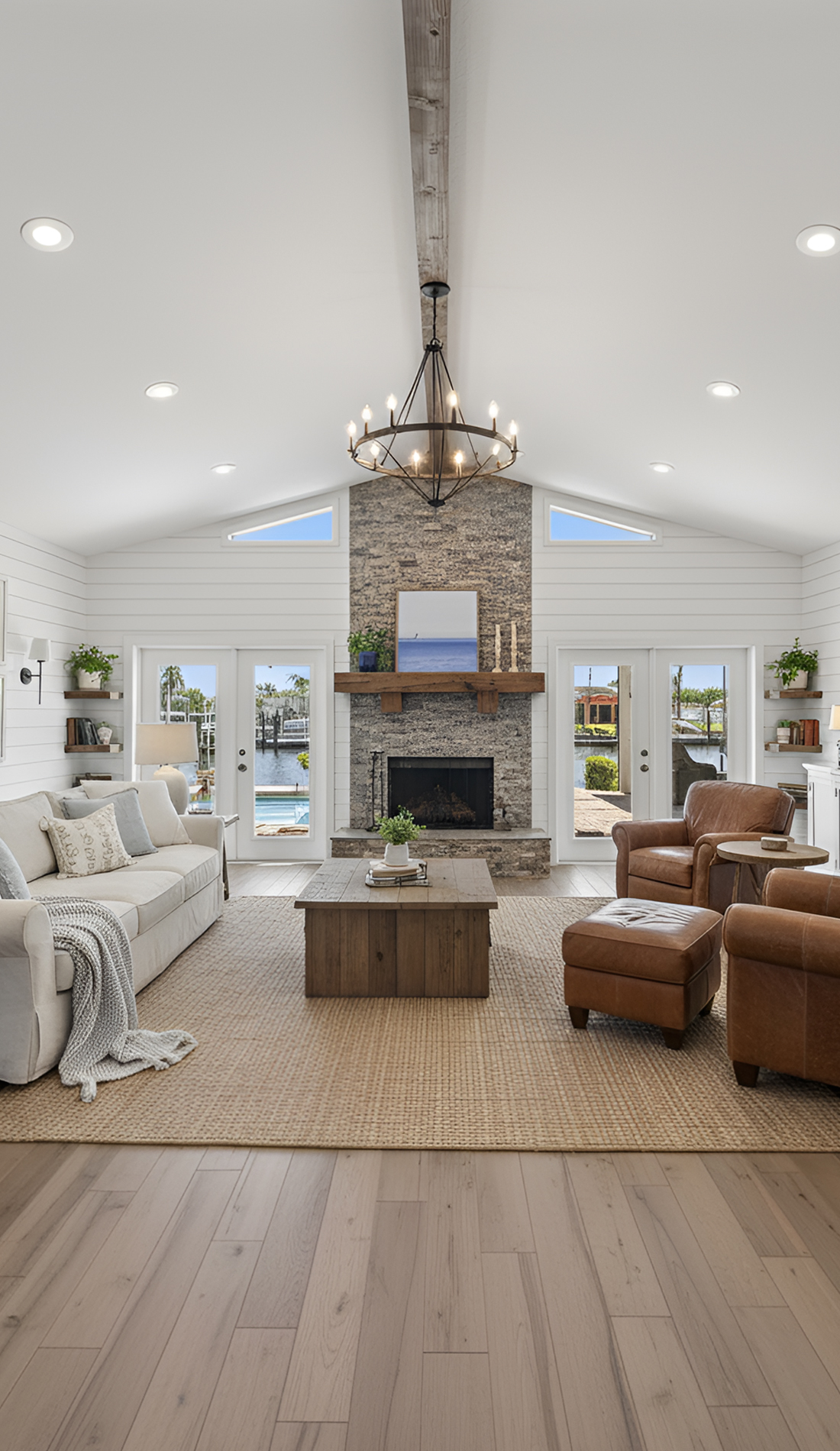
Few things feel more farmhouse than a living room with a beautiful fireplace. It creates a natural focal point. It also adds the kind of comfort this style is known for.
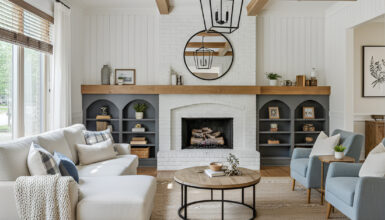
A farmhouse fireplace often features a simple mantel, brick, stone, or shiplap surround, and styling that feels thoughtful but not crowded. A reclaimed wood beam makes a perfect mantel. Then you can decorate it with framed art, a mirror, candlesticks, or a small vase of greenery.
If your home does not have a built-in fireplace, you can still create the look with an electric unit and a custom surround. The goal is to build that central moment in the room.
The cue is gathering. A farmhouse living room should feel like a place where people naturally come together.
8. Mix Old and New Pieces
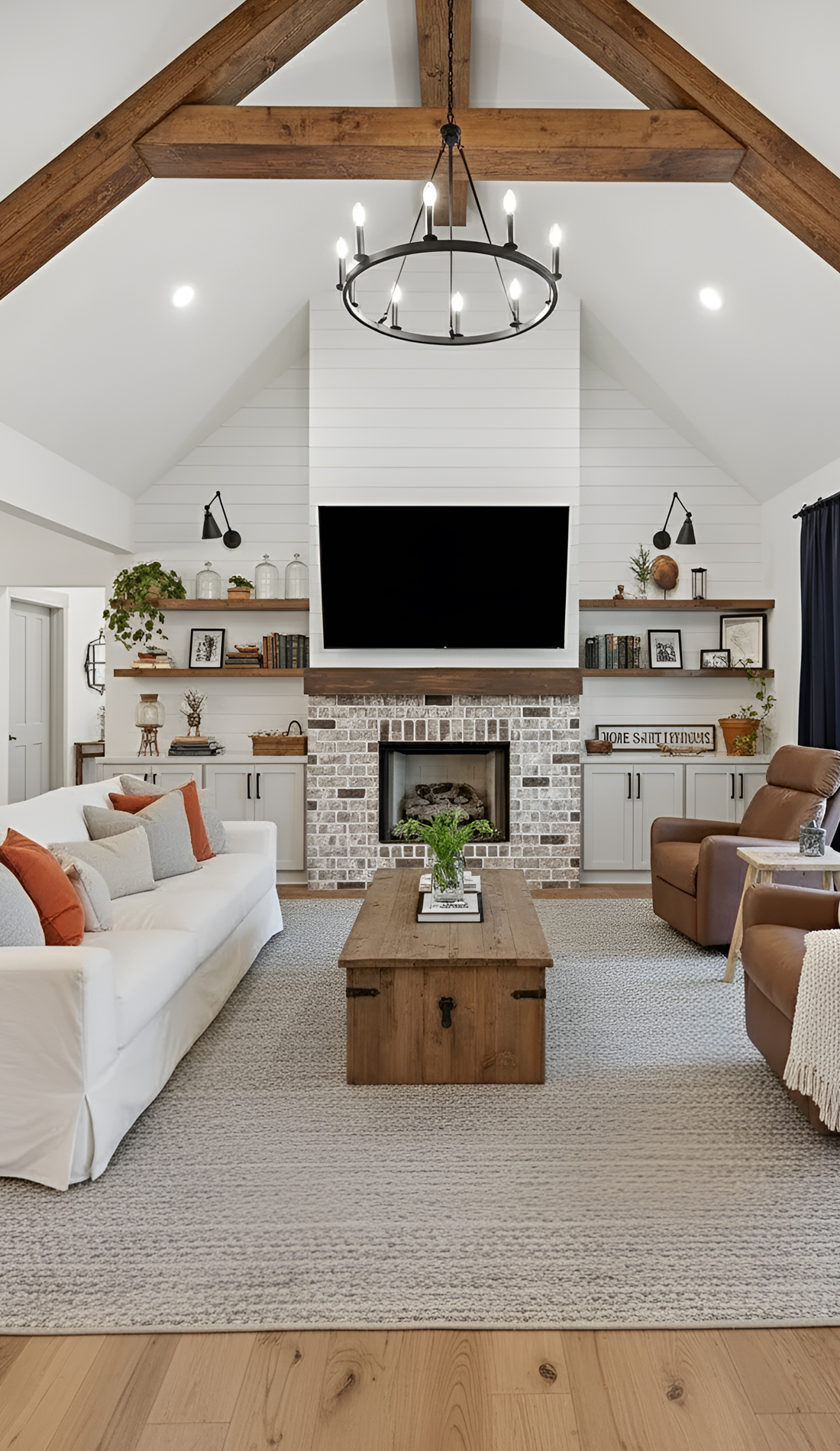
Farmhouse style works best when it feels layered. That is why mixing old and new matters so much. Too many brand-new pieces can make the room feel staged. A few vintage or antique touches add depth and personality.
Try pairing a new sofa with a vintage trunk as a coffee table. Add old wooden frames, an antique crock, or a distressed cabinet beside a modern lamp. This mix keeps the room feeling warm and collected instead of showroom-perfect.
The cue is balance. The room should feel fresh enough for today but rich with the charm of the past.
9. Keep the Lighting Warm and Simple
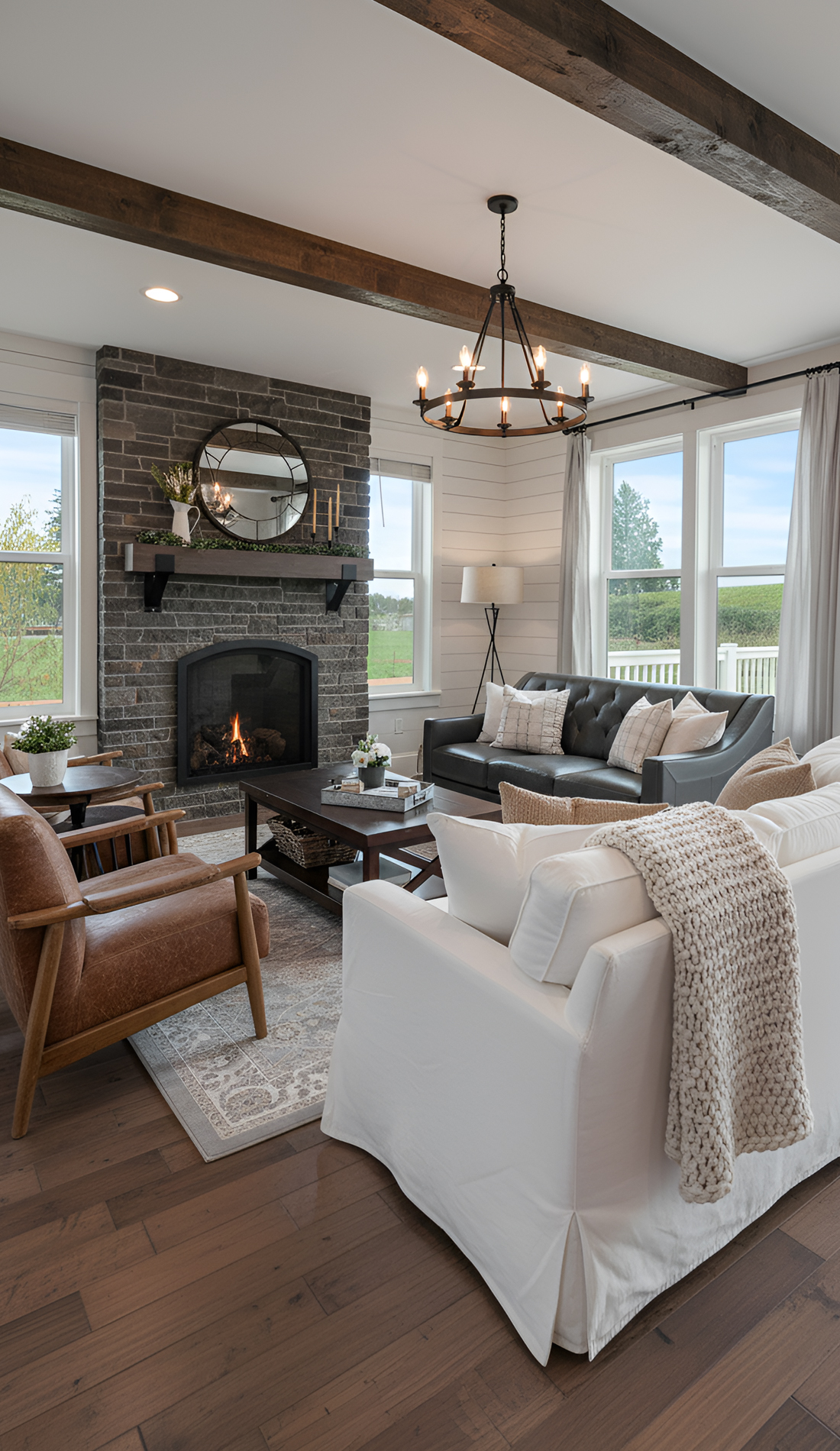
Lighting shapes the mood of a farmhouse living room more than people often realize. Harsh light can ruin the softness of the space. Warm, layered lighting helps the room feel relaxed and welcoming.
Use a mix of sources. A ceiling fixture gives general light. Table lamps add glow at eye level. A floor lamp near a chair makes the room feel more intimate. Wall sconces can also add a lovely farmhouse touch.
Look for fixtures in black metal, aged brass, wood, or iron. Lantern shapes, simple sconces, and classic shaded lamps all work well.
The cue is warmth. The light should feel golden and gentle, never cold or glaring.
10. Try Exposed Ceiling Beams
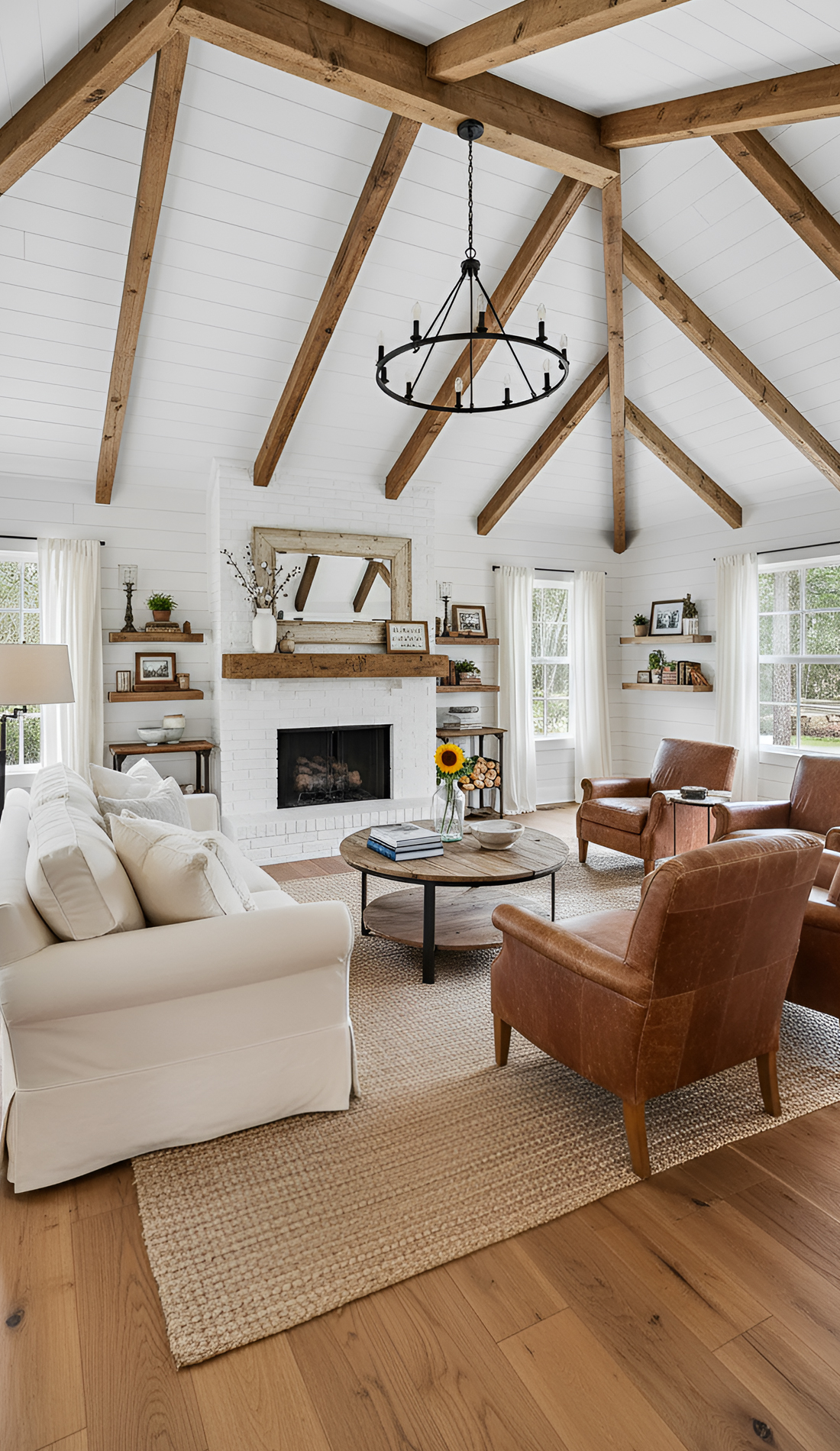
Exposed beams bring farmhouse charm to a living room in a big way. They add architecture, contrast, and warmth to the ceiling, which helps the room feel more complete.
In a true farmhouse or older home, beams may already be there. In a newer home, faux beams can create the same effect. Wood tones work especially well when the rest of the room is light and neutral.
Beams also help draw the eye upward. That makes the space feel larger and more custom. Even a simple room can look more finished with this one detail.
The cue is structure. Beams give the room a grounded, built-in look that feels strong and timeless.
11. Use Built-Ins for Beauty and Function
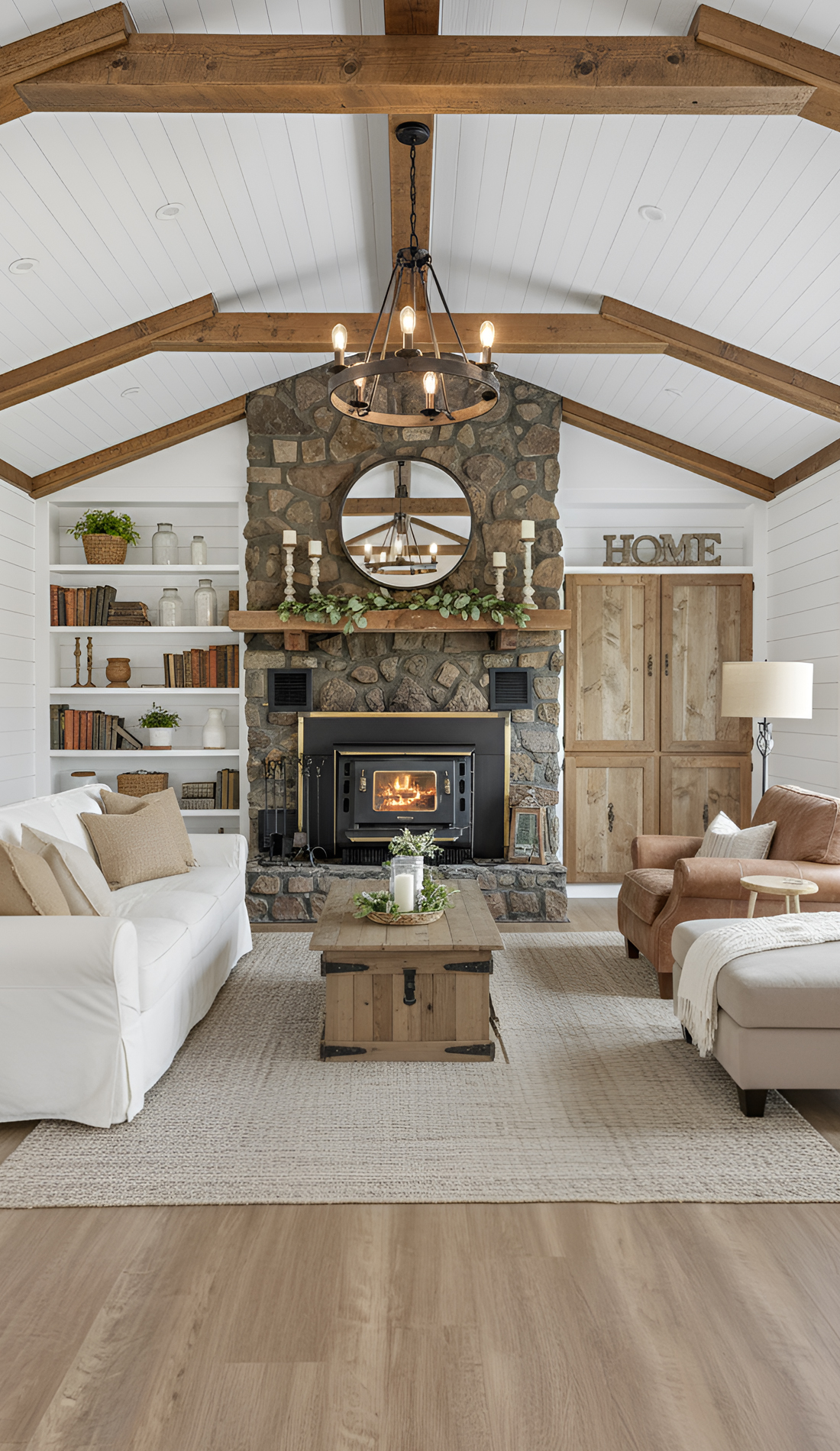
Built-ins are a smart addition in a farmhouse living room because they combine storage and style. They help the room feel custom, and they give you a place to display meaningful pieces without creating clutter.
Flank the fireplace with built-in shelves and lower cabinets. Paint them the same color as the trim or walls for a seamless look. Then style the shelves with books, pottery, baskets, framed art, and greenery.
The best farmhouse built-ins do not look overly decorated. Instead, they feel useful and lived in. Leave some open space so the shelves can breathe.
The cue is simplicity with purpose. Everything should look pretty, but it should also feel practical.
12. Add a Vintage-Style Area Rug
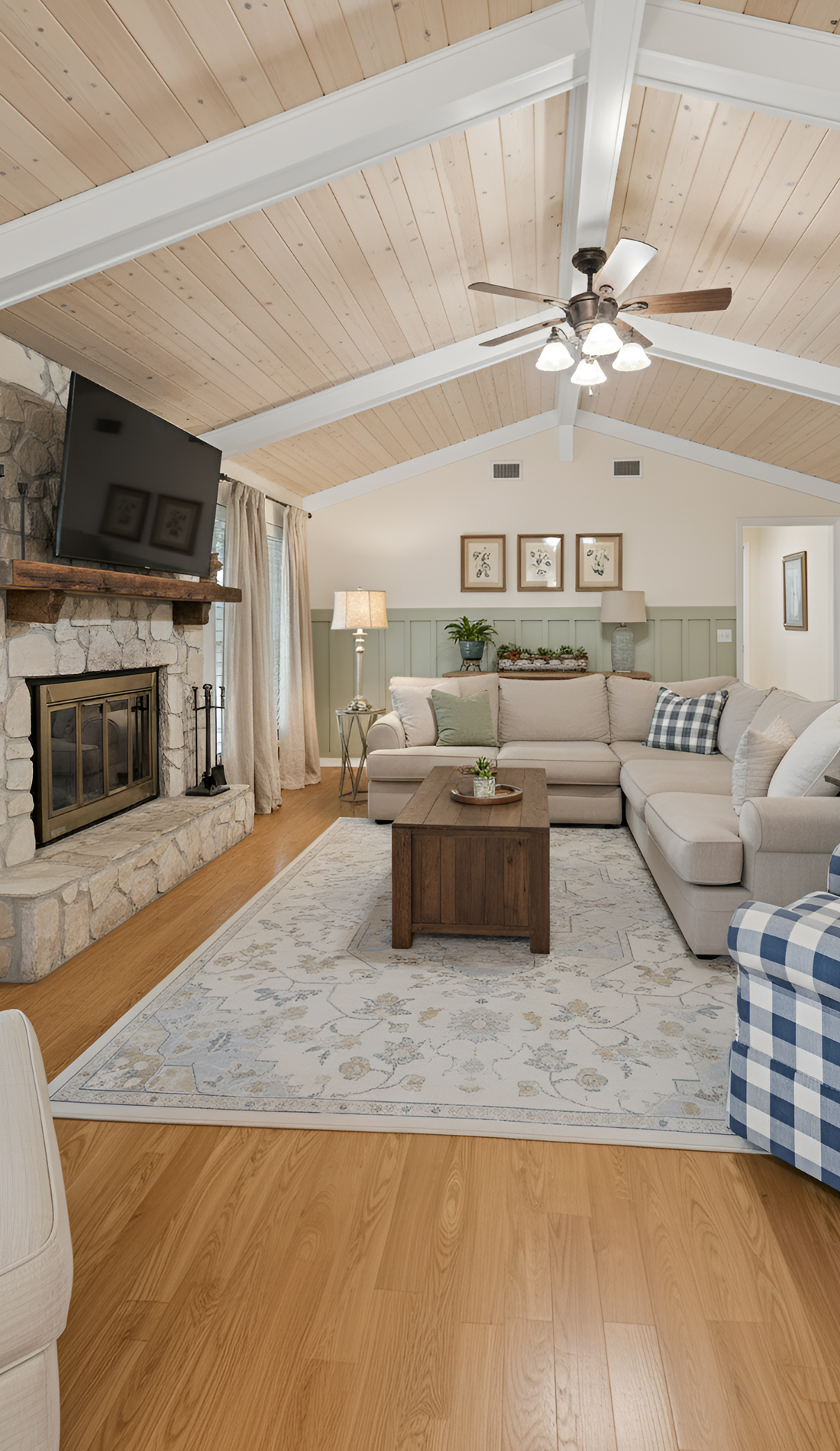
A good rug can change the whole mood of a living room. In farmhouse design, a vintage-style rug helps soften the space and add a bit of worn-in character.
Look for muted patterns in faded reds, soft blues, beige, charcoal, or terracotta. The pattern should feel gentle, not loud. It should ground the furniture while adding movement and age.
This kind of rug works beautifully under a light sofa and wood coffee table. It also helps connect all the colors in the room.
The cue is softness through age. A vintage-style rug adds charm because it looks like it has a story, even if it is brand new.
13. Decorate with Baskets and Natural Fiber Accents
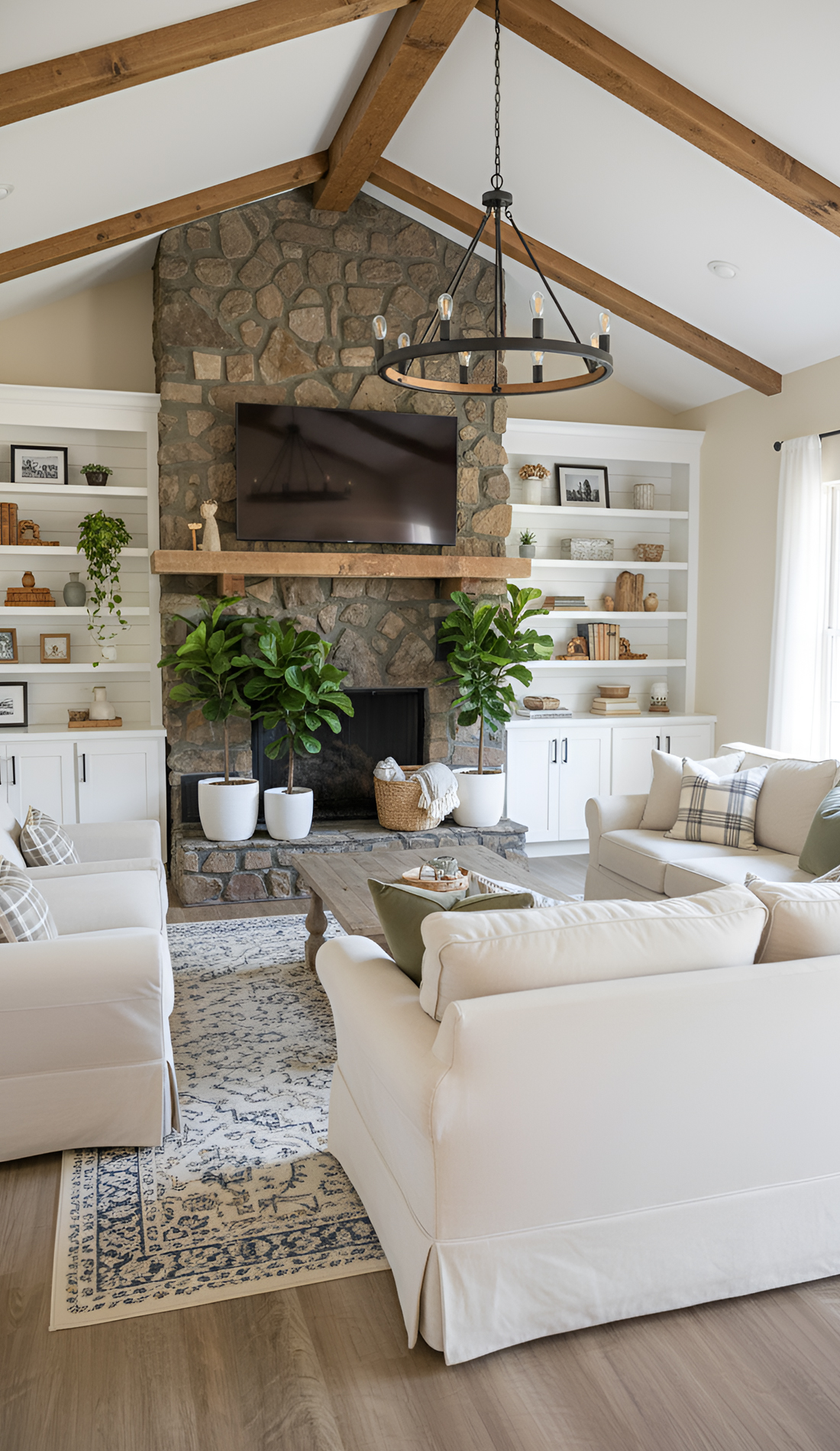
Farmhouse rooms love useful decor. That is why baskets fit so well. They add texture, warmth, and storage all at once.
Use woven baskets to hold blankets, books, toys, or extra pillows. Place a large basket beside the sofa or under a console table. You can also use smaller baskets on shelves for hidden storage.
Beyond baskets, try natural fiber accents like jute rugs, woven trays, rope details, or cane-front furniture. These touches bring in an earthy quality that keeps the room feeling grounded.
The cue is natural texture. These pieces help the room feel warm, relaxed, and connected to everyday life.
14. Make Black Accents Part of the Design
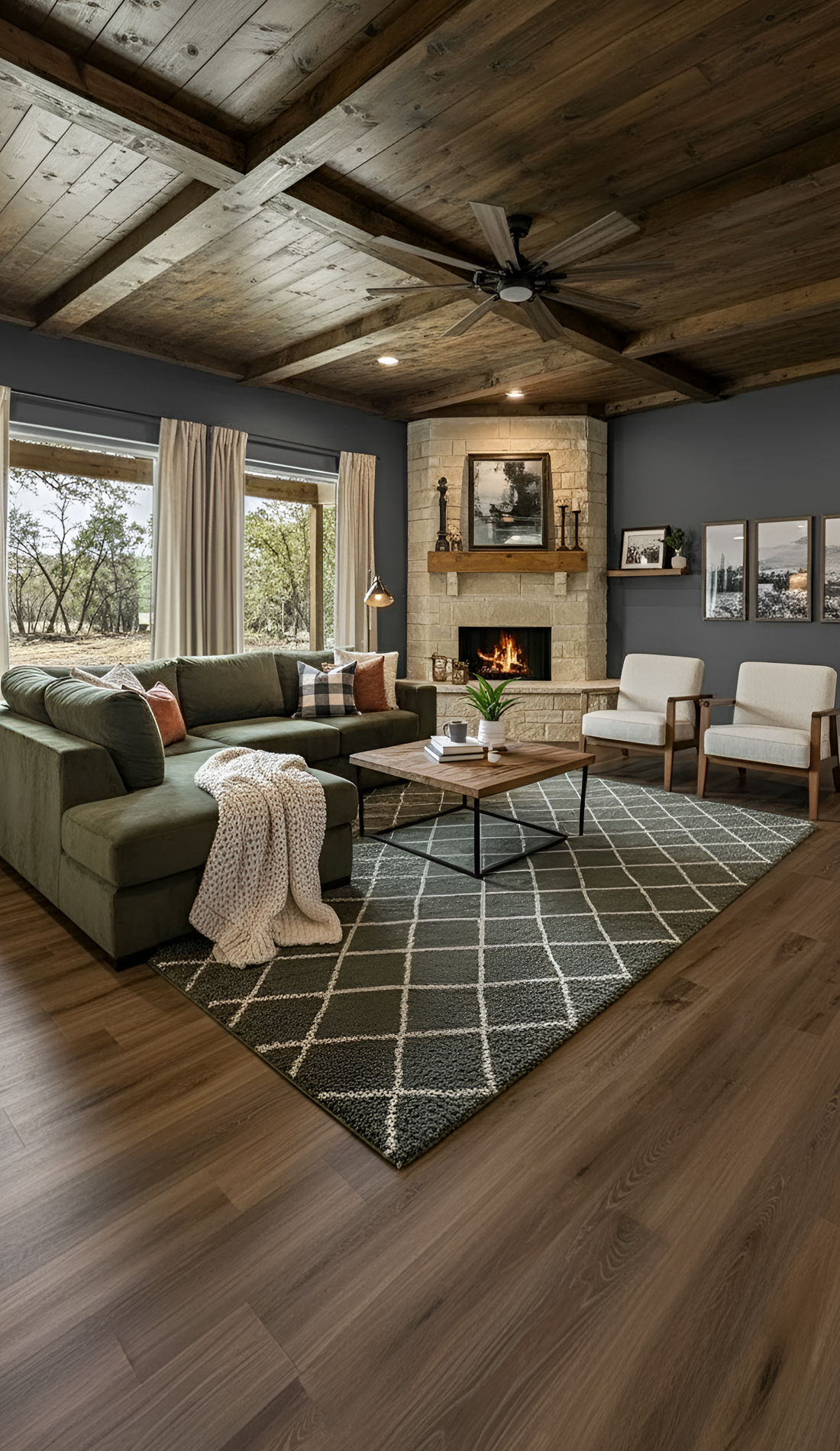
Farmhouse living rooms often use light colors, so they need a little contrast. Black accents do that job beautifully. They sharpen the room and keep it from looking washed out.
Use black in small but meaningful ways. Think curtain rods, picture frames, light fixtures, cabinet hardware, a metal coffee table base, or a window grid. Even a black fireplace screen or black side table can add depth.
The key is restraint. A little black goes a long way in a soft farmhouse palette.
The cue is contrast with control. These darker details bring definition without making the room feel heavy.
15. Create a Collected Gallery Wall
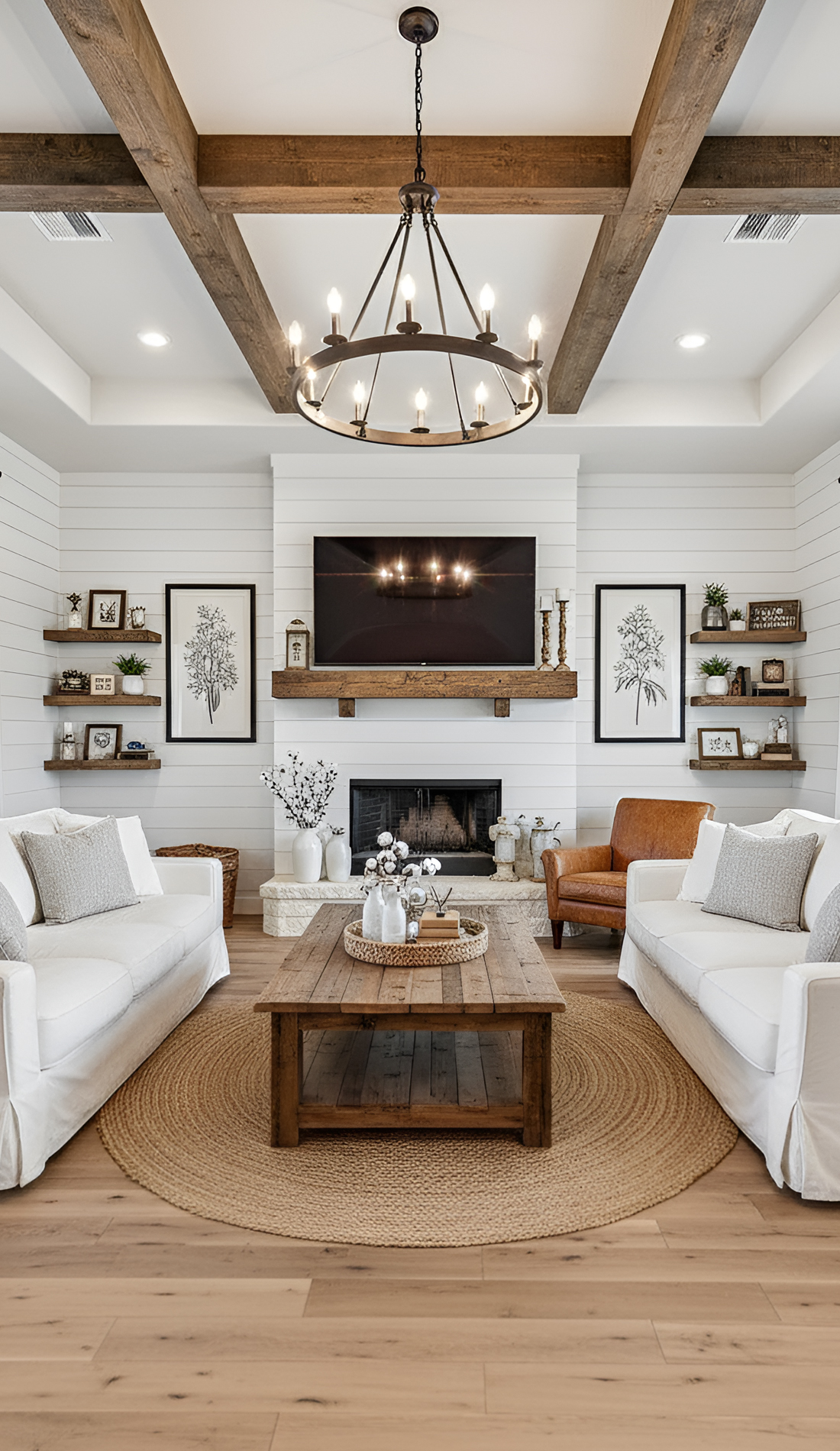
A gallery wall can add personality to a farmhouse living room, especially if it feels personal rather than overly planned. The goal is not perfect symmetry. The goal is warmth and character.
Use a mix of artwork, family photos, vintage prints, botanical sketches, mirrors, and simple wooden frames. Keep the colors soft and the layout relaxed. You can hang the pieces above a sofa, console, or mantel wall.
Farmhouse gallery walls look best when they tell a quiet story. They should feel meaningful, not mass-produced.
The cue is personal charm. Let the wall reflect memory, history, and everyday beauty.
16. Style Open Shelves with Restraint
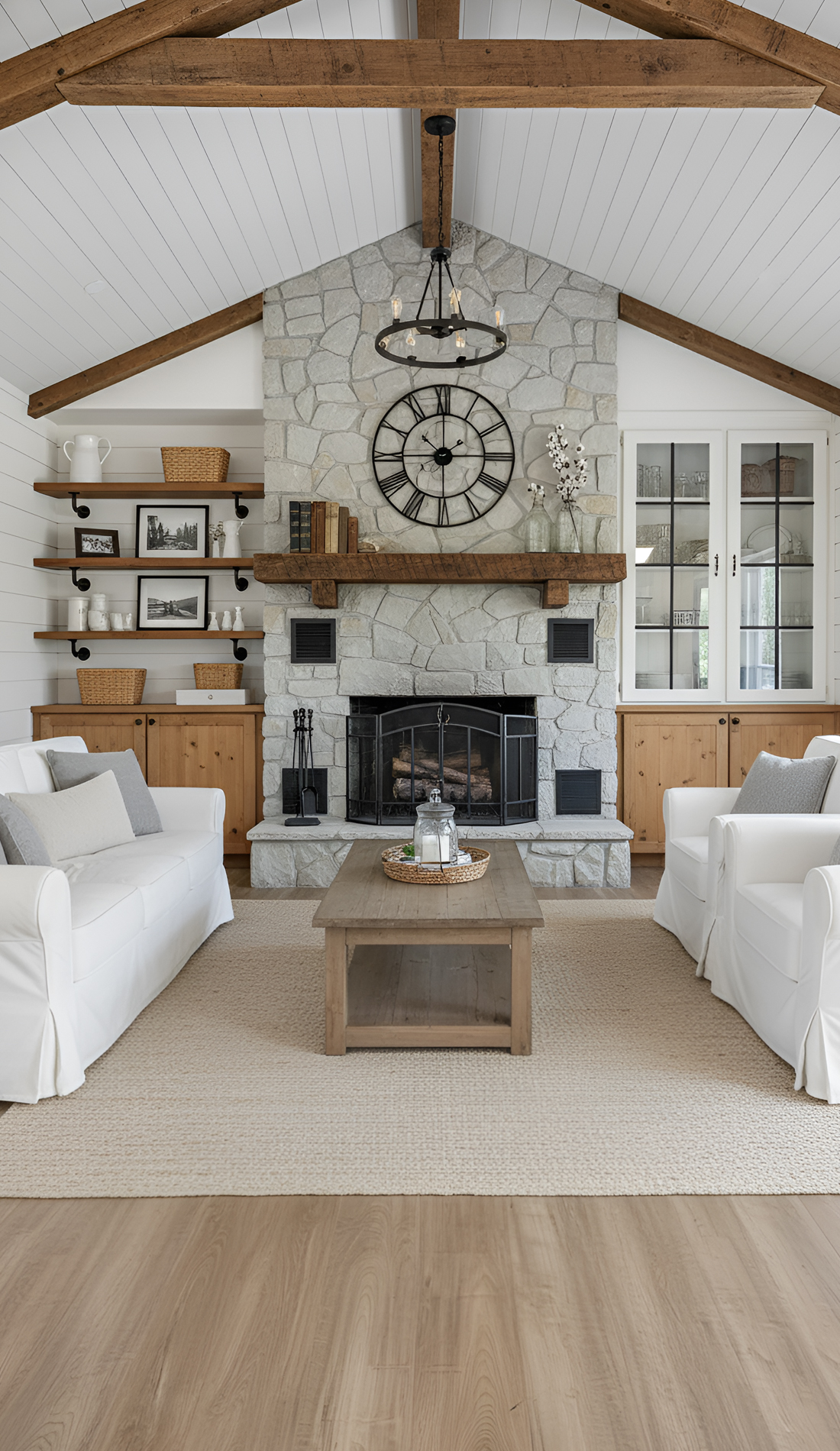
Open shelves can look beautiful in a farmhouse living room, but they need a light hand. If you add too much, the room starts to feel cluttered. If you keep them simple, they add charm and ease.
Style shelves with stacked books, pottery, framed art, candles, greenery, and maybe one or two vintage pieces. Vary the height and shape of the objects, but keep the color palette soft and cohesive.
It helps to repeat materials. For example, if you use a wood frame on one shelf, bring in a wood bowl or bead garland on another. That repetition makes the display feel calm.
The cue is breathing room. Empty space matters just as much as the objects you place.
17. Bring in Greenery for Freshness
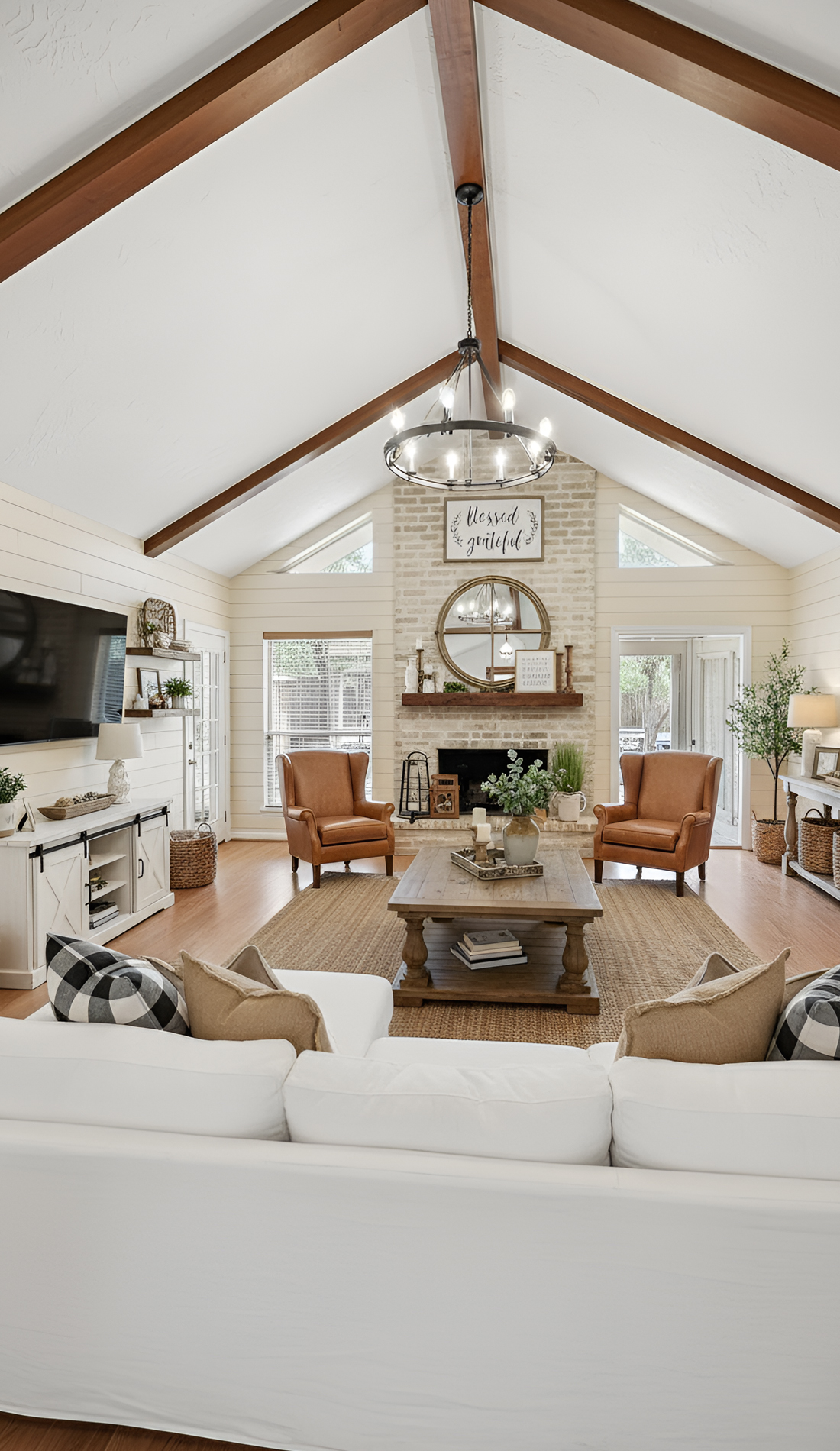
Farmhouse style can lean neutral, so greenery adds life in a simple and natural way. It softens the room and makes it feel more welcoming.
Use olive branches in a ceramic vase, eucalyptus in a pitcher, or potted plants in woven baskets. Real plants are lovely, but high-quality faux stems can work too if they look natural.
Greenery fits especially well on a mantel, coffee table, built-in shelf, or side table. It also pairs beautifully with wood, linen, and white walls.
The cue is freshness. A farmhouse living room should never feel stiff. A little greenery helps the space feel alive.
18. Try Slipcovered Chairs for Casual Elegance
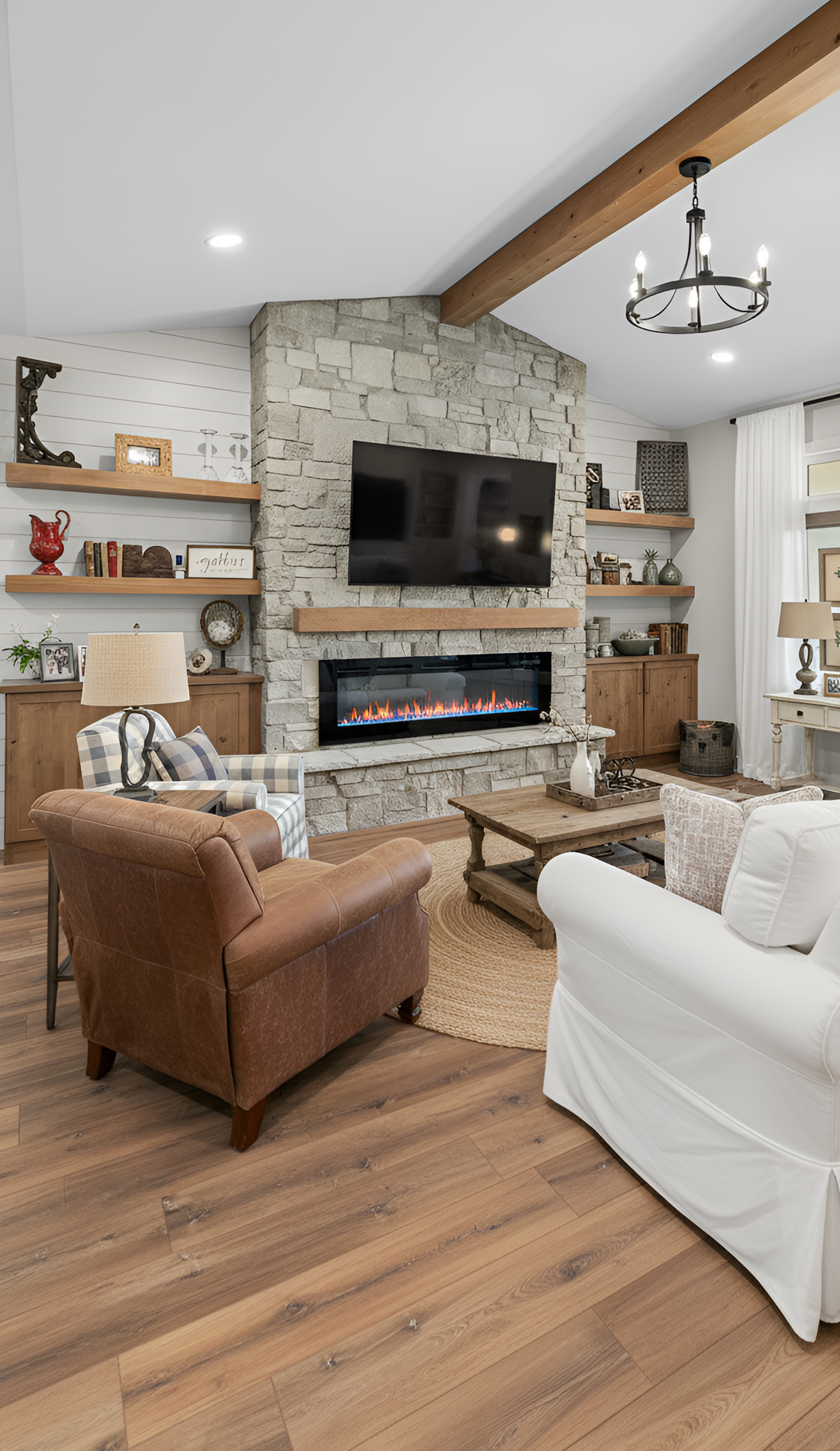
If you want extra seating that still feels soft and relaxed, slipcovered accent chairs are a smart choice. They bring in the same easy charm as a slipcovered sofa, but on a smaller scale.
Place a pair across from the sofa, or add one in a corner with a floor lamp and side table. Choose fabric in a soft neutral shade, and keep the shape simple and comfortable.
These chairs work especially well in farmhouse rooms because they feel classic but not formal. They can also help lighten the look of the room if you have several heavier wood pieces.
The cue is relaxed polish. These chairs make the room feel pulled together without losing comfort.
19. Use a Console Table Behind the Sofa
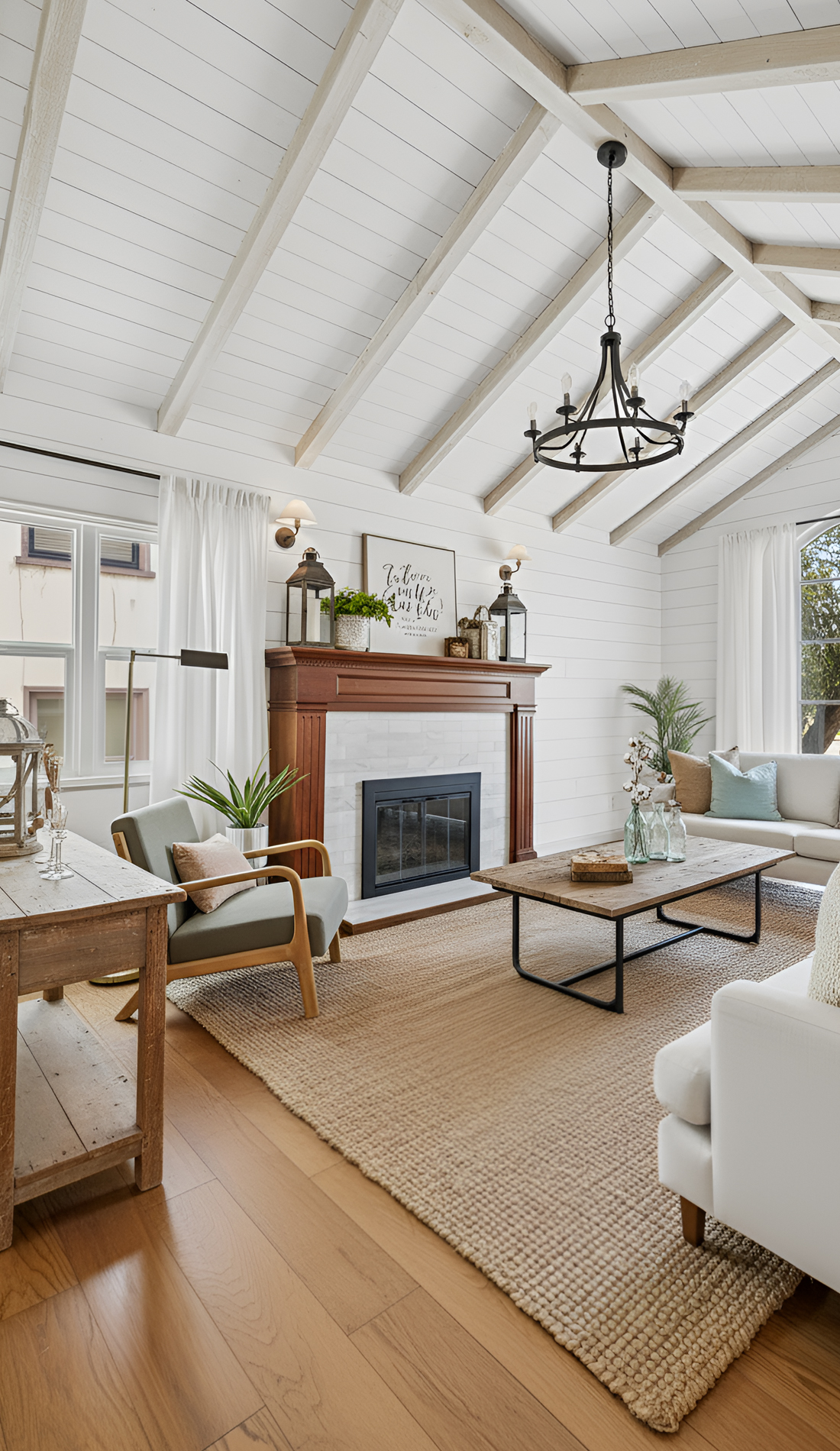
A console table behind the sofa can add style and function at the same time. It helps define the seating area, especially in open-concept rooms. It also gives you a place for lamps, baskets, books, and decor.
Choose a console in weathered wood, painted wood, or a mix of wood and metal. Keep the styling simple. A pair of lamps, a stack of books, and a small vase can be enough.
You can also use the lower shelf for baskets, which adds storage and texture.
The cue is quiet structure. A console table helps the room feel finished and thoughtfully arranged.
20. Add Architectural Charm with Wall Trim
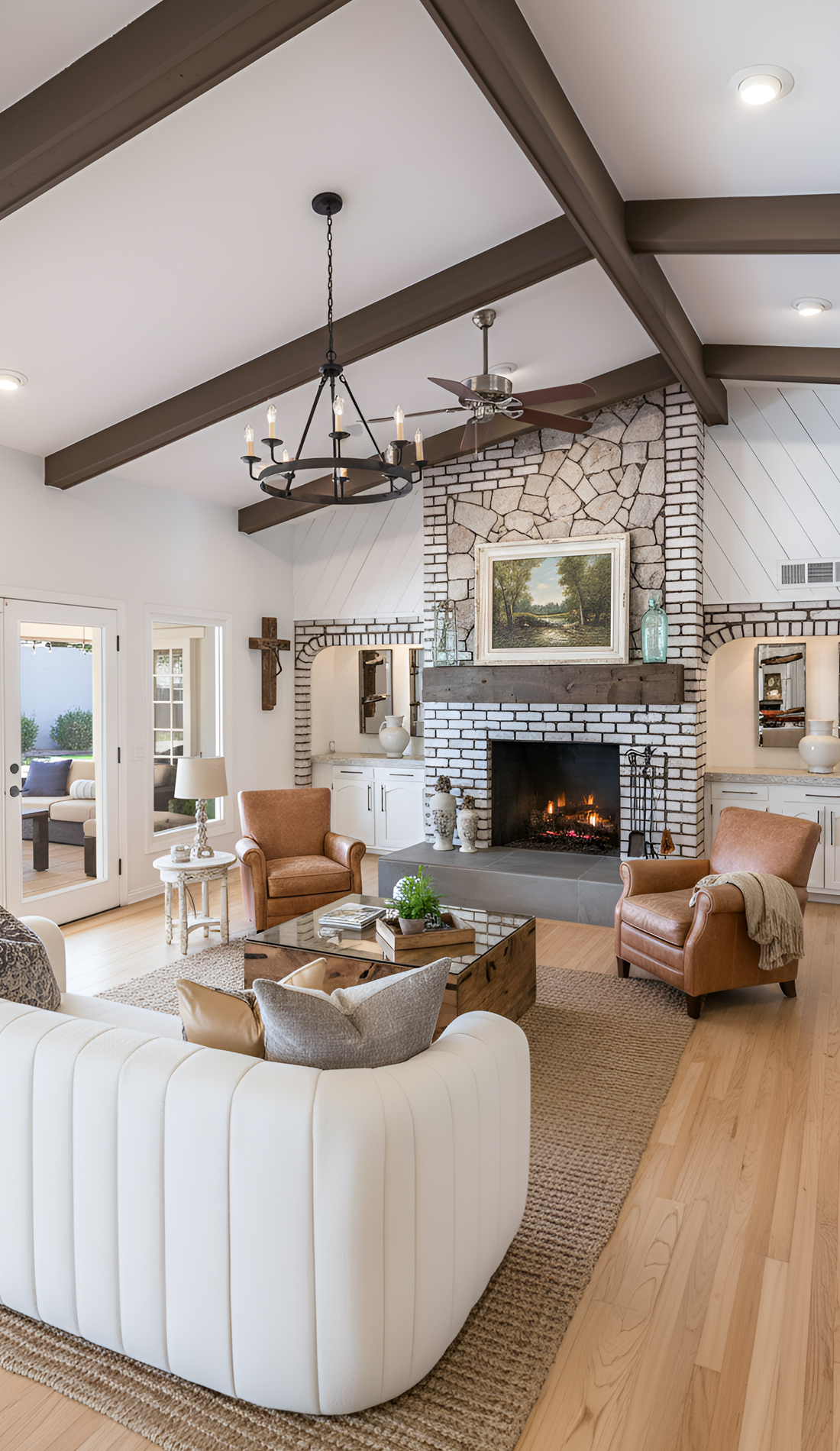
Farmhouse living rooms often feel special because they include simple architectural details. Wall trim is one of the best ways to achieve that look.
Board and batten, box molding, or even a basic chair rail can add dimension to plain walls. Painted in the same color as the wall, trim gives the room texture without overwhelming it.
This works especially well in newer homes that need more character. It helps the living room feel rooted and custom, which fits farmhouse style perfectly.
The cue is subtle craftsmanship. The room should feel like care went into the details.
21. Keep Decor Meaningful, Not Excessive
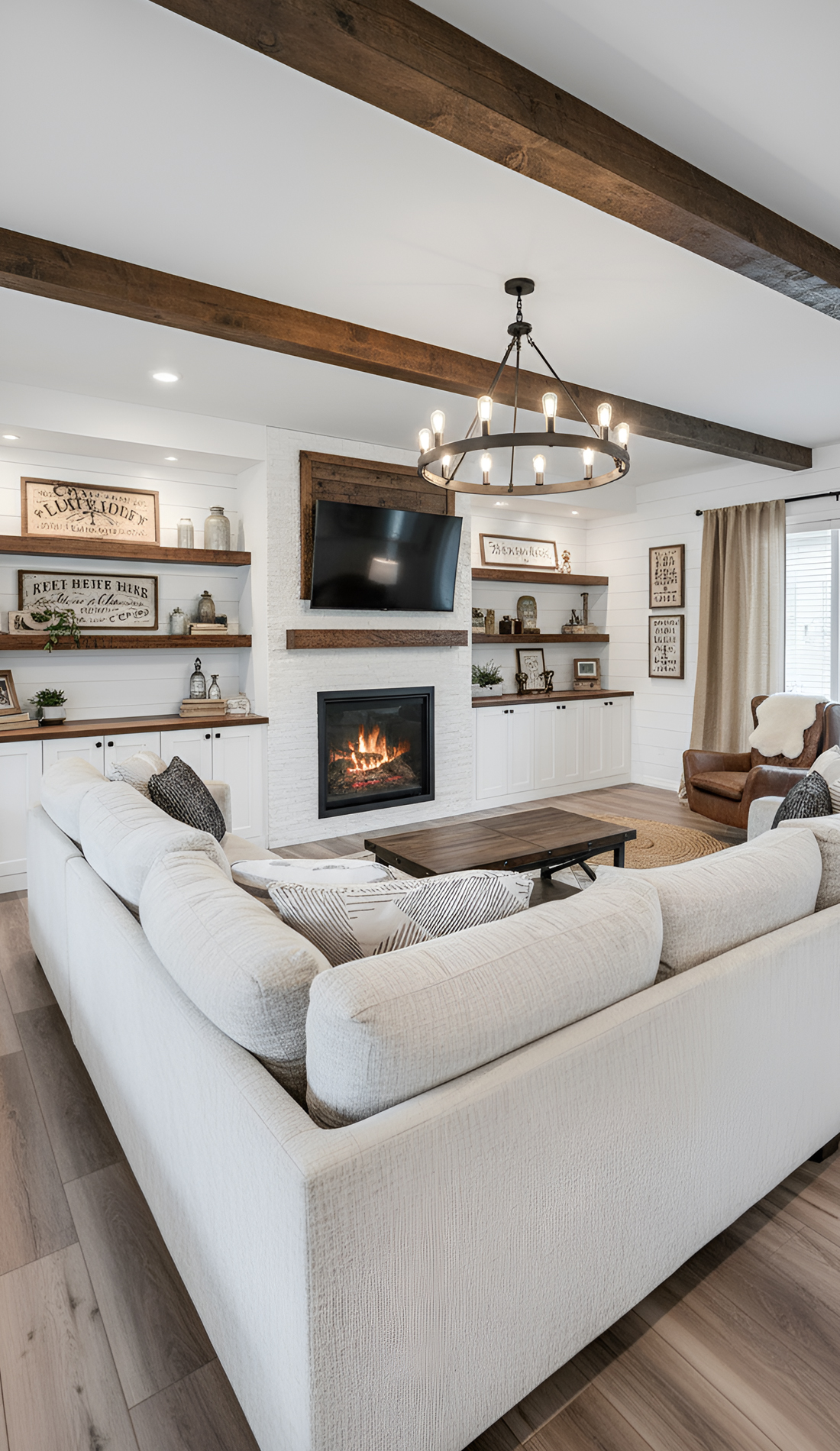
One of the biggest mistakes people make with farmhouse style is adding too much decor. Signs, trinkets, and themed items can quickly make the room feel forced. True farmhouse design feels edited and natural.
Choose pieces that mean something or that truly support the style. A handmade bowl, a stack of old books, a vintage clock, a simple landscape painting, or a ceramic vase often does more than a shelf full of random accessories.
Let each item have space. That makes the room feel calmer and more refined.
The cue is intention. Farmhouse rooms look best when every piece feels chosen, not just placed.
22. Blend Farmhouse with Modern Elements
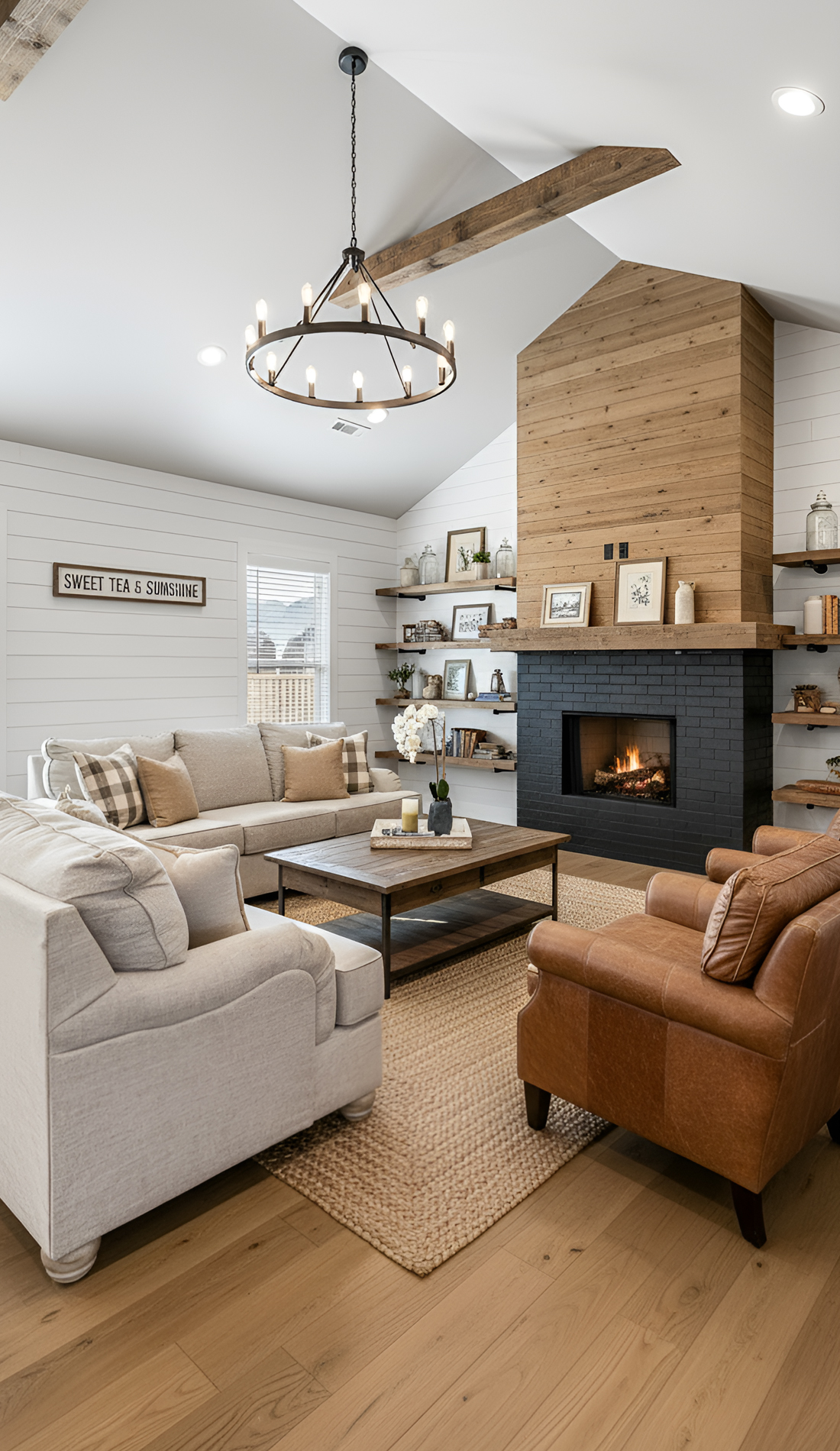
A farmhouse living room does not need to look overly rustic. In fact, one of the best ways to update the style is to blend it with modern elements. This creates a cleaner, fresher version of farmhouse that still feels warm.
You might pair a rustic wood coffee table with a sleek sofa. Or mix classic shiplap with a simple modern light fixture. Black-framed windows, sculptural lamps, and cleaner furniture lines can all bring a modern edge to farmhouse spaces.
This mix works especially well if you want a room that feels current but still cozy.
The cue is contrast in style. The warmth of farmhouse and the clarity of modern design make a beautiful team.
23. Make the Room Feel Family-Friendly
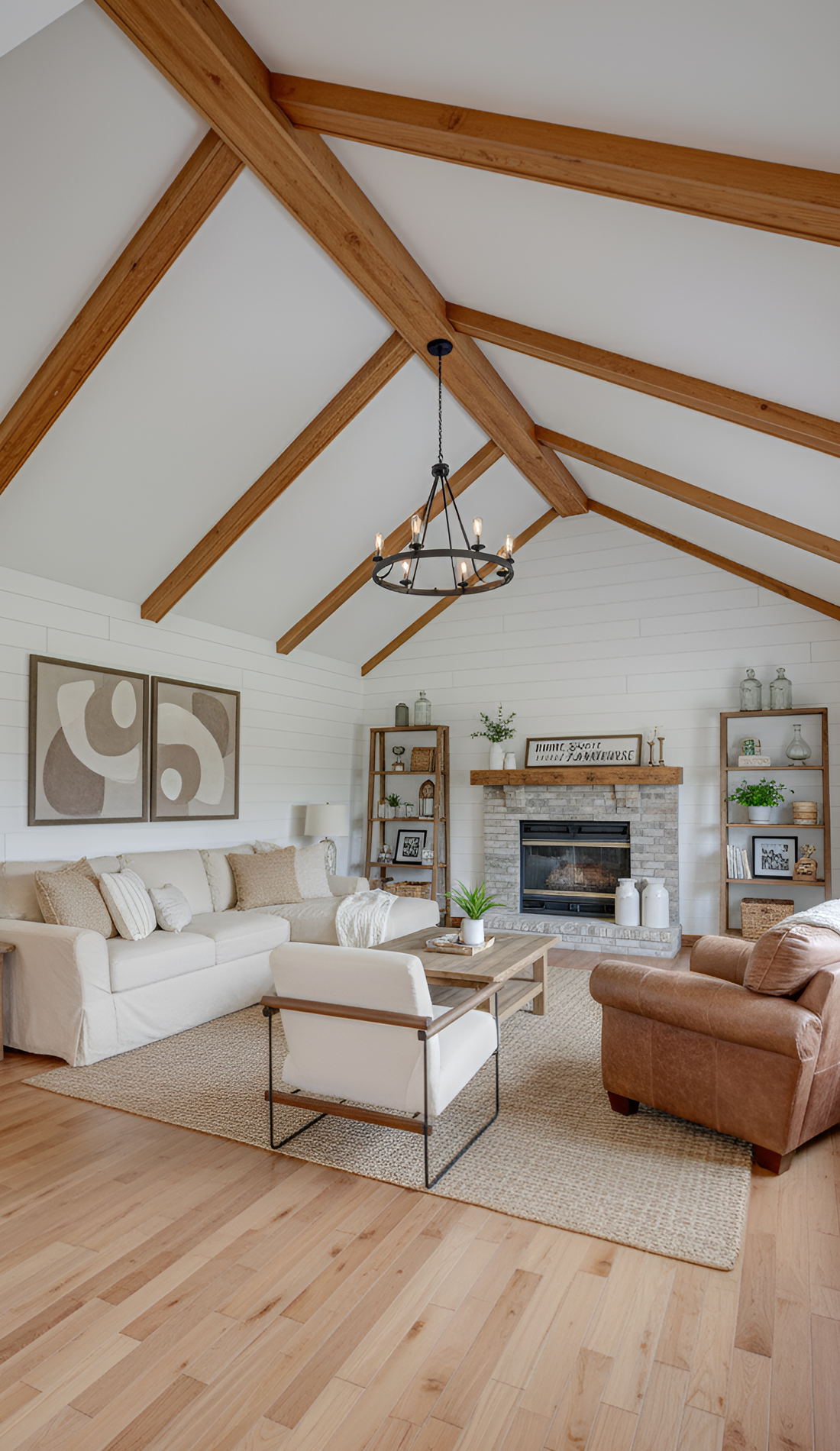
At its heart, farmhouse style is practical. It should work for real life. That means your living room should feel beautiful, but also easy to use every day.
Choose durable fabrics. Add storage baskets. Use washable slipcovers if you have kids or pets. Pick tables with enough surface area for daily life. Make sure traffic flow feels open and natural.
A farmhouse living room should never feel too delicate. It should feel sturdy, forgiving, and ready for movie nights, morning coffee, and casual gatherings.
The cue is livable beauty. The best farmhouse rooms are designed for people, not just photos.
24. Create a Cozy Reading Corner
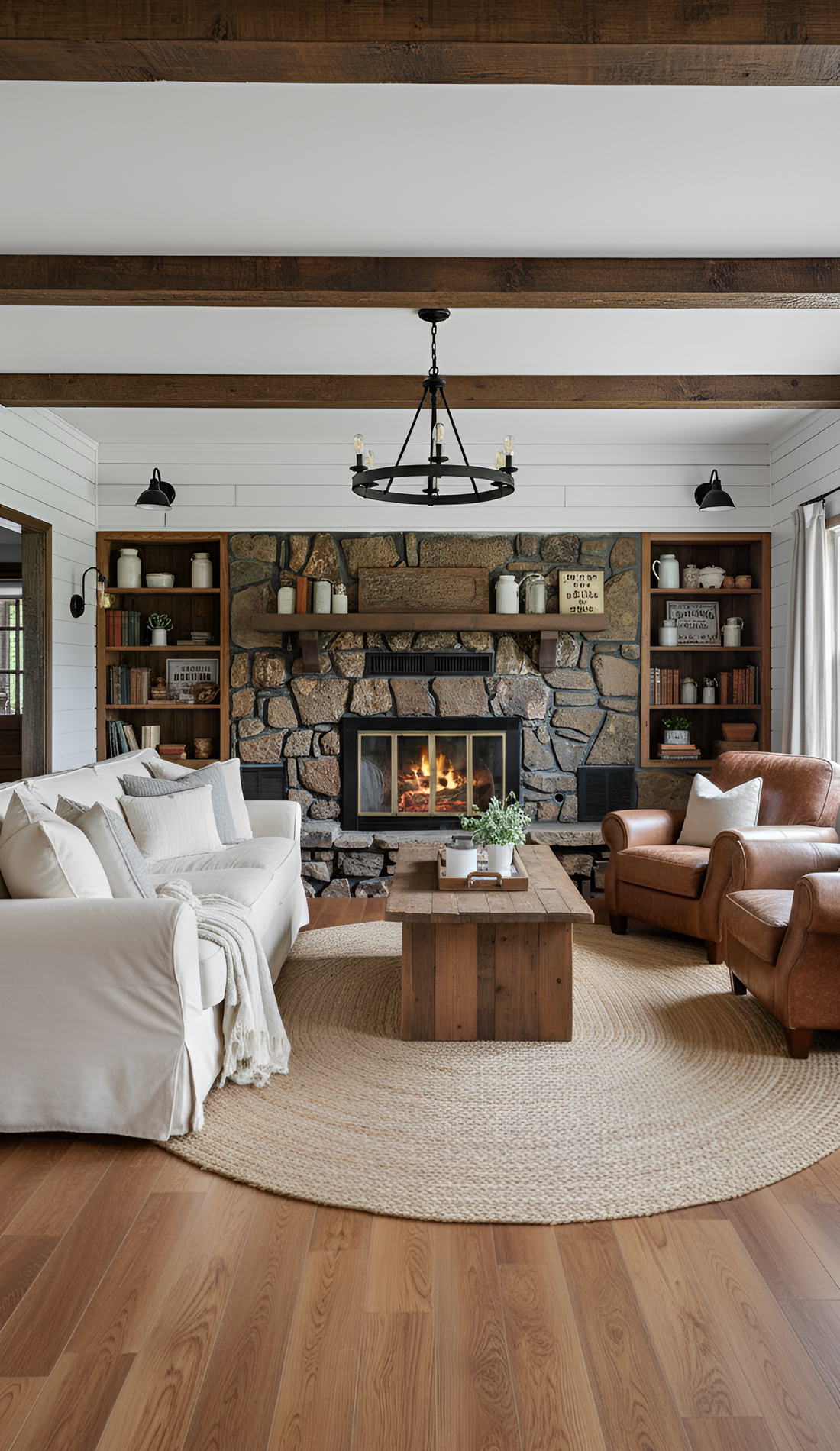
If you have an extra corner in the living room, turn it into a cozy reading spot. This adds charm and makes the room feel more layered and useful.
Start with a comfortable chair. Add a small side table, a warm lamp, and a soft throw blanket. A little stool or ottoman can make the corner even more inviting. Then finish it with a basket of books or a small plant.
This works beautifully in farmhouse spaces because it supports the idea of slow, comfortable living. It gives the room a sense of rhythm and softness.
The cue is intimacy. Not every part of the room needs to be grand. Some corners should feel quiet and personal.
25. Let the Room Tell a Story
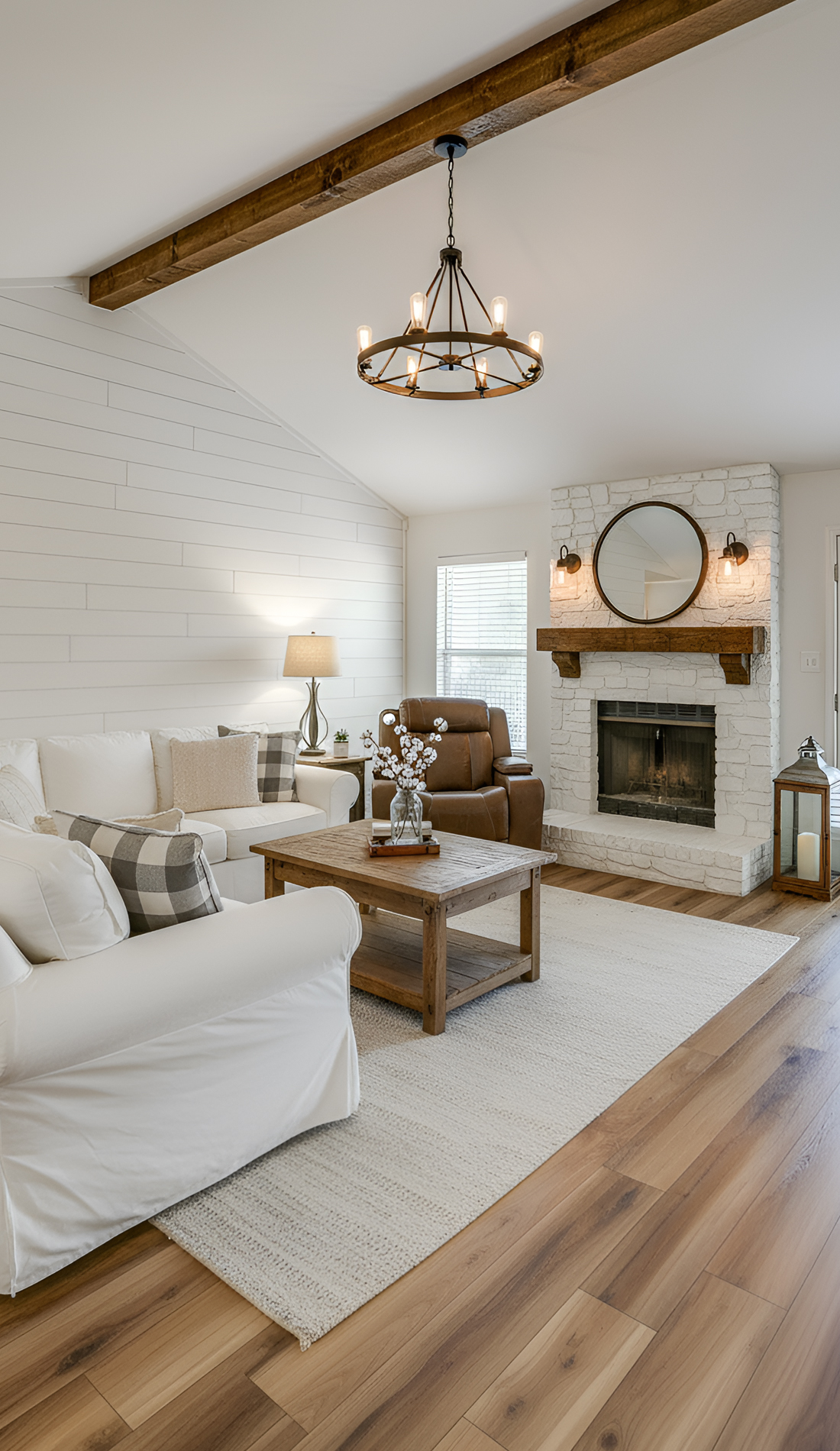
The most beautiful farmhouse living rooms are not built from a formula. They feel special because they reflect the people who live there. They mix comfort, memory, and style in a way that feels honest.
Maybe that means displaying family photos in old frames. Maybe it means using your grandmother’s trunk as a coffee table. Maybe it means hanging simple art that reminds you of the countryside. Or maybe it just means choosing pieces that make the room feel peaceful and welcoming.
Farmhouse style is not about perfection. It is about warmth. It is about texture, history, comfort, and ease. It is about creating a living room that feels beautiful when guests arrive and even better on an ordinary Tuesday night.
The cue is soul. A farmhouse living room should feel like it belongs to you.
How to Pull the Look Together
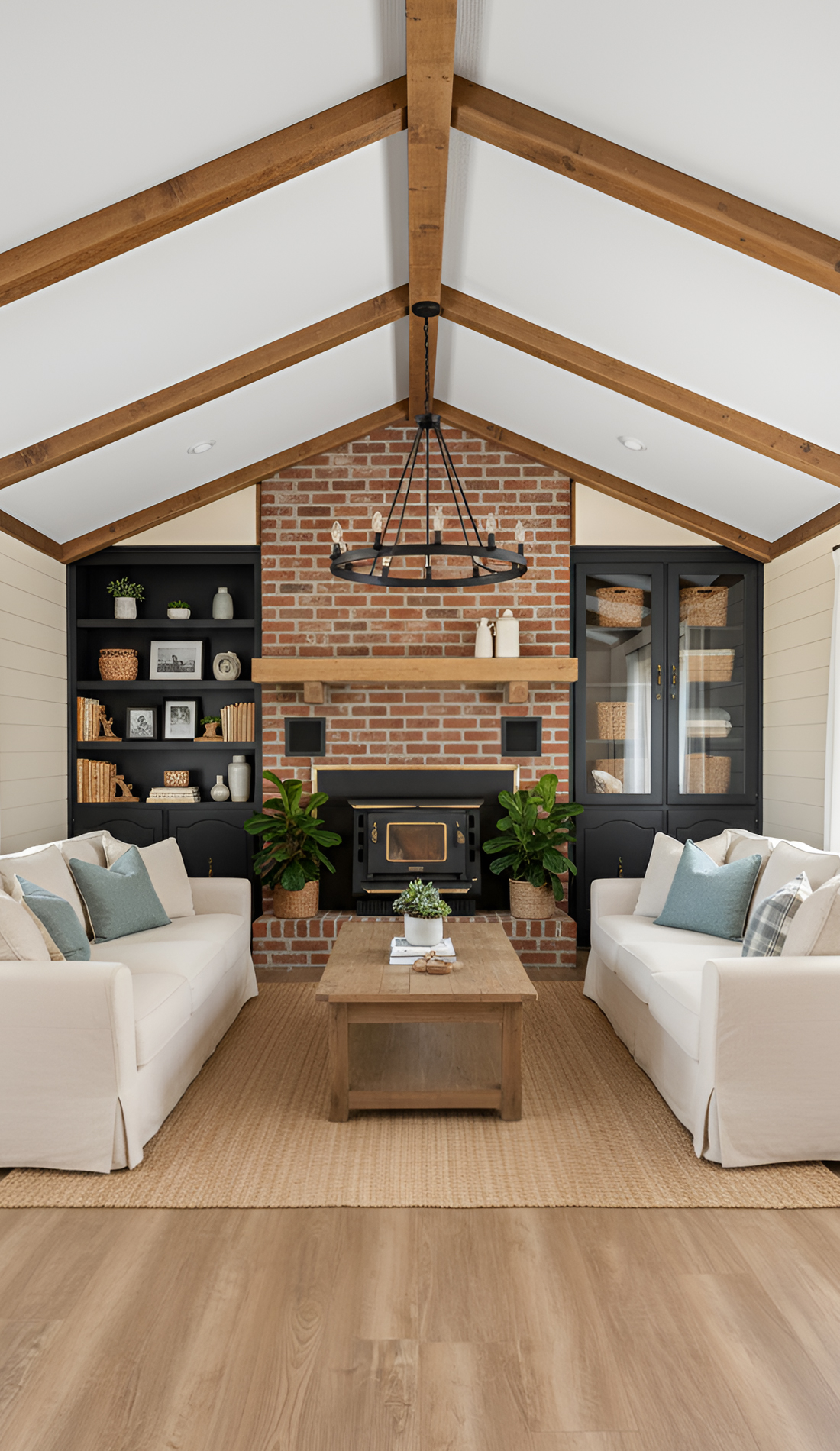
When you start designing a farmhouse living room, it helps to think in layers. Begin with the big pieces first. Choose a soft wall color, a comfortable sofa, and a rug that grounds the space. Then bring in wood tones, warm lighting, and practical furniture. After that, add texture through pillows, throws, baskets, and greenery. Finally, finish the room with a few meaningful decorative pieces that reflect your style.
Try not to rush the process. Farmhouse style looks best when it feels collected. That means the room does not need everything all at once. In fact, it often looks better when it grows slowly over time.
Also, remember that farmhouse style is flexible. You can lean more rustic, more classic, or more modern depending on what you love. You may prefer white shiplap and vintage wood. Or you may want black windows, cleaner lines, and a more modern farmhouse feel. Both can work beautifully.
What matters most is the feeling the room creates.
A good farmhouse living room feels bright, grounded, and deeply comfortable. It welcomes people in. It softens busy days. It gives you a place to gather, rest, and enjoy the beauty of home in a simple and lasting way.
So, whether you start with a reclaimed wood coffee table, a linen sofa, a soft rug, or a wall of built-ins, let each choice move you closer to a room that feels warm, easy, and real. That is the heart of farmhouse style. And that is why people keep coming back to it, year after year.