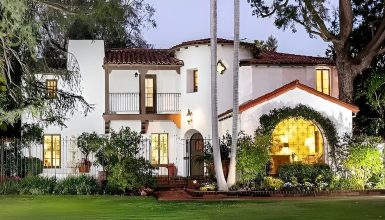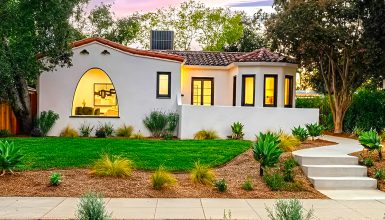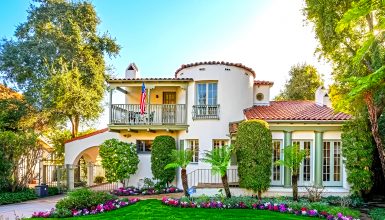
Love dining rooms with warmth, texture, and old-world charm? Spanish Revival style brings all of that together in one beautiful space. With arched details, dark wood, iron lighting, and earthy colors, this look makes every meal feel special. These Spanish Revival dining room ideas will help you create a room that feels rich, welcoming, and timeless.
1. Start with a heavy wood dining table
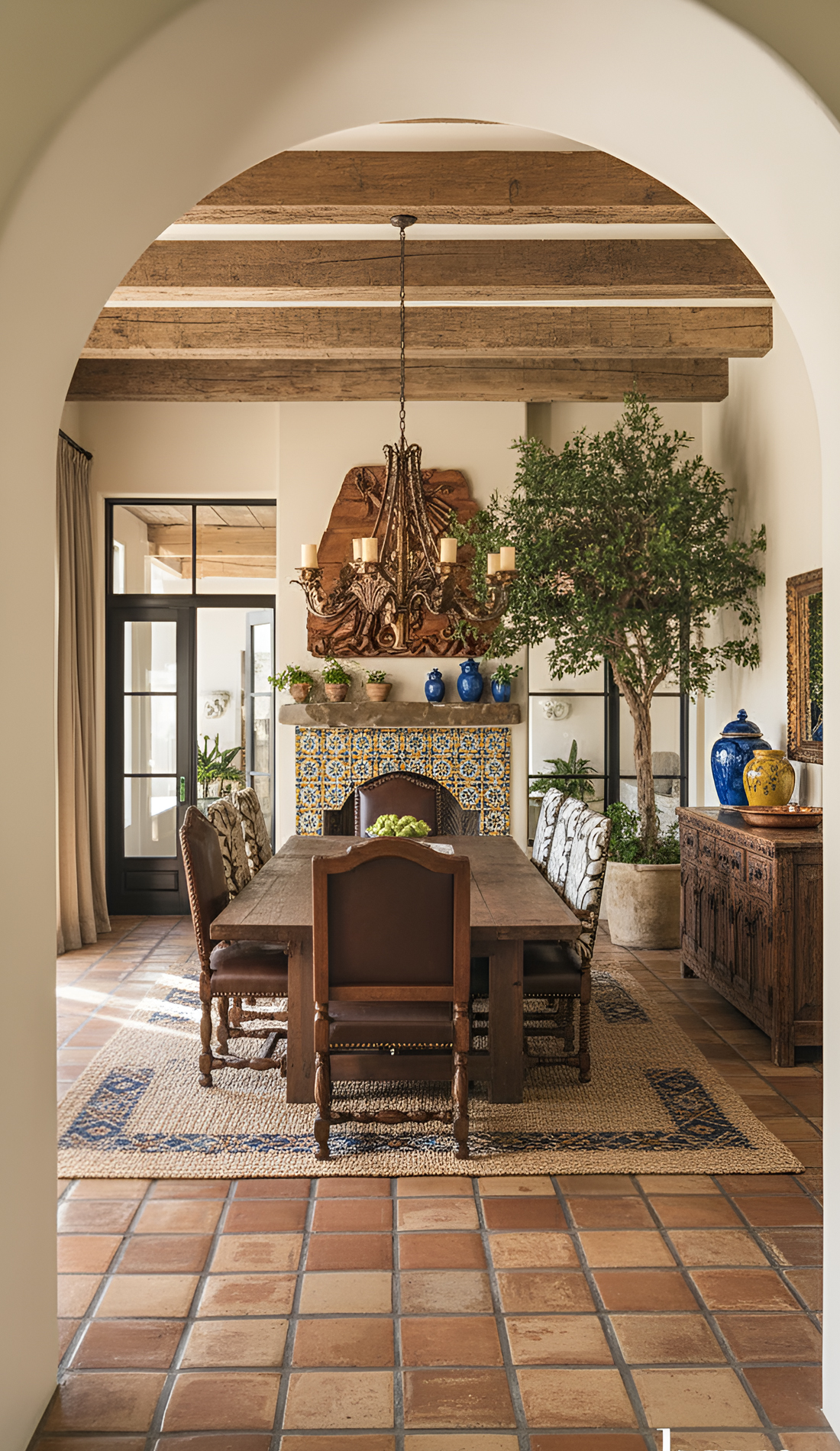
A large wood dining table is often the anchor of a Spanish Revival dining room. It gives the room weight. It also sets the tone for everything around it. Look for a table with a thick top, turned legs, trestle details, or a weathered finish. The wood should feel real and substantial, not slick or overly polished.
This kind of table brings old-world charm to the room right away. It also works beautifully with the rest of the style, which tends to favor natural materials and pieces that look like they have been around for years. A dark walnut or deep chestnut finish can make the space feel moody and elegant. Meanwhile, a sun-faded oak can soften the look and make it feel more casual.
The beauty of a strong wood table is that it becomes more attractive as it ages. Small marks and scratches only add to the story.
Cues to look for:
- Thick wood top
- Trestle or turned-leg base
- Aged, distressed, or hand-rubbed finish
- Dark walnut, oak, or chestnut tones
- Sturdy, grounded shape
2. Use wrought iron lighting for instant drama
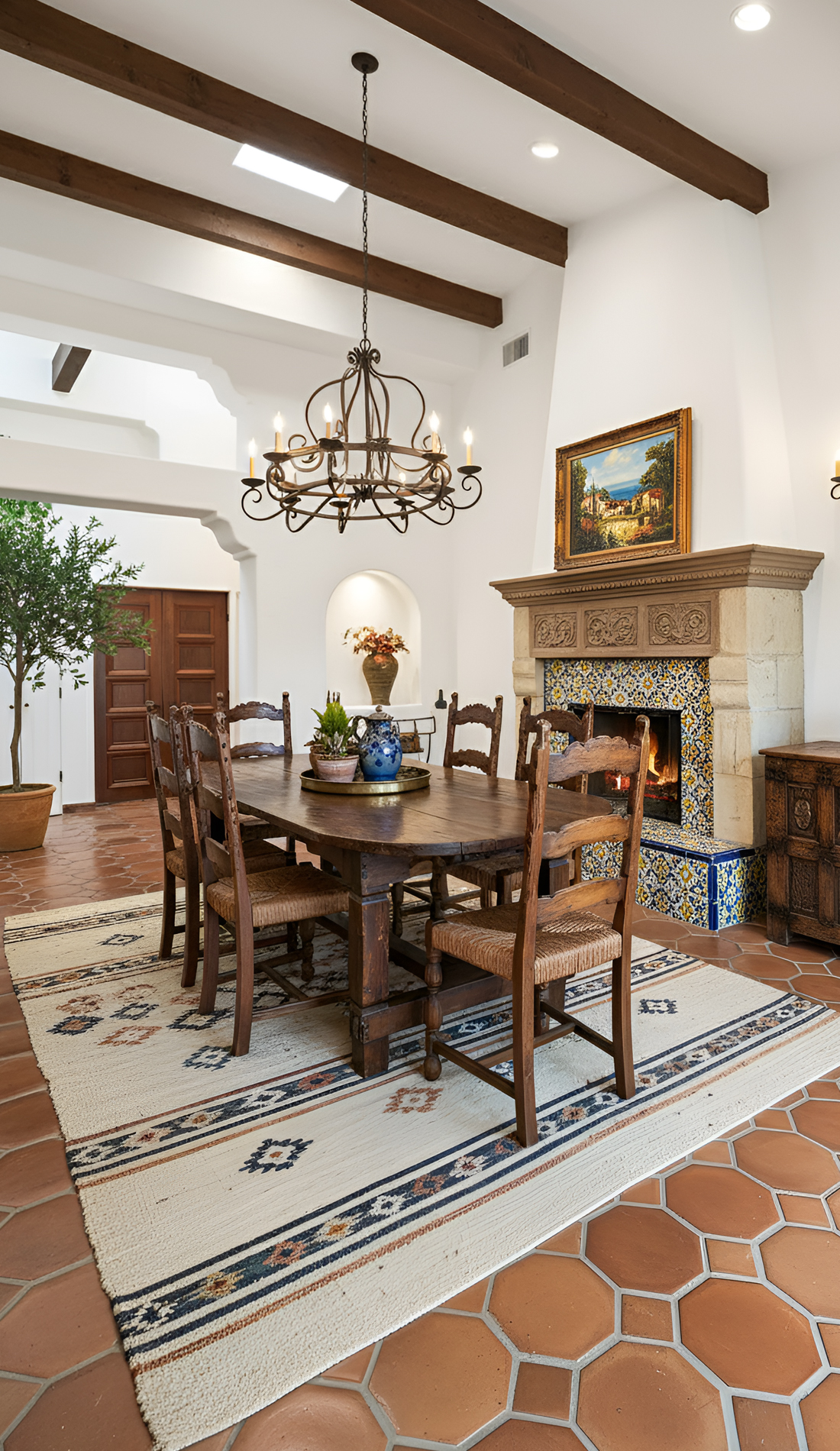
Few things say Spanish Revival quite like wrought iron. In a dining room, it shines best in the lighting. A wrought iron chandelier adds shape, contrast, and old-world drama without making the room feel too formal.
Choose a fixture with curved arms, scroll details, candle-style bulbs, or a rustic hammered finish. If your dining room has a high ceiling, go for a larger chandelier that fills the vertical space. If the room is smaller, a simpler iron pendant can still deliver the same mood.
Iron lighting pairs especially well with plaster walls, dark wood furniture, and terracotta floors. It brings a strong line to the room and helps balance softer textures.
Cues to look for:
- Black or oil-rubbed iron finish
- Scrollwork or curved arms
- Candle-style bulbs
- Hammered metal texture
- Bold silhouette with rustic charm
3. Warm up the room with plaster or textured walls
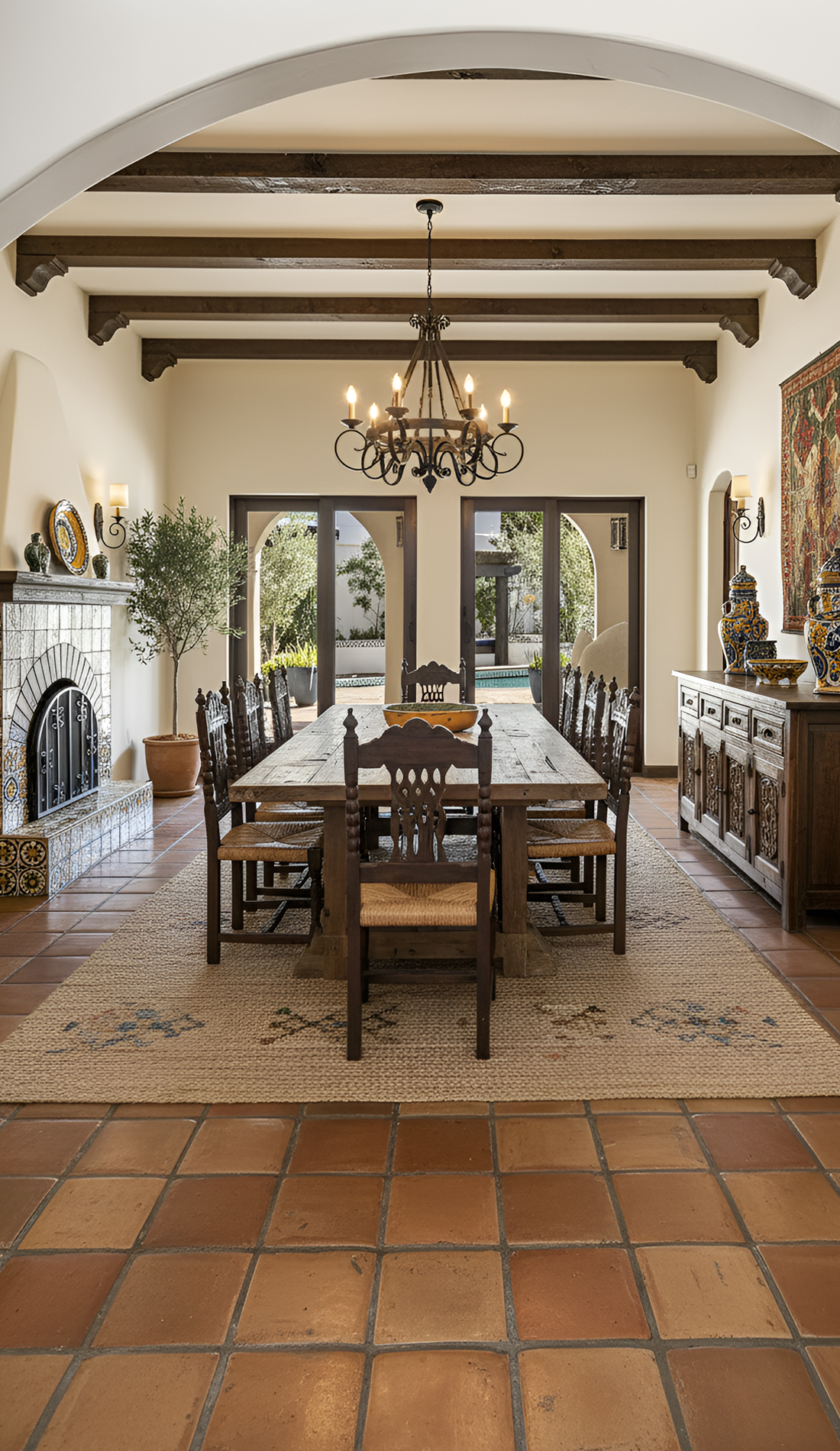
Spanish Revival rooms rarely feel flat. One reason is the walls. Instead of crisp drywall with a smooth finish, this style leans into texture. Plaster walls, limewash, or a faux hand-troweled finish can make a dining room feel rich and lived-in.
These walls catch light in a beautiful way. They create soft shadows. They also give the room an earthy, handmade quality that feels true to the style. Colors work best when they stay warm and muted. Think creamy white, sandy beige, soft clay, warm ivory, or pale terracotta.
Textured walls also help balance darker elements in the room. If you have a heavy table or bold iron lighting, warm plaster walls keep the space from feeling too heavy.
Cues to look for:
- Hand-troweled or plaster-like finish
- Limewashed effect
- Warm white, beige, clay, or sand tones
- Matte surface
- Soft, sun-washed look
4. Add arched details wherever you can
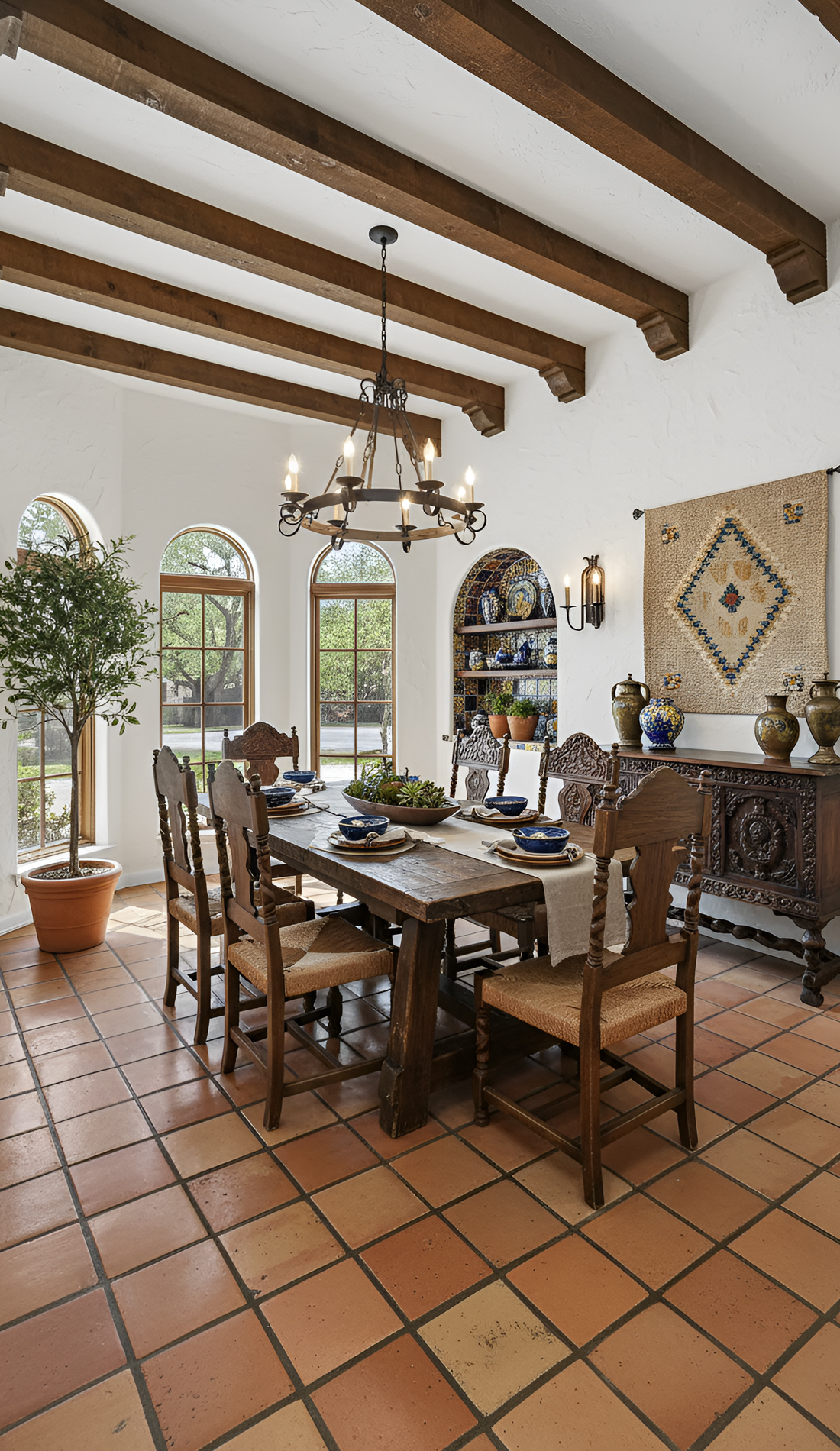
Arches are one of the signature features of Spanish Revival design. They bring softness to the room and create that romantic old-world feeling people love. If your home already has arched windows or doorways, lean into them. If not, you can still echo the shape in other ways.
Try an arched mirror, a curved cabinet, or dining chairs with rounded backs. Even a built-in niche with an arched top can help bring in the look. Arches break up straight lines and make the room feel more graceful.
This detail matters because Spanish Revival style is not just about materials. It is also about shape. The curve of an arch brings movement and elegance to a space that might otherwise feel plain.
Cues to look for:
- Arched doorways or windows
- Rounded mirrors
- Curved chair backs
- Built-in arched niches
- Soft, graceful lines
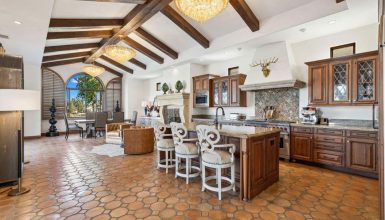
5. Bring in terracotta flooring for earthy character
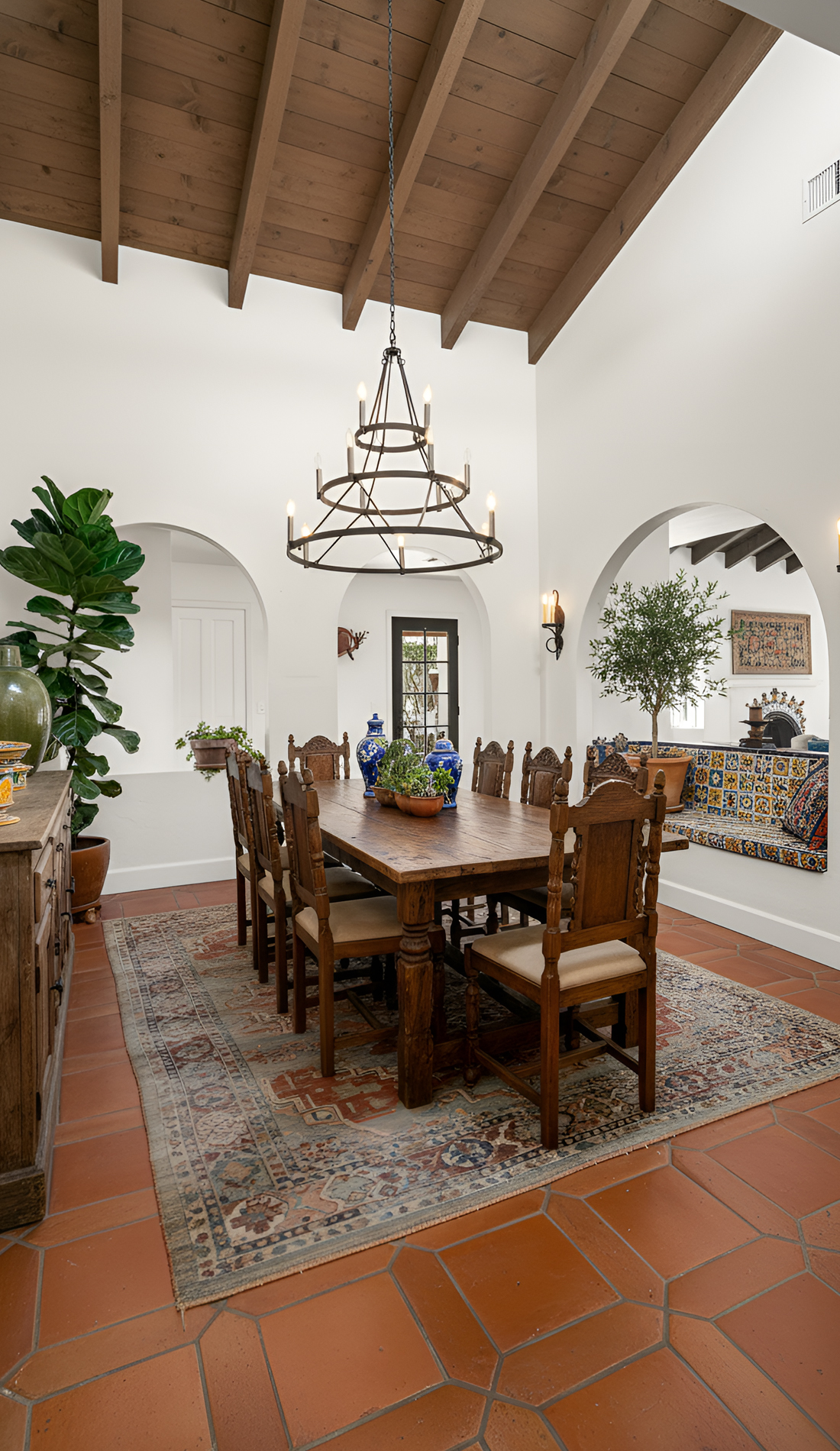
If you want a dining room that feels warm from the ground up, terracotta flooring is a beautiful place to start. Terracotta has that sun-baked, old-world look that fits Spanish Revival style perfectly. Its natural color adds warmth. Its handmade quality adds character.
Real terracotta tiles are gorgeous, especially when they have color variation and a slightly imperfect surface. That variation keeps the room from feeling too polished. It adds age and texture in the best way. If real terracotta is not an option, porcelain tile with a natural clay look can still create the same feeling.
Layering a woven rug over terracotta can also help define the dining area and soften the space.
Cues to look for:
- Clay-toned tile
- Matte, natural surface
- Color variation from tile to tile
- Rustic or handmade look
- Warm red, brown, and orange undertones
6. Use carved wood chairs with presence
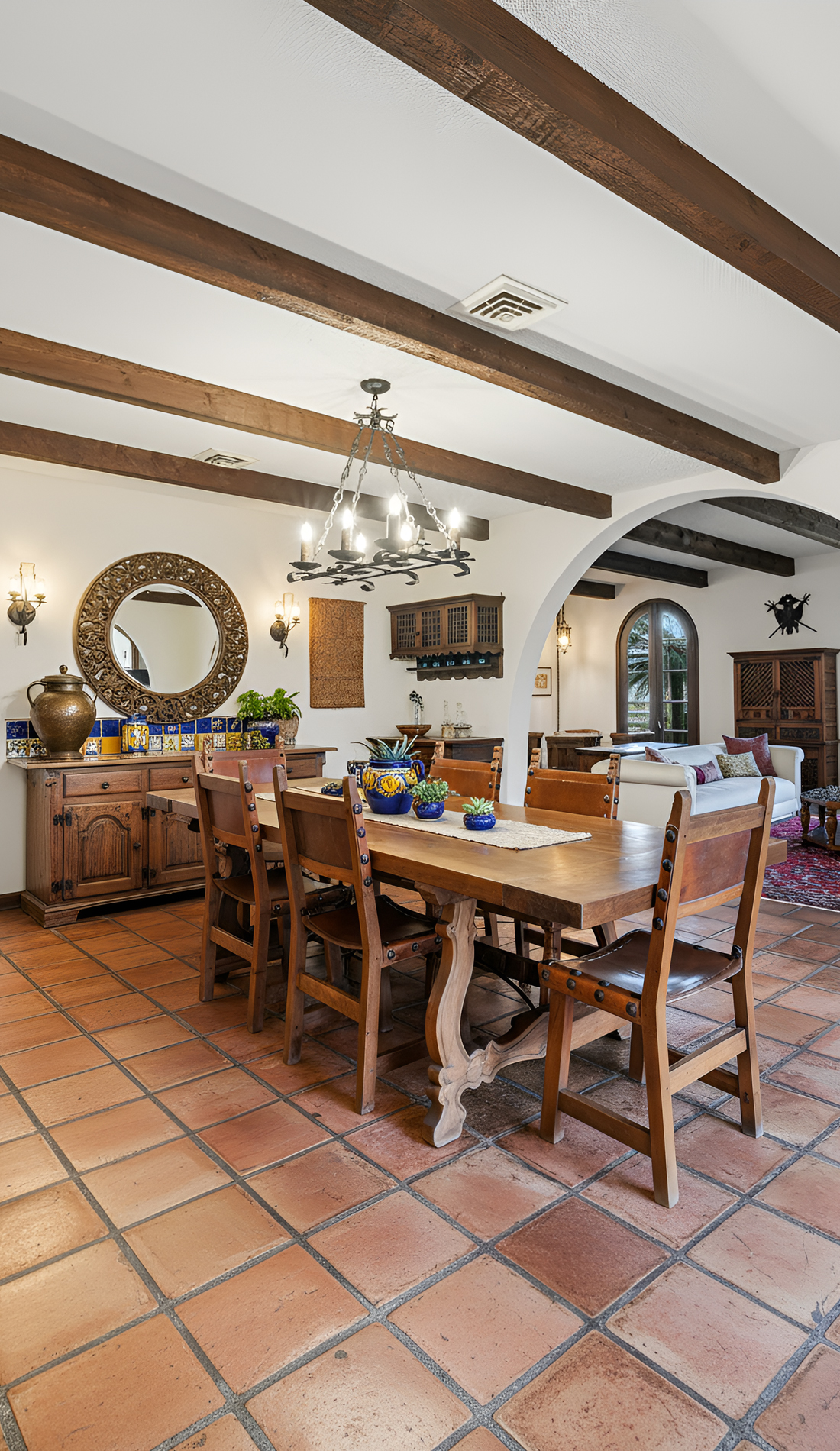
Spanish Revival dining rooms often feature seating that feels more architectural than delicate. Chairs should have presence. Look for carved wood frames, turned details, leather seats, rush seats, or high backs with an old-world feel.
The goal is not to match everything perfectly. In fact, a slightly collected look feels more authentic. You might pair two armchairs at the ends of the table with simpler side chairs along the sides. Or you might use a mix of wood and upholstered seating in similar tones.
The key is to avoid anything too sleek, thin, or modern-looking. Spanish Revival style likes furniture that feels rooted and timeless.
Cues to look for:
- Carved wood frames
- Leather or woven rush seats
- High backs
- Dark stain or warm wood finish
- Handmade, collected feel
7. Decorate with colorful Spanish-style tile
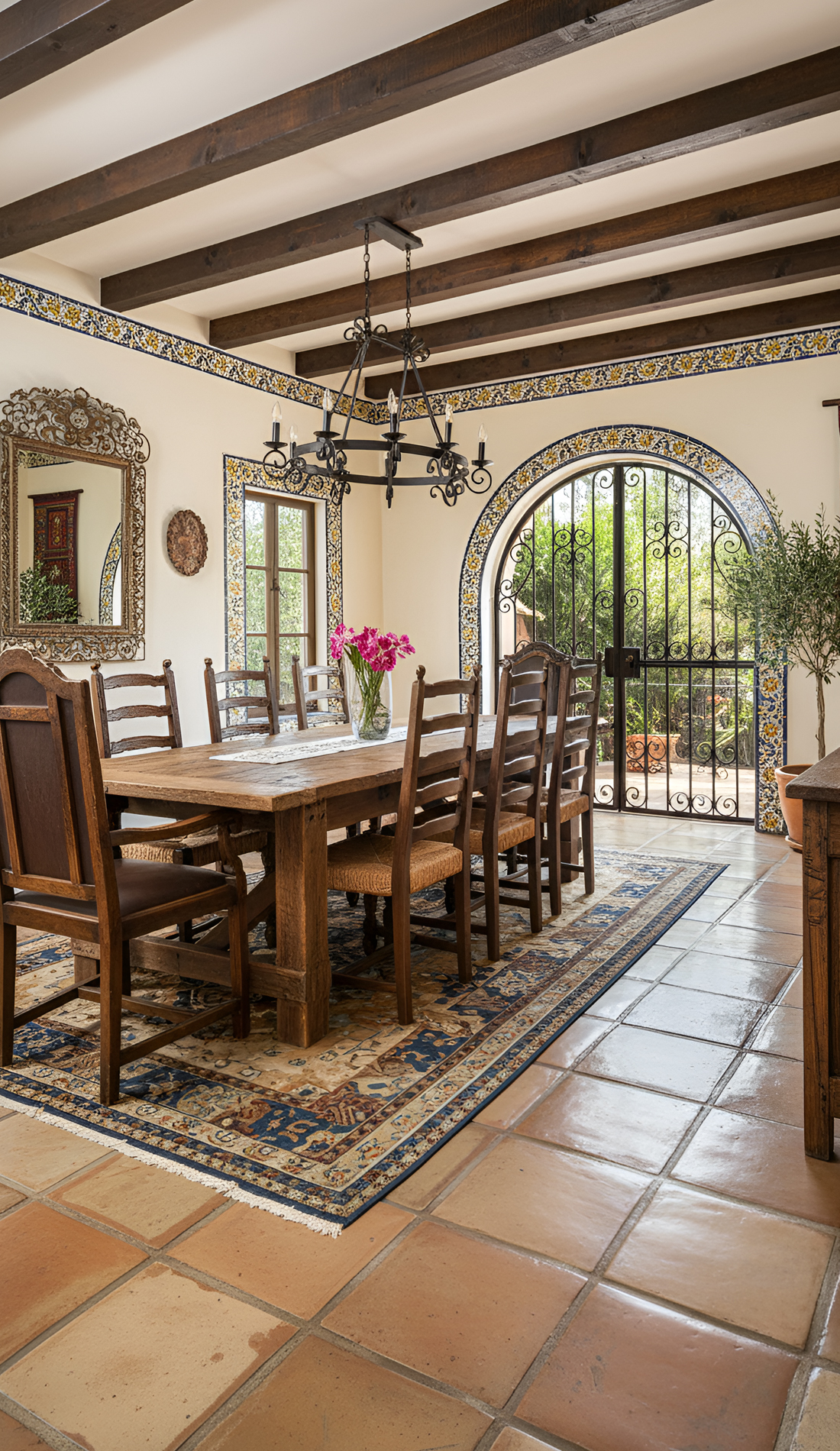
Tile is one of the most charming parts of Spanish Revival design. In a dining room, it can show up in small ways or bold ones. You might use hand-painted tile on a fireplace surround, a stair riser nearby, a wall niche, or even as a decorative tabletop accent.
Traditional Spanish-style tiles often feature blue, gold, green, rust, and creamy white. Some have floral patterns. Others use geometric motifs. Either way, they bring color and artistry into the room.
Use tile with care. A little can go a long way. One well-placed tiled detail can make the whole room feel more layered and authentic.
Cues to look for:
- Hand-painted or handmade look
- Blue, gold, green, rust, or cream colors
- Geometric or floral patterns
- Decorative border or inset application
- Artisan quality
8. Highlight the ceiling with exposed beams
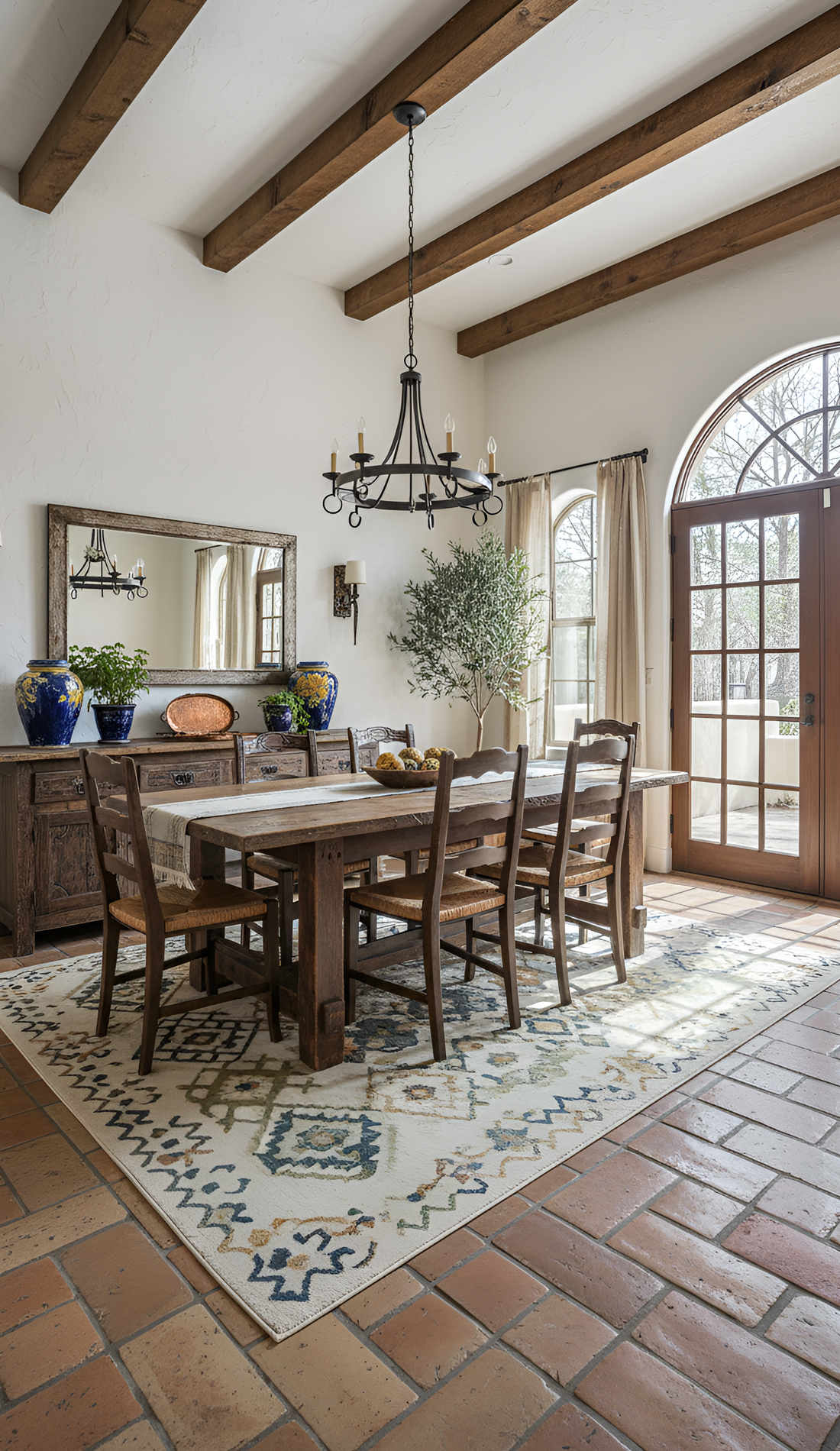
A ceiling with exposed wood beams can transform an ordinary dining room into something unforgettable. Beams add depth, age, and architectural interest. They also pull the eye upward, which makes the whole room feel more dramatic.
In Spanish Revival spaces, beams usually feel rustic and substantial. Dark stained beams create strong contrast against light plaster ceilings. More weathered beams create a softer, timeworn look. Either option works as long as the finish feels natural and not overly glossy.
If your home does not already have beams, faux beams can still create the same visual effect when done well.
Cues to look for:
- Dark or aged wood beams
- Strong contrast against light ceilings
- Rustic, hand-hewn appearance
- Substantial scale
- Old-world architectural character
9. Soften the room with linen and natural fabric
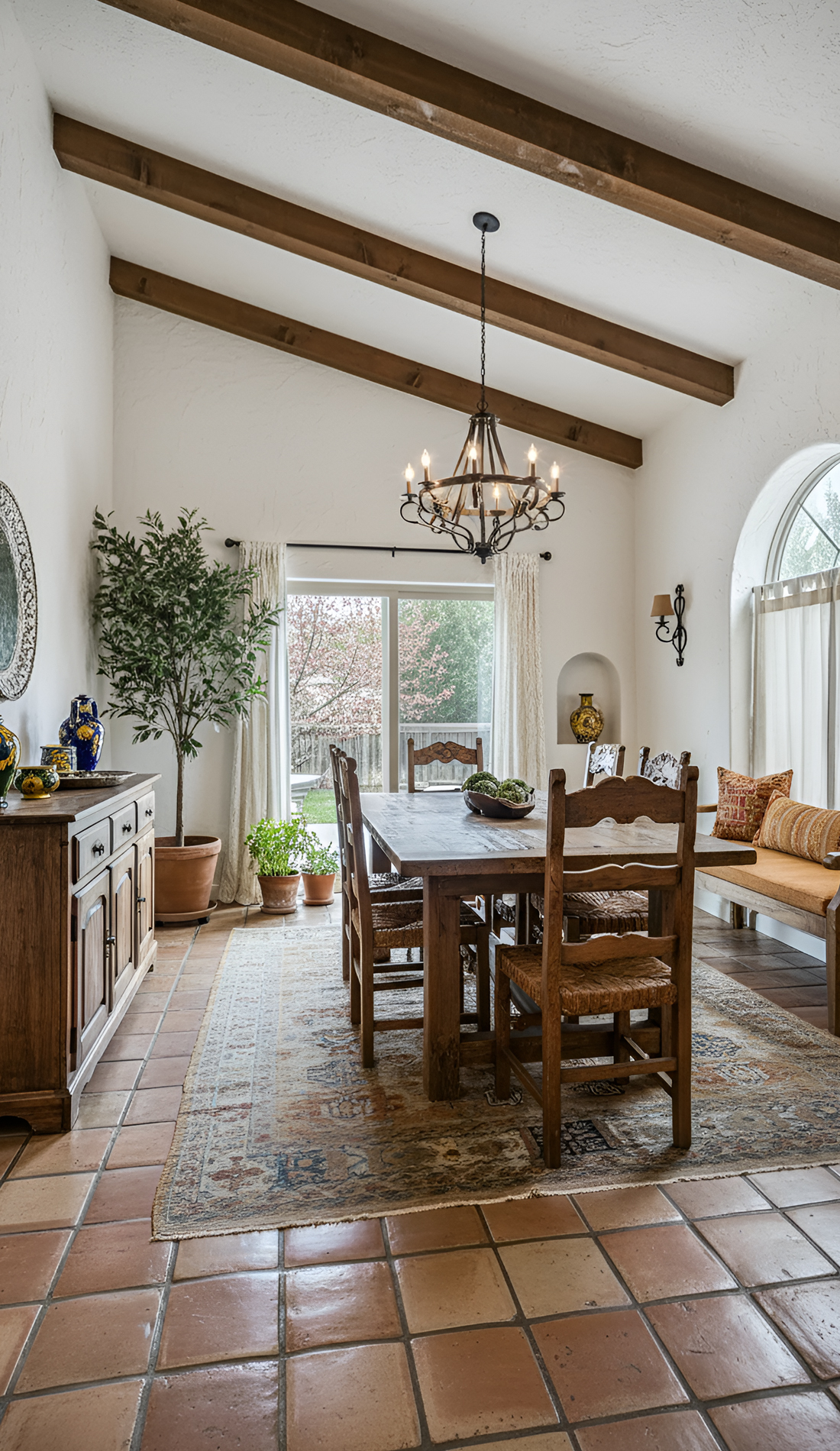
Because Spanish Revival spaces can feature a lot of hard surfaces, fabric matters. It keeps the room from feeling too severe. Linen curtains, upholstered seat cushions, and woven runners all help soften the look.
Stick with natural-looking fabrics in warm, earthy shades. Cream, oatmeal, muted rust, dusty olive, soft brown, and faded gold work well. Patterns can be simple, but even a subtle stripe or old-world motif can add interest.
Choose fabrics that feel relaxed rather than formal. This style should feel welcoming, not fussy.
Cues to look for:
- Linen or cotton textures
- Warm neutral colors
- Relaxed drape
- Earthy accent shades
- Soft, unfussy finish
10. Create a moody palette with sun-baked tones
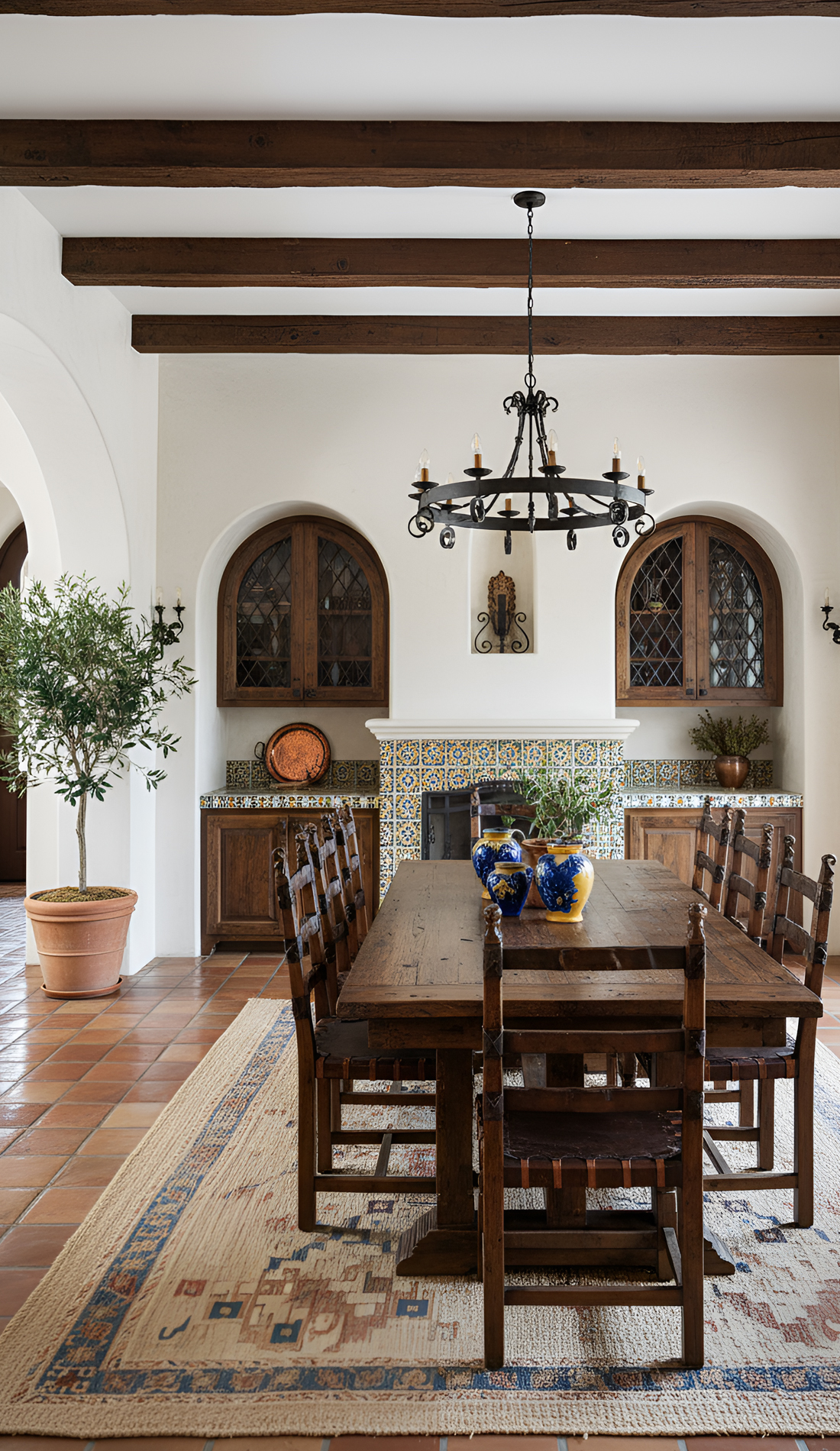
Spanish Revival color palettes feel pulled from the land. They often include warm whites, dusty browns, muted terracotta, olive green, ochre, deep rust, and smoky charcoal. These colors create mood without making the room feel dark or cold.
A great way to use this palette is to keep the backdrop light and layer darker accents on top. For example, pair creamy walls with a dark wood table, black iron lighting, clay tile, and olive green textiles. That combination feels warm, rich, and balanced.
The colors should feel natural and slightly faded, like they have mellowed over time in the sun.
Cues to look for:
- Warm ivory and cream
- Clay, rust, and terracotta
- Olive and muted green
- Smoky black or charcoal
- Sun-washed, earthy mood
11. Use a large sideboard with old-world charm
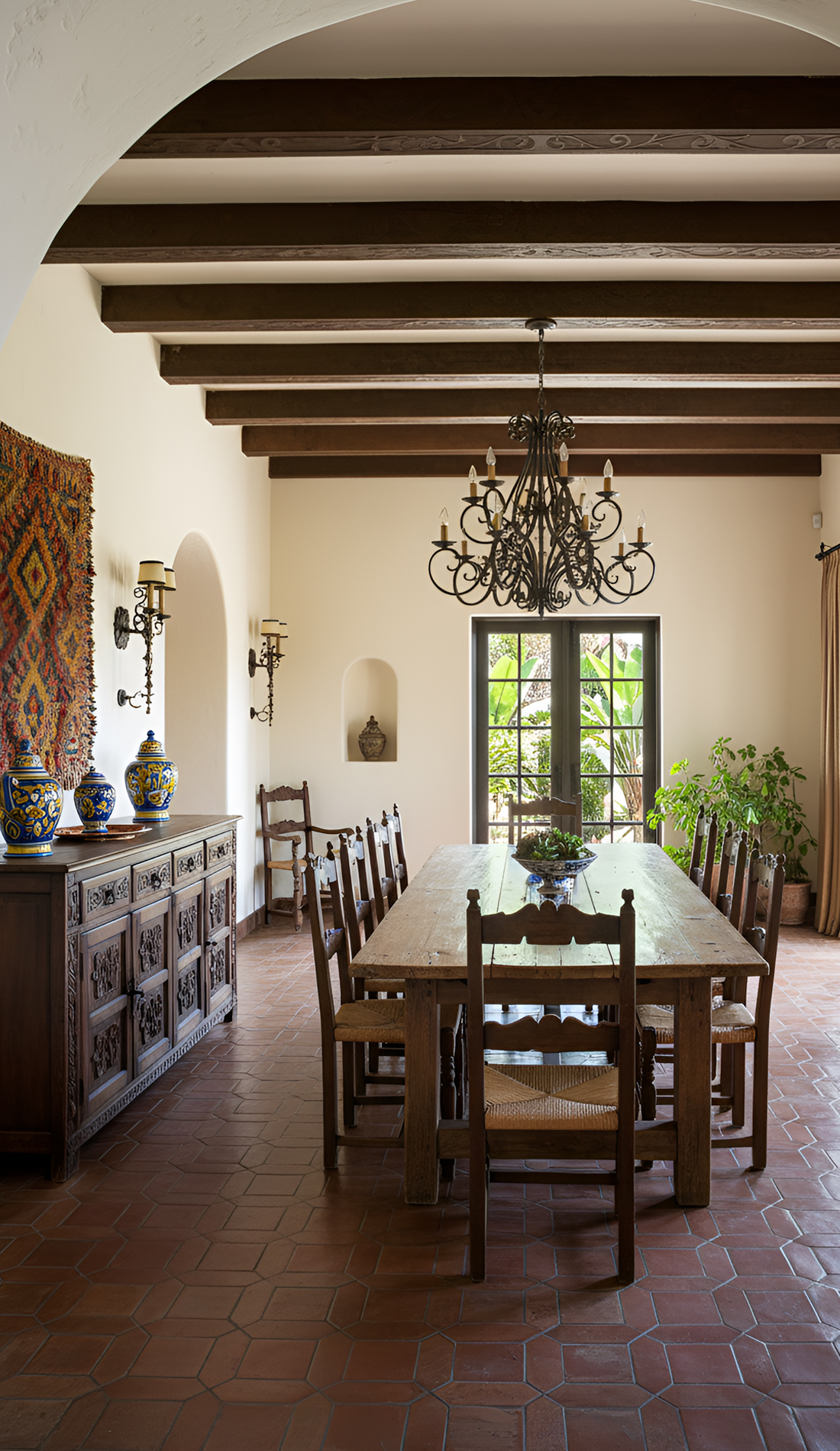
A dining room sideboard is both useful and beautiful in a Spanish Revival space. It gives you storage, of course, but it also adds another layer of character. Look for a piece with paneled doors, carved trim, iron hardware, or a distressed finish.
A sideboard can hold serving pieces, candles, bowls, and fresh greenery. It also gives you a chance to style the room in a way that feels personal. A vintage ceramic pitcher, a stack of linen napkins, or a rustic tray can make the piece feel alive.
Choose something that looks like it belongs to the room, not something shiny or overly new.
Cues to look for:
- Carved or paneled front
- Iron pulls or hinges
- Distressed or aged finish
- Deep wood tone
- Strong, substantial profile
12. Layer in pottery and handmade accessories
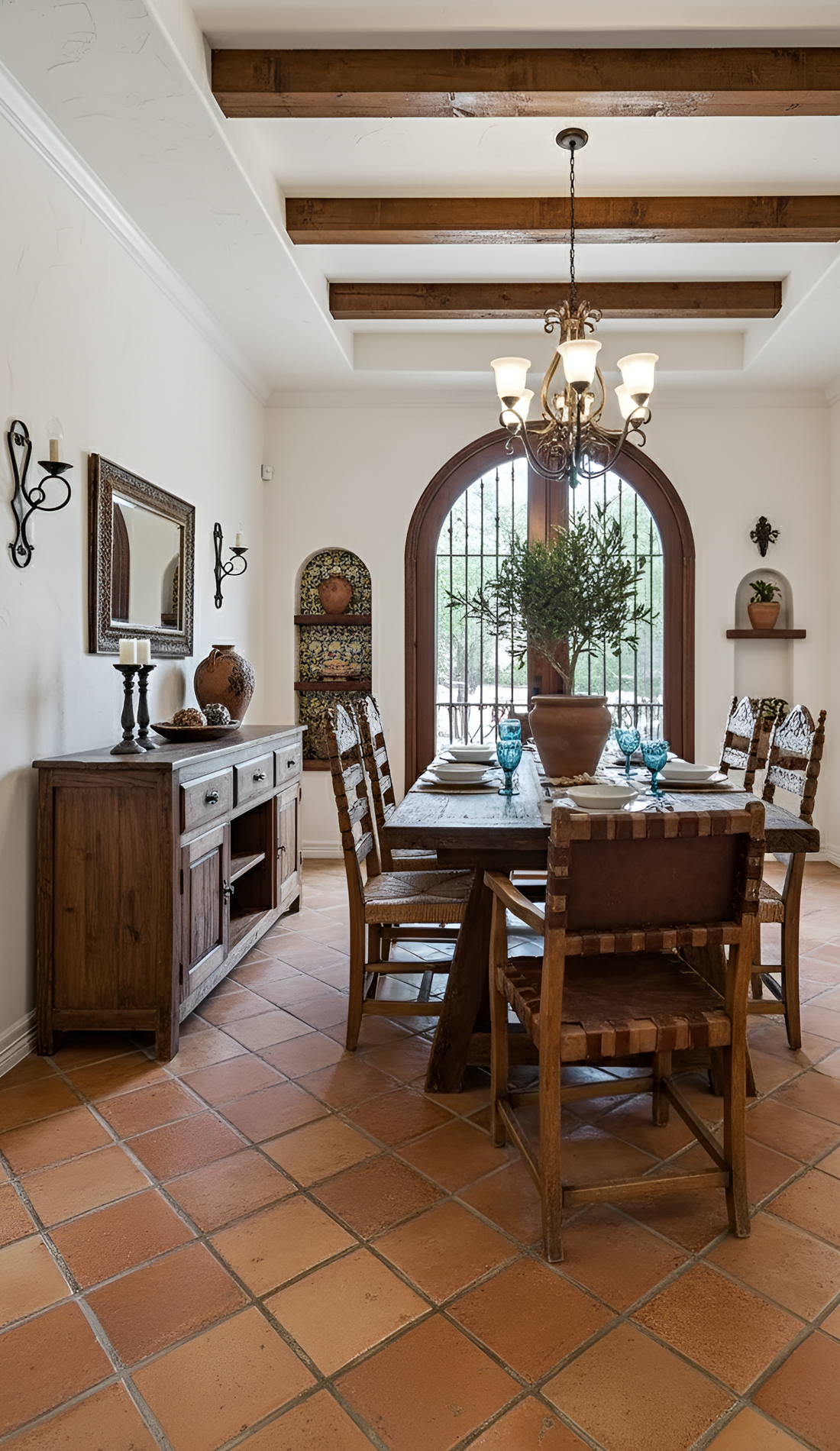
Spanish Revival design loves pieces that feel crafted by hand. That is why pottery works so well here. A few clay vases, ceramic bowls, or aged urns can bring warmth and soul to the dining room.
Accessories should feel collected, not crowded. A simple centerpiece with a ceramic bowl and branches can say more than a table full of tiny items. A pair of rustic candleholders can add soft romance without overpowering the room.
The goal is to use decor that adds texture and story.
Cues to look for:
- Handmade ceramic bowls or vases
- Clay, stone, or matte glazes
- Rustic candleholders
- Simple, sculptural shapes
- Collected, not cluttered styling
13. Mix in leather for a rich, grounded feel
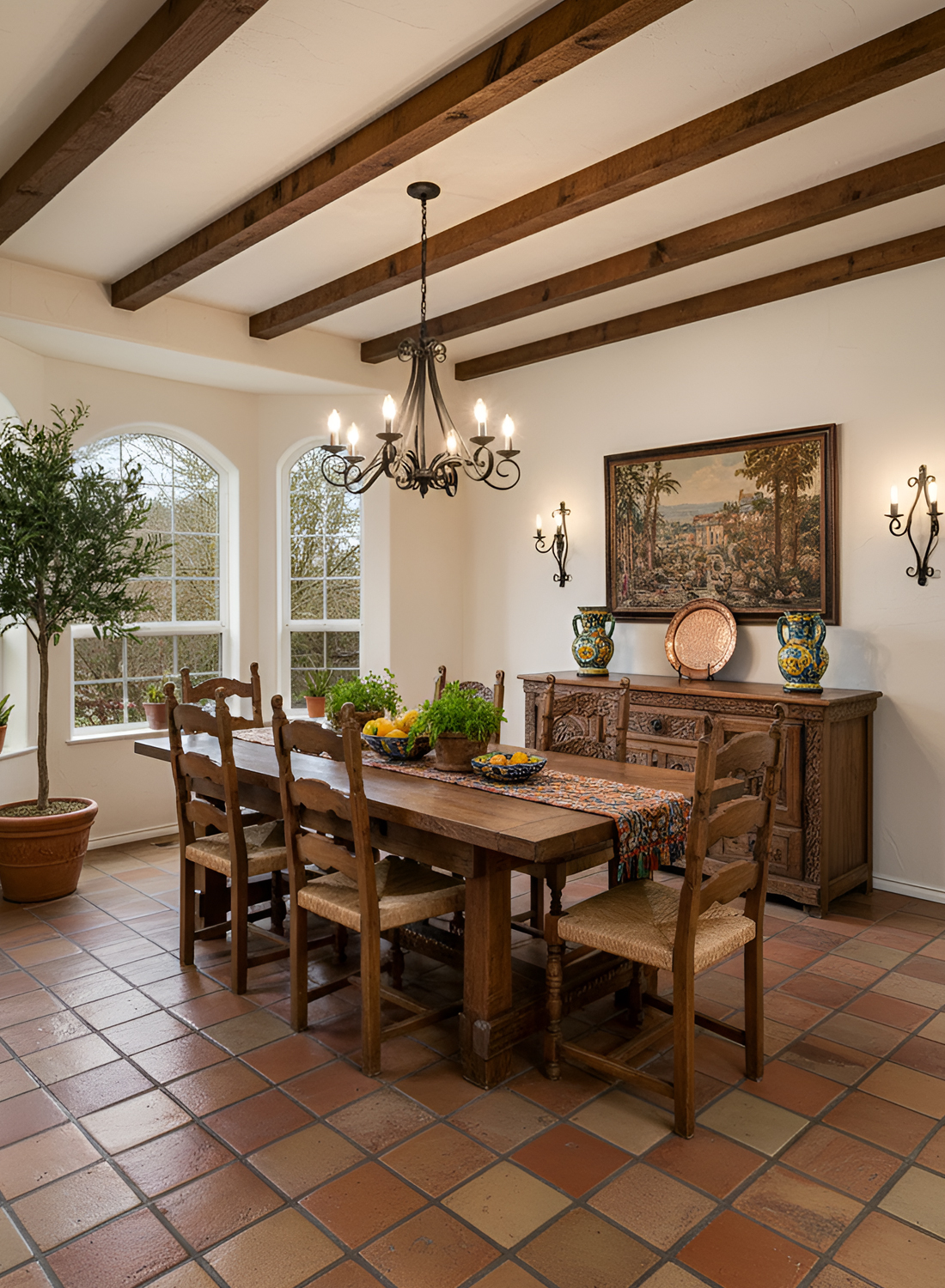
Leather is another material that works beautifully in Spanish Revival interiors. It adds warmth, depth, and a bit of rugged elegance. In a dining room, leather can appear on chair seats, captain’s chairs, or even in small details like straps or stitched accents.
Choose leather that feels natural and slightly worn, not too smooth or shiny. Cognac, saddle brown, and dark tobacco shades tend to look best with this style. They pair well with wood, iron, plaster, and tile.
Leather helps the room feel layered and timeless. It also adds comfort in a subtle way.
Cues to look for:
- Cognac or tobacco leather
- Matte or lightly worn finish
- Leather dining seats
- Rustic stitched detail
- Warm, earthy richness
14. Hang art that feels historic and earthy
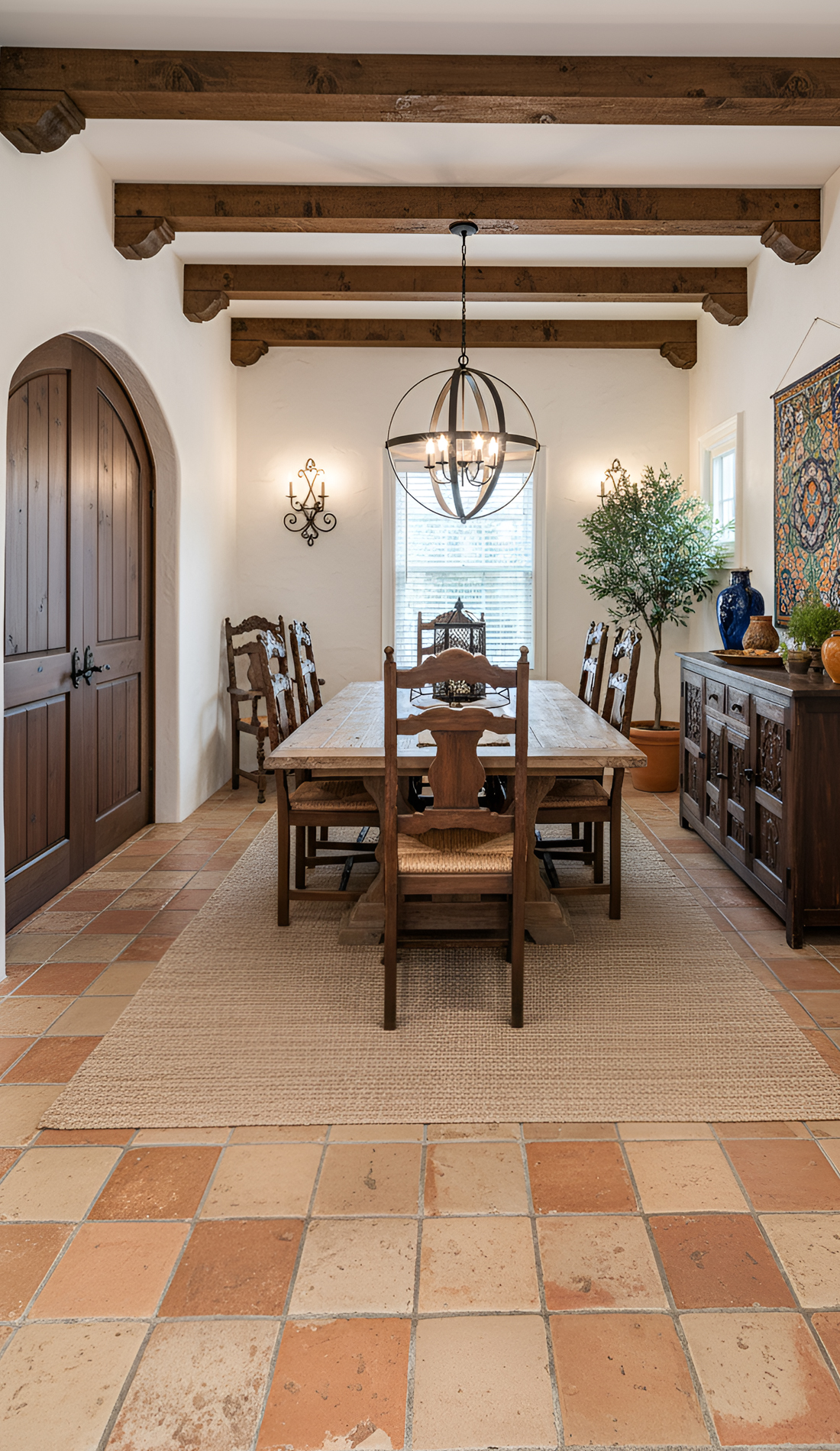
The best art for a Spanish Revival dining room feels connected to place, history, or nature. That might mean a vintage oil painting, a framed textile, a landscape, a still life, or even a piece of old architectural salvage.
Avoid artwork that feels too bright, abstract, or modern unless you want a stronger mix of styles. Traditional or rustic pieces tend to support the mood better. Frames should feel weighty too. Dark wood, black, bronze, or aged gold work well.
Art is a great way to make the room feel personal while still staying true to the style.
Cues to look for:
- Vintage or old-world subject matter
- Earthy colors
- Dark wood or aged metal frames
- Landscapes, still life, or architectural pieces
- Collected, storied feel
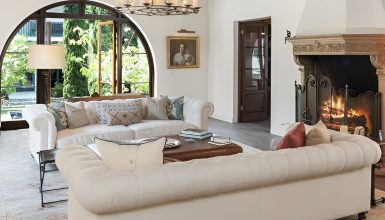
15. Add a fireplace if the room allows
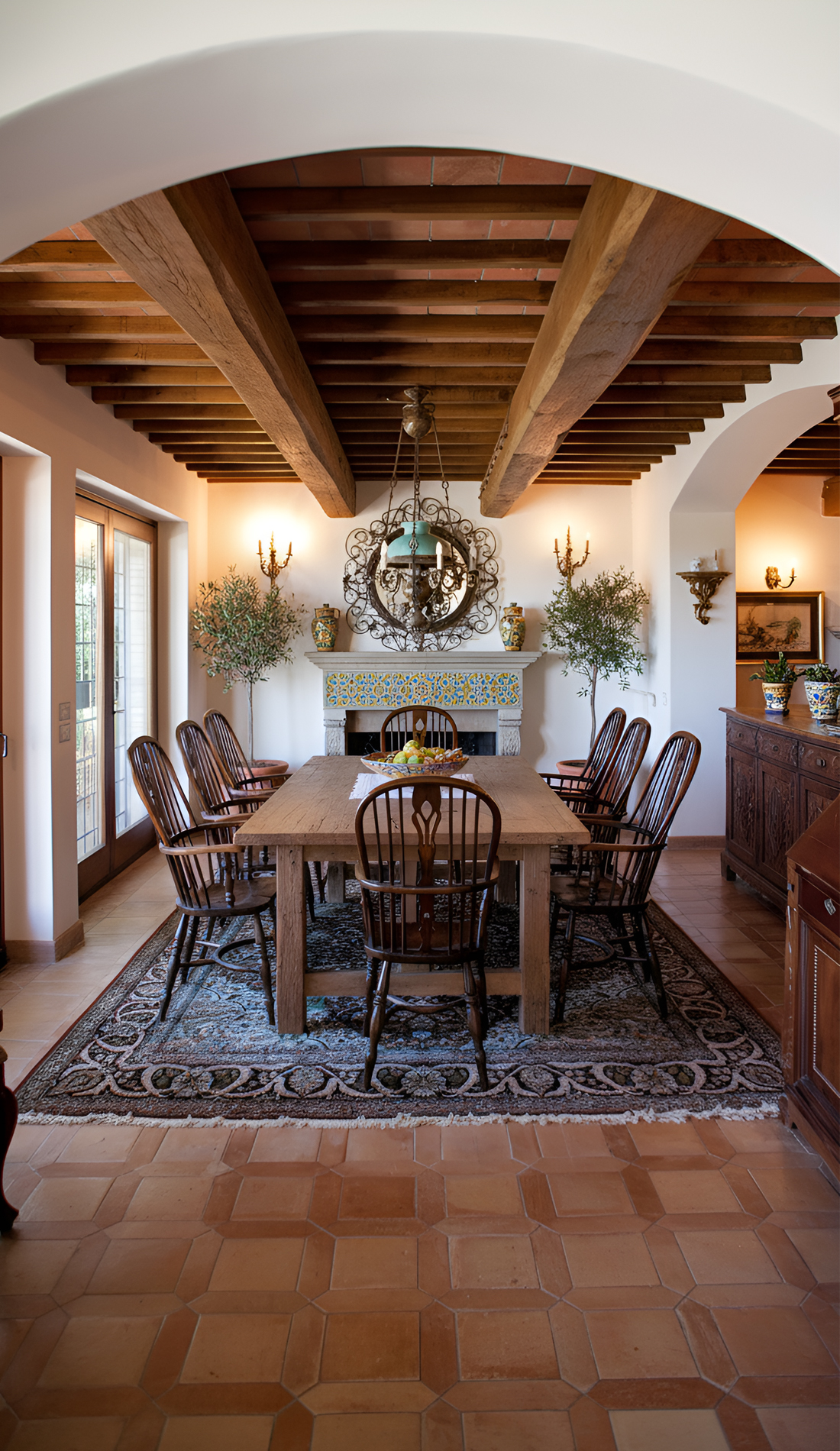
A fireplace can make a Spanish Revival dining room feel truly special. It becomes a natural focal point. It also adds the kind of warmth that makes the whole room feel intimate and memorable.
If you have a fireplace, consider finishing it with plaster, tile, or a rustic wood mantel. A simple curved firebox opening can echo the arched details used elsewhere in the room. Even when it is not lit, the fireplace adds a strong sense of place.
If a real fireplace is not possible, you can still mimic the look with a faux mantel or a built-in niche wall that creates a similar focal point.
Cues to look for:
- Plaster or tiled surround
- Arched firebox opening
- Rustic wood mantel
- Strong focal placement
- Warm, intimate atmosphere
16. Use greenery that feels simple and natural
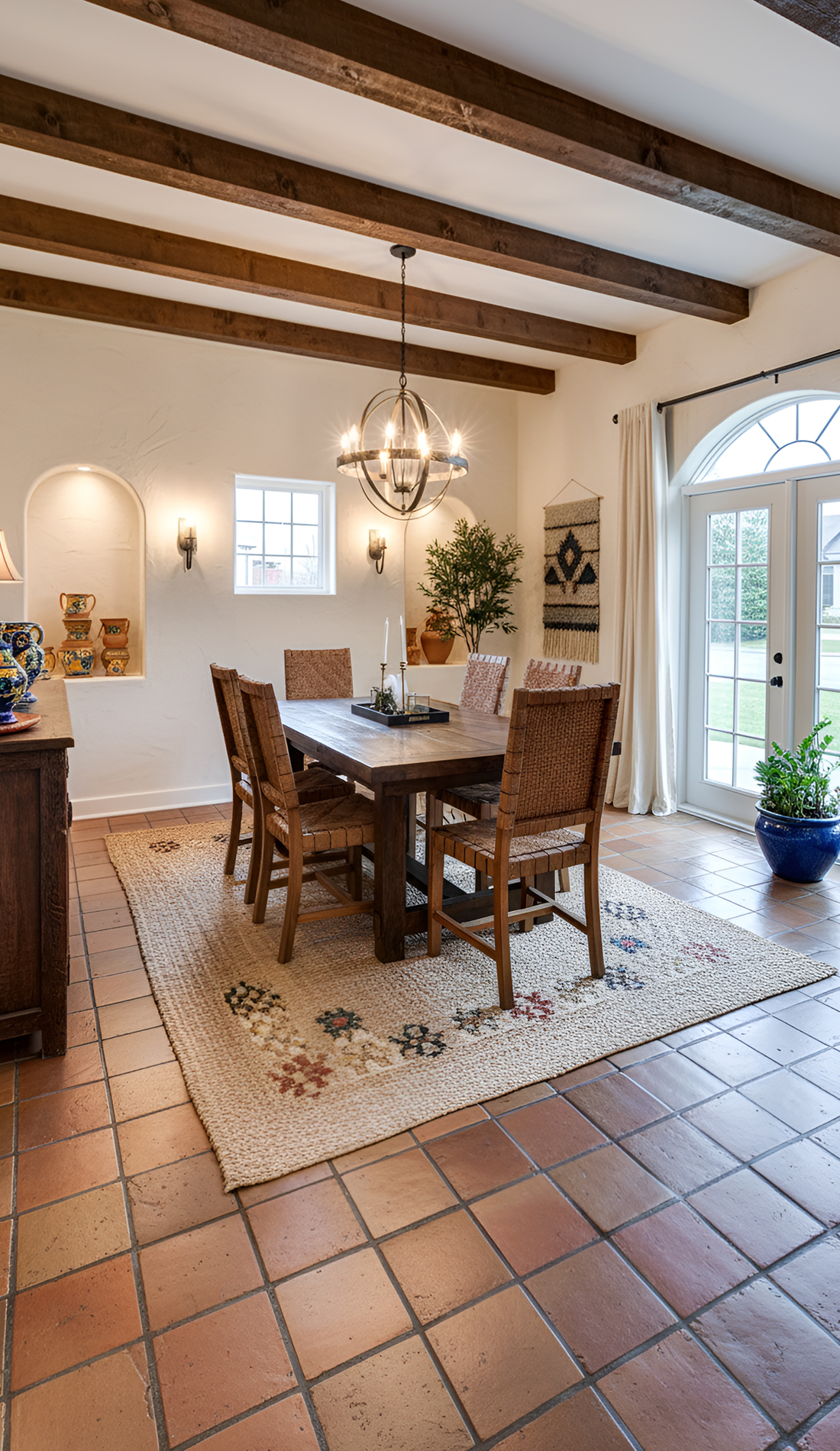
A Spanish Revival dining room does not need flashy floral arrangements. In fact, simpler is often better. Olive branches, eucalyptus, dried stems, or potted herbs fit the look beautifully. They feel natural, relaxed, and connected to the landscape.
Greenery works best when it looks effortless. A clay vase with branches on the table can be enough. A potted olive tree in the corner can add height and softness. These touches keep the room from feeling too heavy.
Nature is part of what makes this style feel alive.
Cues to look for:
- Olive branches or eucalyptus
- Clay or ceramic pots
- Understated arrangements
- Mediterranean feel
- Easy, natural styling
17. Keep the room warm, layered, and a little imperfect
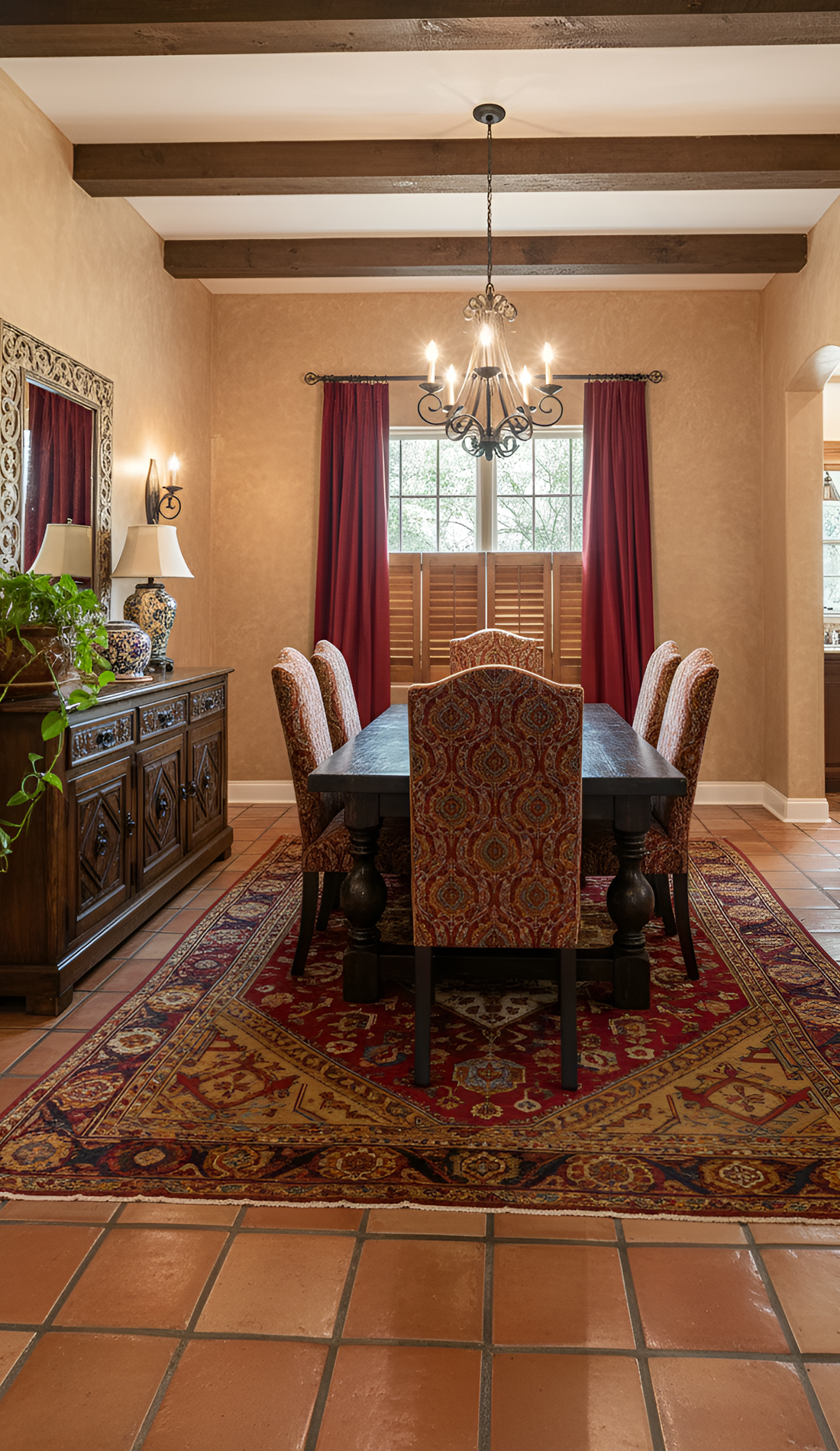
This may be the most important idea of all. Spanish Revival design is beautiful because it does not chase perfection. It embraces age. It celebrates texture. It loves materials that show their grain, patina, and variation.
That means your dining room does not need to feel overly styled. In fact, it should not. A Spanish Revival room feels best when it looks layered over time. Maybe the chairs do not all match exactly. Maybe the tile has natural variation. Maybe the wood table shows wear from family dinners. That is the charm.
So instead of trying to make everything crisp and polished, focus on warmth and character. Let the room feel collected. Let it feel lived in. That is where the magic happens.
Cues to look for:
- Layered materials
- Patina and age
- Handmade finishes
- Collected, relaxed look
- Warmth over perfection
How to pull the look together
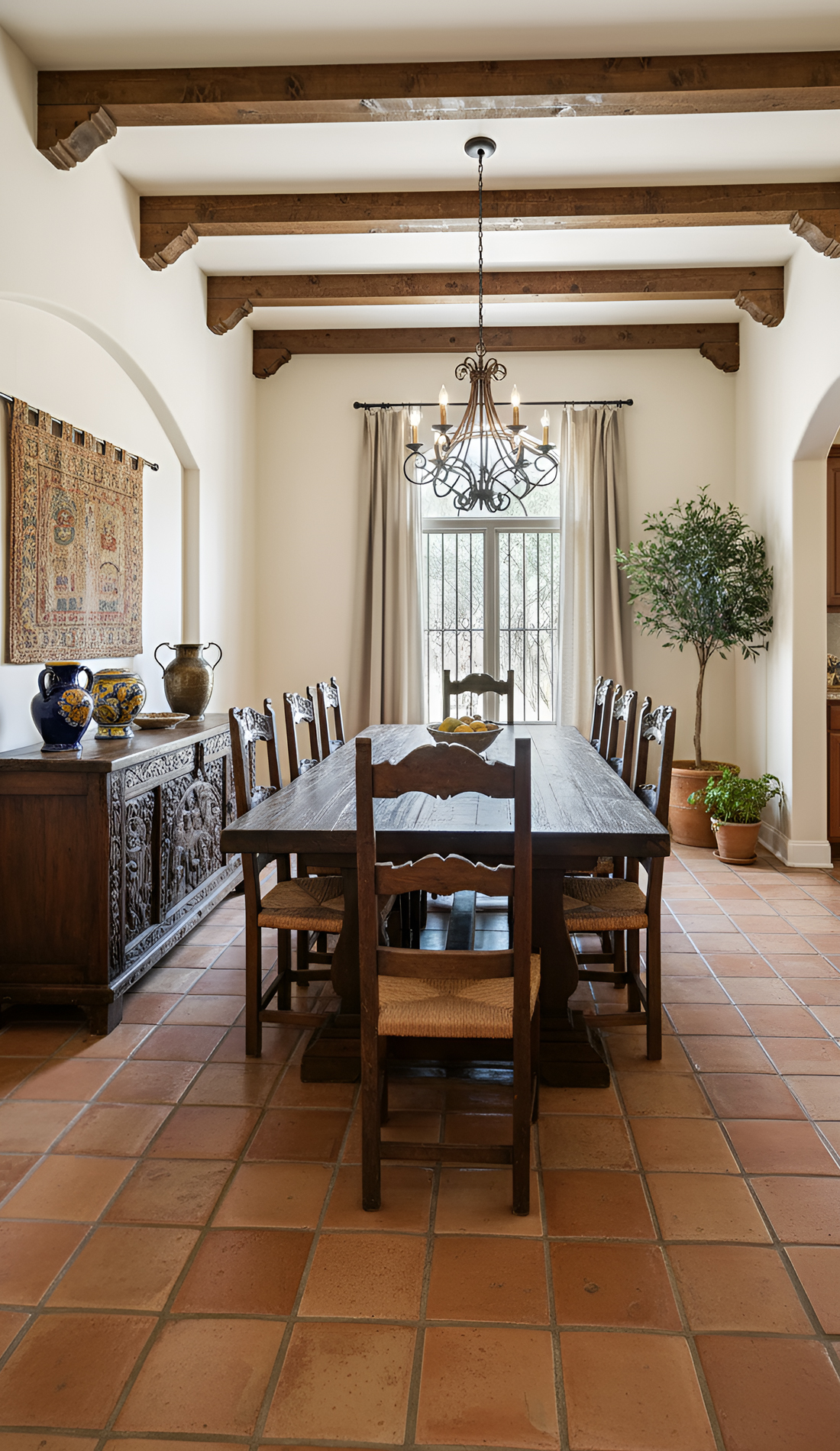
If you want your dining room to feel cohesive, start with the big pieces first. Choose your table, lighting, and wall color. Then build from there with chairs, textiles, and accessories. This keeps the room from feeling busy.
Also, remember that Spanish Revival style works best when every element feels connected by warmth. The woods should feel rich. The metals should feel aged. The walls should feel soft. The colors should feel earthy. When those details work together, the room instantly feels more authentic.
You also do not need to use every idea at once. Even a few strong choices can make a big impact. A wood table, iron chandelier, plaster walls, and one beautiful tiled detail may be all you need.
Conclusion
A Spanish Revival dining room feels cozy, layered, and full of character. It mixes rustic beauty with elegant details in a way that never feels too formal. From terracotta floors to carved wood furniture, each element adds warmth and soul. Use these ideas to create a dining room that feels inviting, stylish, and made to gather in.