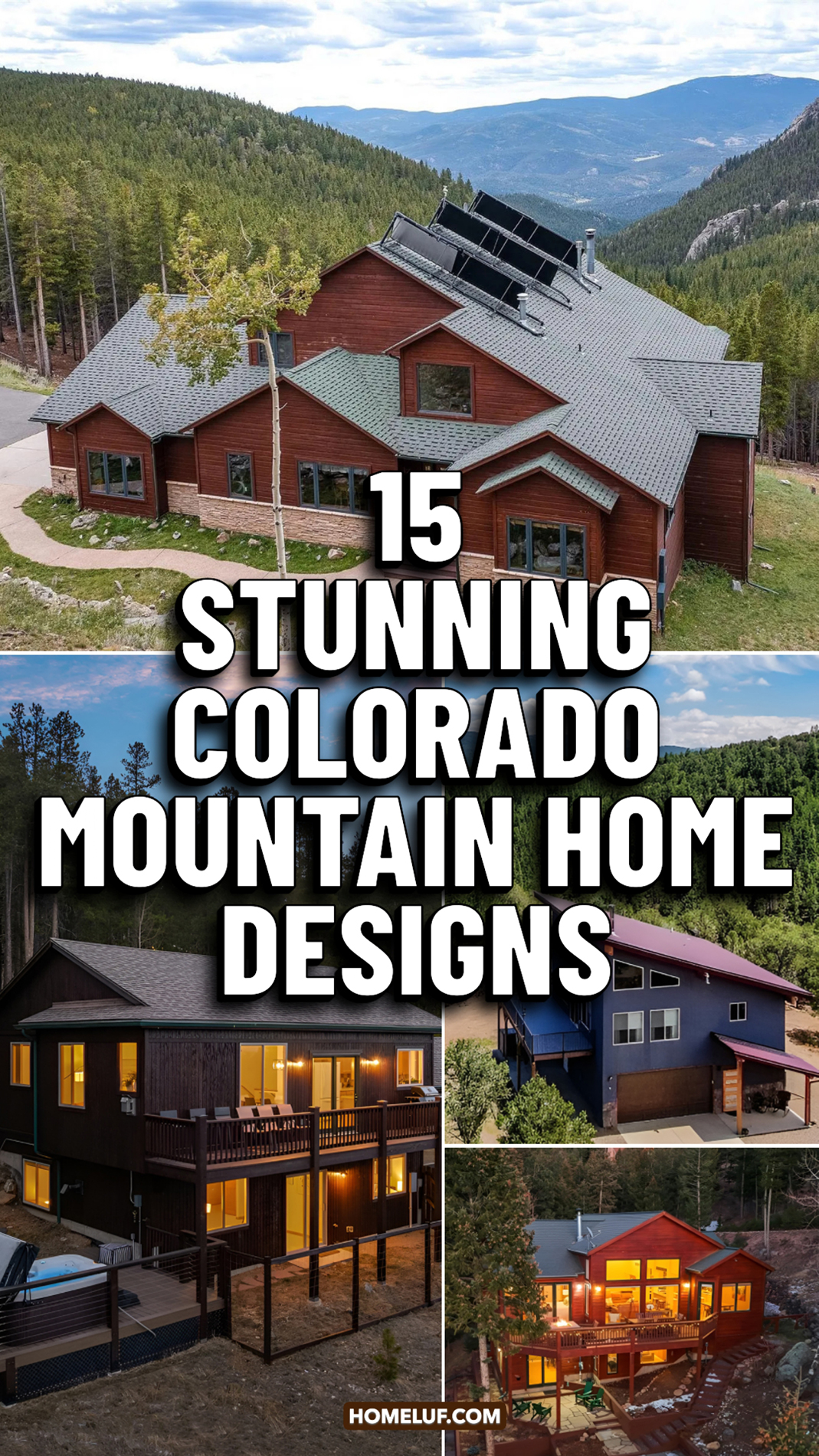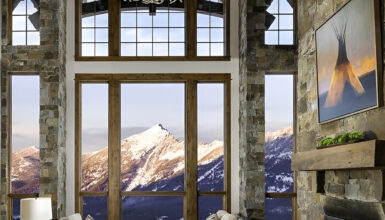
Colorado mountain homes have a magic all their own. Some feel sleek and modern. Others feel warm, rustic, and deeply tied to the land. Yet the best ones all share one thing: they make the view feel like part of the design. From dark cabins in the trees to bold homes set against red rock, these exteriors are full of smart ideas worth saving.
1. Modern Charcoal Mountain Retreat With Warm Wood Accents
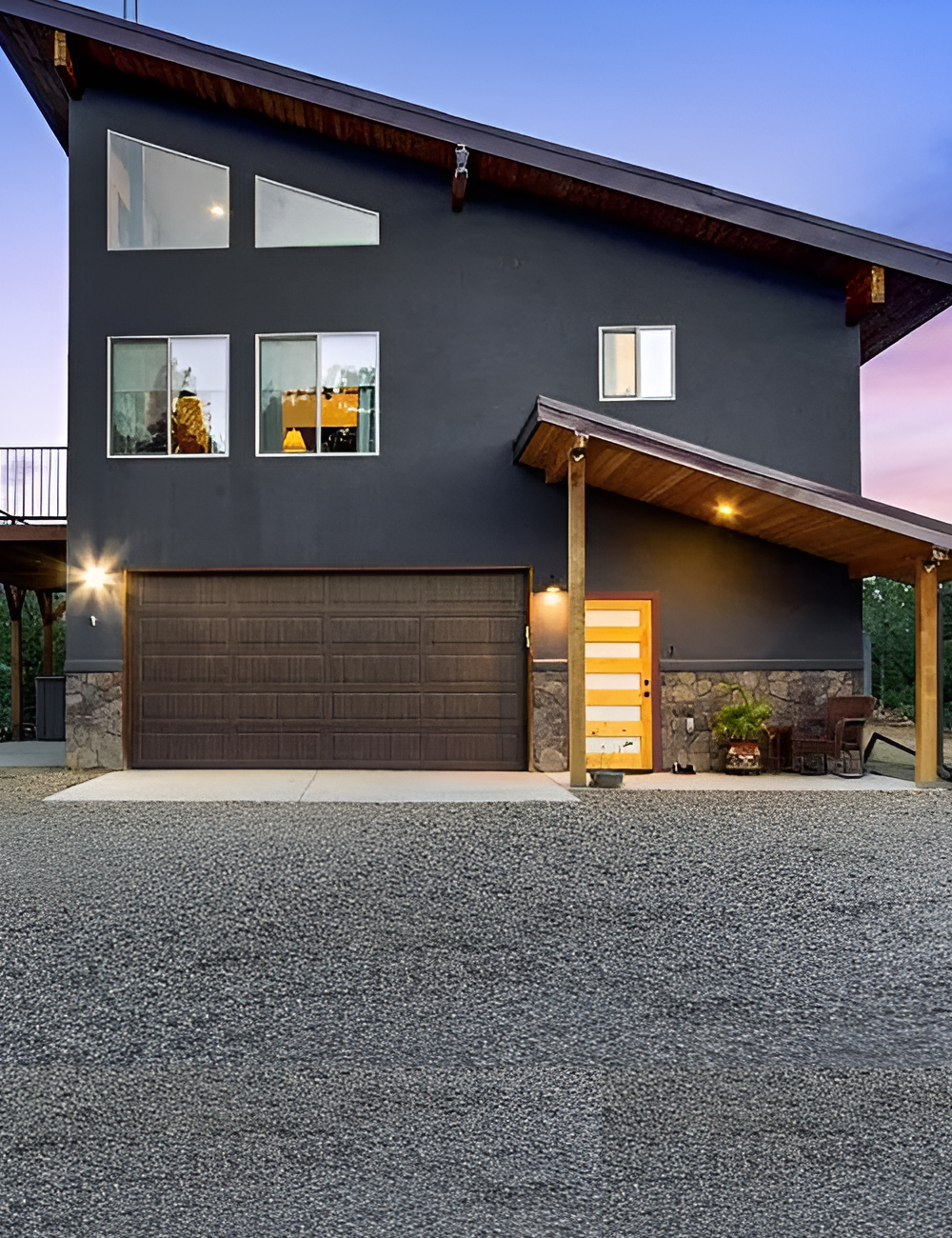
This home feels sharp, clean, and confident right away. The dark charcoal exterior gives it a modern edge, but the wood soffits and porch details stop it from feeling cold. That balance matters. In a mountain setting, a house like this needs some warmth, and the natural wood does that beautifully.
The roofline is one of the strongest features here. It has a dramatic angle, and that gives the house a bold silhouette against the sky. Those high windows also help the shape feel taller and more sculptural. Instead of relying on lots of trim or decorative details, the design lets massing and proportion do the work.
The stone at the base is another smart move. It grounds the house visually, especially since the upper volume feels large and modern. In a mountain home, a heavy-looking base often helps a house feel more stable and connected to the site. Here, the stone also adds texture, which keeps the smooth dark siding from looking flat.
The simple gravel approach fits the setting too. It feels rugged, casual, and low maintenance. That suits a mountain home much better than a fussy front yard would. Meanwhile, the small covered porch gives the entry a sheltered, welcoming feel without taking away from the clean lines.
Cues to borrow:
Use a dark exterior color if you want a home to feel modern and quietly dramatic. Then add wood at the soffits, porch ceiling, or entry to warm it up. Also, consider stone on the lower portion of the house to give the design more visual weight. Finally, keep the landscaping simple so the architecture and the view stay front and center.
2. Angular Forest Home That Melts Into the Hillside
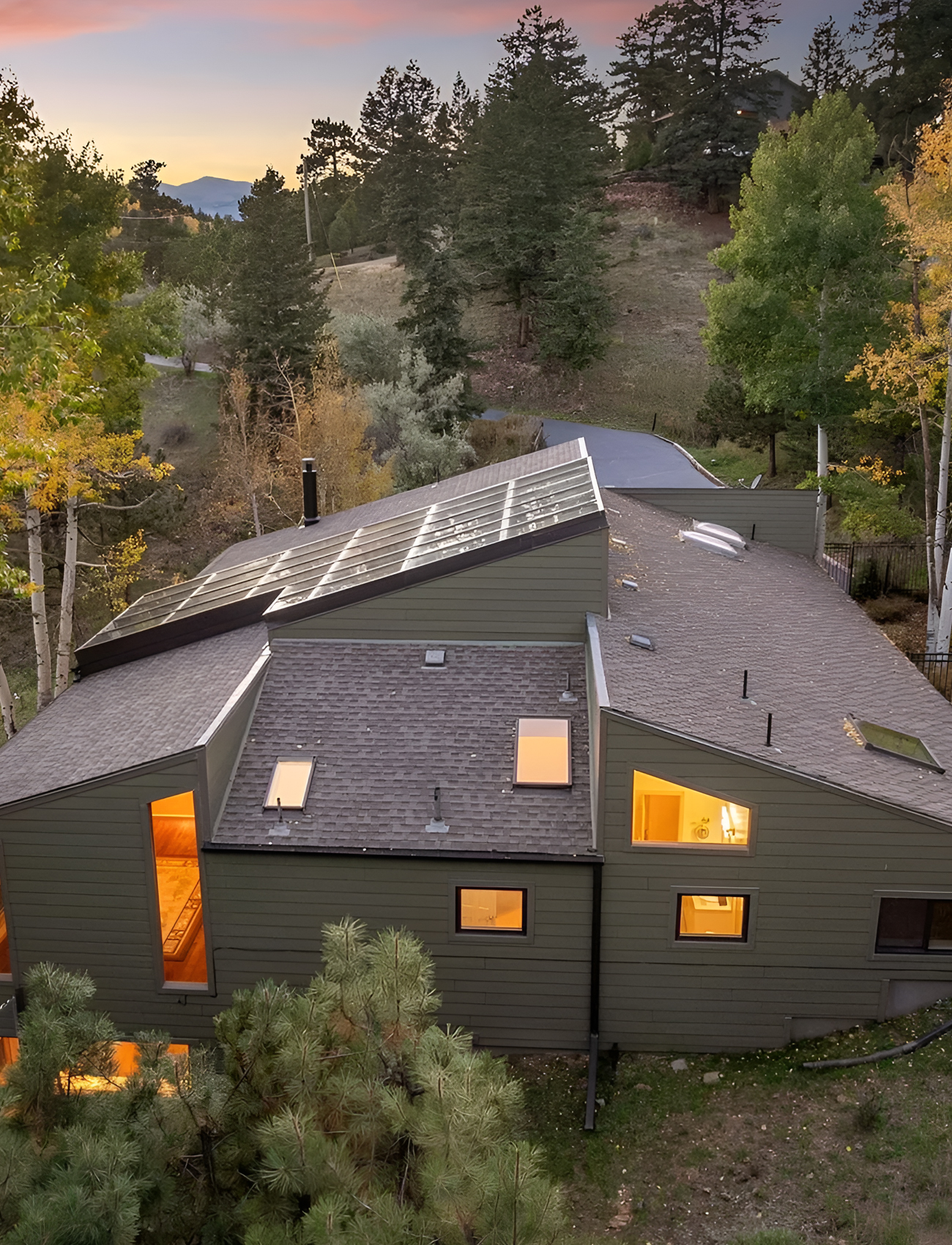
This house feels almost tucked into the land. That is one of its best qualities. The muted green siding blends with the trees and brush, so the home does not shout for attention. Instead, it feels calm and settled, which is often the best look for a mountain property.
The roof design is what makes this exterior stand out. It has a series of strong angles and folded planes that create a modern mountain look without feeling too hard or flashy. Those shapes also help the house feel lower and more connected to the slope. Rather than one large bulky mass, the home breaks into sections that step with the site.
Skylights bring another layer of interest. From above, they break up the roof surface and hint at bright interiors inside. The narrow and angled windows do something similar. They make the exterior feel custom and thoughtful, not generic.
This house also shows how important color restraint can be. The siding, trim, and roof all stay within a deep earthy palette. Because of that, the form becomes the star. In mountain settings, that often works better than lots of contrast.
Cues to borrow:
Choose siding colors that echo the landscape around you. Olive, moss, deep brown, and smoky green often work beautifully in wooded areas. Also, break up a large home into smaller exterior volumes when building on a slope. That helps the house feel more natural on the land. Skylights, asymmetrical rooflines, and carefully placed windows can make even a quiet color palette feel striking.
3. Layered Hillside Lodge With Decks for Every View
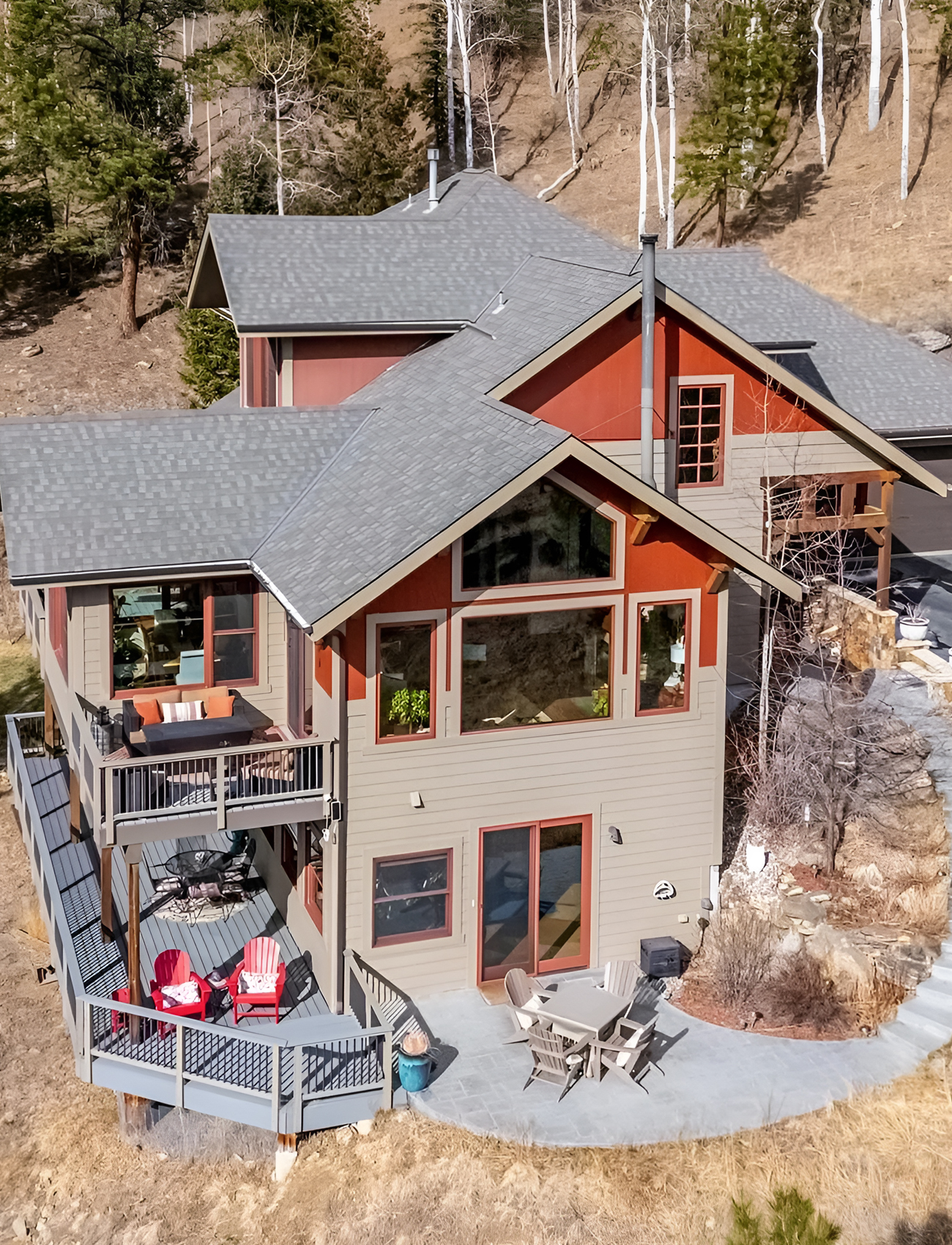
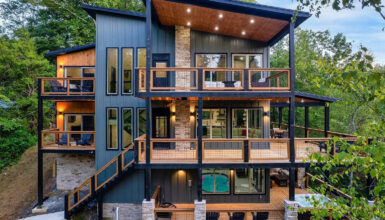
This home shows how well a mountain house can work with a steep site instead of against it. The multi-level design follows the slope, and that makes the whole exterior feel more natural and useful. Rather than forcing a flat footprint, the house stacks outdoor living areas and window walls in a way that celebrates the hillside.
The color palette is a big reason this design feels warm. The taupe siding works as a soft neutral, while the rusty red accents add mountain character. That earthy red picks up the tones of surrounding soil, rock, and wood, so it feels grounded instead of random. It also gives the house more personality.
The decks are doing a lot of work here. They create outdoor rooms at different levels, which is perfect for a mountain home with changing views and sun patterns. The railings are simple and dark, so they do not block the scenery. That is a smart detail worth noticing. In scenic locations, heavy railings can quickly make decks feel bulky.
The large front-facing windows are another strong feature. They pull in light and help the house feel open, even though it sits on a rugged site. Because the trim color ties in with the siding and accent color, the whole composition still feels cohesive.
Cues to borrow:
On a sloped lot, think in layers. Use decks, terraces, and stepped foundations to make the grade feel like an asset. Choose one main neutral and one earthy accent color for a palette that feels lively but still natural. And keep deck railings visually light so the view stays open.
4. Colorado Villa With Stucco Walls and Big Mountain Drama
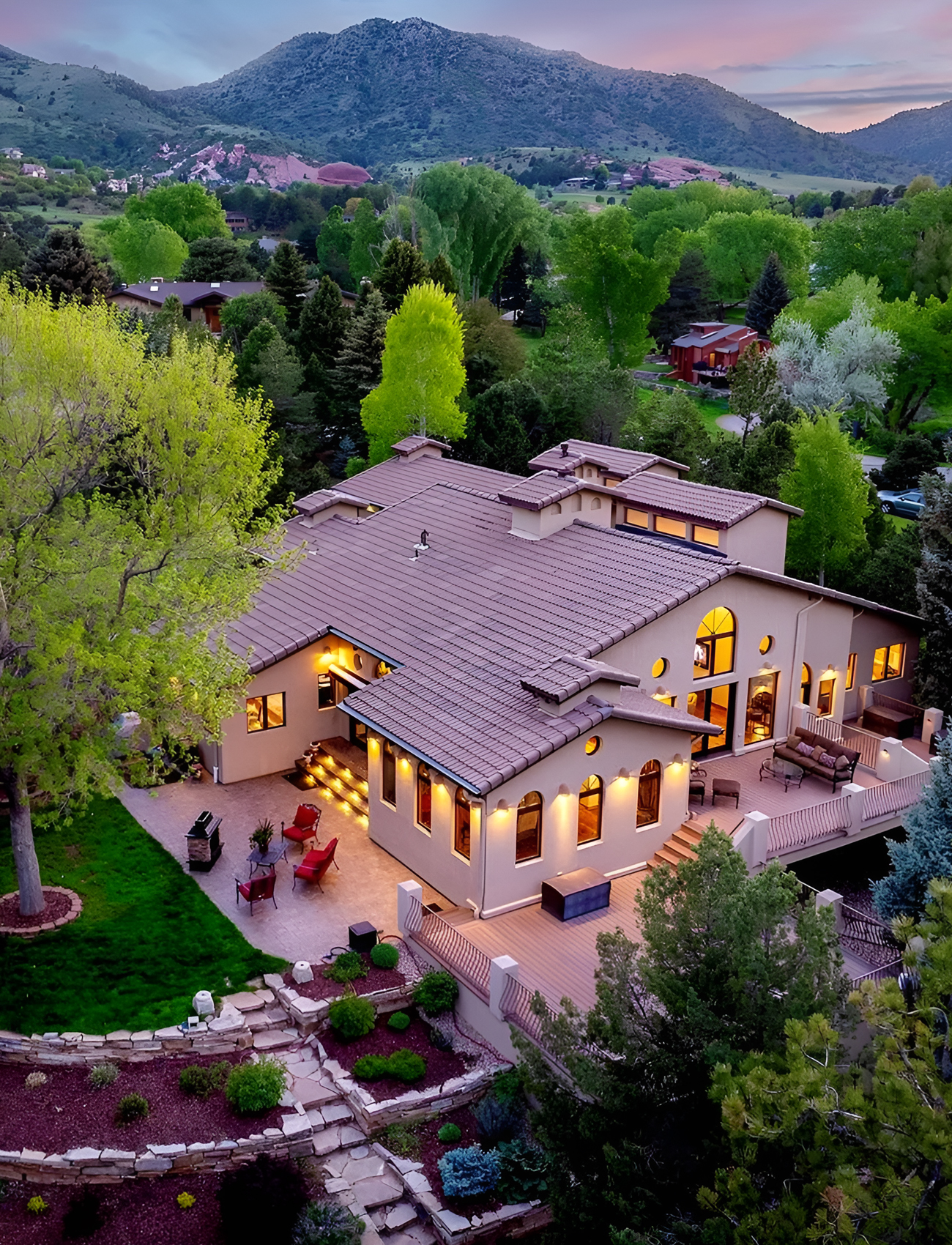
This home takes a different path from the rustic cabin look, and that is exactly why it stands out. It leans more Mediterranean or Southwest in style, yet it still works in the mountain setting because of its scale, materials, and connection to the landscape.
The stucco exterior gives the house a smooth, sculpted look. Then the tiled roof adds warmth and a sense of permanence. Together, they create a more refined mountain estate feel. The arched windows help soften the large facade, while the tall central glass brings in drama and light.
What makes this exterior especially successful is the way the house spreads across the lot instead of rising too sharply. That broad footprint works well with the mature trees and open mountain backdrop. The terraces, steps, and low retaining walls also help blend the home into the site. It feels landscaped, but not overdesigned.
Outdoor living matters here too. The large deck and patio areas make the home feel connected to the views and the yard. Even though the architecture is more formal than some of the other homes, the exterior still invites relaxed outdoor use.
Cues to borrow:
Do not assume every mountain home needs log siding or exposed beams. Stucco, tile, and arches can work beautifully when paired with earthy colors and strong landscaping. Use terraces and layered planting beds to soften a large home. Warm exterior lighting also helps a substantial house feel inviting at dusk.
5. Classic Timber Cabin Framed by Golden Aspens
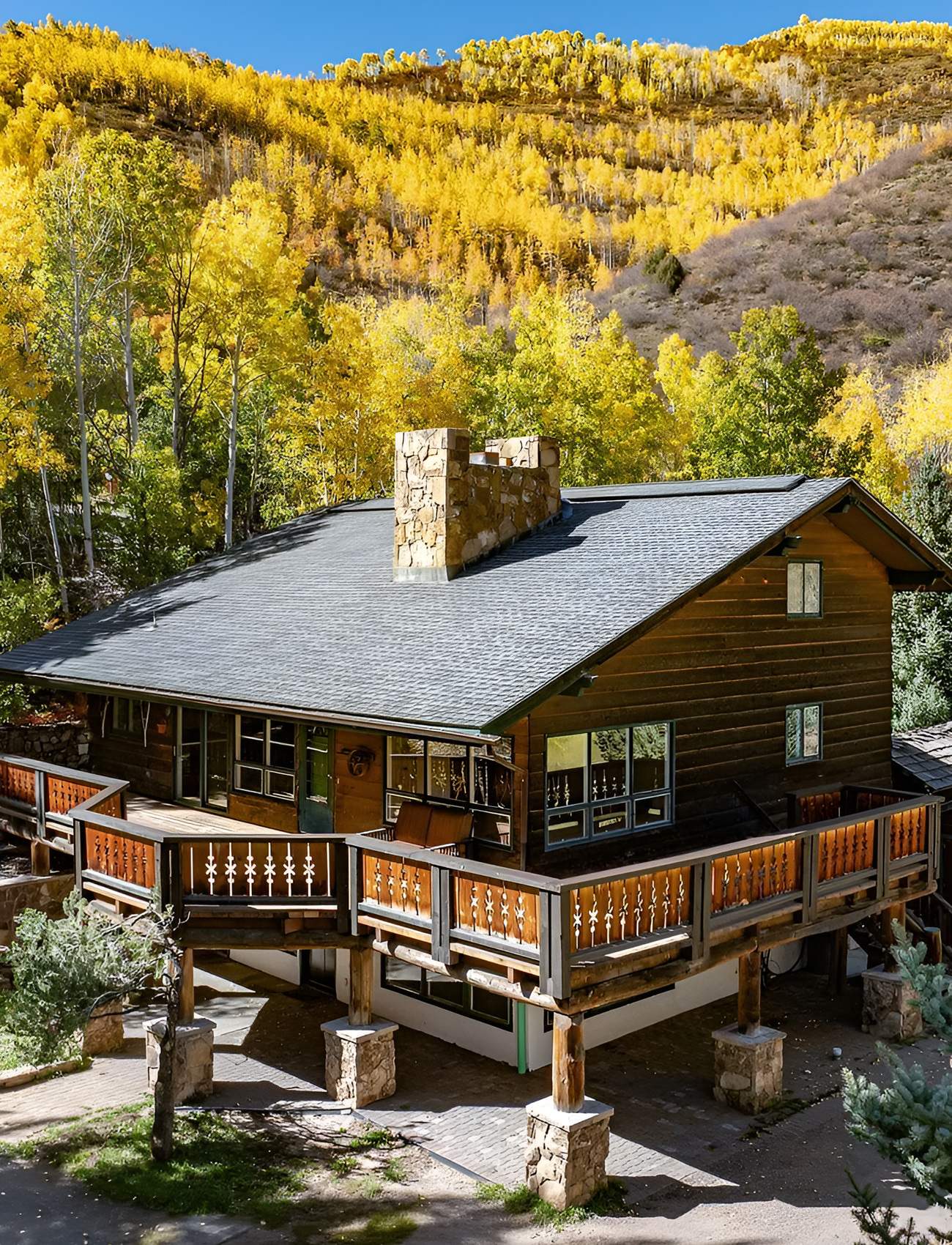
This is the kind of mountain home that instantly feels nostalgic. The dark stained wood siding, wraparound deck, and stone chimney create a timeless cabin look that fits the autumn setting perfectly. It feels cozy, sturdy, and deeply rooted in the landscape.
The deck is one of the best parts of this exterior. It wraps around the house and extends the living space in a practical way. In a mountain home, that is a big win. You want places to sit in the sun, enjoy the trees, and move around the house easily. The deck railing design adds charm too. It has just enough detail to feel classic without becoming fussy.
The stone chimney brings in vertical texture and makes the home feel anchored. A cabin exterior often needs one strong masonry feature, and this chimney does exactly that. It gives the roofline something solid to push against.
The stain color is important as well. It is rich, warm, and dark enough to stand out against the bright aspens. Yet it still feels natural. That is the sweet spot for mountain wood exteriors.
Cues to borrow:
If you love a classic cabin look, focus on a few honest materials: stained wood, stone, and simple decking. Let the grain and texture show. A wraparound or partially wrapped deck can make a modest house feel much more generous. Choose stain colors that feel earthy and deep rather than orange or overly glossy.
6. Secluded Black Cabin With a Deck in the Trees
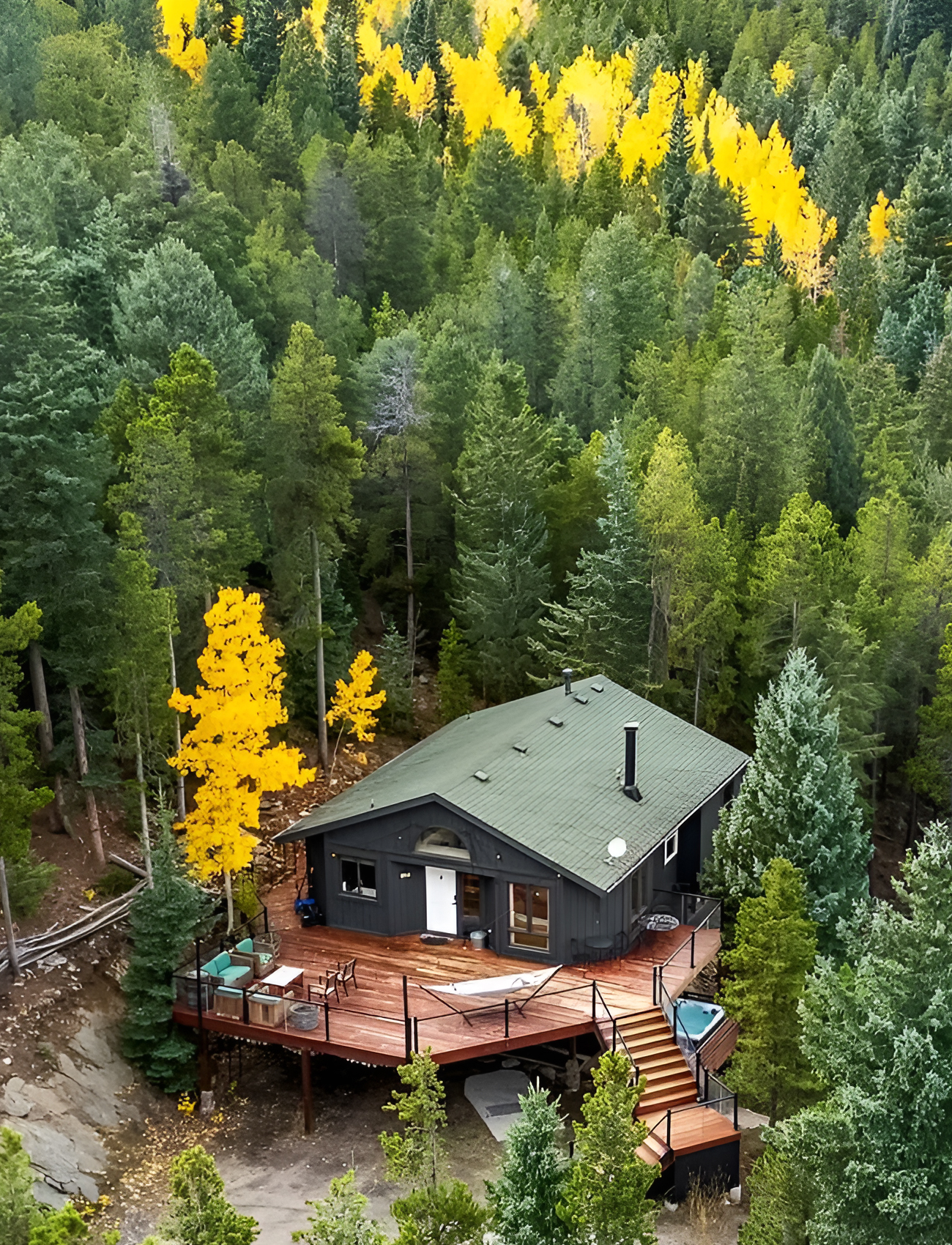
This home proves that small can still feel unforgettable. Set deep in the forest, it uses contrast in a smart way. The black exterior lets the house recede into the trees, while the warm wood deck pops just enough to make the structure feel inviting.
The footprint looks simple, but the placement is what makes it special. The house sits on a clearing at the edge of a slope, and the deck reaches out into the forest like a viewing platform. That kind of outdoor extension is perfect for a mountain home. It lets the setting become part of the design.
The roof is modest and practical, which suits the scale of the home. Meanwhile, the front deck adds the drama. Because the railing is minimal, the house feels open to the woods rather than boxed in. The hot tub placement is smart too. It turns the exterior into an experience, not just a facade.
This house also shows how powerful restraint can be. There are not many materials here. There are not many colors either. But every choice feels deliberate.
Cues to borrow:
For a compact mountain home, keep the architecture simple and invest in the outdoor living area. A large deck can make a small cabin feel much bigger. Dark siding works especially well in dense wooded settings. Pair it with warm-toned decking so the home still feels welcoming.
7. Warm Cedar Lookout With Big Glass and Tiered Outdoor Living
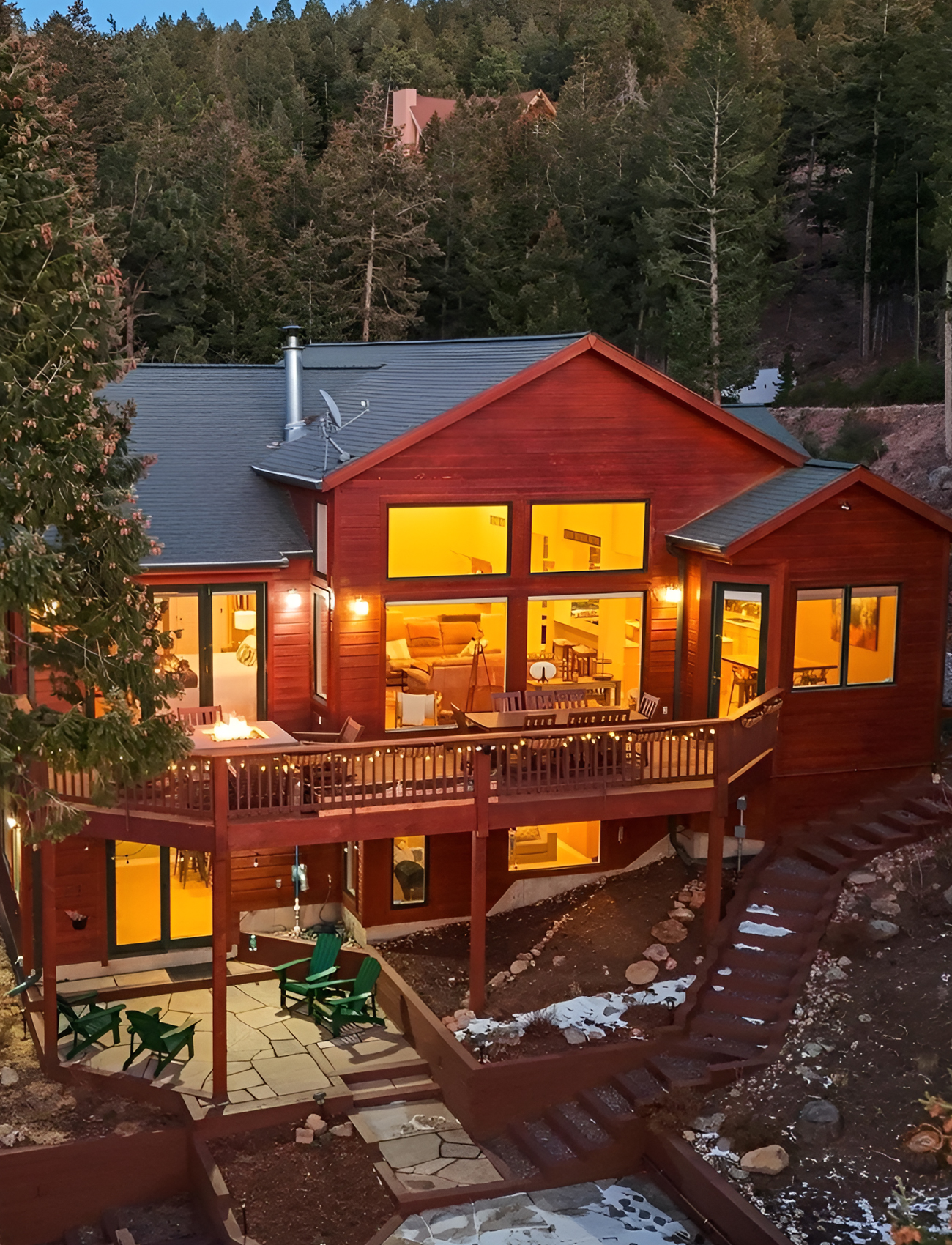
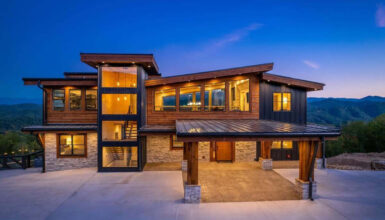
This house has a rich, glowing presence, especially at dusk. The reddish wood siding catches the light beautifully and makes the whole home feel warm from a distance. Against the rocky, wooded slope, that warmth feels inviting and strong.
The large center window wall is the star here. It gives the house a lodge-like feel and likely opens the interior to major views. In mountain architecture, big glass often does the emotional heavy lifting. It connects the inside to the outdoors and makes the scenery feel like part of daily life.
The deck and patio system also deserves attention. There is an upper deck for views and a lower seating area that feels more sheltered. That layering is smart because it gives the exterior more ways to be used. Some moments call for open sky. Others call for a tucked-away fire pit or lounge area.
The steps and retaining edges help shape the steep lot into usable zones. That is a strong lesson from this house. Good mountain exteriors often depend as much on site work as on siding and rooflines.
Cues to borrow:
Use warm wood tones when you want a mountain home to feel welcoming and classic. Add large windows on the main view side, but balance them with solid wall areas so the exterior still feels grounded. On sloped sites, create a mix of upper and lower outdoor zones for variety and comfort.
8. Stone-and-Shadow Mountain Home With Refined Rustic Style
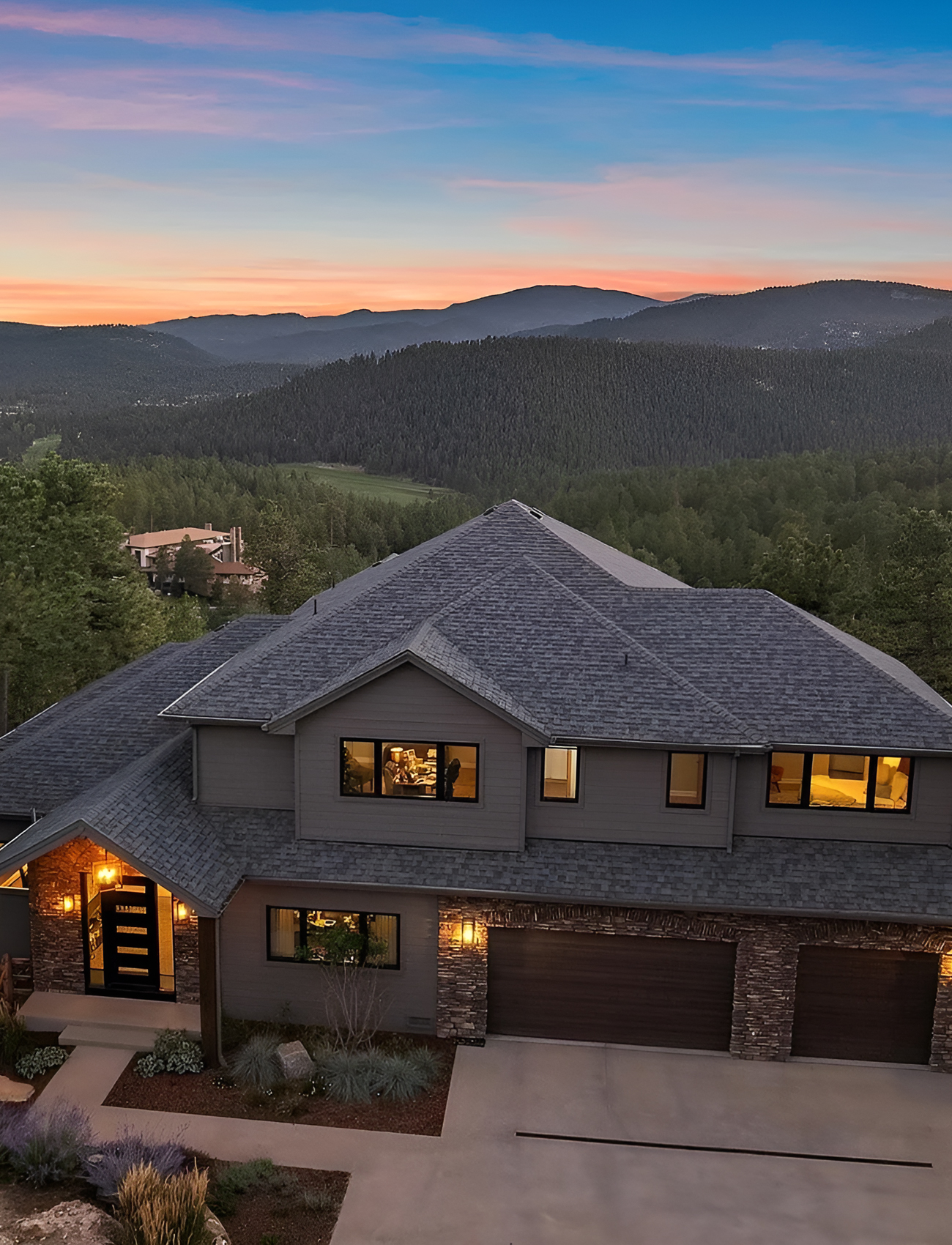
This exterior feels polished, upscale, and very livable. The dark gray siding gives it a contemporary mountain mood, while the stacked stone at the garage and entry adds the rugged texture people expect in this setting. The result feels refined but not too formal.
The composition is especially strong from the street. The roofline is broad and layered, which gives the house presence without making it feel tall or awkward. The covered entry creates a clear focal point, and the black front door adds just the right amount of contrast. Warm sconces finish the look and make the whole facade glow at dusk.
The garage integration is handled well too. That matters more than people think. Large garage doors can easily dominate a mountain facade, but here the stone surround and dark color help them blend into the design. The landscaping stays simple and architectural, which keeps the front elevation clean.
This home also shows how a darker exterior can still feel elegant. Because the stone has warmth and variation, the palette never looks flat or heavy.
Cues to borrow:
Mix dark siding with textured stone if you want a mountain exterior that feels both current and timeless. Pay attention to the entry. A strong front door, covered porch, and warm lighting can make a large facade feel much more personal. Also, use landscaping in a restrained way so the architecture stays crisp.
9. Red Rock Modern With Glass Walls and Desert-Mountain Drama
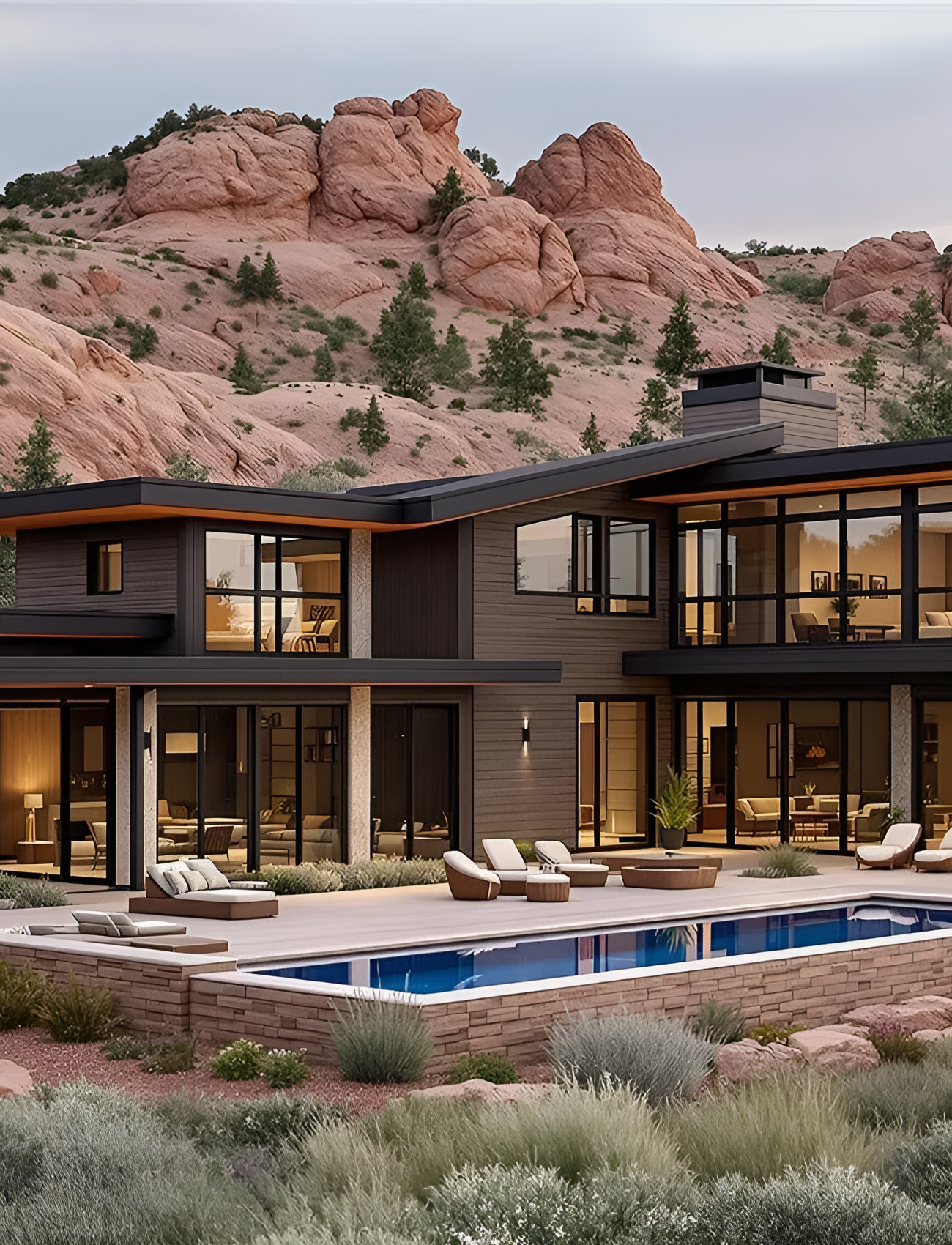
This house feels bold, clean, and perfectly placed. Right away, the long horizontal rooflines mirror the layers of the red rock behind it. That is one reason the design feels so successful. Even though the architecture is modern, it still responds to the natural forms around it.
The dark trim and deep brown-gray siding help the house settle into the site. Those tones look rich against the warm rock backdrop, and they keep the home from feeling too bright or flashy. At the same time, the huge glass walls open the entire exterior to the landscape. That balance between dark solid surfaces and open glass is what gives the home its calm, high-end look.
The flat and low-slung rooflines also do a lot of work here. They stretch the house outward instead of upward, which makes the home feel grounded. In a dramatic setting like this, that is a smart move. A tall or overly fussy roof could fight with the scenery. This one lets the red rock remain the star.
Then there is the outdoor living area. The pool terrace feels crisp and architectural, but the stone retaining walls and soft planting keep it from looking harsh. The desert-style landscaping blends beautifully with the terrain and makes the exterior feel curated without feeling overdone.
Cues to borrow:
Use long horizontal lines when you want a mountain home to feel calm and grounded. Choose siding colors that echo nearby rock, bark, or soil. Add large windows on the best view side, but frame them with darker materials so the design still has visual weight. Keep landscaping low, textural, and regionally appropriate.
10. Charcoal View House With a Sharp Roofline
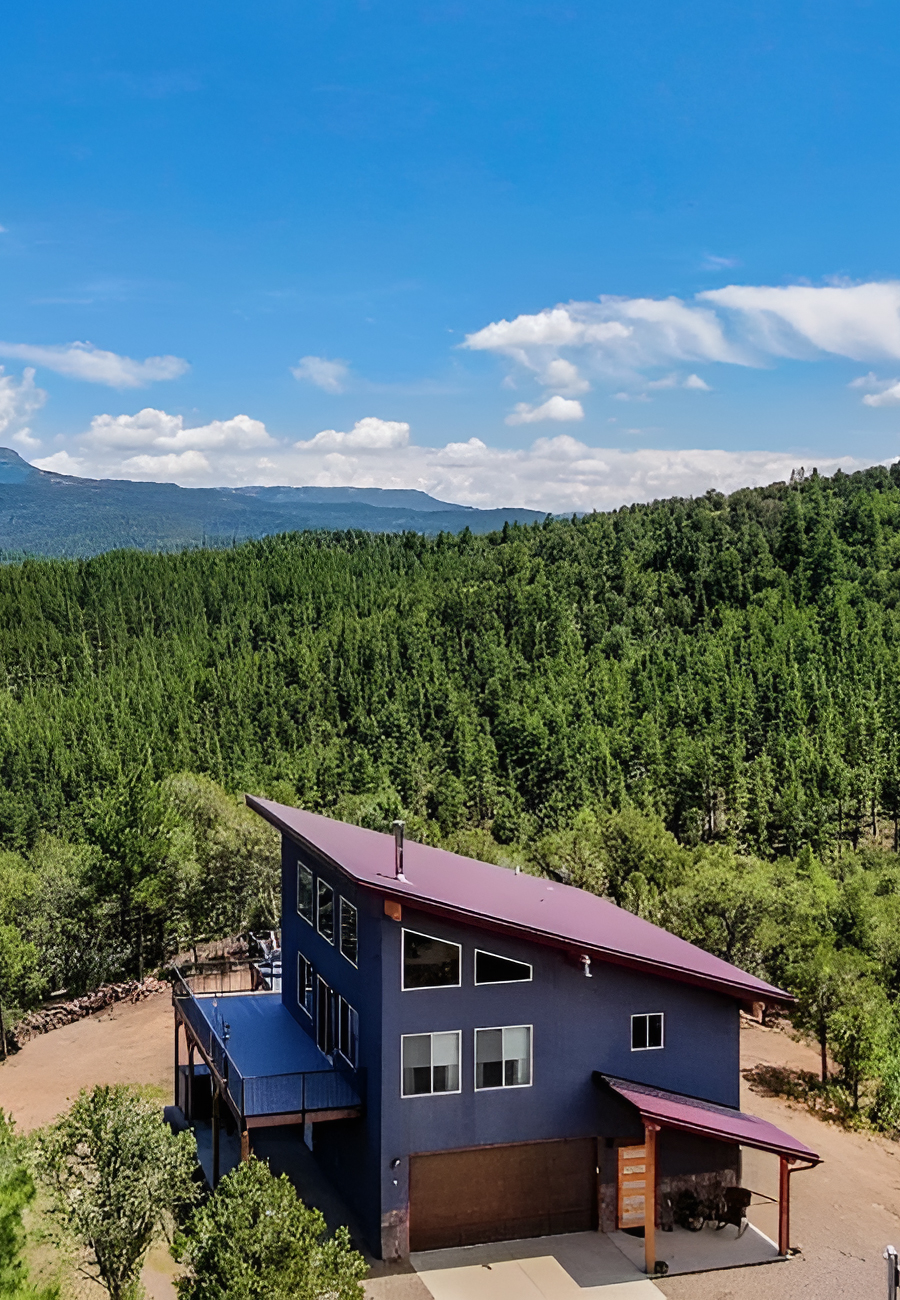
This home proves that one strong shape can carry an entire exterior. The dramatic angled roof gives the house a clear identity right away. It feels crisp, modern, and a little adventurous, which suits the open mountain setting around it.
The dark charcoal siding is one of the best choices here. It lets the house stand out without looking loud. Against the sea of green trees and the wide blue sky, the dark tone creates contrast, but it still feels earthy. The reddish roof adds another layer of personality. It warms up the exterior and gives the home a slightly rugged, custom feel.
The elevated deck is another smart feature. Because the house sits above the land, the deck becomes a natural extension of the living space. It gives the exterior more presence and turns the view into part of daily life. In a mountain home, that kind of connection matters more than decorative trim ever could.
The entry is simple, but it works. The covered porch keeps the front from feeling exposed, and the wood detail at the door brings warmth to an otherwise dark exterior. That small contrast helps the house feel welcoming.
Cues to borrow:
A dramatic roofline can do more than extra ornament ever will. Let the shape of the house create interest. Pair dark siding with one warm accent, such as stained wood or a muted red metal roof. Also, if your site has wide views, use an elevated deck to turn the scenery into a real design feature.
11. Timber-Toned Mountain Lodge With a Strong Stone Base
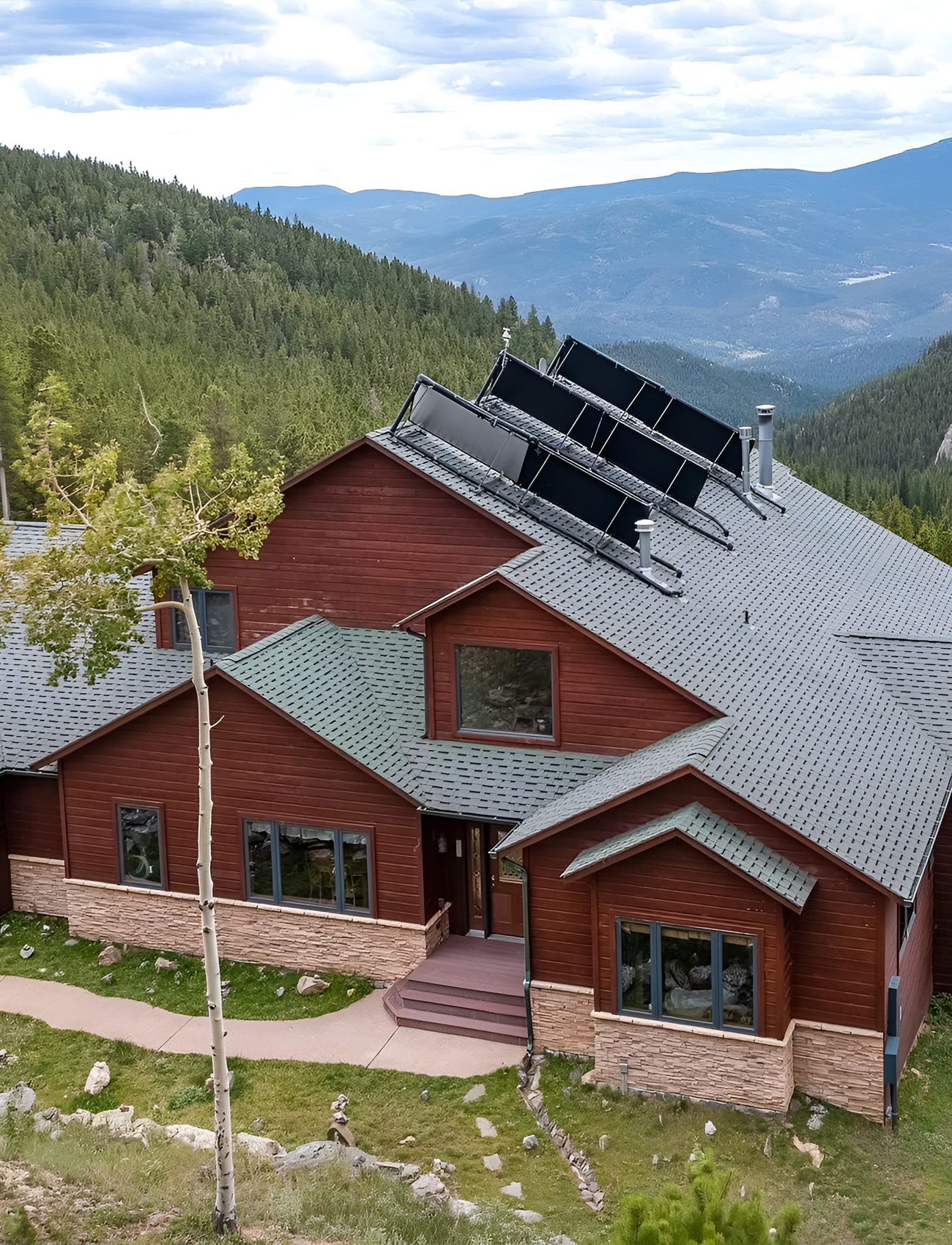
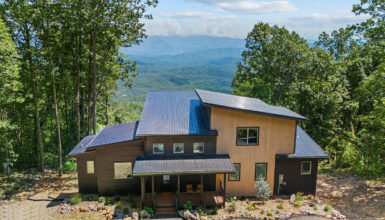
This home leans more traditional, but it still feels fresh because the massing is broken into several clear sections. Instead of one bulky box, the front elevation steps in and out with multiple gables. That gives the exterior rhythm and makes a large house feel more approachable.
The reddish wood siding is warm and classic. It gives the home a true lodge character, especially in this alpine setting. The stone base adds the right amount of ruggedness. It grounds the house visually and creates a sturdy lower layer that feels right for mountain weather and uneven terrain.
The roof deserves attention too. It has enough pitch and layering to feel substantial, but it does not become too busy. The solar panels sit high on the roof, where they catch light without interrupting the front facade too much. That mix of mountain tradition and modern function works well here.
The curved walkway softens the geometry of the house. It creates a gentle approach and helps the structure feel more connected to the slope. Small site details like that often make a big difference in mountain design.
Cues to borrow:
Break up a large exterior into smaller gabled sections so the house feels more natural on the land. Combine wood-look siding with stone on the lower portion for warmth and stability. A curved walkway can soften a strong facade and make the entry experience feel more welcoming.
12. Warm Rustic Craftsman With Hillside Comfort
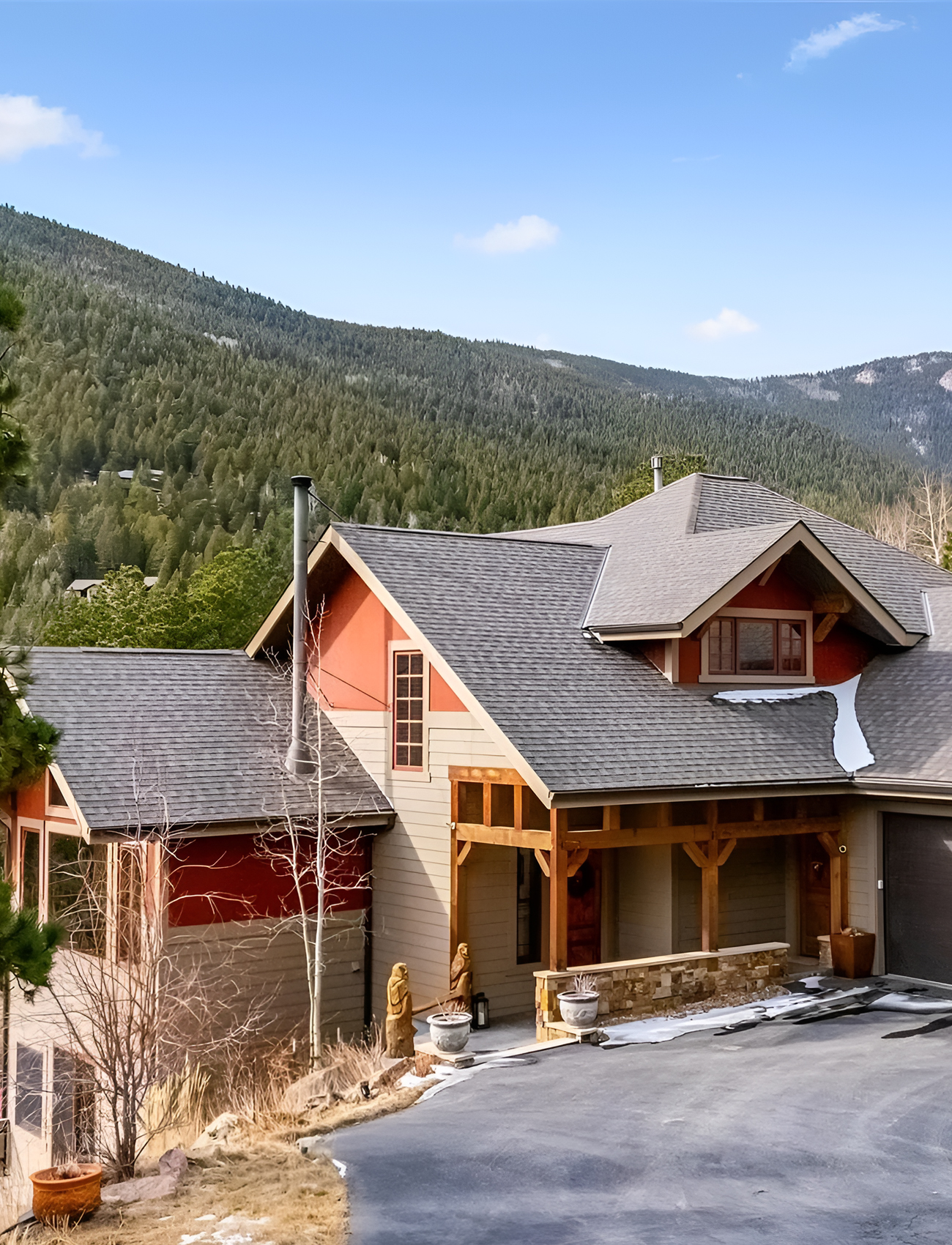
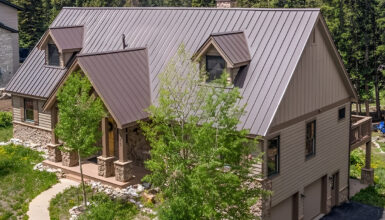
This house has a very livable kind of beauty. It does not try too hard, and that is exactly why it works. The palette of taupe, rust, wood, and stone feels comfortable in the mountain setting. It has enough color contrast to look interesting, but everything still feels tied to the landscape.
The covered front porch is one of the strongest features. The timber posts and stone base create a sheltered, grounded look that feels right at home in Colorado. It adds depth to the facade and makes the entry feel more personal. That matters, especially when the garage takes up a large part of the front elevation.
The roof form also helps the house feel balanced. The main roof is broad and quiet, while the front-facing gables add character. This keeps the home from looking flat. Meanwhile, the reddish accent panels give the exterior a little lift and help highlight the mountain-craftsman style.
The driveway and rock-edged site work show another mountain-home lesson. On steep or uneven lots, practical hardscape becomes part of the design. Here, the driveway curve and rocky planting edges help the house feel settled into the hillside.
Cues to borrow:
If you want a mountain exterior that feels warm and welcoming, mix soft neutral siding with one earthy accent color. Add timber at the porch for instant character. Use stone sparingly but intentionally at the base, entry, or columns to give the house more weight.
13. Black Cabin With String Lights and a Big Wraparound Deck
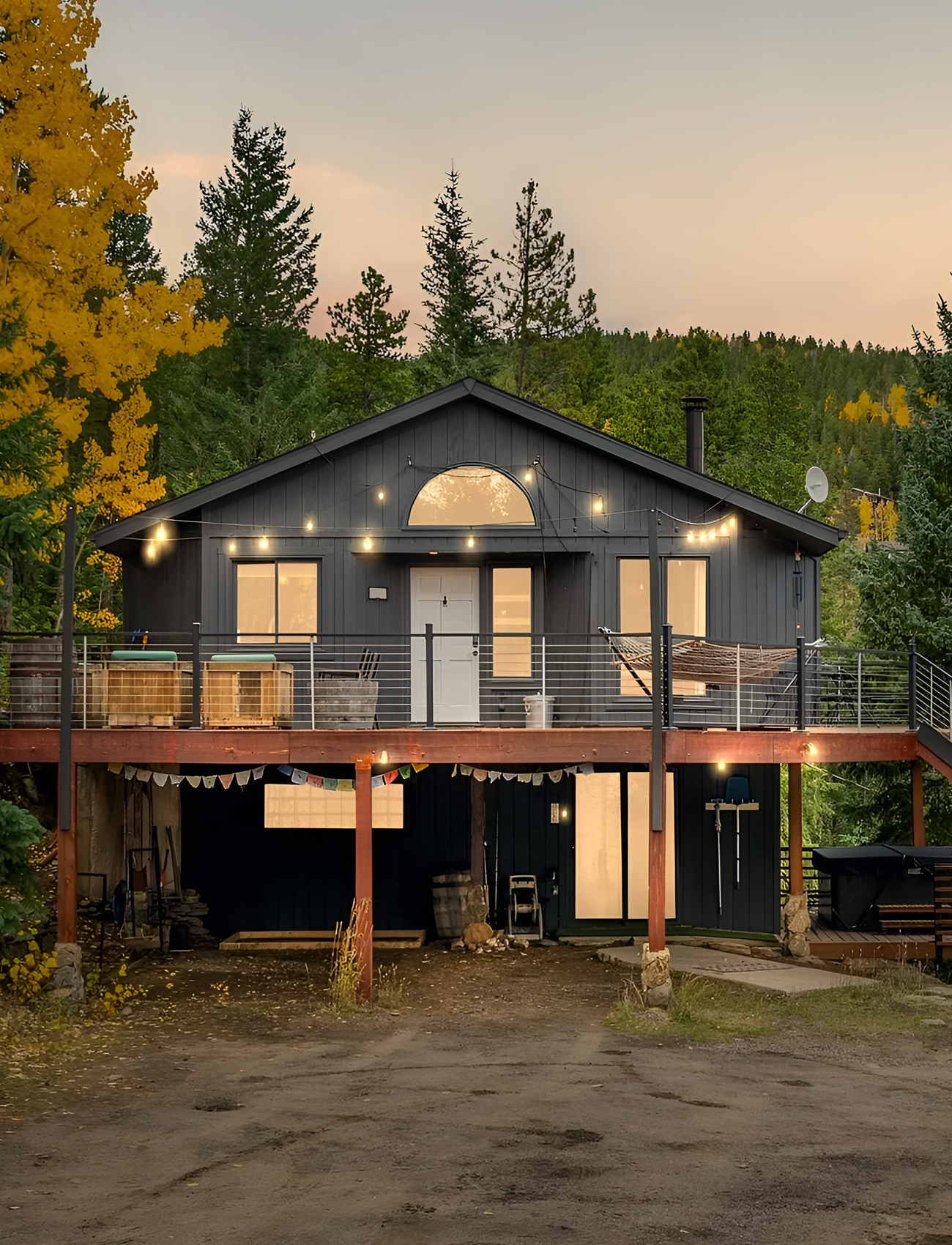
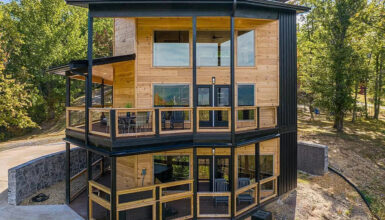
This home feels fun, relaxed, and full of personality. It is simple in form, but the outdoor space gives it a lot of charm. The black exterior makes the cabin feel modern and tucked into the woods, while the warm wood deck adds contrast and keeps the design from feeling flat.
The big deck is clearly the hero here. It wraps across the front and continues down the side with a wide stair. That creates usable outdoor space on a sloped site and gives the cabin a stronger connection to the trees. In mountain settings, a deck like this often matters as much as the house itself.
The railing design helps a lot too. The dark metal lines feel clean and open, so the deck does not look heavy. String lights add softness and make the exterior feel welcoming at dusk. Those details give the cabin a social, easygoing feel without changing the simple architecture.
The centered gable and half-round window keep the front elevation straightforward and balanced. It is not a complicated design, but it knows exactly what it wants to be.
Cues to borrow:
A basic cabin shape can feel special when the outdoor living space is done well. Use dark siding for a modern woodland look. Pair it with warm-toned decking and simple metal railings. Add lighting that feels soft and casual so the house glows at night without looking overdesigned.
14. Dark Wood Hillside Home With Quiet Cabin Appeal
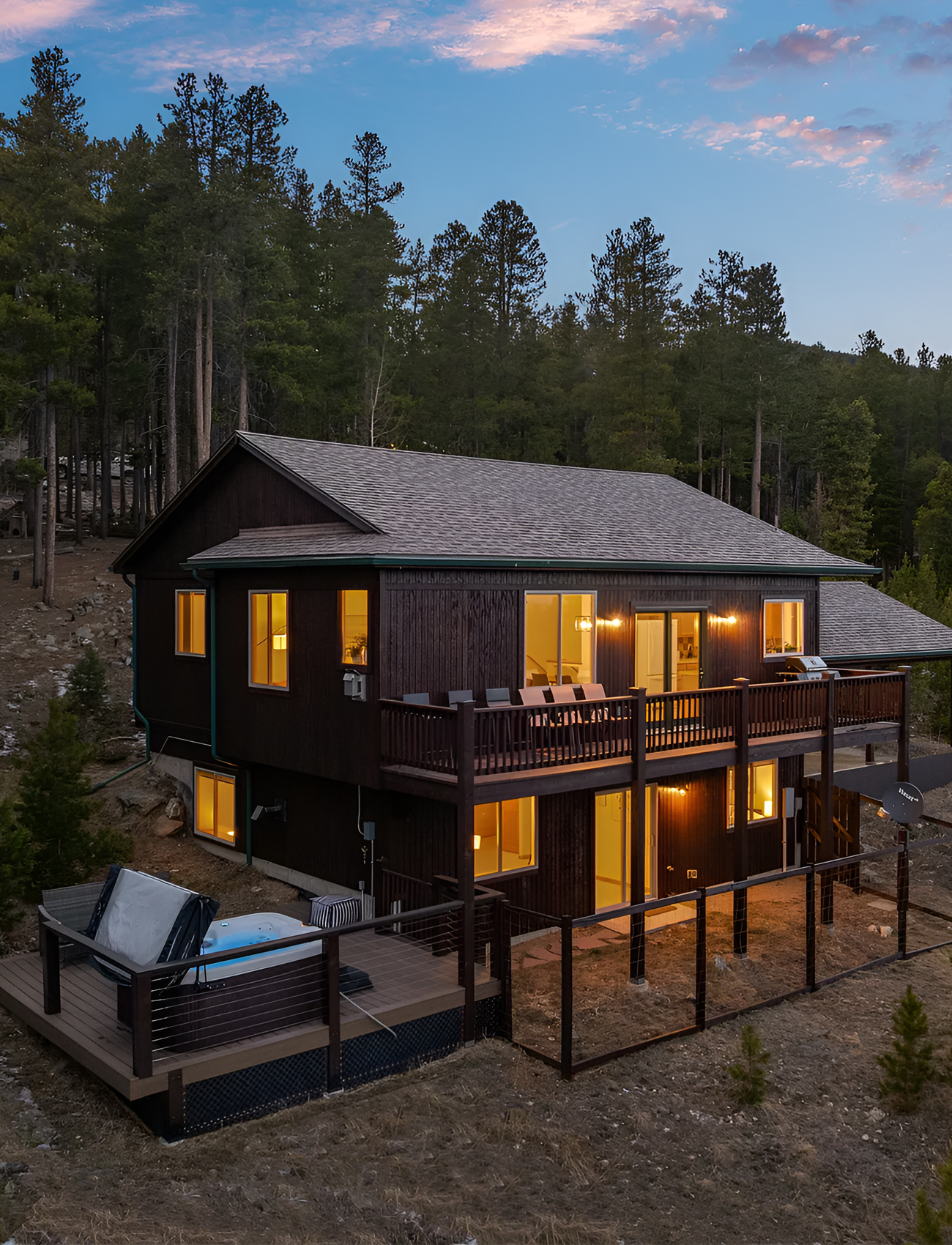
This home feels calm, private, and deeply connected to the woods around it. The dark stained exterior helps it blend into the site, while the warm light from the windows makes it feel cozy and inviting. That contrast is one of the most appealing things about mountain homes at dusk.
The structure is simple, but the tiered outdoor spaces make it feel more dynamic. There is an upper deck off the main level and a lower platform with a hot tub. That layering turns a steep site into an advantage. It also makes the home feel more livable because there are different zones for gathering, relaxing, and taking in the view.
The railing system is light and minimal, which is a smart choice. Bulky railings would make this house feel heavier. Here, the thinner lines keep the exterior more open. The rectangular windows also suit the design well. They feel practical and clean, which matches the quiet character of the house.
This home shows that mountain design does not always need lots of visual drama. Sometimes a restrained palette, simple form, and warm evening glow are enough.
Cues to borrow:
For a serene mountain exterior, keep the palette dark and natural. Use decks to create layers on a sloped site. Let the lighting do some of the charm work at dusk. Large, bright windows paired with deep exterior colors can make even a simple house feel memorable.
15. Modest Rocky Mountain Cottage With Vintage Cabin Charm
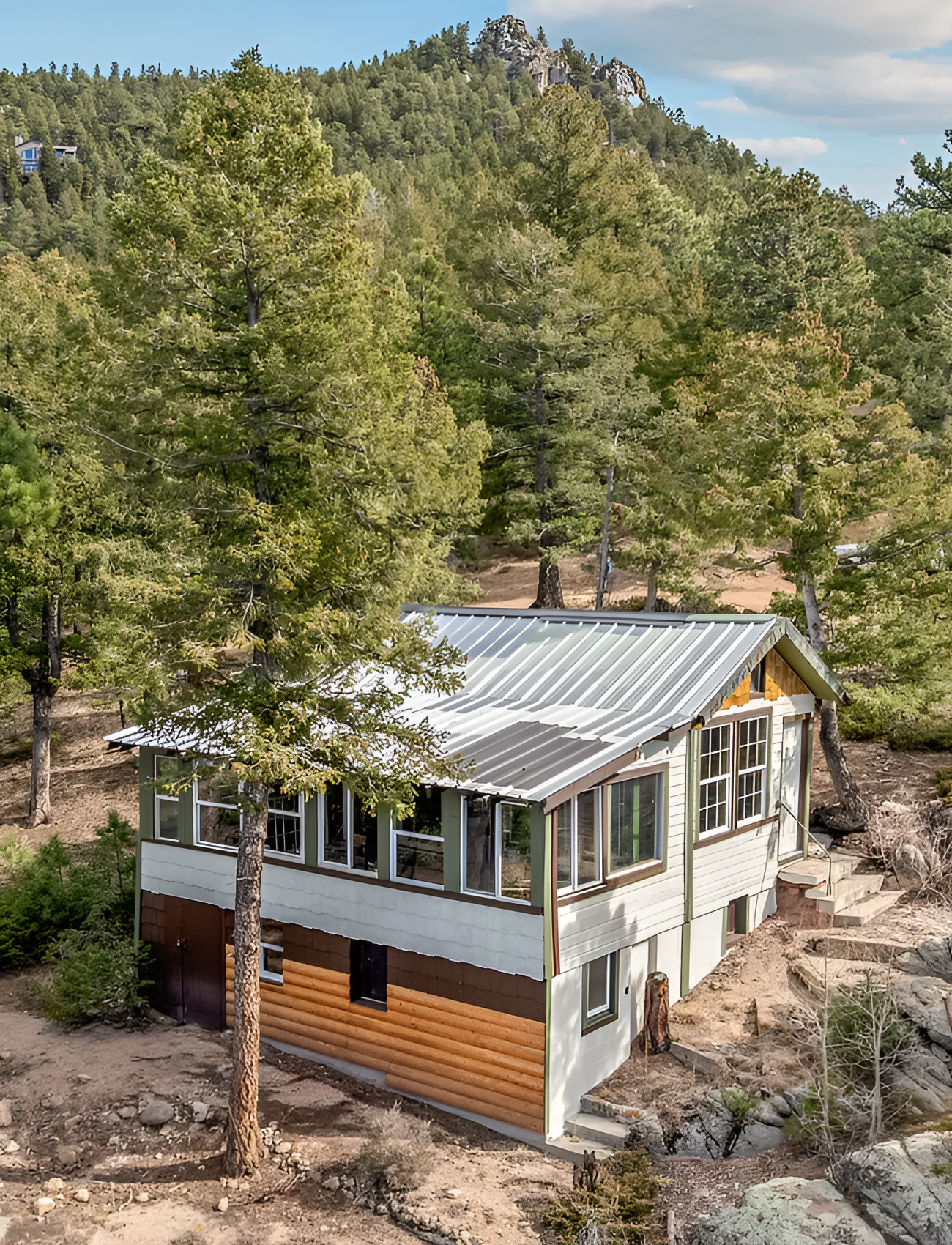
This little home has a very different energy from the larger properties, and that is what makes it so appealing. It feels humble, practical, and full of character. Set among rocks and pines, it looks like the kind of mountain cottage that grew naturally out of the site over time.
The mixed exterior materials tell a big part of the story. The metal roof gives the house a rugged, durable look that feels right for the mountains. The enclosed porch adds function and charm, while the wood-look lower section brings warmth to the facade. The painted upper siding keeps the whole composition light enough to stand out among the trees.
The footprint is small, but the placement is thoughtful. The house sits neatly between rock outcrops and trees, which helps it feel protected and tucked away. It does not try to dominate the landscape. Instead, it feels like part of it.
That modest scale is a design lesson on its own. Not every mountain home needs soaring windows or dramatic decks. Sometimes the best exterior is the one that feels simple, sturdy, and honest.
Cues to borrow:
Do not overlook the charm of a smaller mountain home. A metal roof, simple siding, and a practical enclosed porch can create a lot of character. Let the site lead the design. When a house sits naturally among rocks, trees, and uneven ground, it often feels more beautiful than something overly polished.
Conclusion
These Colorado mountain homes show that great exterior design is not just about style. It is about connection. The best homes work with the slope, the trees, the rock, and the light. Some do it with glass and clean lines. Others do it with wood, stone, and simple forms. Either way, they all prove the same thing: when a home respects the land around it, it becomes even more beautiful.