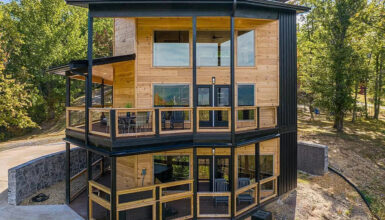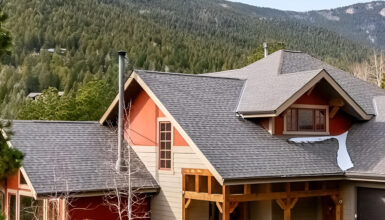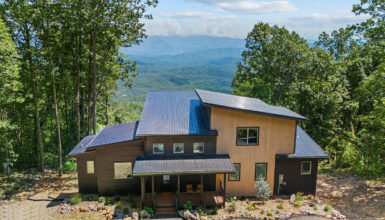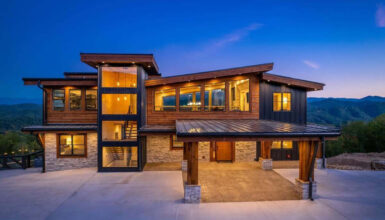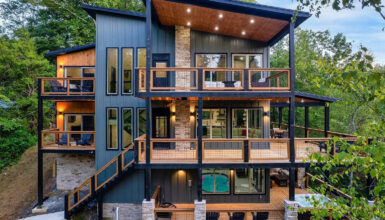
There is something magical about a mountain house interior.
Maybe it is the way wood beams make a ceiling feel taller and warmer at the same time. Maybe it is the quiet mix of stone, soft fabrics, and natural light. Or maybe it is the feeling that the whole home was built to help you slow down, breathe deeper, and stay a little longer.
That is what makes mountain interiors so appealing. They feel grounded. They feel cozy. Yet they can also feel fresh, bright, and polished when done well.
The best part is this: a mountain house does not have to look dark, heavy, or overly rustic. It can be airy. It can be modern. It can feel refined without losing the warmth that makes this style so inviting in the first place.
Below, you will find 15 mountain house interior ideas that can help shape every part of your home. Some lean classic and lodge-like. Others feel cleaner and more modern. Still, all of them share the same goal. They make the home feel connected to the landscape outside while keeping every room comfortable, layered, and full of character.
1. Start With a Great Room That Feels Grand but Welcoming
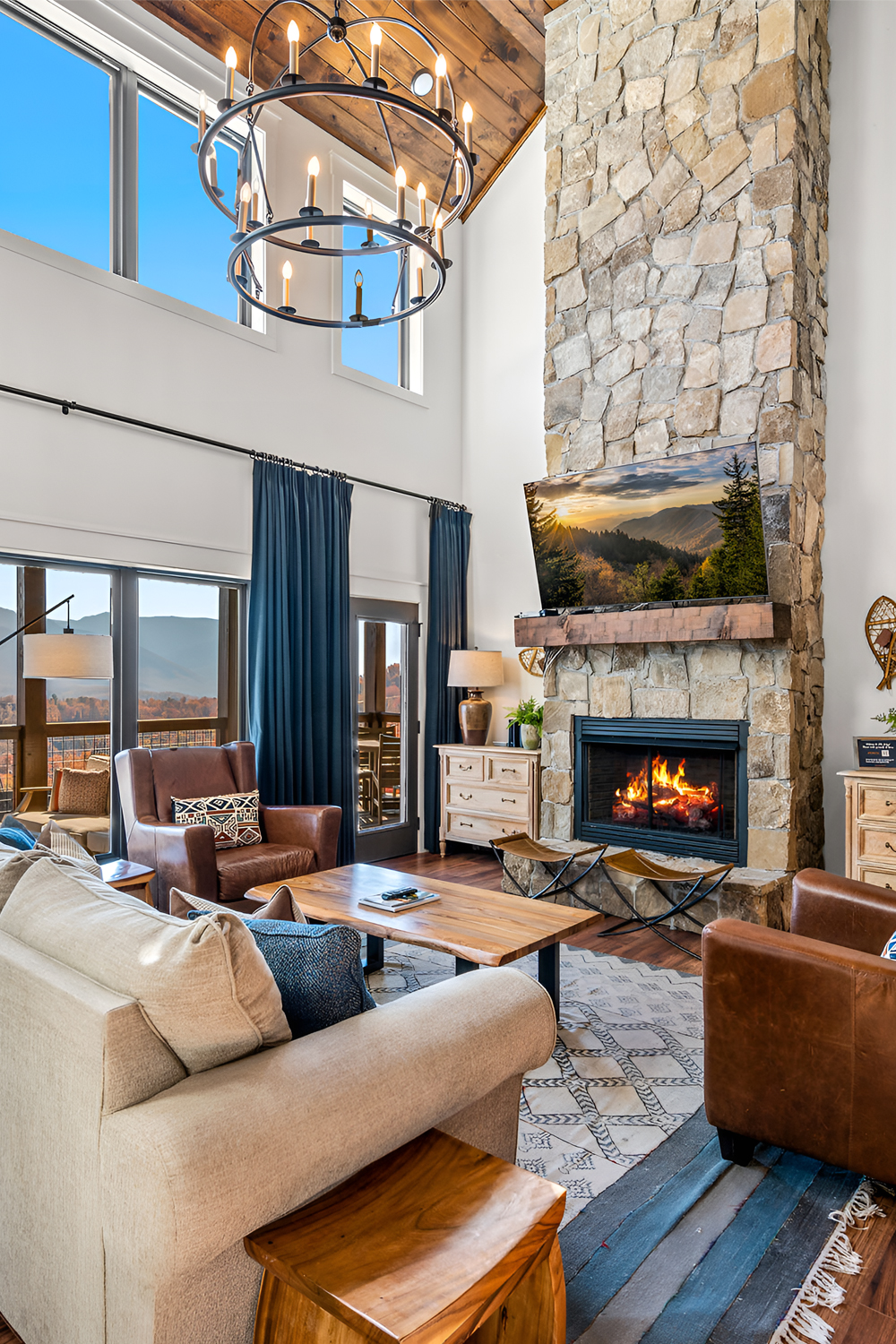
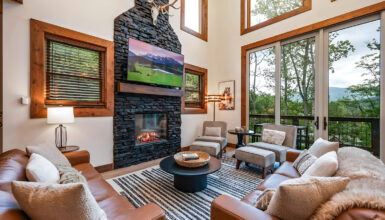
A mountain home often shines brightest in the main living space. This is usually where vaulted ceilings, exposed beams, and a dramatic fireplace come together. Even so, a big room should still feel comfortable enough for everyday life.
That balance matters.
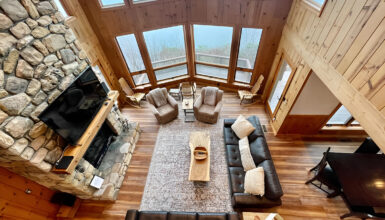
If the room feels too large and open, it can seem cold. If it feels too packed, you lose the airy beauty that makes mountain homes so striking. The key is to create a few strong anchors. A large stone fireplace works beautifully. So does a substantial area rug, a deep sofa, and a coffee table with enough visual weight to hold the room together.
Try to mix rough and soft elements here. Pair reclaimed wood beams with plush seating. Add a chunky knit throw over a tailored linen sofa. Set a smooth leather chair near a rugged stone hearth. Those contrasts keep the room from feeling flat.
Design cues to copy:
- Use a floor-to-ceiling fireplace as the visual focal point
- Choose oversized seating that suits the scale of the room
- Layer soft textiles to warm up stone and wood surfaces
- Add a large rug to define the sitting zone
- Keep the palette inspired by nature, like warm browns, soft grays, mossy greens, and creamy whites
2. Use Exposed Wood Beams for Instant Mountain Character
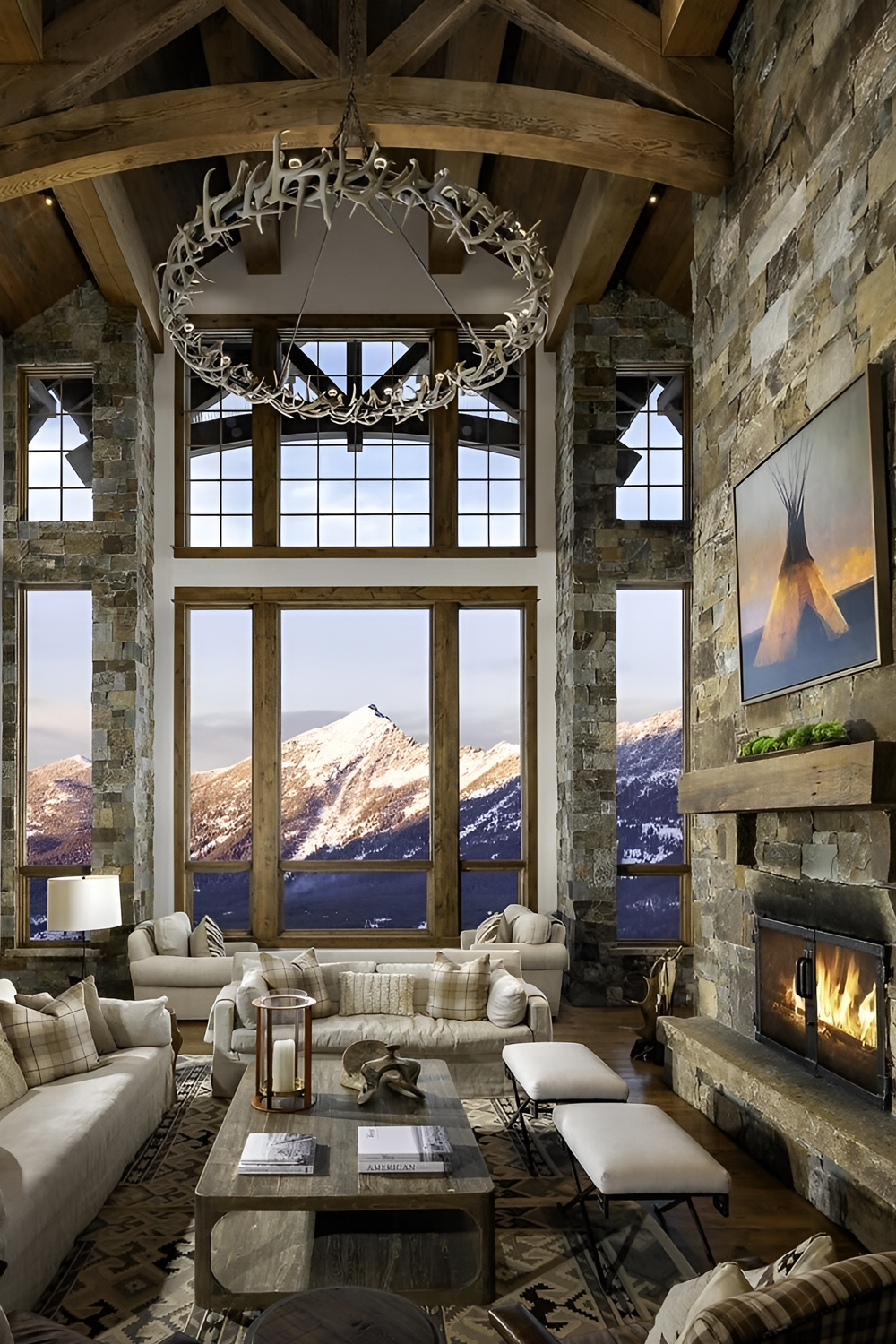
Few design features say mountain house quite like exposed wood beams.
They add structure, texture, and warmth all at once. In a home with high ceilings, beams help the room feel more intimate. In a smaller room, they add charm and detail without taking up floor space.
You do not need beams in every room, though. In fact, using them in key areas can make them feel even more special. A living room, kitchen, dining area, or primary bedroom can benefit most from this feature.
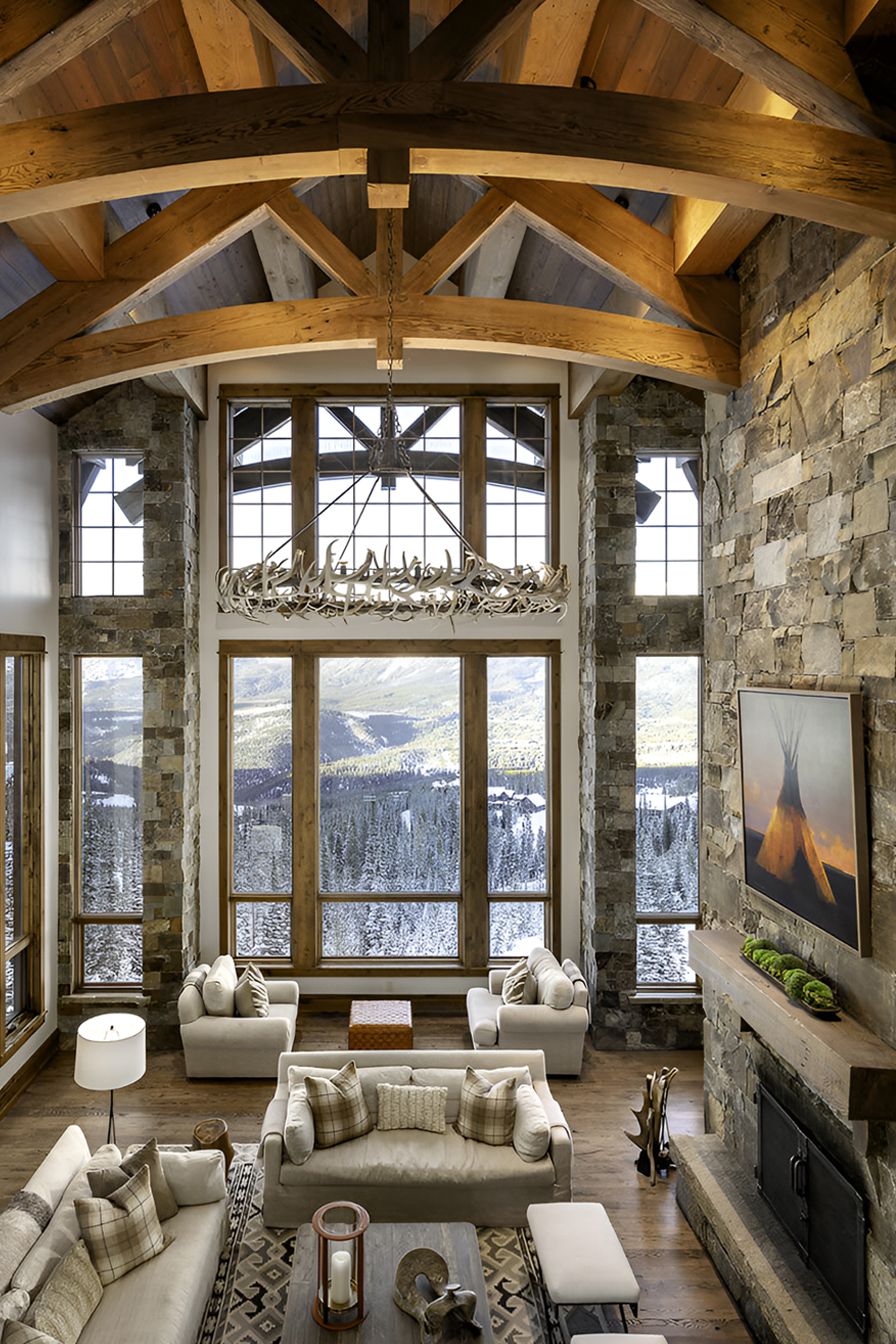
The finish of the wood changes the mood. Dark beams feel dramatic and traditional. Honey-toned beams feel warm and relaxed. Pale or whitewashed beams can make the space feel lighter and more modern.
If your home does not have original beams, faux wood beams can still create a beautiful effect. What matters most is that they feel believable within the style of the house.
Design cues to copy:
- Use beams to break up tall ceilings
- Choose a wood tone that works with the floor and cabinetry
- Let beams stand out against white or light walls
- Repeat the wood tone elsewhere for cohesion
- Keep surrounding finishes simple so the beams can shine
3. Build the Room Around a Stone Fireplace
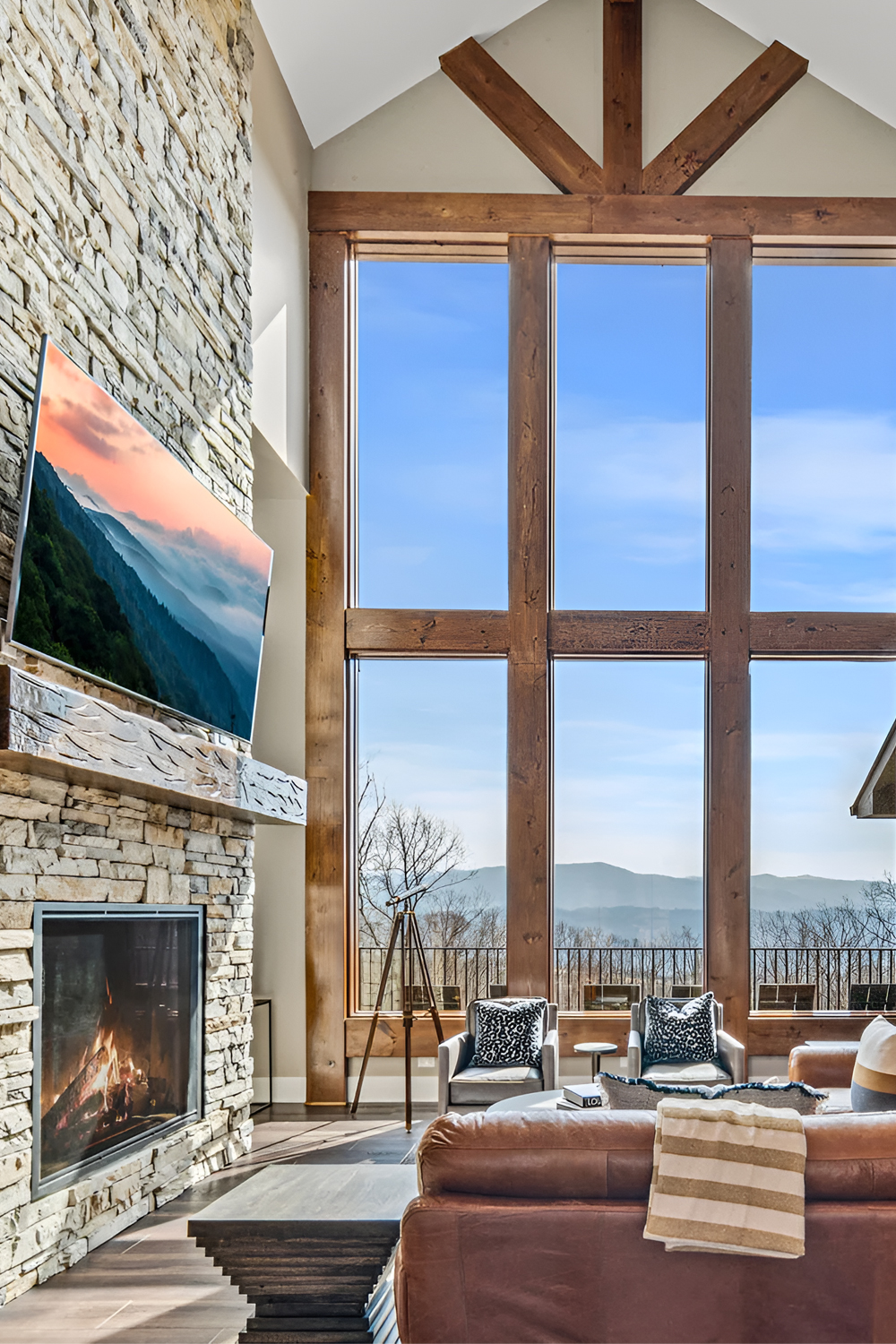
If the heart of a mountain interior is warmth, then the fireplace is often the soul of the room.
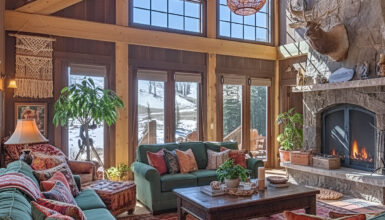
A stone fireplace brings depth, texture, and a sense of permanence. It feels timeless. It also helps the home look rooted in its setting, as if it belongs right where it stands.
Natural stone creates the most organic look. It works especially well in homes with timber ceilings, wood floors, and large windows. A more refined cut stone can feel cleaner and more polished. Meanwhile, stacked stone gives a strong lodge-style effect.
You can also shape the mood through the mantel. A thick reclaimed beam adds rustic charm. A simpler wood mantel feels softer and more modern. Then, finish the look with a few thoughtful accents. A large landscape painting, antique lanterns, or ceramic vases can all work beautifully.
Just do not crowd it. A mountain fireplace already has strong presence.
Design cues to copy:
- Choose stone with natural color variation
- Use a chunky wood mantel for warmth
- Keep decor simple and scale it to the fireplace
- Let the fireplace connect visually to the ceiling beams or wood floors
- Arrange seating to face the hearth and encourage conversation
4. Bring in Oversized Windows That Frame the View
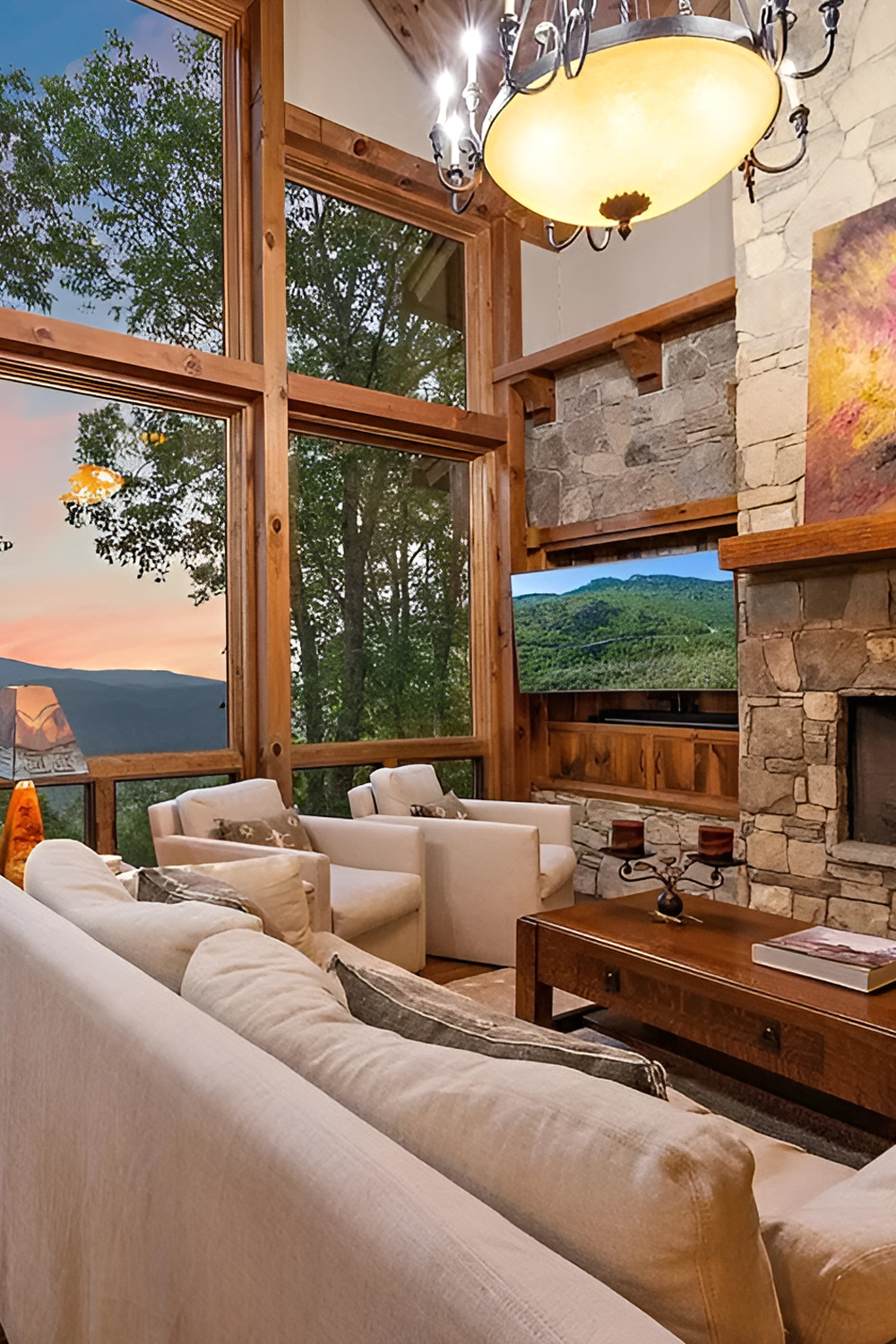
A mountain house interior should never ignore the landscape outside. In fact, one of the smartest design moves is to treat the view as part of the decor.
Large windows do exactly that.
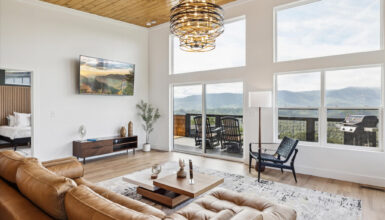
They flood the space with light, which is especially helpful when the home includes wood, stone, and darker finishes. At the same time, they create a strong connection between indoors and outdoors. Trees, rocky slopes, snow, and changing skies all become part of the daily experience.
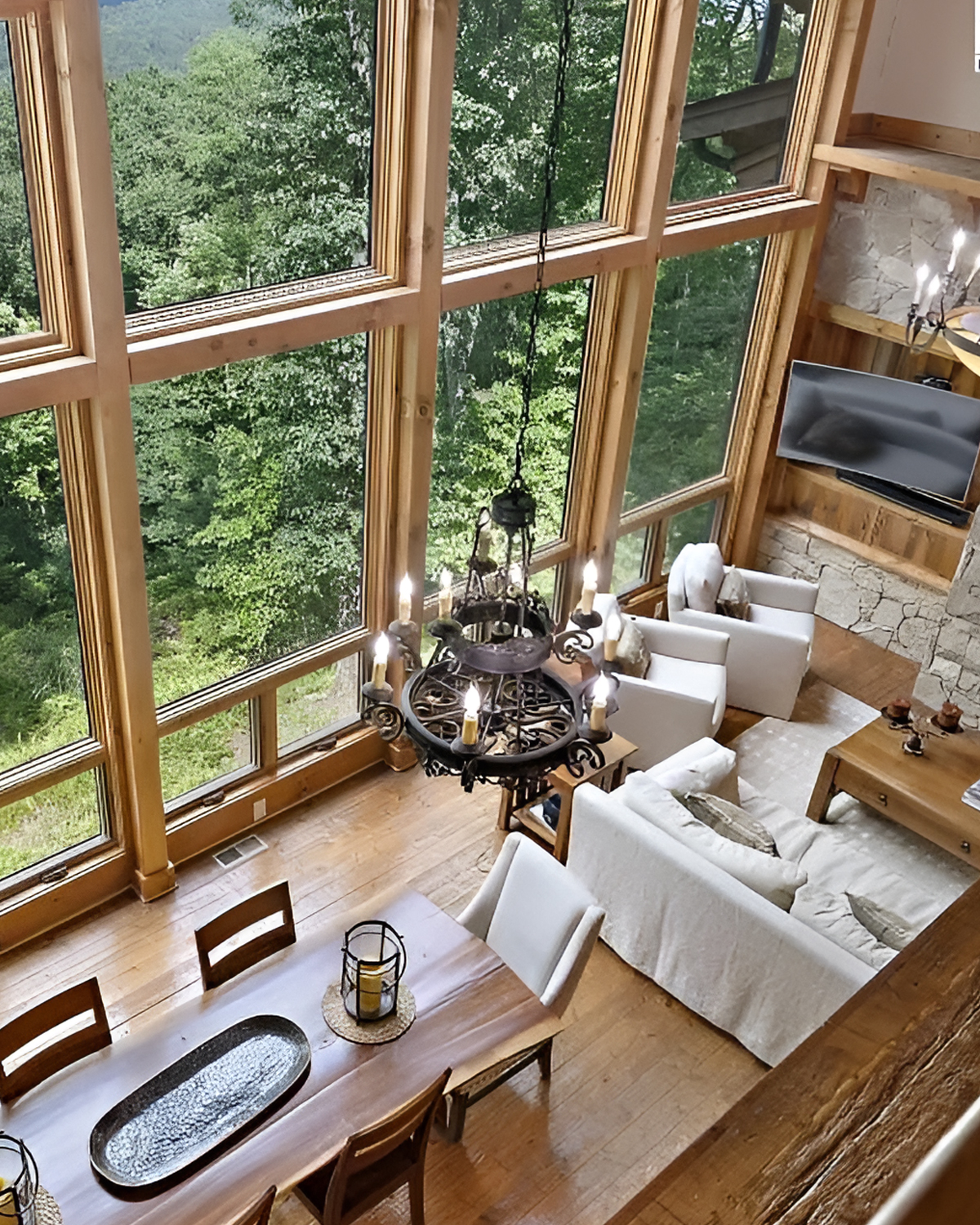
Window trim matters here. Natural wood trim adds warmth. Black window frames feel crisp and modern. Soft white trim can brighten the room and keep the look more classic.
When dressing the windows, keep things light. Heavy curtains can block the very thing that makes the room special. Linen panels, simple woven shades, or even bare windows may be the better choice.
Design cues to copy:
- Use tall windows to pull in natural light
- Frame the view instead of hiding it
- Keep window treatments simple and minimal
- Repeat outdoor colors inside the room for a seamless feel
- Place seating where people can enjoy the scenery
5. Warm Up the Space With Natural Wood Walls and Ceilings
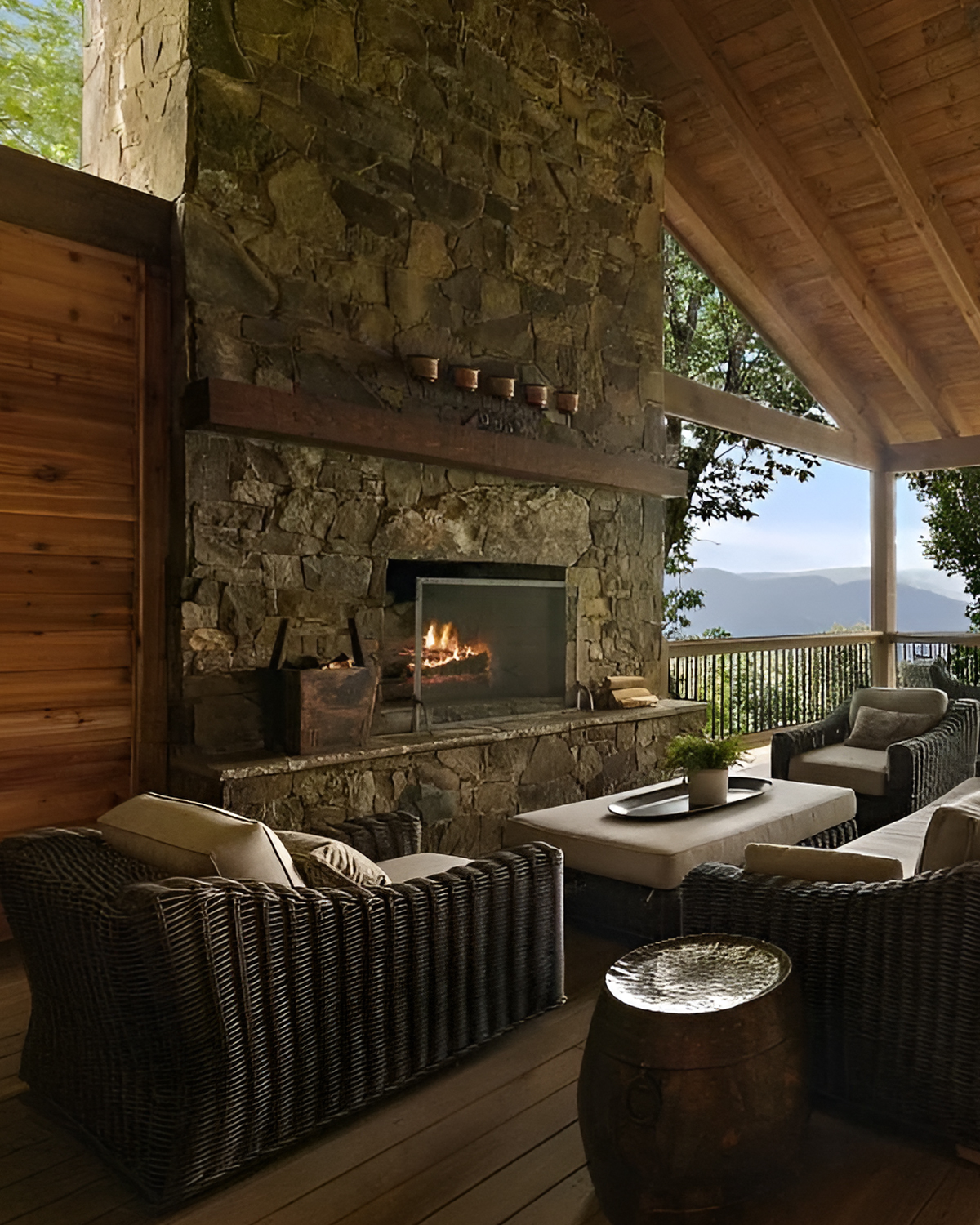
Wood walls and ceilings create the kind of comfort that mountain homes do so well.
They wrap the room in warmth. They add texture without extra clutter. And they make even a new build feel established and inviting.
The trick is balance. If every surface is dark wood, the home can feel heavy. Instead, think about where wood will have the most impact. A planked ceiling in the great room can look stunning. A wood accent wall in a bedroom can feel cozy. Tongue-and-groove paneling in an entry or hallway can add charm right away.
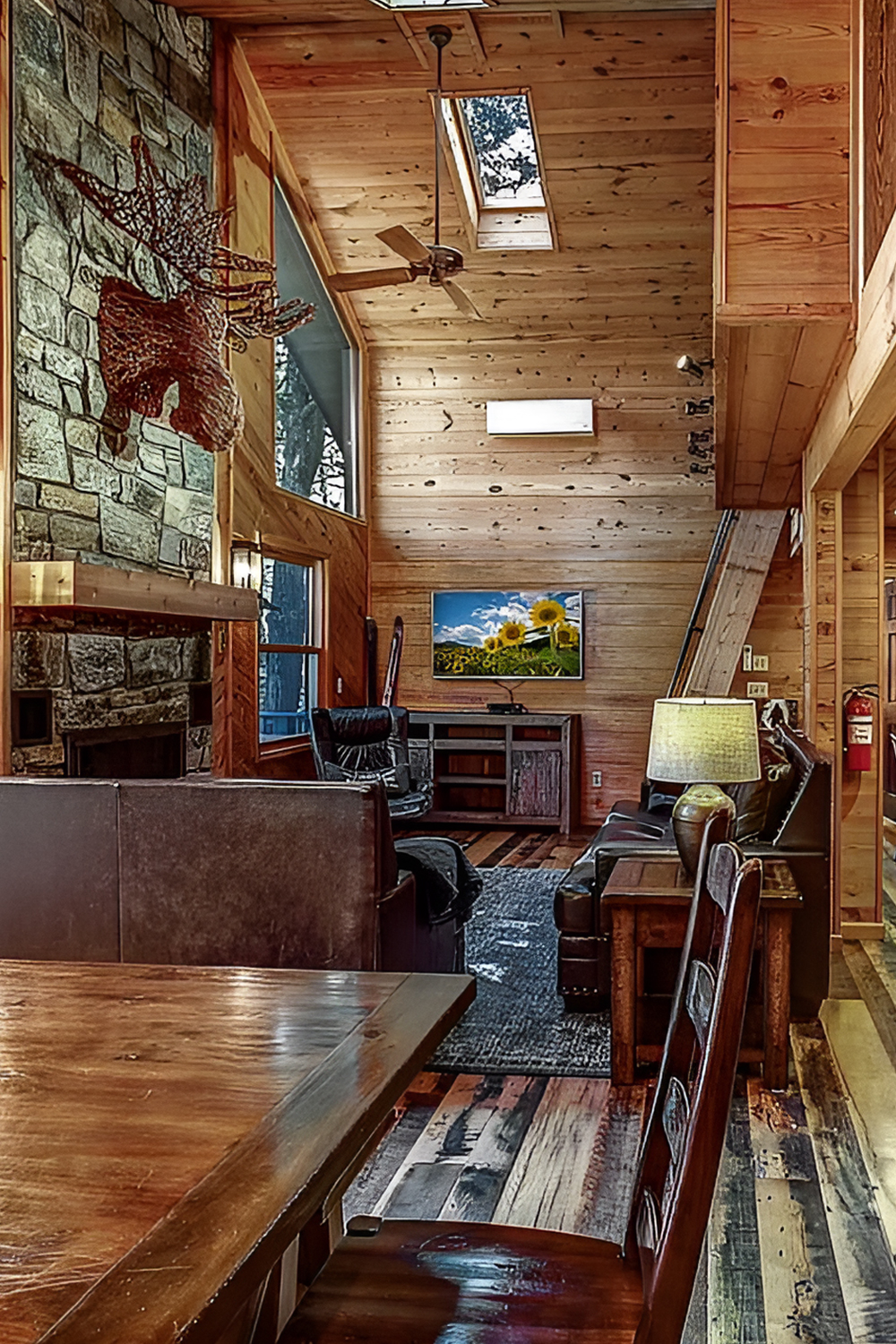
Lighter woods give a Scandinavian mountain feel. Medium and warm woods feel classic. Dark-stained wood leans moodier and more traditional.
To keep the room fresh, pair wood with lighter furnishings, natural textiles, and enough contrast.
Design cues to copy:
- Use wood on ceilings for warmth without overwhelming the room
- Try one accent wall instead of covering every surface
- Mix wood with white paint to brighten the look
- Choose matte finishes for a more natural feel
- Echo wood tones in furniture and decor for consistency
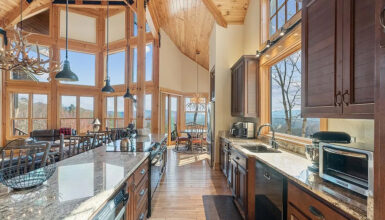
6. Create a Kitchen That Feels Rustic and Refined
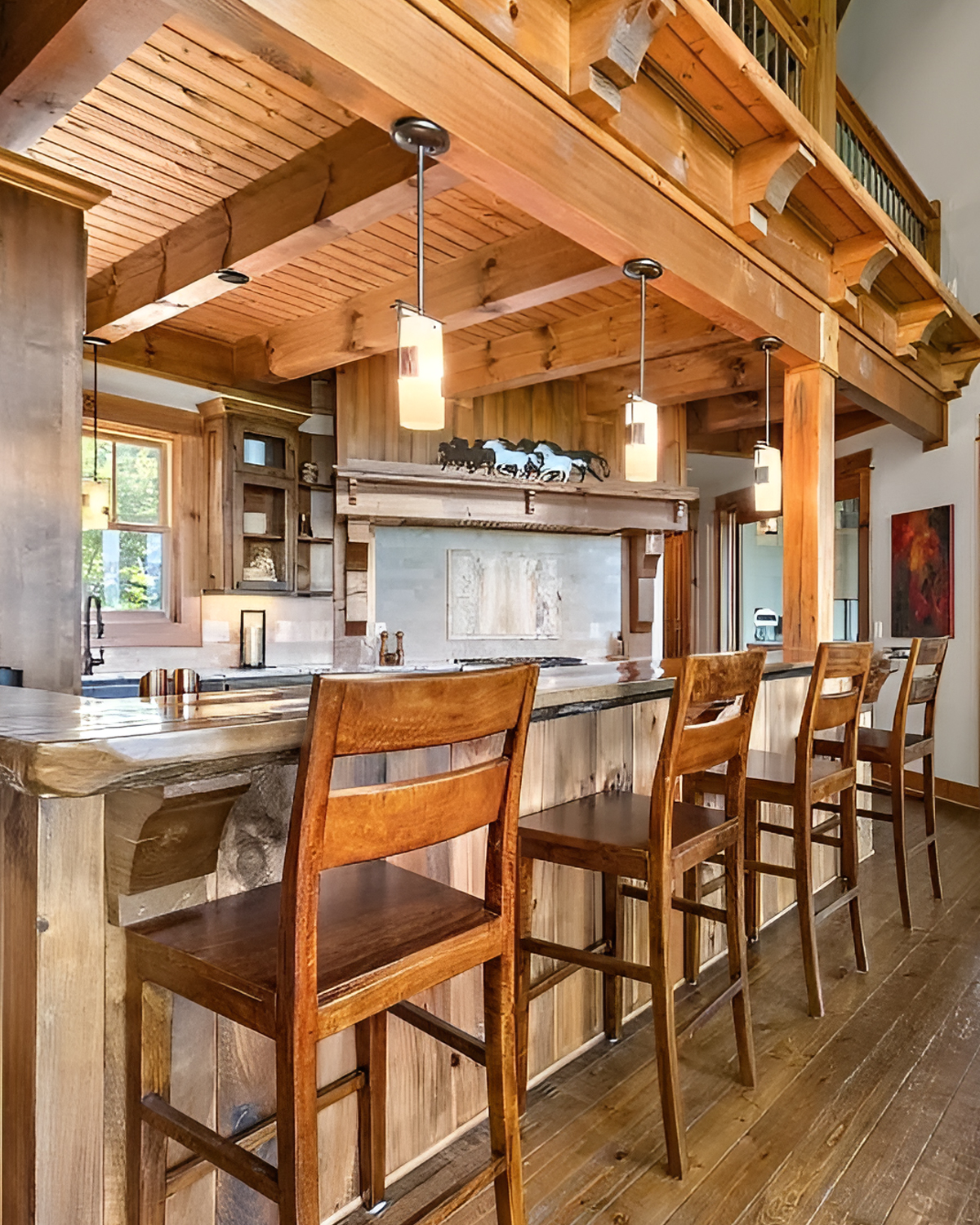
A mountain house kitchen should feel hardworking, welcoming, and beautifully tied to the rest of the home.
This is where rustic charm can meet modern ease. Think wood cabinets or a wood island paired with stone counters. Think open shelving with handmade pottery. Think warm pendant lights over a big island where everyone gathers after a long day outdoors.
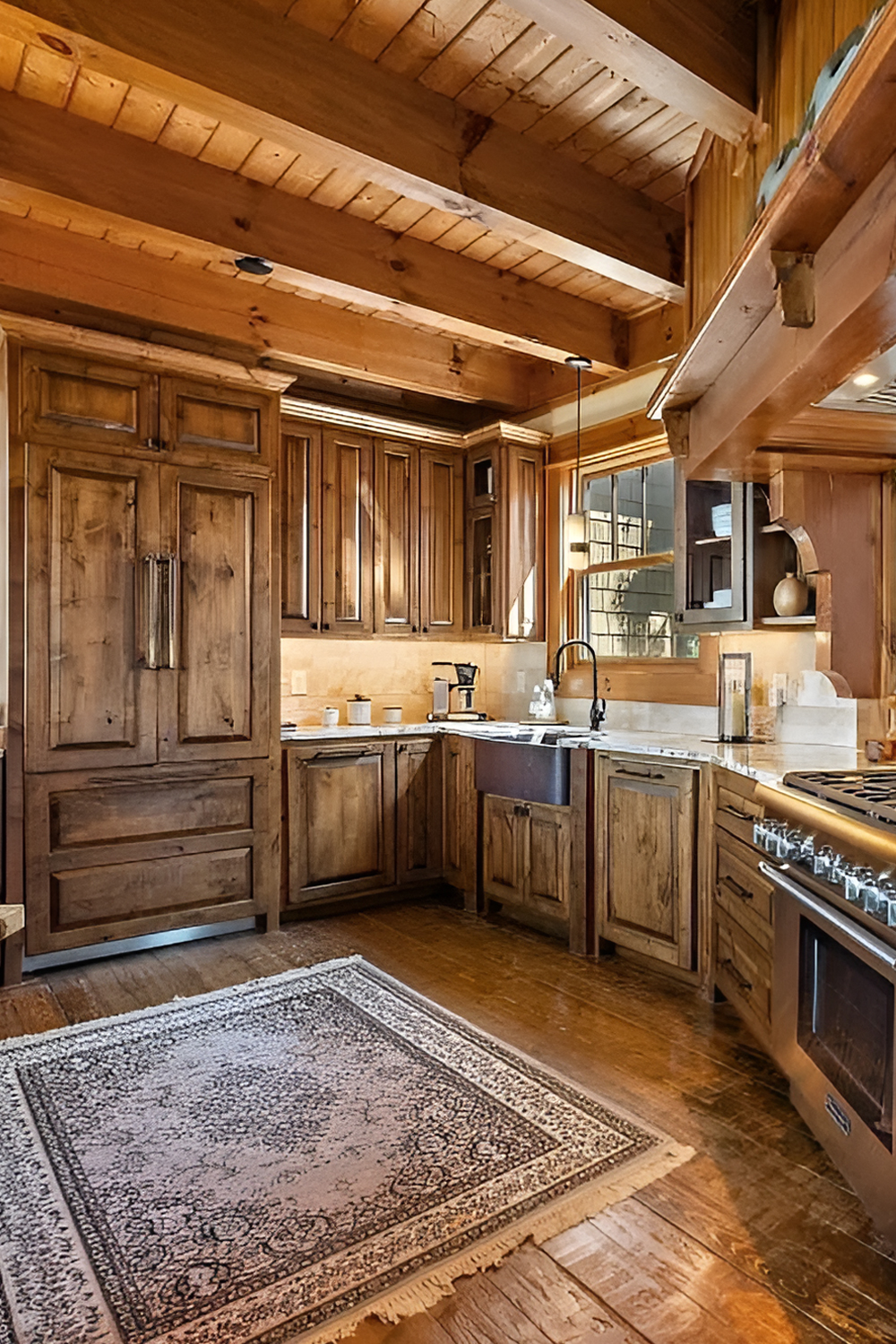
Cabinet style can shift the mood. Flat-panel cabinets feel more modern. Shaker cabinets feel classic and versatile. A stained wood finish often works especially well in mountain homes because it adds natural richness without trying too hard.
Then layer in texture. A rough stone backsplash, aged brass hardware, woven counter stools, and vintage-inspired lighting all add personality. At the same time, keep the layout clean and practical.
This room should feel ready for pancakes in the morning, soup after skiing, and long dinners with friends.
Design cues to copy:
- Use natural wood cabinetry or a wood island
- Pair warm wood with quartzite, soapstone, or honed granite
- Add lighting with iron, bronze, or aged brass finishes
- Use open shelves sparingly for collected pieces
- Bring in stools with leather or woven seats for texture
7. Design a Dining Space That Feels Like a Gathering Place
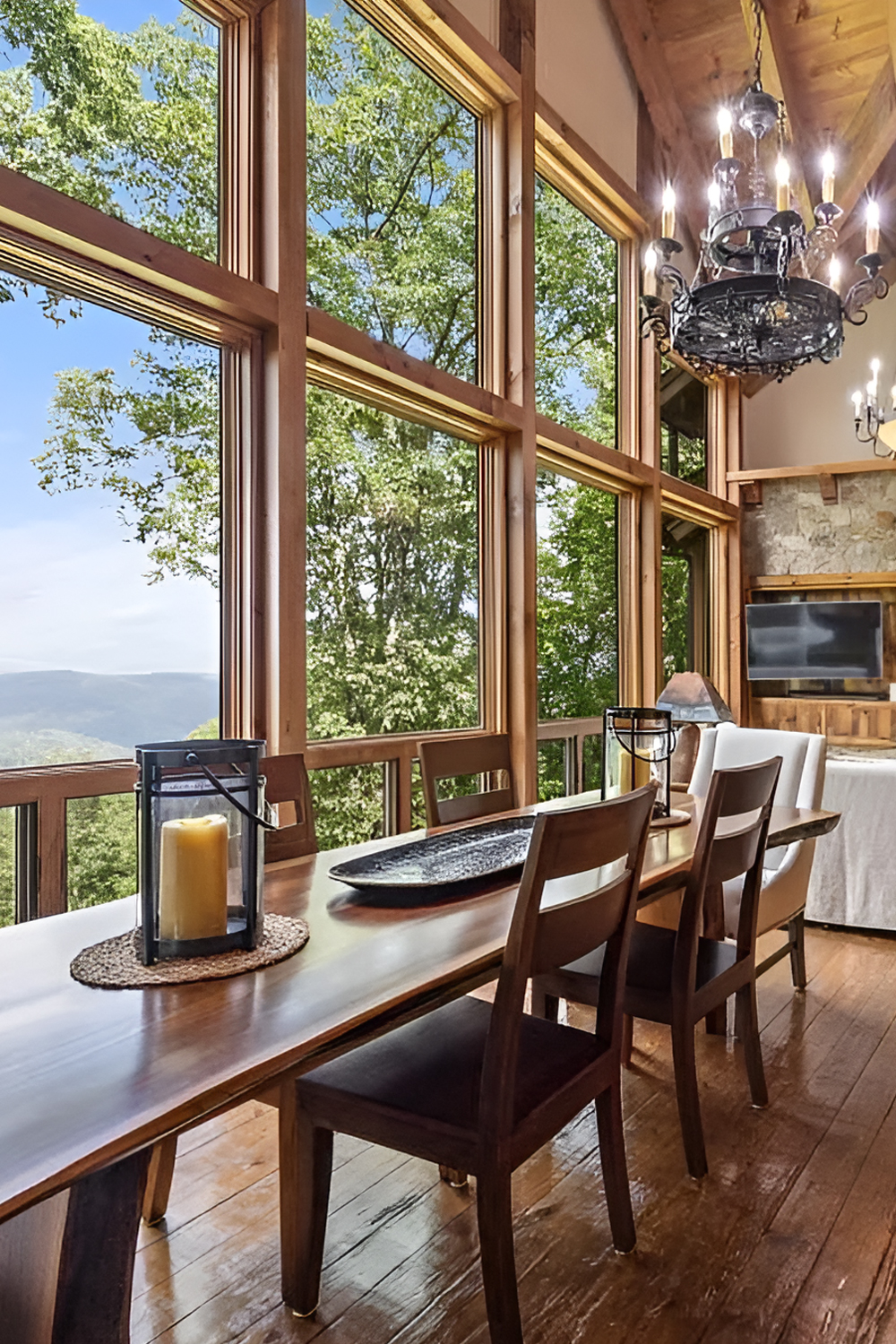
Mountain homes often center around togetherness. So the dining area should feel warm, social, and easy to use.
A large wood table is usually the best place to start. It gives the room weight and warmth. It also sets the tone right away. Then add chairs that feel comfortable enough for people to linger. Upholstered end chairs or slipcovered host chairs can soften the look.
Lighting matters a lot here. A wrought iron chandelier, antler-style fixture, or clean linear pendant can all work, depending on how rustic or modern you want the room to feel.
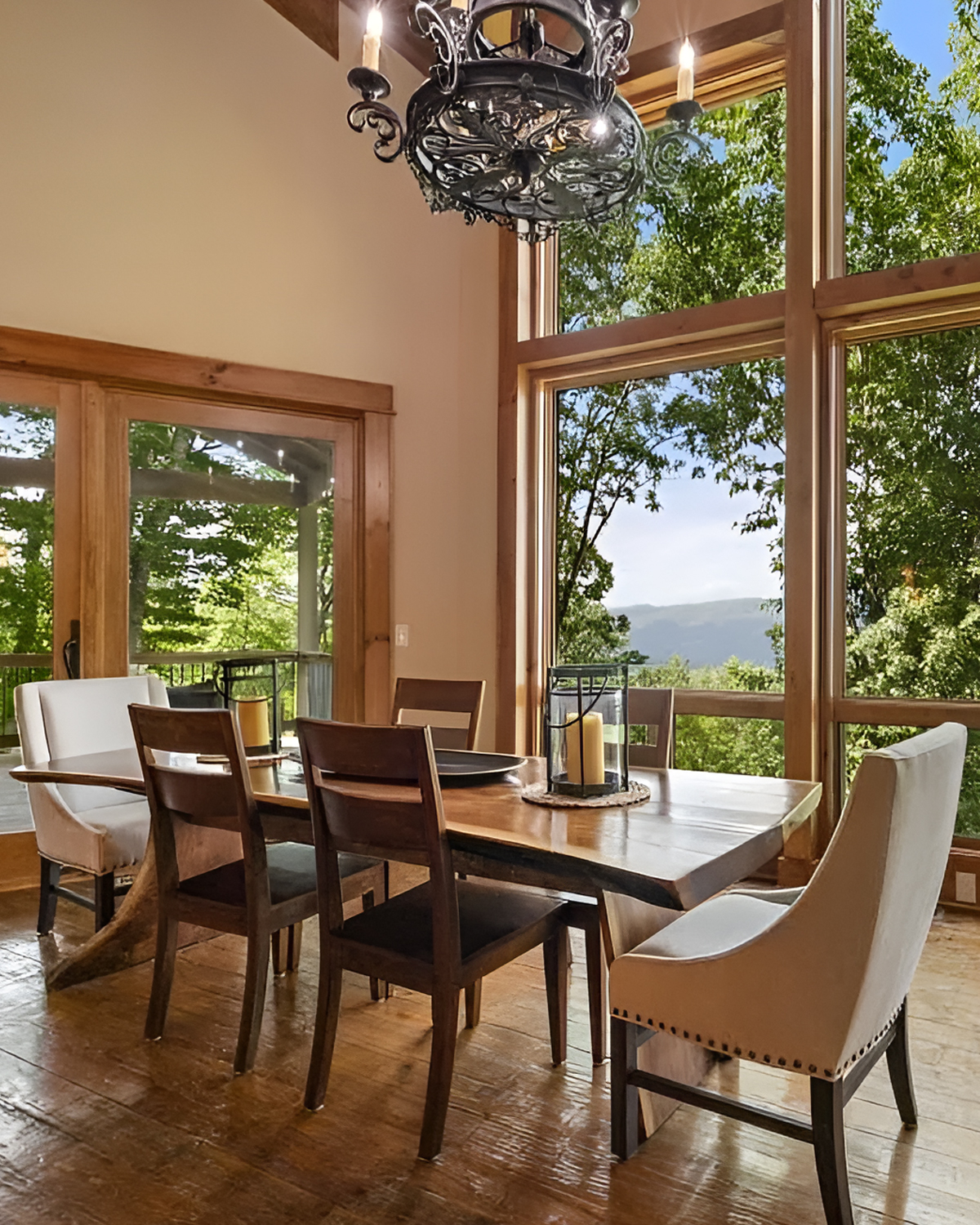
If the space is open to the kitchen or living room, use the dining table to bridge the styles. It can pick up the wood of the beams while also echoing the upholstery or tones in the living area.
Design cues to copy:
- Choose a solid wood table with visible grain
- Use lighting that feels bold enough for the table size
- Add a rug under the table to soften the room
- Mix chair styles for a more collected look
- Keep centerpieces low and natural, like greenery or stoneware vessels
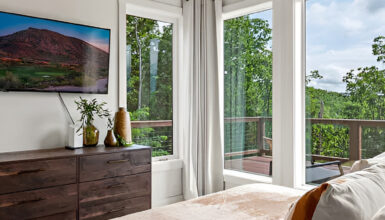
8. Make the Bedroom Feel Like a Quiet Retreat
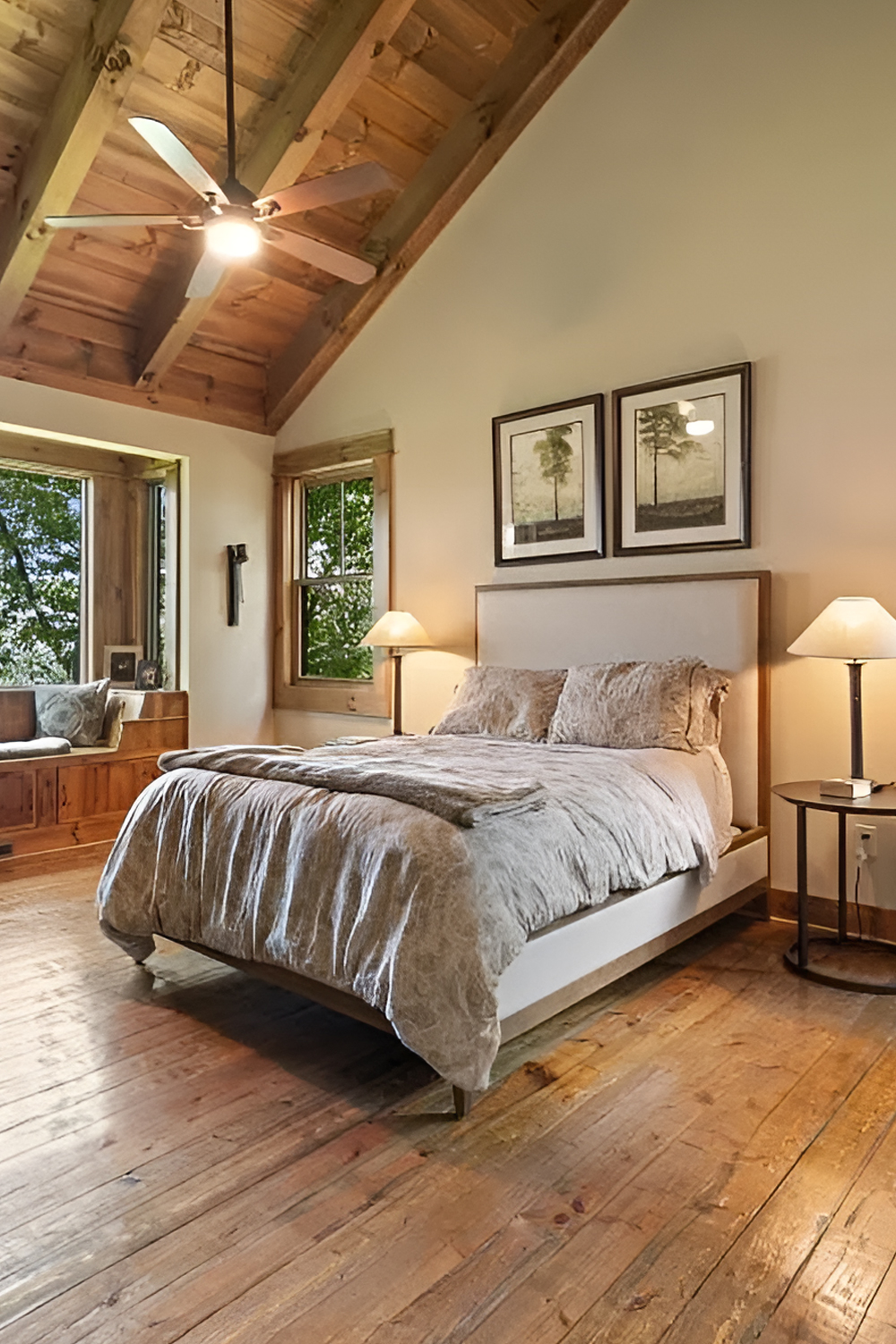
A mountain house bedroom should feel restful the moment you walk in.
That usually means fewer distractions, softer colors, and lots of layered comfort. Instead of filling the room with too much furniture, focus on a few strong pieces. A wood bed frame, an upholstered headboard, sturdy nightstands, and soft lamps can go a long way.
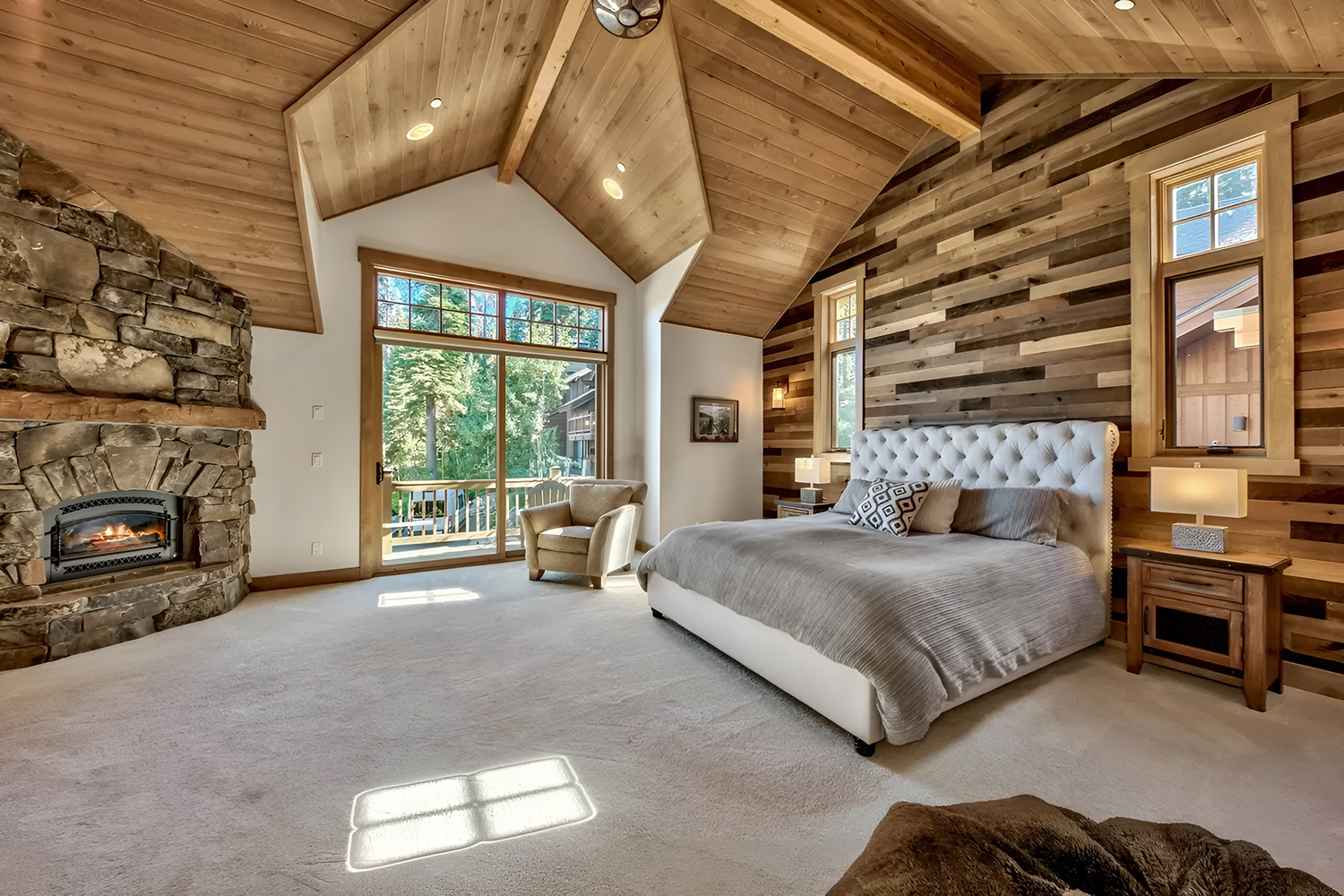
Texture is everything here. Crisp cotton sheets, a wool blanket, a quilt, and a faux fur throw create a bed that looks both inviting and practical. A bench at the foot of the bed or a leather chair in the corner adds warmth and function.
For color, stick with quiet tones. Cream, taupe, charcoal, pine green, dusty blue, and warm brown all work beautifully in mountain bedrooms.
Design cues to copy:
- Layer the bed with natural and cozy fabrics
- Use wood furniture with simple lines
- Add soft lighting on both sides of the bed
- Keep the palette calm and grounded
- Include one or two rustic accents, not too many
9. Add a Bunk Room for Cozy Cabin Charm
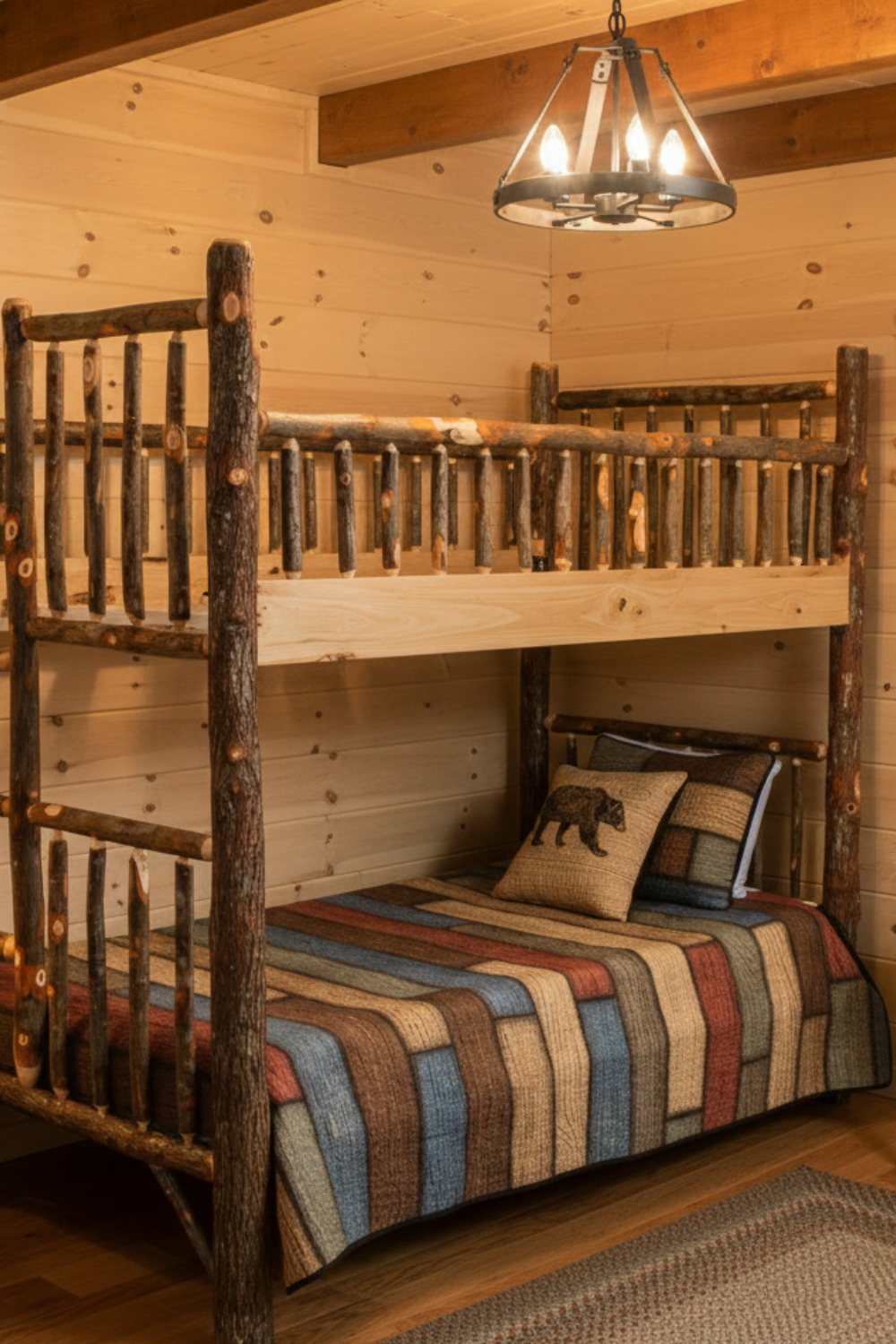
If your mountain house hosts family or guests, a bunk room can be one of the most fun spaces in the home.
It feels playful, practical, and full of cabin character. Still, it does not have to feel childish. With the right materials and colors, a bunk room can look polished and grown-up too.
Built-in bunks are often the best choice. They save space and feel custom. Wood bunks add warmth, while painted bunks can brighten the room. Then make each bed feel special with layered bedding, sconces, and a small ledge or nook for personal items.
This is also a great room for pattern. Plaid pillows, striped blankets, or a simple wallpaper can add just enough visual interest without overwhelming the space.
Design cues to copy:
- Use built-in bunks to maximize sleeping space
- Add wall sconces for each bed
- Keep bedding coordinated but not identical
- Use durable materials that can handle guests and kids
- Include drawers or cubbies below for extra storage
10. Layer in Textiles That Soften Every Hard Surface
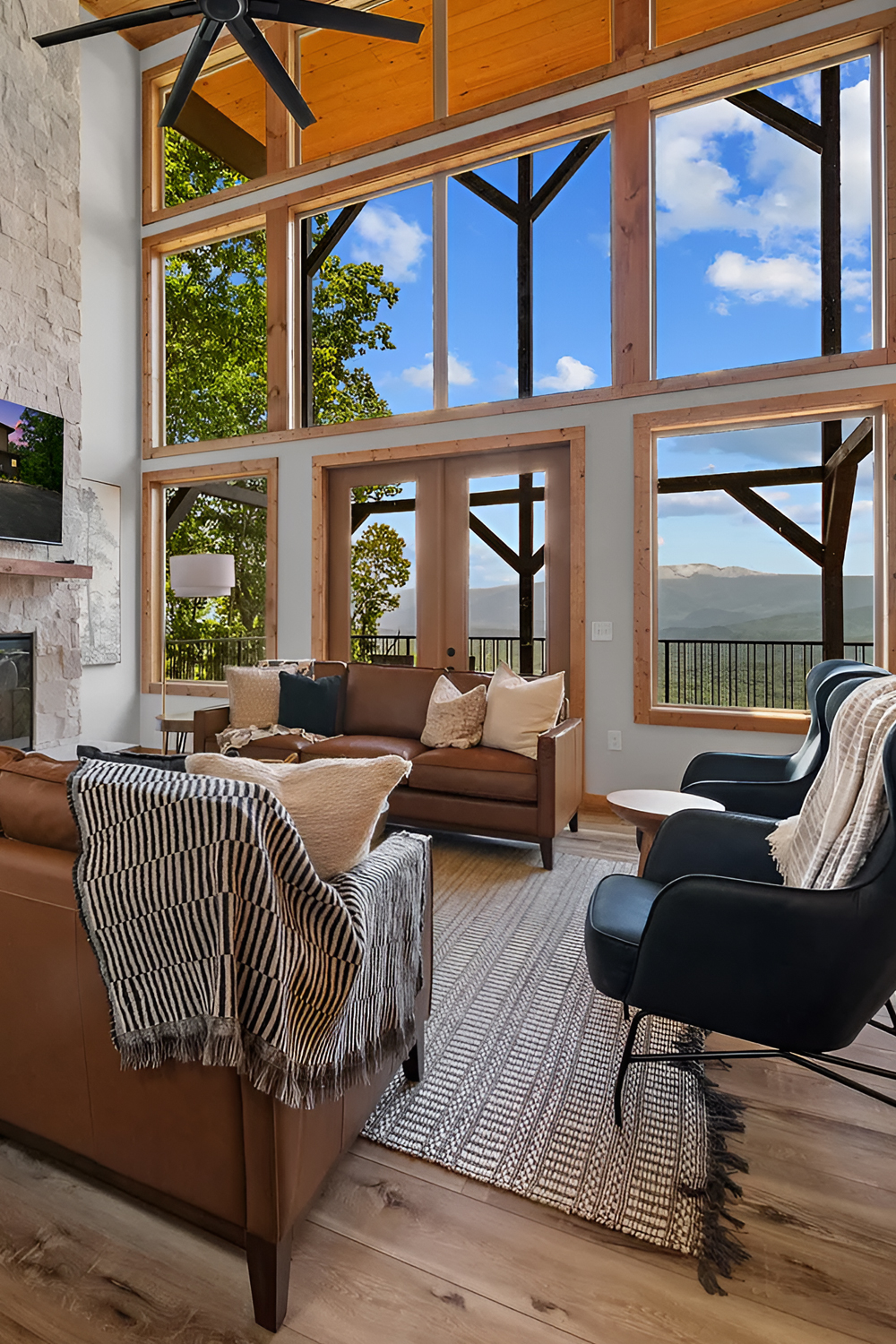
Mountain interiors often include lots of hard materials. Wood. Stone. Metal. Glass. These finishes create beautiful structure, but they also need soft elements to make the home feel livable.
That is where textiles come in.
Rugs, throws, curtains, pillows, upholstered chairs, and bedding all help balance the room. They absorb sound. They add warmth. And they create the kind of layered comfort people expect from a mountain home.
Natural fibers work especially well. Wool rugs, linen drapes, cotton slipcovers, and leather accents all feel right at home here. You can also use subtle patterns inspired by nature or classic lodge style, like plaid, herringbone, or simple stripes.
The key is to layer with purpose. You want the room to feel rich, not busy.
Design cues to copy:
- Use area rugs to soften wood and stone floors
- Mix linen, wool, cotton, and leather for variety
- Choose patterns in small doses
- Add throws to sofas, chairs, and beds
- Repeat similar tones so the room still feels cohesive
11. Mix Rustic Pieces With Clean Modern Lines
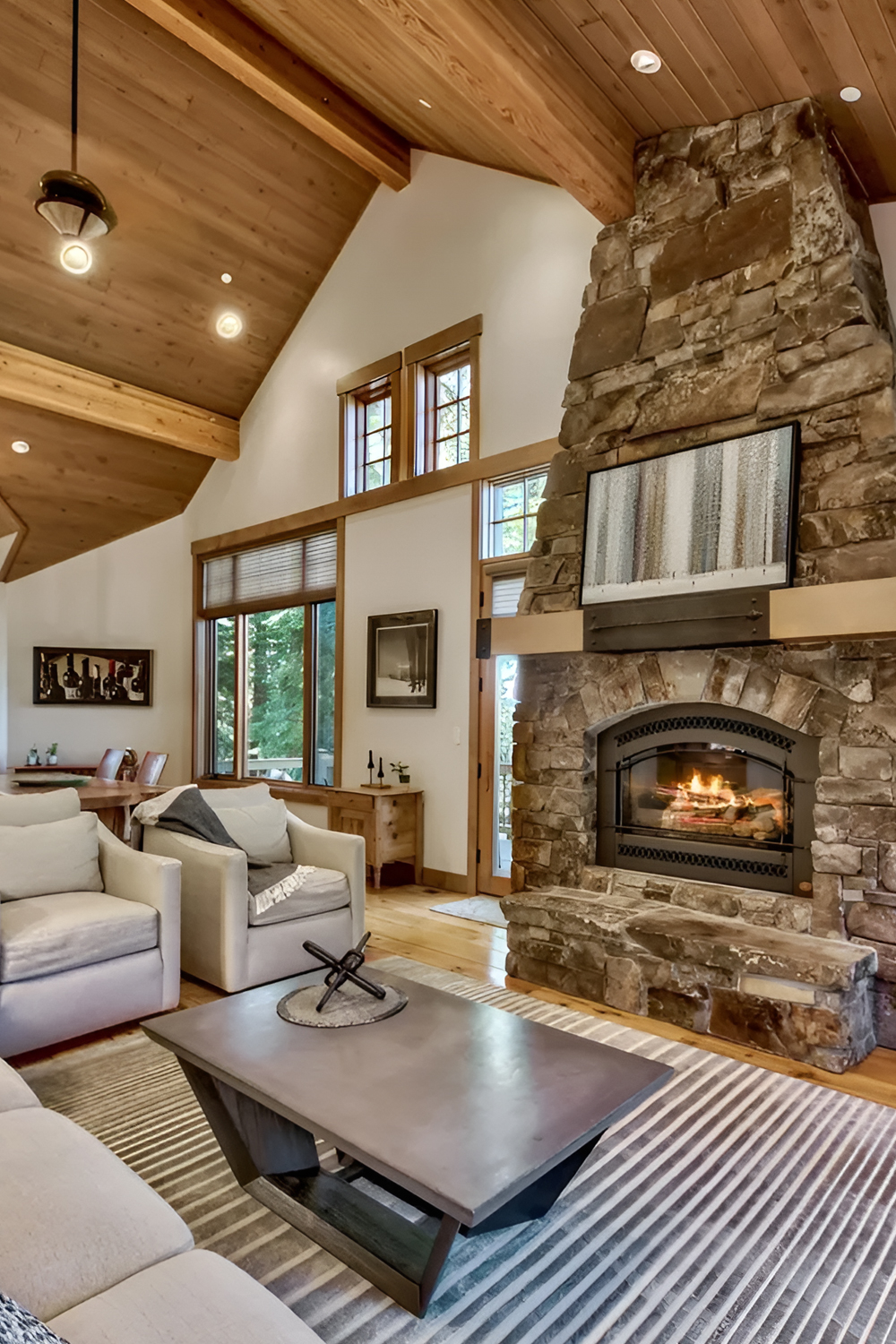
One of the easiest ways to keep a mountain house from feeling dated is to mix rustic features with simpler, more modern furnishings.
That contrast creates balance.
For example, you might have reclaimed wood beams overhead, but pair them with a low-profile sofa. Or use a rough stone fireplace with sleek black-framed windows and clean-lined chairs. This mix helps the home feel updated while still keeping the warmth and soul of mountain style.
Too much rustic furniture can make the room feel theme-driven. On the other hand, too many modern pieces can make it feel disconnected from the setting. The sweet spot is somewhere in the middle.
Let the architecture carry the rustic weight. Then use furniture and decor to lighten the mood.
Design cues to copy:
- Pair rough textures with simple silhouettes
- Choose fewer, better pieces instead of filling the room
- Use black accents to sharpen the look
- Keep decor uncluttered so natural materials stand out
- Balance heavy architectural features with lighter upholstery
12. Create an Entry That Sets the Tone Right Away
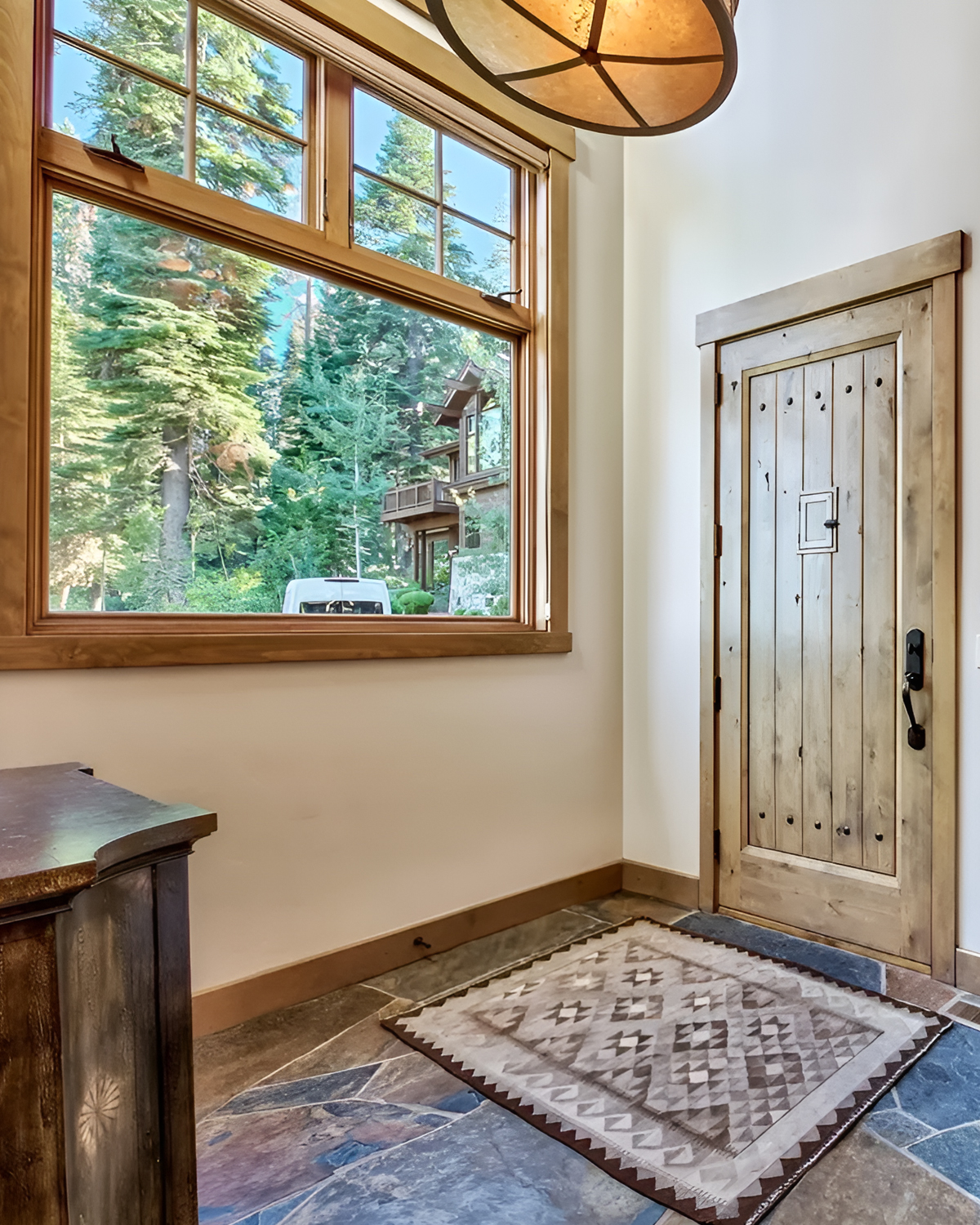
The entry of a mountain house has an important job. It welcomes people in, of course. Yet it also handles boots, coats, bags, and all the gear that often comes with mountain living.
So it needs to be both beautiful and practical.
A strong entry can include a wood bench, hooks, built-in cubbies, and a durable rug. Stone or slate flooring works especially well because it stands up to mud, snow, and heavy use. Then, soften the space with a warm light fixture, a mirror, and maybe a simple piece of art.
Even if the entry is small, it can still make a big impact. It gives people their first impression of the home.
Design cues to copy:
- Use tough flooring like stone, brick, or textured tile
- Add a bench for sitting and removing shoes
- Include hooks or cubbies for daily gear
- Use warm lighting to make the space inviting
- Bring in one natural accent, like branches, wood, or woven baskets
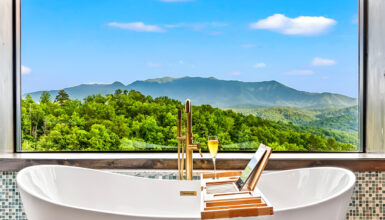
13. Turn the Bathroom Into a Spa-Like Escape
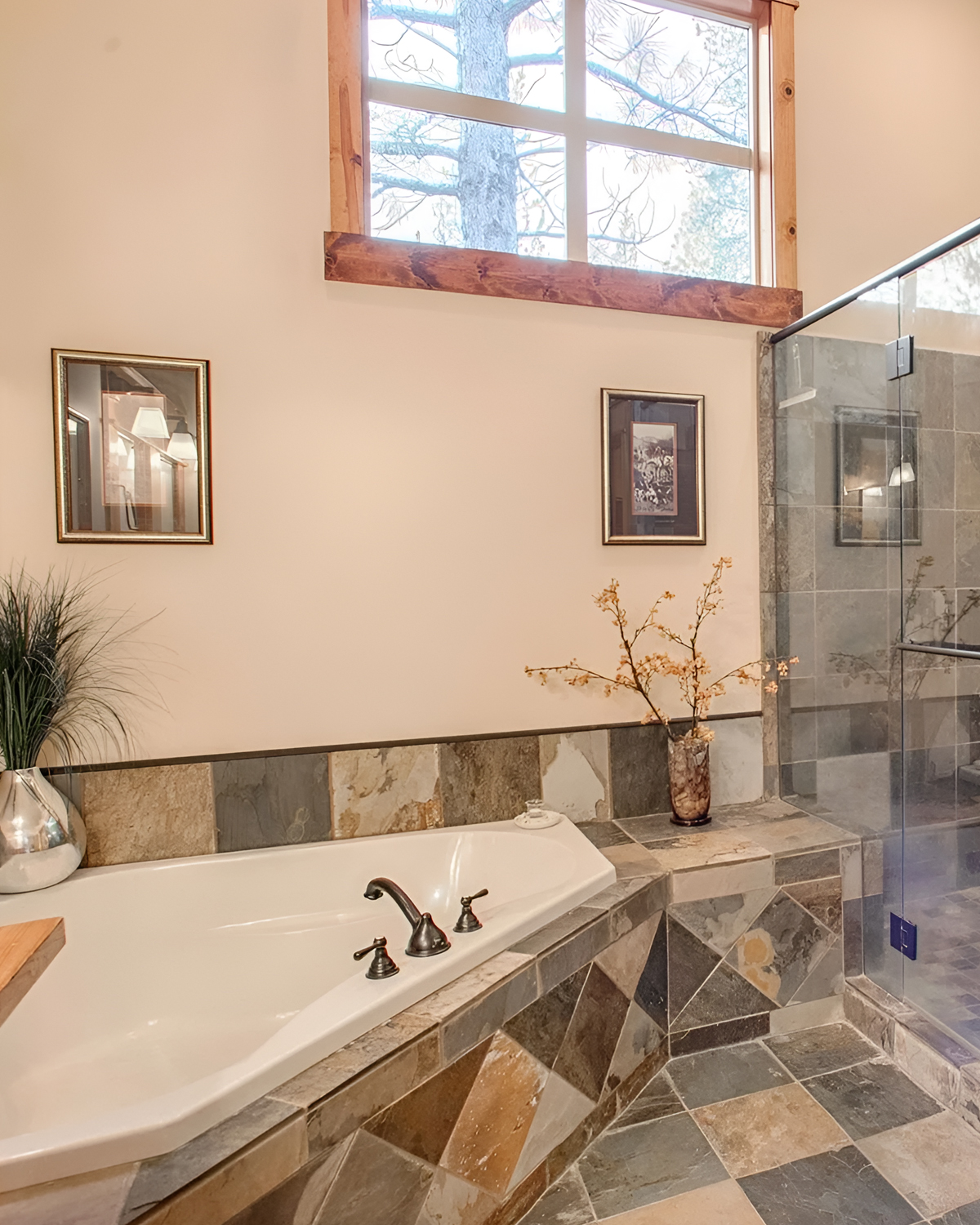
A mountain house bathroom can be more than just functional. It can feel like a retreat.
This is a great place to lean into natural materials and quiet luxury. Think stone-look tile, a warm wood vanity, matte black or aged brass hardware, and soft lighting. A freestanding tub near a window can feel especially dreamy in a mountain setting.
Texture matters here too. Fluffy towels, woven baskets, and subtle tile variation make the room feel layered and calm. If you want more rustic charm, add wood beams, shiplap, or a natural stone backsplash. If you want something more modern, keep the lines clean and let the materials speak for themselves.
Design cues to copy:
- Use warm natural materials instead of cold glossy finishes
- Add a wood vanity or wood-framed mirror
- Choose lighting that feels soft and flattering
- Use neutral tones inspired by the outdoors
- Keep counters simple and clutter-free for a spa feel
14. Add a Reading Nook or Window Seat
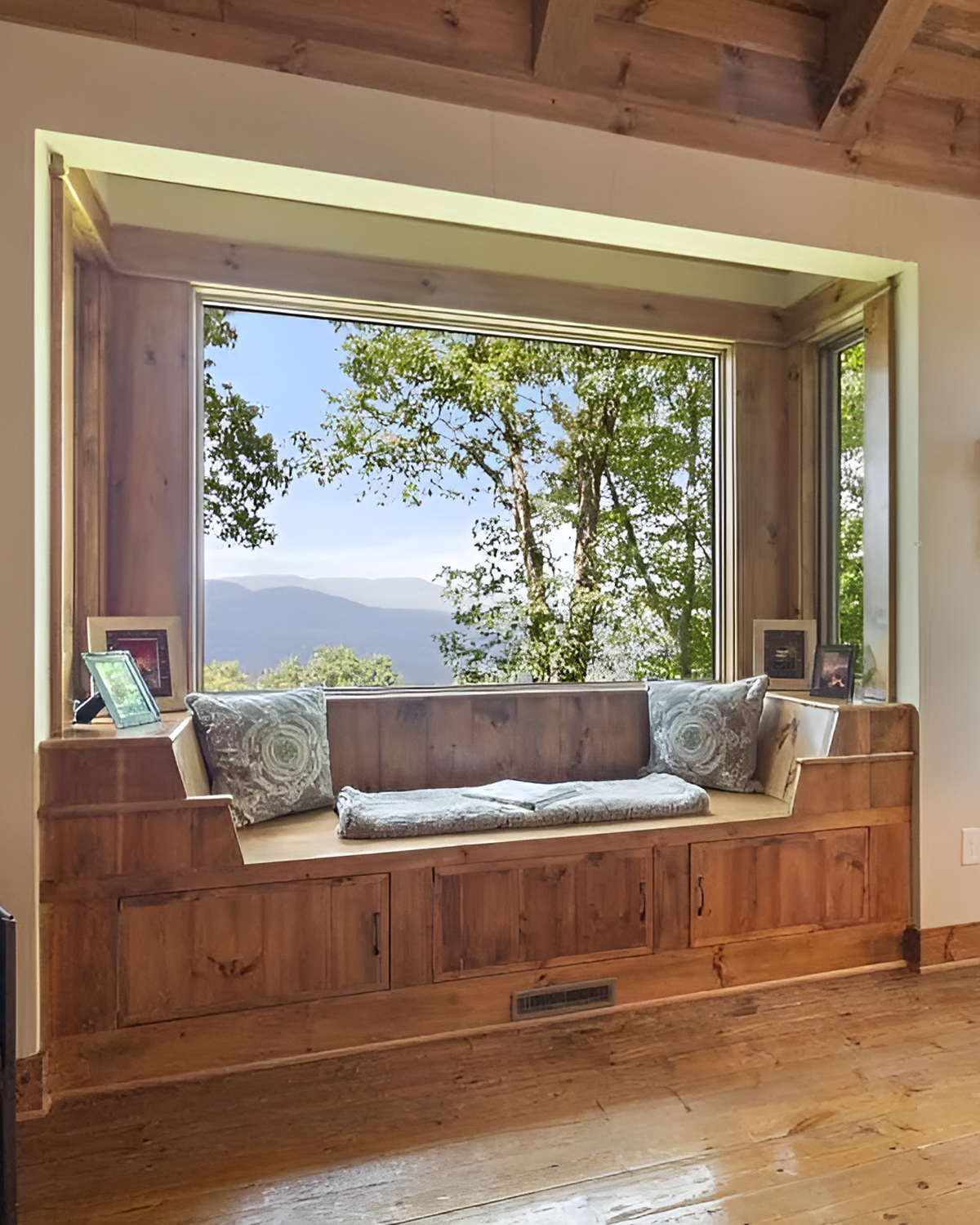
One of the loveliest features in a mountain home is a small spot made just for slowing down.
A reading nook, window seat, or quiet corner chair can do that beautifully. It does not need much space. It just needs good light, a comfortable seat, and enough warmth to invite people in.
This kind of feature makes the home feel more personal. It says the space was designed not only to look good, but also to be enjoyed.
A built-in window bench with storage underneath is a smart option. So is an armchair with a floor lamp and a side table tucked beside a window. Then add a pillow, a throw, and perhaps a view of the trees.
Design cues to copy:
- Use a window area to create a natural resting place
- Add layered cushions for comfort
- Include a lamp for reading in the evening
- Use nearby shelving or a side table for function
- Keep the nook simple so it stays peaceful
15. Finish With Decor That Feels Collected, Not Themed
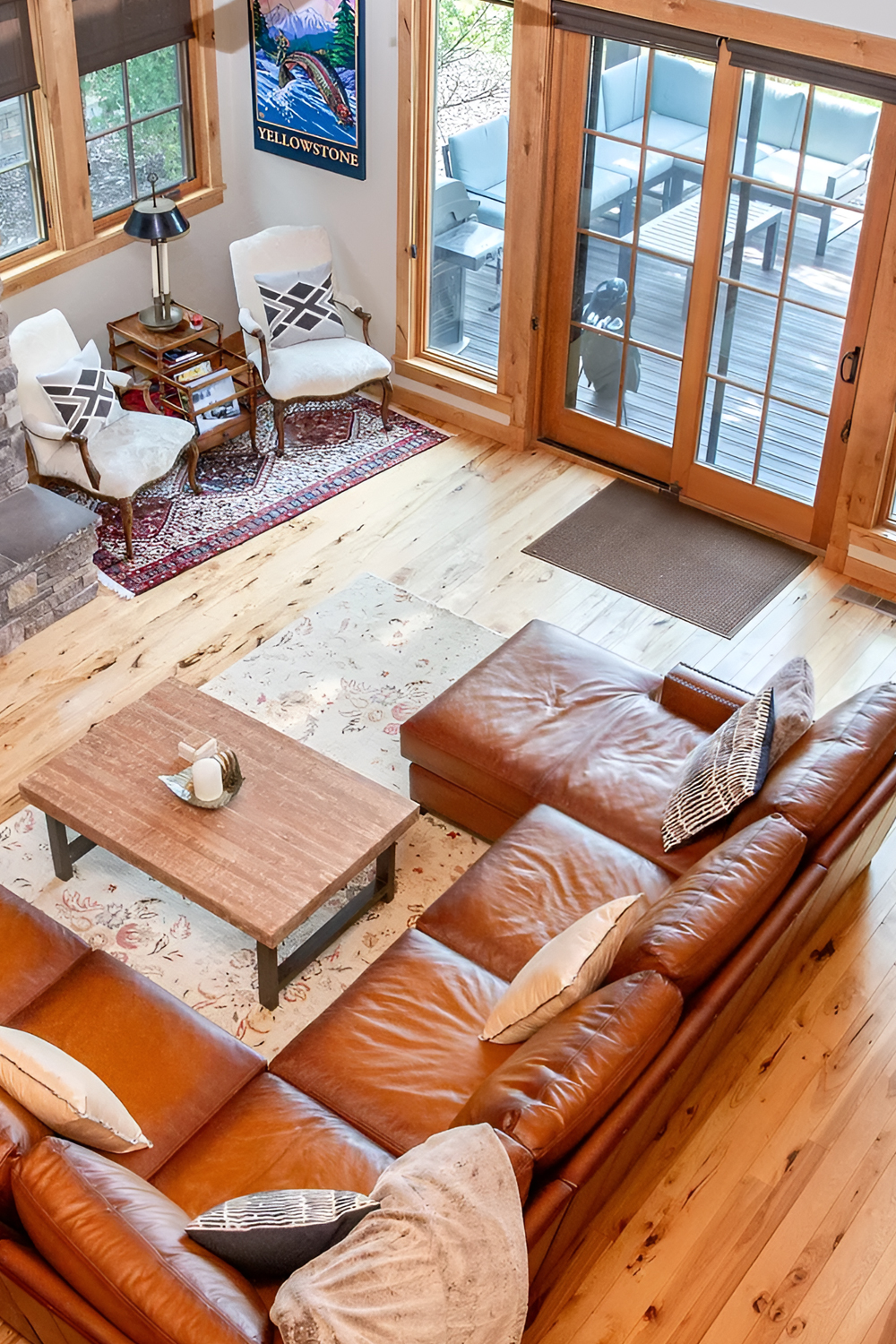
The final layer of a mountain house interior should feel personal and relaxed, not overly staged.
That means choosing decor with care. Handmade pottery, landscape art, woven baskets, old books, vintage skis, carved wood bowls, and natural branches can all work beautifully. But the key is restraint.
You do not need every rustic accent all at once. In fact, fewer pieces often create a stronger effect. Let each item have room to breathe. Choose decor that reflects the setting without turning the home into a mountain cliché.
Artwork is especially powerful. Large landscape paintings, black-and-white nature photography, or soft abstract pieces in earth tones can all reinforce the mood in a fresh way.
Design cues to copy:
- Choose decor with natural materials and texture
- Use meaningful pieces instead of generic filler
- Keep shelves and surfaces lightly styled
- Bring in art that reflects nature in a subtle way
- Mix old and new items for a more layered home feel
A beautiful mountain house interior is not just about rustic materials or cozy furniture. It is about how the whole home feels when those pieces come together.
It should feel warm after a cold day outside. It should feel calm in the early morning light. It should feel welcoming enough for guests and comfortable enough for everyday life. Most of all, it should feel connected to the landscape around it.
That is why the best mountain interiors always strike a balance. They mix rugged and soft. They blend rustic character with modern comfort. They make room for drama, but they never forget warmth.
Whether you love timber beams, quiet bedrooms, grand fireplaces, or simple reading nooks, these ideas can help you shape a home that feels timeless, grounded, and deeply inviting. In the end, that is what mountain style does best. It makes beauty feel livable.